Features & Essays

Where the Present Hangs with the Past

Adelphi Paper Hangings, a small shop in Upstate New York, hand block prints historic wallpapers that are favored by a growing fan base of interior designers, including Kansas City, Missouri-based Katillac.


By Jennifer Vogel
November 11, 2024

Photo by Aaron Leimkuehler

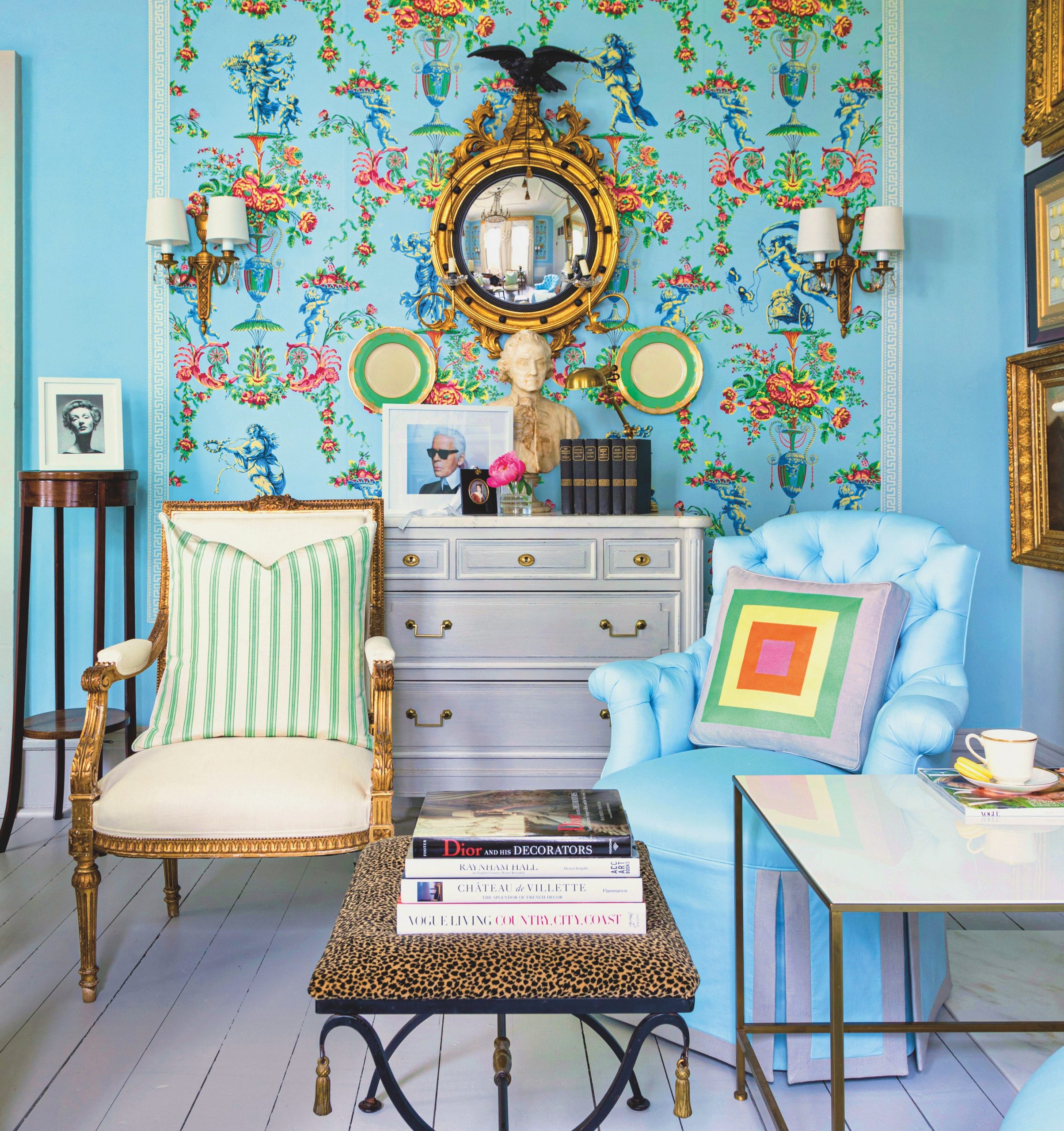
“Locust Grove Arabesque” wallpaper from Adelphi Wall Hangings, re-colored by Kelee Katillac, adorns the lady’s drawing room in the Henry Blosser house.

The Henry Blosser House—a red-brick Second Empire–style mansion built in 1878 on a farm near Malta Bend, Missouri—stood neglected, vandalized, and on the precipice of demolition. The once-grand three-story, seven-bedroom home, with its bell-cast mansard roof and decorative porches, had no plumbing or heating and in 2014 had been placed on Missouri Preservation’s list of most endangered properties.

In 2016 Arthur and Carolyn Elman stepped in, with their passions for history, restoration, and decorative arts, to buy the home and hired Kansas City–based interior and architectural designer Kelee Katillac to manage its renovation.

Completed in 2018, the project met national preservation standards while reflecting the Elmans’ sensibilities and embracing an approach to historical design that combines fascination with the past and a vivid sense of who we have become as a nation. And key to the look and the purpose of the renovation was a remarkable creator of artisanal wallpaper, Adelphi Paper Hangings in Sharon Springs, New York.

In restoring the Blosser home—plus a barn—and refashioning their interiors, Katillac and her team of craftspeople visually relayed details connected to the Blosser family, the Elmans, and the emergence of American style and power, “chapter by chapter, like a book unfolding room by room,” as Katillac puts it. The ballroom contains the Elmans’ collection of Stickley Arts and Crafts furniture, while portraits of Gertrude Stein and a great-granddaughter of Sally Hemings are among the decorative elements in the “lady’s drawing room” that link Carolyn Elman, who is passionate about women’s issues, to influential women throughout history.

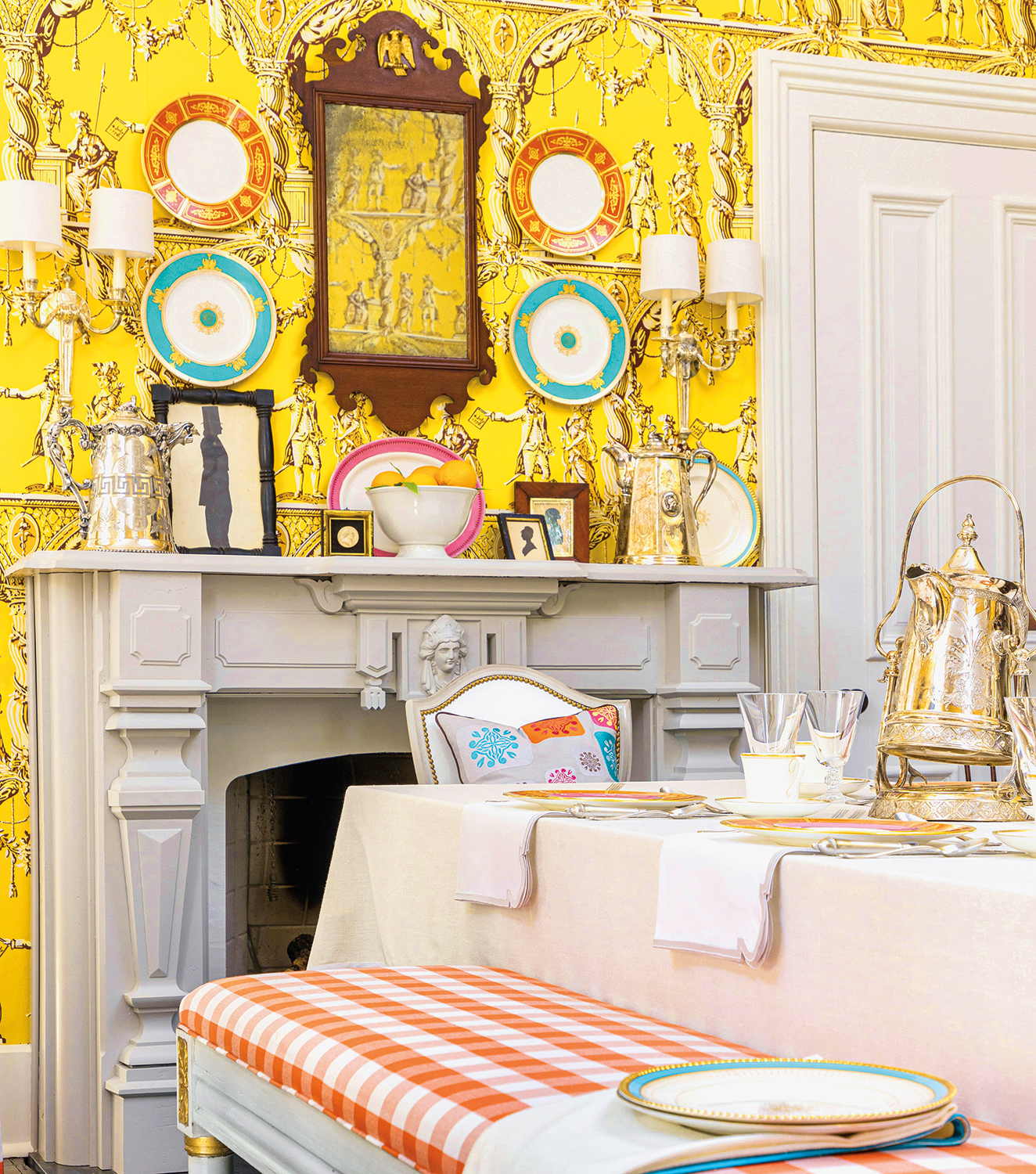
In the dining room, the walls are covered in a version of the 18th-century wallpaper pattern “1776,” which Katillac describes as “an allegory of the triumph of democracy over empire.” It shows a Napoleonic soldier, representing France, handing a document labeled “4 July 1776”—America’s Declaration of Independence—to a weeping Britannia. The archival pattern comes from Adelphi, which hand block printed the paper in a color that Katillac prescribed—a dazzling yellow that’s her personal update of a color found at Thomas Jefferson’s Monticello.

Adelphi’s wallpaper patterns, which appear throughout the house, are the bright stars of the Blosser restoration. “Adelphi was always notable for their work at Mount Vernon and all the great historical houses,” Katillac says. “People who are into the craft of early decorative arts appreciate Adelphi and their fidelity to early craft technique. If you are looking for patterns of the important wallpapers of the world, you are going to go to Adelphi.”
Photography by Aaron Leimkuehler

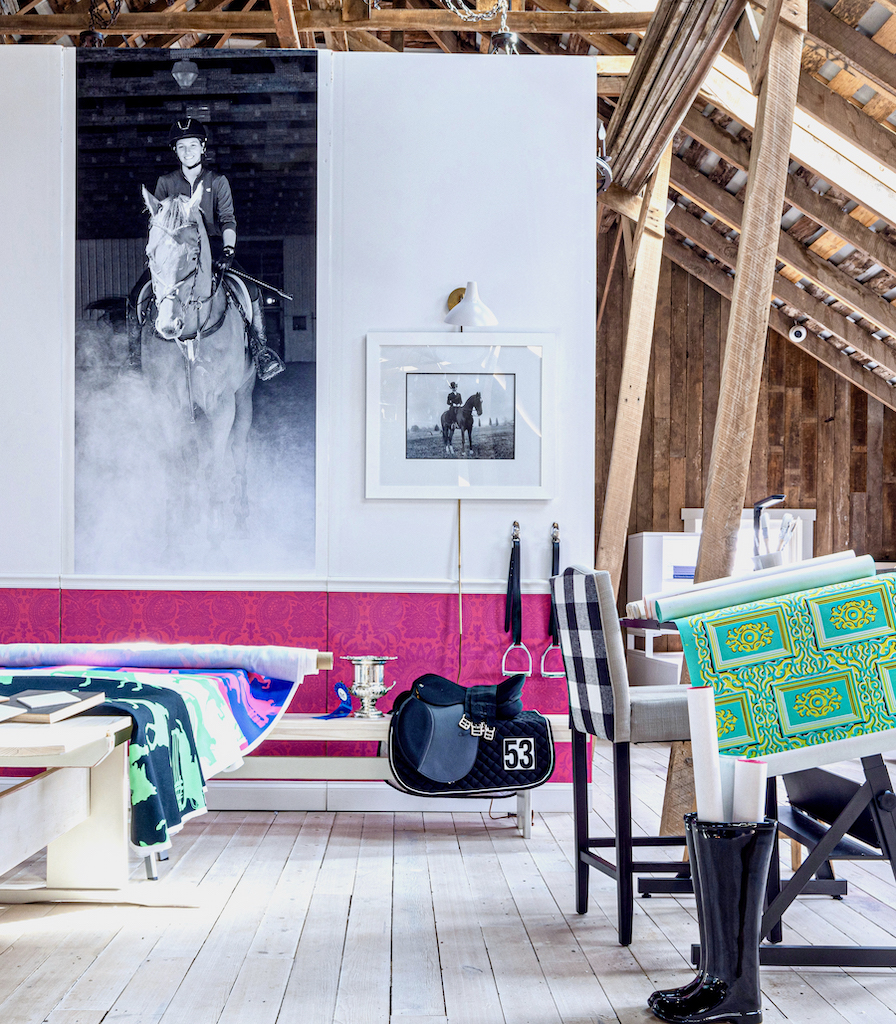
The studio Kelee Katillac created for herself in the Blosser property's barn is adorned with images of the equestrian achievements of notable early 20th-century women and a panel of "Madison Damask" wallpaper from Adelphi Wall Hangings. Other Adelphi papers await her choices.

A Sense of History

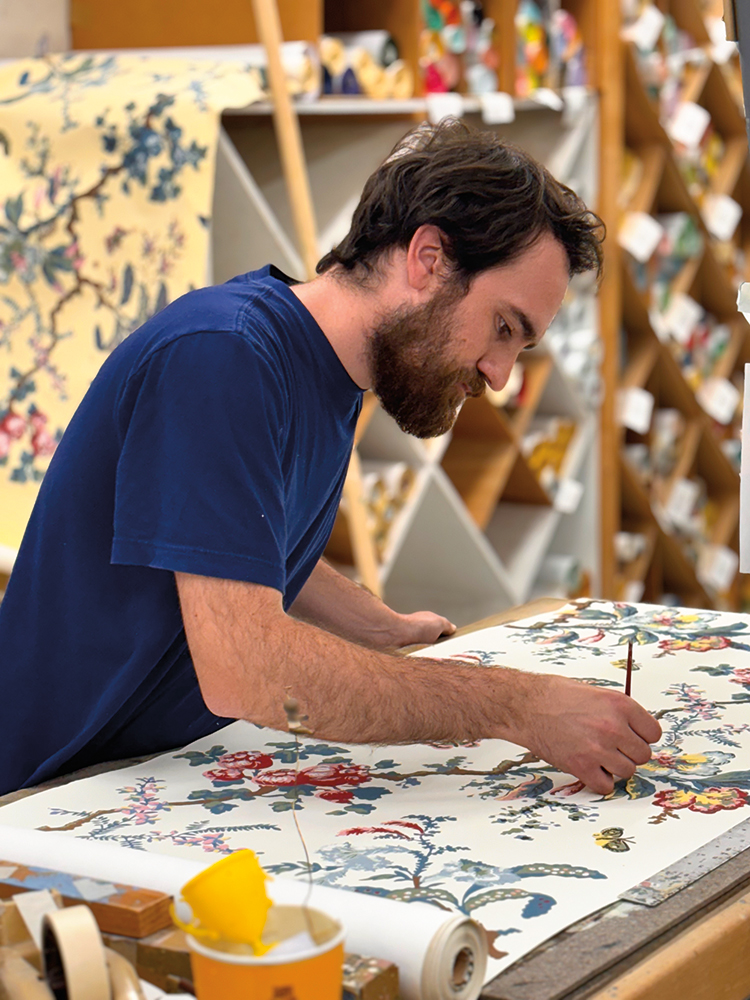
The artisanal producer consults old documents, wallpaper scraps, and other sources to accurately reproduce papers created between the 1740s and the 1930s, using methods and materials typically employed before machine printing became the norm.

Adelphi has showrooms across the country, including on the 18th floor of the venerable D&D Building in Manhattan—home to 100 showrooms featuring interior design elements such as furniture, textiles, and lighting. There, Philip Hess of the home furnishings firm John Rosselli & Associates flips through vertical samples of striking handmade Adelphi wallpaper, which comes in 125 historical patterns, including those on view in July: “Pineapples,”

“Ipswich Sprig,” “Otis Federal Stripe,” “Coffered Rosette,” and “Réveillon Arabesque.” Interior designers are attracted to these wallpapers for their bold patterns and colors, but also for their historical fealty. “I’ve had phone calls where people have said, ’We are working on a project and it’s from this era and we want to stick to that era with the wallpaper,’” Hess says. “Sometimes it’s for a historic inn or historic home. Other times, it’s just a matter of—well, we have interior designers who just love anything Adelphi does.”

Hess lingers over the details of each sample, pointing out the texture of the block-printed surfaces and the order in which the colors were applied. In some patterns, the layers include shiny lacquer and gold leaf. “It has a three-dimensional feel,” he says, running his hand over a print.

Photo by Aaron Leimkuehler

The Blosser house kitchen’s historic wallpaper pattern is the venerable anti-British design “1776,” recreated by Adelphi and recolored Jefferson yellow by Katillac, a reference to Monticello and the American triumph of democracy over empire.

The Craft of Block-Printed Wallpaper

Founded in 1999 by Steve Larson, who was trained as a ceramist, and Chris Ohrstrom, an expert on early American decorative arts, Adelphi is headquartered in a building that has served many purposes, including as an opera house, in the tiny town of Sharon Springs, near Cooperstown. While other wallpaper makers pump out huge quantities using techniques such as digital printing, Adelphi’s small staff painstakingly produces only around 2,000 rolls per year.

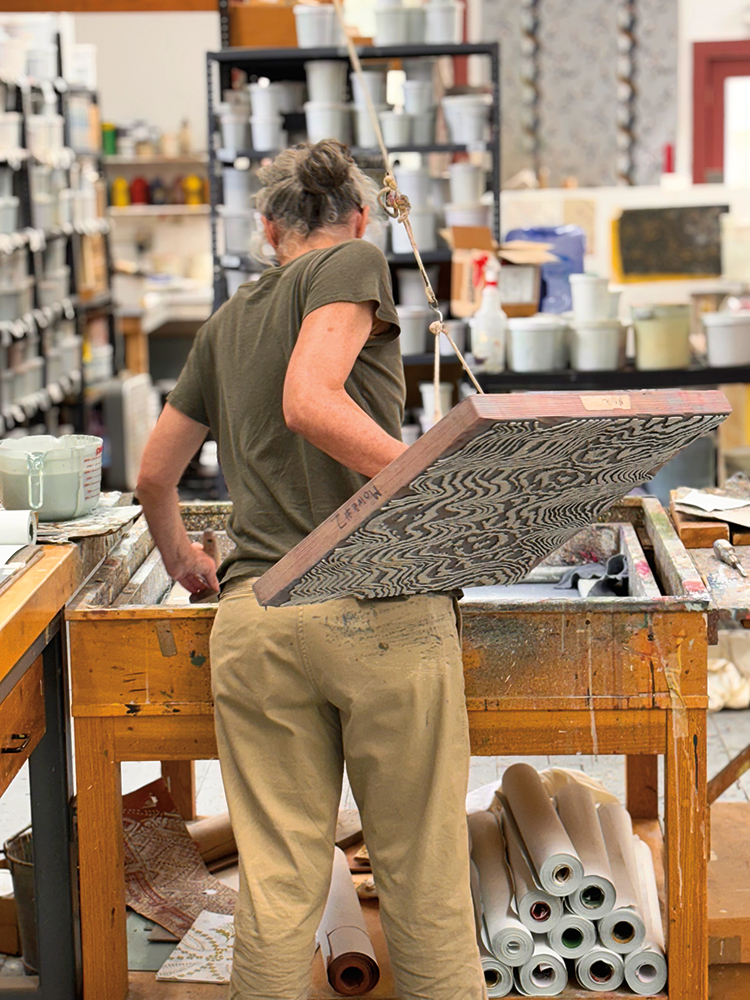
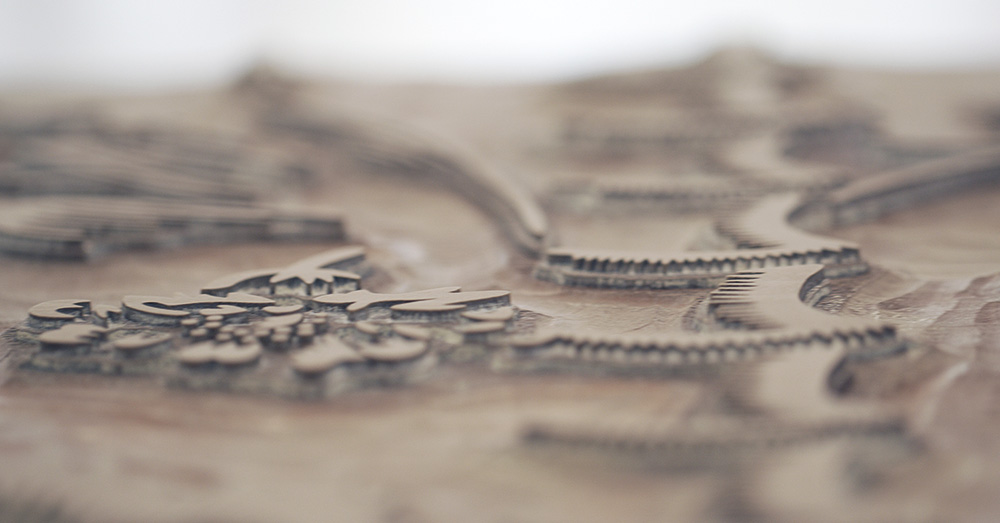
Larson mixes most of the paint, which is a modified version of distemper, made from chalk, clay, water, pigment, and binder. “Traditionally, the binder was rabbit-skin glue,” he says. “We used it in the first year of the business. It makes delicate wallpaper that’s hard to hang. That didn’t seem like a recipe for success, so we switched to an acrylic binder. It gives us the same matte surface appearance.” Each wallpaper pattern requires multiple wooden blocks for printing, one for each color. “Most of the patterns that we sell have between two and four printed colors,” Larson says. The custom blocks on which the designs are laser cut “are made out of Baltic birch plywood. The printing surface is covered with cherrywood or Swiss pear. Swiss pear is a very hard, fine-grained wood. It’s traditional for making blocks because it holds the patterns.”

Adelphi’s artisans work on three hand-built presses, which are “based on a foot pedal press from the late 19th century, early 20th century that came up for sale in England,” Larson says. “It was being sold as an antique. It was made of cast iron. When I considered shipping it over, I thought I don’t think so.” Instead, he acquired a schematic drawing of the antique model and “a fellow near here who is quite a genius as far as building things constructed the presses.”

In addition to supplying designs for historic houses such as George Washington’s Mount Vernon in Virginia and Ulysses S. Grant’s boyhood home in Ohio, Adelphi has made wallpaper for films such as Little Women, Atonement, and The Personal History of David Copperfield. More recently, the company collaborated with a handful of prominent interior designers, including Harlem visionary Sheila Bridges—who, like Katillac, recolored patterns from the Adelphi catalog.

Larson enjoys working with designers, who conjure new twists on archival patterns. Katillac, he says, “has an unusual color sense. It took a number of tries on some of them. First, we’d pull our hair out trying to match the colors she wants. We’re good at matching historic colors, but with the new colors, it’s like speaking a new language. That took some time. There was a lot of back-and-forth. It was fun to see how the patterns changed through these colors.”

Photo © Adelphi Paper Hangings

Adelphi’s Jack Bryant touches up a detail on the 18th-century French pattern “Butterfly Chintz.”

  • Photo © Adelphi Paper Hangings

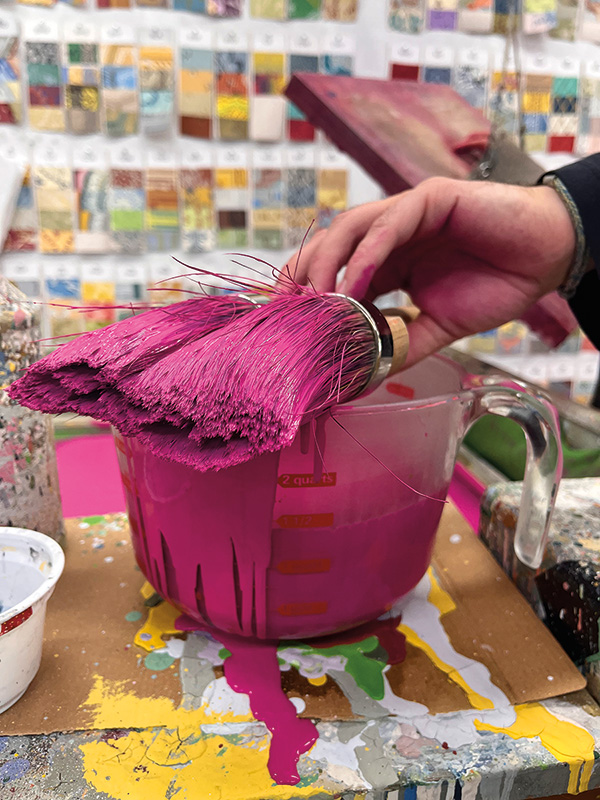
    Adelphi mixes distemper paint (chalk, pigment, occasionally clay, water, and a binder), which was standard in the 18th century. Instead of the traditional animal glue binder, however, the company developed a modern binder that makes the paper easier to work with.

  • Photo © Adelphi Paper Hangings

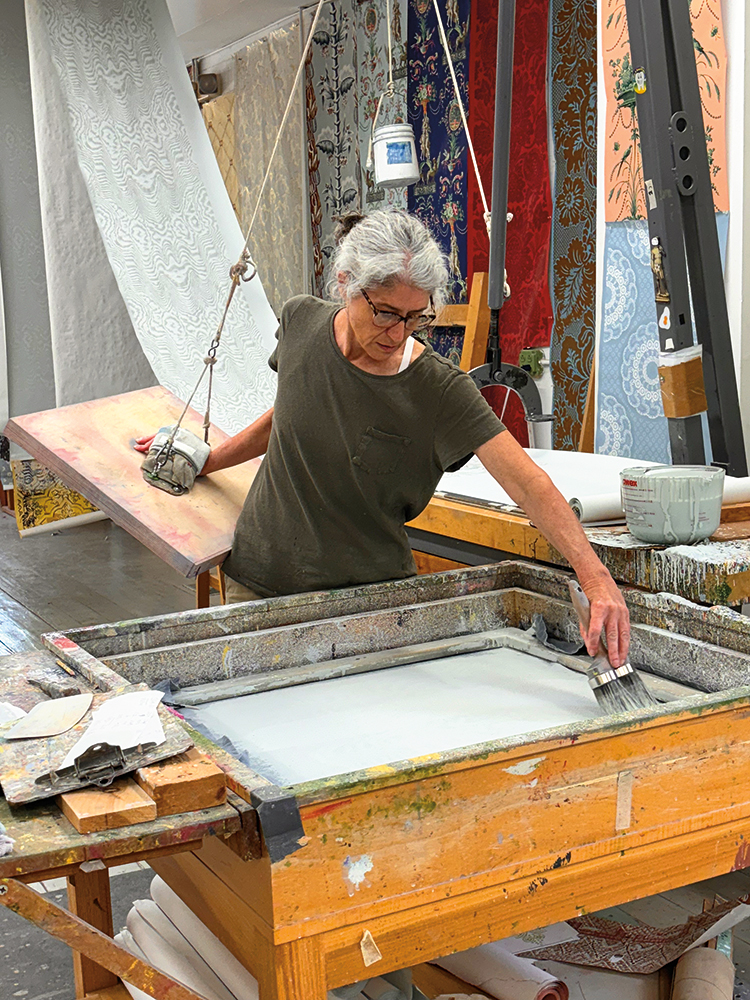
    Applying a block to a roll of colored paper.

“Swiss pear is a very hard, fine-grained wood. It’s traditional for making blocks because it holds the patterns.”

— Steve Larson

  • Photo © Adelphi Paper Hangings

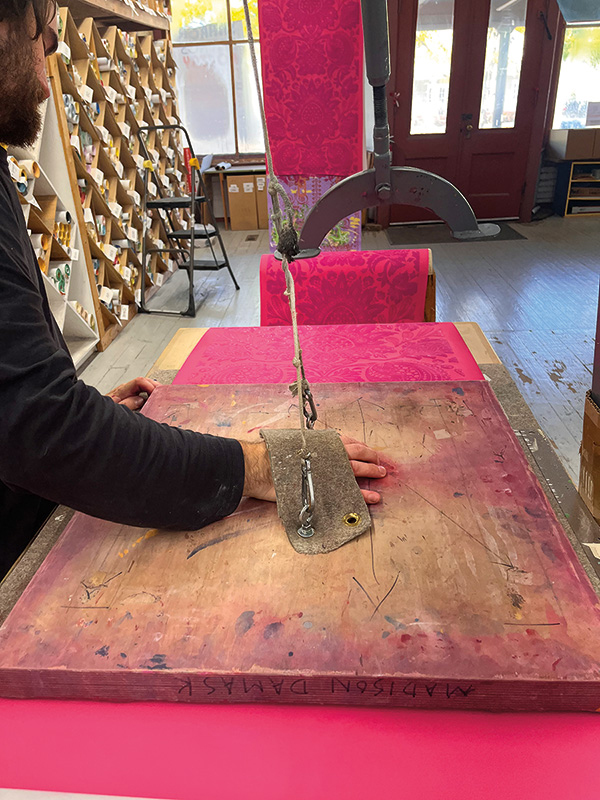
    Michele Farwell spreads paint on a felt bed, before pressing a printing block (in her right hand) onto it, to color it for printing.

  • Photo © Adelphi Paper Hangings.

    A rear view of the same process. Farwell holds a full block, which prints the full width of the paper; half-blocks are also used. Blocks are laser cut to save time and allow for a larger inventory of patterns, then finished by hand.

Updating History with Radical Inclusion

Adelphi’s wallpapers fit perfectly with Katillac’s philosophy, which involves restoring and designing historic homes with an eye toward telling a more complete version of our history. (Historic Style: Honoring the Past with Design for Today [Missouri Life, 2023] details Katillac’s work and thought.) The firm’s carefully reproduced historical patterns allow her to reenvision American traditions by recoloring them in ways that reflect today’s wider and deeper sense of American identity. In doing so, she honors “all of the hidden co-creators who have been left out of the American design story,” Katillac says, “including the early enslaved builders of our monuments, the coal miners who worked in unhealthy conditions to create the meta materials that were used to build 20th-century modernism; also our farm families who grew the food to feed the carpenters, all the while building their own remarkable barns and houses.”

For La Villa, a century-old, Spanish-style event space in Kansas City, for example, she recolored the normally subdued wallpaper pattern “Parson Smith Pillar and Arch” in vibrant purple, giving one corner of the building a regal spin to reflect the Latin culture of the craftspeople who built it.

Aderton House (1845), the home Katillac remade for herself and her husband, architect Steve Heiffus, in the historic Missouri community of Arrow Rock, represents, architecturally, a bridge between Federal and Italianate styles. And, like Blosser House, it was in rough shape when Katillac undertook its restoration.

Looking to weave history into an atmosphere of belonging and “a visually expressed attitude of healing,” she went to work with her team. Today, Aderton is imbued with symbols and meaning, color, and craft. For the home’s entryway, Katillac and associate designer Sherry Mirador developed a textile pattern that incorporates images of gemstones and cameos with both white and African American silhouettes.

Photo by Aaron Leimkuehler

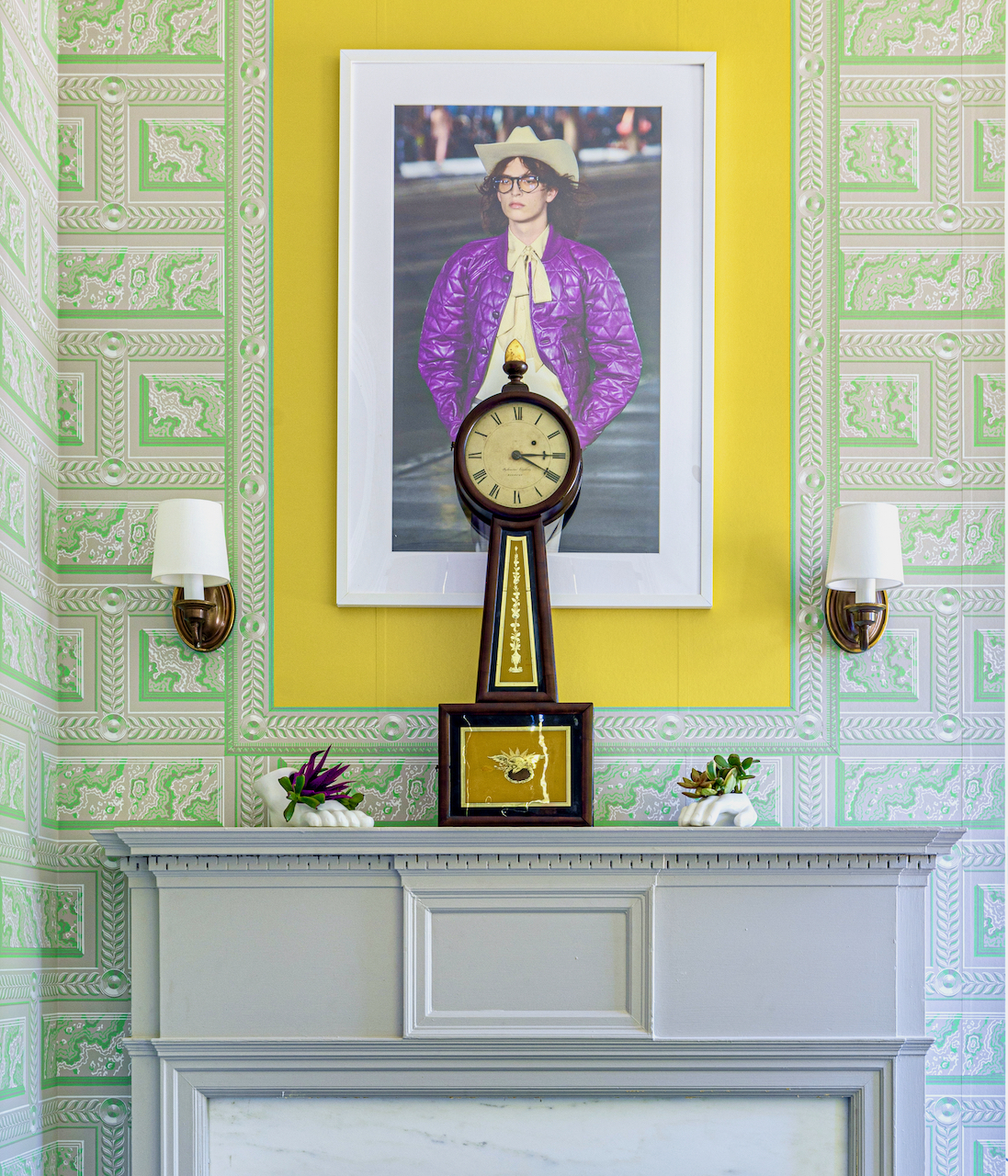
Adelphi’s “Blanchard Ashlar” pattern in the 1845 Aderton House, where Katillac lives.

Photo © Adelphi Paper Hangings

A pear-wood block. Each color requires a separate block.

Photo © Adelphi Paper Hangings

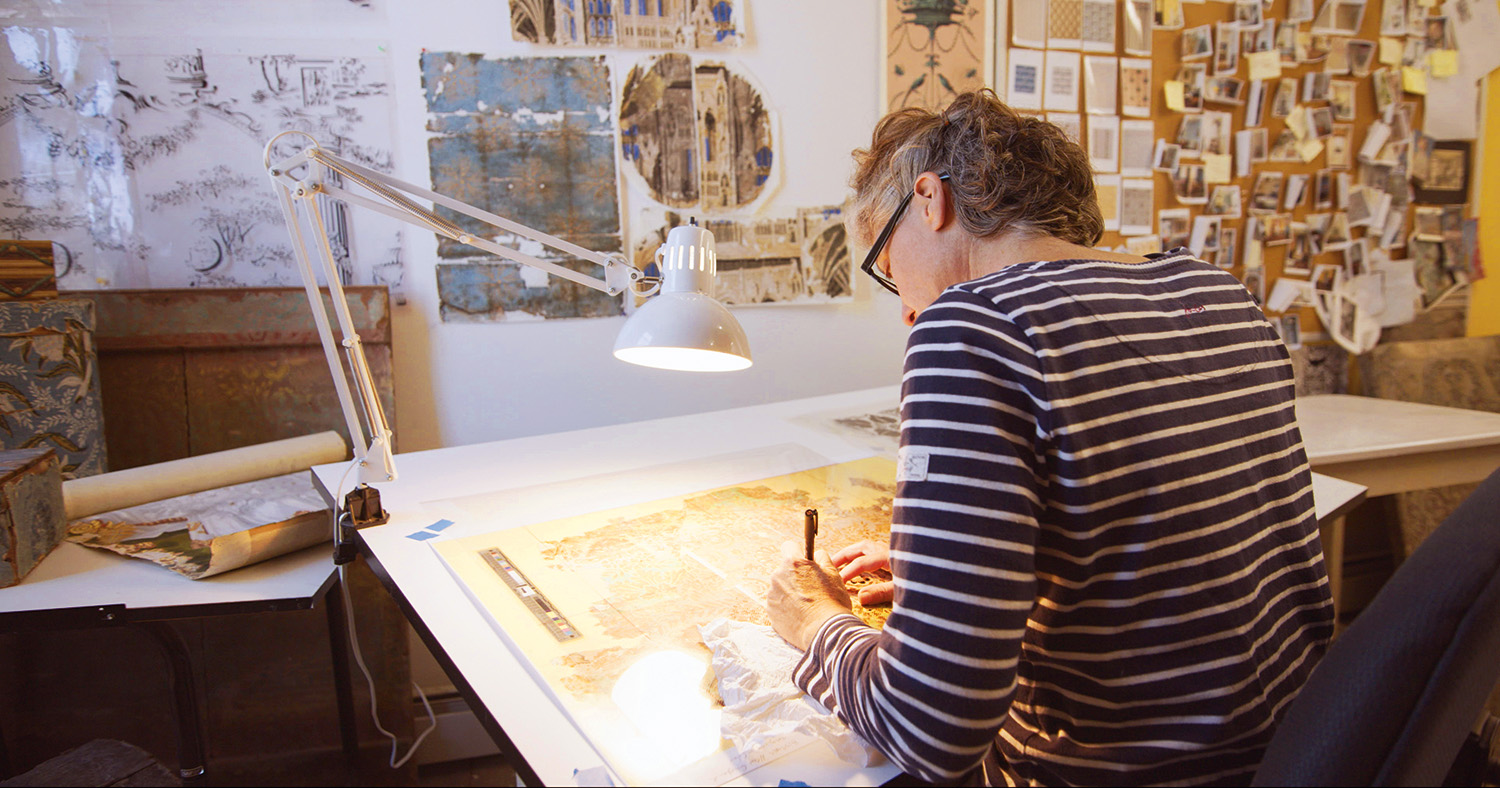
Adelphi’s Michele Farwell traces a historical wallpaper pattern on a transparency to be used to guide the laser cutting of a printing block.

Photo © Adelphi Paper Hangings

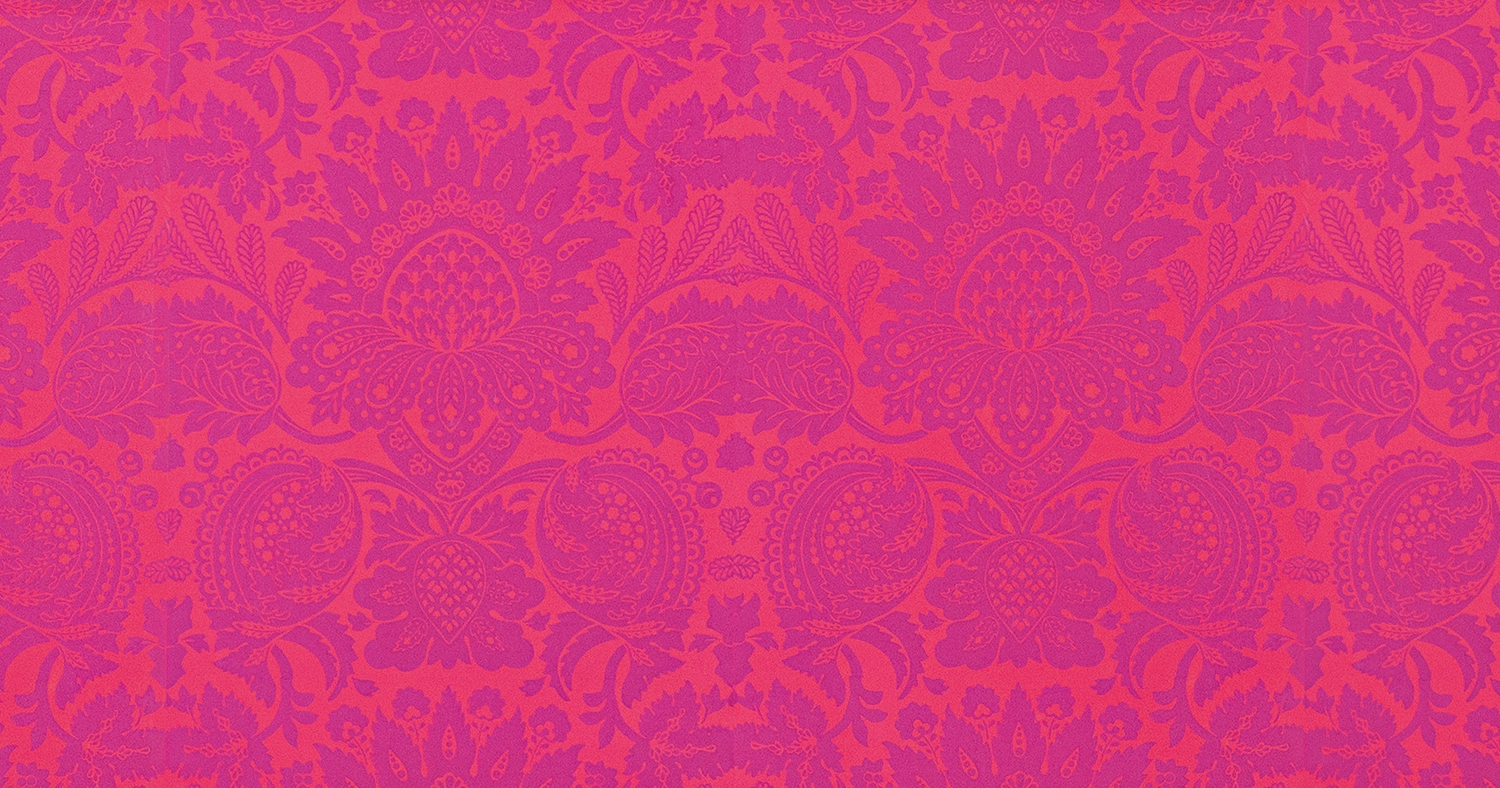
“Madison Damask” (French or English, 1800–15, recolored by Katillac).

Photo © Adelphi Paper Hangings

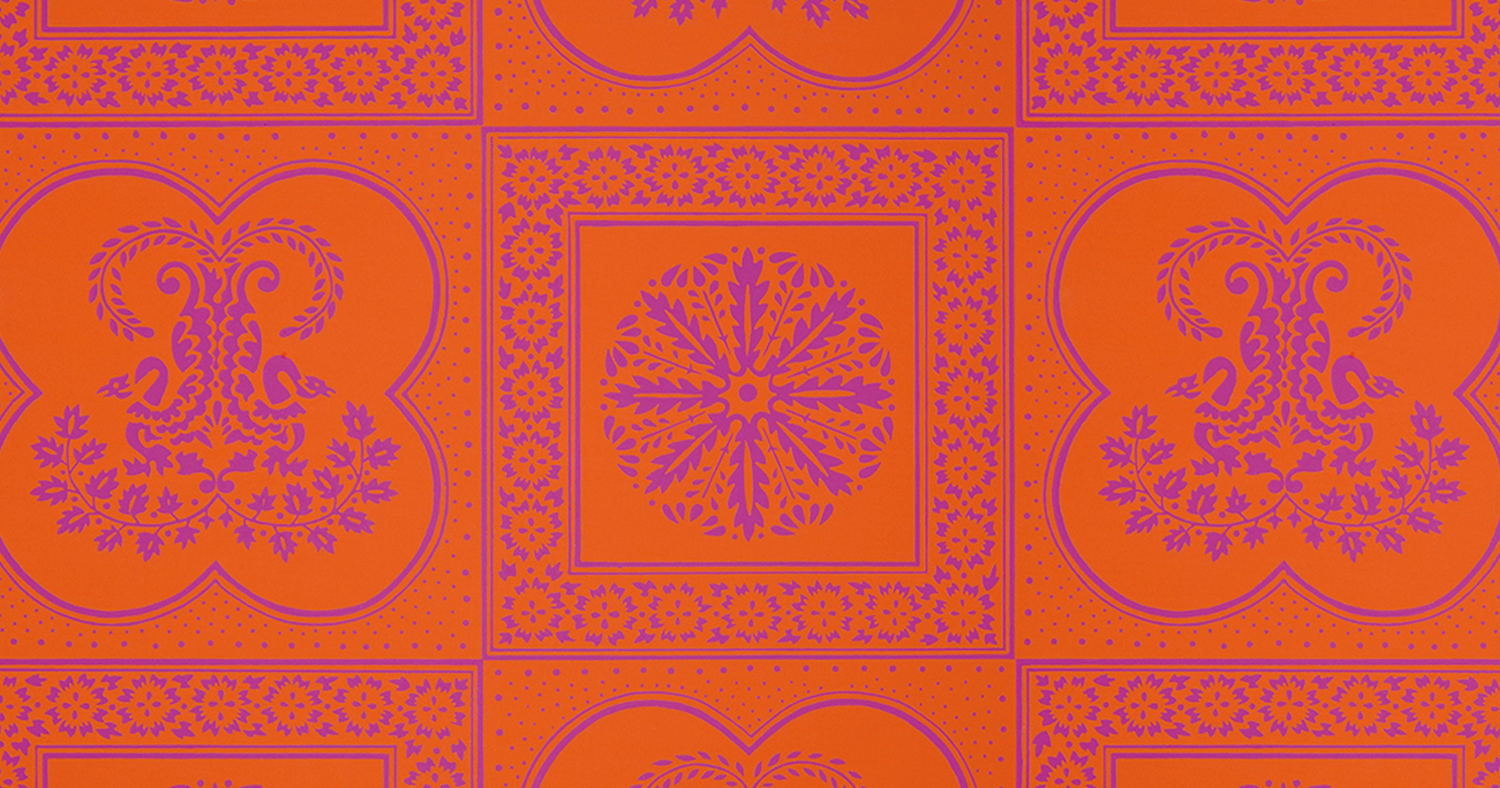
“Neoclassical Square” pattern (American, 1815–20, recolored by Katillac).

1 - 4

And Adelphi is present too. The bedroom features the pattern “Blanchard Ashlar,” recolored in a variation of arsenic green from the Napoleonic era, when France sold a vast swath of our continent, including what’s now Missouri, to the young United States. “The Louisiana Purchase and the influence of Napoleon,” says Katillac, “hover over Missouri like a ghostly mist to this day.”

“It’s all about helping us become who we want to be and embracing the life we want to live,” says Katillac, who encourages “creative manifestation” through design. Once we “join the creative force with our life experience, once we have a home that represents these things, we find our purpose and passion. That’s how we are going to transform our art, craft, and careers and figure out how we are going to serve the world beyond ourselves.”

It’s a formula for any homeowner who wants to turn their house into an expression of their most deeply held values—with the aid of sympathetic designers and skilled craft artists.

adelphipaperhangings.com | @adelphipaperhangings
historicstyle.com | @keleekatillachistoricstyle


Jennifer Vogel, American Craft‘s contributing editor, is a freelance writer and editor based in Minneapolis.

Photo by Karen Swope, courtesy of Missouri Life Publishing

Katillac (at right) with associate designer and collaborator Sherry Mirador.

Kelee Katillac created Historic Style: Honoring the Past with Design in collaboration with writer Jorge Arango. After an introduction by
Anthony Barzilay Freund, editorial director of 1stDibs, the book offers a tour of historic American homes and reveals Katillac’s philosophy of
design—offering a bold vision for combining old houses and decorative arts with a modern sensibility. It is the winner of the Independent Publisher Book Award: Coffee Table Book of the Year 2024.

Before you go!


We believe that making creates a meaningful world, and we hope you do, too. Deeply researched and impactful journalism on the craft community is in short supply. At the same time, being featured in a national publication can have a major effect on a maker’s or artist’s livelihood, particularly those who are just starting in their career. You can help support our mission and the work of makers around the country by becoming a member or by making a gift today.

Thank you!
American Craft Editors