Craft Around the Country

Big Percy Dwarfs the Competition

Corey Alston’s new life-sized sweetgrass basket might be the biggest ever made.

By Robert Alan Grand
March 20, 2026

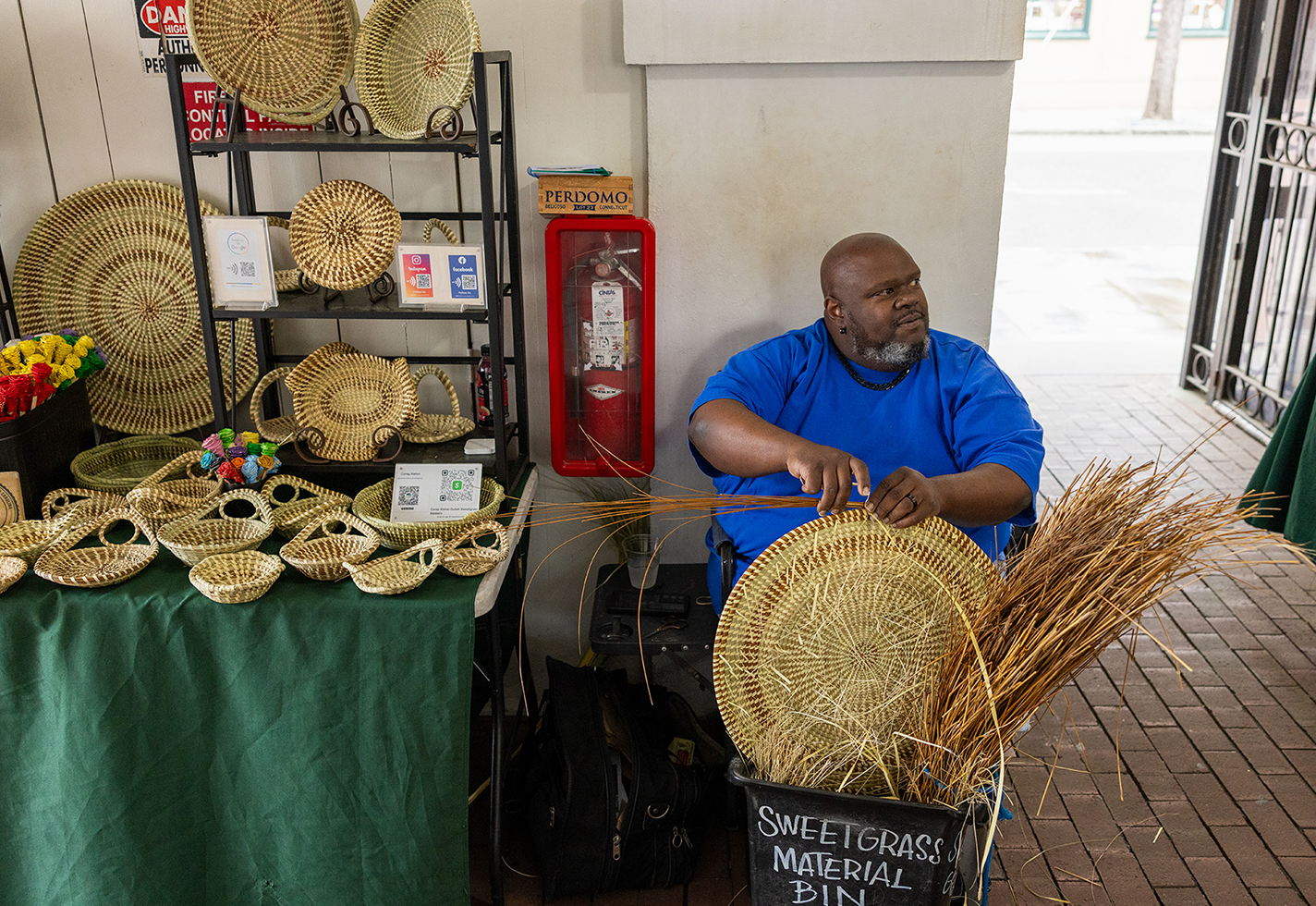
Photo by Robert Alan Grand

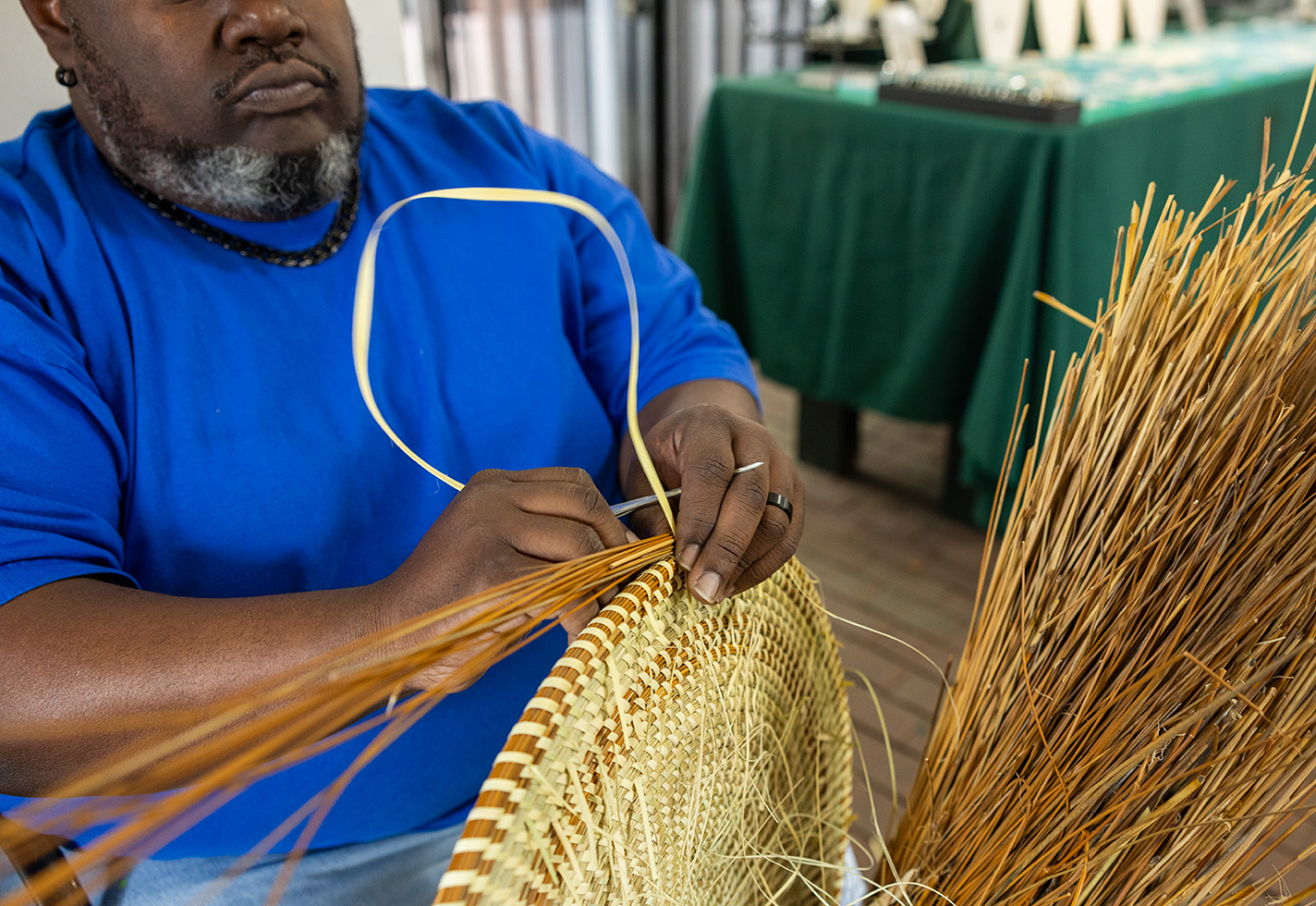
South Carolina basketmaker Corey Alston sewing sweetgrass into a basket.

Corey Alston is no stranger to museum commissions. His sculptural baskets—enormous sewn vessels stacked and linked by swirls of coiled marsh grass—have been commissioned or collected by the Smithsonian American Art Museum, the Duke Endowment, the Mint Museum, the Museum of Arts and Design, and more. 

But when approached by the South Carolina State Museum, the fifth-generation sweetgrass basket maker challenged himself to create something bigger and more impressive than ever before in honor of his home state.

Finished just a few weeks ago and now permanently on display in the museum, Alston’s Big Percy is around 11 feet wide, five feet tall, and entirely handcrafted. In addition to being Alston’s biggest undertaking, it may also be the largest sweetgrass basket ever made. “It turned out about 35 inches bigger and one foot taller than it should have been, but that’s what art does when you’re just being freehanded,” he explains. 
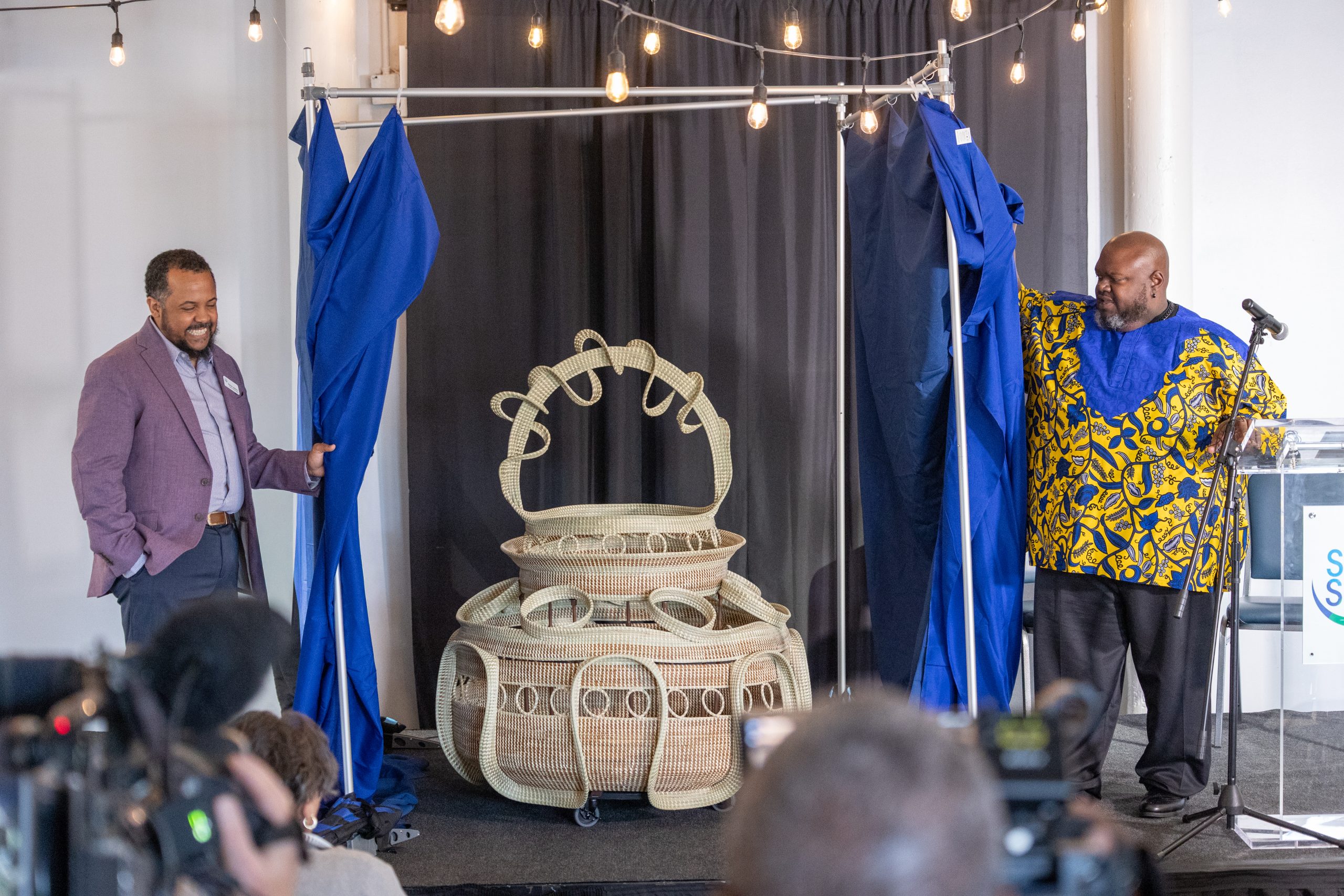
Photo courtesy of the South Carolina State Museum

Alston and Dr. Ramon Jackson, South Carolina State Museum curator of cultural history, reveal Big Percy at a press conference.

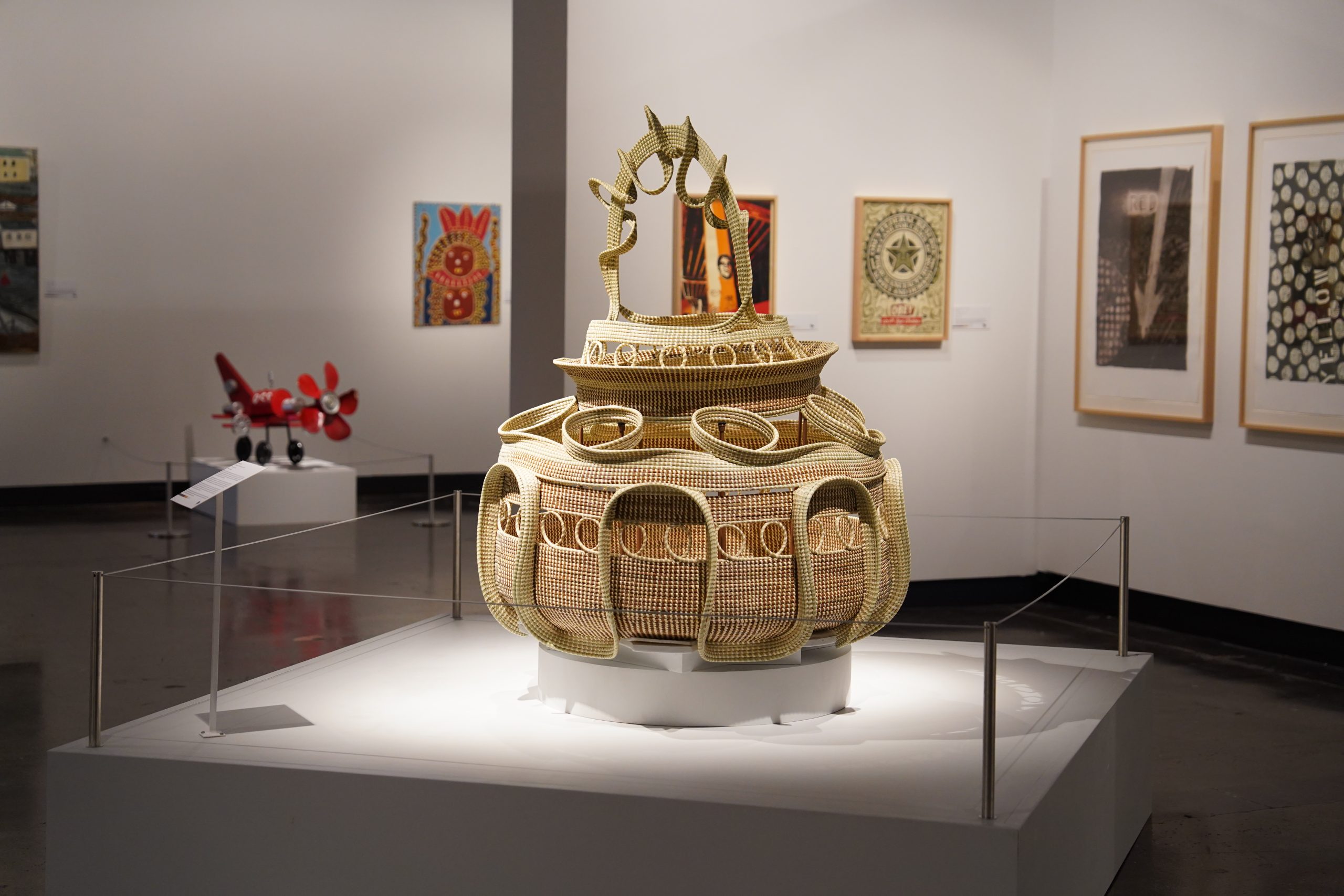
Sweetgrass basketry, a centuries-old art form with Central and West African roots, thrives in Gullah Geechee communities around Charleston and Mount Pleasant, South Carolina, where descendants of enslaved Africans from plantations along the lower Atlantic coast have lived for centuries. Originally created for practical farming tasks such as rice harvesting and water transport, these sewn baskets (not woven, as is often mistakenly claimed) have become popular with tourists visiting the Lowcountry, where they’re available for purchase at area markets and roadside stands.

Alston, who married into a basket-making family, received blessings from his wife’s grandmother, Mary Jane Manigault, to continue this craft. He’s also teaching his two daughters, preserving the tradition into its sixth generation. While the market for his family’s sweetgrass baskets remains significant, Alston’s more sculptural works have defined his personal style and garnered widespread attention. 

Percy has the most unique everything,” Alston jokes, noting that many of Percy’s signature decorative elements are his new interpretations of age-old techniques. The seven large loops in the middle, which he refers to as the “seven oceans,” seem weightless, miraculously holding the dense halves of the piece together. Percy’s handle, resembling a double helix, took an entire month to create, with Alston spending 10 to 14 hours a day sewing. (“Harvesting time is totally separate,” he says of the invisible labor behind collecting the materials for his work. “But we don’t ever talk about the harvest. No one cares.”)

Photo courtesy of the South Carolina State Museum

“It turned out about 35 inches bigger and one foot taller than it should have been, but that’s what art does when you’re just being freehanded.”

— Corey Alston

A significant challenge came when the piece became too large to manage alone. “We make baskets in our lap,” he says. After a certain point, he says, “I couldn’t make him right here anymore.” Alston had a wooden cradle created to hold the 11-foot-wide, 80-plus-pound basket on its side for stability. 

Today, when viewed in the round, Big Percy lives up to its evocative name—one Alston says was inspired by a tag-team duo from the 1974 comedy Uptown Saturday Night: Little Seymour and his imposing bodyguard, Big Percy. Alston views them as metaphors for his artistic journey so far, representing how this basket pushed him out of his comfort zone and challenged him in new ways, creating something almost unbelievable.

“I’ve made a lot of Little Seymours,” he says, “but I’ve never made a Big Percy.” That is, until now.

Photo by Robert Alan Grand

Sewing sweetgrass baskets is labor-intensive work.

Robert Alan Grand is a writer and photographer based in Asheville, North Carolina. He received the 2025 Andy Warhol Foundation Arts Writers Grant to cover contemporary art in southern and central Appalachia.

Learn more about Corey Alston.

Website Instagram

This article was made possible with support from the Windgate Foundation.

Before you go!

We believe that making creates a meaningful world, and we hope you do, too. Deeply researched and impactful journalism on the craft community is in short supply. At the same time, being featured in craft-centered media and articles can have a major effect on a maker’s or artist’s livelihood, particularly those who are just starting in their career. You can help support our mission and the work of makers around the country by becoming a member or by making a gift today.

Thank you!
American Craft Council