Craft Around the Country

This Honolulu Exhibition is a Family Affair

Ea Mai Eiwa: Patterns of Practice, on view now at the Bishop Museum, brings together works by hula practitioner Nālani Kanaka‘ole and her family members, including hula skirts, bamboo printing tools, and other objects made from traditional Hawaiian materials. 

By Jacqueline Huynh Young
September 16, 2026

Photo courtesy of the Bishop Museum

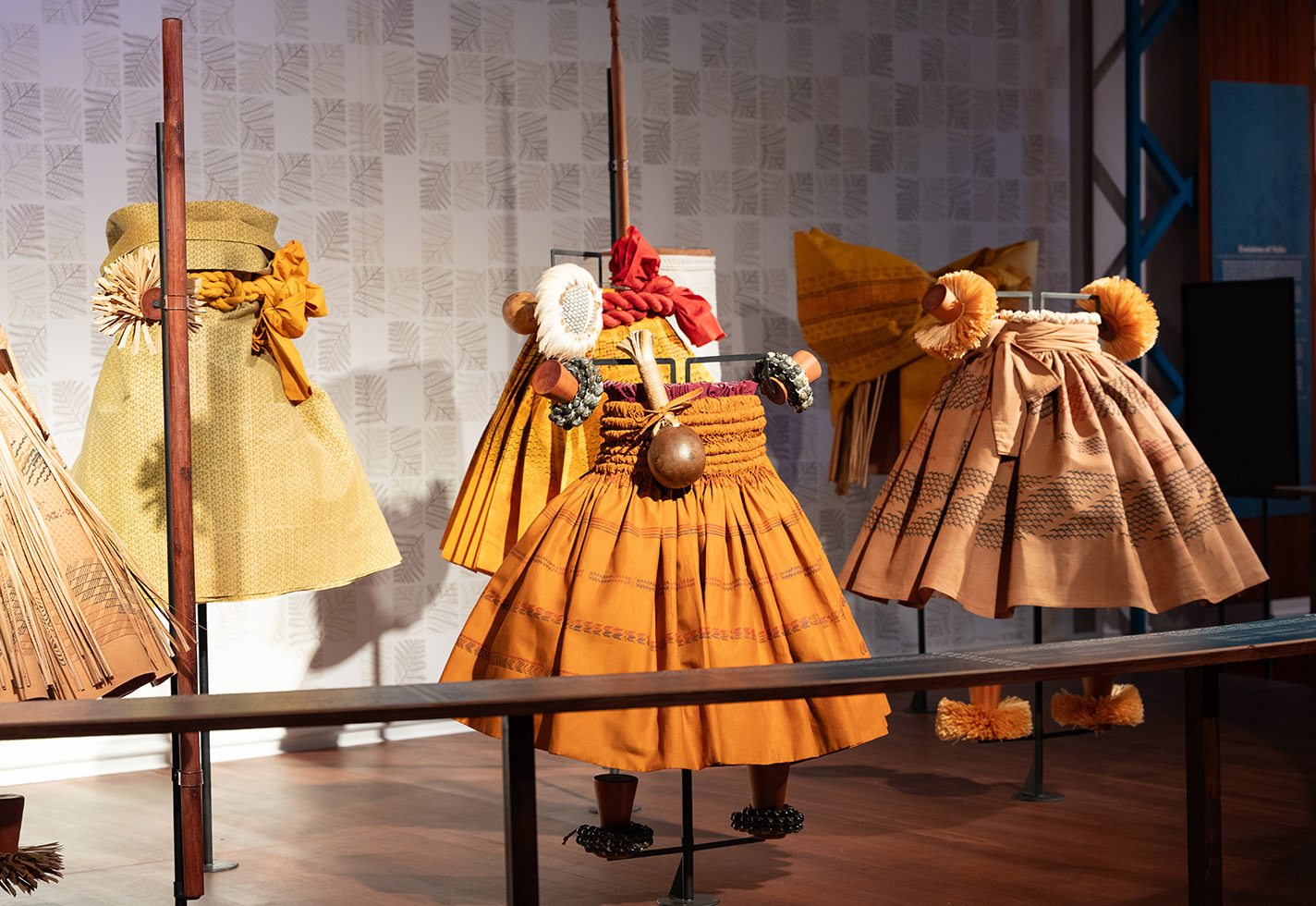
Hula practitioner Nālani Kanaka‘ole designed Pāʻū Milo with Hala in the late 1990s, using strips of lau hala (pandanus leaf) to make hula dancers’ hand movements more visible from a distance.

A sea of blue kites floats overhead, filling much of the J.M. Long Gallery at Honolulu’s Bishop Museum. 

Ea Mai Eiwa: Patterns of Practice, the exhibition on view in that space through February 17, 2027, traces generations of creative and cultural practice within a family based in the Big Island city of Hilo. Together, the kites make up Kūhaʻimoana, hula practitioner and matriarch Nālani “Aunty” Kanaka‘ole’s last large-scale installation before her passing earlier this year. 

The work takes its name from a chant describing the migration of nine shark gods from their ancestral homeland of Kahiki to Hawaiʻi and gives the exhibition its title: Ea Mai ‘Eiwa, or “here are the nine.” “Kūhaʻimoana,’ for me, has many layers to it,” says Kanaka‘ole’s son, Kūhaʻoʻīmaikalani Zane, creative director of Sig Zane Designs and SZKaiao. “It’s a migratory chant that compares migrations to waves of ocean-navigating sharks.” 

The family’s practice is grounded in hula ‘aiha‘a. Kanaka‘ole, a revered kumu hula, or master hula teacher, centered her practice around this powerful, low-postured style associated with the volcano deities Pele and Hi‘iaka. The teachings of hula ‘aiha‘a also shape the work of her husband, famed graphic artist and cultural practitioner Sig Zane, and their son, Kūhaʻoʻīmaikalani Zane.
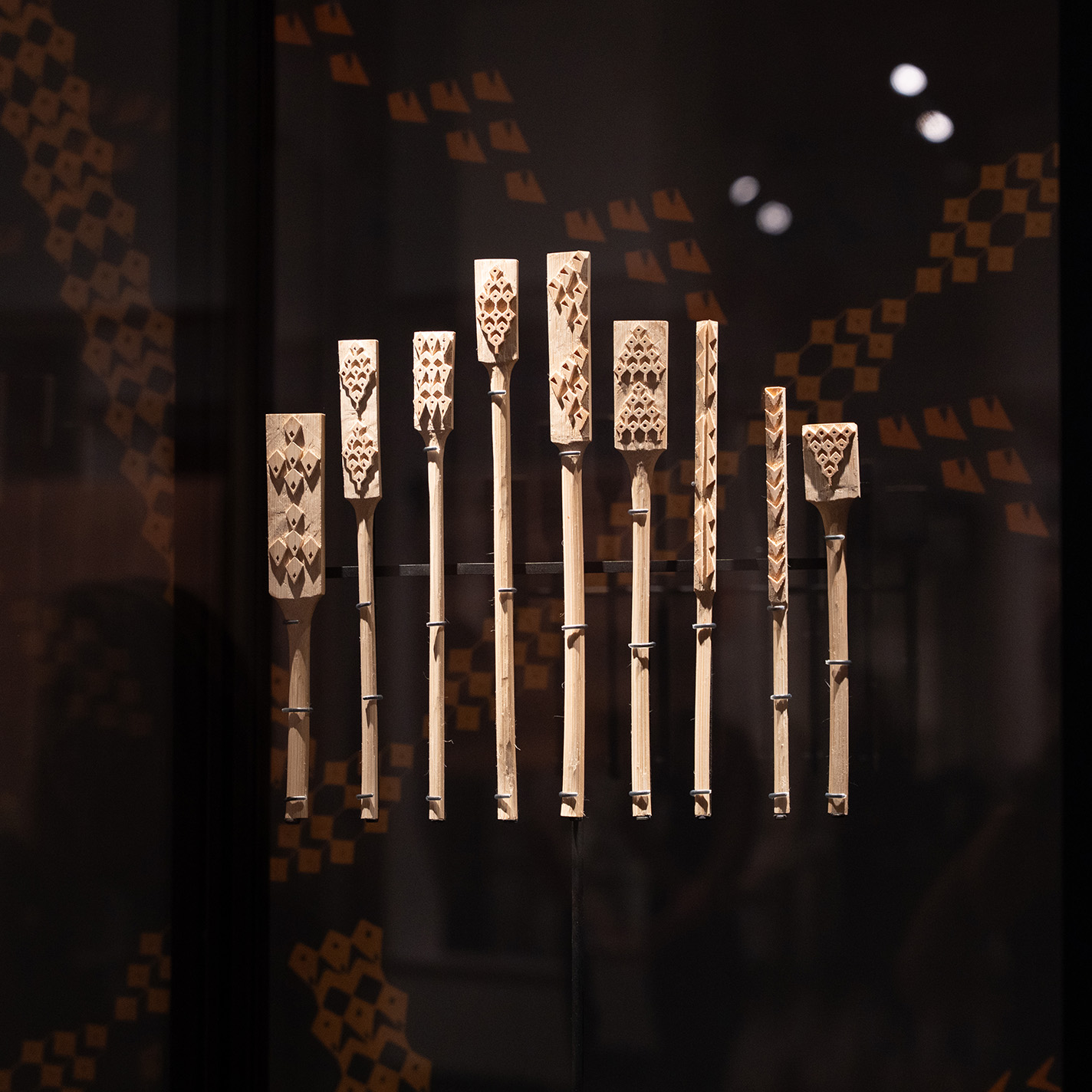
Photo courtesy of the Bishop Museum

‘Ohe kāpala (bamboo stamps) are small tools made from sections of bamboo carved with geometric designs and used to print patterns onto kapa (Hawaiian barkcloth).

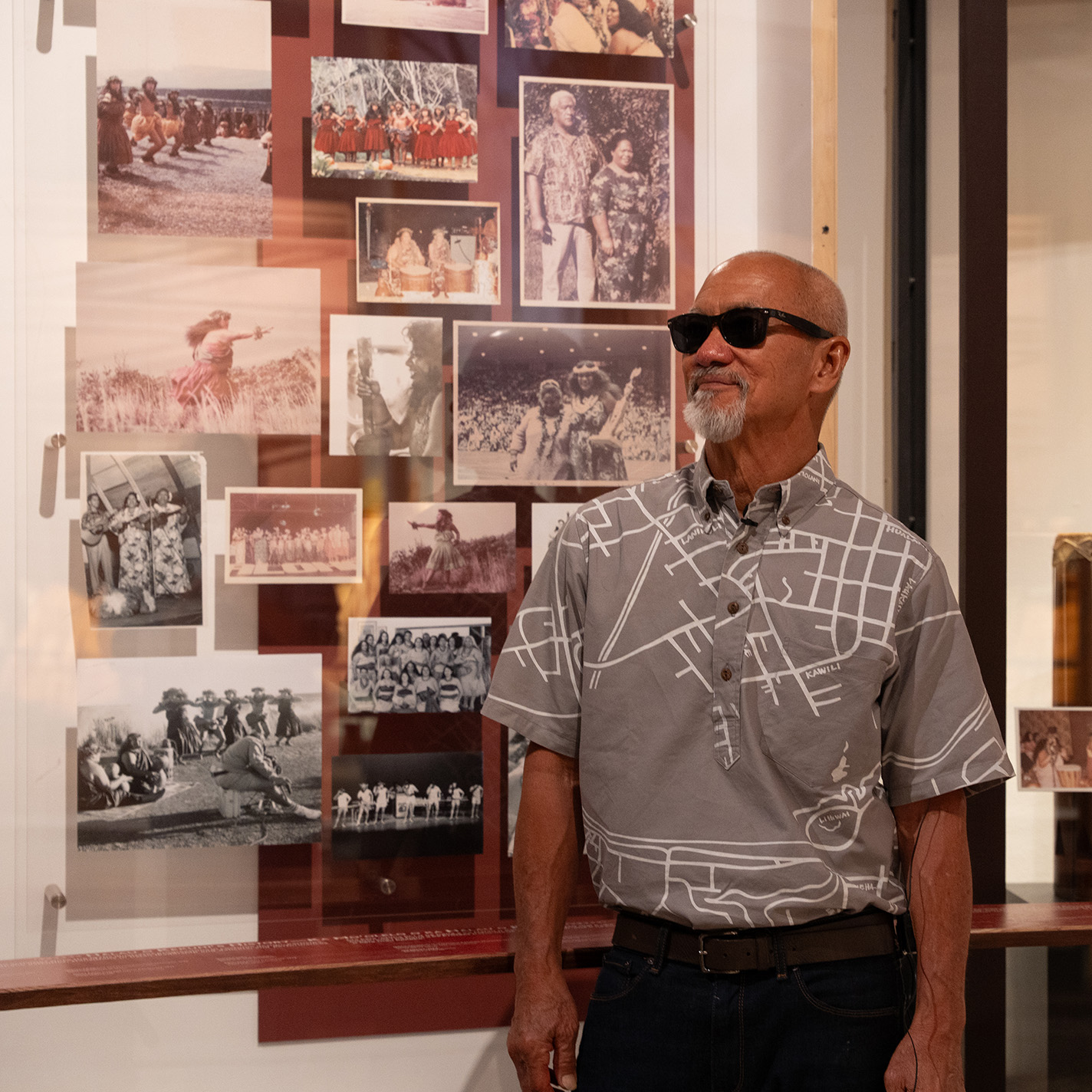
Family photographs and archival material sit alongside hand-carved bamboo stamps, botanical specimens, and Sig Zane’s intricate rubylith designs of native Hawaiian plants. Nineteenth-century kapa (bark cloth), kūpe‘e (sea snail) shell fetters, and other objects from Bishop Museum’s collections place the family’s work within a much longer history of making with these materials. 

Nine pā‘ū, or hula skirts, are among the exhibition’s most prominent works, designed by Kanaka‘ole and made by her students in the hula company Hālau o Kekuhi. In the late 1990s, she designed a skirt overlay using narrow strips of lau hala (pandanus leaves) to extend the dancer’s hand movements so they could be seen from farther away. The design has since become a familiar style of hula regalia and recently appeared on the packaging for chocolate company Hawaiian Host, worn by model Kanoelehua Robinson. A version of this skirt, Pā‘ū Milo with Hala, is on view in the exhibition; it was crafted by Hawaiian language scholar Myoung-Ja Hwa and designer ʻIliahi Anthony under Kanaka‘ole’s creative direction. “The continual use of Aunty’s designs is a testament to her ingenuity,” says Sarah Kuaiwa, Curator for Hawai‘i and Pacific Cultural Resources at the Bishop Museum. 

Ea Mai ʻEiwa: Patterns of Practice reflects Aunty Nālani’s philosophy of practice,” says Kauʻi Kanakaʻole, the exhibition’s co-curator. “She intentionally taught hula with depth of language, craft, and art form to encompass a full-on lifestyle commitment. This was her everyday; the way she learned, grew, and inspired.”

Photo courtesy of the Bishop Museum

Sig Zane with family photos.

Jacqueline Huynh Young is a Vietnamese American artist and writer based in Los Angeles.

Learn more about the exhibition online.

Website

This article was made possible with support from the Windgate Foundation.

Before you go!

We believe that making creates a meaningful world, and we hope you do, too. Deeply researched and impactful journalism on the craft community is in short supply. At the same time, being featured in craft-centered media and articles can have a major effect on a maker’s or artist’s livelihood, particularly those who are just starting in their career. You can help support our mission and the work of makers around the country by becoming a member or by making a gift today.

Thank you!
American Craft Council