Craft Around the Country

A New Exhibition Centers Women's Contributions to the Studio Glass Movement

Tough Stuff: Women in the American Glass Studio, now on view at the Corning Museum of Glass in Upstate New York, dredges up lost histories of women glass artists in the 1960s and ’70s.

By Kate Schuler
August 5, 2026

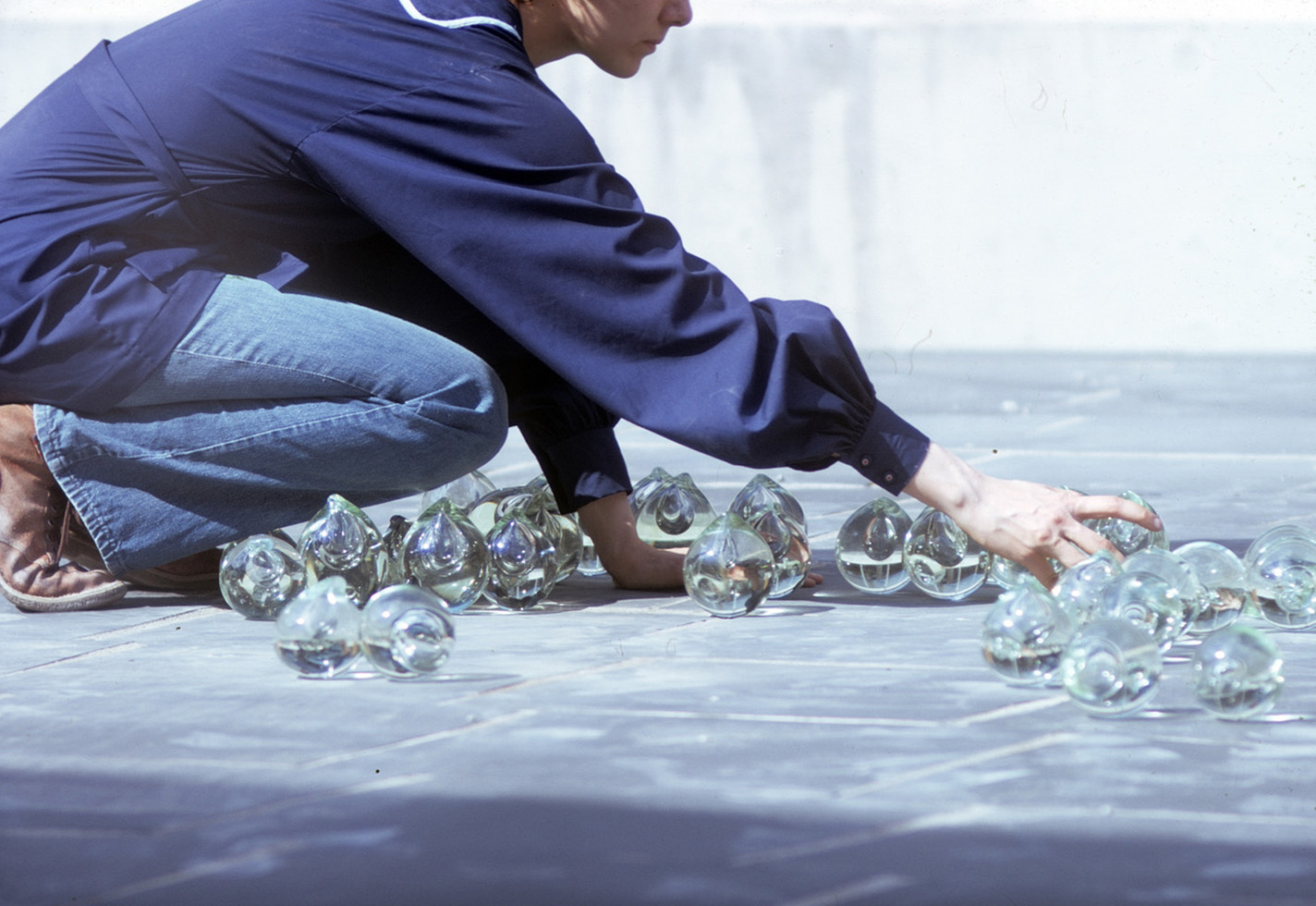
Photo courtesy of Kathleen Mulcahy

Kathleen Mulcahy installing Drops on a Landscape at Alfred University, Alfred, New York, 1973.

Tami Landis, curator of postwar and contemporary glass at the Corning Museum of Glass, spent two years exploring attics and personal archives around the country to find the 200 objects in Tough Stuff: Women in the American Glass Studio, on view now through January 10 at the Upstate New York museum.

The result is an exhibition that recovers the untold history of women working in glass during the 1960s and ’70s, highlighting the influence of groundbreaking artists such as Kathleen Mulcahy, Ruth Tamura, Flo Perkins, Suellen Fowler, and Toots Zynsky in the studio glass movement’s early years. “Women approached the material with a lot more play and curiosity and inventiveness,” says Landis. “Not as many of them felt tied to a set tradition.”  

That tradition was largely defined by a male-dominated network of university programs that valued glassblowing technique and virtuosity in the hot shop—facilities that most women didn’t have access to after graduating from college. Shut out of the hot shop, women artists innovated with alternative processes like cold-working, fusing, and sculpting with industrial plate glass.
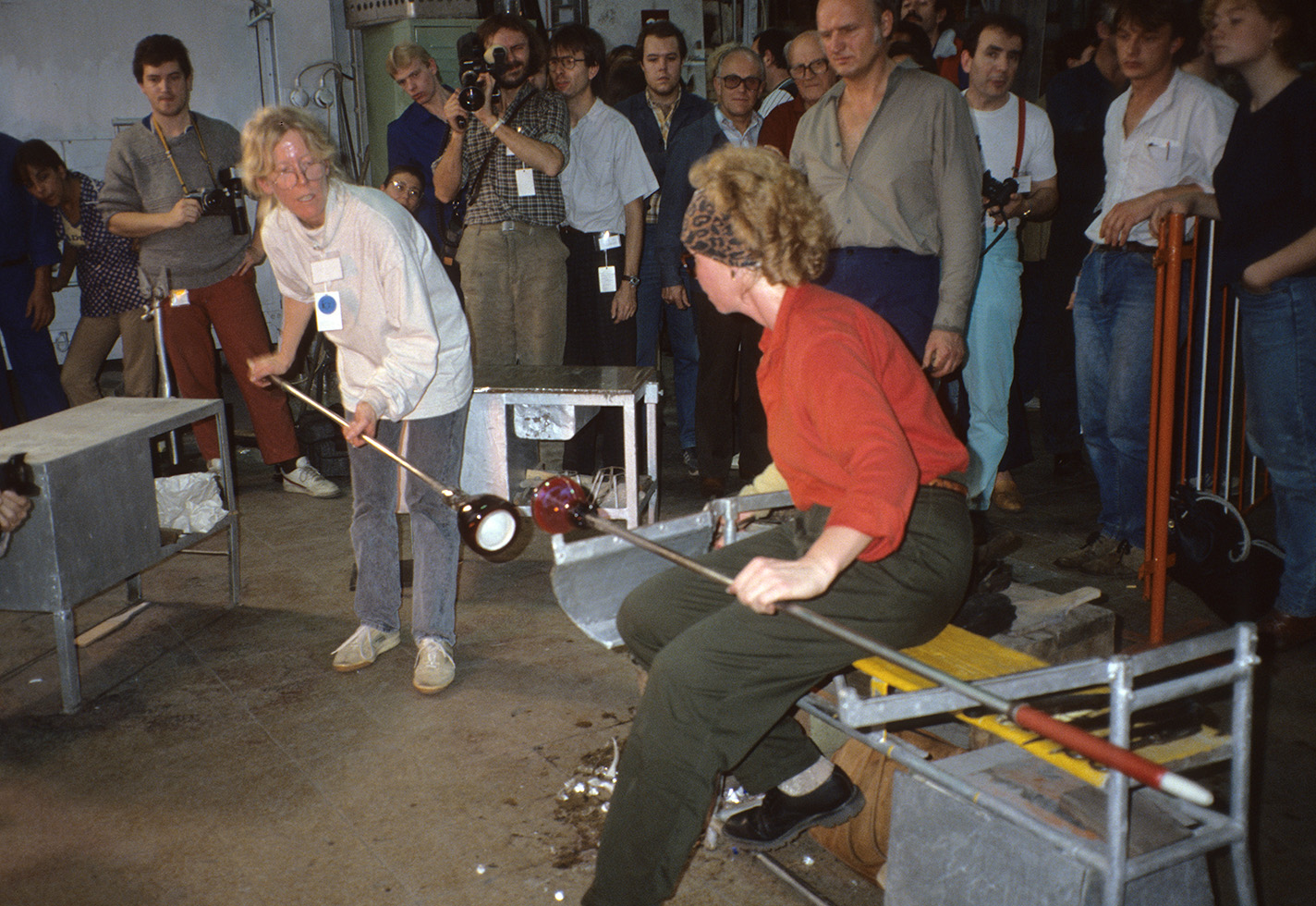
Photo courtesy of the Corning Museum of Glass

Sonja Blomdahl and Paula Barton demonstrating the incalmo technique at the International Glass Symposium, Czech Republic, 1988.

A display case of Fowler’s perfume bottles includes an early piece from 1971 that resembles stained glass. Fowler, known for formulating new colors in borosilicate glass, uses flameworking to layer clear and colored glass. The resulting depth is visible in her later intricately patterned bottles.

Tamura, who co-founded the Pilchuck Glass School in Washington, recognized the performance potential of glass early on. For her 1969 master’s thesis show, she installed a bed of sand and invited visitors to play with dozens of large blown-glass marbles. The Corning exhibition—which takes its title from Tamura’s description of glassmaking as “rather tough stuff”—displays the three remaining marbles. Visitors took the rest in 1969.

The catalog features the first essay examining Tamura’s contributions to the field, and she is one of several guest artists giving demonstrations at Corning later this year. 

The objects assembled for Tough Stuff, along with oral histories and new research, go a long way in deepening the story of the Studio Glass movement. “We are folding women into these narratives forever,” says Landis.

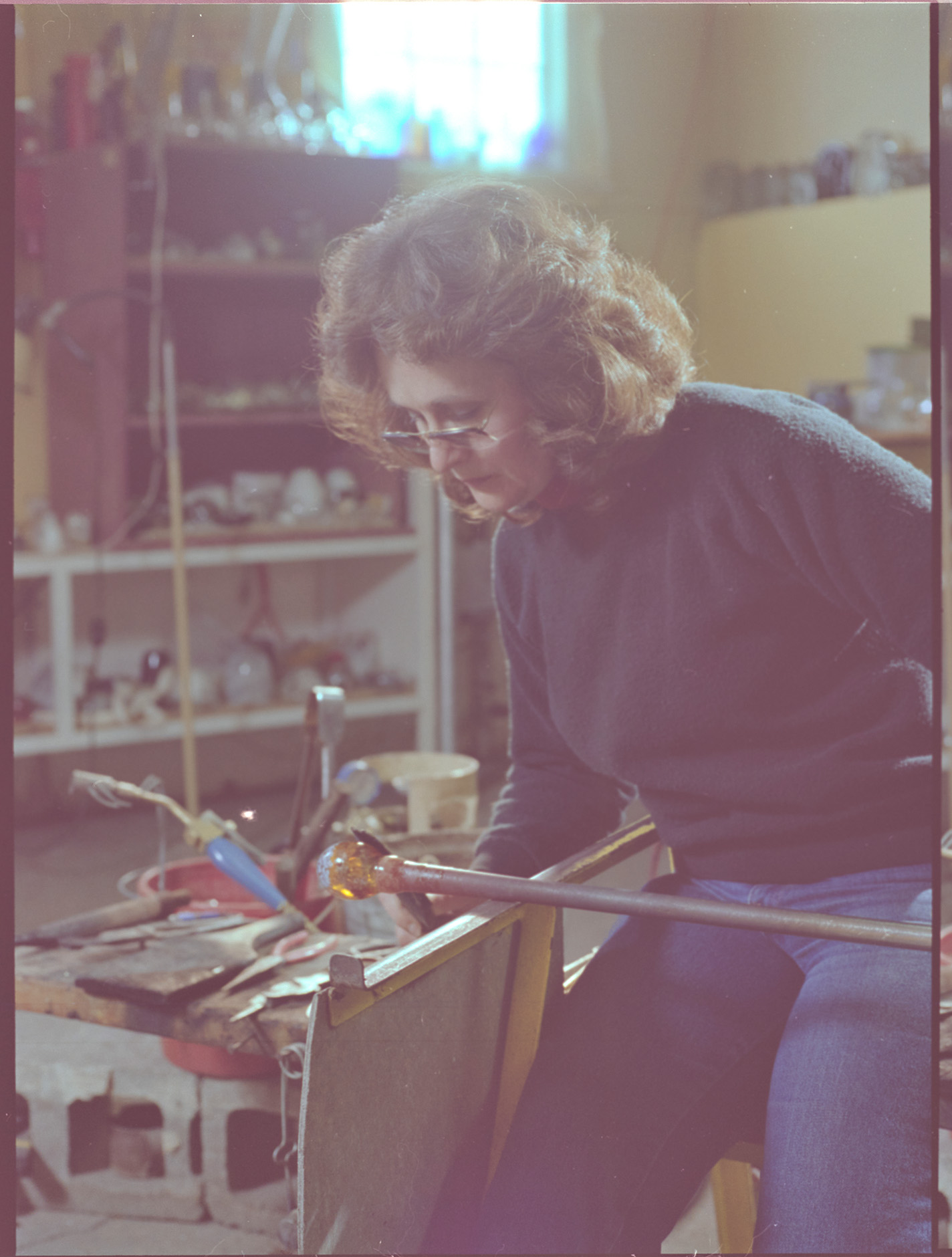
Photo courtesy of Audrey Handler

Audrey Handler working with glass.

Kate Schuler is a potter, writer, and editor based in Washington, DC.

Learn about Tough Stuff and related programming online.

Exhibition Website Guest Artists Website

This article was made possible with support from the Windgate Foundation.

Before you go!

We believe that making creates a meaningful world, and we hope you do, too. Deeply researched and impactful journalism on the craft community is in short supply. At the same time, being featured in craft-centered media and articles can have a major effect on a maker’s or artist’s livelihood, particularly those who are just starting in their career. You can help support our mission and the work of makers around the country by becoming a member or by making a gift today.

Thank you!
American Craft Council