Haitian American artist Abigail Lucien works mostly in iron and steel, but in talking about their art, they invoke flow and transformation rather than the solidity associated with those materials. Consider this third-person quote from their artist statement: “Lucien uses formal poetics to ponder concepts such as loss, love, and grief as fluid processions rather than states to reach or become.”
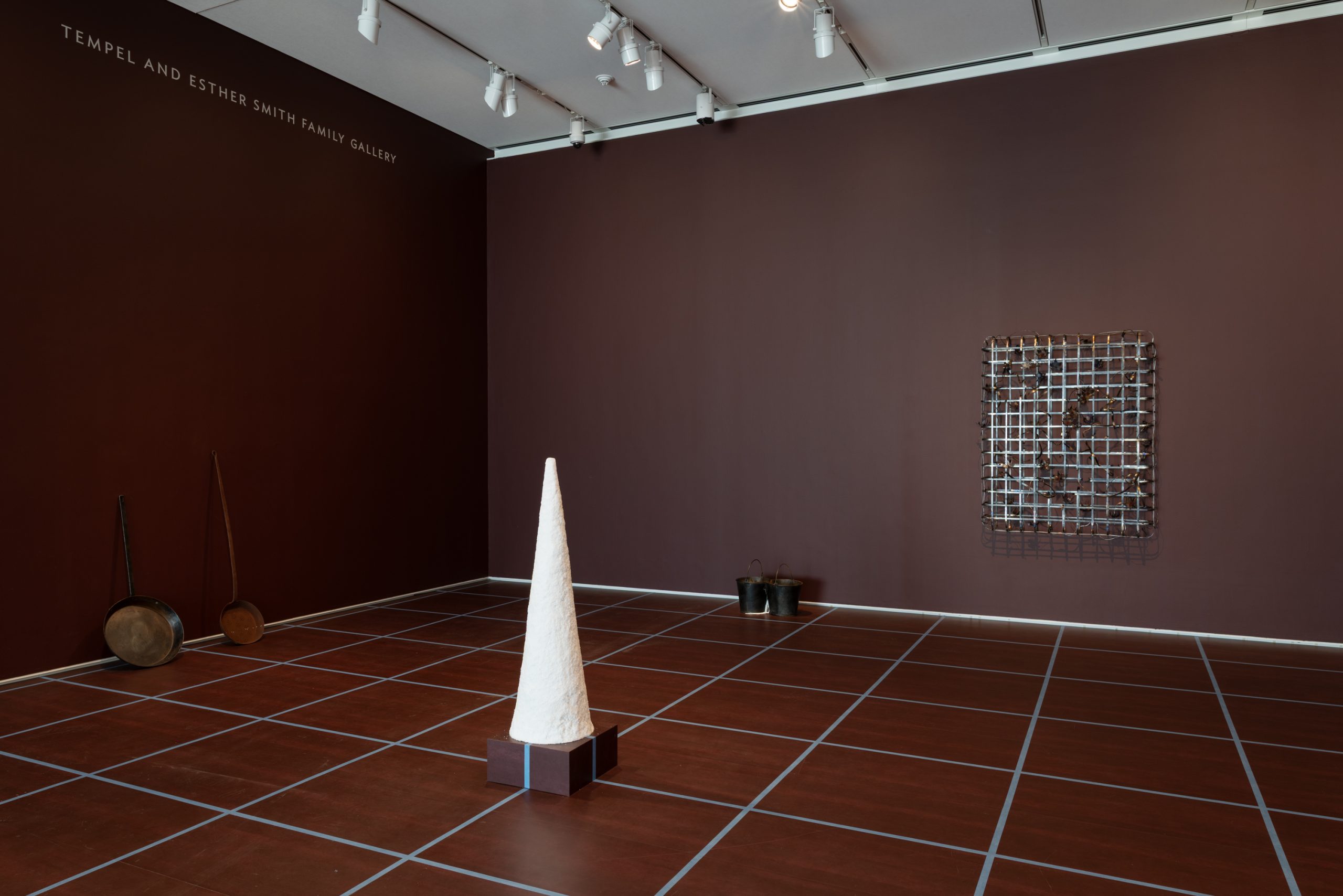
It’s an apt declaration for the pieces in Abigail Lucien: Blood of the Earth, which opened on June 18 at the Art Institute of Chicago and runs through next January. In To Unravel a Wrought (2026) and Spirit Lays Their Hand (2025), for example, lattice structures evoking the ornate gates and grilles adorning buildings in Lucien’s Caribbean homeland are entwined with delicate leaves (in Unravel) and, in Spirit, a spirited dog or wolf and a small rabbit cavort amid two stalks of ornate tropical vegetation—all in rich, dark, rusty-looking iron. Even the heavy, heart-shaped A Lover’s Sulk, which rests very solidly on the floor, is titled after a transitory mood.
Lucien’s fascination with the very process of forging metal, tied to their awareness of its sacred status in African traditions, is responsible for the inclusion in the the exhibition of a furnace, a bellows, an anvil, and other tools used in the forging, welding, and pouring of iron and steel. “These transformative processes, which Lucien used to create the objects on view, “ write the organizers of the show, “embody the adaptability and transitory nature of belonging”—whether that belonging refers to the Afro-Caribbean diaspora, a love relationship, or a holy tradition of heating, melting, and transformation.
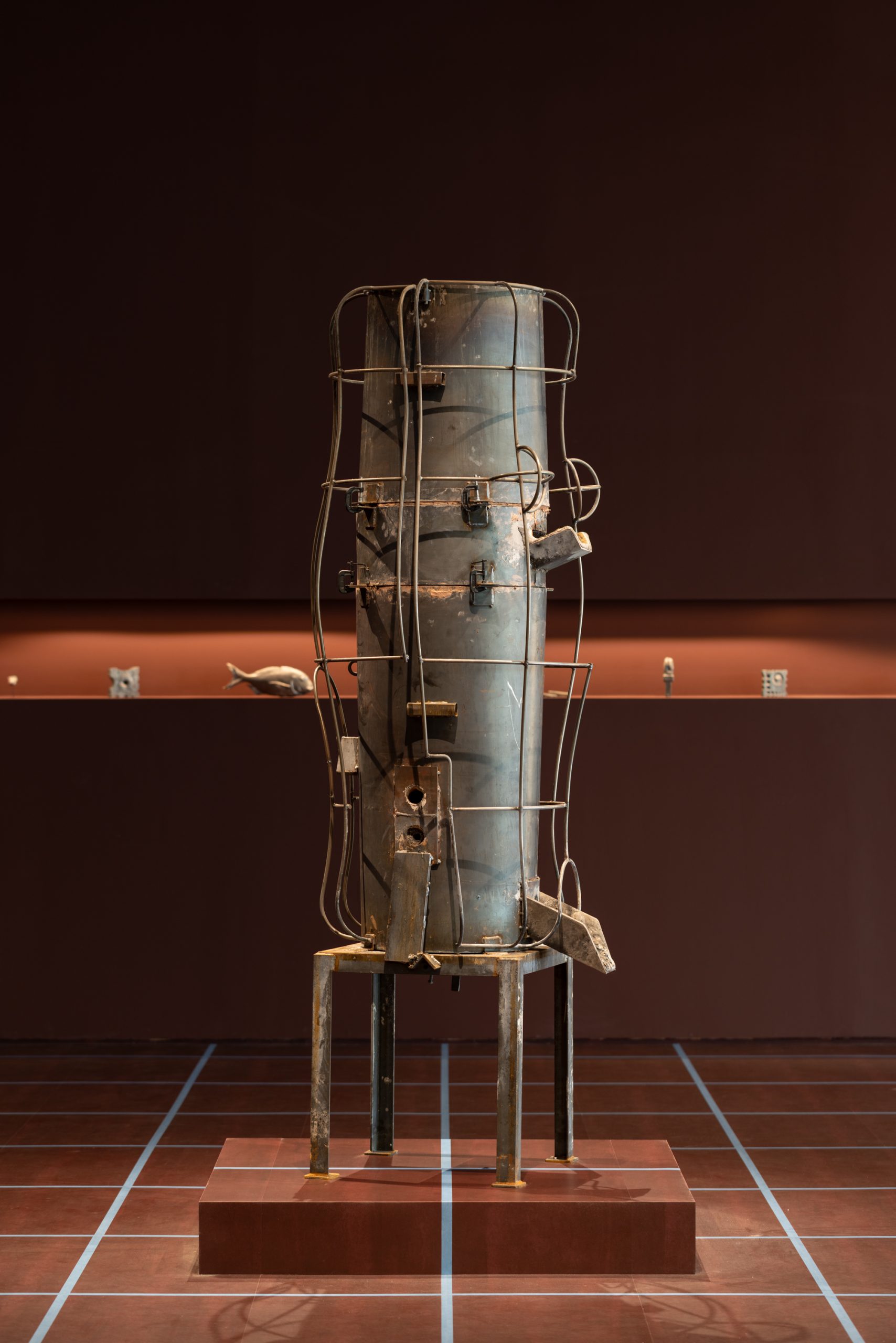
Installation view of Abigail Lucien: Blood of the Earth at the Art Institute of Chicago, 2026.