Craft Around the Country

Bernhard Schobinger’s Anarchic Jewelry Reaches the US

Going Underground, the Swiss art jewelry giant’s first American retrospective, opens this week in Houston.

By Jacqueline Huynh Young
August 31, 2026

Photo by Thomas R. DuBrock

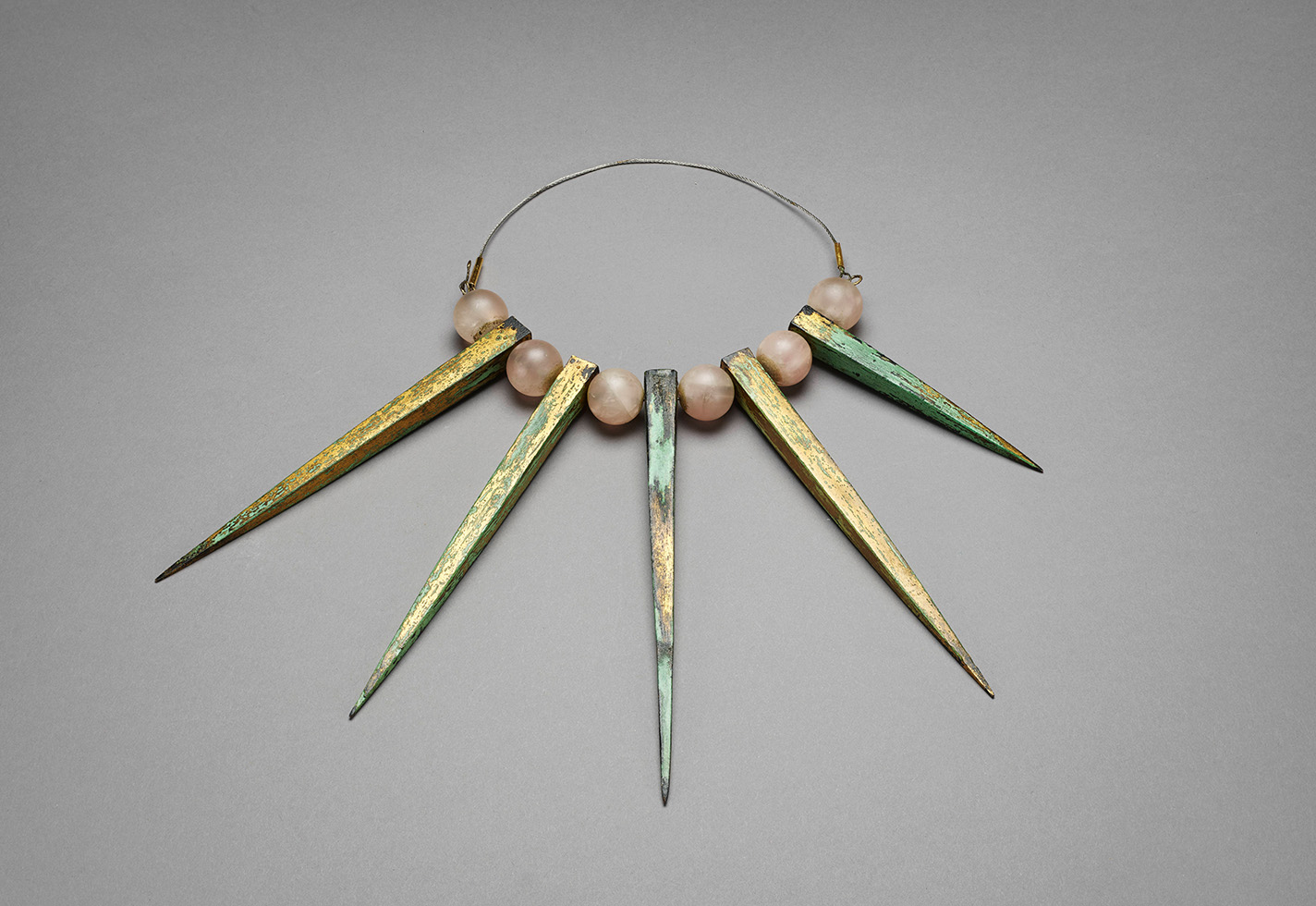
Bernhard Schobinger's Lightning Rod Necklace, 1990, lightning conductor, fire-gilded copper, rose quartz, stainless steel, and gold.

For his Shards From Moritzplatz Berlin Necklace (1983–84), Bernhard Schobinger strung together antique crystal beads, television bulbs, and broken shards of a German Coca-Cola bottle. The items were all scavenged from Moritzplatz, at the time a gathering place for punks and Neue Wilden artists in the shadow of the Berlin Wall. The unlikely combination captures the Swiss jeweler’s anti-aesthetic approach, with precious stones threaded alongside the political and consumer detritus of the time. 

A towering figure in contemporary jewelry, Schobinger has spent the past five decades treating the form as a subversive medium, working with everything from barbed wire and fishing lures to asphalt and broken toys. Going Underground: The Jewels of Bernhard Schobinger, on view through January 3, 2027, at the Museum of Fine Arts, Houston, is the first US exhibition devoted to his work, which curators Cindi Strauss and Elizabeth Essner describe as, “complex assemblages in which found and precious materials coexist, challenging traditional hierarchies of value.”
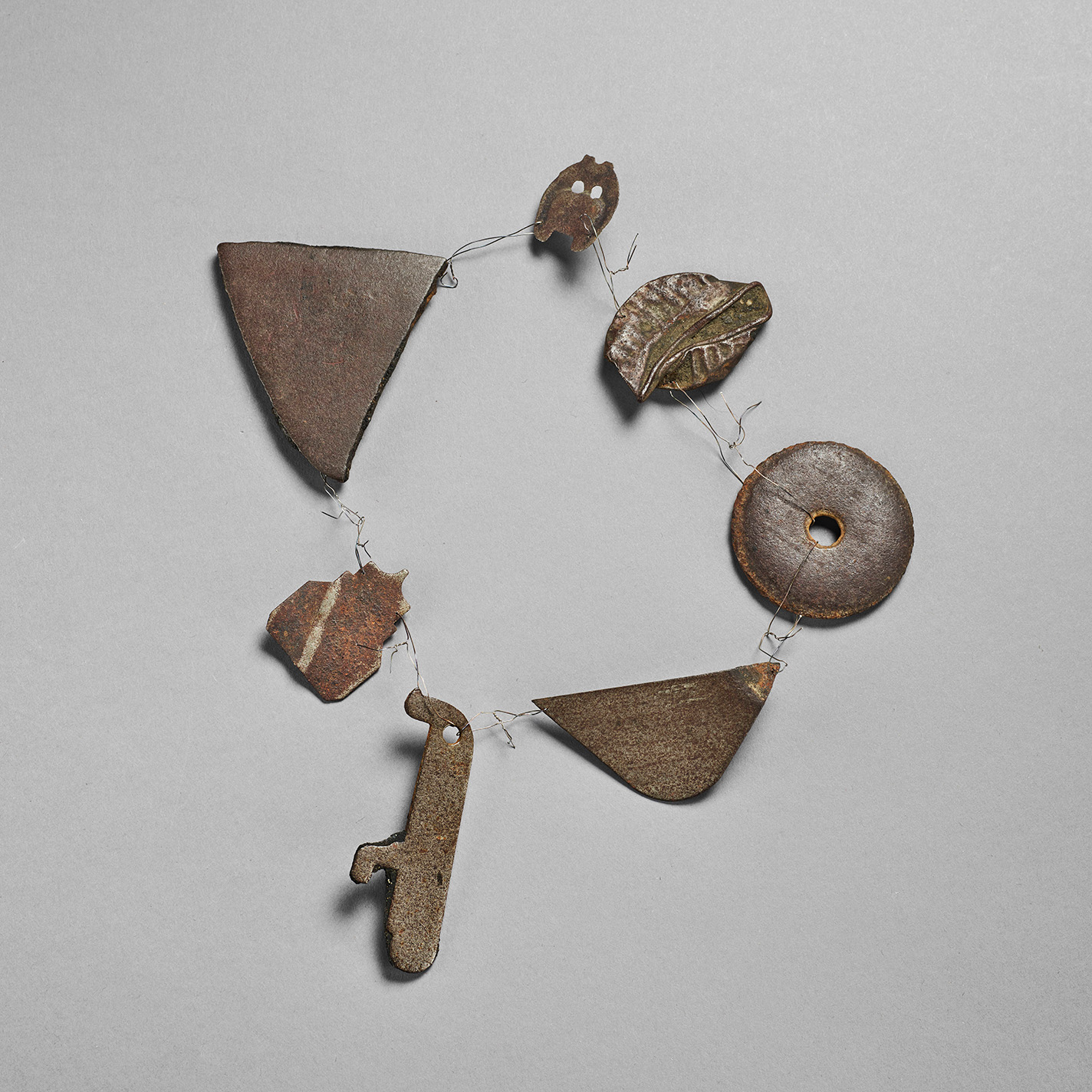
Photo by Thomas R. DuBrock

NYC 1980, 1980, metal, asphalt, and wire.

Schobinger trained as a goldsmith at the Zürich School of Applied Arts in the 1960s, but his practice soon absorbed influences beyond traditional jewelry, among them Bauhaus, Dada, concrete art, Situationist art, punk, and Japanese culture. His choice of materials became equally expansive: he pulled asphalt and metal from a deteriorating New York street and retrieved fishing lures from Lake Zurich.

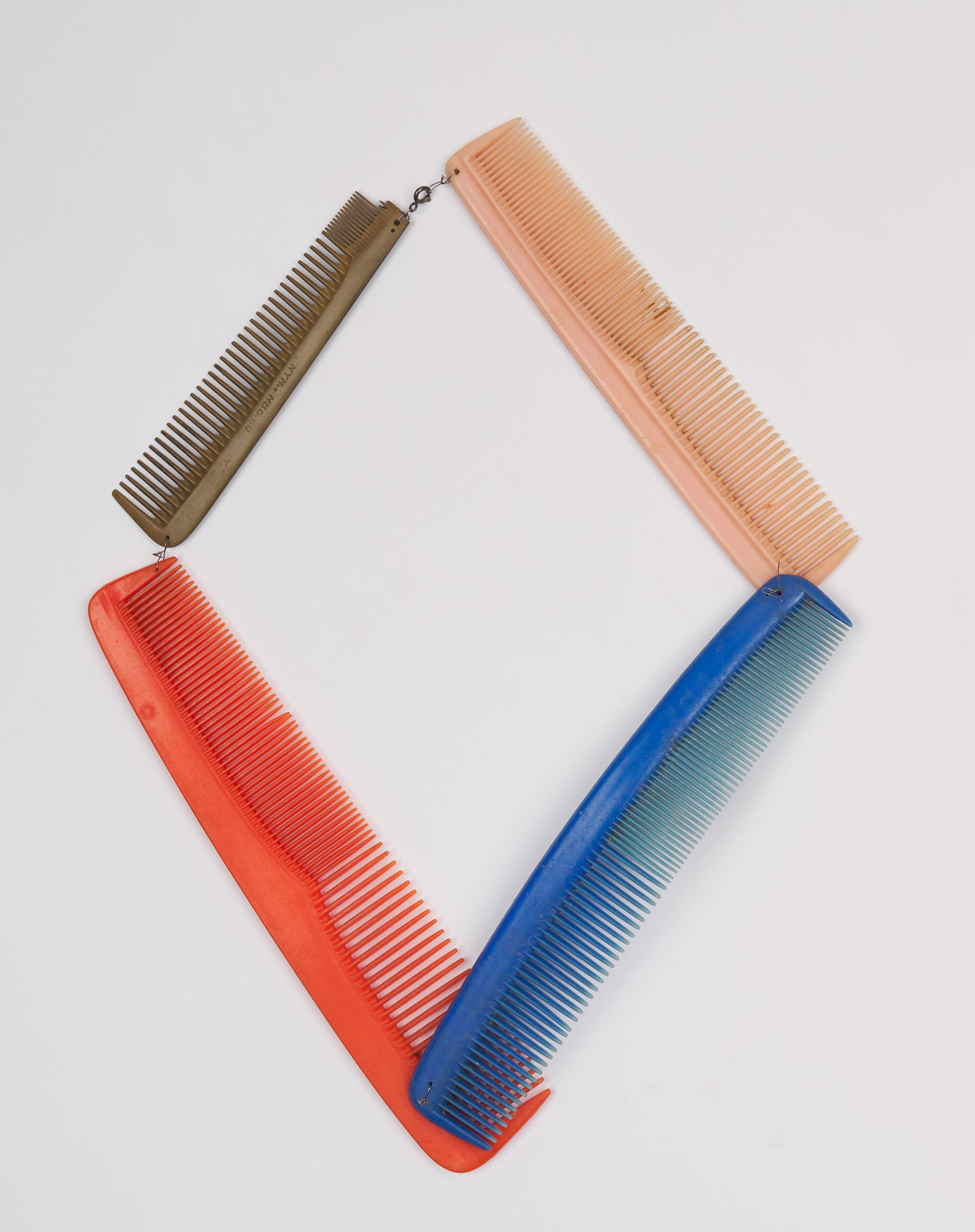
Sometimes the appeal lies in an object’s perceived worthlessness. In 1983’s Only Combed Clean Are We Truly Free, cheap plastic combs circle the neck, one turned inward with its teeth suggesting aggression. 

In their catalogue essay, Strauss and Essner locate a kind of aesthetic anarchy in Schobinger’s work, writing that “an important through line in his history is a resistance to authority.” 

The curators recall a time when a student in Tokyo asked Schobinger if he was an anarchist. “Not in the political sense, but in the aesthetic sense,” he replied.

Photo © Guillaume Python, courtesy of the artist and Martina Simeti, Milan

Only Combed Clean Are We Truly Free, 1983, plastic combs and cobalt wire.

Jacqueline Huynh Young is a Vietnamese American artist and writer based in Los Angeles. 

Learn more about Schobinger and the exhibition online.

Artist Website Exhibition Website

This article was made possible with support from the Windgate Foundation.

Before you go!

We believe that making creates a meaningful world, and we hope you do, too. Deeply researched and impactful journalism on the craft community is in short supply. At the same time, being featured in craft-centered media and articles can have a major effect on a maker’s or artist’s livelihood, particularly those who are just starting in their career. You can help support our mission and the work of makers around the country by becoming a member or by making a gift today.

Thank you!
American Craft Council