Craft Around the Country

Erin Jane Nelson’s Hybrid Ceramics Confront Impending Climate Collapse

An early-career survey of the Santa Fe–based artist and photographer’s work runs at the University of Alabama at Birmingham through September 26.

By Robert Alan Grand
September 4, 2026

Photo courtesy of the artist

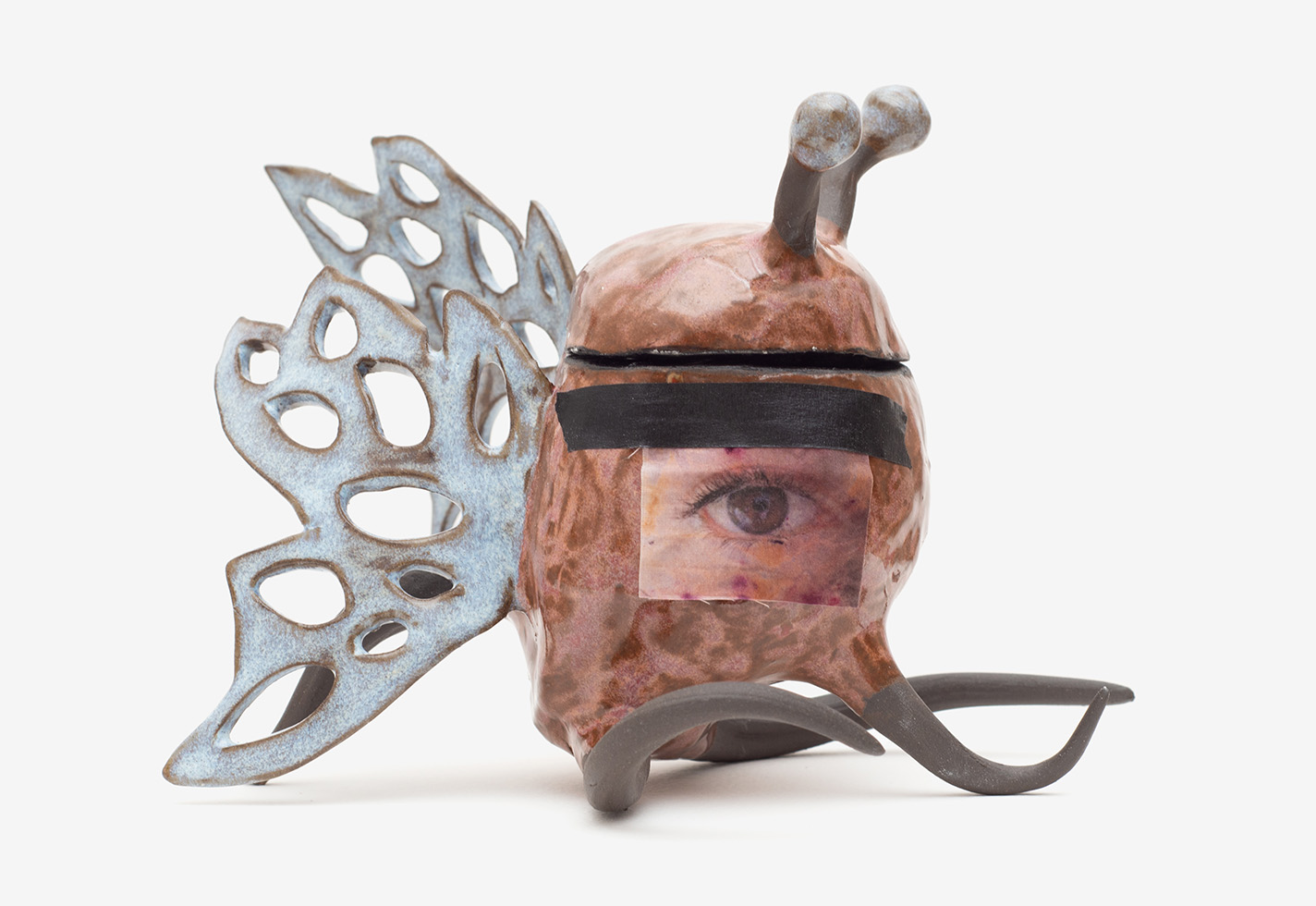
Erin Jane Nelson's 2024 sculpture Bug Cam, pigment print and tape on glazed stoneware, 6 x 6 x 9 in.

Erin Jane Nelson’s handcrafted ceramic pinhole cameras, about the size of a cookie jar, resemble scampering animals or fluttering insects. When she takes photos, she positions them low to the ground, yielding daydream-like images that provide an intimate view of the ecosystems around her—more from a critter’s perspective than a bird’s-eye view.

Living and Working, a new early-career survey of Nelson’s work—which spans two galleries at the University of Alabama at Birmingham’s Abroms-Engel Institute for the Visual Arts and runs through September 26—begins and ends with a display of her pinhole cameras: simple, lensless devices that record an image by channeling light through an almost microscopic hole onto film or light-sensitive material. 

Spotlighting Nelson’s most recent works creates a feedback loop of her conceptual and artistic foundations, one in which photography has been central throughout her experiments with other material techniques. Throughout her career, she has used photographic images as another craft or material to work with in patchwork-like concoctions in fiber, ceramics, and more. Evident in the 20-plus works on view in Living and Working is Nelson’s ongoing interest in the materiality of photography and how it offers tangible connections to the world around us.
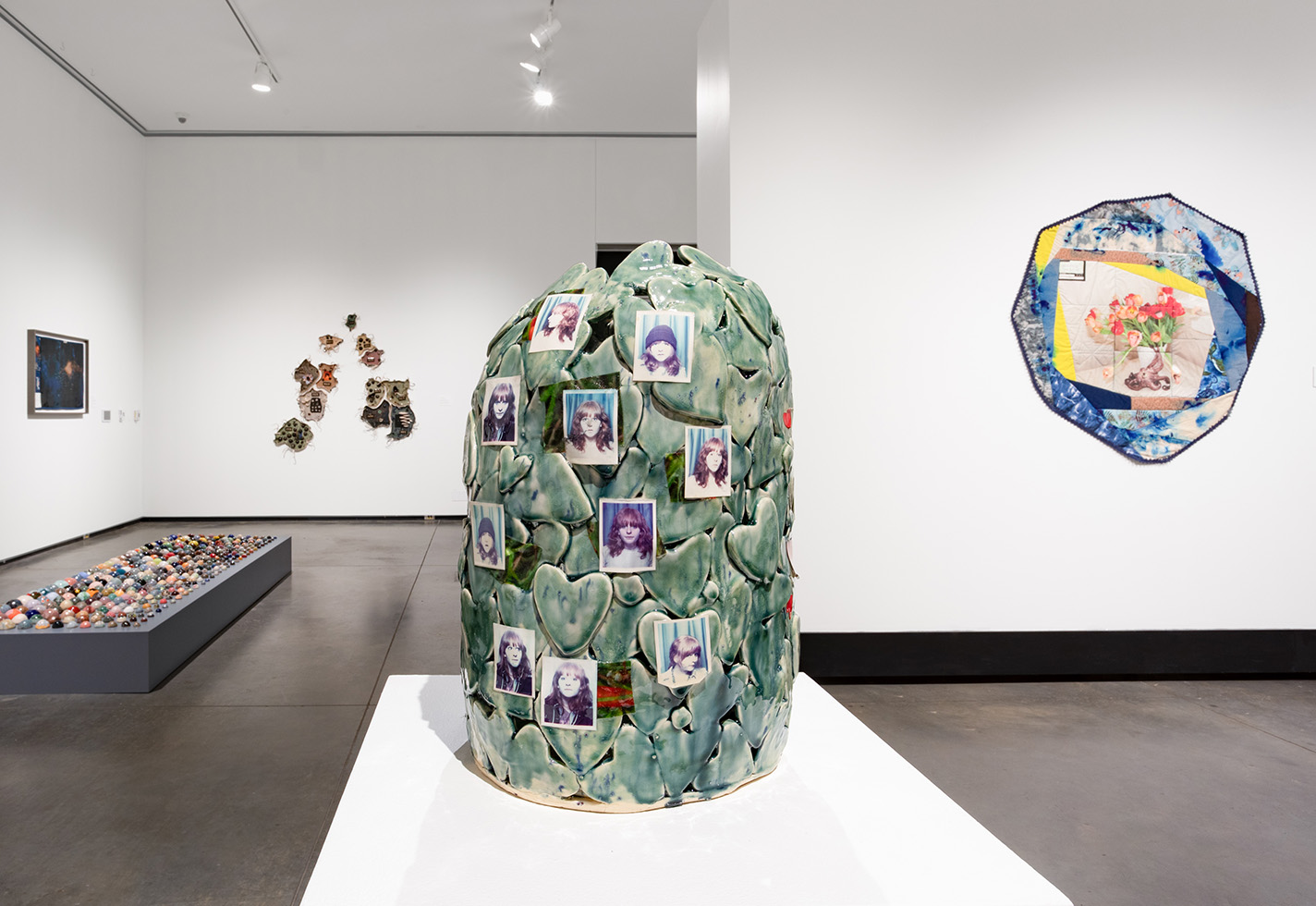
Photo by Beau Gustafson for Abroms-Engel Institute for the Visual Arts/University of Alabama at Birmingham

Installation view of Living and Working at the Abroms-Engel Institute for the Visual Arts at the University of Alabama at Birmingham.

Another connecting thread throughout Nelson’s work is her penchant for creating Kafkaesque pieces that look to species that predate human existence for guidance and wisdom in light of contemporary climate catastrophes. In her work over the past decade, Nelson contemplates, as she says, “how we find our place in the long arc of history and what that means when futurity is put into question.” 

Heavy concepts, but her works confront this existential dread with a surreal, comical approach, making Living and Working a joy to parse through—each corner turned revealing a more fantastical way the 37-year-old artist combines vernacular craft techniques with contemporary art influences, personal and historical archives, and ecofeminist ideas to create memorable works that defy easy categorization.

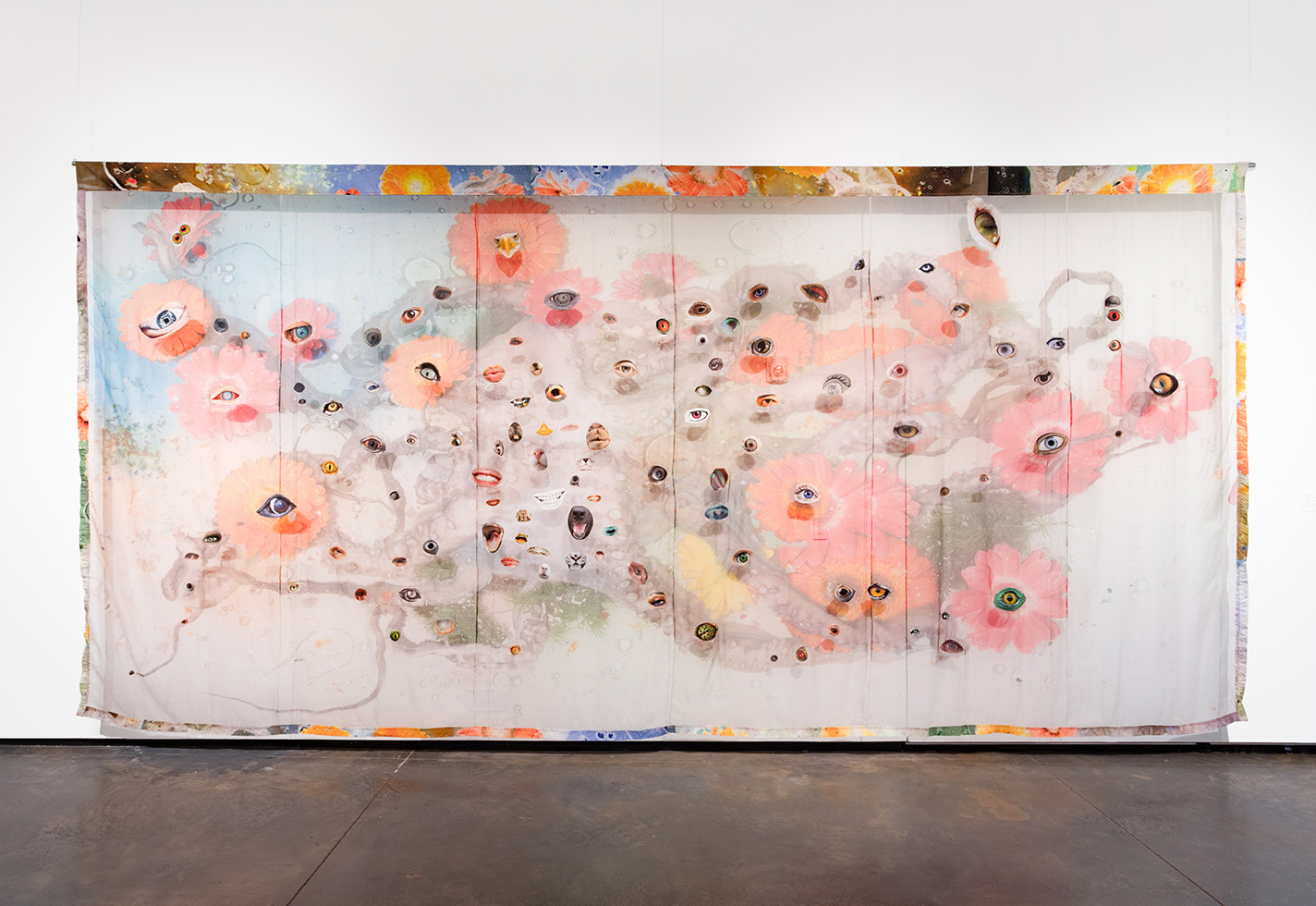
The mural-sized fabric work Raccoona Charon (2017), from her Psychopompopolis series, features an image of an octopus stretched across the length of the sheer organza, overlaid with more than 100 cutouts of drawings and photos of eyes, mouths, and noses, along with a handful of zinnia flowers. The whole arrangement looks like a school project or rudimentary Photoshop collage. It illustrates a concept from a science fiction story Nelson wrote, in which advanced cephalopods help humans adapt to rising sea levels by merging together into a new kind of species, one specifically evolved to survive a water-filled future.

Photo courtesy of the artist

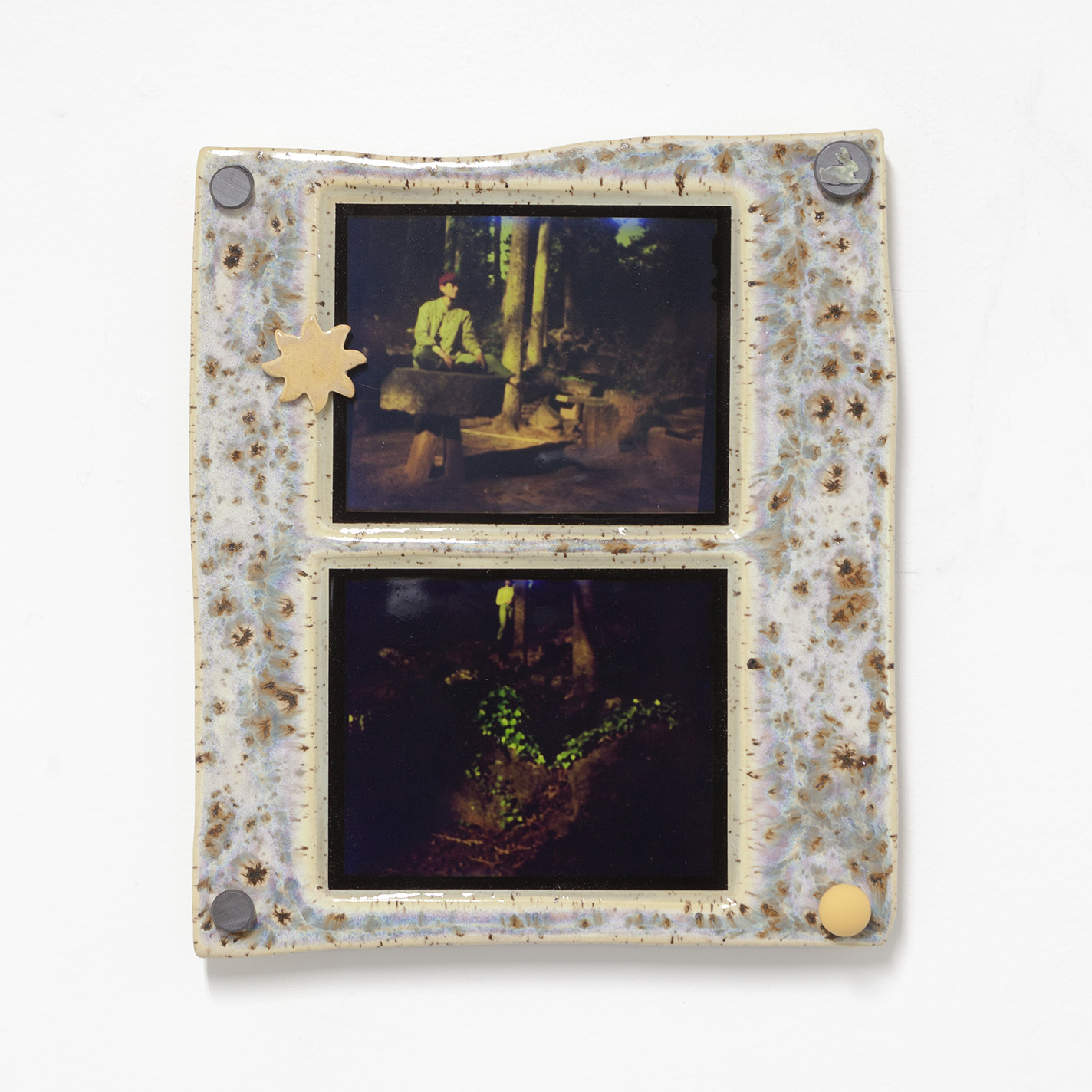
Carley Glen Emerald Rock Garden, 2024, pigment print and resin on glazed stoneware, 11 x 10 x 1 in.

Photo by Beau Gustafson for Abroms-Engel Institute for the Visual Arts/University of Alabama at Birmingham

Raccoona Charon, 2017, pigment print on jacquard, organza, and cotton, 115 x 240 in.

Nelson, raised in the American South and based in Atlanta for many years before relocating to Santa Fe in 2024, also draws on Southeastern regional craft traditions and environmental issues throughout her works. 

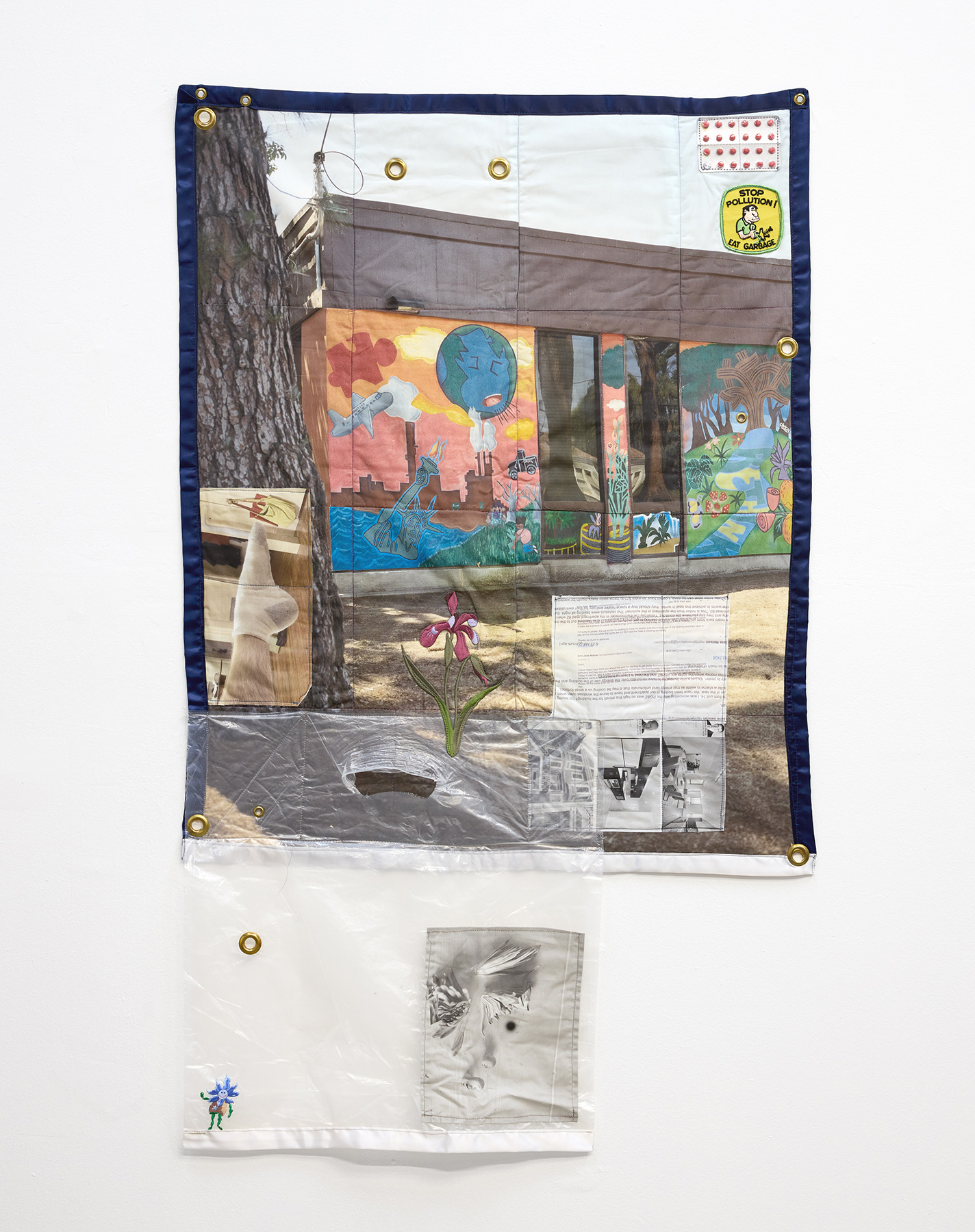
Early photo-based quilts made from inkjet fabric sheets she discreetly ran through her work printer, including 2015’s Stop Pollution Eat Garbage and Kearny to Post Flâneuse, show how a crafty resourcefulness quickly became central to her practice. 

Her Barrier Island series from 2017–2018 features platter-shaped, slab-built ceramic forms around two feet wide by three feet tall, with edges that mimic the shapes of highway signs, tourist trinkets, and low-lying islands, highlighting rapidly disappearing landscapes and their impact on the communities that inhabit them.

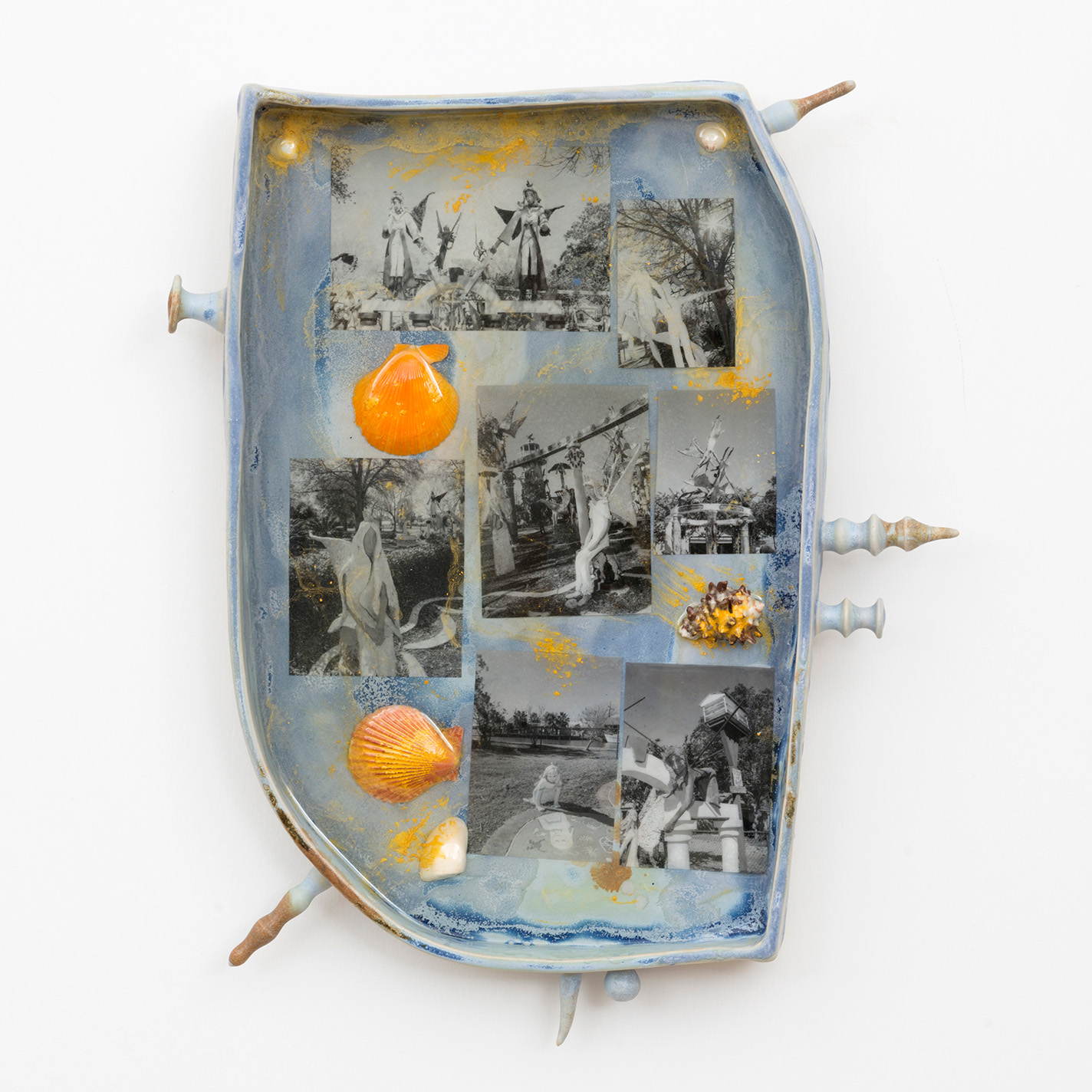
Chauvin Garden, from 2018, is one of the most evocative works in the Barrier Island series, demonstrating Nelson’s wide array of influences. The base of the platter is decorated with a gray-blue glaze swirling like running water, a smattering of seashells dyed in safety orange, and seven black-and-white snapshots. Taken at an installation crafted in the late ’80s and ’90s by stonemason, bricklayer, and self-taught artist Kenny Hill in Chauvin, a small coastal town in Louisiana, the photos feature lanky angel statues positioned around an eccentric garden. By embedding images from this roughly constructed artist-built environment, Nelson muses on what cultural history, in addition to physical history, may be lost in an impending climate collapse.

Photo courtesy of the artist

Stop Pollution Eat Garbage, 2015, pigment print on cotton, plastic, embroidered patch, grommets, Sudafed, cotton batting, and silk ribbon, 50 x 29 in.

Nelson picks up this same thread in later pieces revolving around the Okefenokee Swamp in southeastern Georgia, creating interlocking versions of these Island-like sculptures to remark on gestation, reproduction, and the passage of time. A Gut A Lake A Cell A Sky (2021), with its 12 dark-blue slabs covered with spores and shelf fungi, looks like magnified protozoa sitting uncomfortably still. 

Revisiting her practice through Living and Working, it’s easy to see how Nelson, who received a 2023 Guggenheim Fellowship in the Creative Arts and is currently included in the 2026 Whitney Biennial, hovers between the art and craft worlds and draws inspiration from both. 

Nelson especially appreciates craft’s “make-do” philosophy, seeing it as a driving force in her own practice. “A spirit of invention feels central to the history of craft,” she says. “For me, the artistic process has failure in every part of the equation. I would prefer to include that in the work rather than edit it out—I think that makes it more human and interesting.”

Photo courtesy of the artist

Chauvin Garden, 2018, pigment prints, shells, powdered pigment, and resin on glazed stoneware, 19 x 16 x 2 in.

Robert Alan Grand is a writer and photographer based in Asheville, North Carolina. He received the 2025 Andy Warhol Foundation Arts Writers Grant to cover contemporary art in southern and central Appalachia.

Learn more about Erin Jane Nelson and Living and Working online.

Exhibition Website Artist Website

This article was made possible with support from the Windgate Foundation.

Before you go!

We believe that making creates a meaningful world, and we hope you do, too. Deeply researched and impactful journalism on the craft community is in short supply. At the same time, being featured in craft-centered media and articles can have a major effect on a maker’s or artist’s livelihood, particularly those who are just starting in their career. You can help support our mission and the work of makers around the country by becoming a member or by making a gift today.

Thank you!
American Craft Council