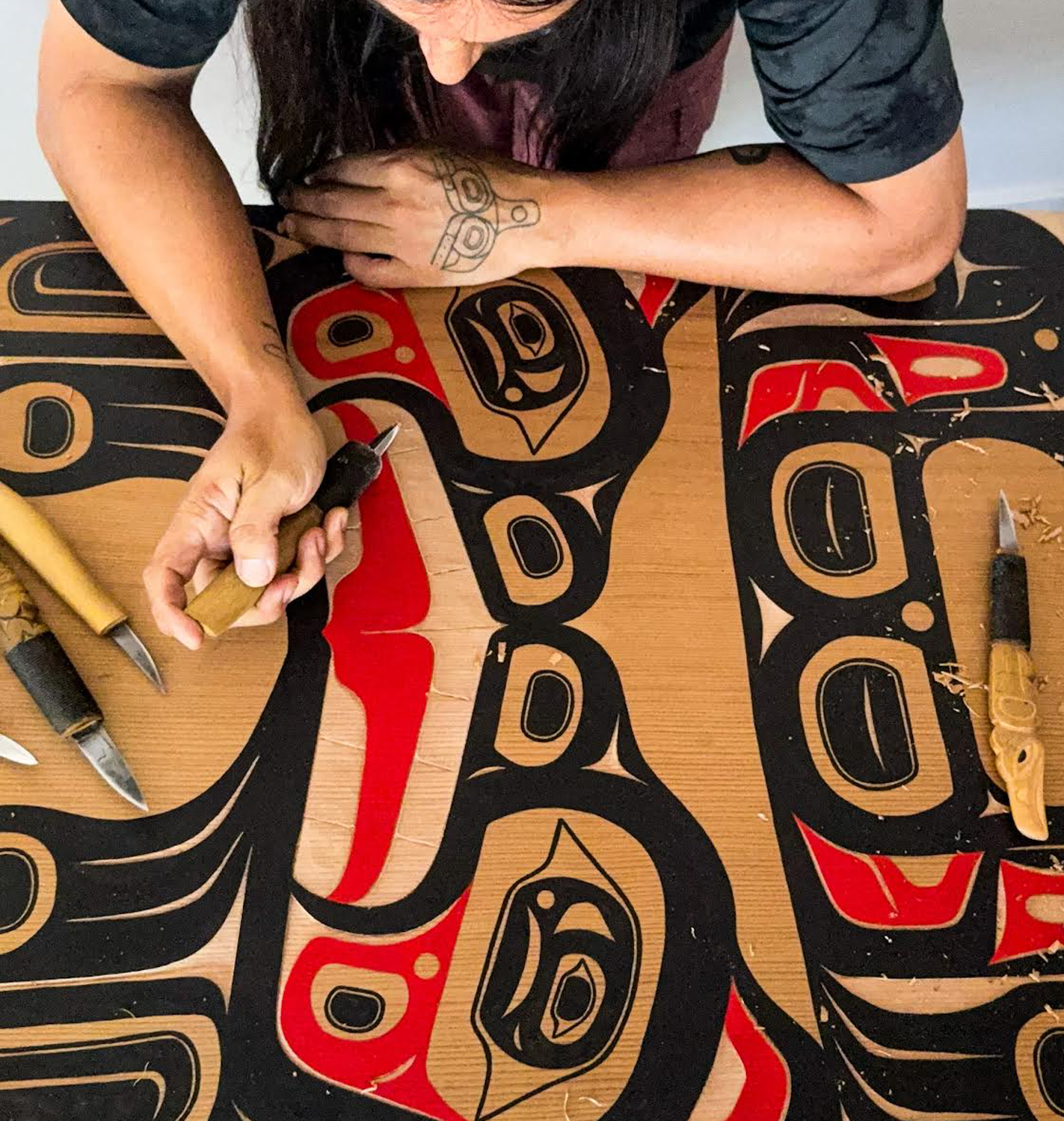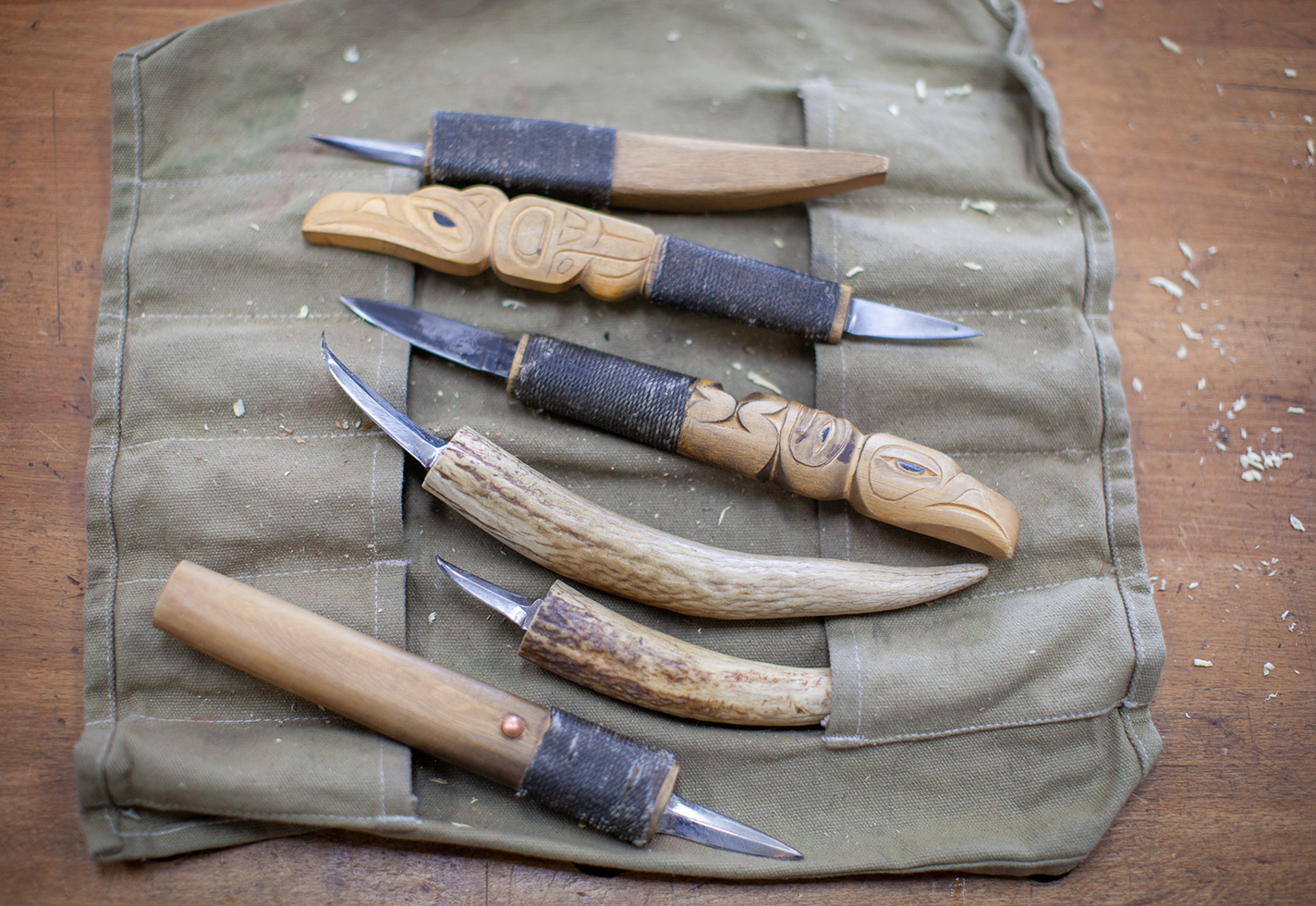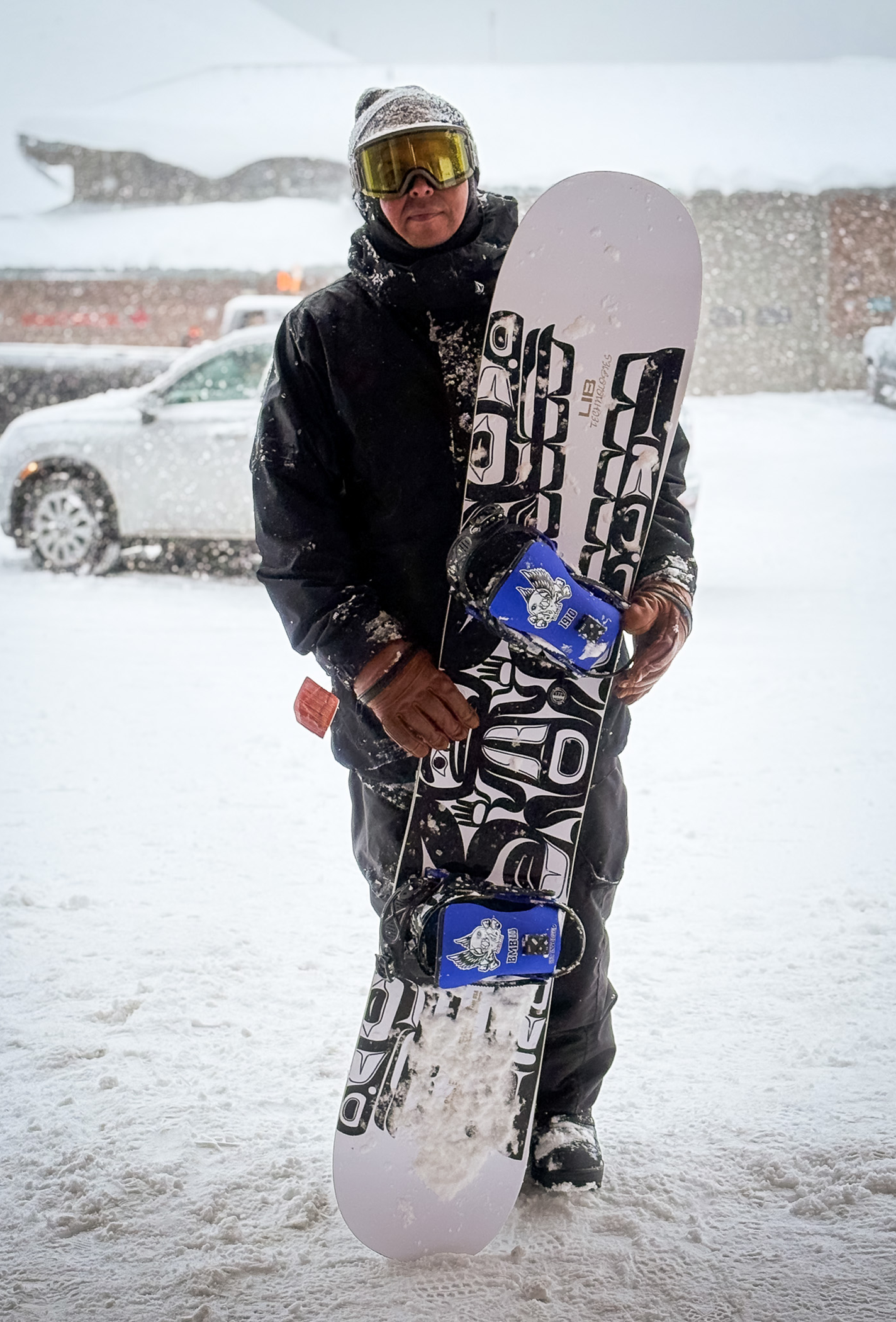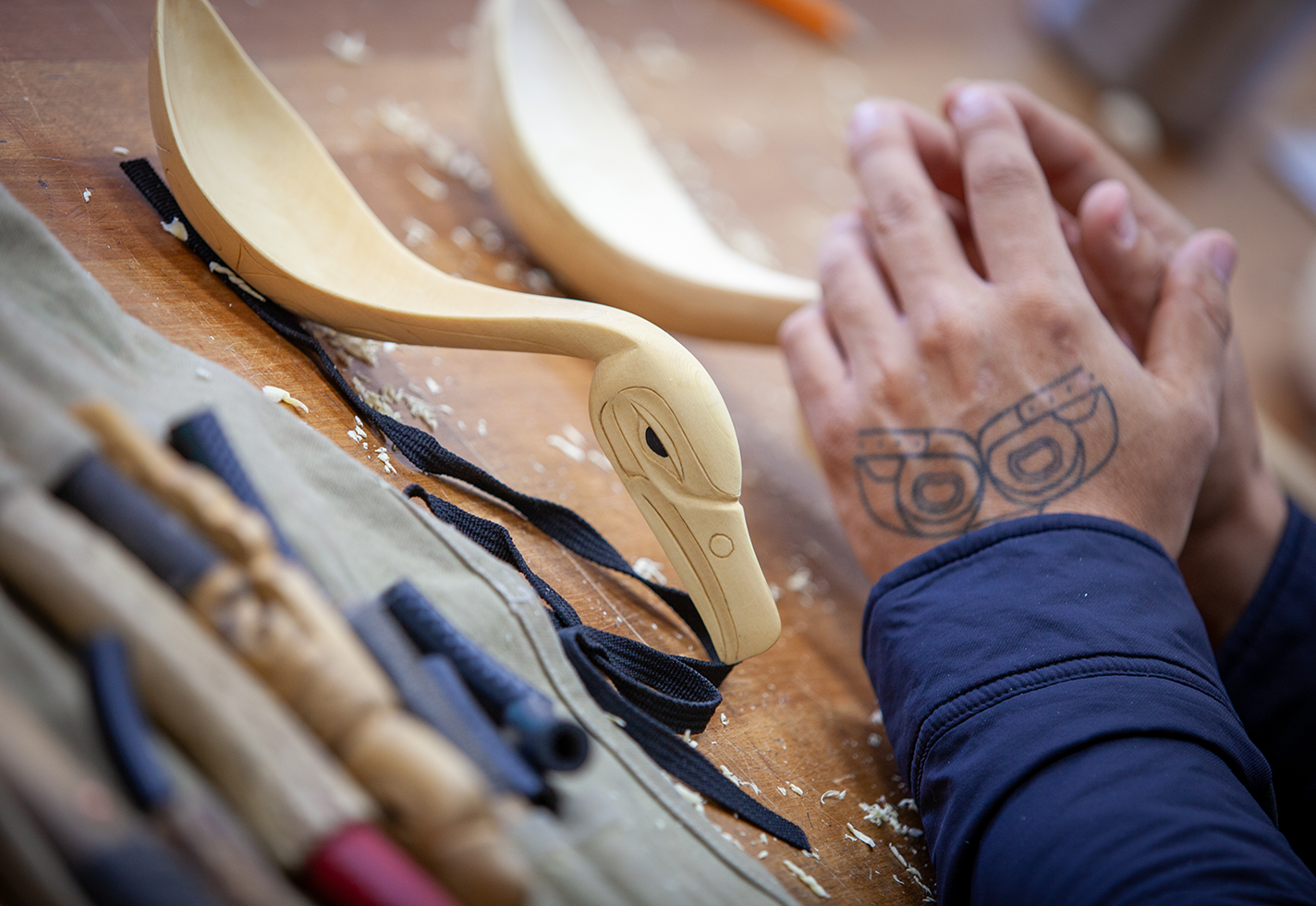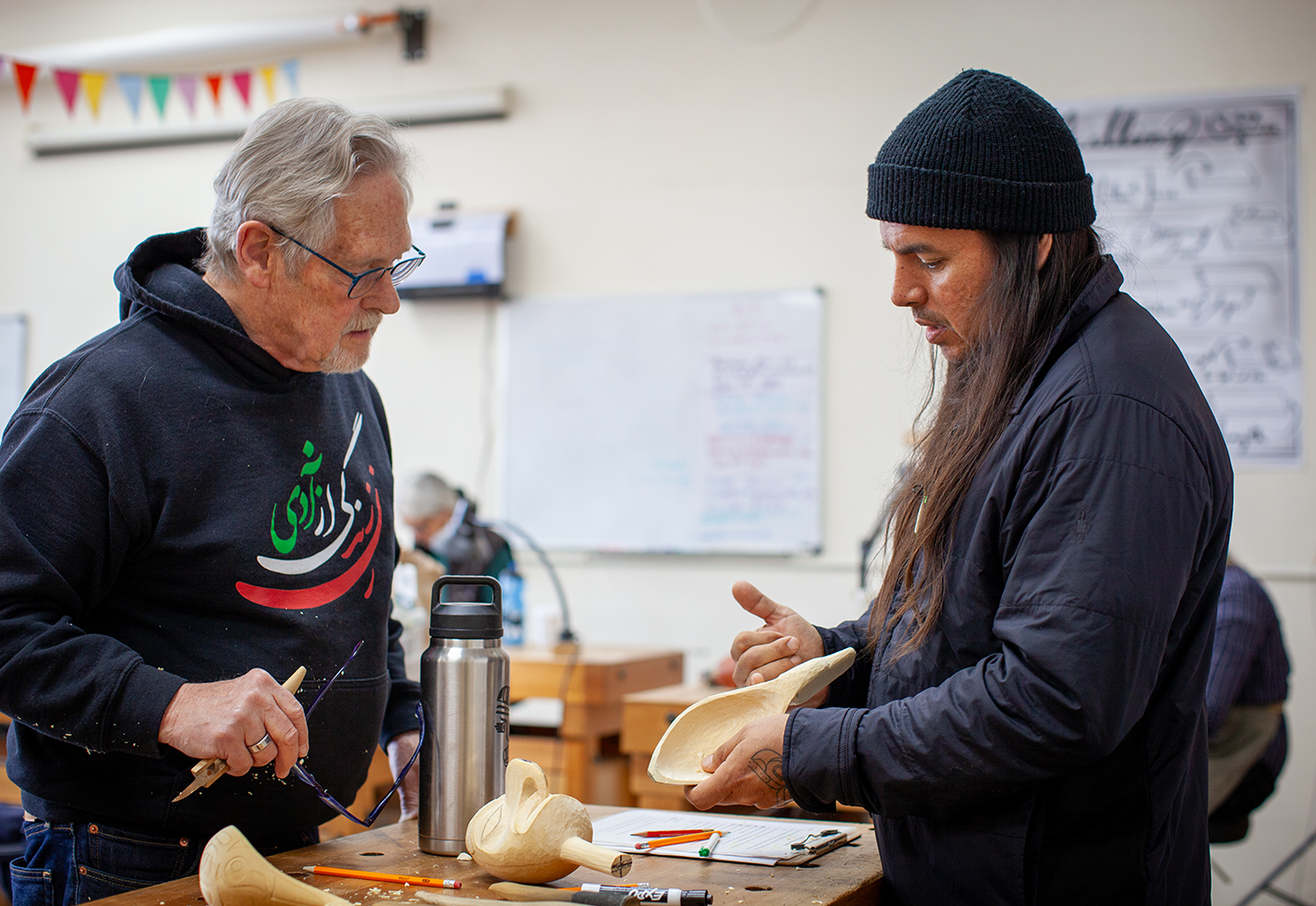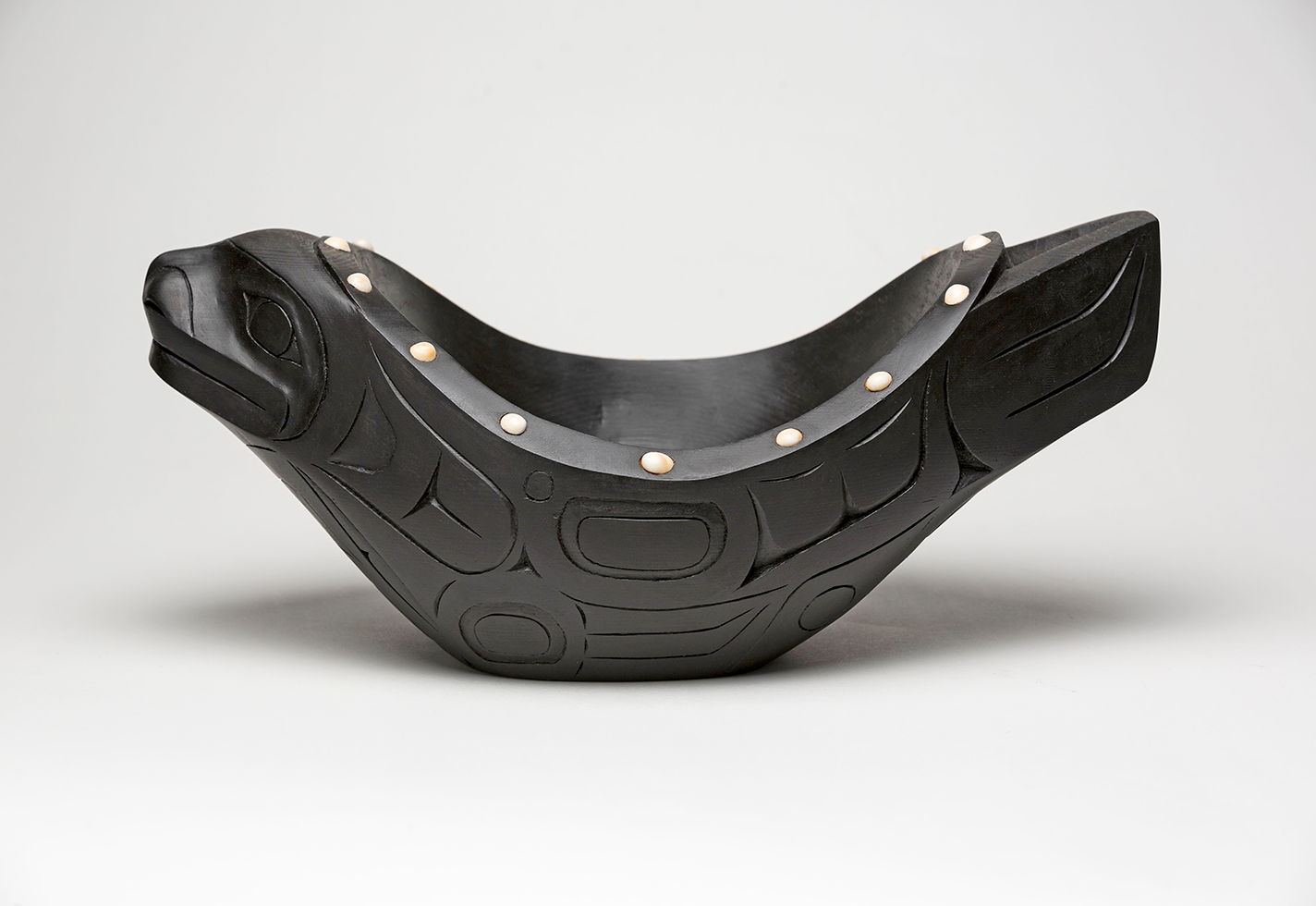
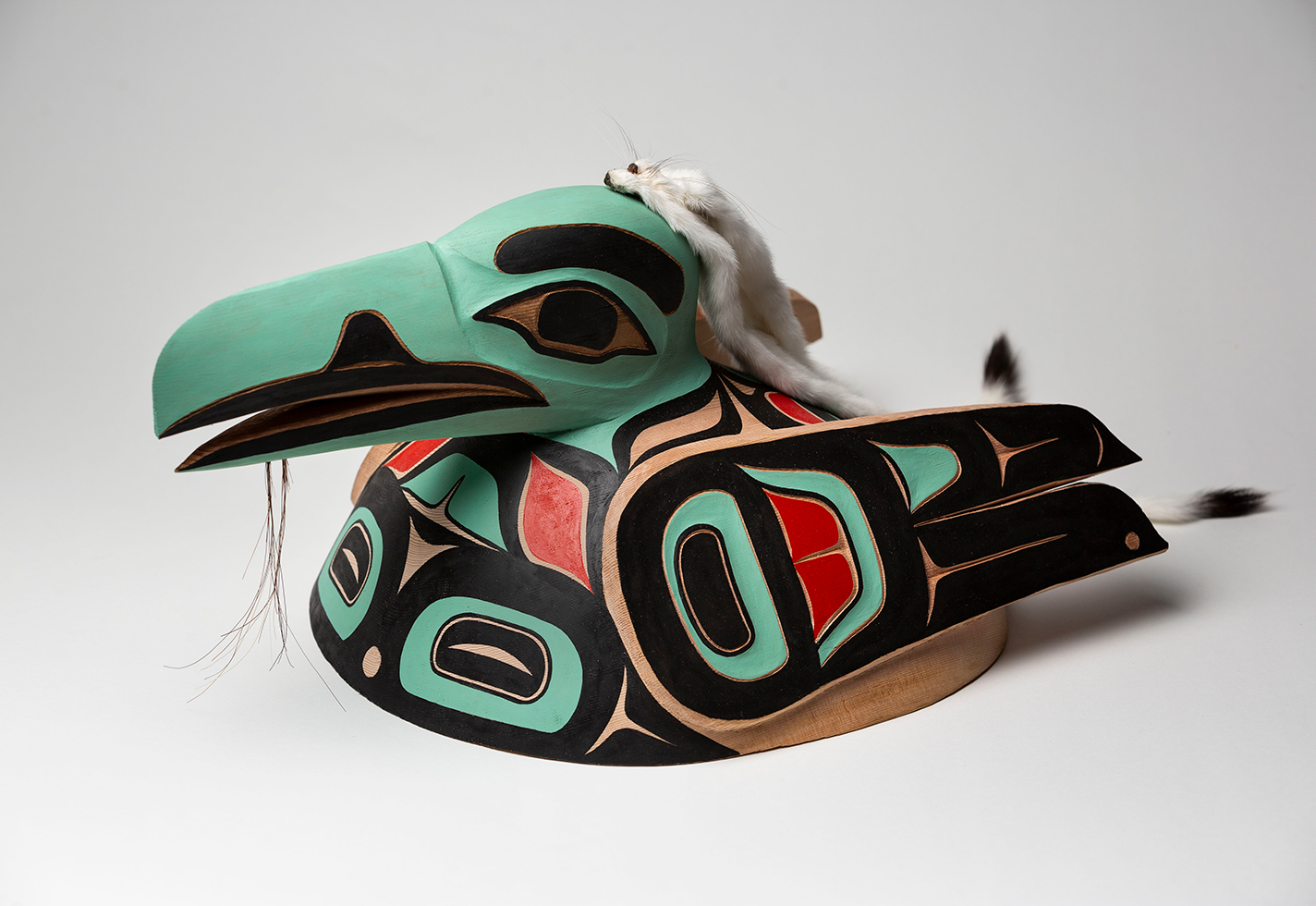
Tlingit artist and wood carver James Johnson grew up in Juneau, Alaska, surrounded by the culture, stories, and landscapes that shape his art. In Tlingit culture, he explains, there is no separate word for “art.” The carvings, bentwood boxes, and ceremonial objects associated with Pacific Northwest Coast design are inseparable from identity, history, and daily life. “I’m connected to my ancestors when I carve,” Johnson says. “The spiritual aspect of it, I feel that connection.”
A member of the Tlingit Ch’áak’ Dakl’aweidi (killer whale) Clan, Johnson’s Tlingit name, Onn-Iss-kwah, means “man who stands alone strong.” He was working unloading crab boats for a seafood company when he decided he wanted to pursue meaningful work; he turned to wood carving full-time in 2008. Largely self-taught, he spent years studying Tlingit art in museums across the country, studying his ancestors’ work and examining the precision of each cut, the balance of positive and negative space, and the technical mastery embedded in centuries-old pieces. Those works became his teachers.
The foundation of Johnson’s practice is formline, the flowing two-dimensional imagery that defines Northwest Coast art. Each tribe has their own style of formline, with its own history, language, style of carving, and use of color. “In order to be a carver, understanding the rules and guidelines of proper formline is essential,” Johnson says. “It teaches you to see the balance.”
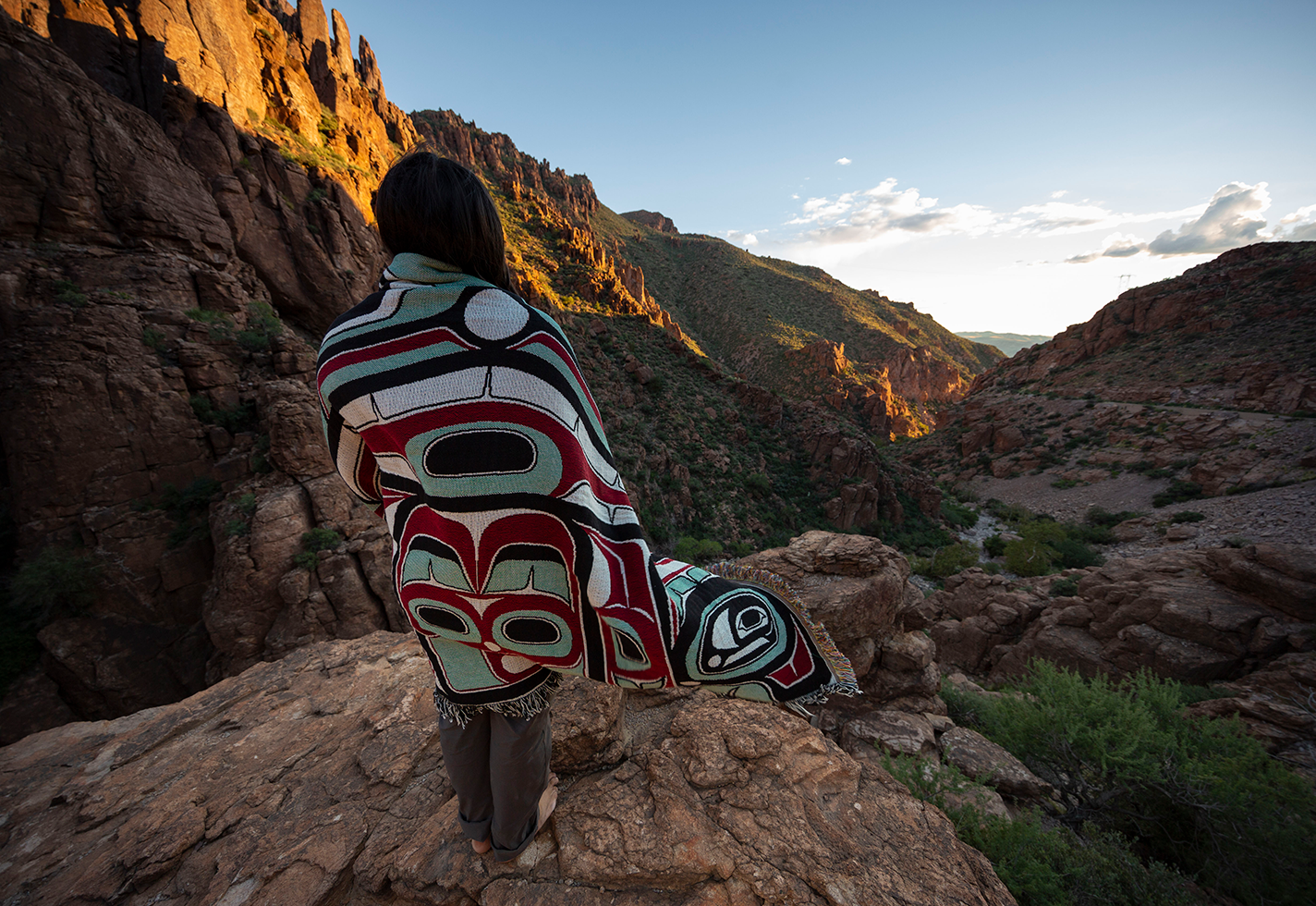
Johnson collaborated on this blanket design with home goods company Slowtide.