Craft Around the Country
Interviews & Profiles

Furniture Problems, Artfully Solved

Eric Carr aims to satisfy unique client needs with his fine studio furniture.

By Kate Schuler
February 11, 2026

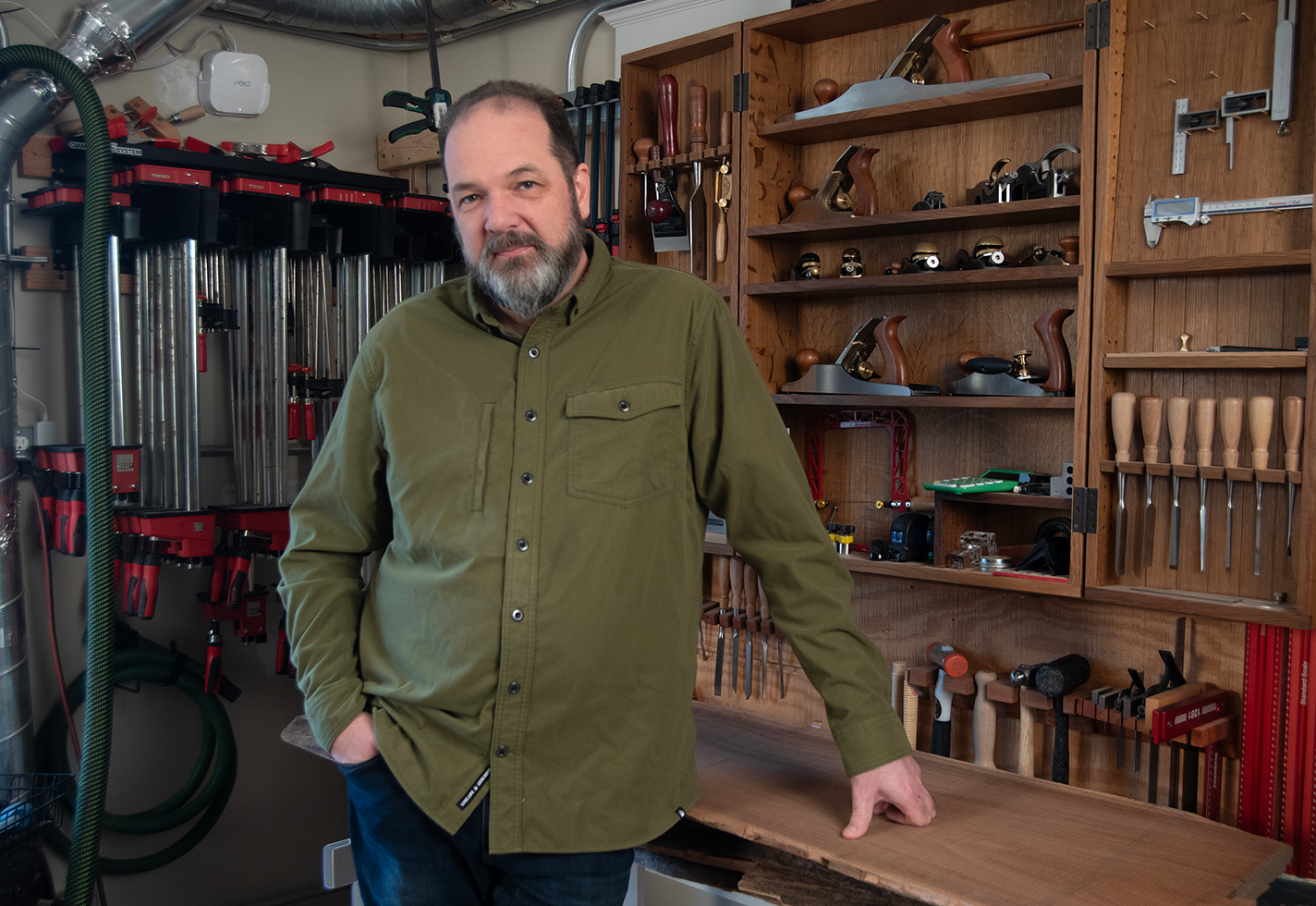
Photo courtesy of the artist

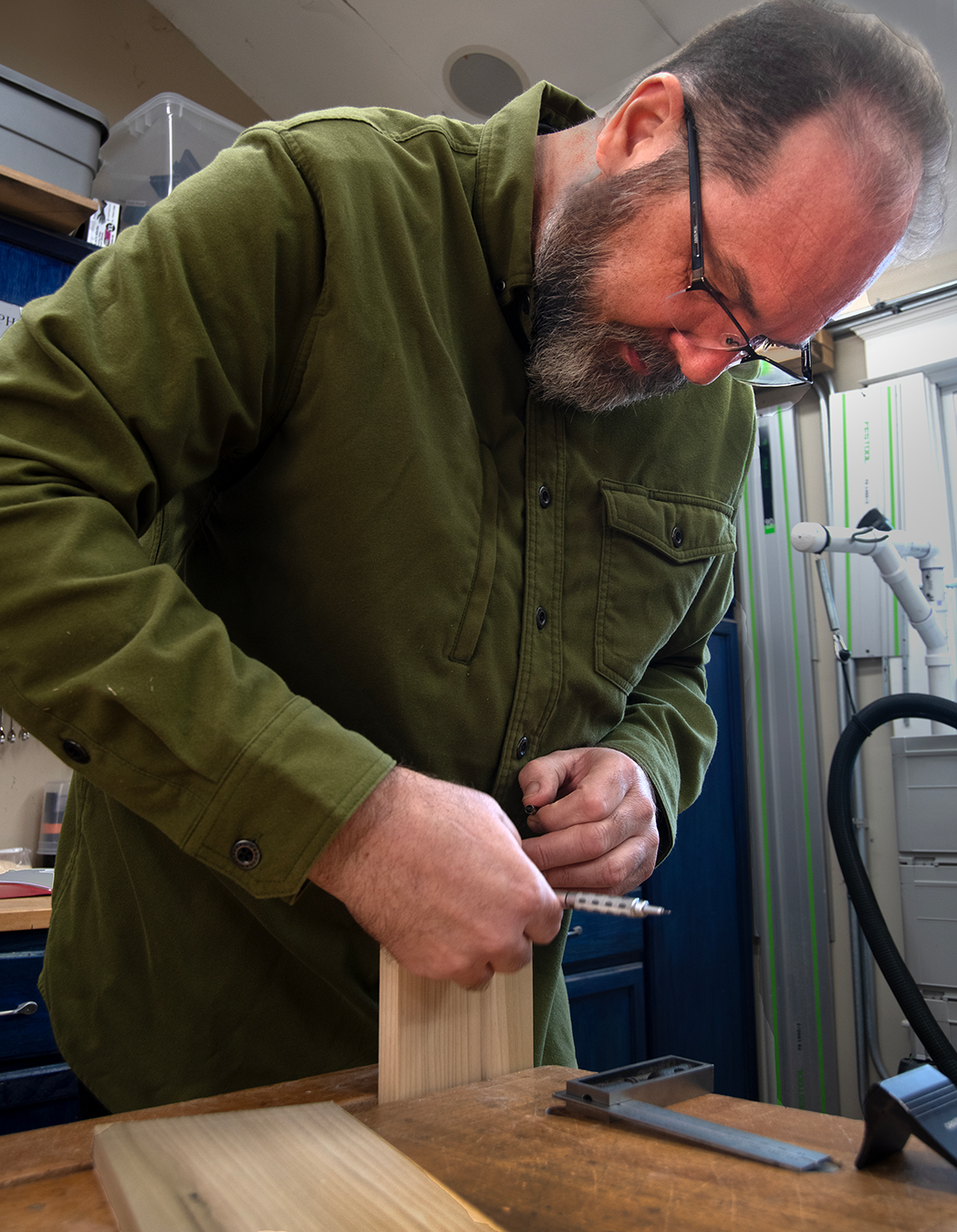
Eric Carr in his woodworking studio in Great Falls, Virginia.

When Eric Carr traded a career as a graphic artist for woodworking at age 45, he brought his designer’s instincts for problem-solving with him.

 His work often begins as a specific design, engineering, or materials challenge: a chest to fit under a window in a historic home, shelves for a client’s tricky kitchen corner, finding the right use for a beloved piece of wood. 

This combination of problem-solving and art is a big part of what he enjoys about woodworking, especially when working with clients who tell him, “I have this problem, and I need you to help me.” In delivering a piece of furniture that solves their problem, he says, “I like that my work is beautiful, but it’s also functional. You can actually use the desk, use the chest of drawers, use a stool for a specific spot in your house.”

Based in Great Falls, Virginia, outside of Washington, DC, Carr spent 20 years as a graphic designer before shifting to full-time woodworking in 2018. He prefers working with materials local to the Mid-Atlantic, such as walnut, maple, and cherry. Inspired by midcentury modern design and the arts and crafts movement, he honors the natural beauty of his materials and pays close attention to the lines and flow of his pieces, creating a deceptive simplicity.
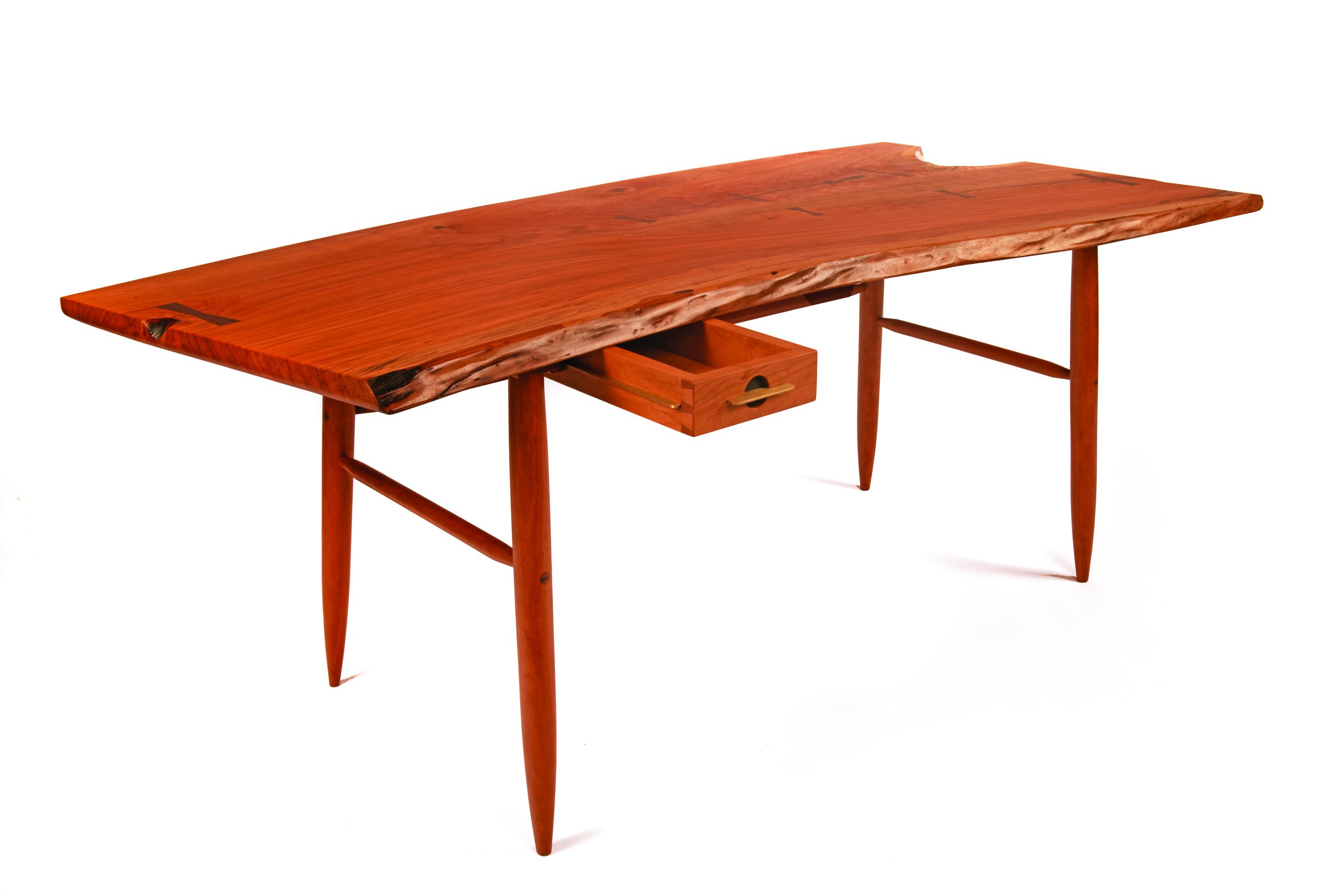
Photo courtesy of the artist

Carr's Right-Sized Office Desk, 2025, is made from cherry, walnut, and ebony, with brass hardware, 66 x 26.5 x 32 in. The top is made from a single piece of wood.

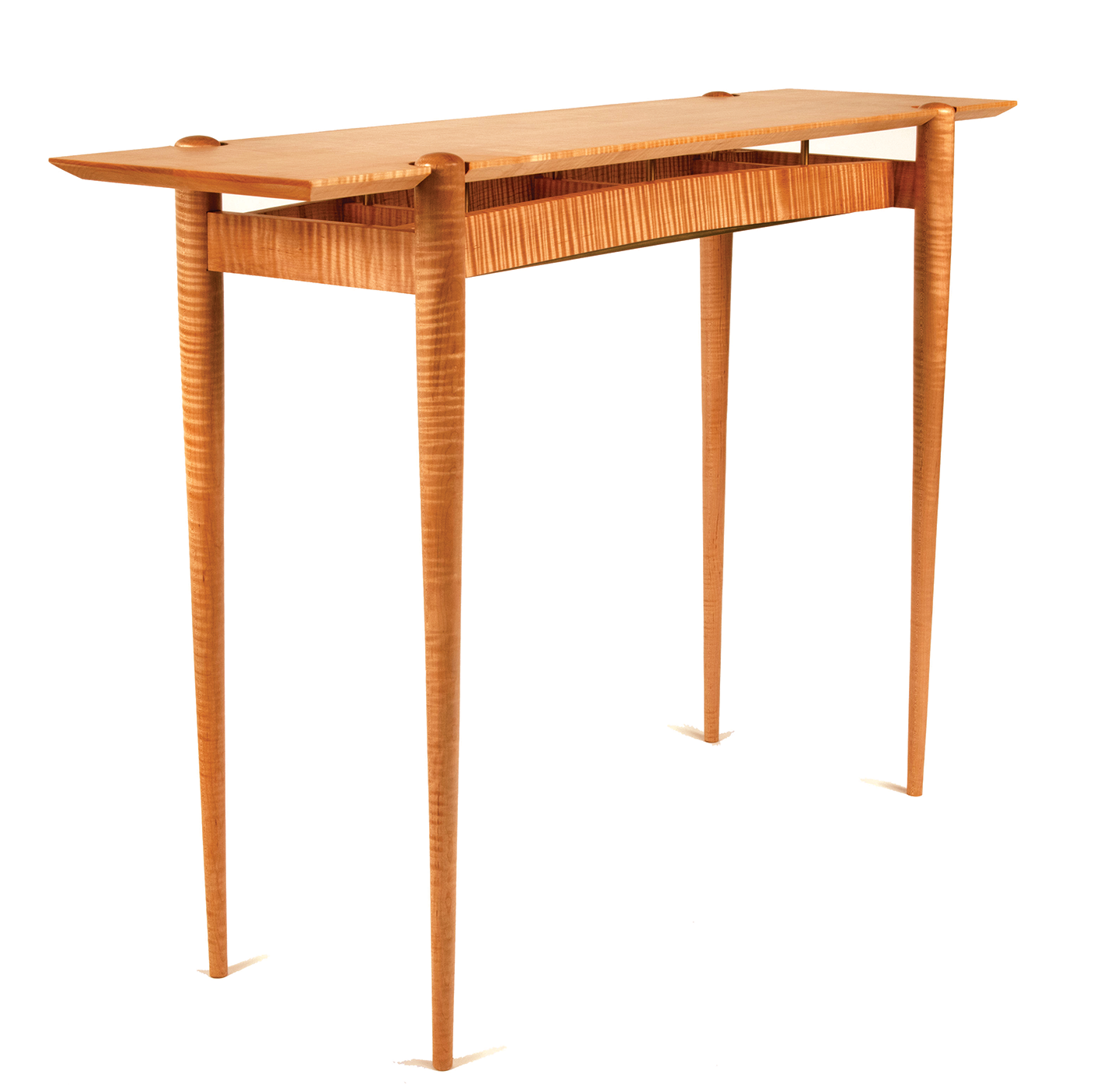
Carr’s Gazelle Table exemplifies this spirit. Developed during a six-week furniture-making and design course at the Corcoran College of Art and Design in Washington about 15 years ago, the table has slender tapered legs and a top that seems to float above the base. It appears impossibly light, but the solid construction reveals a deep understanding of how wood moves and holds weight. Rounded ends of the legs peek through the top to add subtle sculptural detail, punctuation marks that reward close viewing. And carefully oriented tiger maple, with its rippling flame-like grain, lends kinetic energy. 

He recently completed a nine-month intensive at the Center for Furniture Craftsmanship in Rockport, Maine, but has had little other formal woodworking training outside of a handful of classes. Carr describes his experience in Maine “like drinking from a firehose” with all of the tools and techniques he was learning from supportive instructors committed to helping him realize his vision. 

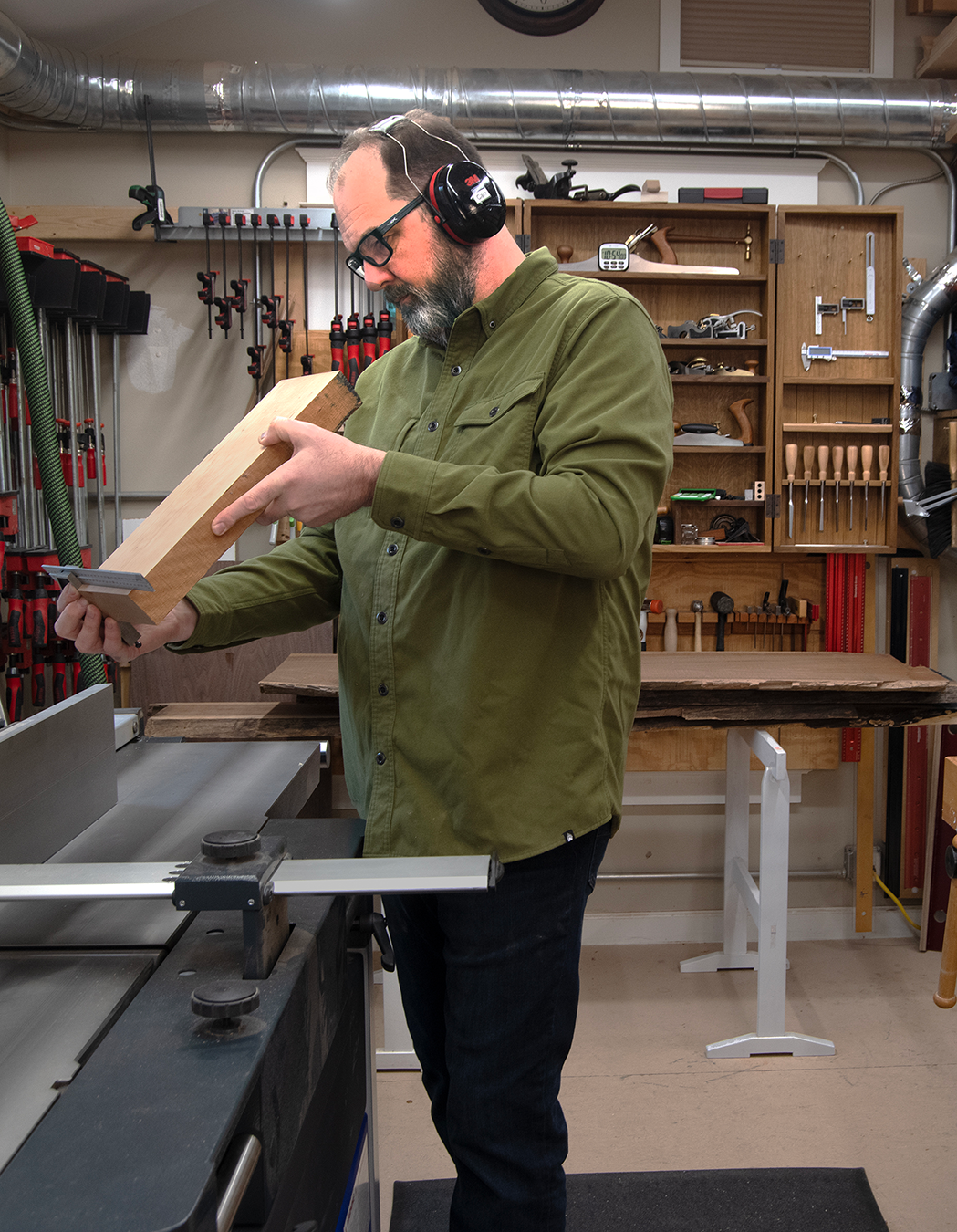
Carr now works out of the former family room of his house, where he starts all his designs with a pencil sketch and then refines the proportions and joinery in 3D-modeling programs. This combination of hand drawing and technology during the design process mirrors Carr’s overall approach to making. There are different schools of thought in woodworking that favor using only hand tools or only machine tools, but he favors a middle path. “I believe that there’s a balance between the two schools of thought,” Carr says. “I use whatever tool gets the job done.”

Photo courtesy of the artist

Crafted entirely from tiger maple, the Gazelle Table is intended for a hallway, 2024, 48 x 33 x 13 in.

  • Photo courtesy of the artist

    Carr at work in his studio.

Woodworking is a craft that rewards experience with improved efficiency. Mindful of this, Carr takes careful notes of his process and incorporates more modern tools as needed. Recently, he’s been using a Shaper Origin handheld CNC router to make templates and jigs. “I’m trying to figure out how to integrate that into my workflow, so I don’t spend three days making a jig.”

Conscious that wood continues to live and breathe and change with the seasons, even after being cut, milled, and turned into a piece of furniture, Carr carefully considers this in decisions on joinery and grain direction. “You do have to work with it, instead of against it,” he says. 

Carr also knows that like other living things, his material can have its own opinions. “Sometimes the tree does not want to be a table,” he says. “The tree wants to be a bookcase, and it will fight you.” When that happens, he’ll usually set aside that piece of wood until he understands what it should be.

Two slabs of Osage orange hardwood—a species Frederick Law Olmsted featured prominently in the expansion of the U.S. Capitol grounds in the late 1800s—currently sit in Carr’s storage shed. That connection has given Carr an idea to make a table using books—written by both Democratic and Republican congressmembers—as support for a top that teeters back and forth. He’s still thinking through the engineering, but he has Unstable Government in mind as a possible title. (Carr’s 2020 table I Cannot Tell A Lie, with a cherry surface supported by books on George Washington’s life, is an early prototype for this kind of work.)

Photo courtesy of the artist

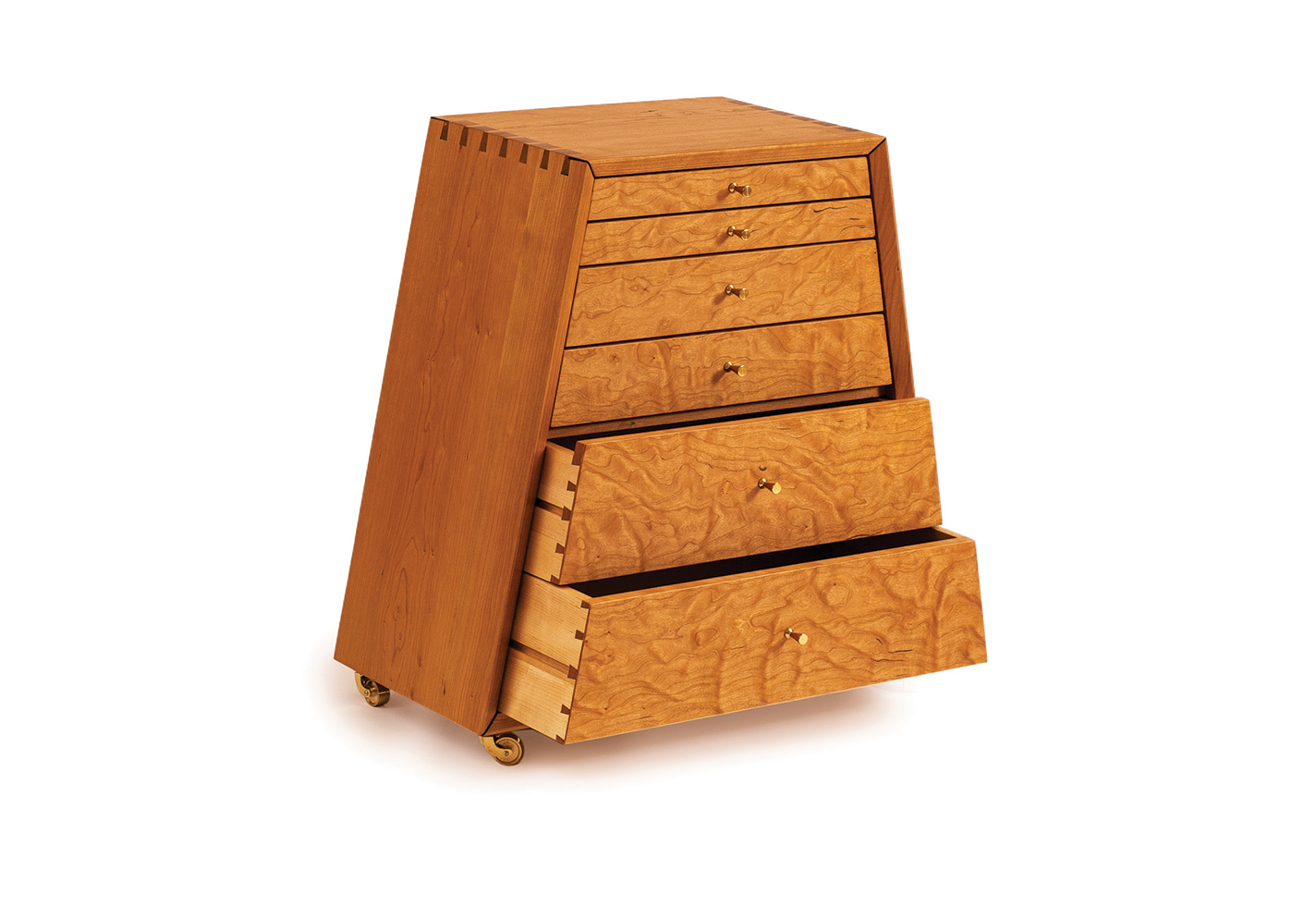
Carr designed and made Beehive Shaped Chest for a client whose home dates to 1796, 29 x 27 x 14 in.

“Sometimes the tree does not want to be a table. The tree wants to be a bookcase, and it will fight you.”

— Eric Carr

Carr first exhibited at American Craft Made Baltimore in 2020 as a member of the American Craft Council’s emerging artists cohort, which he credits with helping him understand pricing, insurance, and booth setup. Now when he attends craft shows, he aims to bring what he typically makes and not lose himself in making smaller items specifically for shows. He’s realistic about the economic uncertainties of the moment and the kind of investment his work—which ranges in price from $1,200 for a side table up to $15,000 for a California King bedframe—can be.

And he understands that his work is not something someone casually picks up and takes home from a show. “No one is going to drop $15,000 on a bed frame right here and now,” he says. “But, they know I’m here, so it’s more of a marketing event for me and getting my name out. 

Carr’s goal in Baltimore is to meet people and make himself available for future commissions if someone has a problem that can be solved with a beautifully crafted piece of furniture. His advice: “Stop by and say hello.”

Photo courtesy of the artist

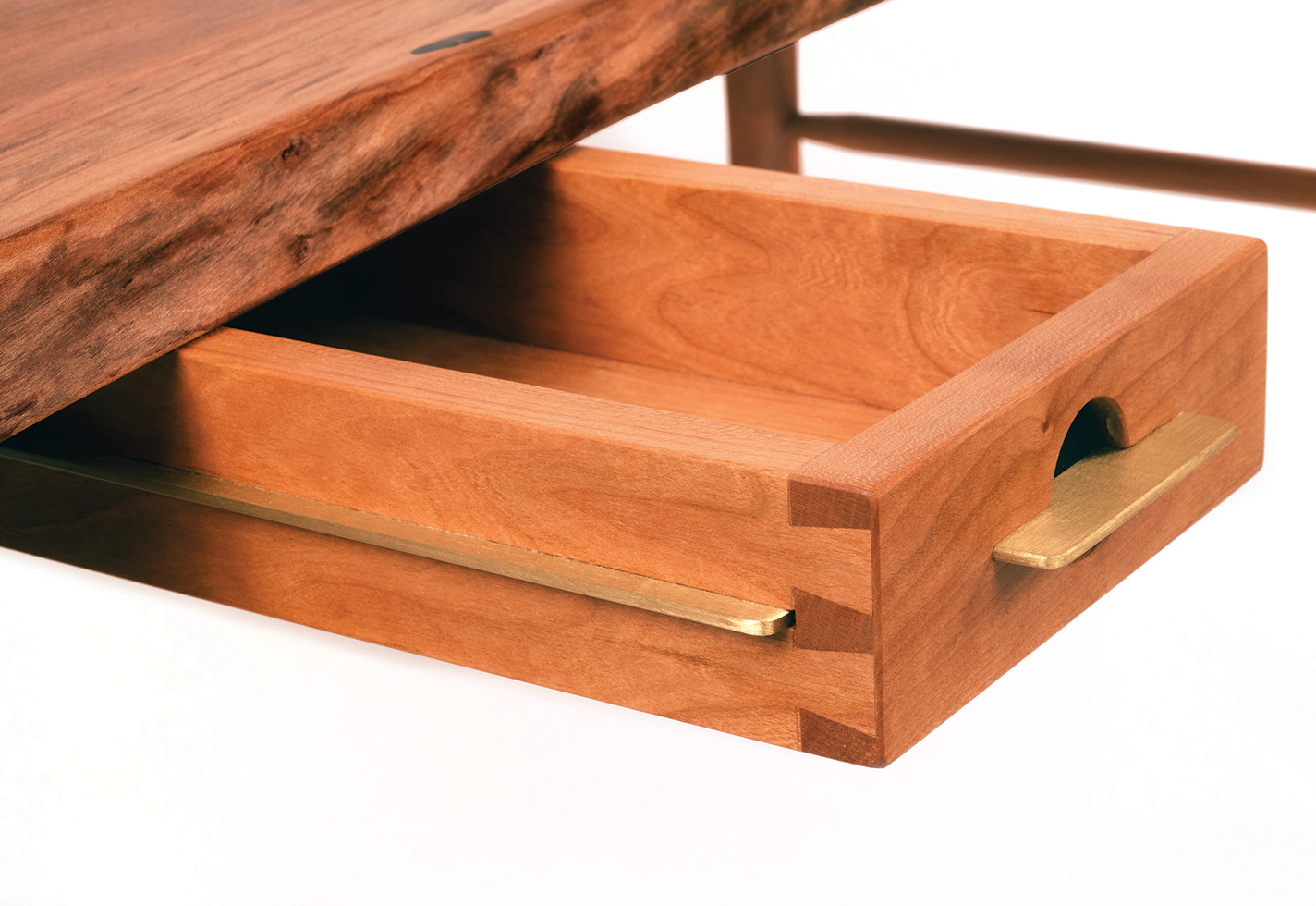
A detail shot of Right-Sized Office Desk shows its hidden drawer.

Kate Schuler is a potter, writer, and editor based in Washington, DC. 

Learn more about Eric Carr's work online.

Website Instagram

This article was made possible with support from the Windgate Foundation.

Before you go!


We believe that making creates a meaningful world, and we hope you do, too. Deeply researched and impactful journalism on the craft community is in short supply. At the same time, being featured in a national publication can have a major effect on a maker’s or artist’s livelihood, particularly those who are just starting in their career. You can help support our mission and the work of makers around the country by becoming a member or by making a gift today.

Thank you!
American Craft Editors