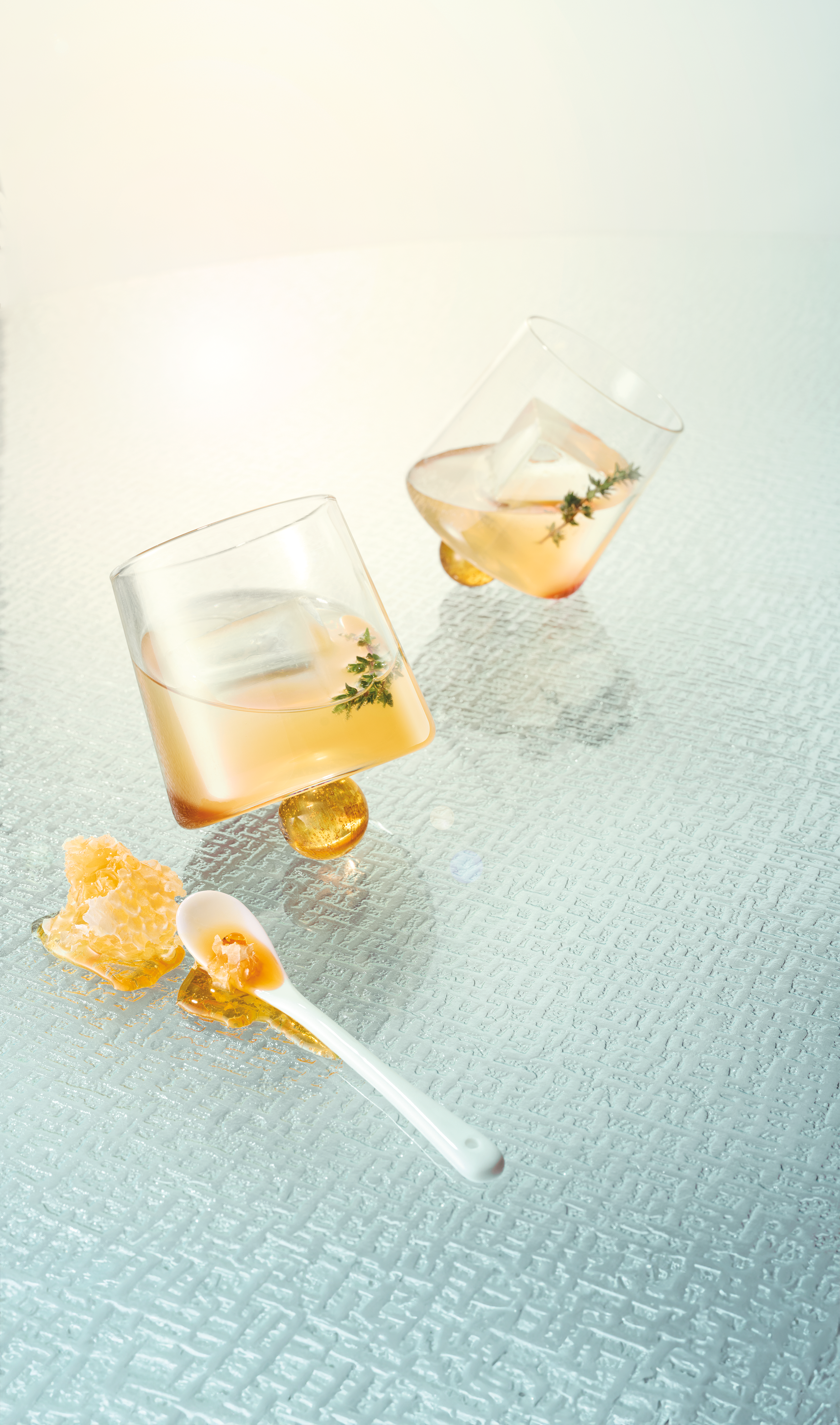
Single-sourced honeys can be found from all around the world, and each has its own unique flavor profile. They’re lovely to add to fizzy water with a touch of citrus or your favorite cocktail or mocktail recipe. You can substitute honey when simple syrup is called for in a recipe. Here we’ve drizzled chestnut flower honey into the glass, topped it with lemon ginger kombucha, and added a sprig of fresh thyme. You might also try acacia flower, buckwheat, or other honeys from faraway places—or better yet, from right near home.
These Clearly Kinetic Glasses by Cedric Mitchell Design in Los Angeles (the Colorful version is on the cover of this issue) can help you savor the scent of the honey. Designed to be slowly turned, the unusual glasses enhance the aroma of spirits such as cognac or whiskey, and work beautifully for small, fragrant sips of other drinks too.
/ $110 / cedricmitchelldesign.com | @cedricmitchelldesign
How to Make Your Own Syrups
Basic instructions to make a syrup: Simmer roots, fruits, or dried herbs covered with water for 5 minutes and allow to steep for 20 minutes before straining through a fine sieve. Then add the flavorful liquid to a base of simple syrup or your favorite honey or maple syrup. Experiment with the following ingredients to find your favorites.
Roots: Ginger and turmeric root syrup can be made by grating fresh ginger and turmeric roots, simmering and straining them, then adding the resulting liquid to your base. Store in the refrigerator for up to two weeks to add to drinks.
Fruits: Summer is the season of fruits, and there are so many options to explore, such as peaches and melons. Try rhubarb and strawberries in the spring, apples and pears in the fall, and citrus in the winter. Simply simmer, then add the liquid to your base.
Herbs and spices: Turn to your spice cabinet for inspiration. Savory rosemary and thyme, uplifting mint, aromatic cardamom—even celery or fennel seed can be surprising additions to a drink syrup (and aid digestion as well). Simmer, strain, then add the liquid to your base.
Mugolio: For the forager, mugolio is a syrup made with immature pine cones that are chopped coarsely, mixed with sugar, and allowed to “ferment” for several months in a cool, dark space. Find recipes for making your own on Chef Alan Bergo’s foragerchef.com.
Betsy Nelson is a freelance food stylist, recipe developer, cooking teacher, Ayurvedic chef, and certified herbalist. She’s passionate about teaching people how to incorporate foods and herbs that support health and to forage for wild edibles. Paul Nelson, Betsy’s brother, is a freelance photographer.