Craft Around the Country

Jes Fan's Material Explorations

The Brooklyn-based sculptor and glass artist’s new show at the Yale University Art Gallery surveys their diverse body of work.

By Kate Schuler
March 25, 2026

Photo courtesy of Yale University Art Gallery

Jes Fan, Bivalve II, 2023, polymer-modified gypsum, metal, glass, pigment, 53.25 x 35 x 13.75 in.

When Jes Fan suspends biological materials—hormones, bacteria, blood—inside blown glass forms, it reflects a maker’s instinct as much as a conceptual one. Their sculpture, process-driven and exploratory, is rooted in material investigation. 

Since graduating from the glass program at the Rhode Island School of Design in 2014, Fan has expanded their practice beyond the hot shop, adding silicone, resin, and biological matter to their materials, and 3D printing, CT scanning, and casting to their slate of processes.  Their first solo museum exhibition, Jes Fan: Unbounded, brings that breadth into focus. It’s on view at the Yale University Art Gallery through June 28.

Fan is drawn to materials that shift and change states. Those materials “facilitate the exploration of the ways in which things are rarely black and white, but rather, can have different qualities at different times,” says Margaret Ewing, assistant curator of modern and contemporary art at the Yale University Art Gallery. 

In Form Begets Function (2020), Fan precariously drapes blown glass capsules containing testosterone, melanin, and urine on a human-scale biomorphic rectangular lattice made of wood, fiberglass, and resin. The form itself references a classical Chinese scholar’s shelf used to display collections. By suspending the biological materials in glass, outside the context of the body, Fan explores the intersection of identity and biology and challenges constructs of gender and race, themes that they return to often in their work. 
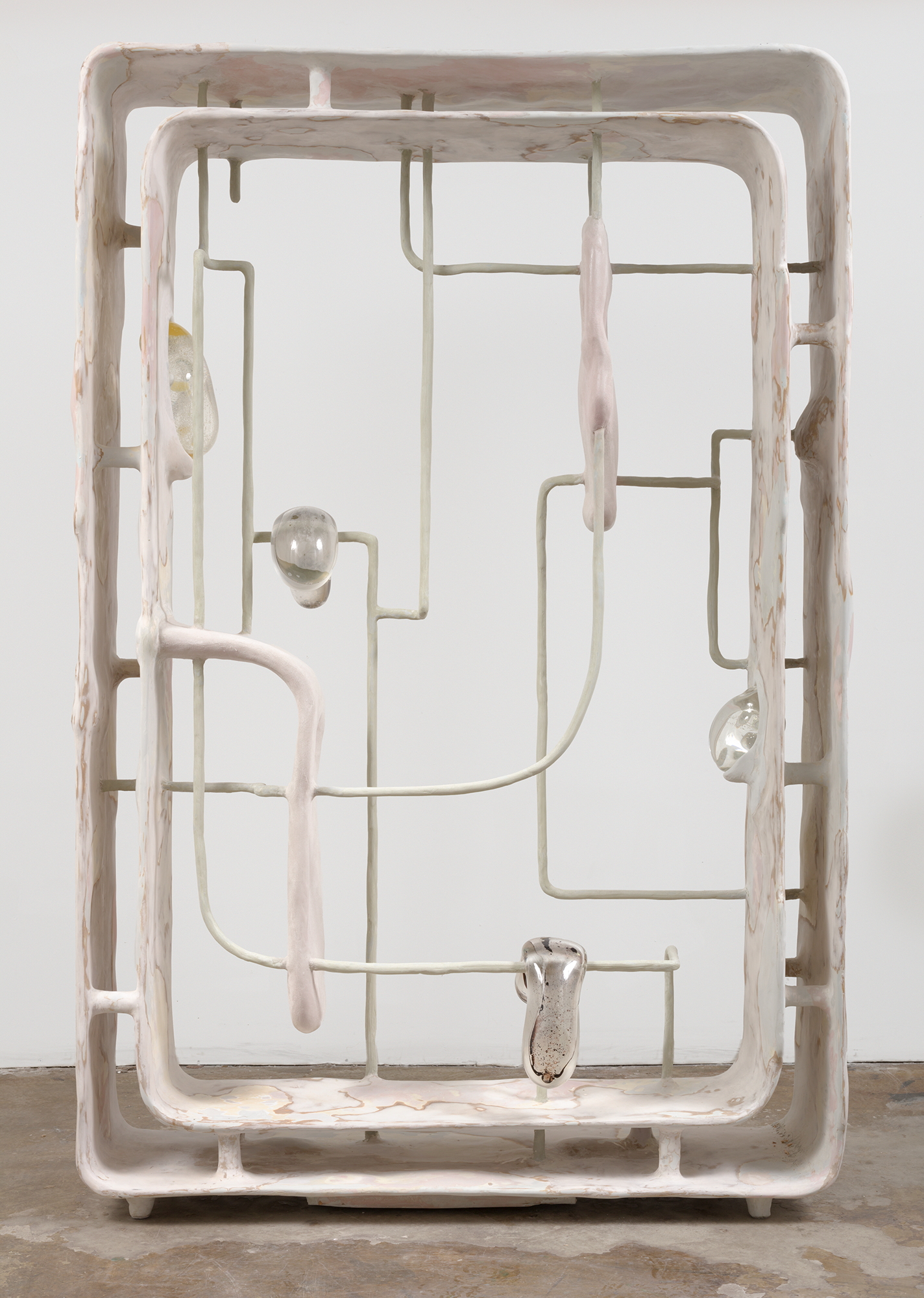
Photo by C. Creagan, courtesy of the artist and Andrew Kreps Gallery, New York

Form Begets Function, 2020, wood, polymer-modified gypsum, metal, glass, fiberglass, silicone, urine, testosterone, melanin, 76 x 50 x 16 in.

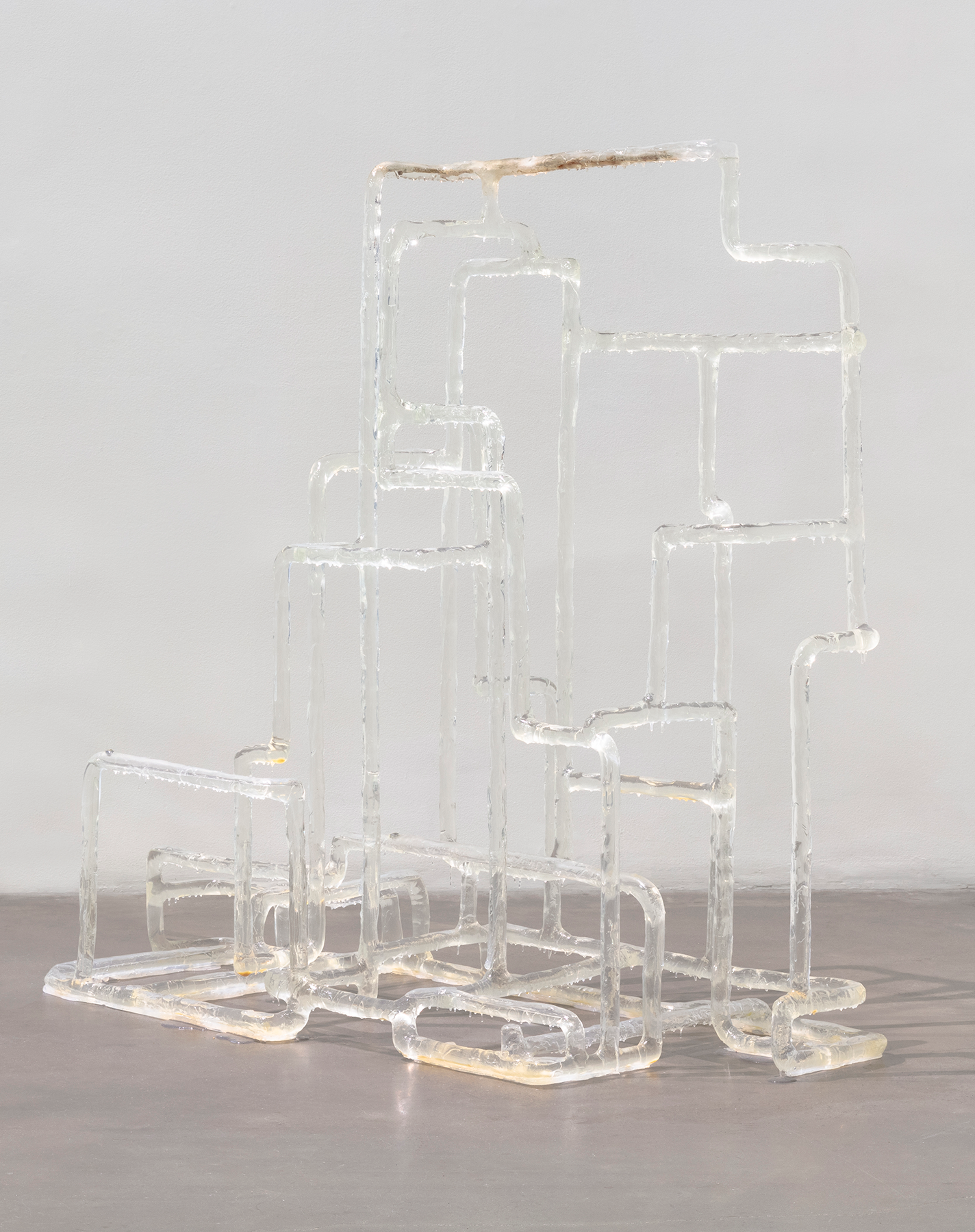
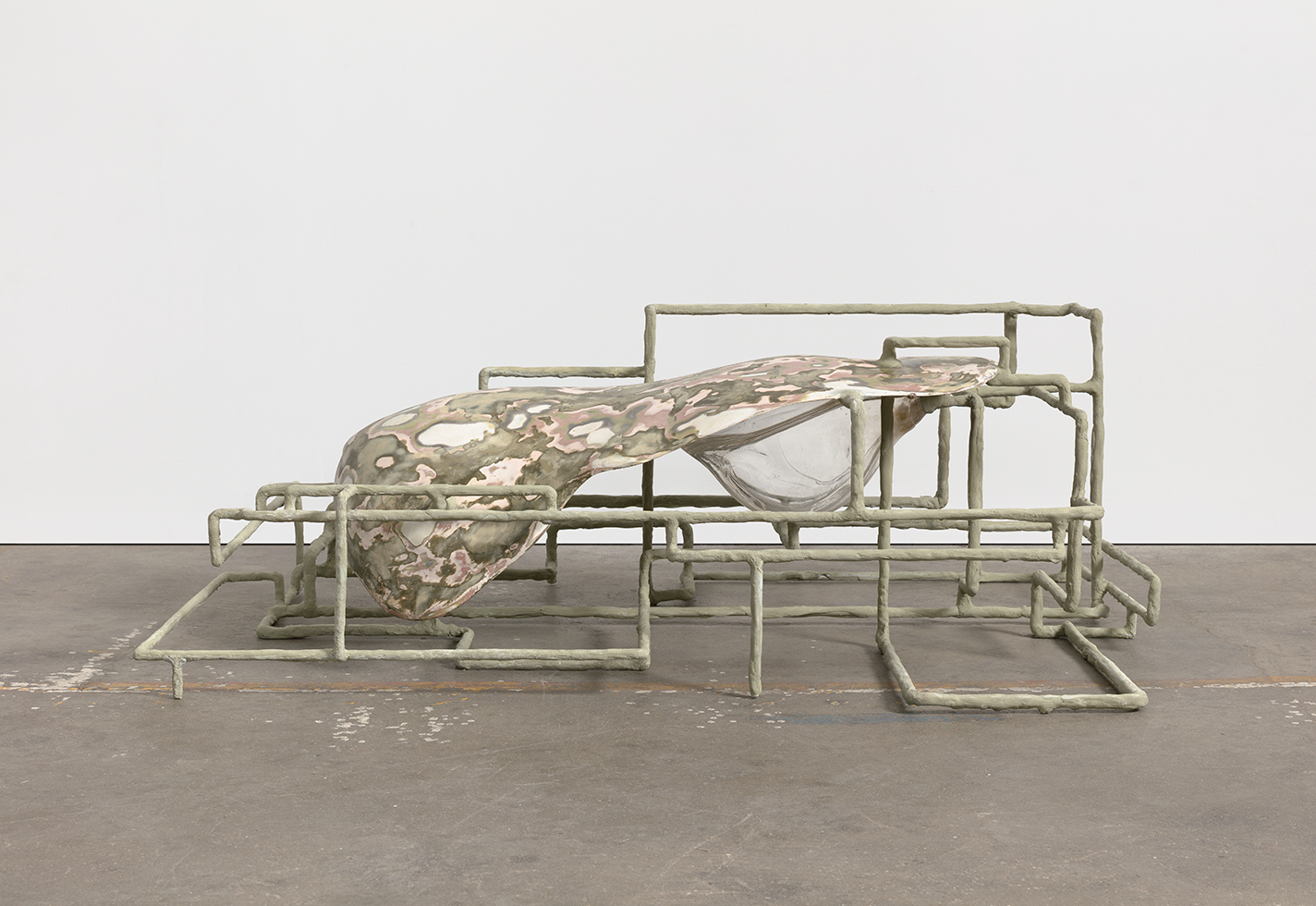
Born in Toronto, raised in Hong Kong, and now based in Brooklyn, Fan references Hong Kong’s natural and built environment—banyan trees, scaffolding, pipes outside buildings—in the sculptural language of their work. In newer pieces, Fan turns to oysters and the agarwood tree, which are native to Hong Kong. Both species transform external wounds into something precious—pearls and incense, respectively. 

Having lived in Hong Kong both before and after the handover from British to Chinese rule, Fan works with these species in part as a metaphor for the legacy of colonialism. Their experience in Hong Kong also drives much of their interest in blurred borders—between East and West, ancient and modern—and the construct of racial categories that came out of colonialism. 

In 2025, Fan received the Rakow Commission from the Corning Museum of Glass. The resulting wall-mounted sculpture, Accordion, explores ideas of transformation, the body, and otherness, while also pushing material exploration by incorporating clay into their work for the first time. 

Unbounded brings together pieces that represent the major themes from Fan’s decade-long career, revealing new connections among the work. “Underlying Jes’s many areas of investigation is a questioning of assumptions about how we understand the world and a demonstration of the ways in which things are more complex than we usually acknowledge,” said Ewing.    

Photo by C. Creagan, courtesy of the artist and Andrew Kreps Gallery, New York

Networks (for Expansion), 2021, borosilicate glass, silicone, water, and Phycomyces zygospore culture.

Kate Schuler is a potter, writer, and editor based in Washington, DC. 

Check out more of Jes Fan's work online and learn more about Unbounded.

Jes Fan's Website Unbounded

This article was made possible with support from the Windgate Foundation.

Before you go!

We believe that making creates a meaningful world, and we hope you do, too. Deeply researched and impactful journalism on the craft community is in short supply. At the same time, being featured in craft-centered media and articles can have a major effect on a maker’s or artist’s livelihood, particularly those who are just starting in their career. You can help support our mission and the work of makers around the country by becoming a member or by making a gift today.

Thank you!
American Craft Council