Craft Around the Country

Large and Daring Craft Finds a Home on a Remote Pacific Northwest Island

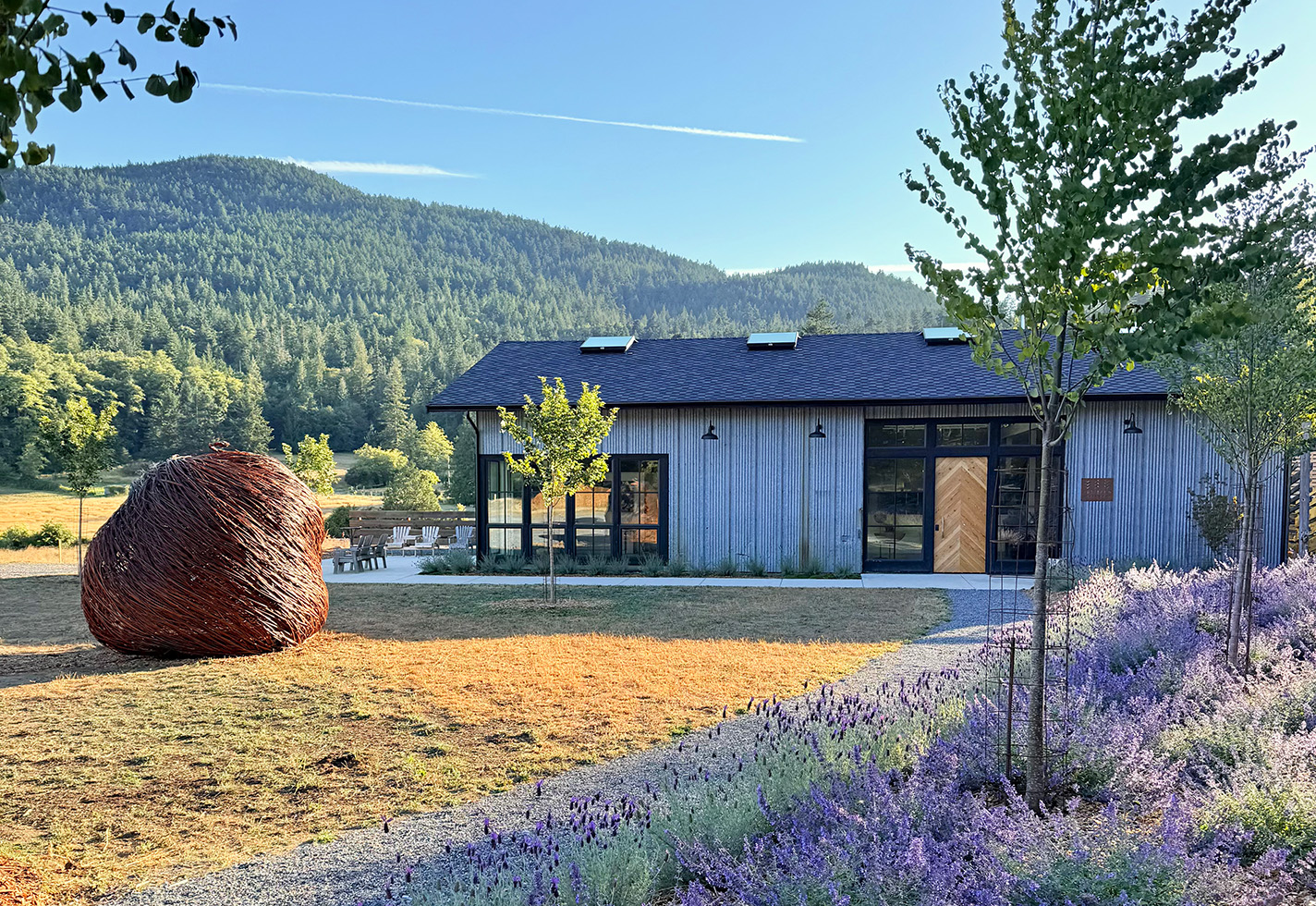
At Orcas Art Barn on Orcas Island, Washington, gallery owner Inese Westcott has transformed a barn into a new gallery with plenty of room for experimentation. 

By Megan Gannon
October 12, 2026

Photo by Inese Westcott

Orcas Art Barn, a new gallery on Orcas Island, Washington.

In the solitude of her studio at the top of a dirt road on a mountain on Orcas Island, Washington, woodworker Laura Yeats has lots of conversations with trees. 

There, she creates monumental, minimalist vessels by carving away at huge hunks of wood. Sometimes the wood will have an interesting feature in it that she’ll want to emphasize as she finds the right place to stop. “It’s an intuitive process for me,” Yeats says. “I’m at the lathe, I’m removing wood, it comes off in layers, and I’m constantly stopping. I have to turn my head to look at it. I’m just looking for that curve that sings.” 

Her vessels and sculptures, with their subtle, singing curves, might get lost in a crowded craft shop with dozens of smaller objects competing for attention. But inside a new gallery down the road in a former hay barn, work like Yeats’s feels at home. 

Now in its second year, Orcas Art Barn gives local artists and craftspeople a new context to show large-scale willow baskets, metal sculptures, wooden forms, and other work in the idyllic San Juan Islands off the coast of Washington.
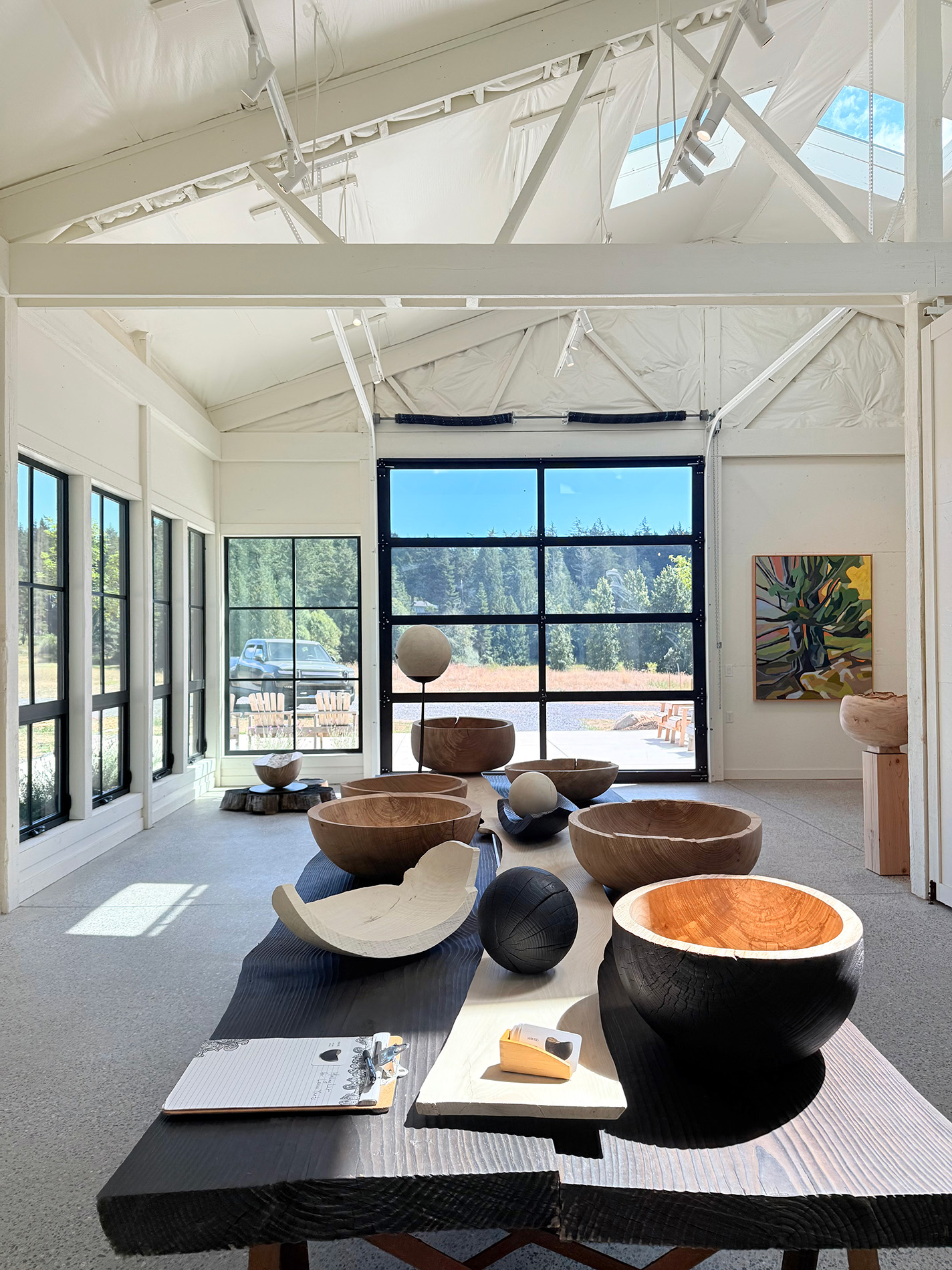
Photo by Inese Westcott

Giant bowls, spheres, and other wooden forms made by Laura Yeats.

“I wanted to stay away from the stiffness of a gallery,” says owner Inese Westcott. “I don’t like when people get intimidated. I wanted people to come in, enjoy the space, sit with the art, and go take a walk and have that kind of a good connection between the creative world and nature. Having art with different natural elements kind of went with the whole feel.”

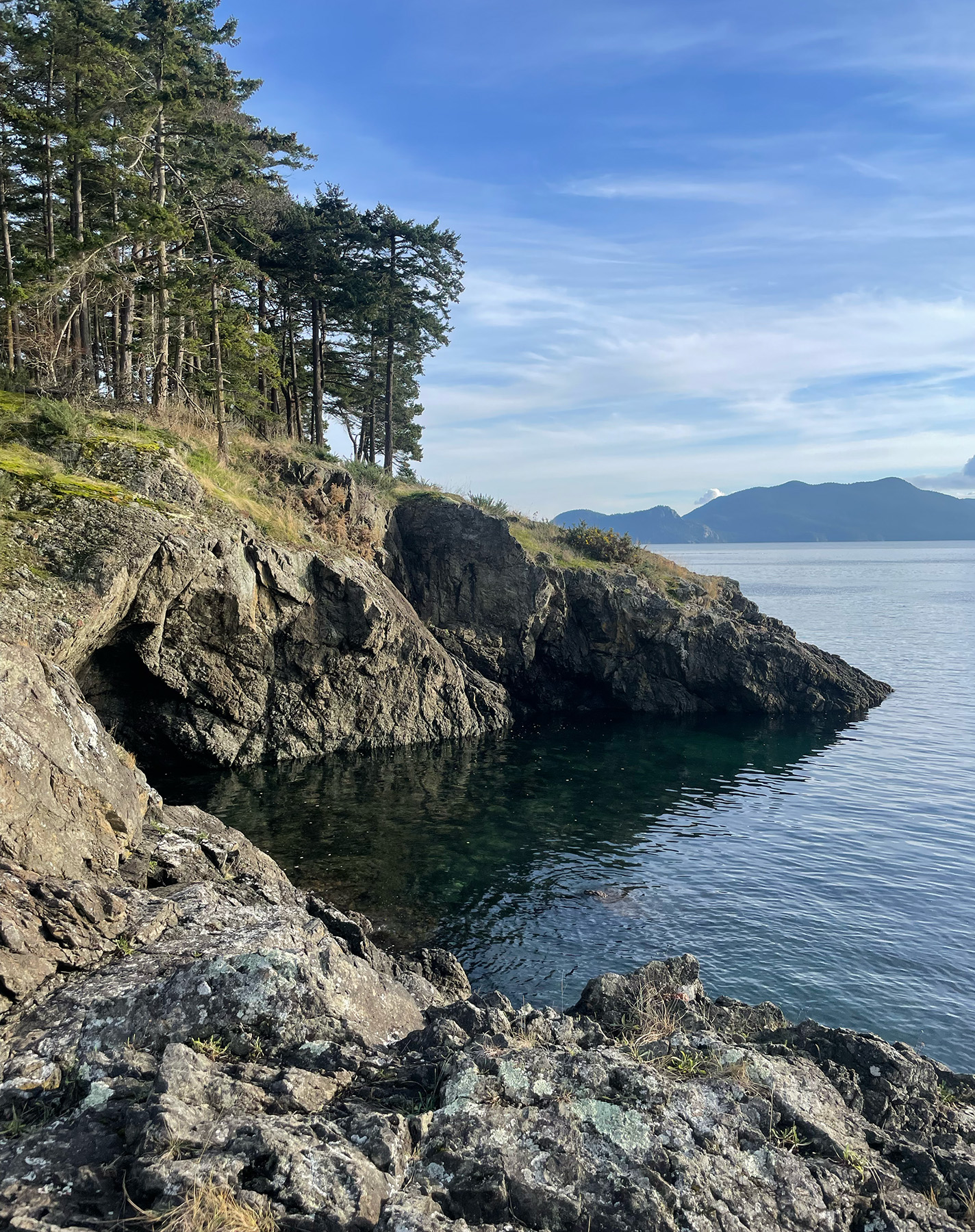
About an hour’s ferry ride from the mainland, Orcas Island indeed offers a wealth of natural beauty: rugged coasts, forests thick with madrones and Douglas firs and cedars, mountains, meadows, sandy beaches, and waters full of orcas, salmon, seals, and shellfish. The island’s landscapes and seascapes have long been shaped by people cultivating those natural riches. The Coast Salish peoples cared for the land and waters for thousands of years before Euro-American homesteaders arrived in the mid-19th century. In the 20th century, the islands’ local economy relied on agriculture—especially fruit production—but then shifted to tourism after commercial farming declined. Visitors today still seek the island’s rustic ambience, slow living, and local food and art. Restaurants boast farm-to-table menus; even the diviest of taverns might have the option to upgrade to local greens on a burger. 

Just down the road from the Art Barn is Orcas Island Pottery, a whimsical gallery founded in 1945 that features a treehouse. Other longstanding shops and galleries, like Orcas Island Artworks and Crow Valley Gallery, are dedicated to the handmade, selling artists’ work to local collectors as well as tourists who want to take a piece of the San Juan Islands home with them.


Photo by Megan Gannon

The coastline along Doe Bay on Orcas Island. The island is known for its exceptional beauty.

Westcott, herself a painter, explains that the vision for a new kind of art space for the island came about organically. Originally from Latvia, she moved with her family to Orcas Island from Bellevue, Washington, just before the COVID-19 pandemic started, seeking a home more reminiscent of the Baltic coastal forests she grew up around. The family bought a property that came with a barn, and since they didn’t need that much hay, Westcott started using the barn to put up her paintings and renovated it with white walls and huge windows. 

Then basket maker Maria Bullock, who grows and harvests materials such as willow at her family’s nearby permaculture farm, asked to host a workshop inside the space. “She created this beautiful, big piece,” Westcott recalls. “I said, ‘Do you want to leave it here? I have some clients coming to look at my paintings. They will see your work. I can talk about you.’”

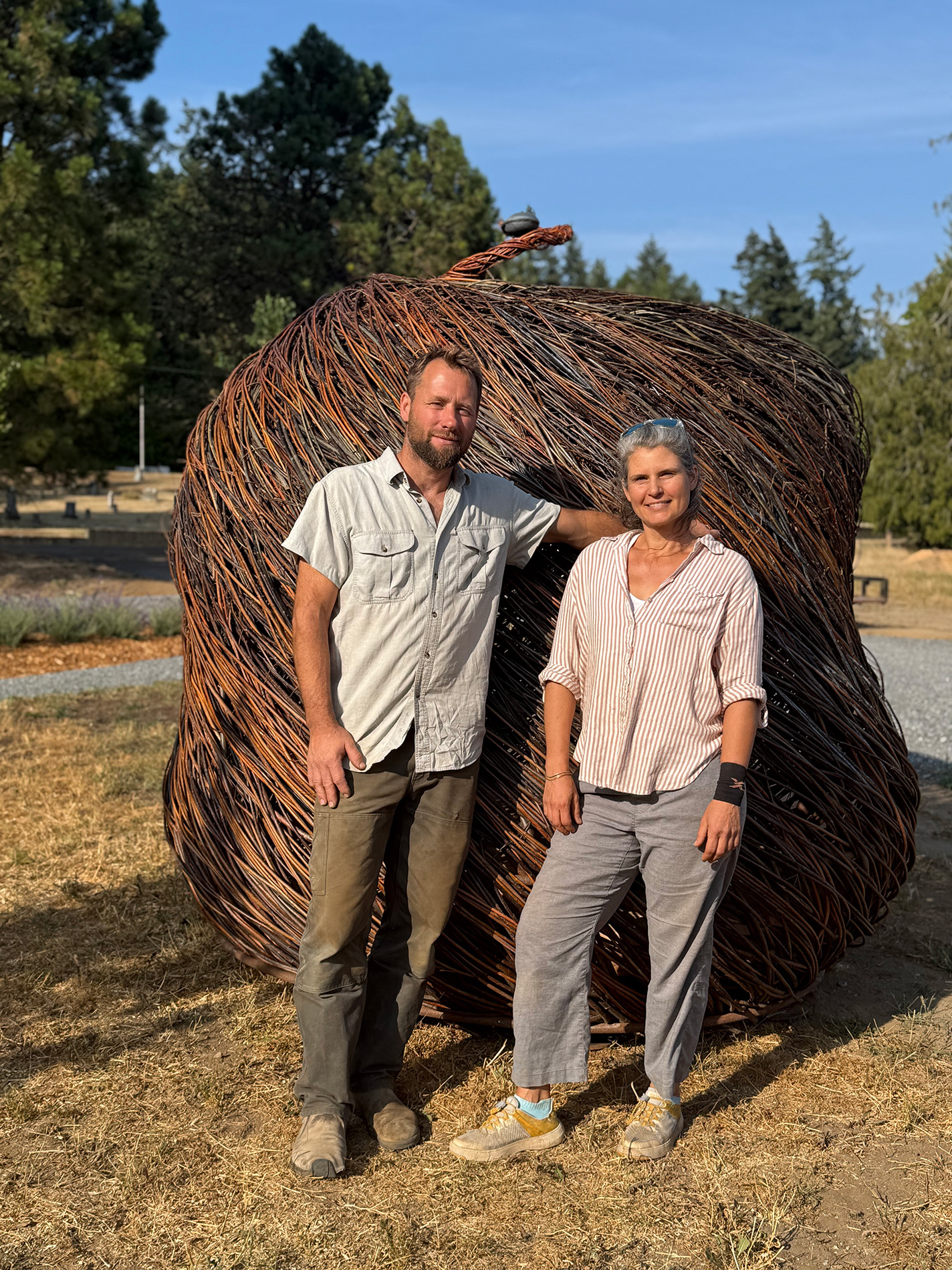
Bullock made a collaborative sculpture with the metal artist Zackarya Leck, and he brought more work to the barn. They were joined by Annie Starling Sparks, a ceramist down the road whose porcelain vessels are decorated with crackling, bubbling textures and realistic flower petals. Pete Welty, a stone-carving artist whose sculptures are common features in public spaces across the island, brought work, too. Looking around, Westcott realized that a team of different artists working in different craft media was forming.

Photo by Inese Westcott

Metal artist Zackarya Leck and basketry artist Maria Bullock in front of a large sculptural piece they created for Orcas Art Barn.

Yeats, who recently moved back to Orcas from Santa Fe, says that the Art Barn helped her see how she could maintain her art career while living in a more remote location. Her one-of-a-kind objects are created through an intimate process with her material, responding to natural characteristics like burls and bug trails. Her favorite wood to work with is the local madrone. “It’s just incredibly loaded with tension,” she says. “It’s very difficult to work with, but it’s so fun to carve, the colors are amazing, and it has a great fragrance, like a wine barrel in a way.” 

In September, Yeats displayed her work at Orcas Art Barn in a show called Form Follows Nature. This month, the barn will close for the season, marking the end of its second full summer being open. Orcas Island is packed with visitors during the summer, which can be a boon for sales, but many also cherish the island’s sleepy stretches of the year.

“I think for us artists, it’s a good time to produce some new work without being interrupted,” Westcott says. “Having the winter time is something nice to look forward to, to create.”

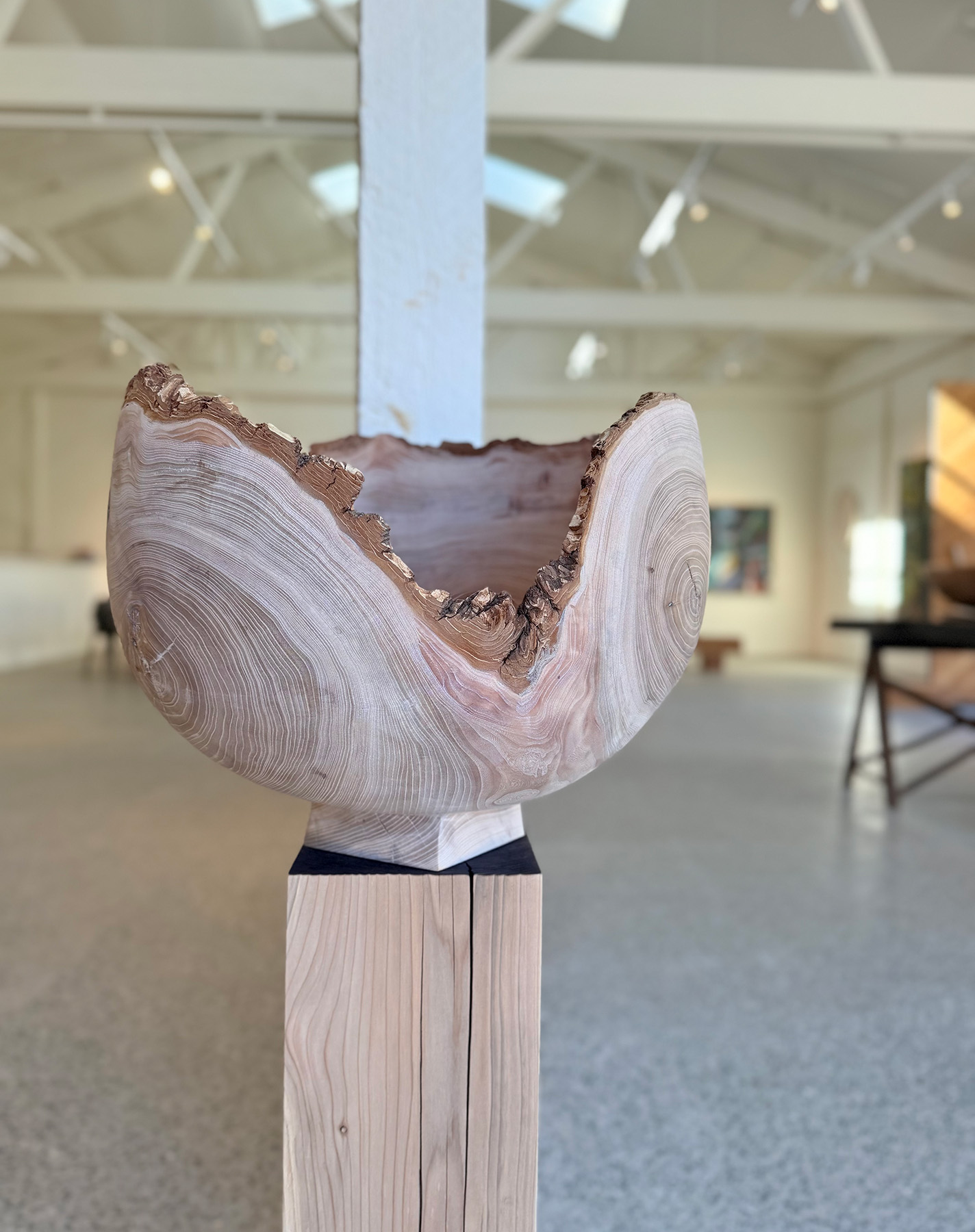
Photo by Inese Westcott

A vessel made by Yeats on display at Orcas Art Barn.

Megan Gannon is a writer and ceramist based in Seattle. She is a manager at Third Place Pottery, a community clay studio, and her journalism has appeared in National Geographic, High Country News, and Scientific American, among many other publications. 

Learn more about Orcas Art Barn online.

Website Instagram

This article was made possible with support from the Windgate Foundation.

Before you go!

We believe that making creates a meaningful world, and we hope you do, too. Deeply researched and impactful journalism on the craft community is in short supply. At the same time, being featured in craft-centered media and articles can have a major effect on a maker’s or artist’s livelihood, particularly those who are just starting in their career. You can help support our mission and the work of makers around the country by becoming a member or by making a gift today.

Thank you!
American Craft Council