Craft Around the Country

Mae Colburn Unravels Family and Fashion History from Wool Skirts

The Brooklyn artist has transformed her grandmother’s collection of 632 thrifted wool skirts into an exhibition and archive.

By Kate Schuler
May 4, 2026

Photo by Pablo Argüelles, courtesy of Sudestada

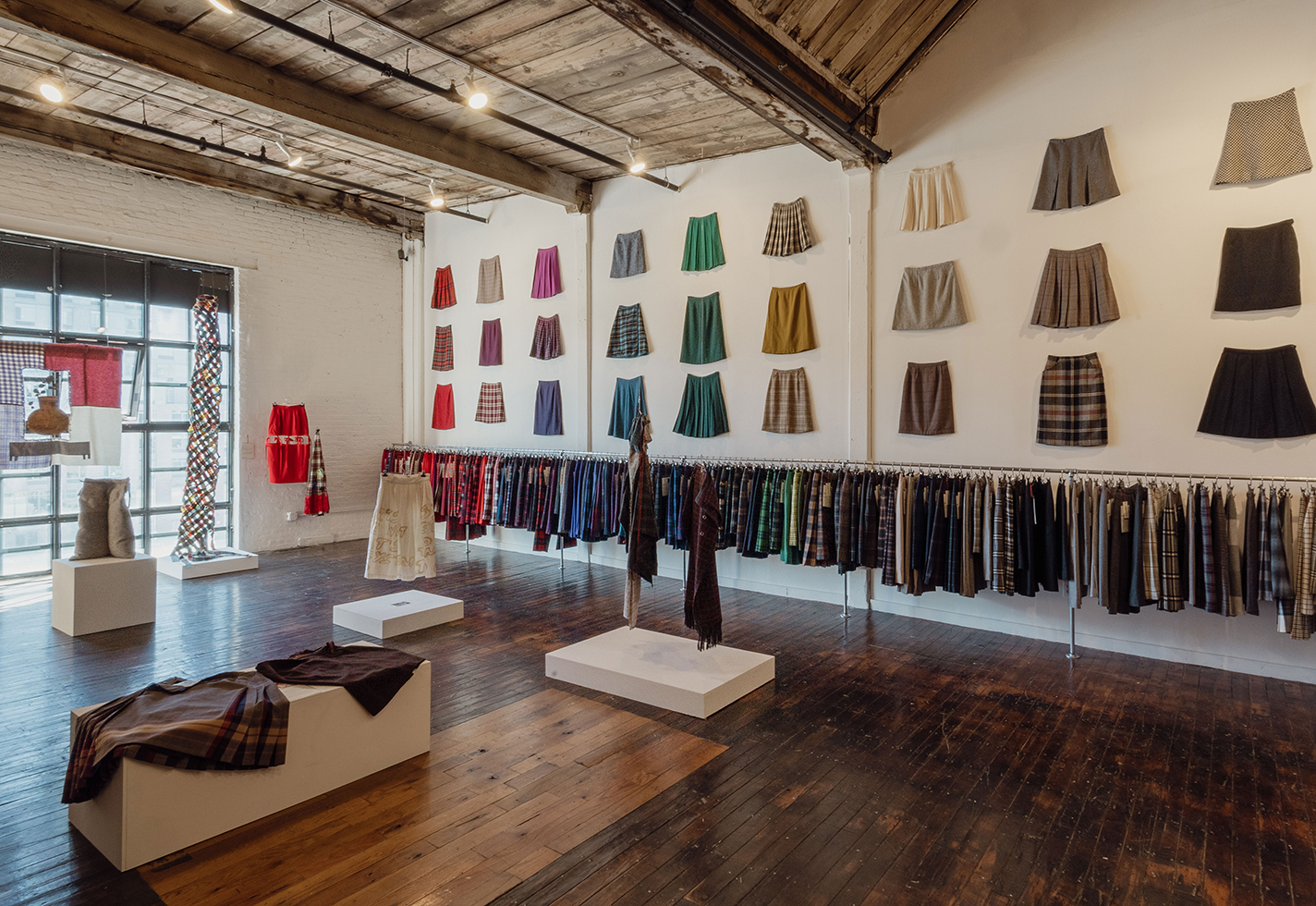
Mae Colburn and Gimena Garmendia organized the Wool Skirts exhibition at Brooklyn's Sudestada gallery to display Colburn's grandmother's collection of 632 wool skirts.

Unravel a rag rug and you’ll find “the constellation of someone’s life” in the remnants, says Mae Colburn. The material has a past. Fabric strips from a summer dress woven together with worn jeans and pantyhose begin to tell a story. 

Weaving a rag rug is, in a way, an act of archiving the everyday. “You’re tending to the materials, and by tending to them, you’re giving them value and understanding their potential,” she says. 

Colburn, a weaver, writer, and researcher based in Brooklyn, sees parallels between the ethos of rag-rug weaving—using worn, personal textiles to create something new and meaningful—and her current project, Wool Skirts. Reflecting the same consideration she has for scraps of fabric gathered for rag rugs, Colburn has become the steward of 632 wool skirts collected and assembled by her grandmother, Audrey Huset.

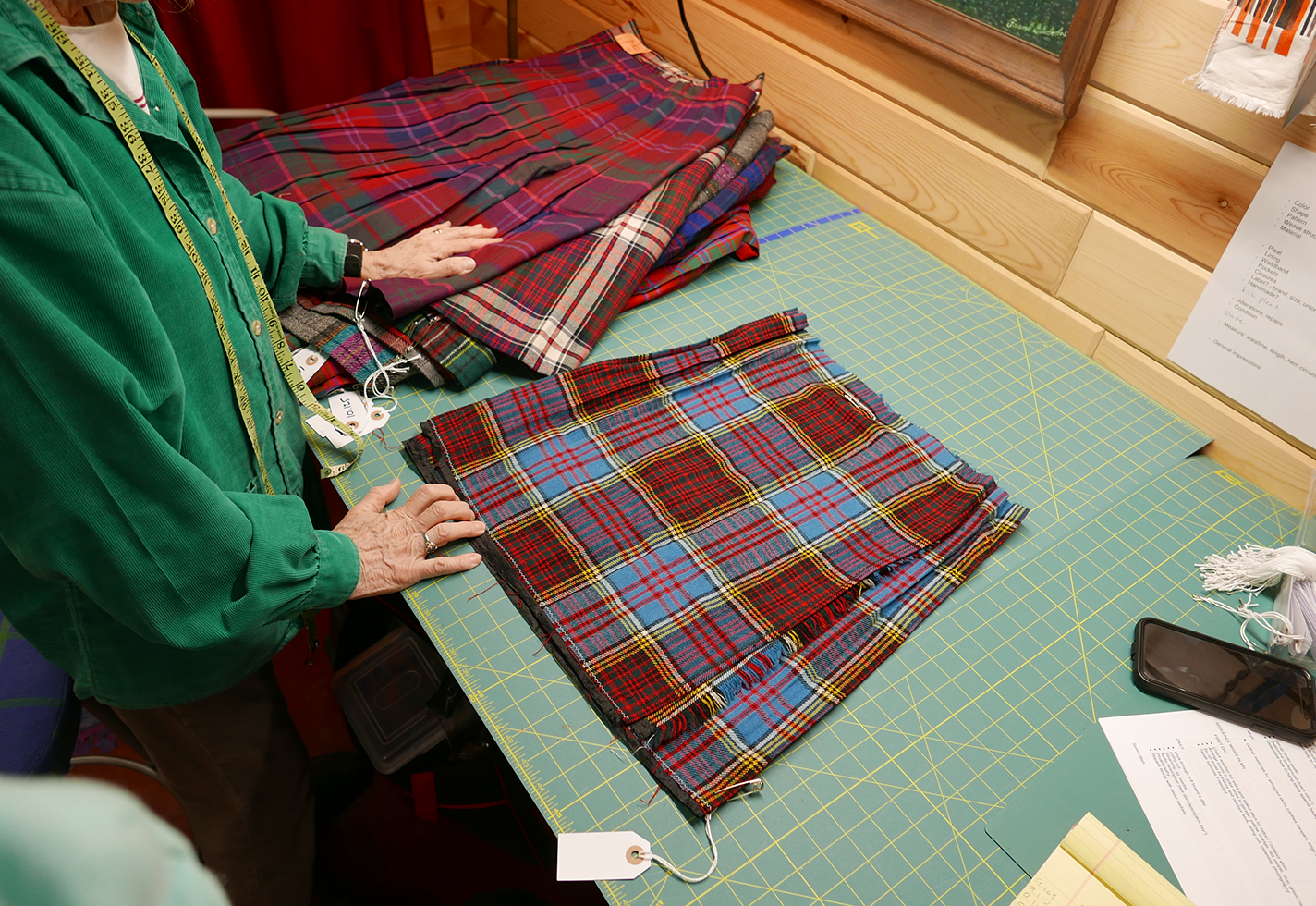
When Huset died in 2022, she left behind the skirts, which she collected from Minnesota secondhand shops beginning in the 1960s and spanning the next four decades. With her mother, a costume historian, and her father, a photographer, Colburn painstakingly documented each skirt, noting details like weave structure, closure type, pleat style, brand, alterations, and condition. 
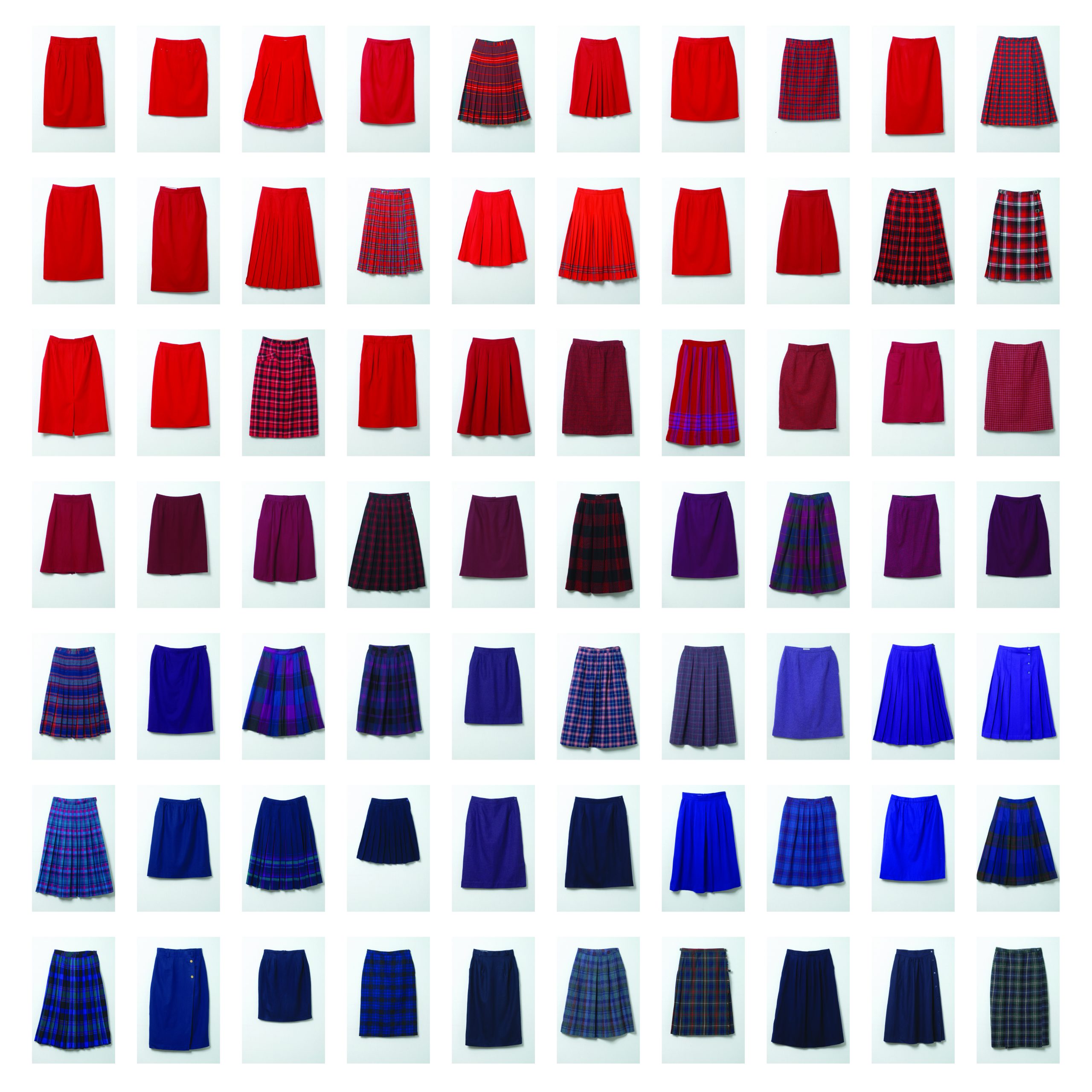
Photo courtesy of Sudestada

Seventy of the 632 skirts excerpted from the collection.
Colburn learned the foundations of this kind of recordkeeping from a decade working as studio manager and archivist for the Swedish-born artist Helena Hernmarck, known for her monumental photorealistic tapestries and detailed documentation. “Recordkeeping is part of what fueled and facilitated her career,” says Colburn, who is currently developing a catalogue raisonné of Hernmarck’s work.

The initial idea for the skirts was to create rag rugs from the entire collection. By weaving a one-square-foot test rug in 2023, she was able to calculate that using all the fabric from the skirts would have yielded about 1000 square feet when woven. But Colburn recognized that the number and variety of skirts required “plural destinies” for the collection. She kept a running list of ideas for what to do with it, soliciting input from friends and family. 

The project took new shape in December 2024 when Gimena Garmendia, founder of the Brooklyn studio and gallery space Sudestada, came across a video of Colburn and her mother talking about the skirts as part of New York Textile Month and reached out. Garmendia visited Colburn’s studio in Red Hook two months later.

As she showed Garmendia some of the skirts from the 50 or so boxes containing the archive, Colburn also shared the list of ideas she had been amassing about what the collection could become.

Photo by Pablo Argüelles, courtesy of Sudestada

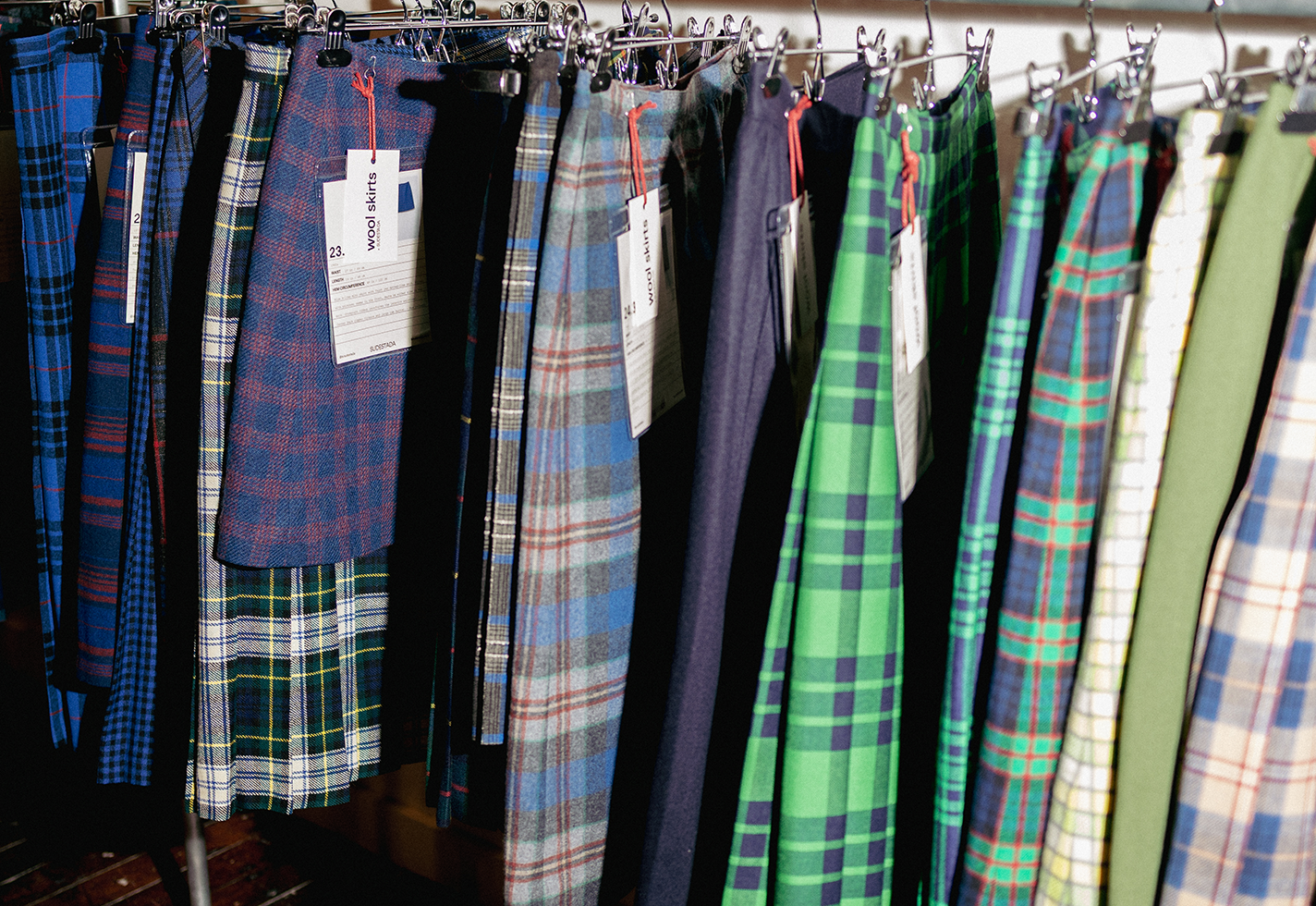
Some of the skirts, like the ones pictured here, were for sale at the Wool Skirts exhibition.

“I'm very happy to disperse the collection. But I do get greedy about recording exactly what happens with the process.”

— Mae Colburn

“What drew me in most was the openness of the list. Mae and her family were genuinely willing to experiment, collaborate, and imagine many different futures for the collection,” says Garmendia. She immediately saw potential for experimentation, exhibition, and participation in the ideas on that piece of paper, values that are also core to her studio and gallery work.

“That was the moment I knew this was more than an archive, it was a living project,” Garmendia  says. 

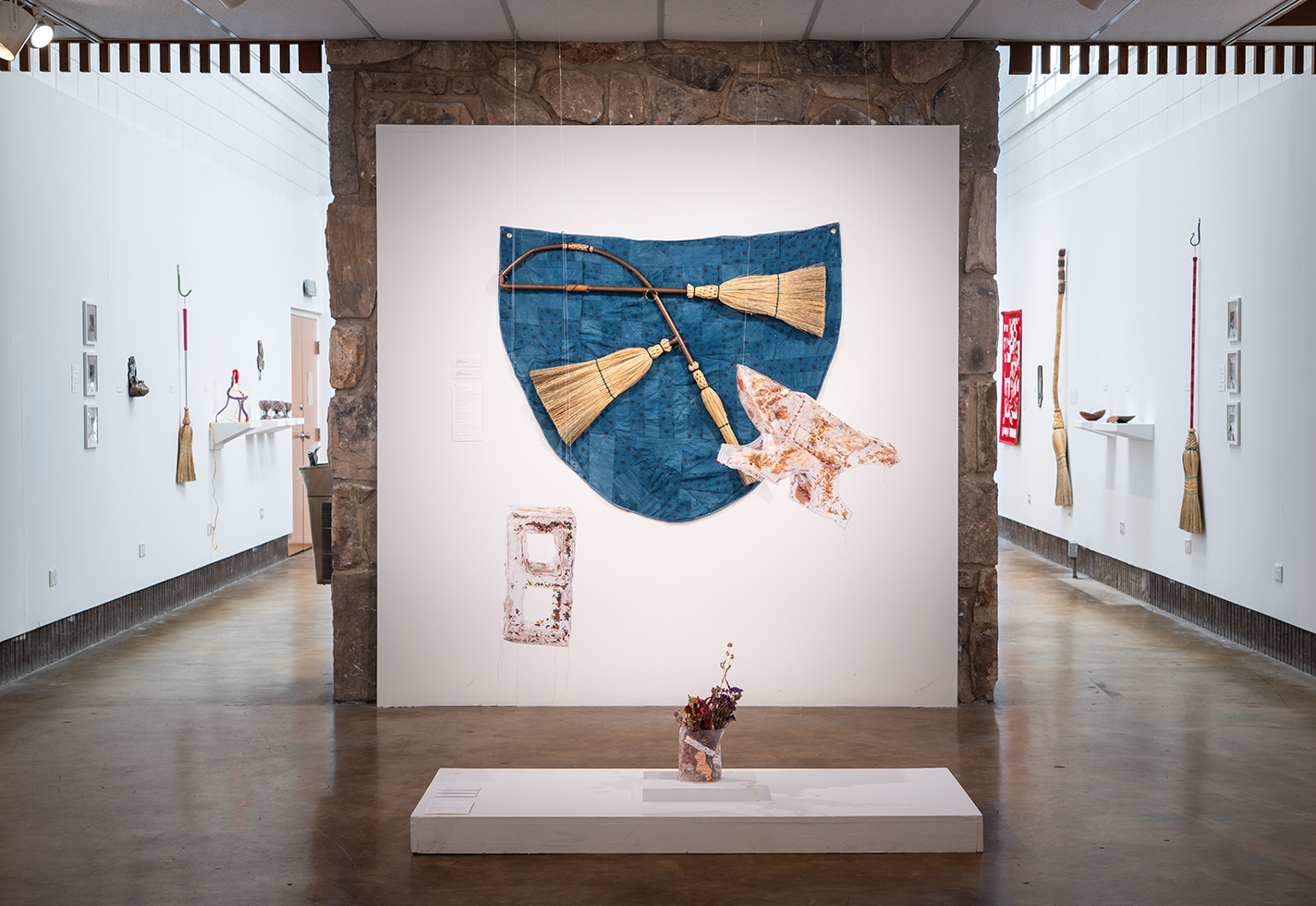
Within months, the pair had co-curated an exhibition at Sudestada’s Greenpoint gallery space, inviting 21 artists to reimagine skirts from the collection. Another 130 skirts were on display and available for purchase. “We both have this real interest in participation,” Colburn says. “That became part of our joint curatorial method very quickly.” 

“That transformation, from a private archive to a shared cultural project, felt very powerful,” Garmendia says. 

Photo by Mae Colburn, courtesy of Sudestada

Colburn and her mother Carol Colburn, a clothing historian, recorded themselves describing each skirt in the collection, noting dimensions, silhouette, decade, condition, and more.

The artists they recruited brought a range of skills from both the fashion and craft worlds. “You’re trusting that other people will bring things to the table that you yourself couldn’t envision or imagine,” Colburn says. 

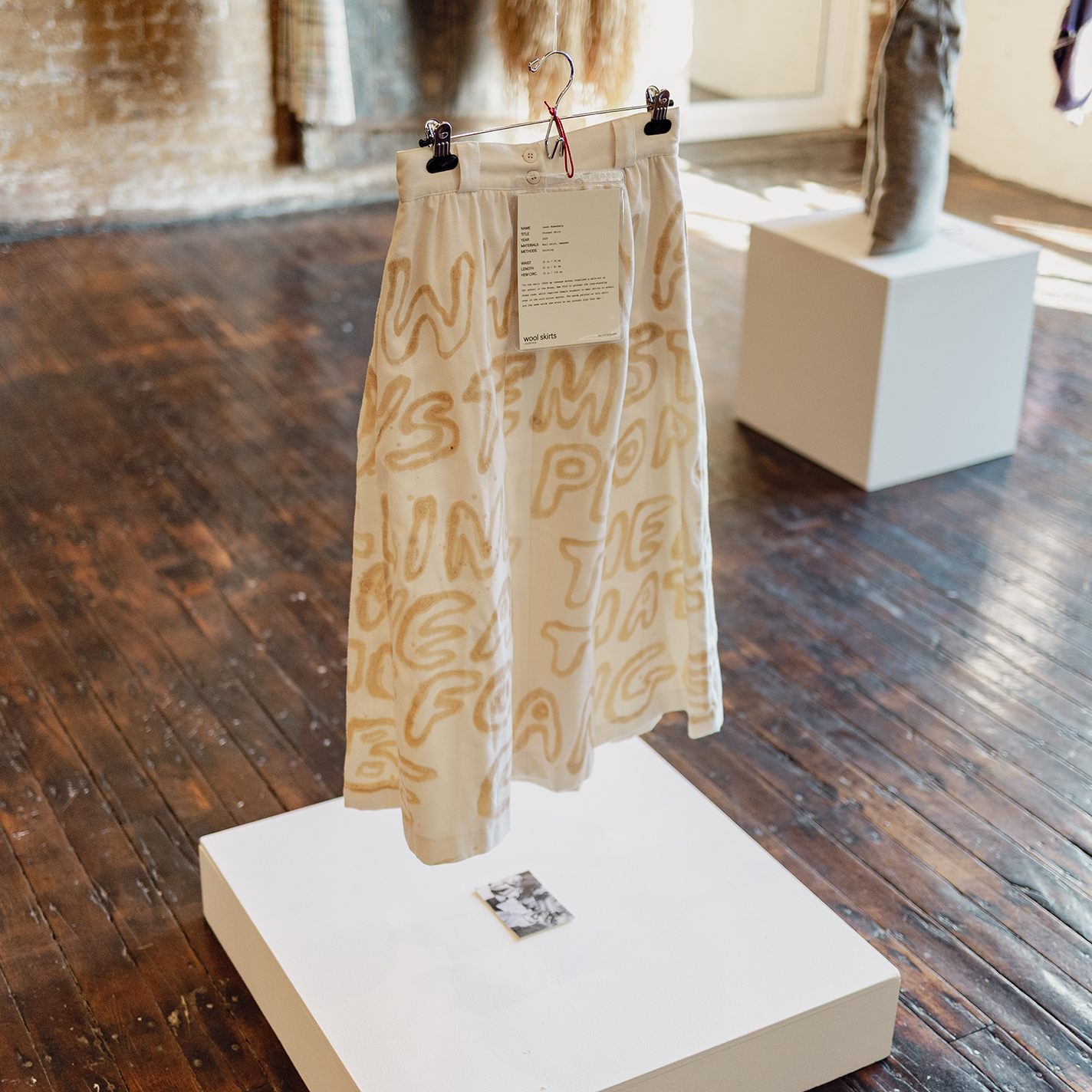
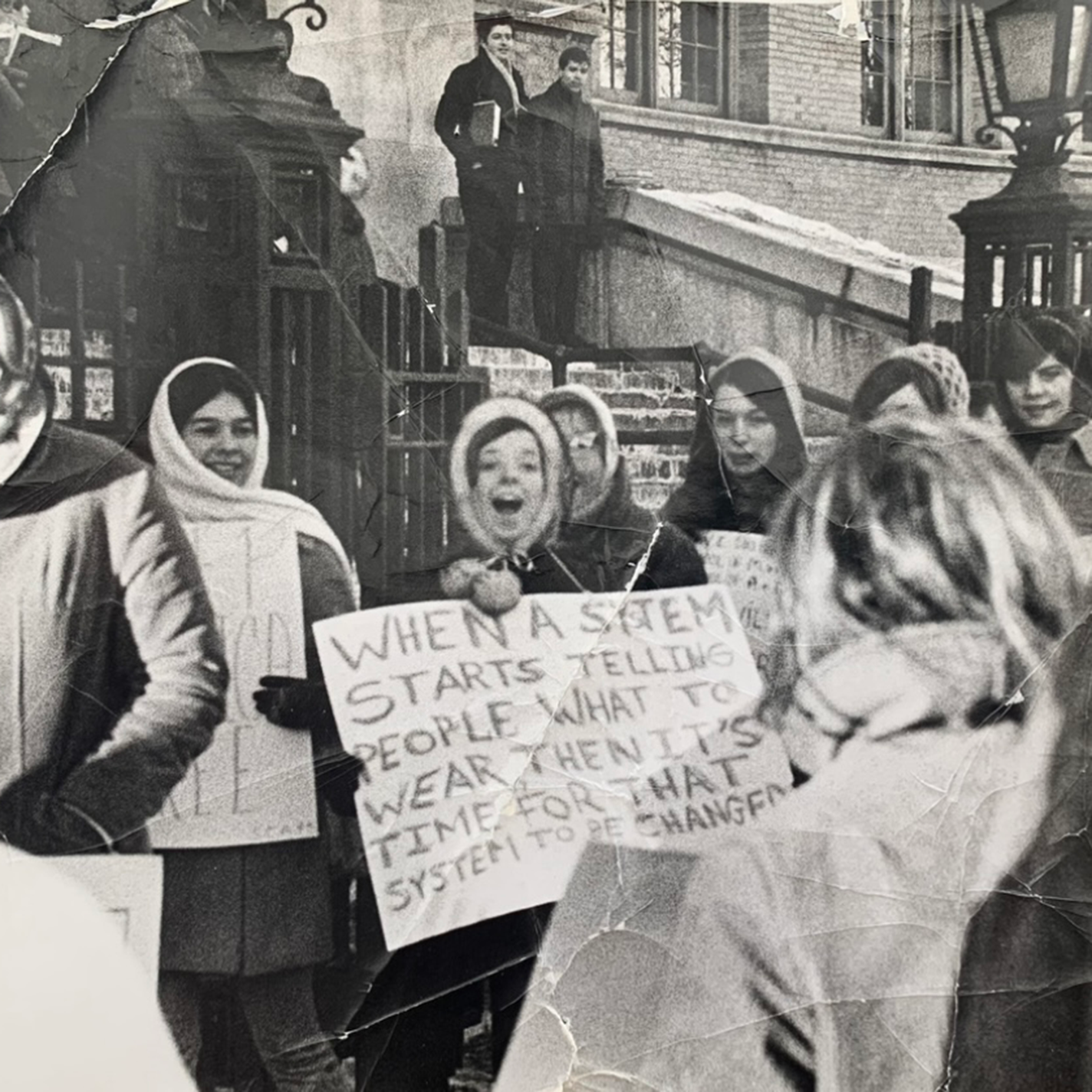
Jason Rosenberg, a multidisciplinary artist, had shown Colburn a photo of his mother from the early 1960s, during a protest of her high school’s dress code. The cream-colored skirt that Rosenberg selected from the collection came back with the text from his mother’s protest sign painted in beeswax: “When a system starts telling people what to wear, then it’s time for that system to be changed.” Rosenberg, who works with natural dyes and Batik techniques, left the skirt undyed. “He’d done the transcription in beeswax and let it be, and it was just really perfect as it is,” Colburn said. 

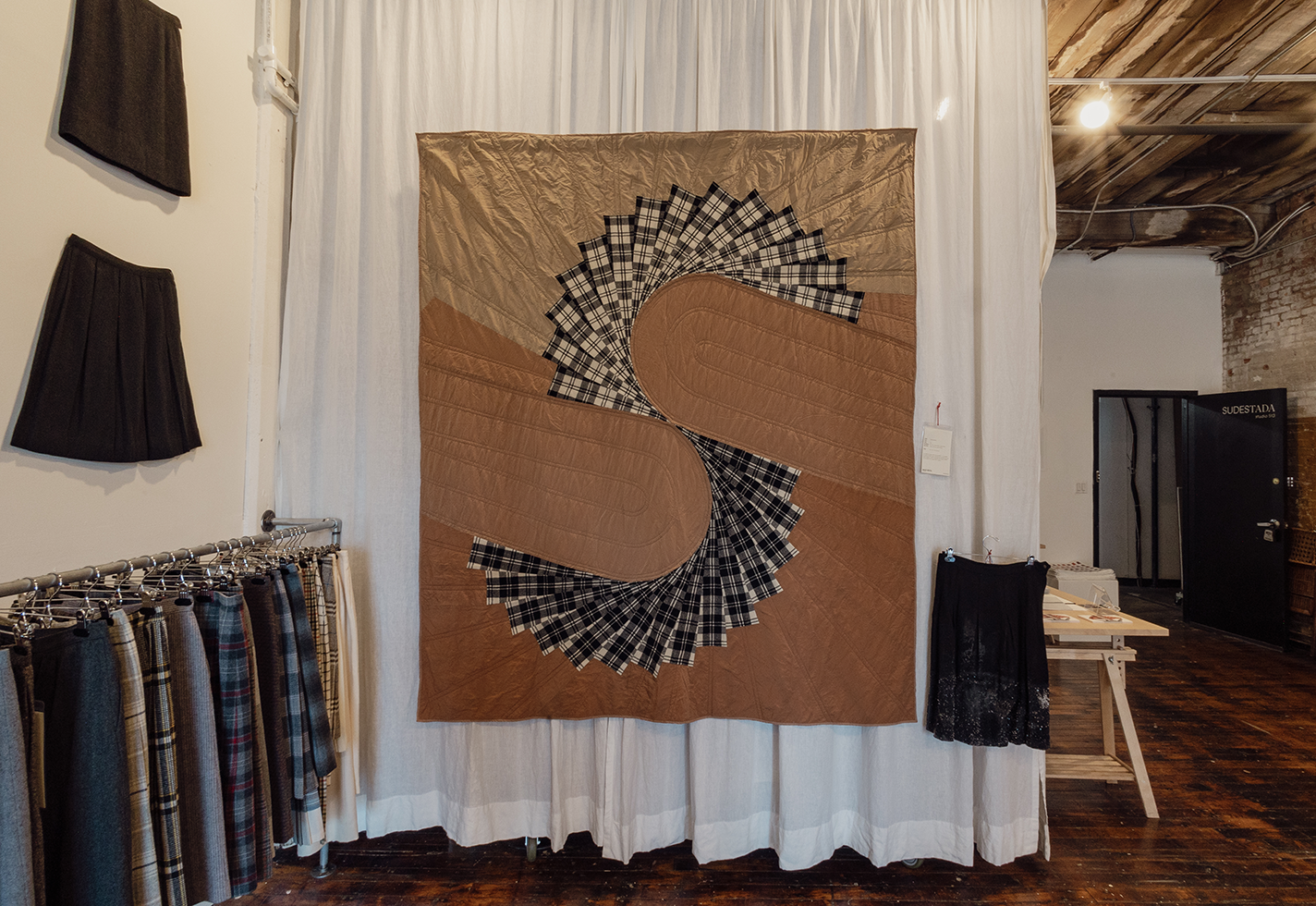
Many of the artists who created tapestries worked with more than one skirt. Lorenza Lattanzi, a hand quilter and weaver based in New York, selected a single black-and-white pleated plaid skirt to incorporate into her quilt. She completely deconstructed it and transformed its rectilinear pattern into sinuous black-and-white curves infused with a sense of movement.

One of the most unexpected pieces came from Colburn’s friend and frequent collaborator Mariah Smith, an architect. “She called to say it was eight feet tall. That was a surprise,” laughs Colburn. Smith cut loud plaids into strips, applied fabric stiffener, braided them into a towering column, then coated the whole thing in polyurethane. Installed in front of a window at Sudestada, it became something like a stained glass window.

Photo by Pablo Argüelles, courtesy of Sudestada

Lorenza Lattanzi, S, 2025, wool, cotton fabric, cotton thread, 86 x 76 in.

  • Photo by Pablo Argüelles, courtesy of Sudestada

    Jason Rosenberg, Protest Skirt, 2025, wool, beeswax, 32 x 30 in.

  • Photo courtesy of Jason Rosenberg

    Jason Rosenberg’s mother holding a sign that reads: “When a system starts telling people what to wear, then it’s time for that system to be changed.” In the early 1960s, she organized a walk-out at her Bronx school to protest rules that required female students to wear skirts. The words painted on Rosenberg’s skirt are the same words she wrote on her protest sign that day.

As the skirts are shared, distributed, and reimagined, the documentation grows. “That’s what I’m replacing the collection itself with,” says Colburn. “I’m very happy to disperse the collection. But I do get greedy about recording exactly what happens with the process.” 

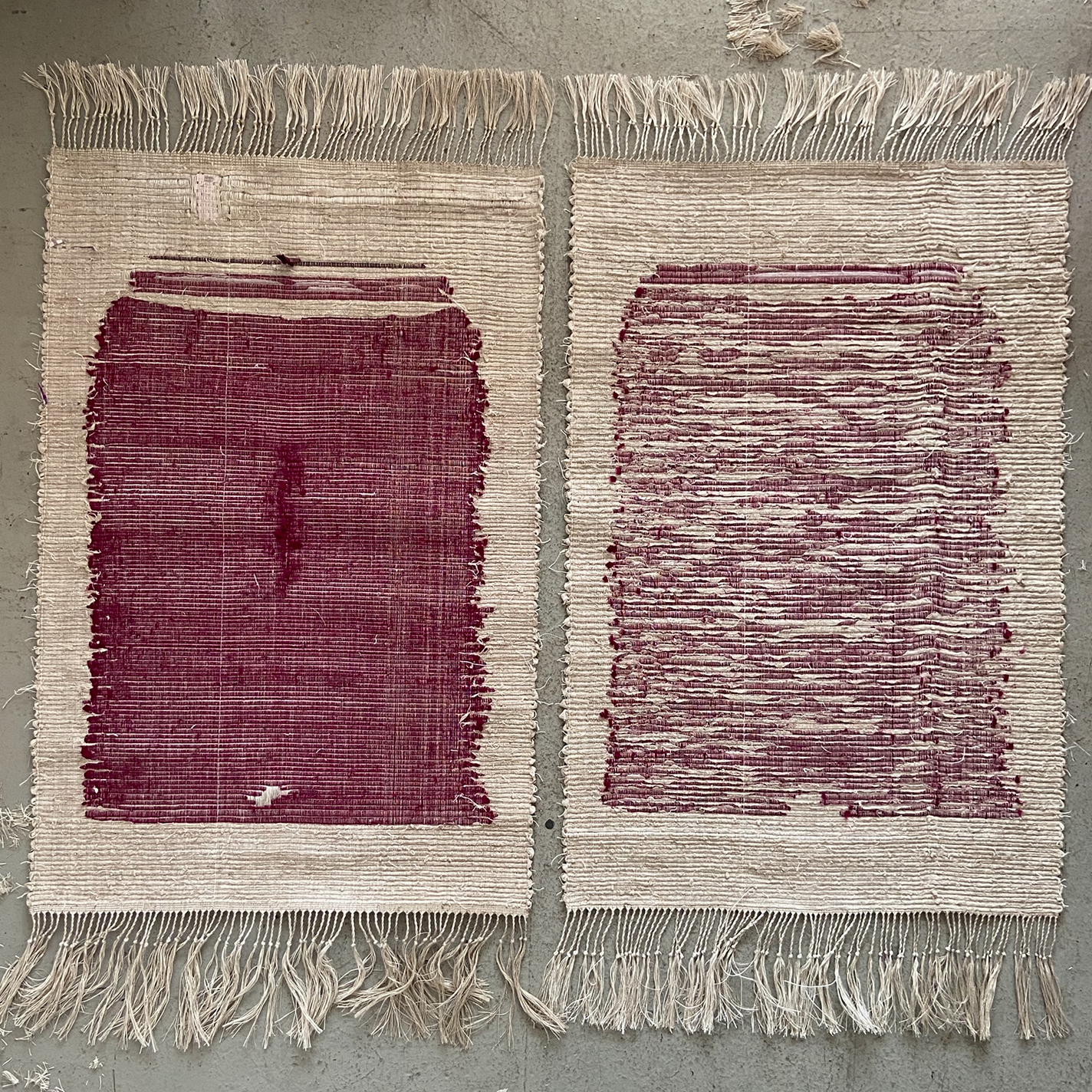
While spending much of her time managing the Wool Skirts project, Colburn has incorporated some skirts into her own work. For Wool Skirt Study (skirt no. 1.014), she chose a skirt that had, as she describes, “a perfect hole chewed through it.” 

For about a decade, her grandmother’s skirts had been stored in boxes in her parents’ garage in Duluth, Minnesota, where the cold offered some protection from moths. But a mouse had taken shelter in the first box she opened with her family after her grandmother’s death. With fabric from that skirt, Colburn wove two rag rugs while preserving the silhouette of the skirt—including the mouse-eaten hole—to create a diptych. The left panel uses the wool layer of the skirt, while on the right, a mirror image incorporates the acetate lining.

While the exhibition at Sudestada closed in March, the Wool Skirts project is ongoing. The idea is for every stage of the project to be different as they build on what they’ve learned. “There have to be many different destinies for this collection,” Colburn says.

Photo courtesy of Mae Colburn

Colburn woven the fabric from a mouse-eaten skirt into this rag rug.

Kate Schuler is a potter, writer, and editor based in Washington, DC. 

Learn more about Mae Colburn and Wool Skirts online.

Mae's Website Instagram Wool Skirts Website

This article was made possible with support from the Windgate Foundation.

Before you go!

We believe that making creates a meaningful world, and we hope you do, too. Deeply researched and impactful journalism on the craft community is in short supply. At the same time, being featured in craft-centered media and articles can have a major effect on a maker’s or artist’s livelihood, particularly those who are just starting in their career. You can help support our mission and the work of makers around the country by becoming a member or by making a gift today.

Thank you!
American Craft Council