A sea of blue kites floats overhead, filling much of the J.M. Long Gallery at Honolulu’s Bishop Museum.
Ea Mai ‘Eiwa: Patterns of Practice, the exhibition on view in that space through February 17, 2027, traces generations of creative and cultural practice within a family based in the Big Island city of Hilo. Together, the kites make up Kūhaʻimoana, hula practitioner and matriarch Nālani “Aunty” Kanaka‘ole’s last large-scale installation before her passing earlier this year.
The work takes its name from a chant describing the migration of nine shark gods from their ancestral homeland of Kahiki to Hawaiʻi and gives the exhibition its title: Ea Mai ‘Eiwa, or “here are the nine.” “Kūhaʻimoana,’ for me, has many layers to it,” says Kanaka‘ole’s son, Kūhaʻoʻīmaikalani Zane, creative director of Sig Zane Designs and SZKaiao. “It’s a migratory chant that compares migrations to waves of ocean-navigating sharks.”
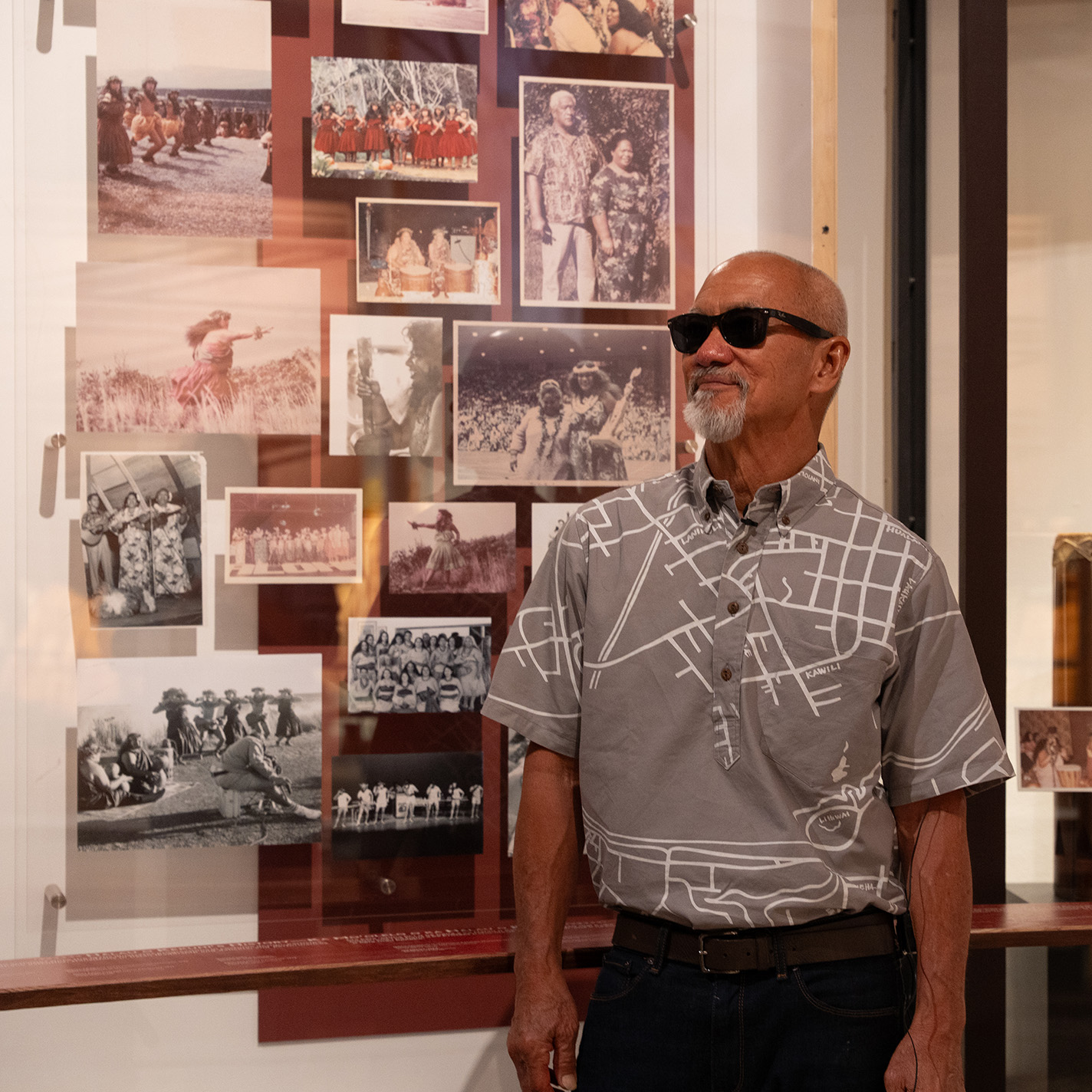
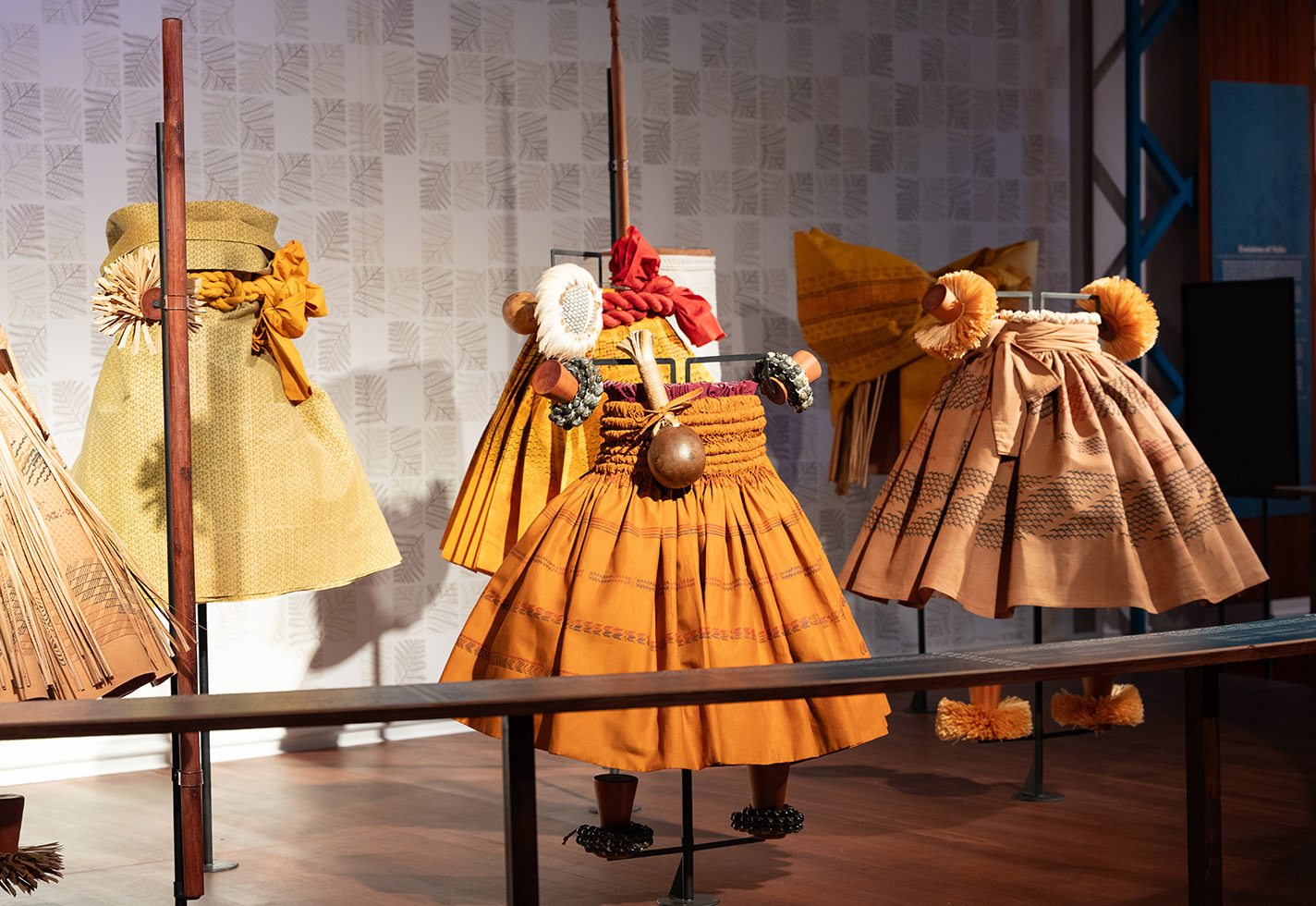
The family’s practice is grounded in hula ‘aiha‘a. Kanaka‘ole, a revered kumu hula, or master hula teacher, centered her practice around this powerful, low-postured style associated with the volcano deities Pele and Hi‘iaka. The teachings of hula ‘aiha‘a also shape the work of her husband, famed graphic artist and cultural practitioner Sig Zane, and their son, Kūhaʻoʻīmaikalani Zane.
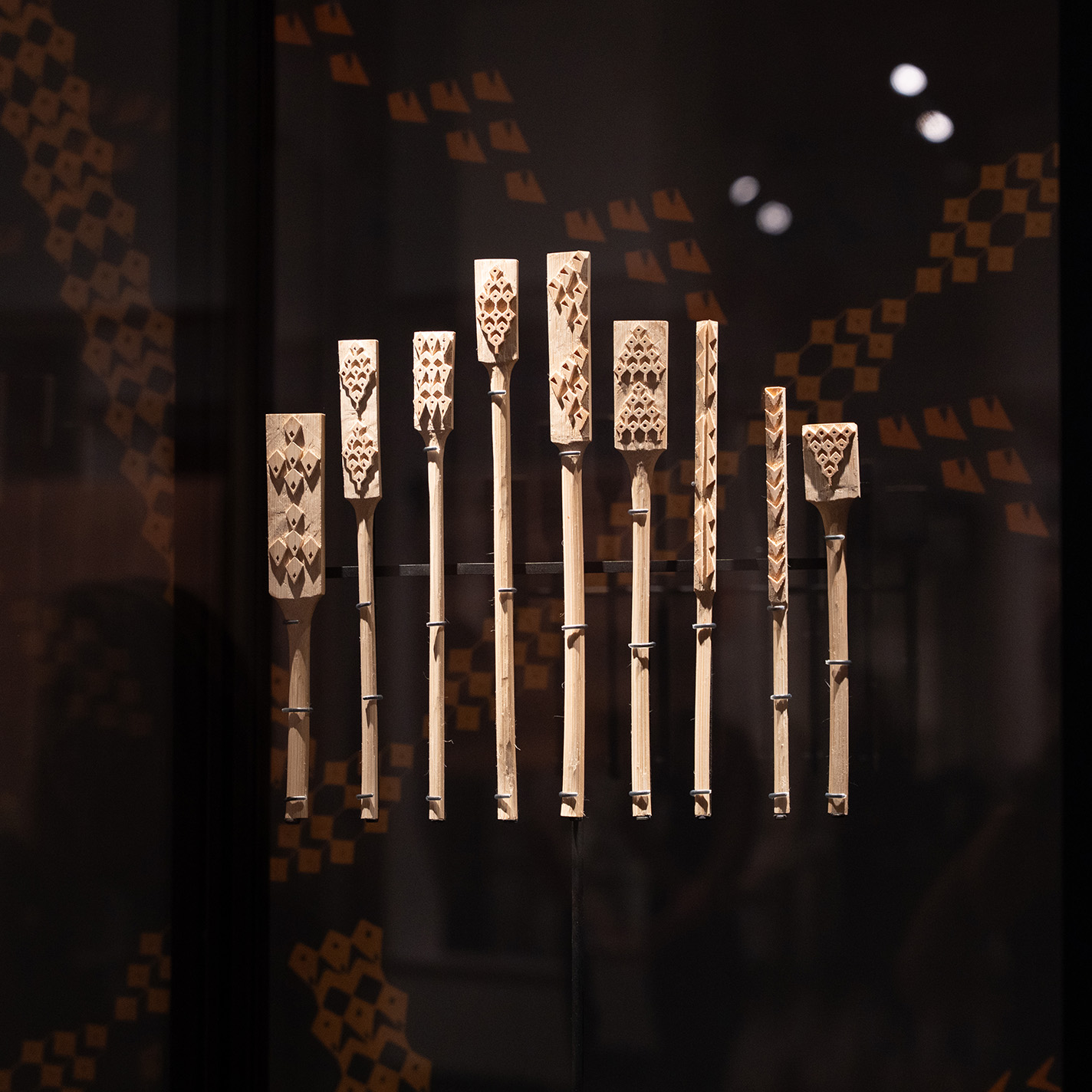
‘Ohe kāpala (bamboo stamps) are small tools made from sections of bamboo carved with geometric designs and used to print patterns onto kapa (Hawaiian barkcloth).