Craft Around the Country

Alaska Native Weavers Turn Baleen into Masterful Vessels

Once dismissed as a “tourist” craft, intricate woven baleen baskets made by the likes of MaryJane Litchard have become a collectible art form.

By Megan Gannon
August 25, 2026


Photo courtesy of MaryJane Litchard

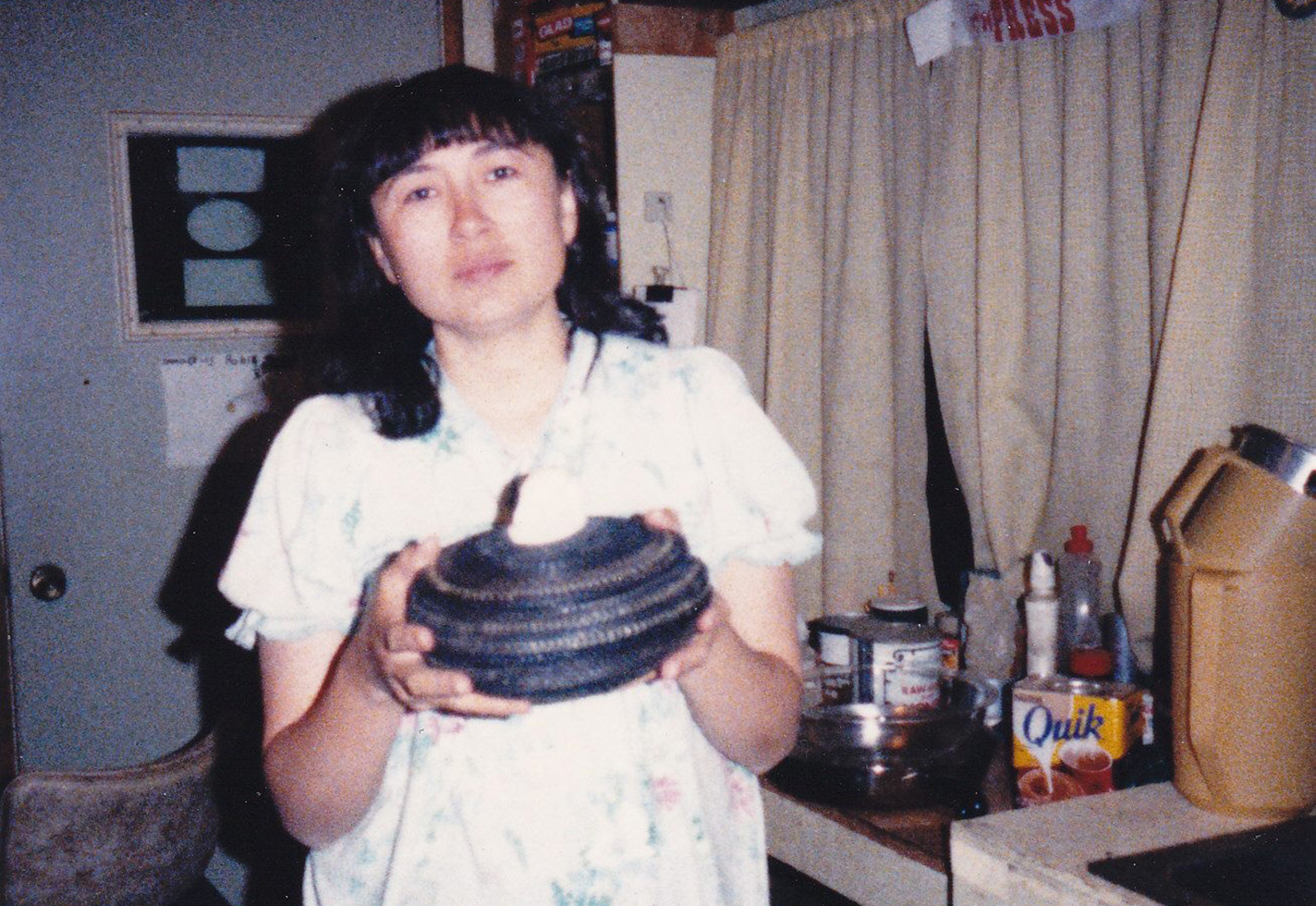
MaryJane Litchard, a Iñupiaq artist from Alaska, holds the largest baleen basket she has ever made.

Summertime in the subarctic demands a host of harvesting activities. There are greens to gather from the beach, berries to pick from the tundra, salmon to catch from the rivers. Still, Nome-based Iñupiaq artist MaryJane Litchard, one of a small number of artists in Alaska who practice baleen weaving, is determined to make time for weaving hair barrettes with baleen she gets from whaling captains in Utqiaġvik, the northernmost city in the US. 

But before she even can weave, there’s weeks or even months or years of preparation.

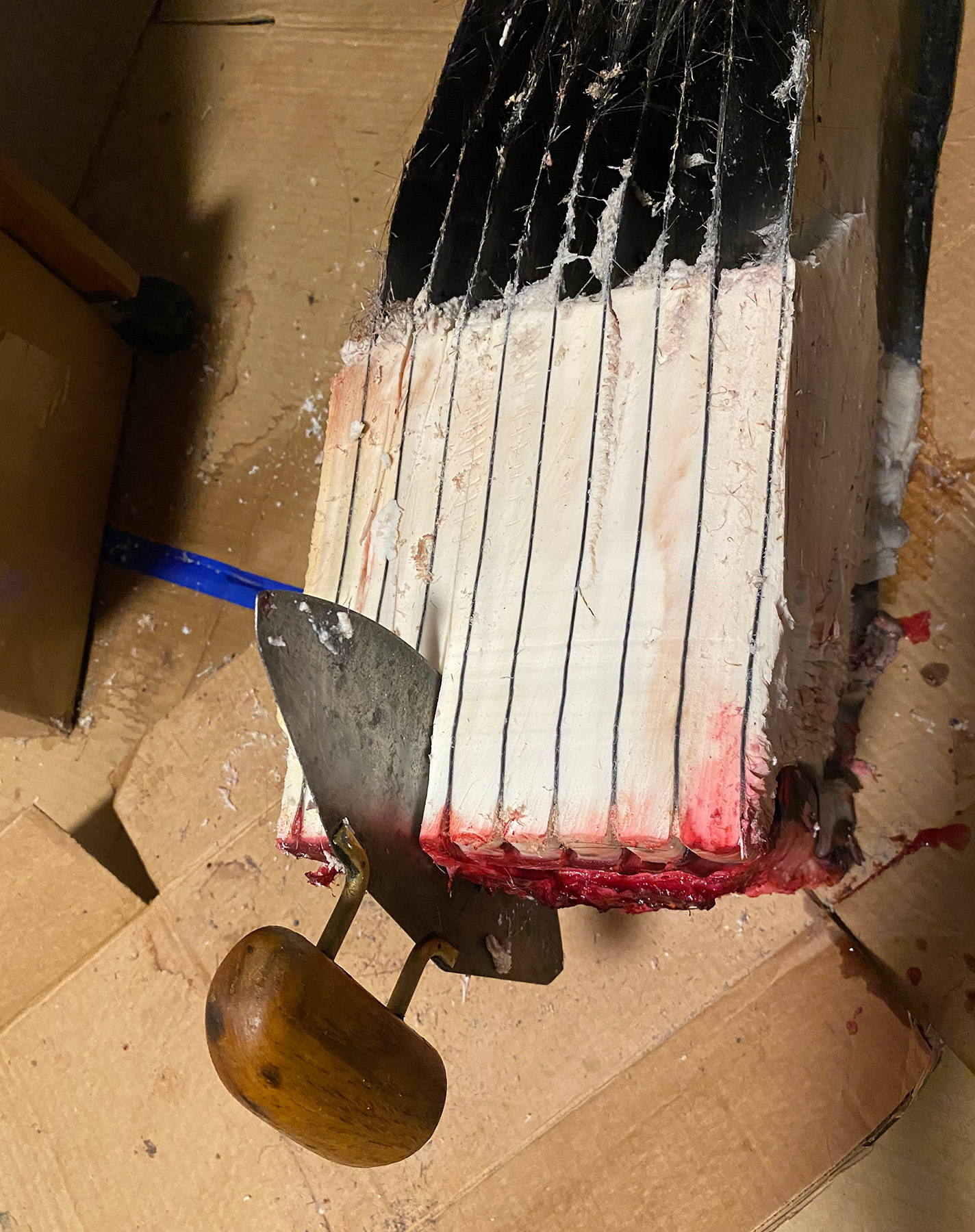
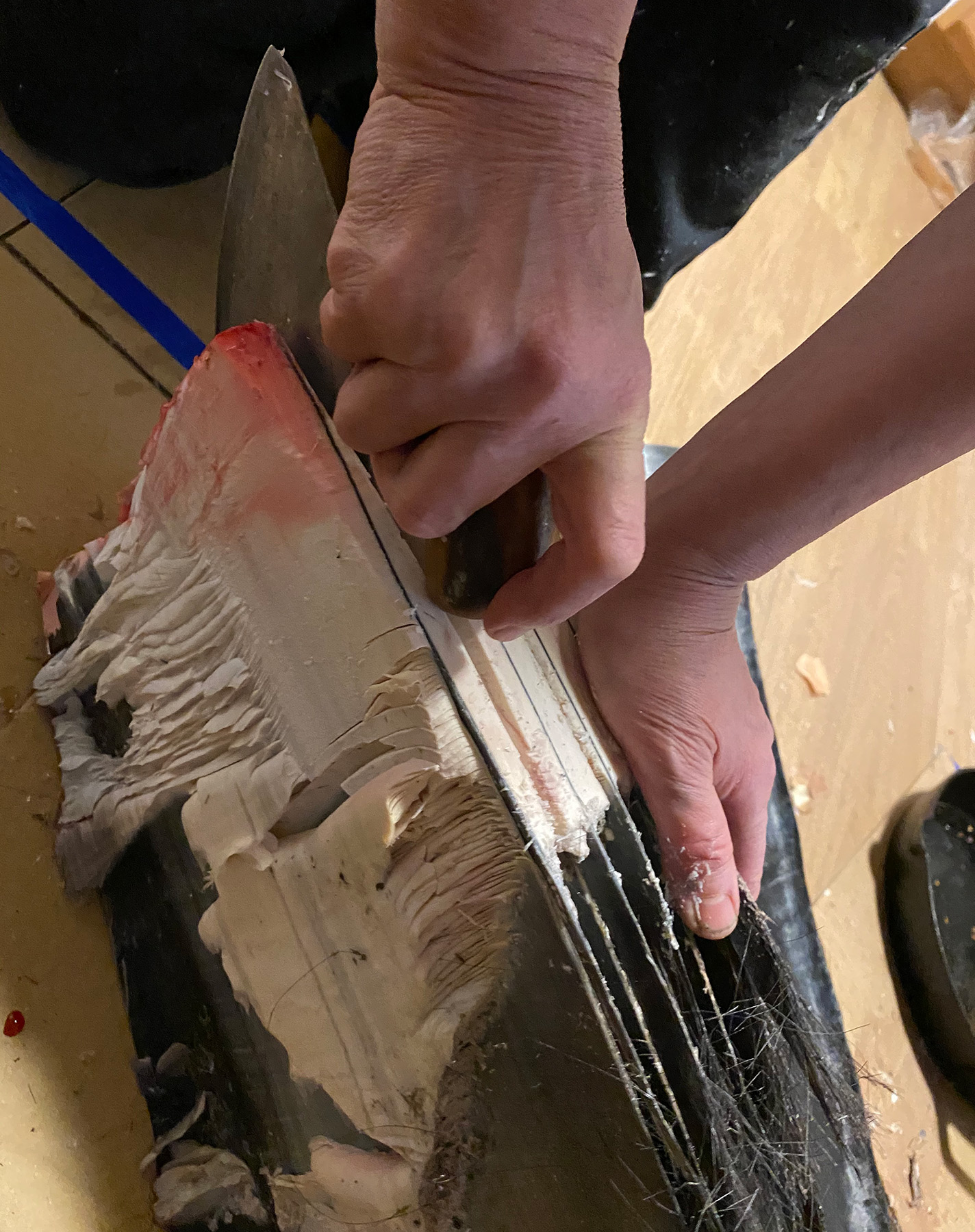
After getting a shipment of baleen, Litchard separates the baleen plates from the gums, splits them while they’re still fresh and flexible, scrapes away all the matted baleen in between, and slices long, thin weaving strands and coiling strands with a bandsaw. She keeps all the materials in her freezer between steps in the process so she’s ready when inspiration strikes.

“When I get in the mood, I can whip out maybe four little tiny baskets,” Litchard says. “But I have to make sure that I have everything prepared. Once you start weaving, it’s so much fun.”
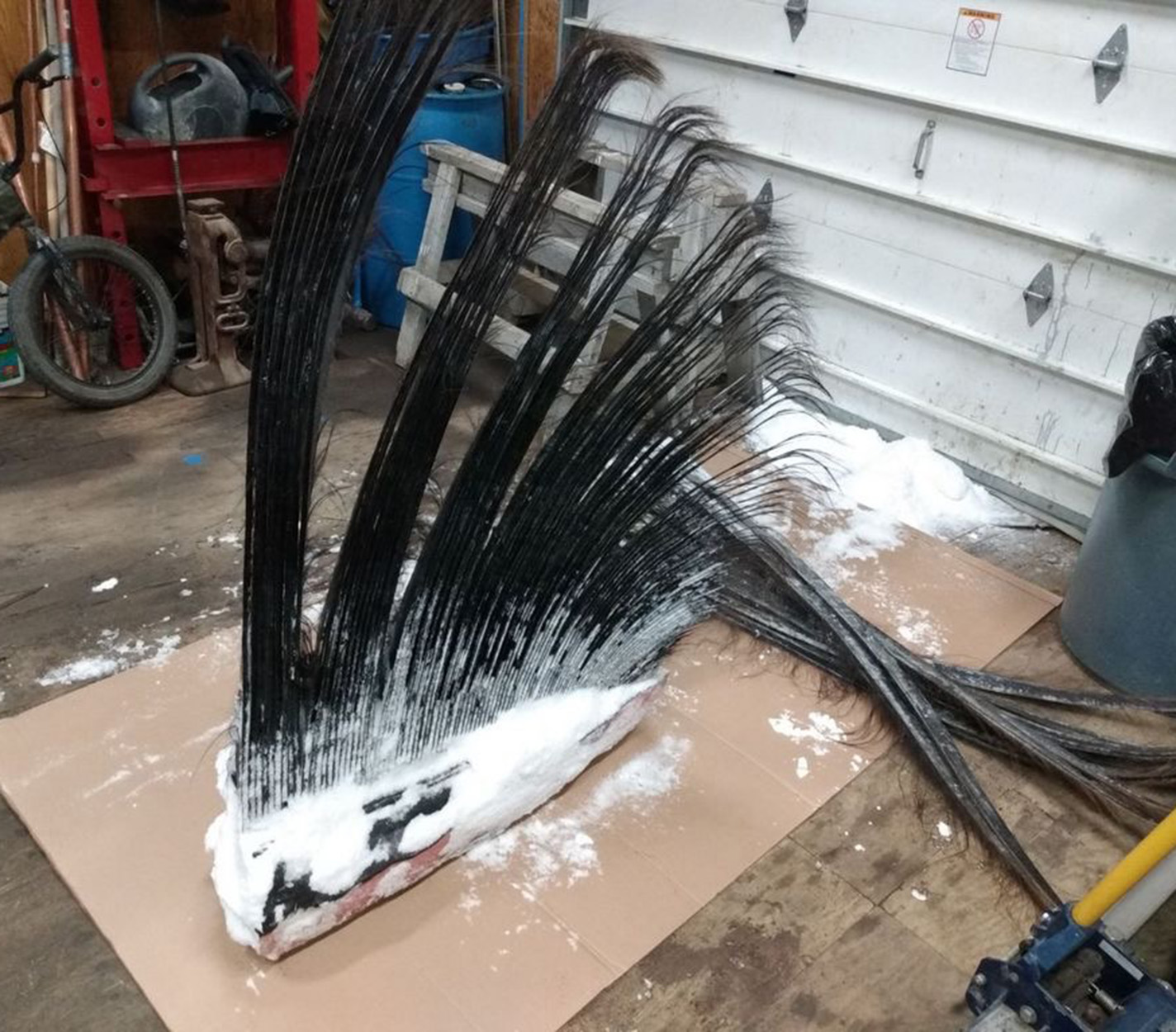
Photo courtesy of MaryJane Litchard

A fresh shipment of baleen, still attached to a bowhead whale's gums.

  • Photos courtesy of MaryJane Litchard

    A rack of baleen being prepared.

  • Photo courtesy of MaryJane Litchard

    Baleen being cut with an ulu, a knife frequently used by Iñupiaq woman.

Long before contact with European settlers, Iñupiaq communities in Alaska hunted bowhead whales, using every part of the animal to sustain their way of life. The meat and thick blubber layer furnished a robust supply of food and fuel; bones supported sod pit houses. A filter-feeding bowhead whale can also have more than 600 plates of baleen in its mouth, and each plate often stretches over six feet long. Made of keratin and resembling laminated plastic, the material proved valuable for making buckets, sled runners, and other tools because it was strong, flexible, and did not collect frost. 

Today, along the northwest coasts of Alaska, Iñupiaq whaling crews sustainably harvest bowhead whales as a food source and to continue a keystone part of their culture. In the US, only Alaska Natives are allowed to harvest bowheads and to make handicrafts from their baleen.

Weaving baleen baskets is a young tradition, dating to the early 20th century, when whaler Charles Brower persuaded an Iñupiaq craftsman named Kinguktuk to replicate a willow-root basket using baleen in Utqiaġvik. At that time, American commercial whaling had ended and, along with it, so had the market for baleen to make corsets, buggy whips, and other commercial products. According to the scholar Molly Lee’s 1983 book Baleen Basketry of the North Alaskan Eskimo, it’s likely that Brower commissioned Kinguktuk to make souvenirs.

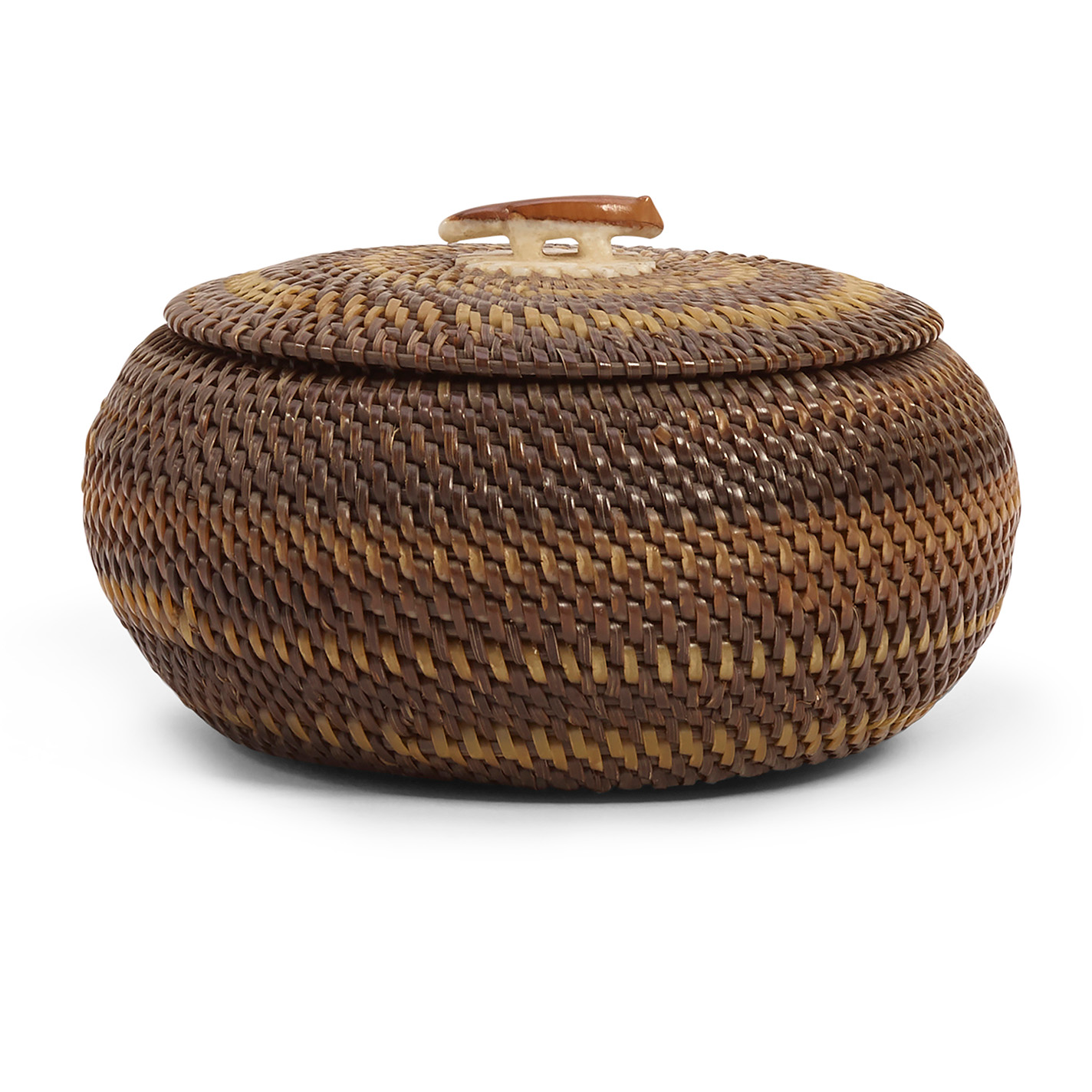
Photo courtesy of Bonhams

A lidded baleen basket with a geometric fox finial attributed to Kinguktuk, the artist who invented baleen baskets as a craft form sometime between 1914 and 1918. The basket was originally in the collection of Charles Brower, the American whaler who first commissioned baleen baskets from Kinguktuk. It was sold at a Bonhams auction in 2024.

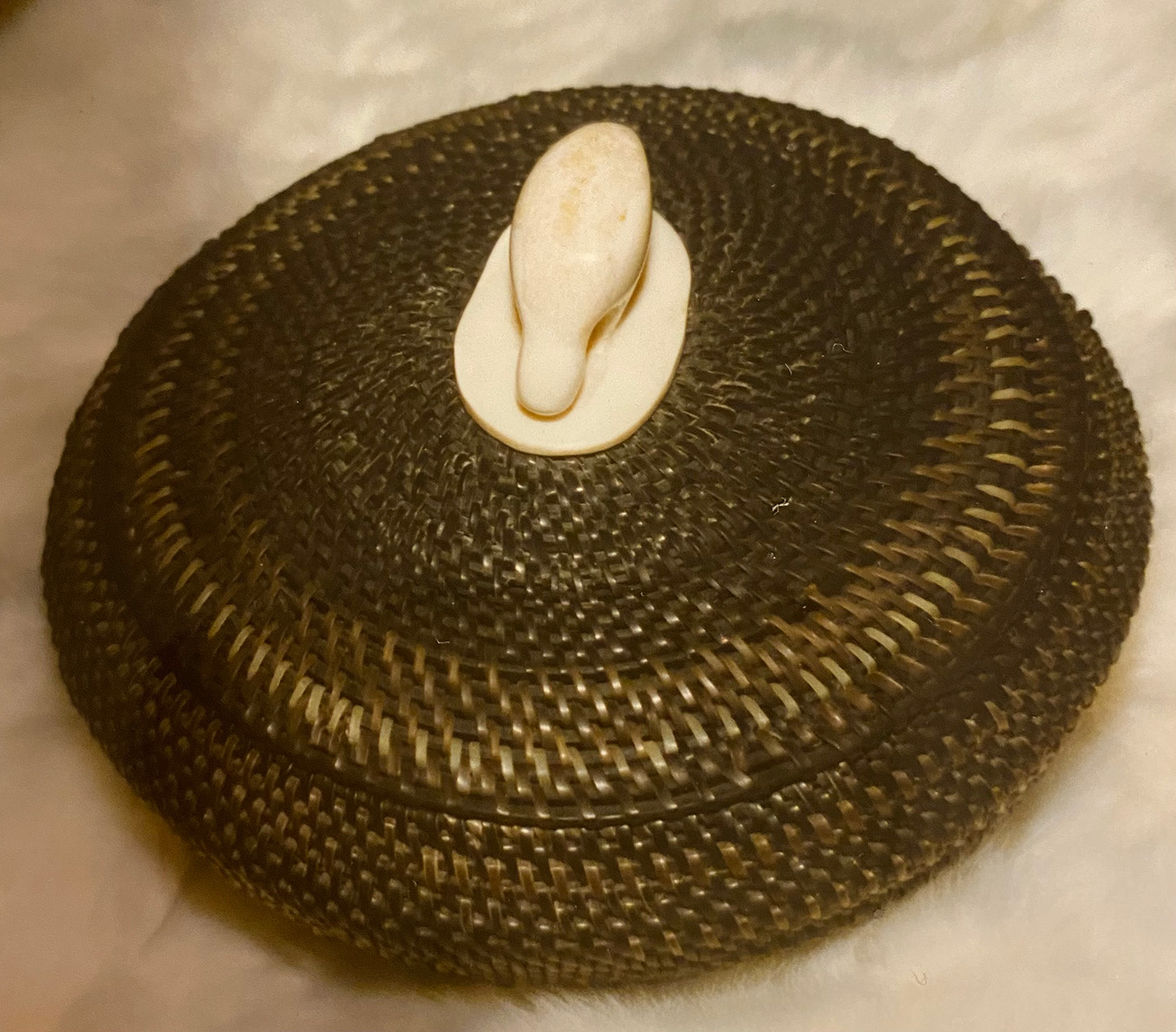
A well-executed, tightly woven basket often results in a clean form with a dark polished finish. In rare cases, baskets are woven in oval or square shapes, but they are usually round and can range from cylindrical to spherical to angled forms. Lids can be flat or come to a higher peak. 

Since baleen is not pliable enough to be bent into a tight basket bottom, baleen baskets need starter pieces, often made from a walrus-ivory disk. Kinguktuk first made his lids with unadorned starter pieces, and later with spare, geometric knobs, but there is now a wide variety of basket toppers, including intricately carved finials depicting polar bears or walruses or people. Although black is the dominant color, baleen can also have a variety of gray and white shades in it, opening the possibility to add lighter accents to baskets.

According to Lee, the craft form had often been overlooked or even spurned by curators because it was seen as a “tourist art,” unlike other Native American basketry traditions that emerged from historical functional uses. Yet galleries and museums—such as the Seattle Art Museum and the University of Oregon’s Museum of Natural and Cultural History—now have baleen baskets in their collections, appreciated for their rarity, labor-intensiveness, and beauty.

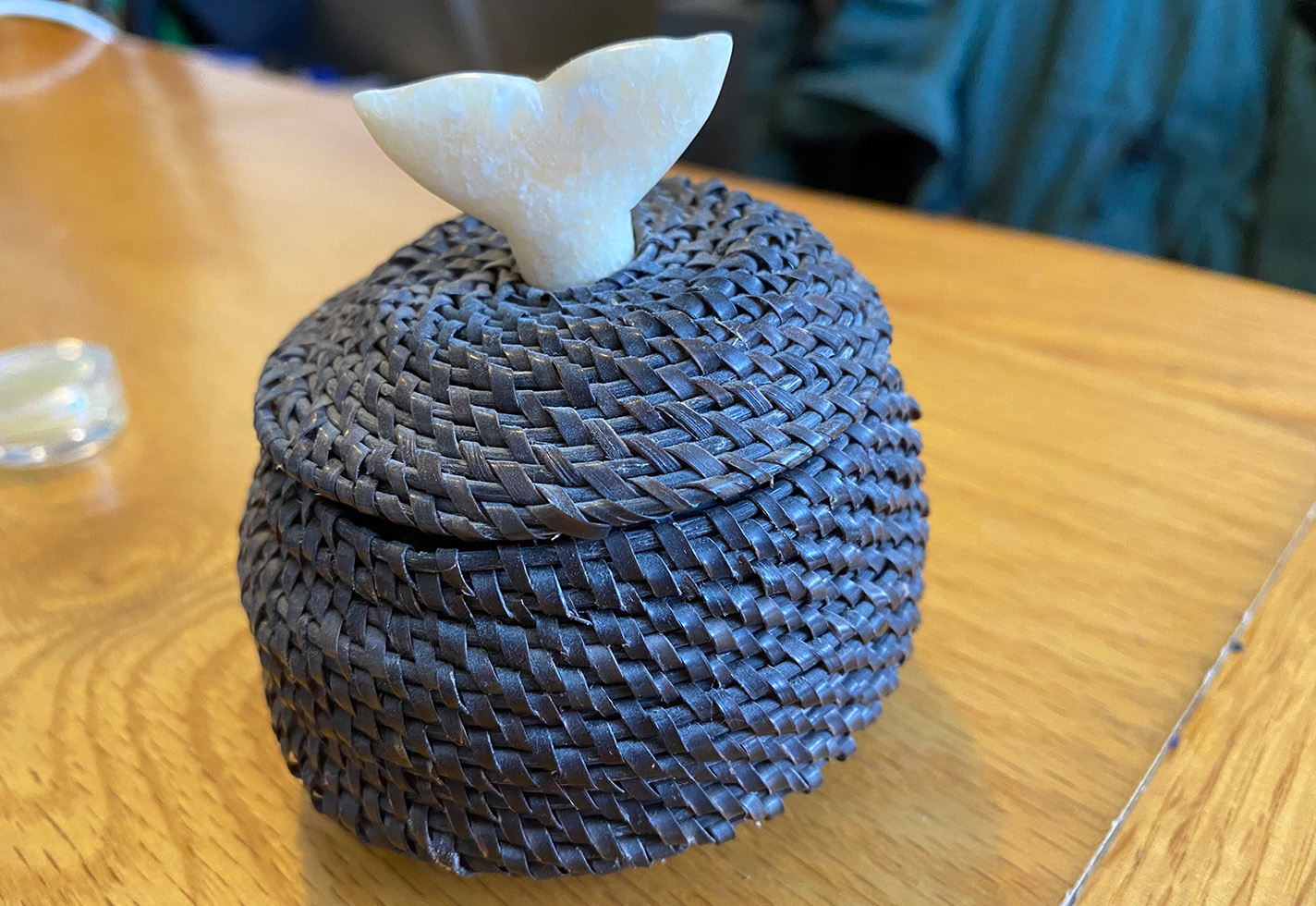
Photo courtesy of MaryJane Litchard

Litchard made this baleen basket with whale-tail finial for her son's birthday.

“Once you start weaving, it's so much fun.”

— MaryJane Litchard

Litchard learned baleen basketry in the late 1970s from Utqiaġvik-based artist Joshua Sakeagak. Litchard, who was already familiar with weaving grass baskets, was excited about using a new material and drawn to the inky black color of baleen. Sakeagak primarily spoke Iñupiaq, and Litchard did not, so she had to mimic his techniques for important steps in the process, such as knotting the baleen strands together. 

“I made my first basket with him, and I showed it to him—he just tore it all apart,” she says. She remained intrigued by the challenge and mystery of figuring out how to do it herself, even after Sakeagak left town.

Even if Litchard can weave quickly now, all the weeks and months of preparation required just to start making a basket means that she is not churning out artworks. That seems to be common among other baleen weavers: Steinbrueck Native Gallery in Seattle says that Marilyn Hank, another baleen weaver, only creates one large showpiece basket once every three years. Litchard recalls she wrestled with one “bossy” basket for an entire year. 

“I learned I can’t let a basket control me, I have to control the basket,” she says.

Photo courtesy of MaryJane Litchard

This basket took Litchard a year to finish.

Megan Gannon is a writer and ceramist based in Seattle. She is a manager at Third Place Pottery, a community clay studio, and her journalism has appeared in National Geographic, High Country News, and Scientific American, among many other publications. 

This article was made possible with support from the Windgate Foundation.

Before you go!

We believe that making creates a meaningful world, and we hope you do, too. Deeply researched and impactful journalism on the craft community is in short supply. At the same time, being featured in craft-centered media and articles can have a major effect on a maker’s or artist’s livelihood, particularly those who are just starting in their career. You can help support our mission and the work of makers around the country by becoming a member or by making a gift today.

Thank you!
American Craft Council