Emily Dickinson largely avoided publishing during her lifetime, but she left behind nearly 1,800 handwritten poems when she died in 1886. In a singular, elliptical style marked by compact language and extensive use of dashes, she explored themes of nature, grief, religion, and art.
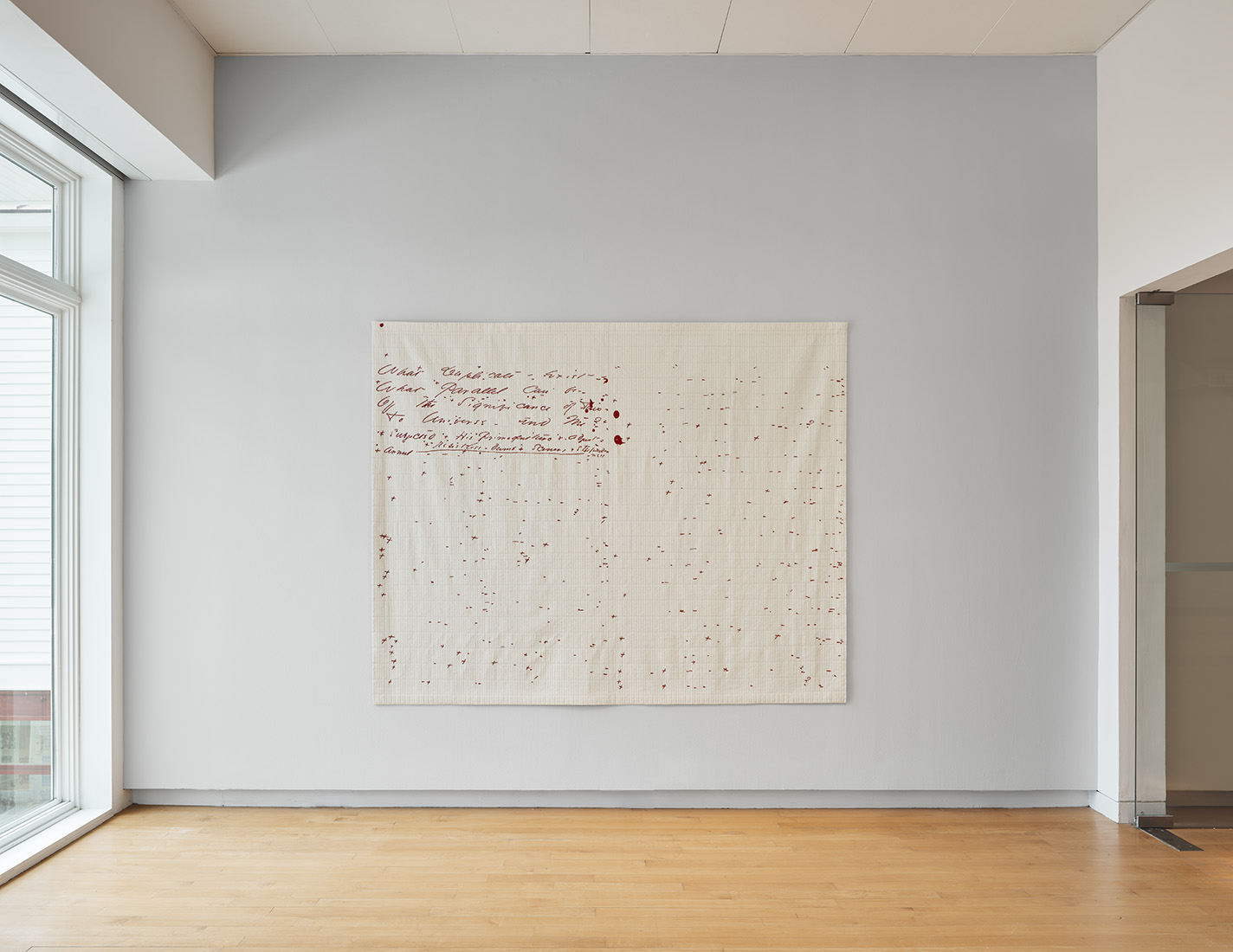
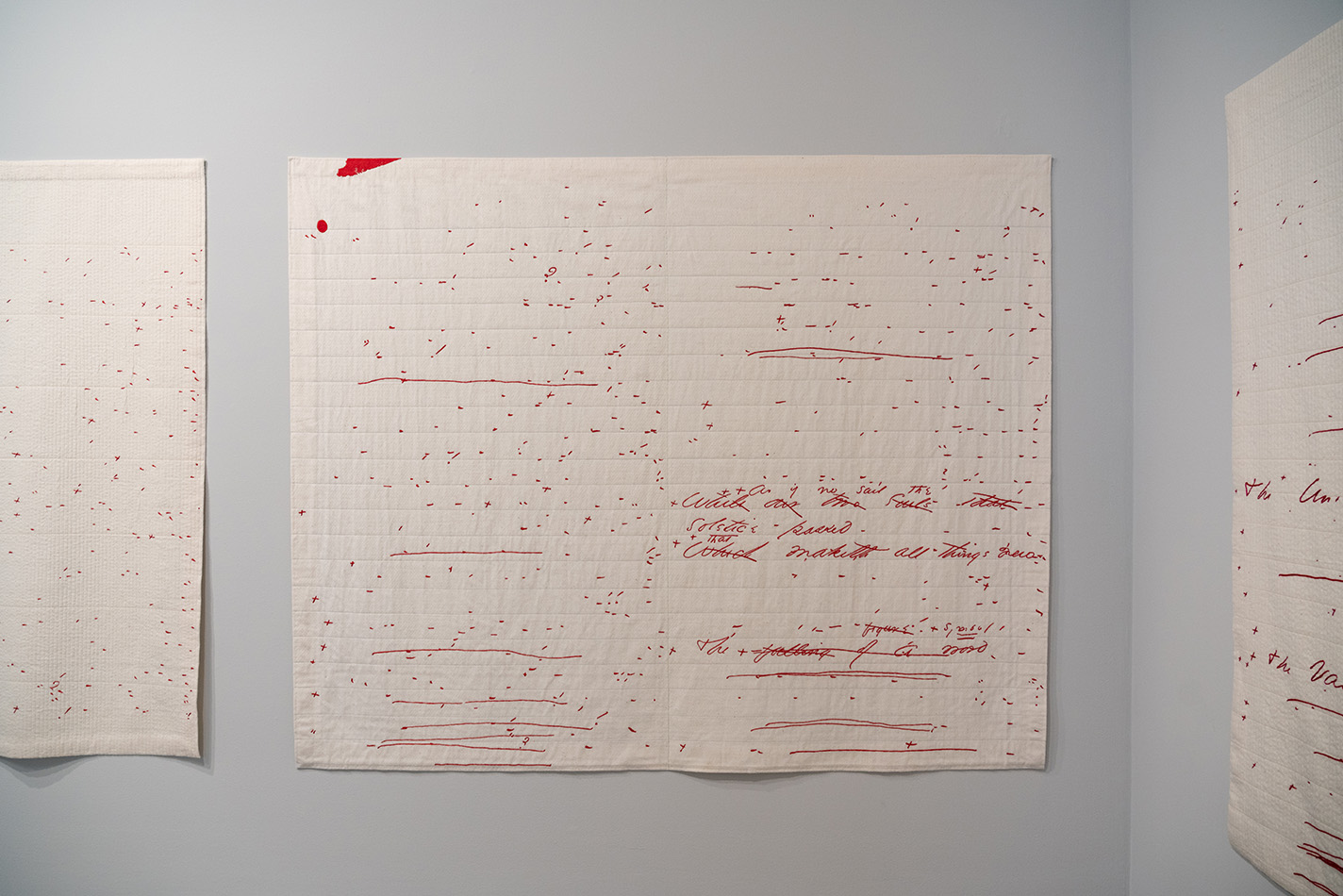
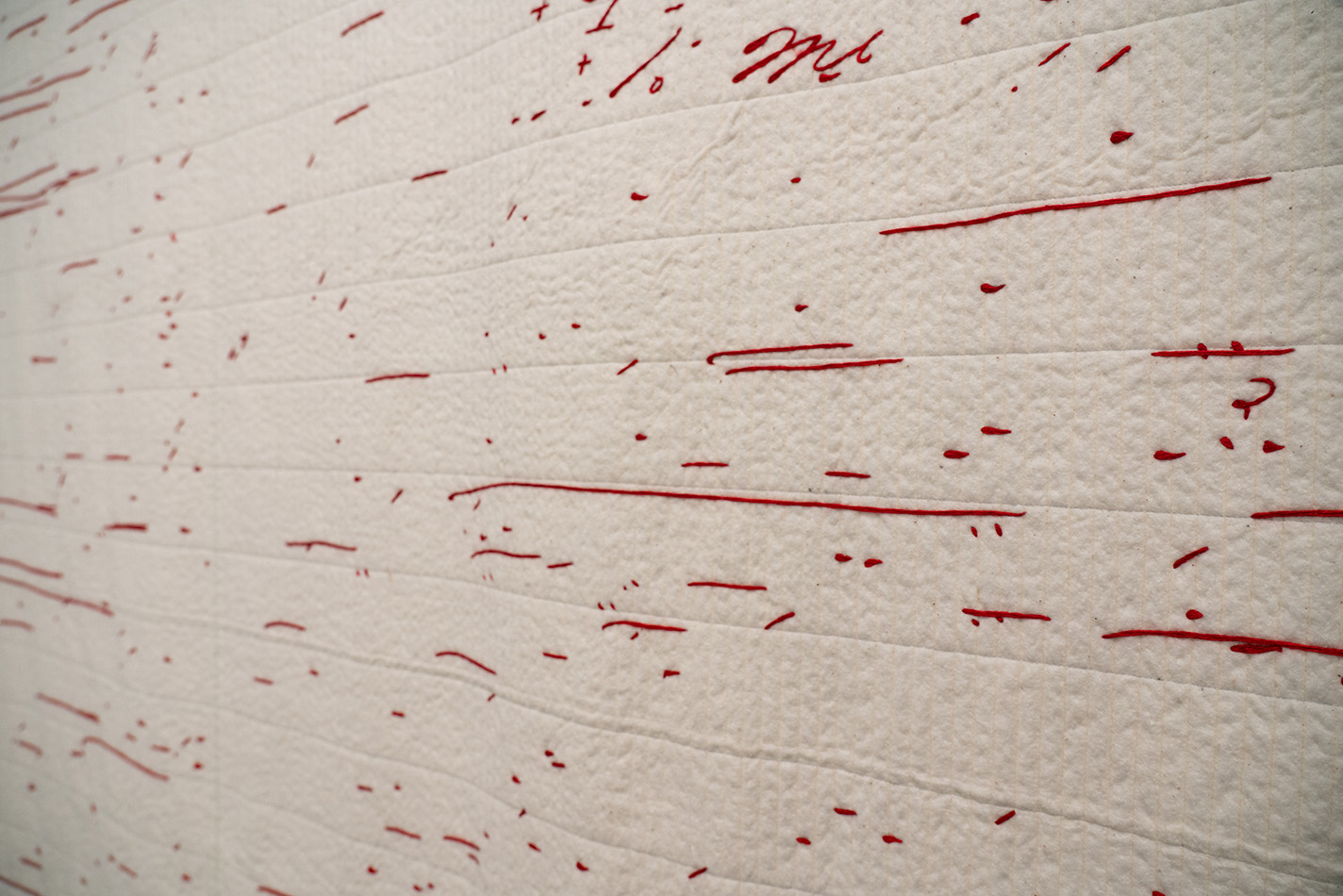
During the most active period of her career, from 1858 to 1864, she copied more than 800 of her poems onto folded sheets of stationery, stacked them into 40 packets (later called “fascicles” by her editors), numbered them chronologically, and stitched them together with a single thread. By Fascicle 11, Dickinson began to place small plus signs in the lines of a poem, keyed like a footnote to lists of alternative word choices she wrote in the margins of a page. The symbols are often faint and the words occasionally underlined or crossed out in Dickinson’s expressive hand.
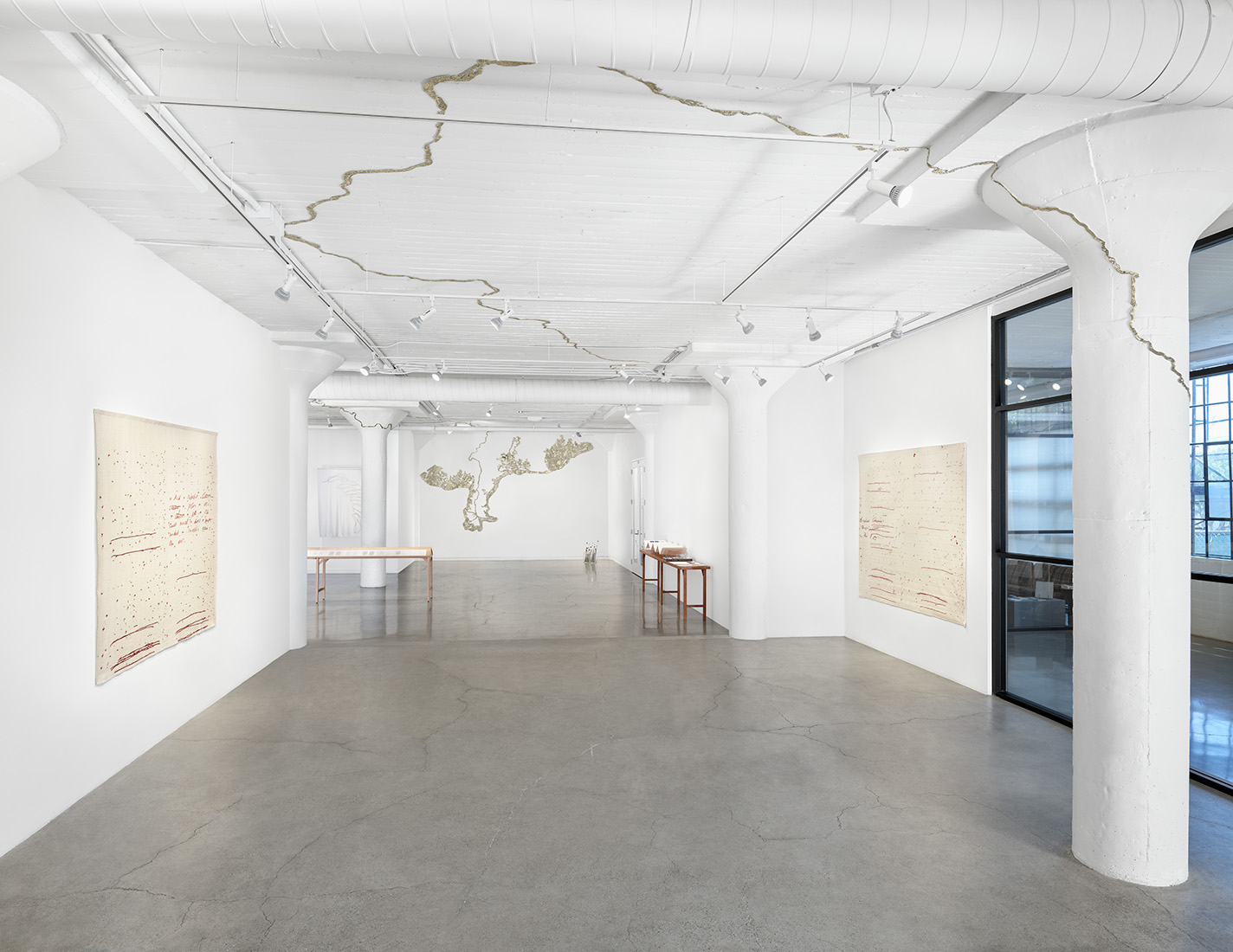
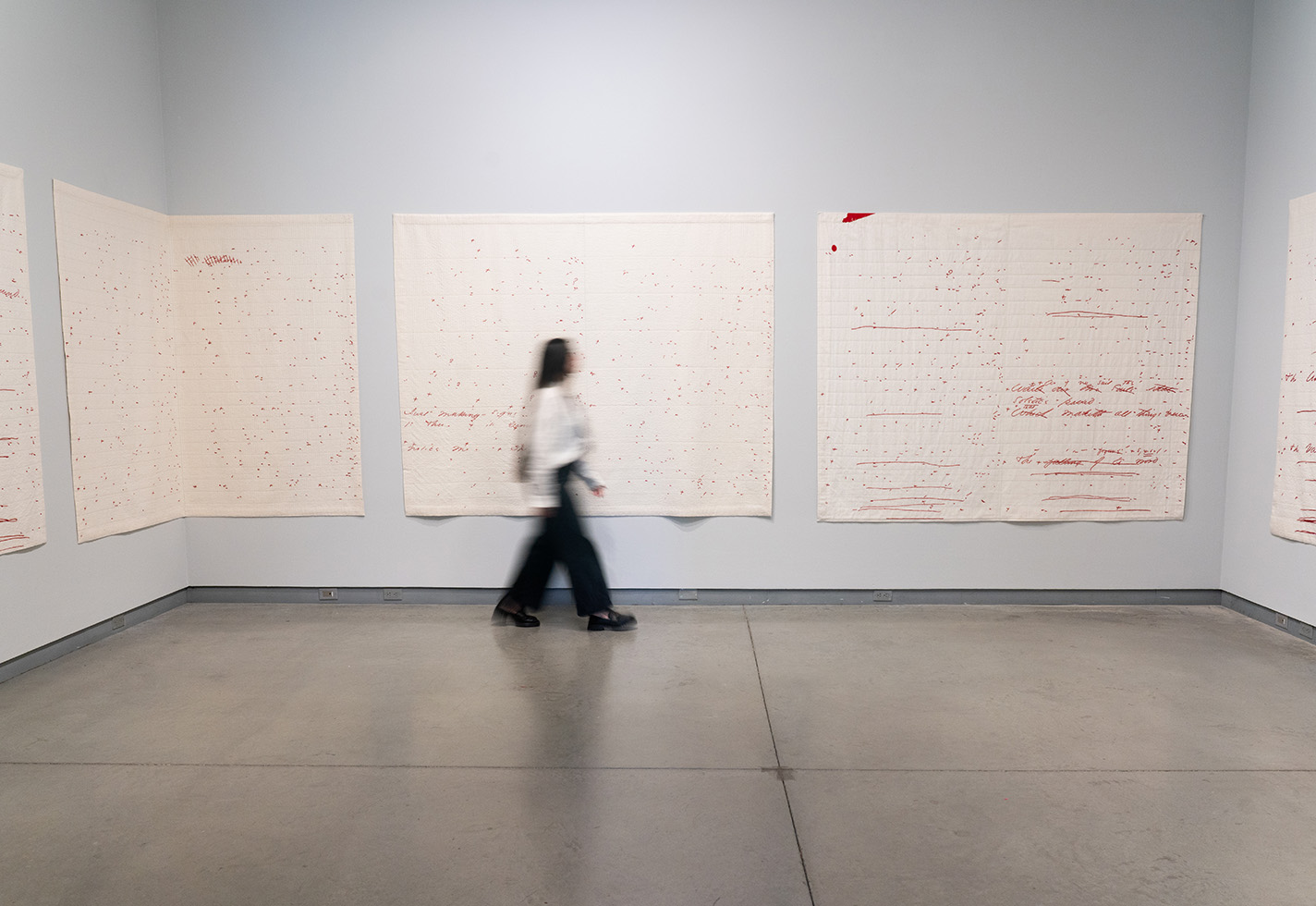
“As drawings, they’re extraordinary. As poems, they’re extraordinary,” says multidisciplinary artist and poet Jen Bervin, who has made them the focus of her current textile work. One of Bervin’s quilts wrestling with these formalistically thorny poems is now on view at the Aldrich Contemporary Art Museum in Ridgefield, Connecticut through January 10 as part of the non-collecting museum’s first decennial.
While early editors dismissed Dickinson’s “variants” as indecision and omitted the notations during publication, Bervin stands with the scholars (like her frequent collaborator, the English professor and Dickinson expert Marta Werner) who read the poet’s markings as a deliberate choice to embrace multiple meanings. “She made up her mind to not make up her mind,” says Bervin. “To unmake that choice when you print the poems seems to me a violence that should not happen.”
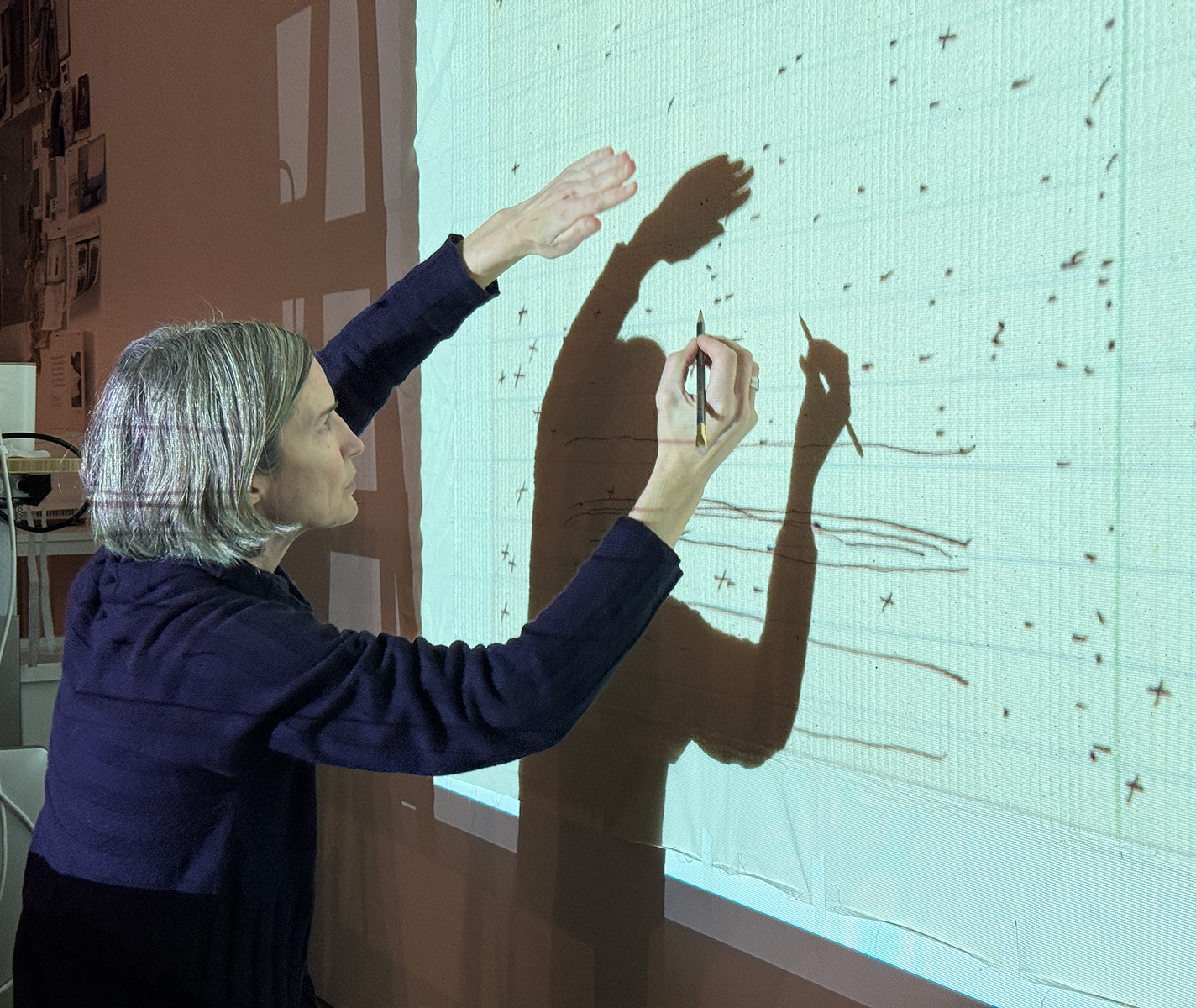
Bervin working in her Connecticut studio.