Craft Around the Country

Stitch by Stitch, Christian Le's Garments Celebrate the Beauty of Traditional Vietnamese Clothing

Folding Screens, a solo show by the Houston fashion designer, runs through September 27 at the Houston makerspace TXRX Labs.

By Jacqueline Huynh Young
September 14, 2026

Photo

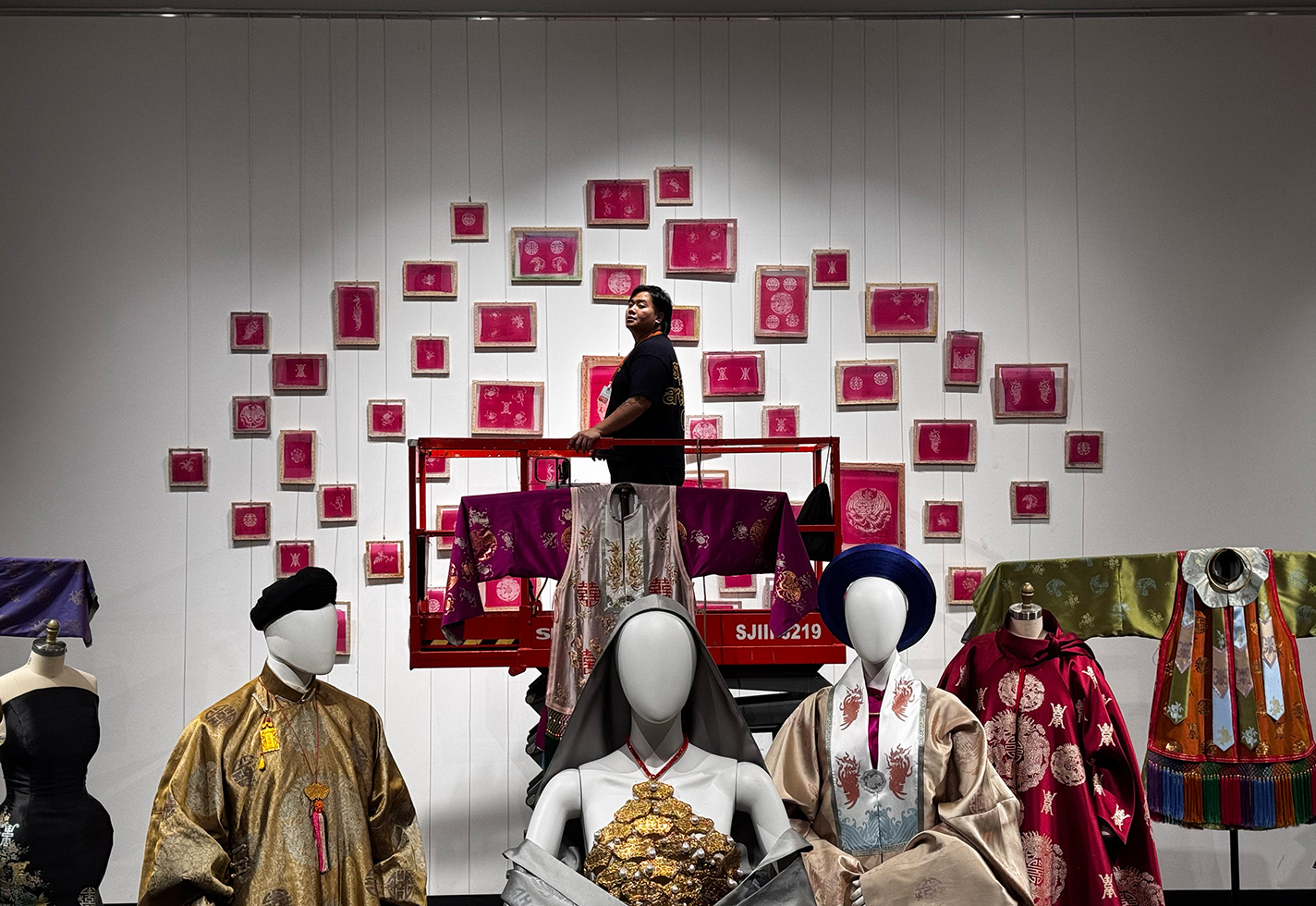
Christian Le hangs a wall of silk screens used to print patterns onto his garments along the back wall of TXRX Labs’s Techne Gallery. Le is currently the Craft and Maker Resident at the Houston makerspace. His solo exhibition, Folding Screens, is on view through September 27.

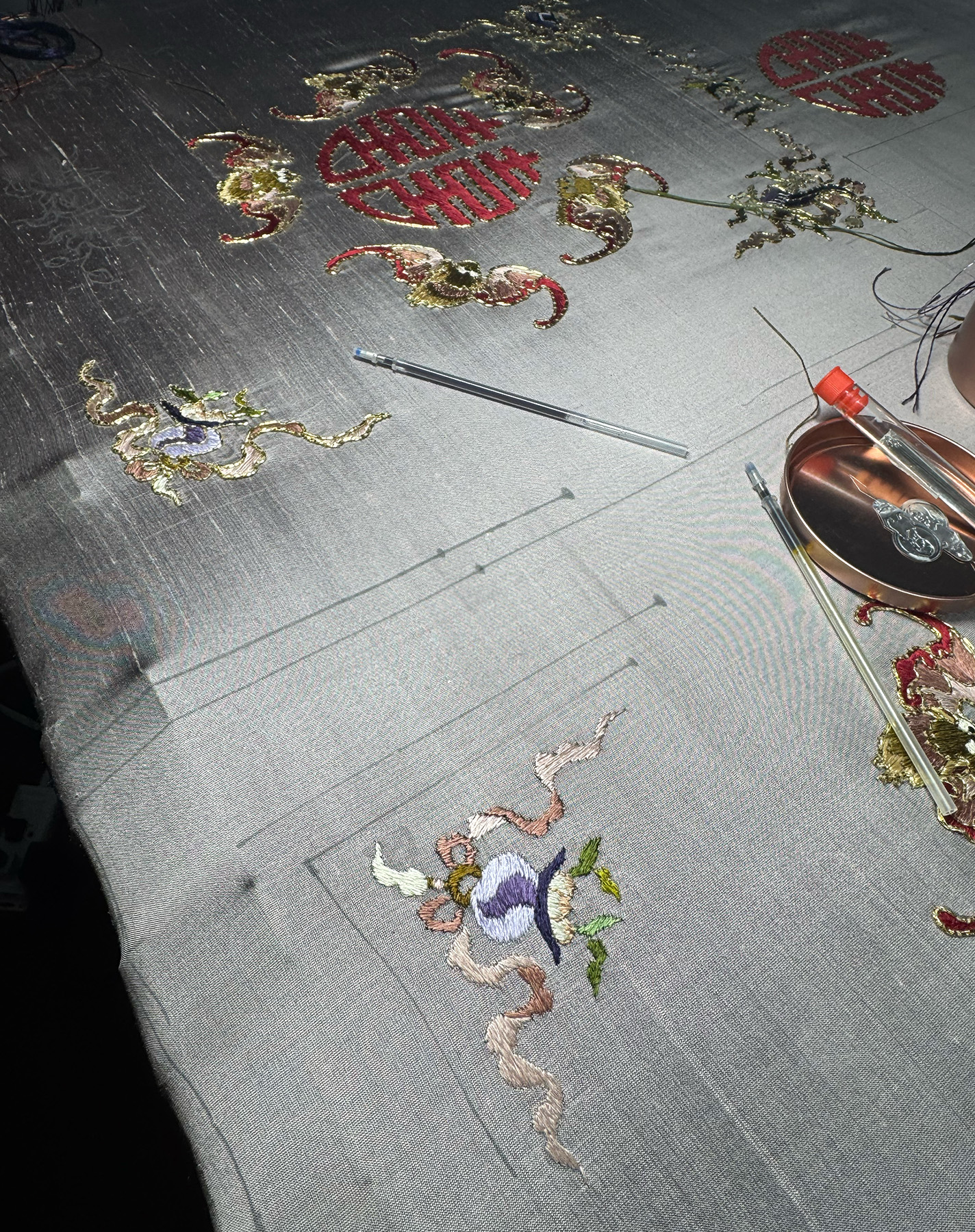
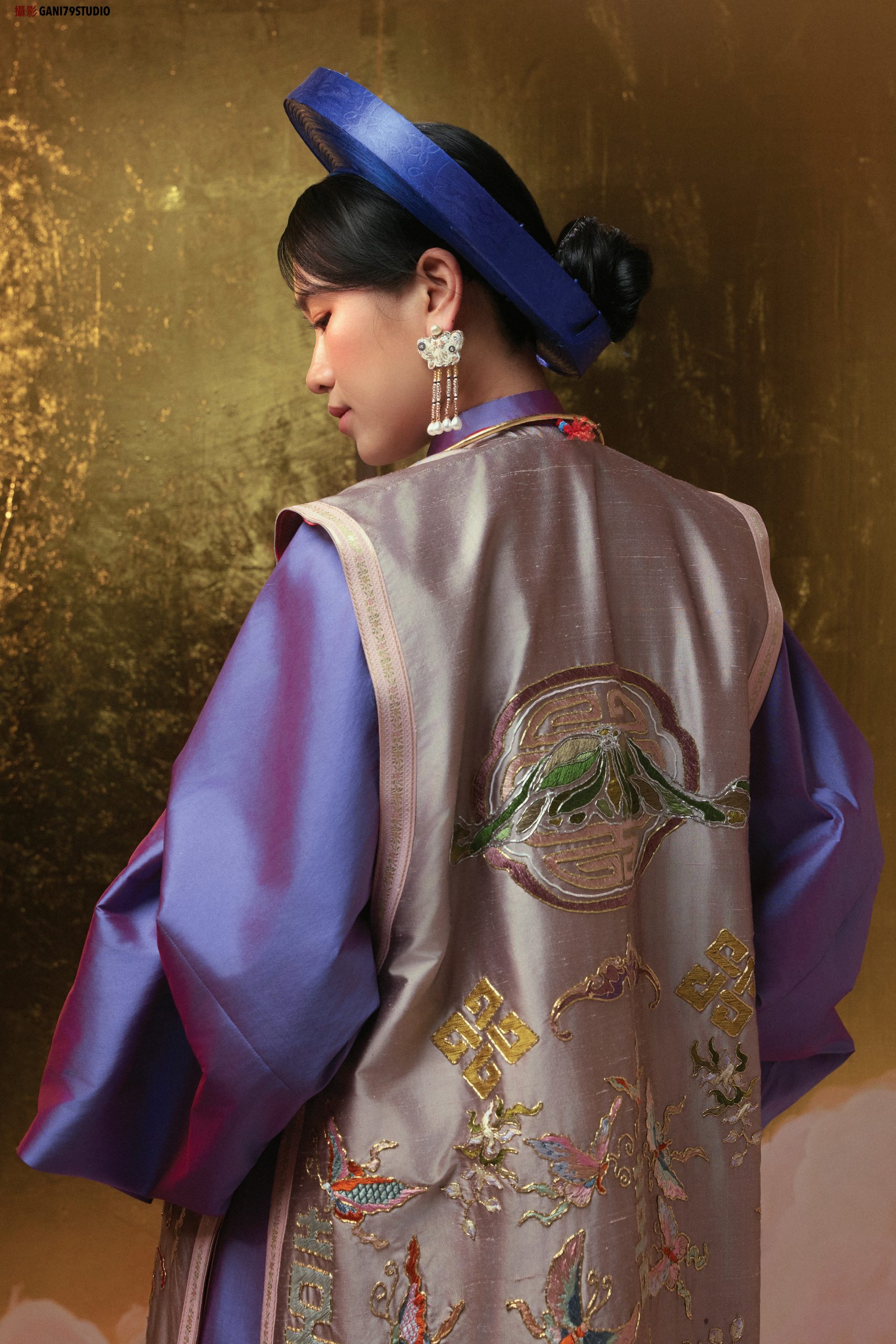
Christian Le spent six months hand-embroidering an áo lá tua, covering nearly every inch of the garment with longevity symbols, butterflies, wispy clouds, and a pair of phoenixes perfectly mirrored across the front panels. 

It is a stunning display of skill for someone who, until he began working on it, had never embroidered at all. “I don’t think I’d be able to do embroidery three years ago,” says the Houston-based fashion designer. “This patience only comes with age. I guess once you hit 30.”

The áo lá tua, a decorative outer vest worn by court women during Vietnam’s Nguyễn dynasty (1802–1945), took shape with the help of a friend in Vietnam, whom Le met with over FaceTime twice a week to learn embroidery and macramé and work through problems as they arose.

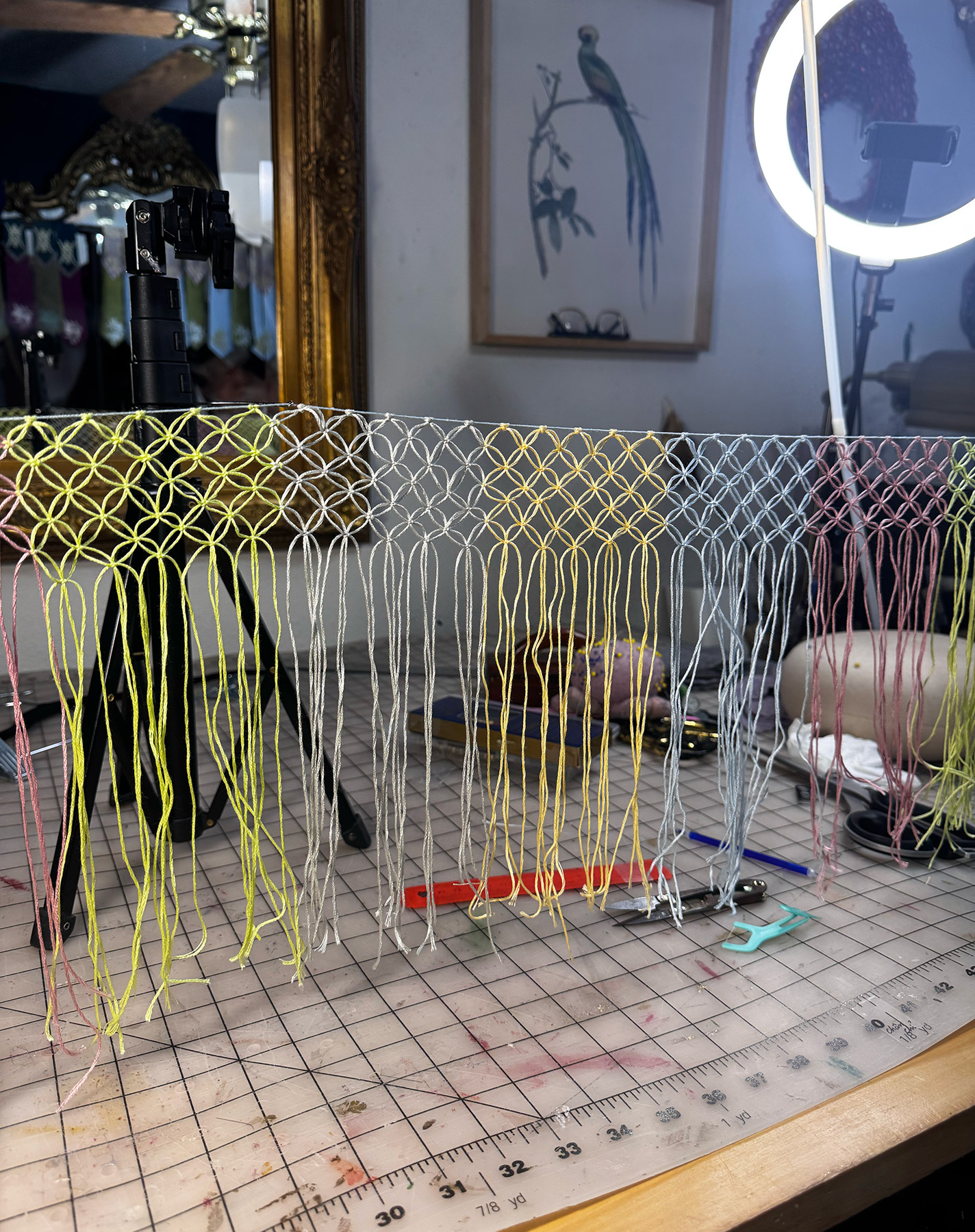
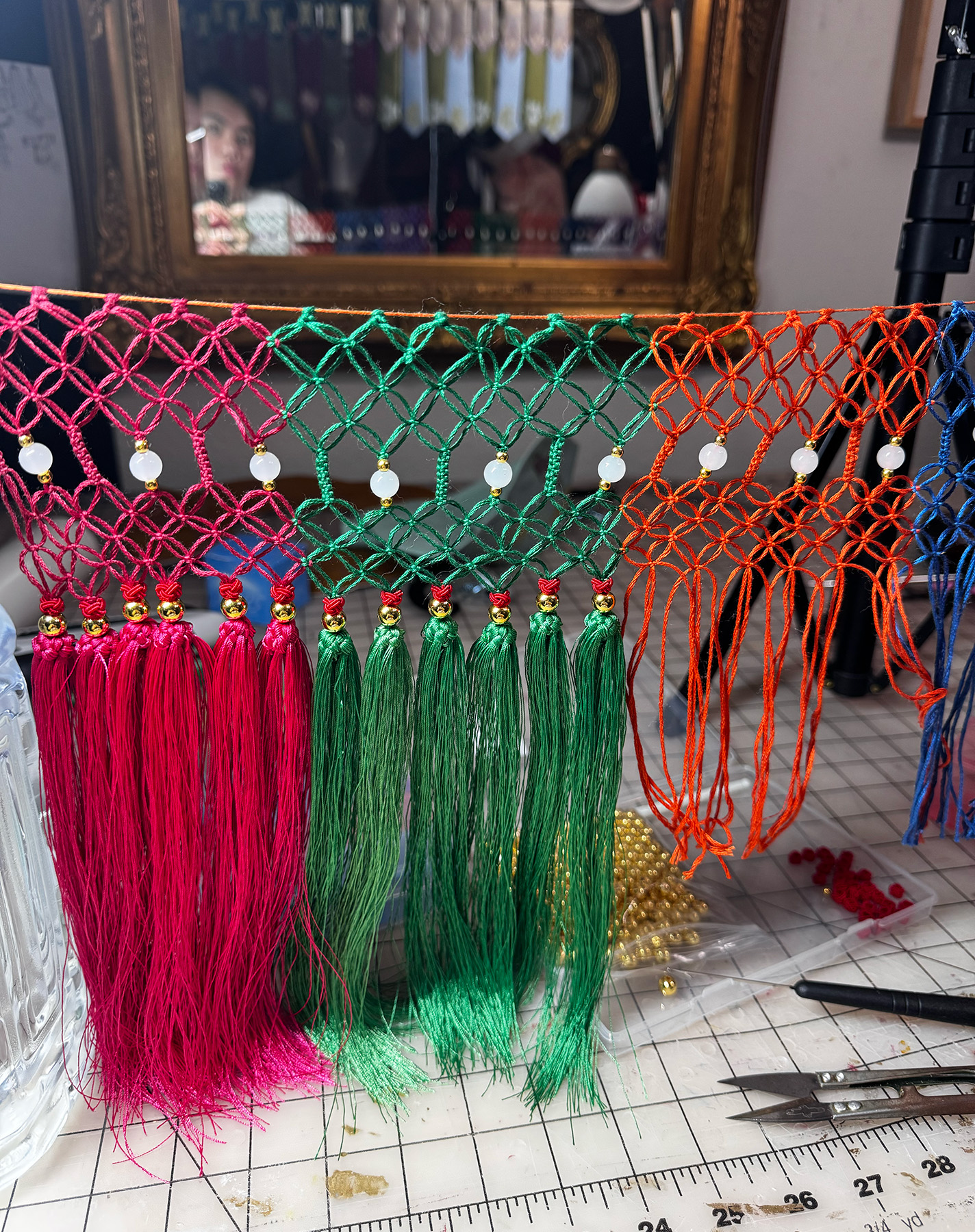
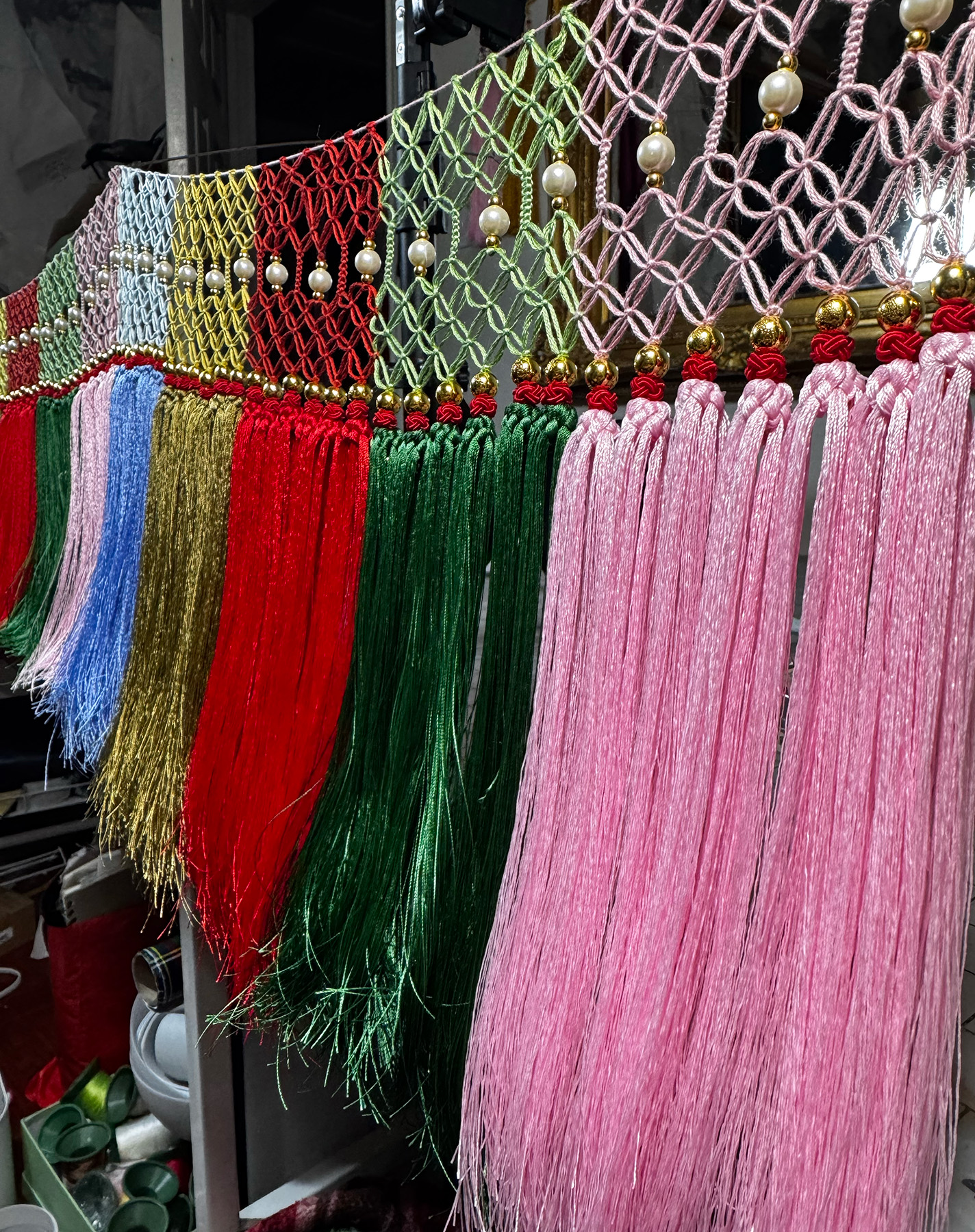
The tassels that hang along the bottom hem took another month, each string tied one by one. “It’s not just that you tie a knot, right?” he says. “You have to make it the way that people did back in the day.” 
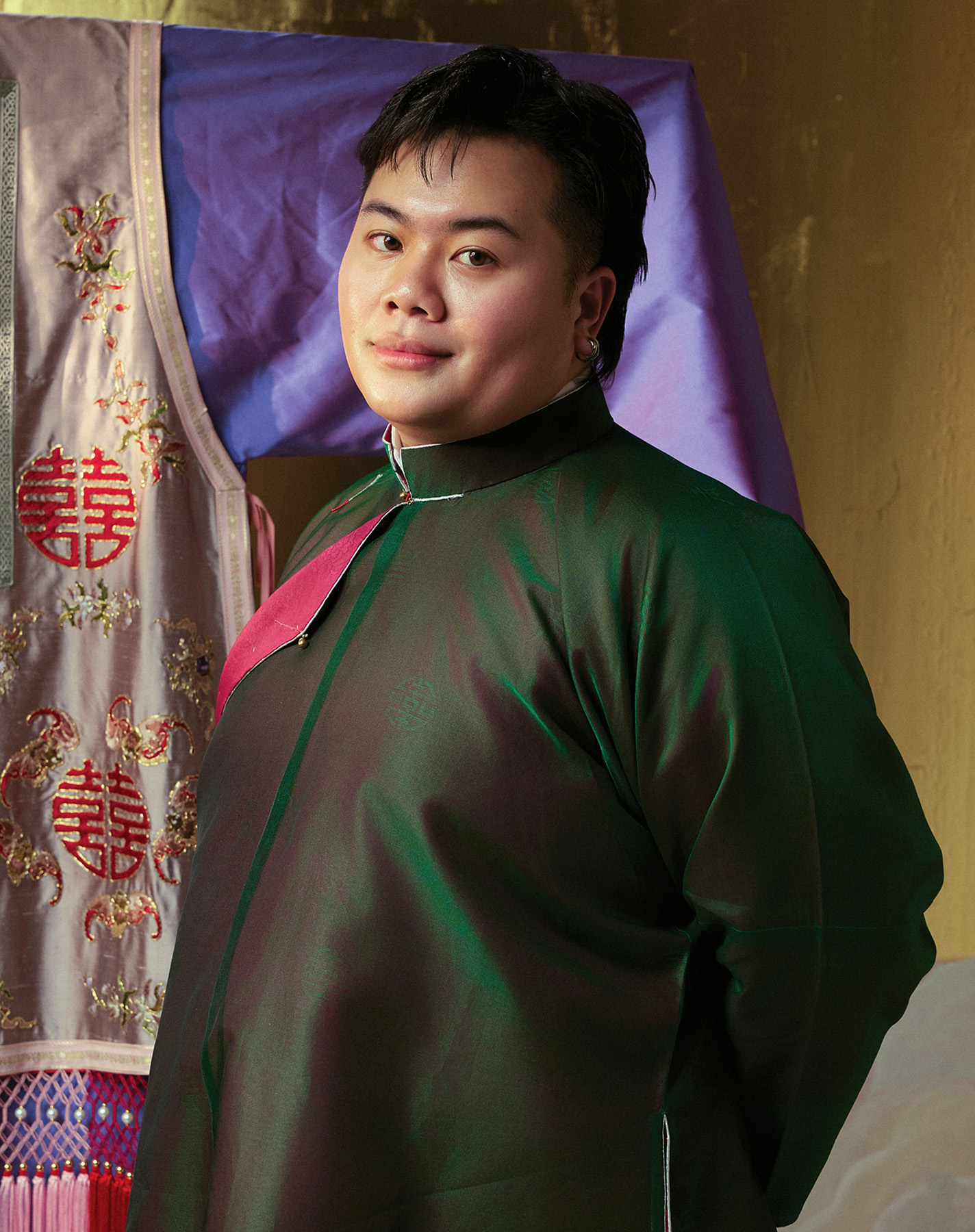
Photo courtesy of Christian Le

Le stands in front of Xuân Tín — Spring Glad Tiding, an embroidered and screen printed garment on view in Folding Screens.

The tassels that hang along the bottom hem took another month, each string tied one by one. “It’s not just that you tie a knot, right?” he says. “You have to make it the way that people did back in the day.” 

The finished piece, Xuân Tin — Spring Glad Tiding, now hangs at TXRX Labs in Houston, as part of Le’s solo exhibition Folding Screens, on view through September 27. The show brings together an eight-look mini-collection based on the cuts and silhouettes of Nguyễn dynasty garments.

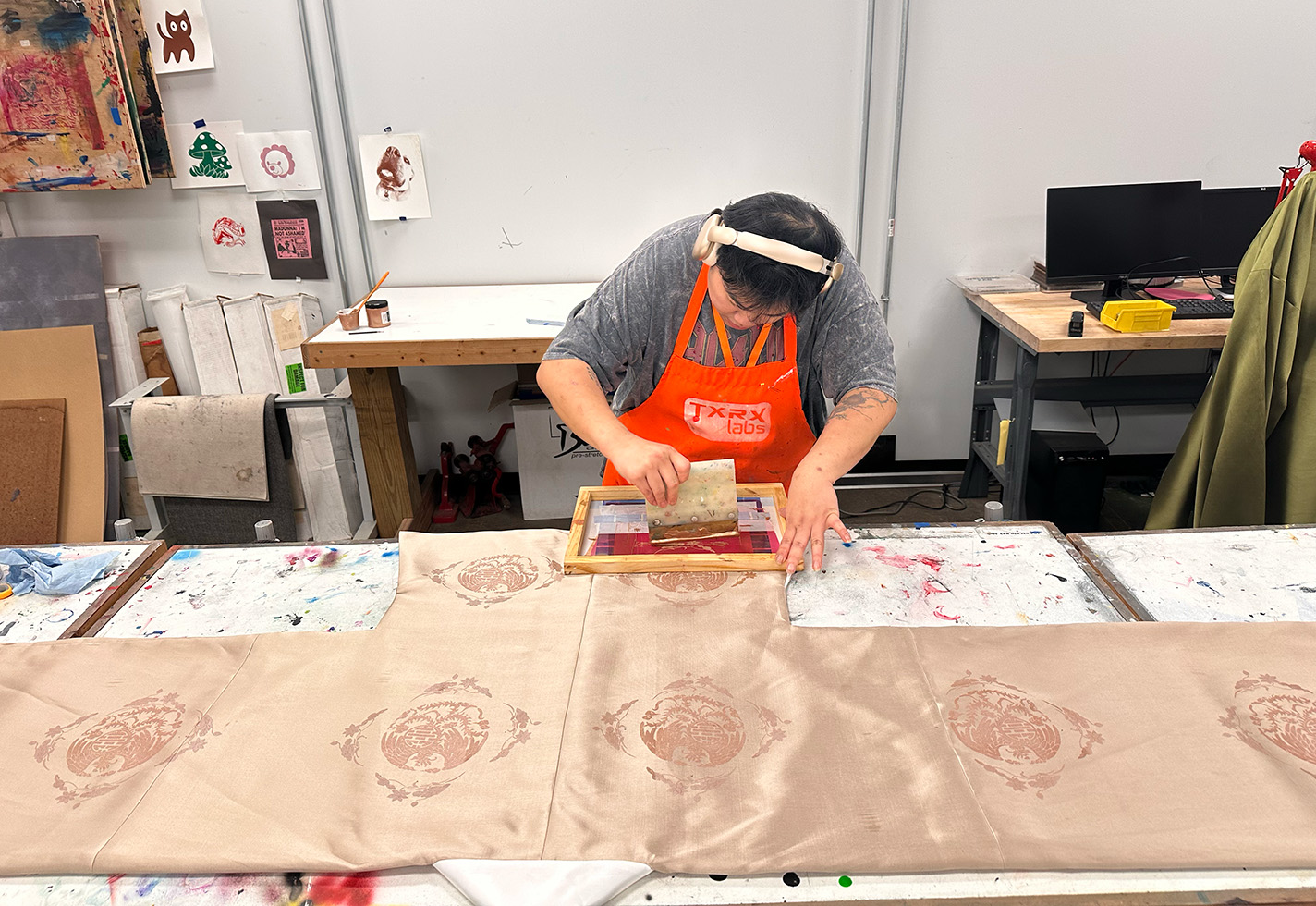
As TXRX Labs’s current Craft & Maker Resident, Le has had the opportunity to experiment with processes he might not otherwise have tried. The Houston makerspace gives its residents access to equipment and classes ranging from woodworking and metalsmithing to screen printing and laser cutting. Le gravitated toward the latter two, eventually incorporating both into this collection of garments.

Photo courtesy of Christian Le

A model wears Xuân Tín — Spring Glad Tiding. The vest is made out of duo-colored silk dupioni and bordered with ornamental ribbons. Le embroidered colorful decorative traditional patterns with silk thread and crouched in gold thread.

  • Photos courtesy of Christian Le

    Chân chỉ hạt bột is an intricate Vietnamese craft technique used to create handmade netting and tassels. These embellishments are often added to garments like áo lá tua vests.

The screen-printing process proved particularly difficult for the Mermaid Gown, a structured black dress made from polyester mikado. Since the gold foil Le used was too delicate to apply before construction, he finished sewing the gown first and saved the printing for last. The challenge then lay in getting a structured, boned dress to lie flat on the table, an impossible task that left Le little choice but to screen-print directly onto the gown as it stood on the mannequin. “It’s quite tricky,” he says. “I had to hold the screen at a really weird angle, and sometimes the pattern didn’t really stay. So I had to pivot into a way to work with all the smear and all the messiness of the garment itself.”

Le’s use of screen printing gives the exhibition its title, though Folding Screens also looks beyond the process to the folding screens found in Vietnamese interiors. “If you go to Huế, in the center of Vietnam, you will see that all the gardens have a big folding screen in the front to block the evil energy coming in,” Le says.

Located along the Perfume River, Huế served as the imperial capital of the Nguyễn dynasty, the country’s last ruling house; its court shaped the clothing traditions that Le references throughout the collection. He is particularly interested in the loose, T-shaped construction that preceded the fitted áo dài, a long split-sided tunic worn over trousers and widely recognized today as a symbol of Vietnamese dress.

Photo courtesy of Christian Le

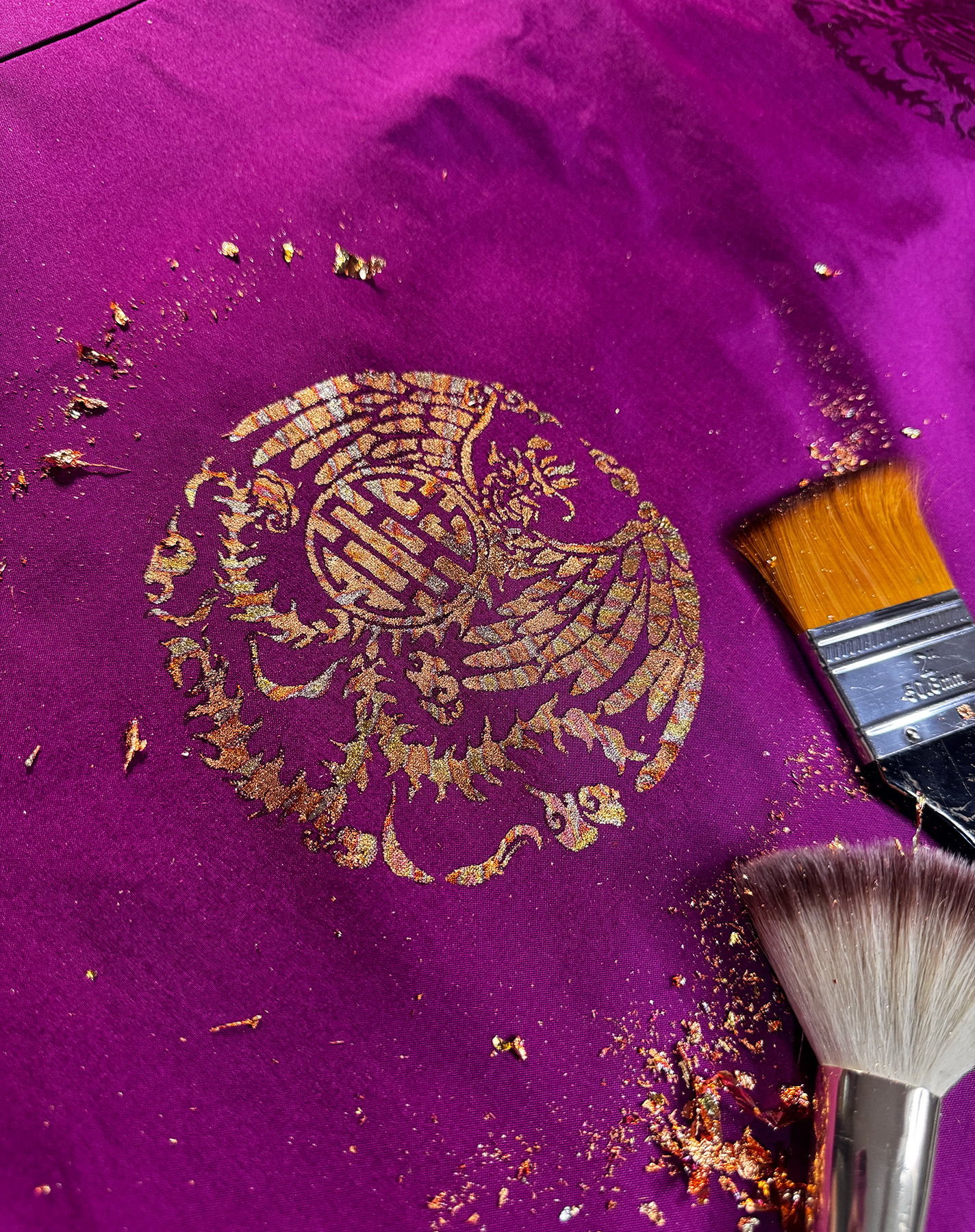
Le screen prints phoenix roundels, longevity letters, and waves onto this nhật bình–inspired wedding coat.

“I'm not making a career out of my talent, which went against everything that I hoped for since I was a kid. And I think that's also a part of growing up that you have to make peace with.”

— Christian Le

“I keep the same loose silhouette because the áo dài nowadays has become such a modern signature that people think it’s the traditional way—the French influence with the raglan sleeve,” Le says. “So I went back to doing the straight sleeve that people have been doing for many many years. It’s loose. It’s structural. It gives a vibe, and it’s not sexy, right? The goal is to not sexify the traditional outfit.”

At 19, Le immigrated to the United States with his family. Soon after, he enrolled in the fashion program at Houston City College. Already adept with a sewing machine, he expected to turn his talent for making clothes into a livelihood. “Back in the day, we didn’t have a definition for what exactly a craft maker is, right?” he says. “You have talent, and your talent has to go into making money. If it doesn’t, then your talent is wasted. So I always knew that I wanted to go into fashion to be successful, to make a lot of money.”

For years, Le tried to make good on that expectation, but the pursuit eventually wore him thin, and he left fashion as a profession and earned a certificate as a medical interpreter, which remains his full-time job. “I’m not making a career out of my talent, which went against everything that I hoped for since I was a kid,” he says. “And I think that’s also a part of growing up that you have to make peace with.”

Photo courtesy of Christian Le

A phoenix roundel screen printed with gold foil.

But there is a freedom in where Le now finds himself. With his creative life separate from the work that pays his bills, he can spend six months embroidering a single garment and another month knotting its tassels, simply because he wants to. He can return to the loose silhouettes of Nguyễn dynasty dress, teach himself techniques that take months to learn, and follow an interest well past the point where efficiency would tell him to stop.

Le is, nevertheless, circumspect about imbuing that work with a larger purpose. “I don’t think of myself as a hero who comes in and makes people care about the Vietnamese tradition,” he says. “I just want to do Vietnamese tradition, and if people like it or not, then I’m still doing it.”

Even if Le is reluctant to tell others what his work should mean, he knows what he would tell his younger self. “Fashion can be whatever you want it to be,” he says. “Don’t let anything dim your light for doing what you love.”

Photo courtesy of Christian Le

Le used silk thread to embroider the garments in Folding Screens.

Jacqueline Huynh Young is a Vietnamese American artist and writer based in Los Angeles. 

Learn more about Christian Le and his exhibition at TXRX Labs online.

Artist Instagram TXRX Labs Instagram

This article was made possible with support from the Windgate Foundation.

Before you go!

We believe that making creates a meaningful world, and we hope you do, too. Deeply researched and impactful journalism on the craft community is in short supply. At the same time, being featured in craft-centered media and articles can have a major effect on a maker’s or artist’s livelihood, particularly those who are just starting in their career. You can help support our mission and the work of makers around the country by becoming a member or by making a gift today.

Thank you!
American Craft Council