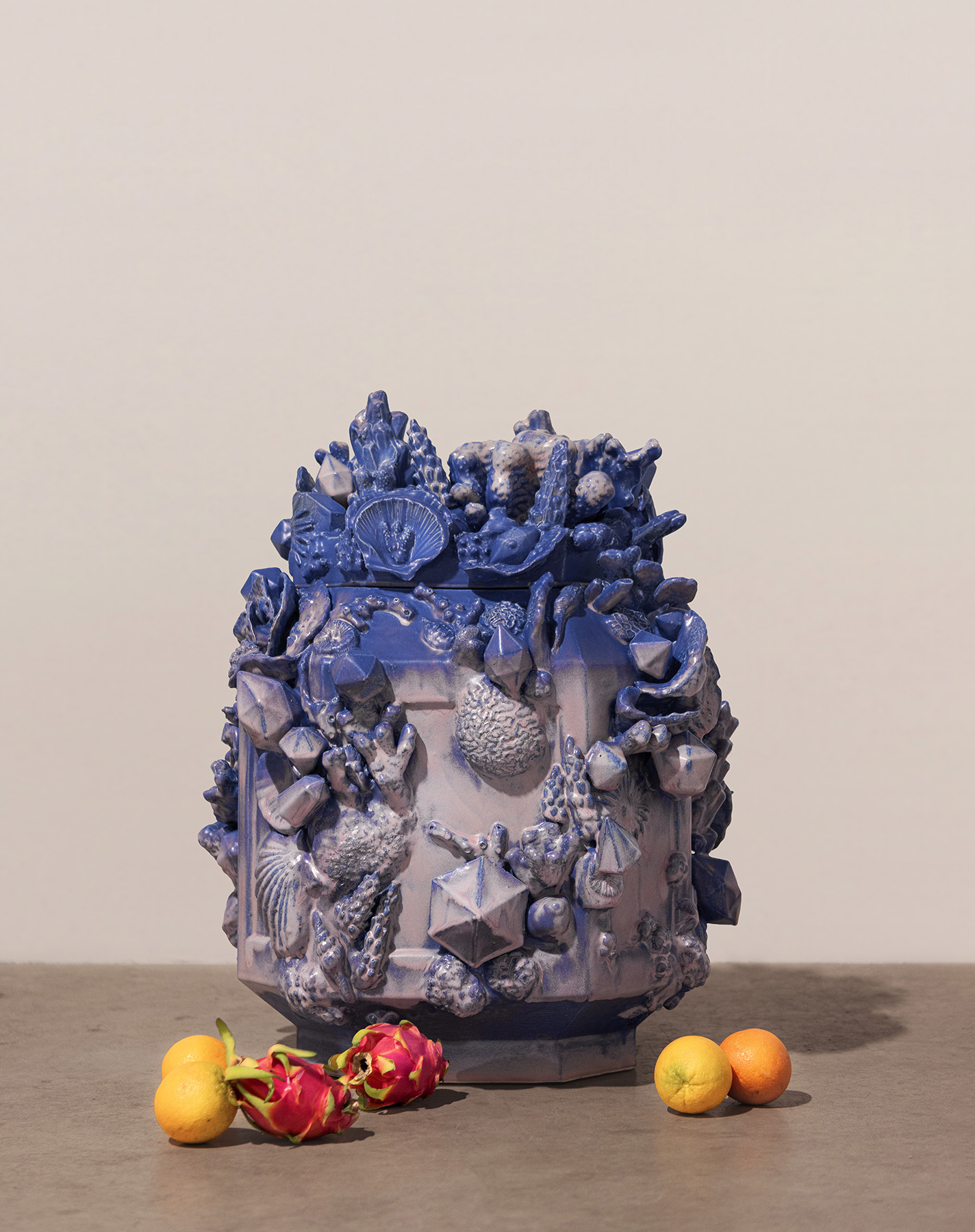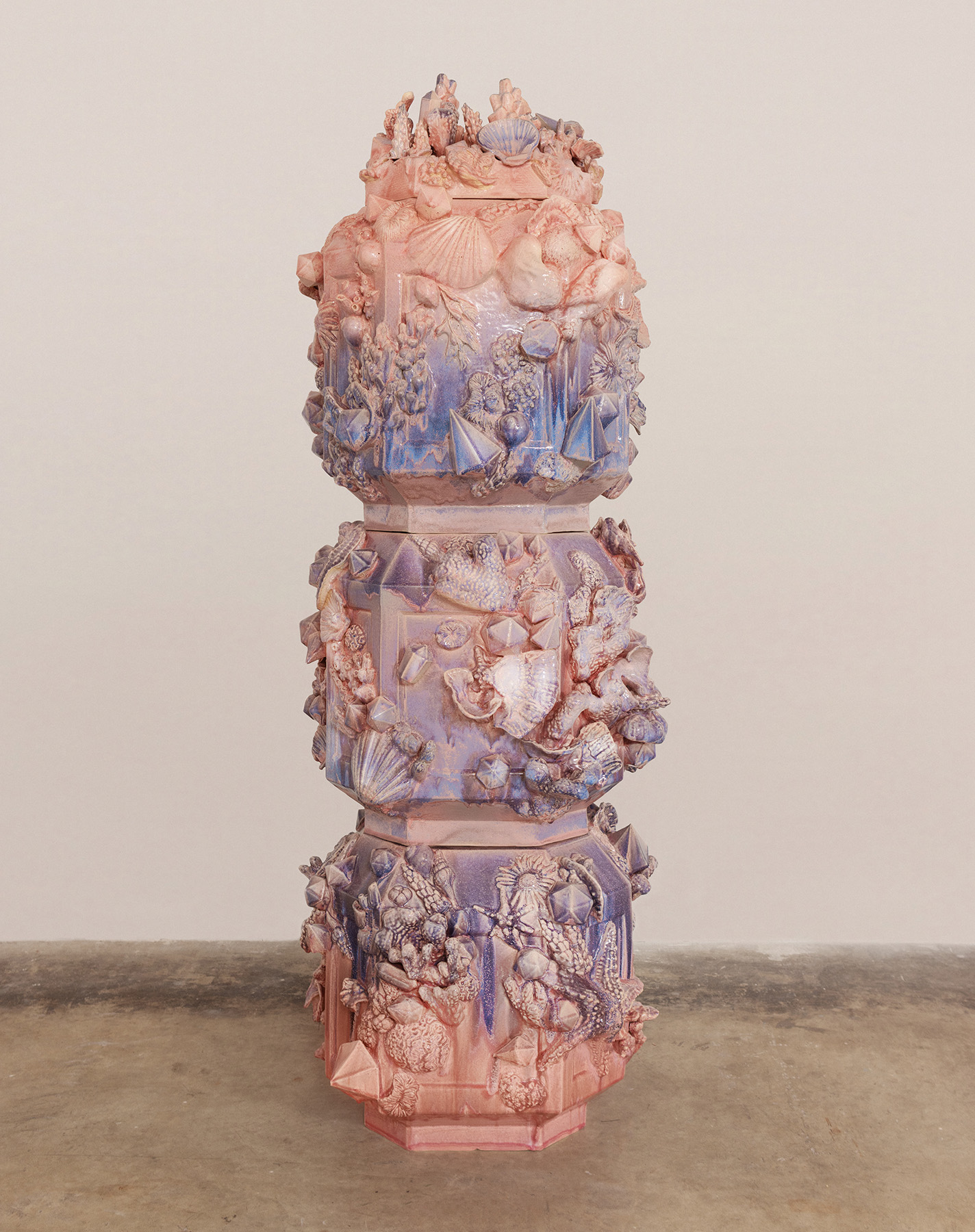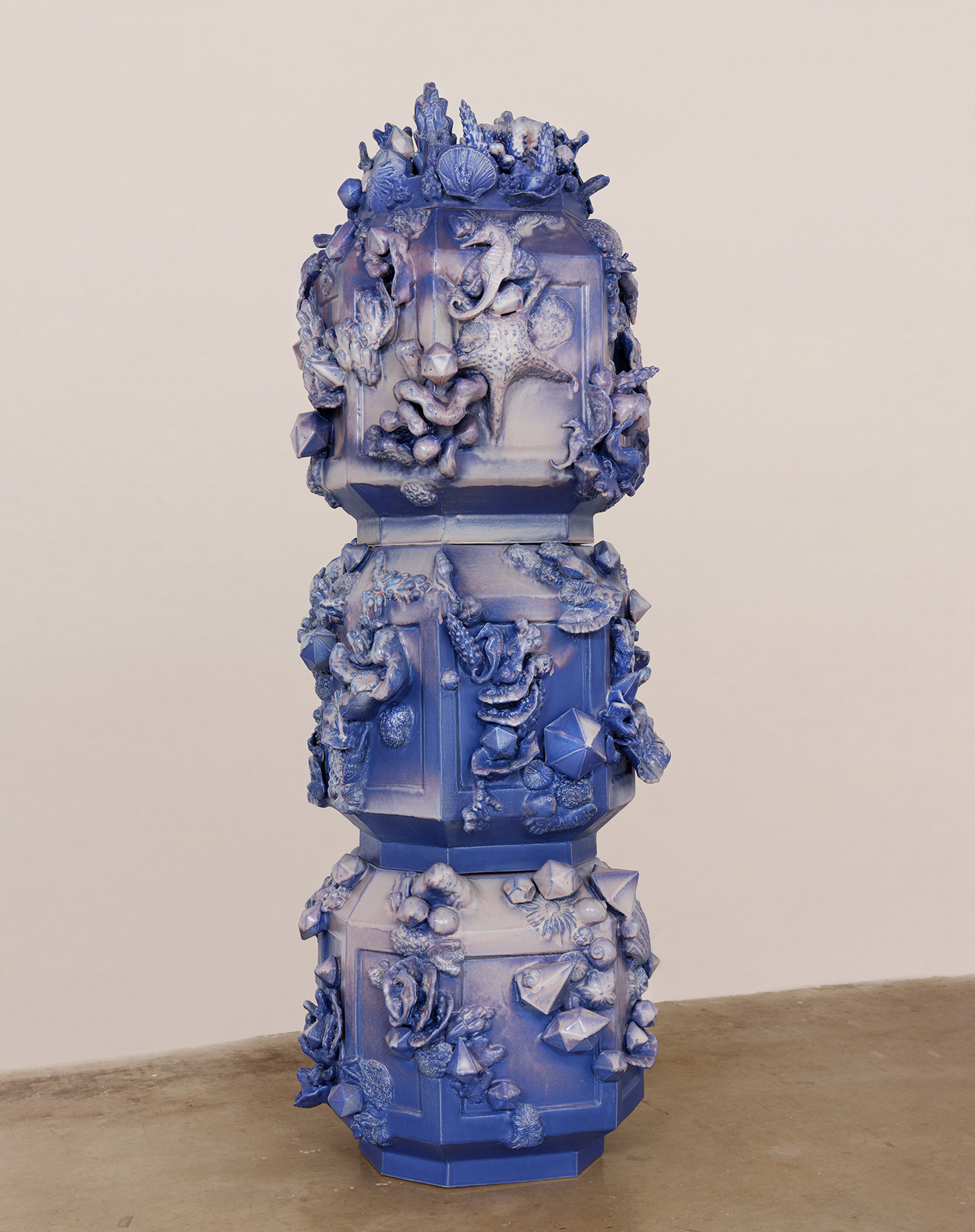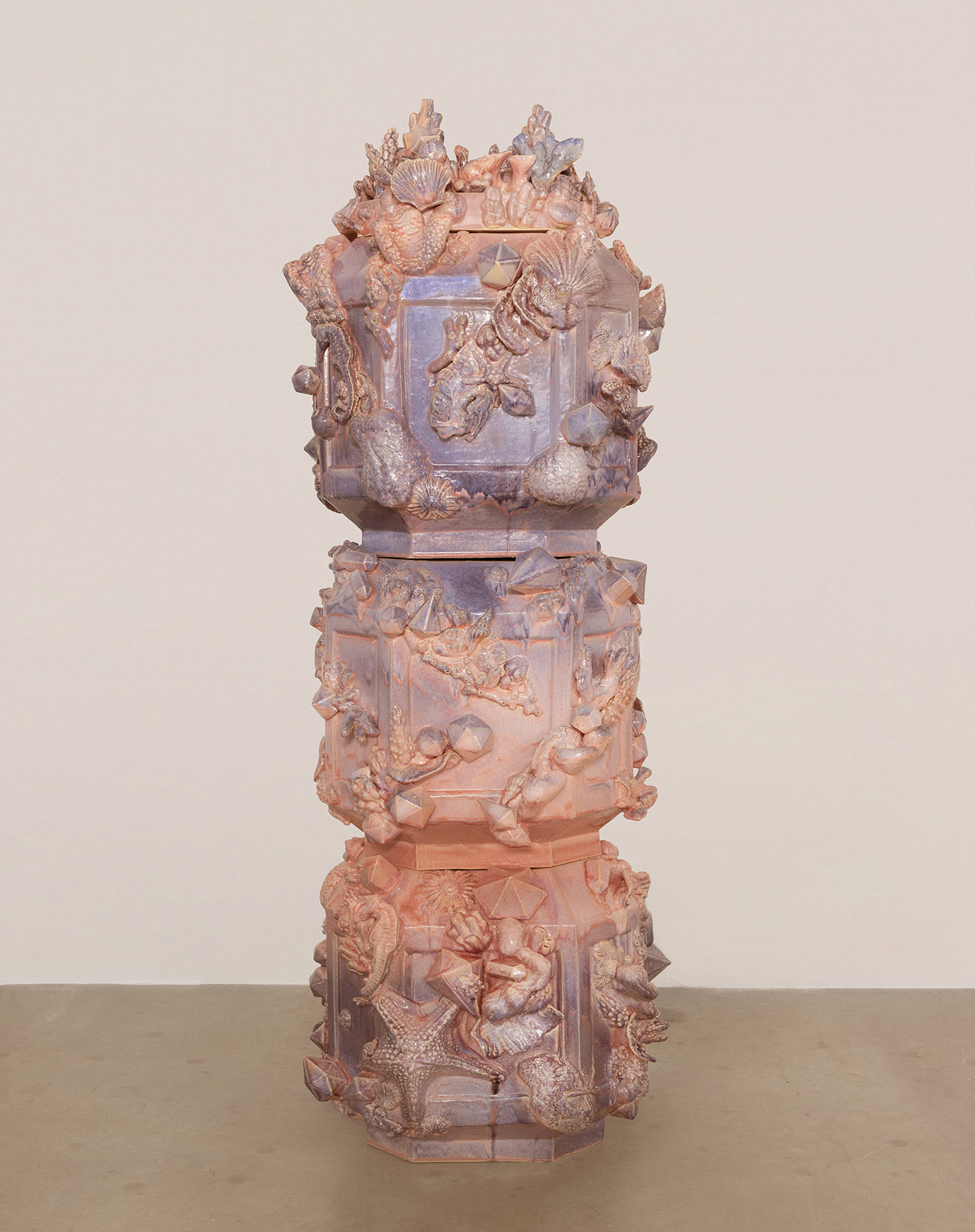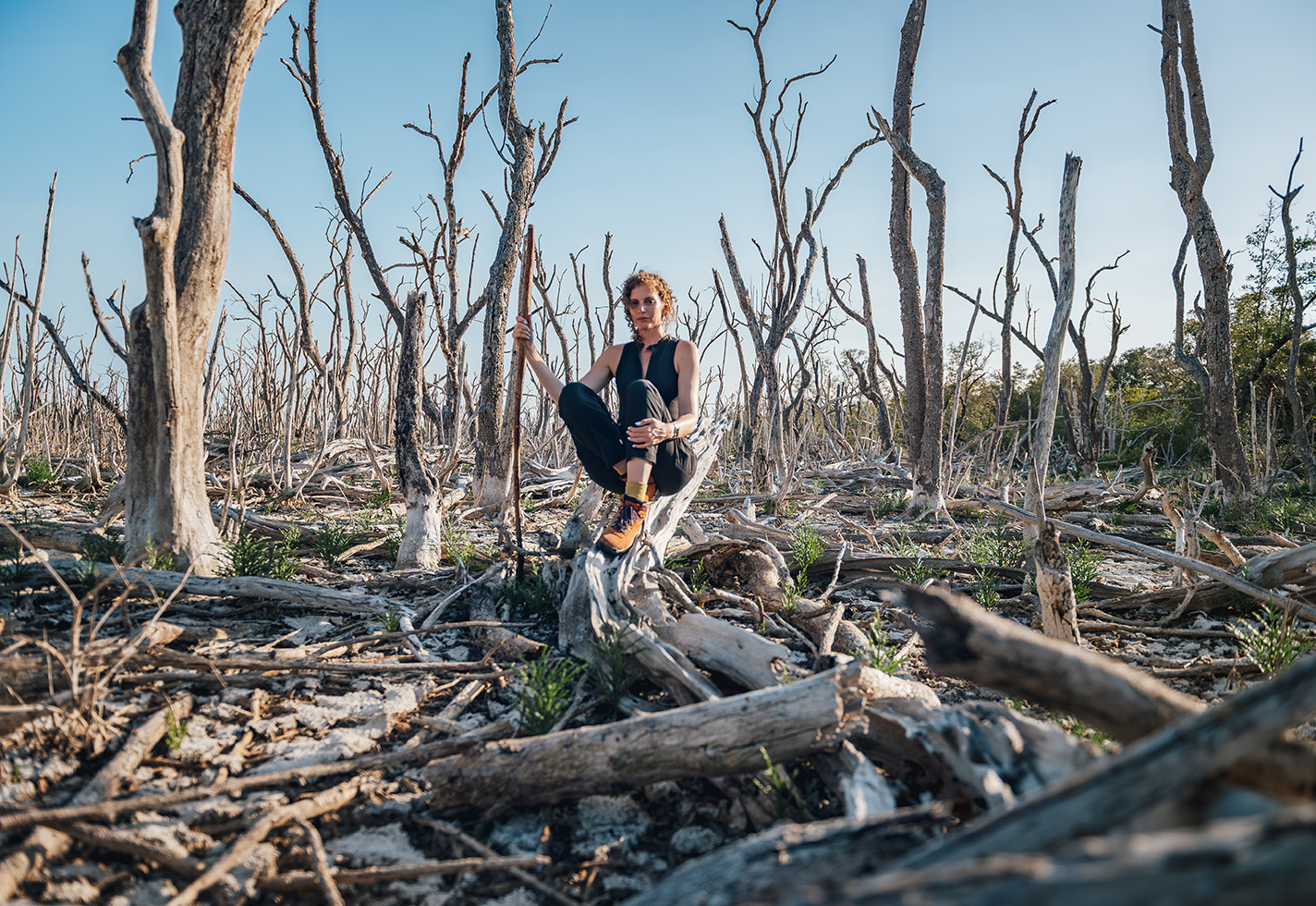
For Miami-based sculptor Lauren Shapiro, sourcing the forms that adorn her sculptural works begins below sea level.
She scuba dives miles from barrier islands off the coast of Miami, sometimes 40 feet deep, with a GoPro camera attached to her head, capturing vulnerable habitats and other aquatic wonders (such as the Neptune Memorial Reef) and mapping them using photogrammetry—a technology that enables scientists and researchers to estimate the dimensions of a three-dimensional structure from scores of overlapping, almost panoramic photographs.
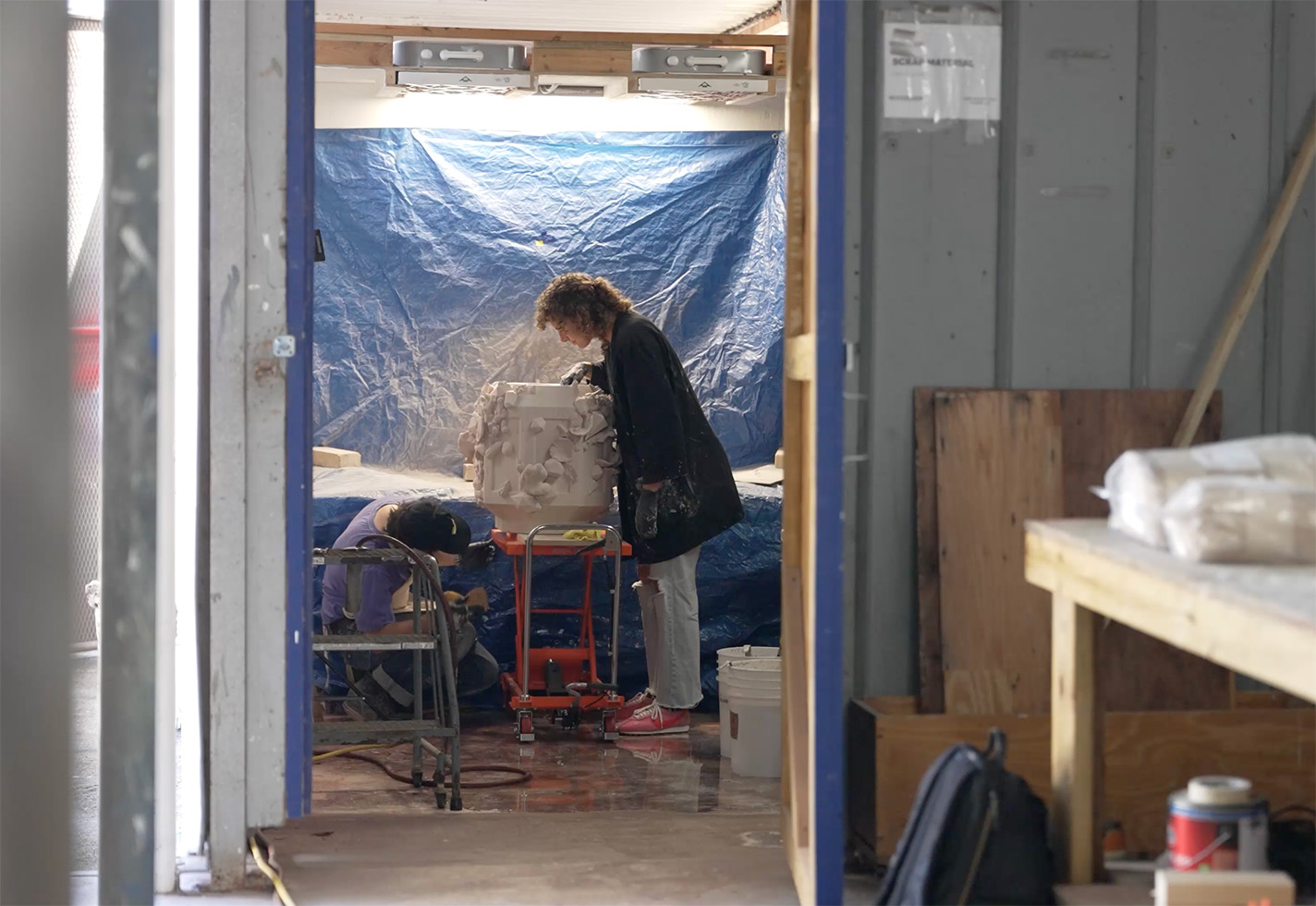
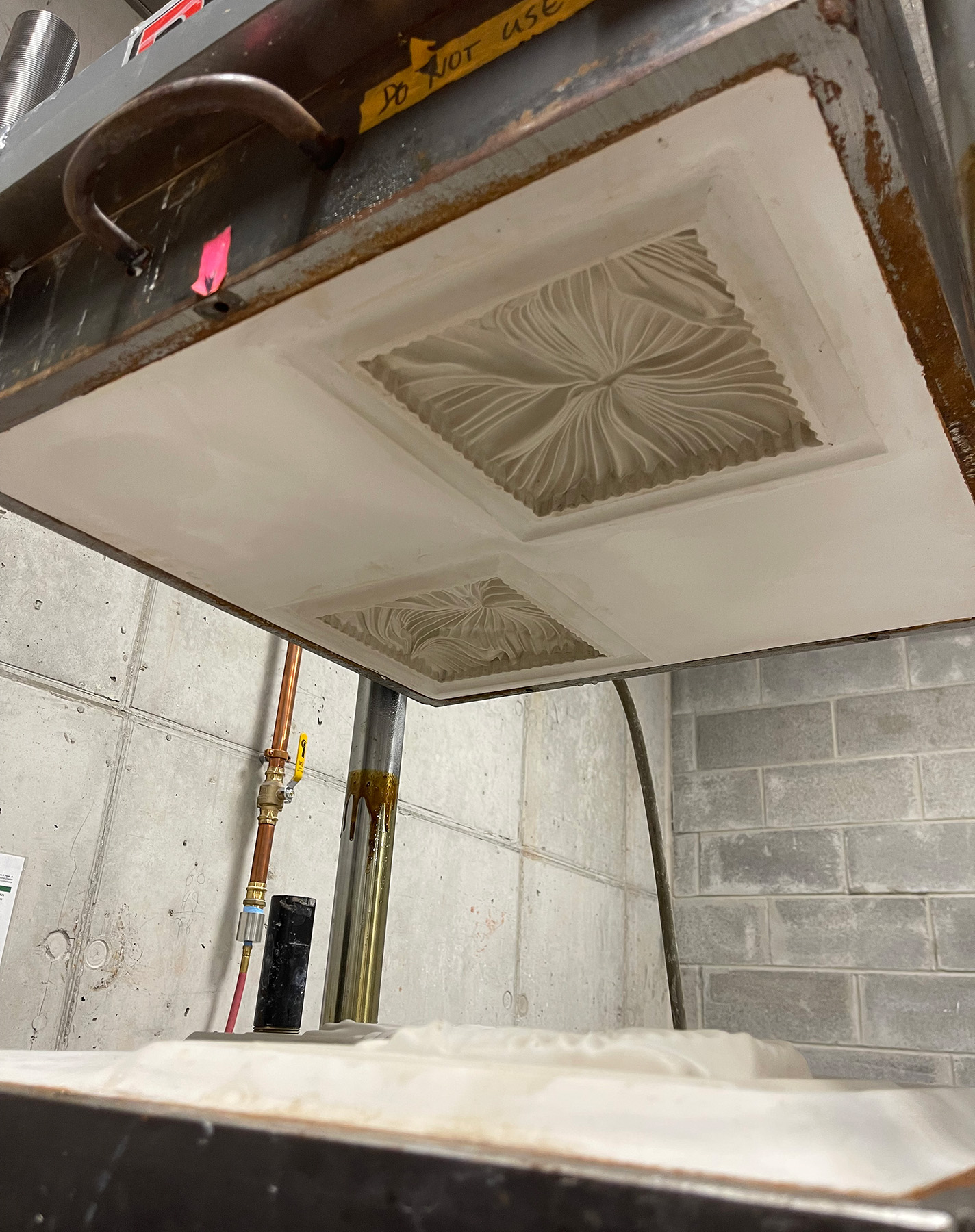
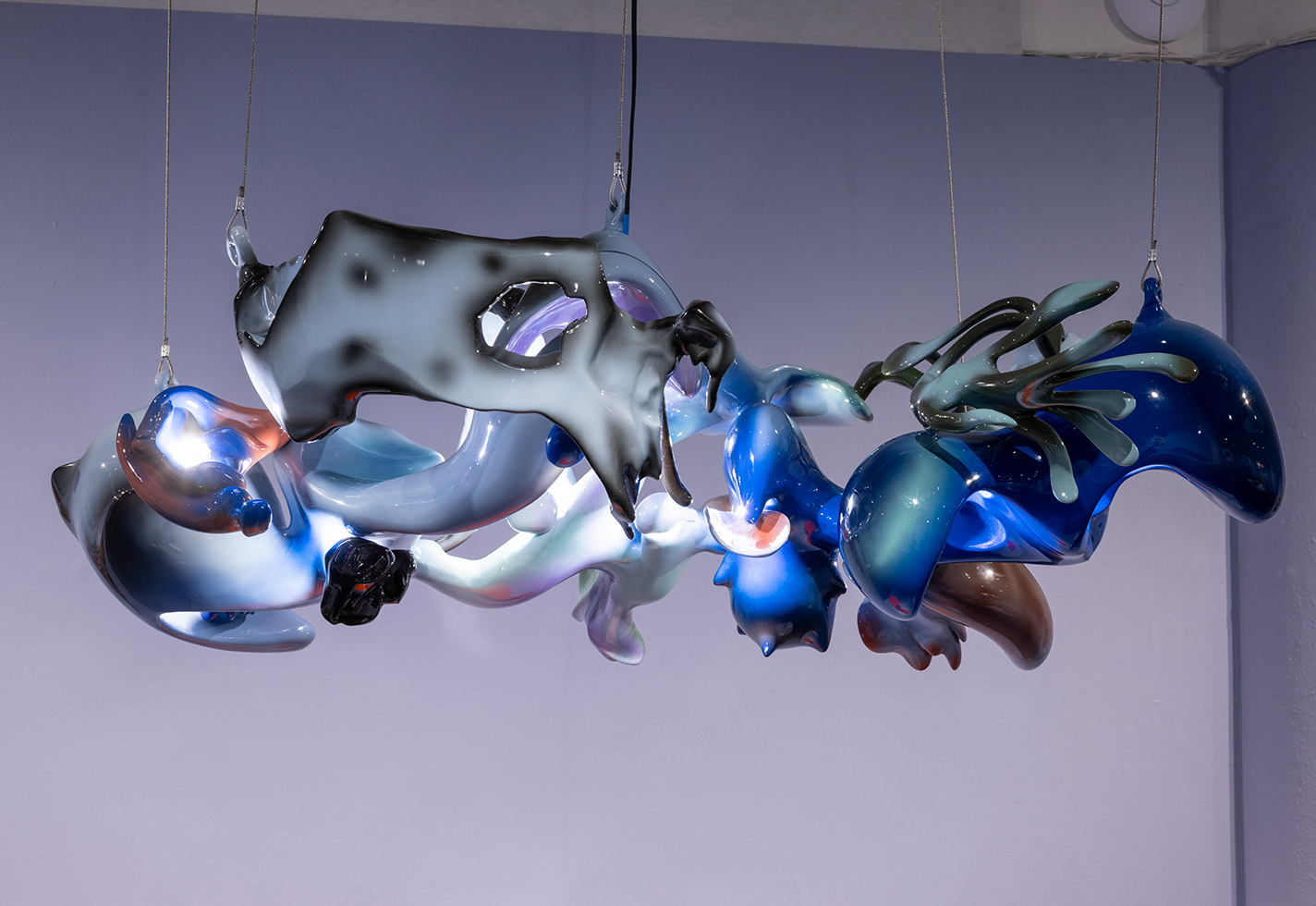
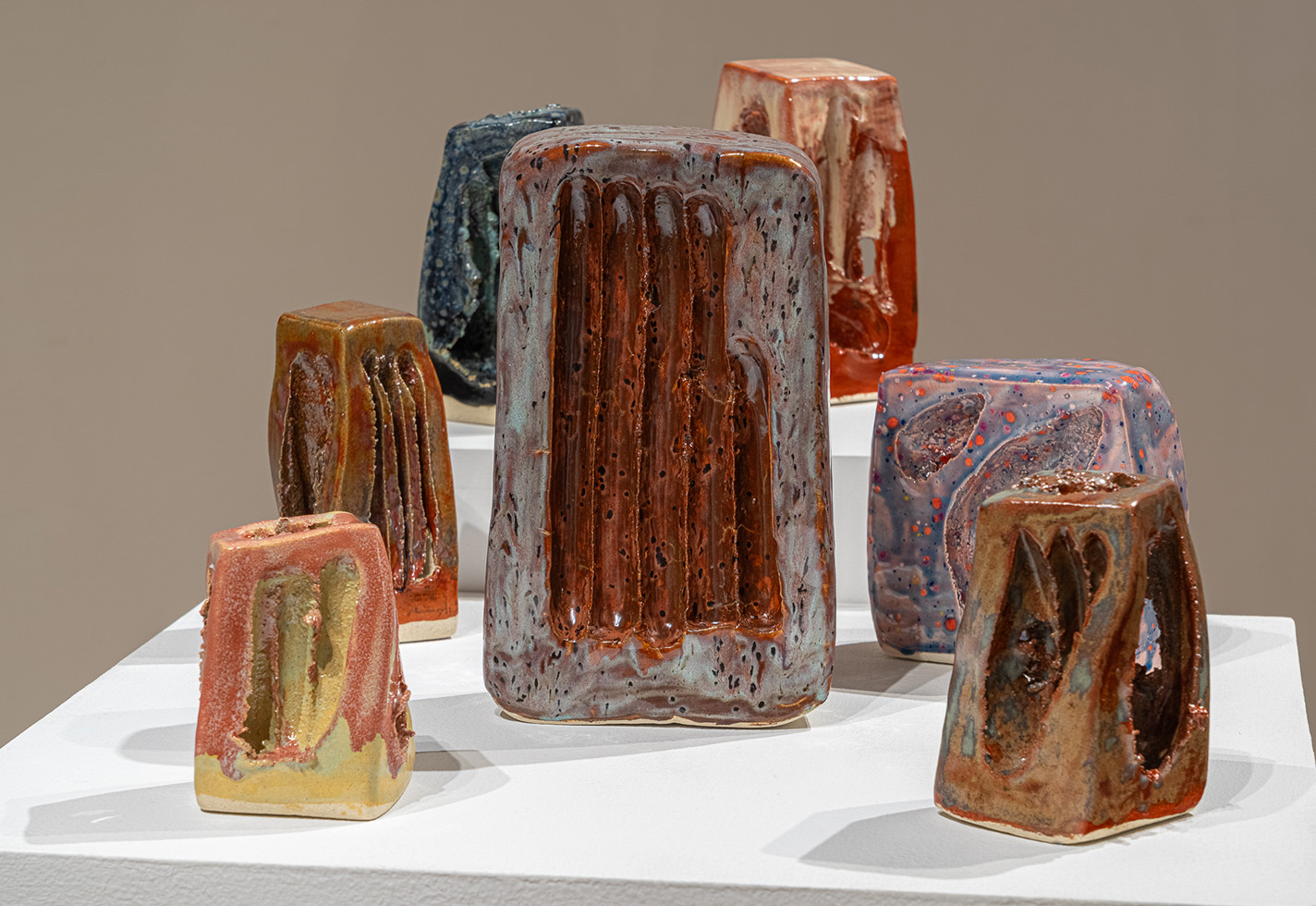
Shapiro is building an ever-expanding archive of 3D scans, historical drawings, and photographic documentation that become the basis for molds and sculptural elements. Combining techniques from ceramics, kiln-cast glass, and digital fabrication, she transforms these scans and records into materials and modules for pieces that move beyond reproduction to create a full reimagining of how natural structures relate to the built environment.
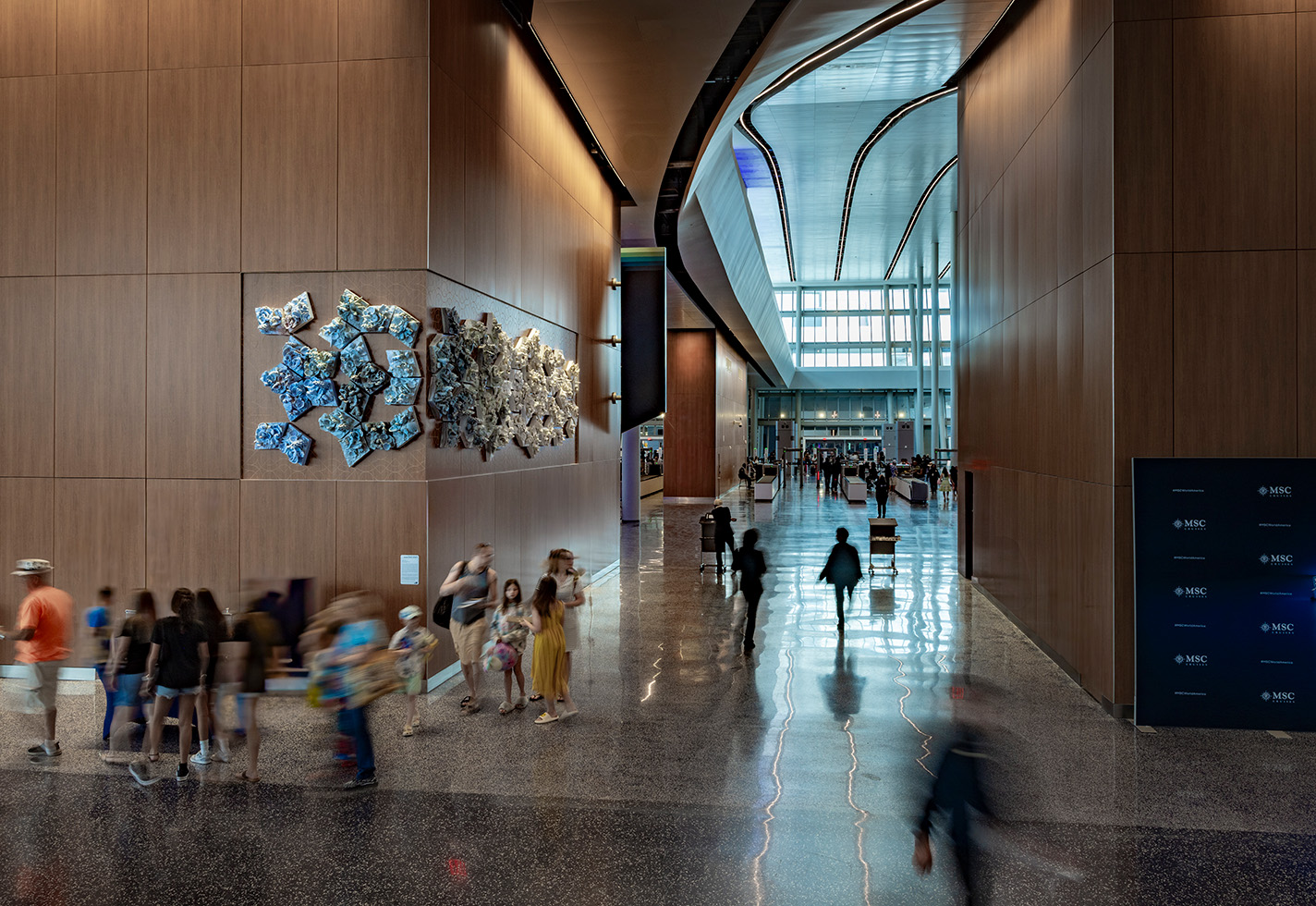
The ensuing works examine the environmental degradation and cultural losses unfolding in the face of climate change. Shapiro’s pieces—including shelf-size statuettes, site-specific installations that occupy entire galleries, and colossal public pillars—blend technology, scientific research, art, and craft to help viewers “reckon with the fragile infrastructures, natural and built, that sustain us” and imagine what will remain once the ocean overtakes the land.
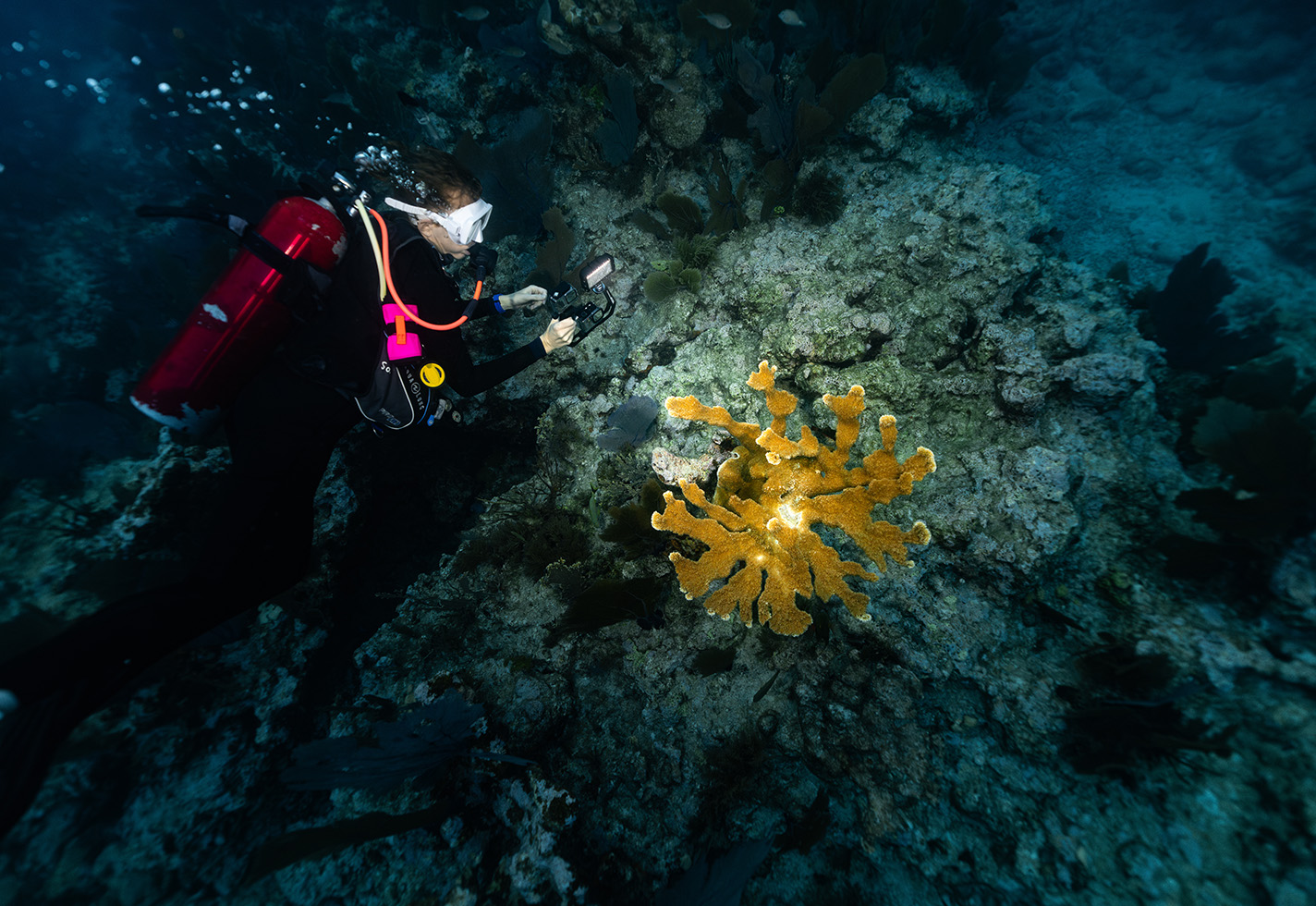
Shapiro scuba diving, 2024. The artist goes deep underwear with a GoPro to capture images that inspire her work in ceramics and glass.