Craft Around the Country

María Berrío Paints with Paper

The New York–based artist, whose solo exhibition Songlines is currently on view at the Minneapolis Institute of Art, painstakingly fashions Japanese paper into epic-sized scenes.

By Jon Spayde
November 6, 2025

Photo by Bruce M. White

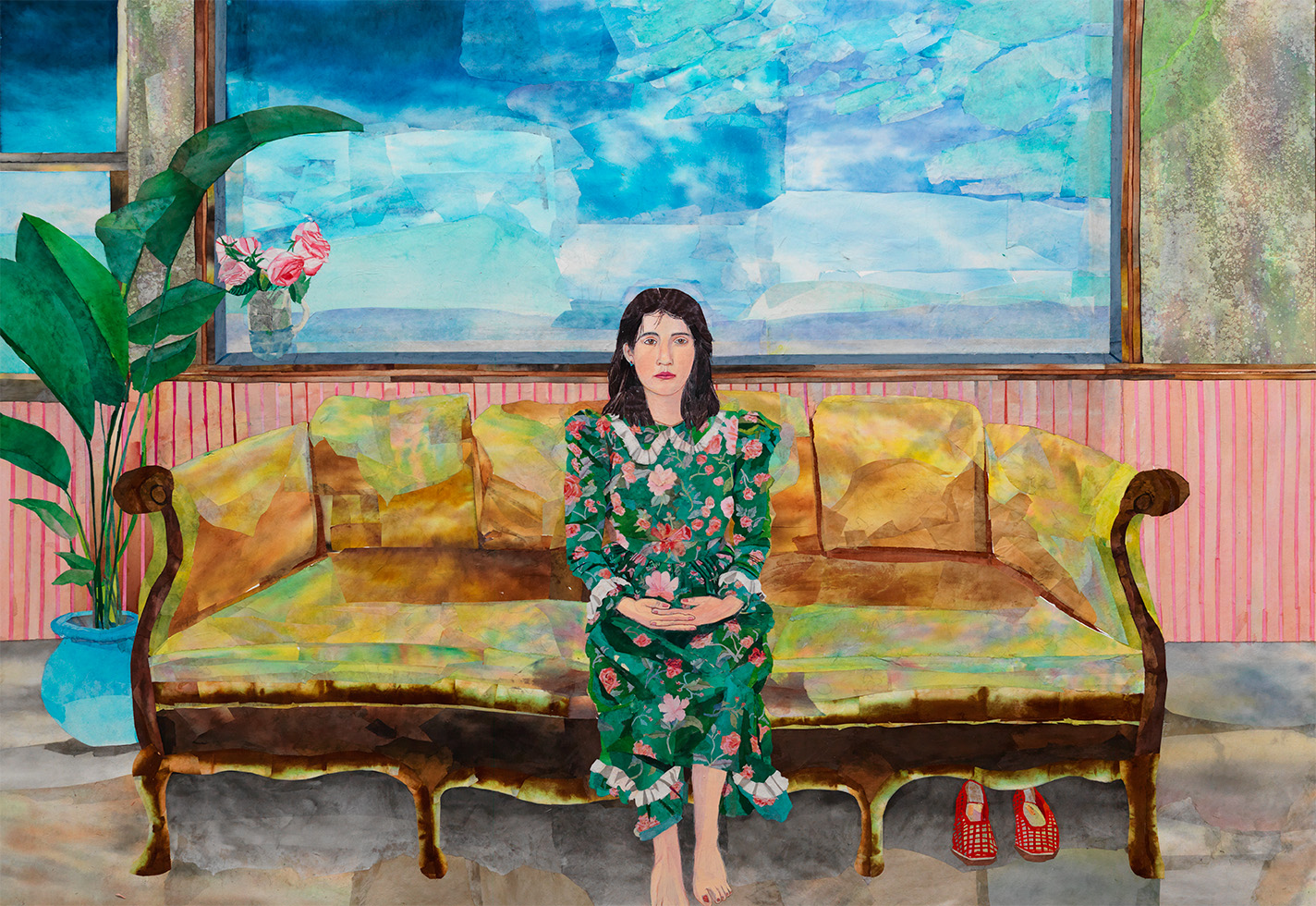
María Berrío, Clouded Infinity, 2020, collage with Japanese paper and watercolor paint on canvas, 84 x 120 in.

María Berrío has loved to draw since she was a child, but she ran into a problem on her way to becoming an artist. 

“I wanted to add colors,” she says, “but I never was proficient with paints, and I wasn’t interested in colored pencils.”

Her answer? Painting with paper.

The artist, born in Colombia and based in New York, creates collages that read as paintings—sometimes as giant paintings, on an almost 19th-century scale. Twenty of them are on display until January 10 at the Minneapolis Institute of Art (MIA). 

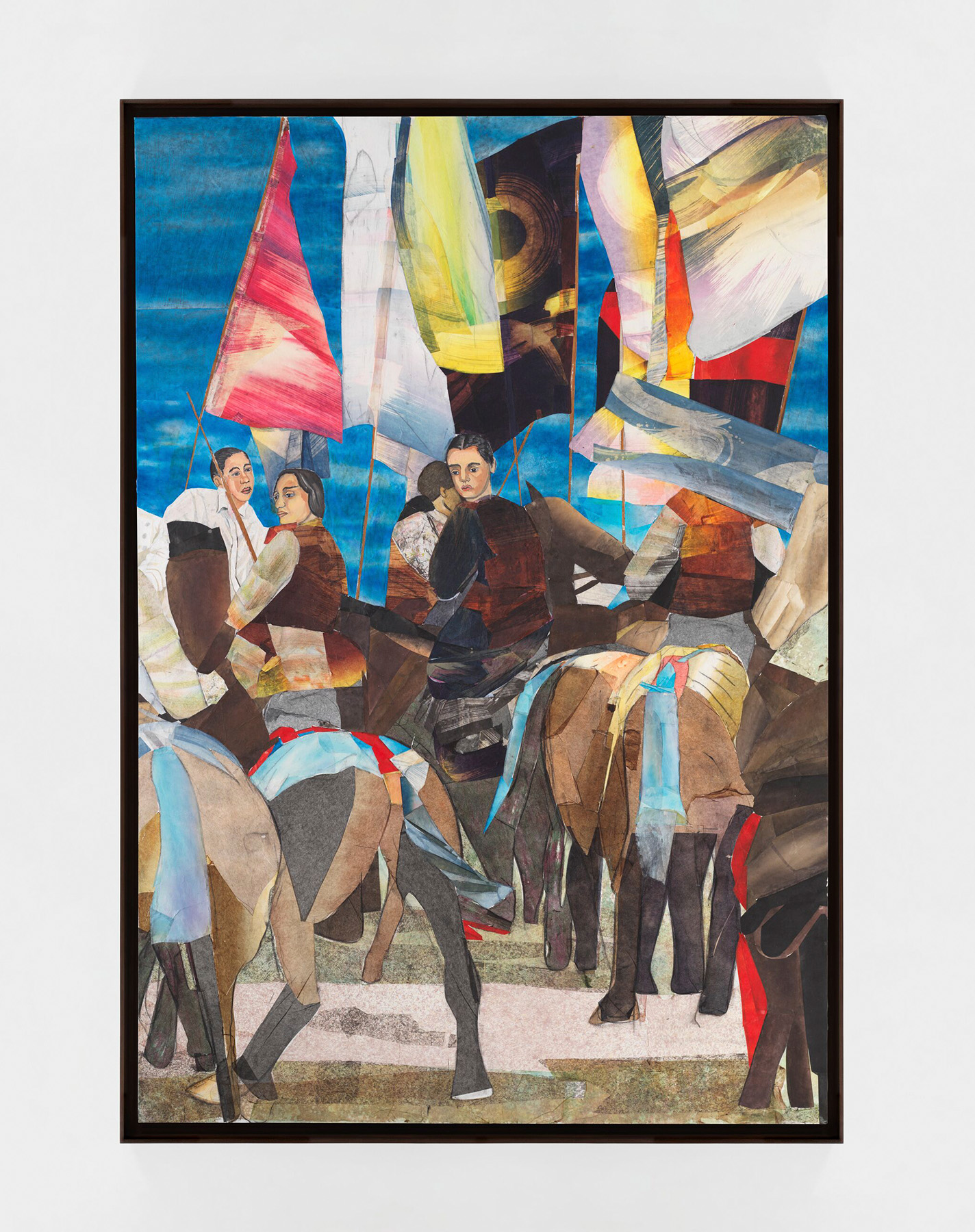
María Berrío: Songlines brings together works from the past decade, ranging from the 2021 series Joyas Voladoras (“Flying Jewels”)—diminutive portraits of hummingbirds—to the huge Oda a la Esperanza (“Ode to Hope”), in which eight solemn, dark-haired female figures sit facing the viewer, each cradling a bird, and the equally imposing Edge of the Salted Plains, in which a group of banner-carrying riders appear to be on the verge of heading off on a crusade.
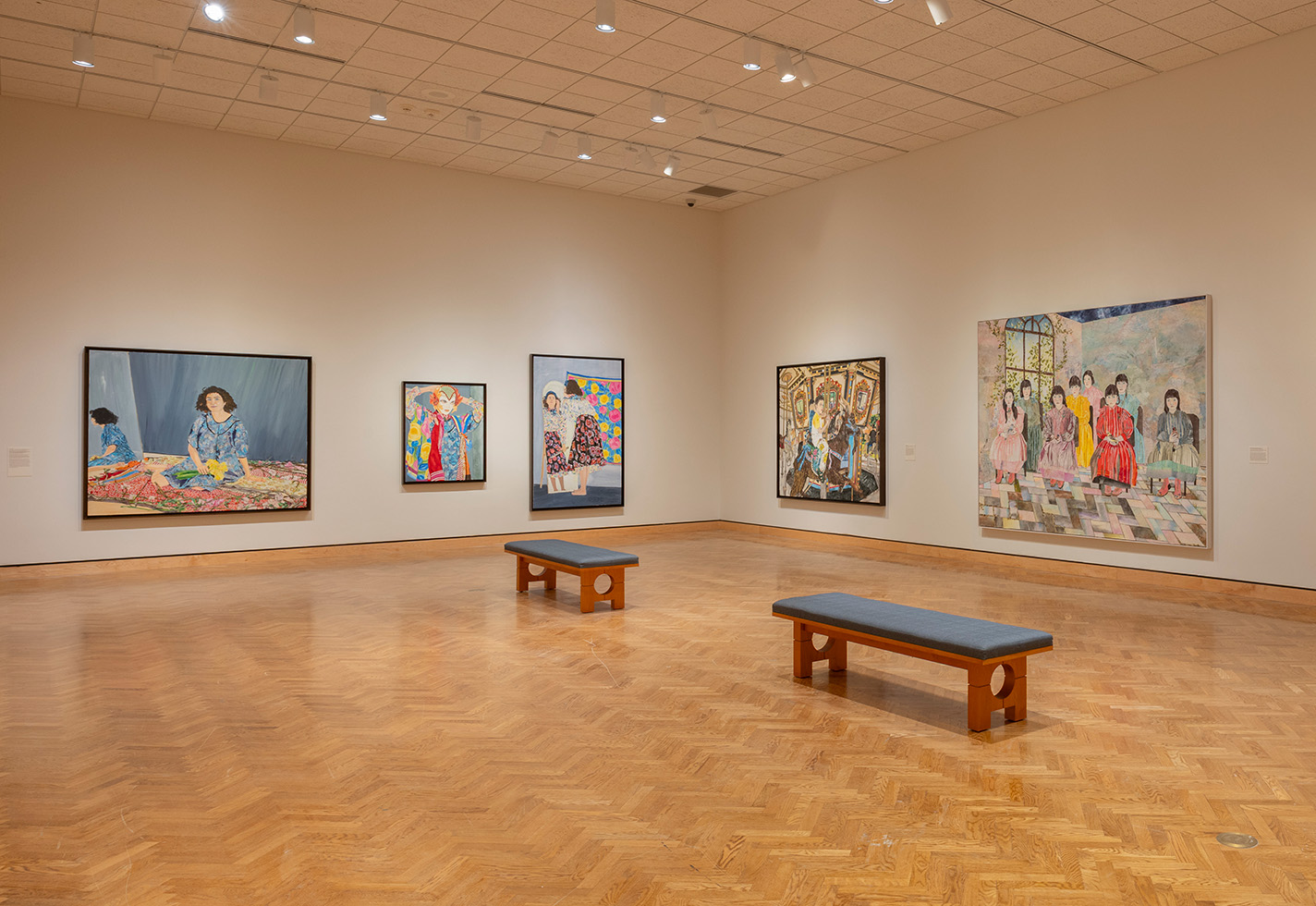
Photo courtesy of the Minneapolis Institute of Art

Installation view of María Berrío: Songlines at the Minneapolis Institute of Art, 2026.

The opulently colorful works, which begin as charcoal sketches and then are made with the painstaking application of bits of Japanese artisanal paper and some painting, are enchantments, blending myth—of both classical Greek and personal varieties—with notes of concern about contemporary problems such as environmental disaster and political turmoil. 

The women in Oda, for example, are intended to stand for mothers and the hopes they have for their children; it was created in 2019, at a time when thousands of children were separated from their families at the US/Mexico border.

The MIA’s Leslie Ureña, who co-curated the show with Lauren Schell Dickens of the San José Museum of Art, notes that Berrío’s work has, in the last few years, moved more and more into enigmatic storytelling in which the protagonists in the stories are usually still, silent, and pensive. “Despite its many vivid colors and layers, Maria’s work helps us enter the contemplative spaces that the figures inhabit and draw us into our own self-reflection,” Ureña says. “One of the goals that we have for the show is to invite our viewers to maybe make their own stories out of these works.”

Photo by Bruce M. White

Edge of the Salted Plains, 2025, collage with Japanese paper and watercolor paint on canvas, 117.75 x 80.5 in.

“There are also a number of limitations that come with using a medium you can’t easily fade or blend or mix, but part of the fun is the challenge of finding ways around those issues.”

— María Berrío

In making her stories, Berrío has moved from using commercially produced papers to an exclusive commitment to handmade Japanese paper (washi), following a suggestion from her friend Yuriko Katori, a Japanese artist. “I find these papers the easiest to work with,  and they have such a wide variety of colors, styles, and textures,” she says. “Some make for thick, solid, forceful lines, others can be blended together almost like mixing paint.”

As she proceeds, she is “not beholden to the sketch, as my works may go off in very different directions from what I originally planned. I choose a paper, cut it with an X-acto knife, and glue it, sometimes applying the glue with a brush, sometimes with my fingers.” 

The characteristics of the paper play a role in her choices. “Visually certain colors or patterns of paper might work, but their textures might not quite align, or the type of paper or thickness makes it hard to work with,” she says. “Some are so delicate that I have to use different techniques to cut and apply them, some so thick that I need a new blade with every slice. There are also a number of limitations that come with using a medium you can’t easily fade or blend or mix, but part of the fun is the challenge of finding ways around those issues.”

Berrío’s thought and labor add up to art that rewards close viewing, says Leslie Ureña. “María wants us to enjoy the act of looking at the piece, to really be drawn into it, whether it’s the texture of the paper or the theme of the work.”

Photo by Jeanette May

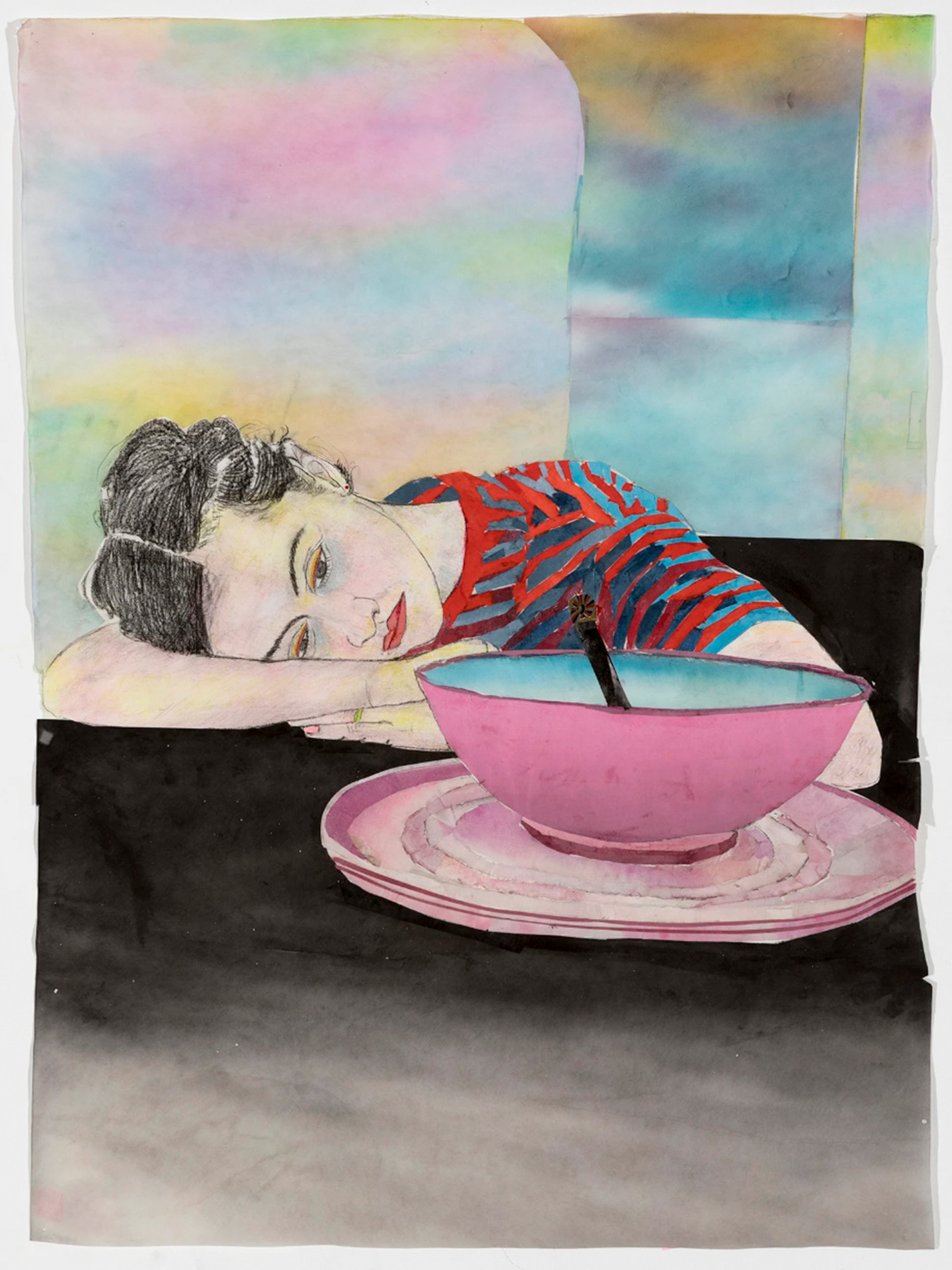
Self-Portrait, 2019, collage with Japanese paper, charcoal, and colored pencil on Okawara paper, 36 x 25 in.

Jon Spayde is a writer and editor in Saint Paul, Minnesota. A former contributing editor to American Craft, he writes on art, psychology, education, and personal growth for a number of regional and national publications.

Learn more about Berrío and Songlines online.

Exhibition Website Artist Instagram

Before you go!

We believe that making creates a meaningful world, and we hope you do, too. Deeply researched and impactful journalism on the craft community is in short supply. At the same time, being featured in craft-centered media and articles can have a major effect on a maker’s or artist’s livelihood, particularly those who are just starting in their career. You can help support our mission and the work of makers around the country by becoming a member or by making a gift today.

Thank you!
American Craft Council