Craft Around the Country

A Philadelphia Exhibition Adds Dimension to the Legacy of Japanese American Design

Noguchi to Asawa: Designing Postwar America, on view at the Barnes Foundation in Philadelphia through January 10, reexamines the lives and work of six storied designers.

By Kate Schuler
November 23, 2026

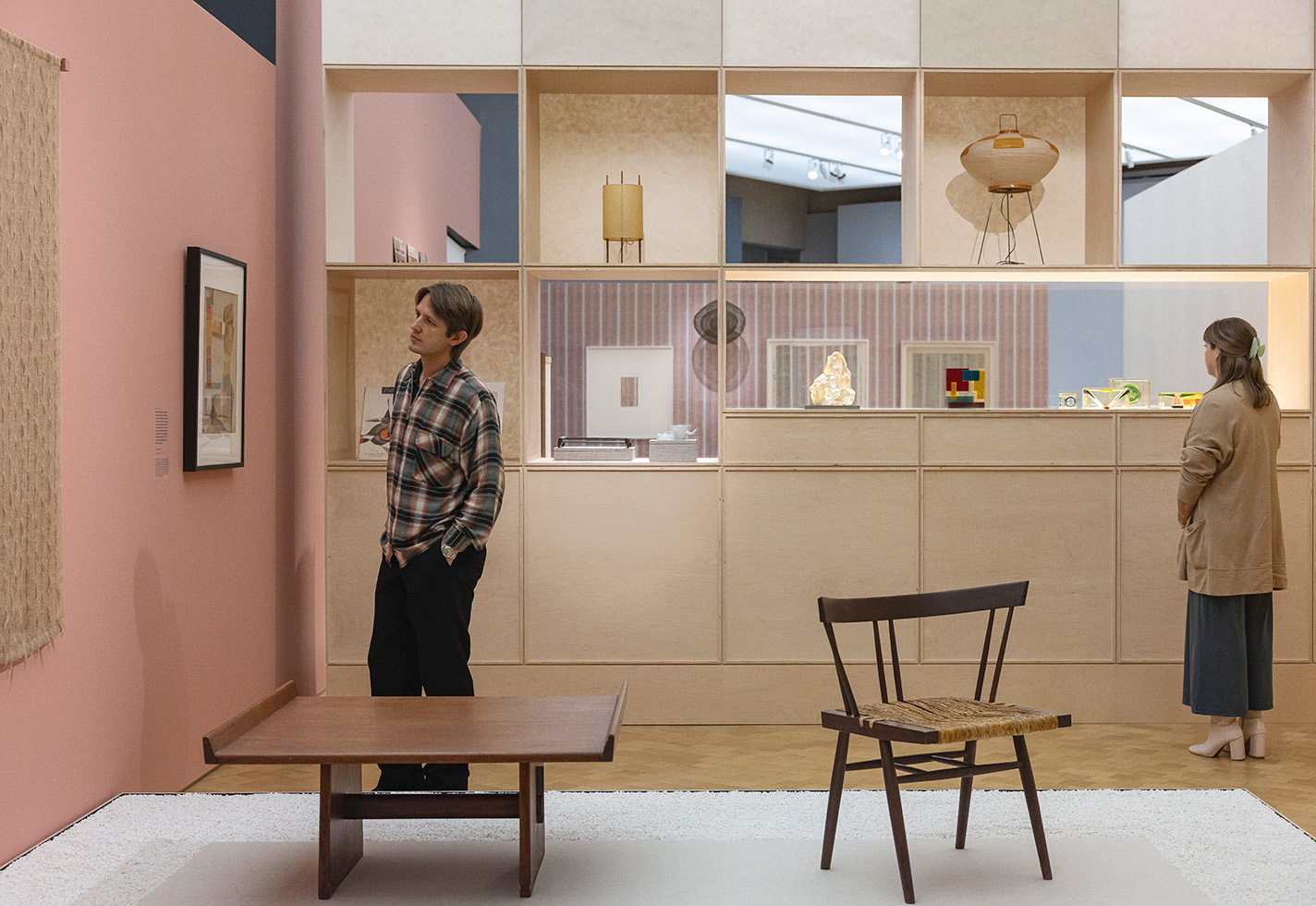
Photo courtesy of the Barnes Foundation

Visitors to the Barnes Foundation in Philadelphia examine works in Noguchi to Asawa: Designing Postwar America, 2026.

Japanese American artists created some of the most recognizable designs of America’s postwar aesthetic. Isamu Noguchi’s tables, George Nakashima’s chairs, and S. Neil Fujita’s cover art for Mario Puzo’s The Godfather became instant icons of midcentury design. 

Yet so ubiquitous are these designs, so accepted and assimilated, that the historical forces shaping them are flattened into the broader story of midcentury modernism.  

A new exhibition aims to remedy that. Noguchi to Asawa: Designing Postwar America, on view at the Barnes Foundation in Philadelphia through January 10, reexamines the lives and work of six Japanese American artists. In doing so, the show draws a direct line from displacement and internment during World War II to their postwar work.

Three of the featured artists—Noguchi, Nakashima, and sculptor Leo Amino—had established careers before the war. The younger three—Fujita, sculptor Ruth Asawa, and fiber artist Kay Sekimachi—were teenagers when they were interned in camps by the US government, where they took informal art classes.
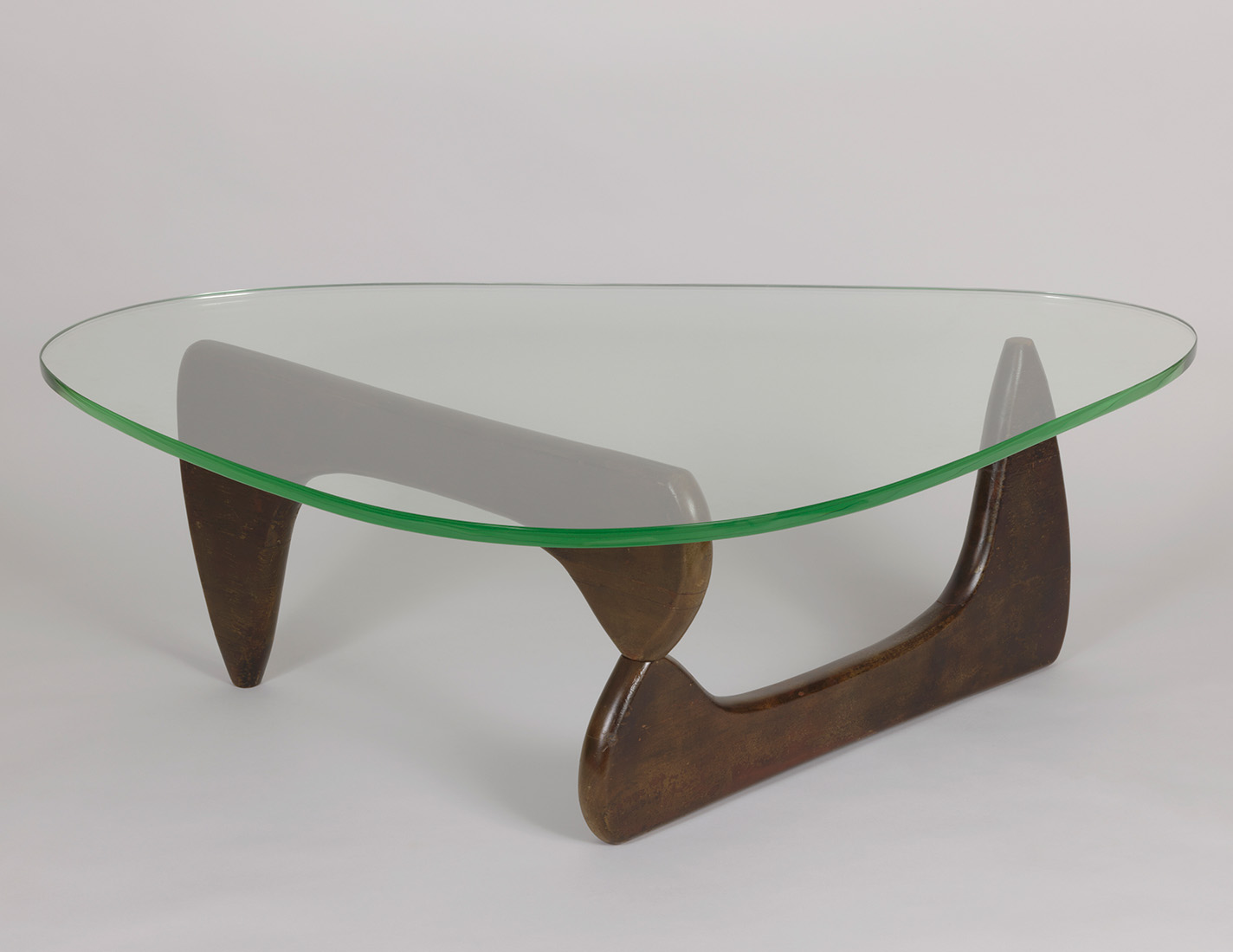
Photo by Matt Flynn © Smithsonian Institution, The Isamu Noguchi Foundation and Garden Museum, New York / Artists Rights Society (ARS), New York

Isamu Noguchi, Model IN-50 Coffee Table, 1944, glass and birch, 15.5 x 50 x 36 in.

Interned—voluntarily at first—in Arizona, Noguchi scoured the desert for wood to sculpt. Gnarled ironwood from his collection is on display in the exhibition, the twisted branches echoed in the interlocking curved wood base of his Coffee Table (IN-50), a 1944 design also on view in the gallery. 

Amino was not incarcerated, but his work charted the war’s impact. The biomorphic wood sculpture Air Raid (1940) evokes bodies twisted in horror, while his postwar works pushed the creative possibilities of newly declassified plastic materials developed by the military. “A lot of the artists were interested in synthetic materials because they were brand new, they were like a blank slate in an open field of exploration,” says Cindy Kang, curator of collections and exhibitions at the Barnes. 

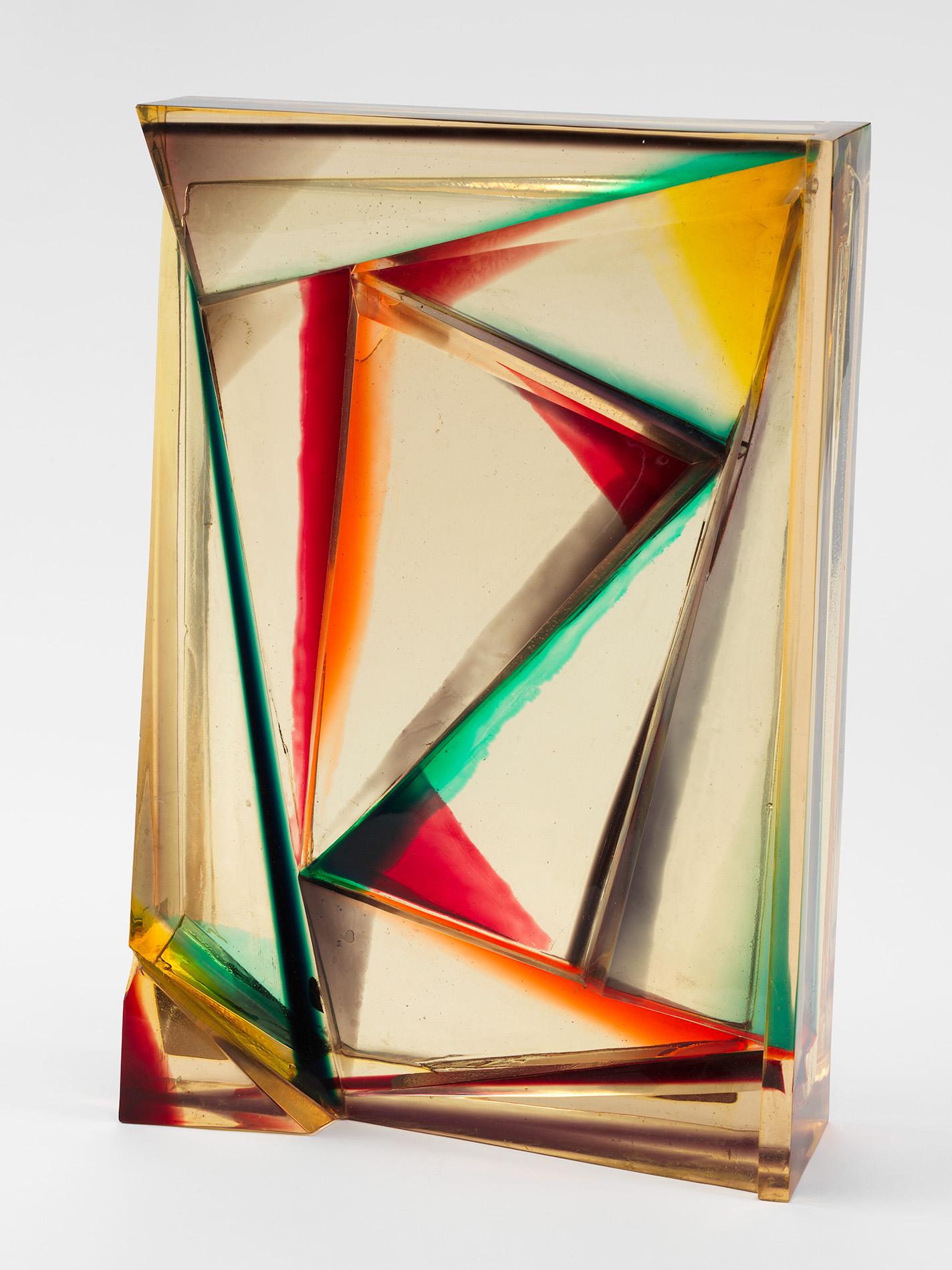
In Amino’s Refractional #47, a series of small luminous objects play with light passing through colors suspended in polyester resin. “It’s a poignant transformation of this material that’s used for violence in combat,” Kang says. 

Philadelphia is a fitting place for this reappraisal. The city’s 1876 Centennial Exposition put Japanese silks, ceramics, and lacquerware in front of the public for the first time, kickstarting an American fascination with Japanese artisanry as hostility was growing toward Japanese Americans. “The people were not valued, but the objects were valued,” Kang says. “This exhibition is about interrogating that dynamic and reinserting the people into the narrative.”

Photo by Dan Bradica

Leo Amino, Refractional #21, 1967, polyester resin, 20 x 13.5 x 4.5 in.

Photo by Christian Giannelli

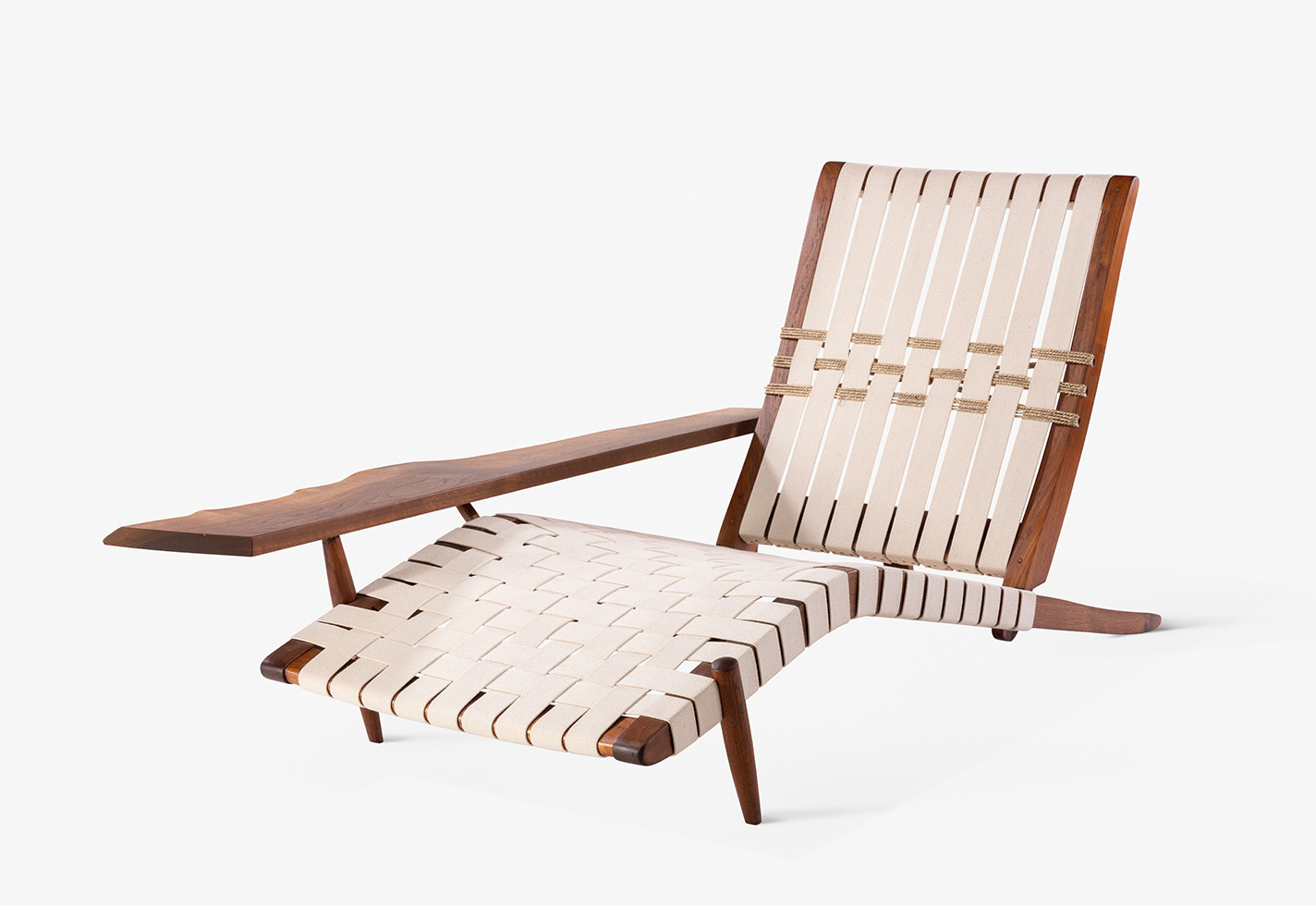
George Nakashima, Long Chair with Freeform Arm, 1952, American black walnut with sea-grass and cotton webbing, 35 x 66 x 30 in.

Kate Schuler is a writer, potter, and editor based in Washington, DC.

Learn more about the exhibition online.

Website

Before you go!

We believe that making creates a meaningful world, and we hope you do, too. Deeply researched and impactful journalism on the craft community is in short supply. At the same time, being featured in craft-centered media and articles can have a major effect on a maker’s or artist’s livelihood, particularly those who are just starting in their career. You can help support our mission and the work of makers around the country by becoming a member or by making a gift today.

Thank you!
American Craft Council