Craft Around the Country

This Workshop's Plaster Ornaments Adorn San Francisco's Historic Buildings

At Lorna Kollmeyer Ornamental Plaster, artisans recreate and restore the ornamental flourishes that define the City by the Bay’s unique architecture.

By Jacqueline Huynh Young
November 13, 2026

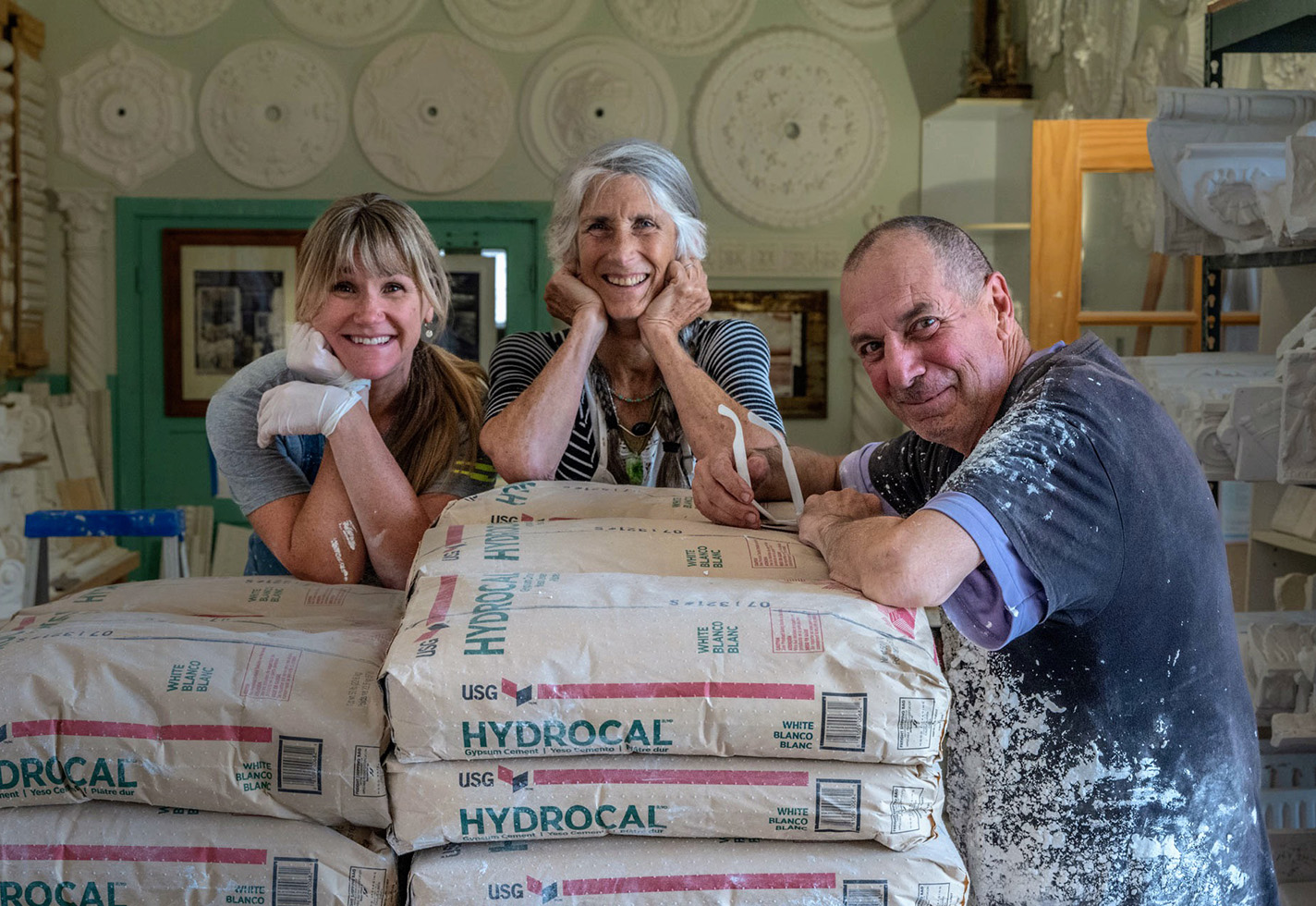
Photo courtesy of Lorna Kollmeyer Ornamental Plaster

Lorna Kollmeyer (center) with business partners Amy Firman (left) and Mike Dyer (right) at Kollmeyer's San Francisco plaster shop.

Lorna Kollmeyer Ornamental Plaster occupies 3,200 square feet inside Building 115 at San Francisco’s Hunters Point Shipyard, a former World War II torpedo training center. Sixteen-foot ceilings rise above the workshop, where elaborate ceiling medallions, egg-and-dart moldings, and dainty tulip drops hang from the walls. Two old photographs of San Francisco plaster shops, predecessors to the one Kollmeyer runs today, are displayed on a set of mint-green doors.

When the Navy shut down operations at Hunters Point in 1974, it left behind a sprawling collection of industrial buildings that artists began moving into by the late 70s. Today, Kollmeyer is one of nearly 300 artists working at the former naval shipyard and nearby Islais Creek Studios. 

Her shop also happens to be San Francisco’s last ornamental-plaster business, producing and restoring the cast ornament found throughout the city’s historic buildings. When asked why she thinks hers survived, her expression falls. “Two words: real estate,” she says. As other plaster businesses disappeared under rising commercial rents, affordable space at Hunters Point allowed her three-person business to keep both its workshop and its enormous collection of molds.
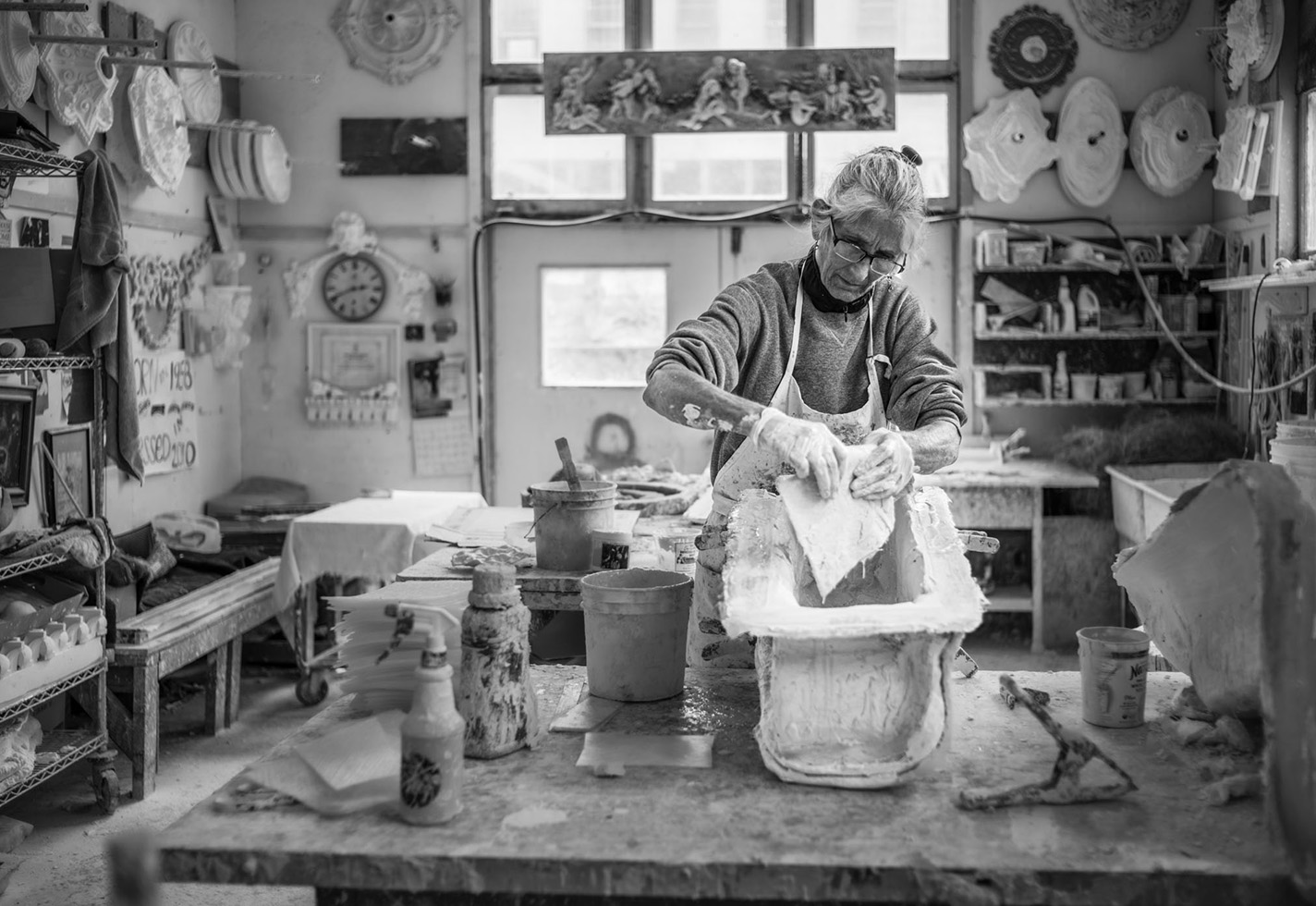
Photo courtesy of Lorna Kollmeyer Ornamental Plaster

Kollmeyer applies gypsum-soaked hemp fiber into a mold. Her workshop holds a massive catalog of historic ornaments.

Kollmeyer arrived at plaster almost accidentally. An All-American basketball star at Colorado College, Kollmeyer spent a year playing professionally in France and assumed she would eventually coach. Instead, she returned to California wondering what else there might be beyond basketball. “I just kind of wanted to be in the real world, and San Francisco was the closest to the real world I could get. But I don’t think I ever quite got to the real world being in the Bay Area,” she laughs.

In San Francisco, she organized 10K runs and pieced together work at a cafe, a bike shop, and the Jewish Community Center before meeting Peter and Helene Marchant, a couple who flipped dilapidated Victorians in the city. Peter made his own plaster ornament and sold some through Cliff’s Variety in the Castro, the landmark variety store Kollmeyer describes as equally useful for finding a piece of hardware or serving the local drag community. “It’s this real bastion of the neighborhood,” she says. 

One day, Peter asked if she knew anyone who wanted to buy a plaster business, and Kollmeyer began doing the math. “I thought to myself, ‘God, if every couple months, Cliff’s did a big ol’ order, I would be able to net about $1,500 from making this big shipment to them, and that would take a huge financial stress off.’” She bought the business and began making plaster ornament out of the Marchants’ basement.

Photo courtesy of Lorna Kollmeyer Ornamental Plaster

A ceiling medallion from Kollmeyer's 400 series, fabricated as a multi-piece set. A central medallion is surrounded by a multi-part wreath.

Photo courtesy of Lorna Kollmeyer Ornamental Plaster

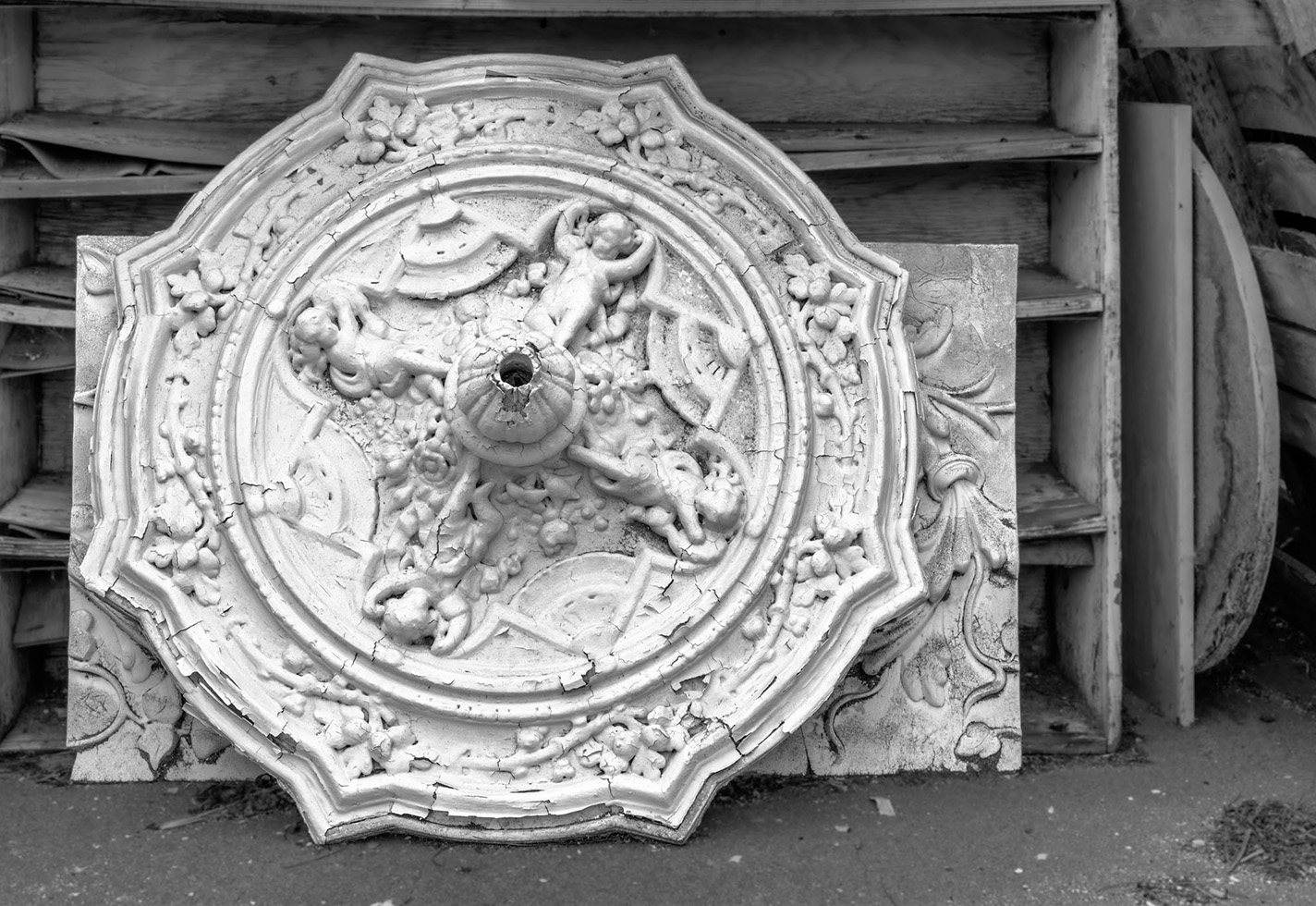
An antique plaster ceiling medallion waiting to be restored.

One of her first major commissions was the Hotel Majestic in Pacific Heights, a five-story Edwardian hotel whose original plaster ornament had been stripped away and whose facade had been remodeled in a stucco-covered Neo-Tudor style. Victorian and Edwardian ornament had fallen out of fashion by the middle of the 20th century, and many San Francisco homeowners began covering their buildings with stucco or asbestos siding. 

The Marchants advised Kollmeyer to go into the contractor’s office and not let on if there was something she didn’t know how to do. When she arrived, someone handed her a set of plans. “Never seen blueprints before,” she recalls thinking.

With only historic photographs to work from, Kollmeyer brought in two artist friends who had recently graduated from San Francisco Art Institute, Ali Pearson and Lori Lambertson, to sculpt the missing pieces from scratch. “This was a gigantic job,” Kollmeyer says. “It was a hotel on a corner with about eight bay windows. On three of the floors, every facet of the bays had a different plaque on it.” The commission gave the young business a foothold and also led Kollmeyer to Hunters Point, where Pearson had a studio. A small room there rented for $150 a month.

Photo courtesy of Lorna Kollmeyer Ornamental Plaster

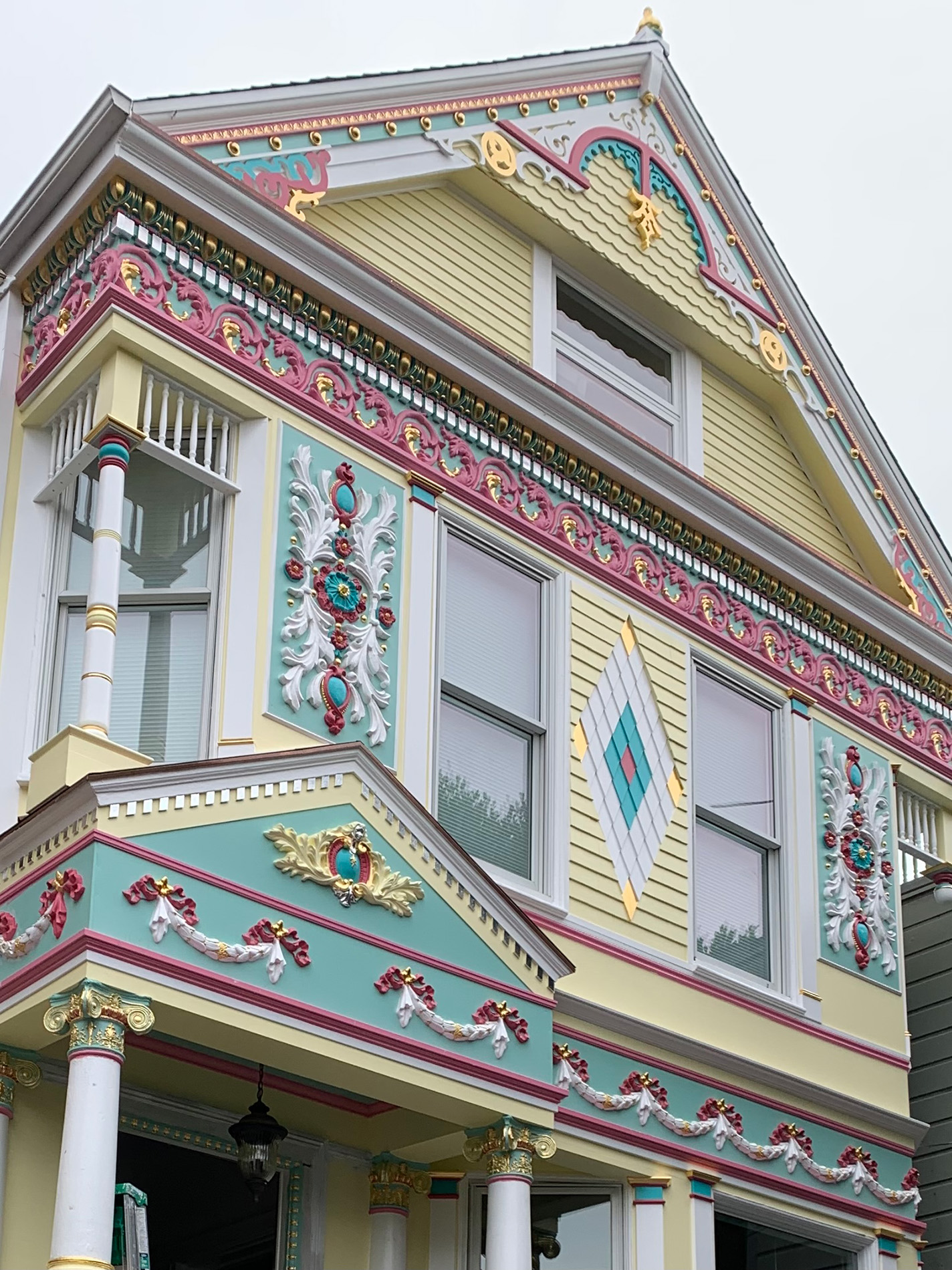
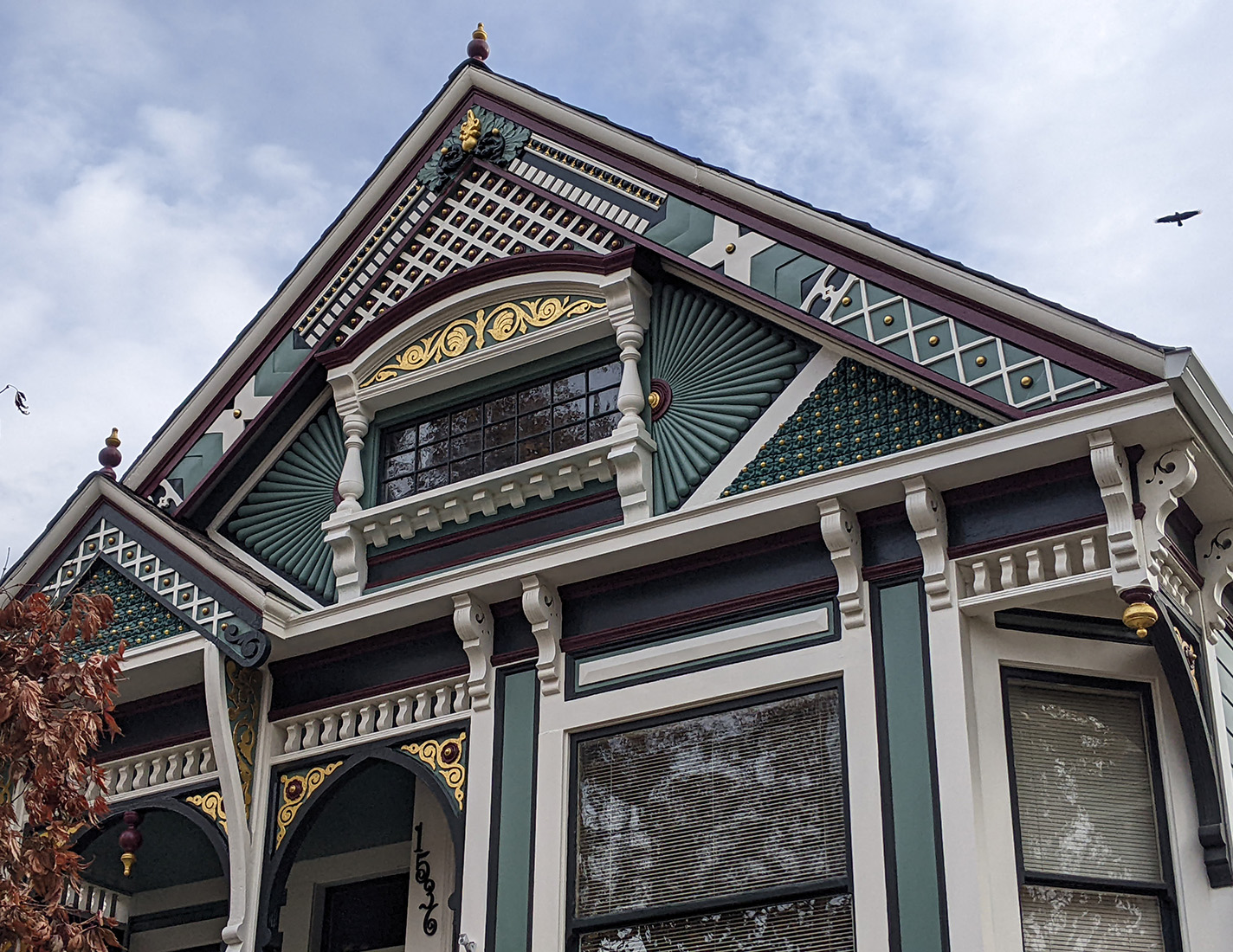
A colorful painted lady house restored by Lorna Kollmeyer Ornamental Plaster, featuring gingerbread detailing, hanging garland appliqués that drape along the porch entablature, and Corinthian style capitals brushed with gold leaf.

The molds Kollmeyer inherited from the Marchants eventually became the foundation of a much larger collection. Homeowners brought in old medallions they wanted reproduced. An architectural salvage business in Oakland traded ornaments for new castings. When San Francisco Victoriana, another longtime source for plasterwork, closed about a decade ago, Kollmeyer acquired its molds too. Today, she can look across the shelves and recognize families of designs by the repetition of a leaf or a pattern that suggests they came from the same hand.

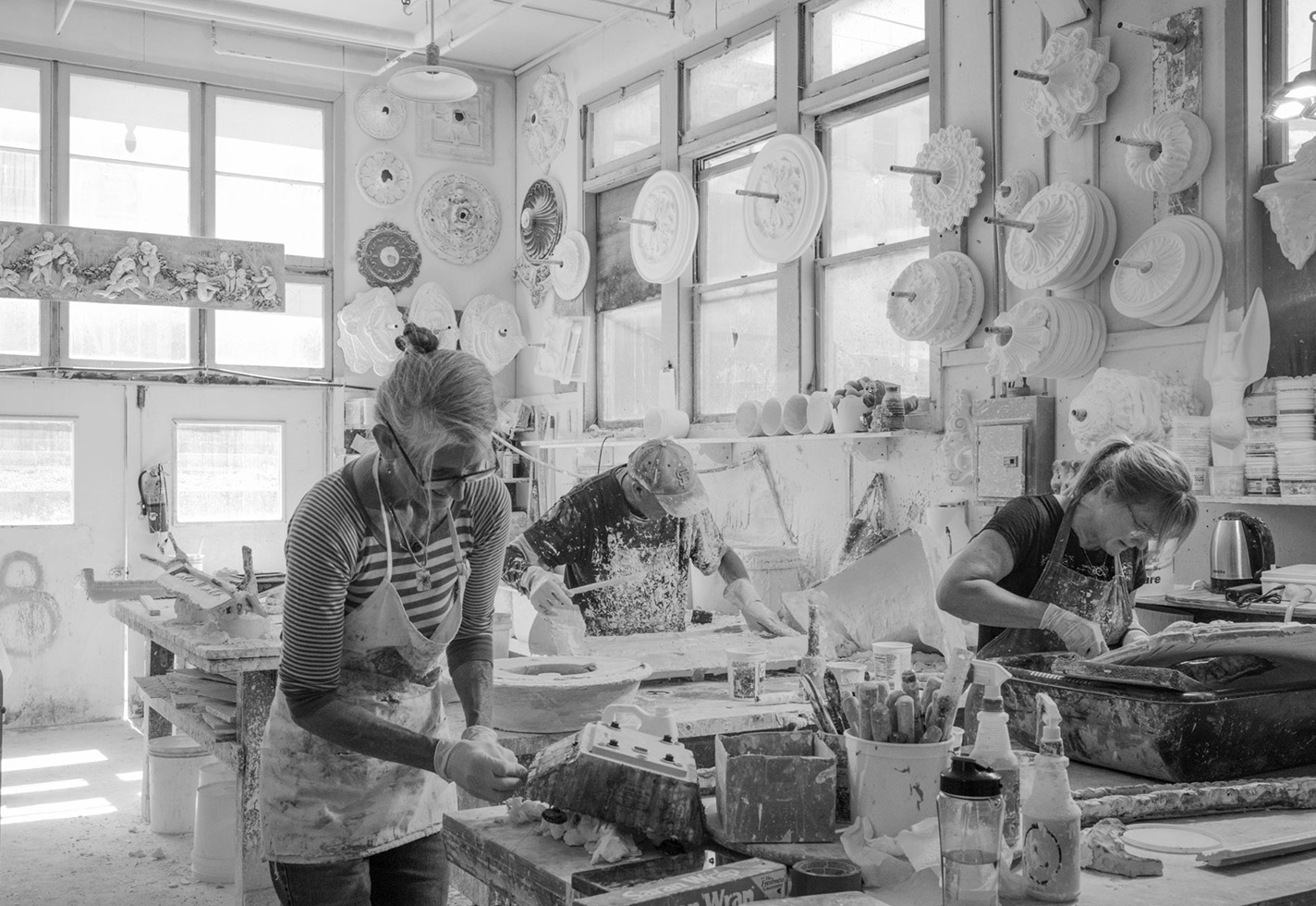
Kollmeyer runs the shop with longtime partners Mike Dyar and Amy Firman. Dyar pours the castings, while Firman does much of the restoration and mold-making Kollmeyer used to handle. “Now I just sweep because I’m the only one that cares about sweeping,” she laughs. When an original piece comes in, Amy strips away layers of old paint and repairs any broken details before brushing on layers of urethane rubber. Once the rubber cures, a rigid plaster shell supports the flexible mold, keeping it from losing its shape. Interior ornament is made from casting plaster, while exterior pieces require a denser, stronger gypsum cement. Dyar  mixes the appropriate material with water and pours it into the mold. Once it sets, he eases the new casting free. The mold can then be used again and again, one of hundreds lining the workshop’s shelves.

Photo courtesy of Lorna Kollmeyer Ornamental Plaster

Kollmeyer, Firman, and Dyer collaborate on different parts of the mold-making and plaster casting process.

San Francisco–based designer and restoration expert Tom Leach has worked with Kollmeyer for about two decades and knows the shop well enough to navigate those shelves almost from memory, first narrowing his search by size and then by type and motif: leaves, lion heads, scrolls, cartouches. When historic photographs survive, he can recreate a facade closely. When they don’t, Kollmeyer’s collection gives him a vocabulary of ornament that once appeared on the city’s buildings. “That’s why I use Lorna’s pieces,” Leach says. “I really wouldn’t go anywhere else because she has molds and designs that are specific to San Francisco.”

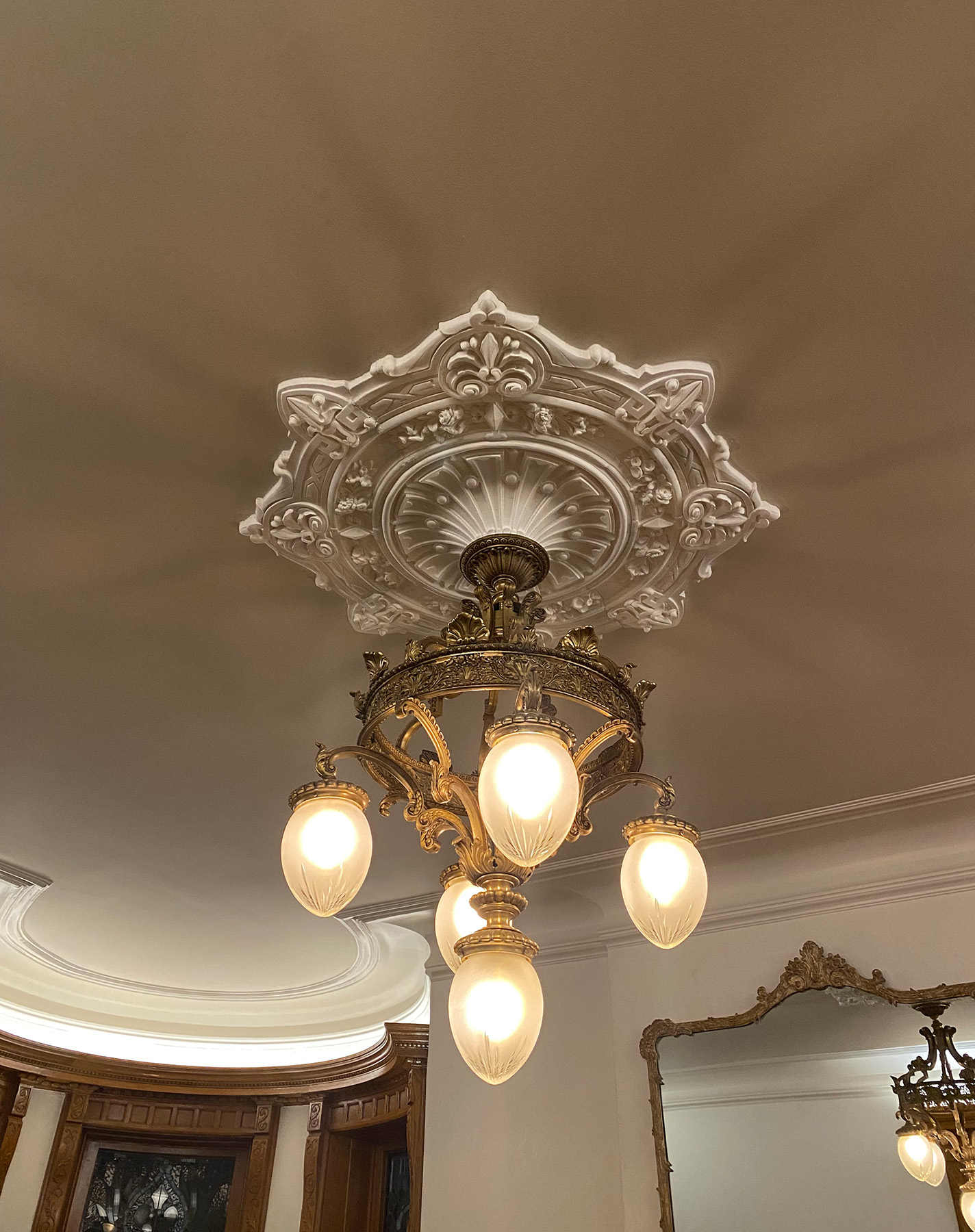
Compared with ornament Kollmeyer has seen elsewhere in the country, the city’s historic plasterwork can be unusually exuberant. “The guys out here in San Francisco, they got wacky,” she says, pointing to items crowded with fruit and faces. Nearby are delicate picture moldings and rows of Mediterranean crown moldings from houses built in the 1920s and ’30s. She gestures toward a corner of the shop she particularly loves. “The Victorians had a lot of ceiling medallions,” she says. “All of the Victorians had gas heating and gas lighting that came down through the lighting fixtures, and I think that’s got to be my favorite aspect of the shop.”

Kollmeyer’s collection grew because people kept bringing old pieces through the door. “Every little bit and bob that you see in this shop is all here because somebody cared enough about their house to have it redone,” she says. “I like to sort of brag about our archive that it really belongs to the city.”

Photo courtesy of Thomas Leach

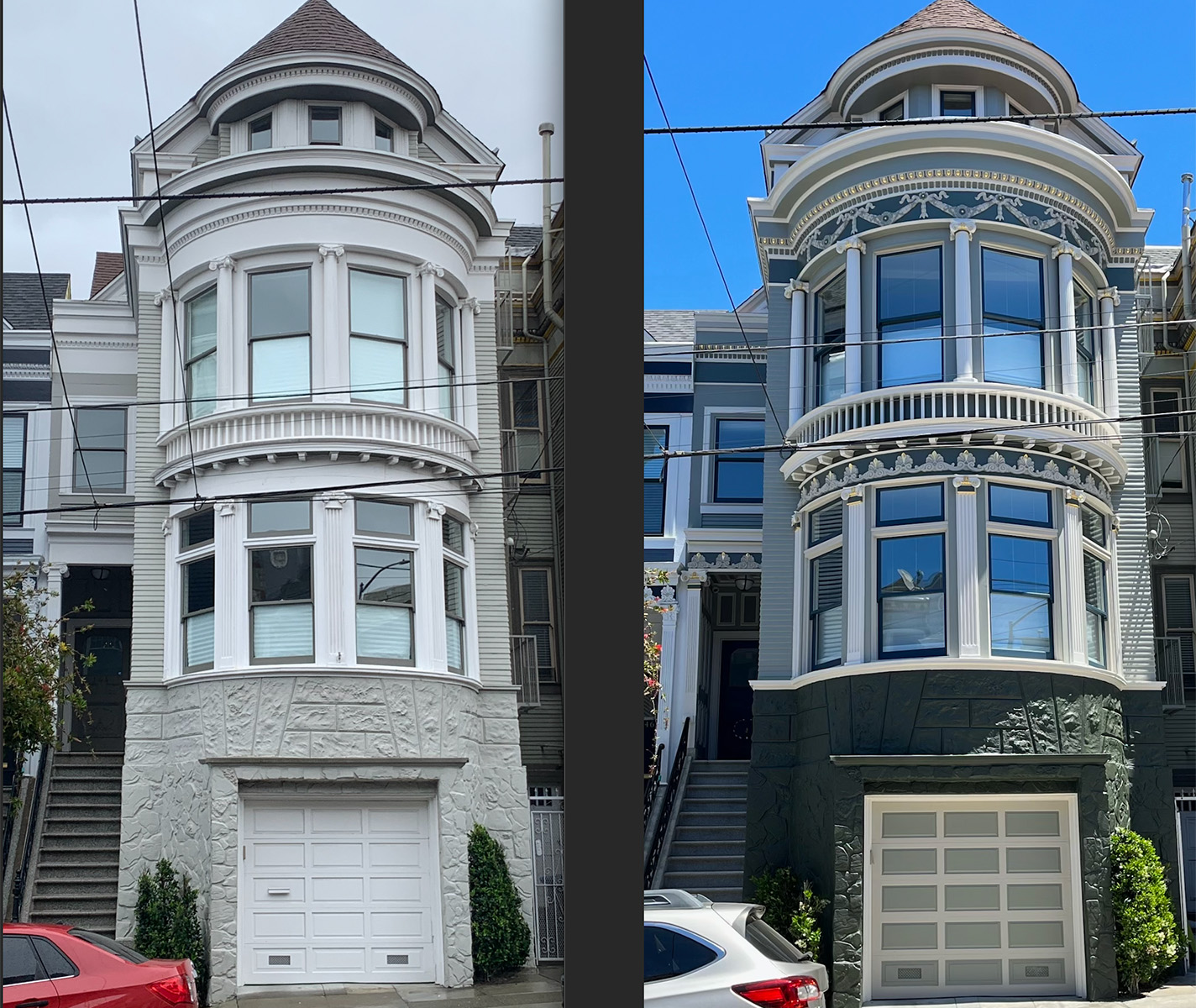
Designer Thomas Leach uses Kollmeyer's exterior ornaments on his San Francisco home restoration projects. Pictured here is a before and after.

Photo courtesy of Lorna Kollmeyer Ornamental Plaster

Kollmeyer's ornamentation decorates this Queen Anne Victorian–style home, which features intricate geometric trim and gilding accents.

Jacqueline Huynh Young is a Vietnamese American artist and writer based in Los Angeles. 

Visit Lorna Kollmeyer online.

Website Instagram

This article was made possible with support from the Windgate Foundation.

Before you go!

We believe that making creates a meaningful world, and we hope you do, too. Deeply researched and impactful journalism on the craft community is in short supply. At the same time, being featured in craft-centered media and articles can have a major effect on a maker’s or artist’s livelihood, particularly those who are just starting in their career. You can help support our mission and the work of makers around the country by becoming a member or by making a gift today.

Thank you!
American Craft Council