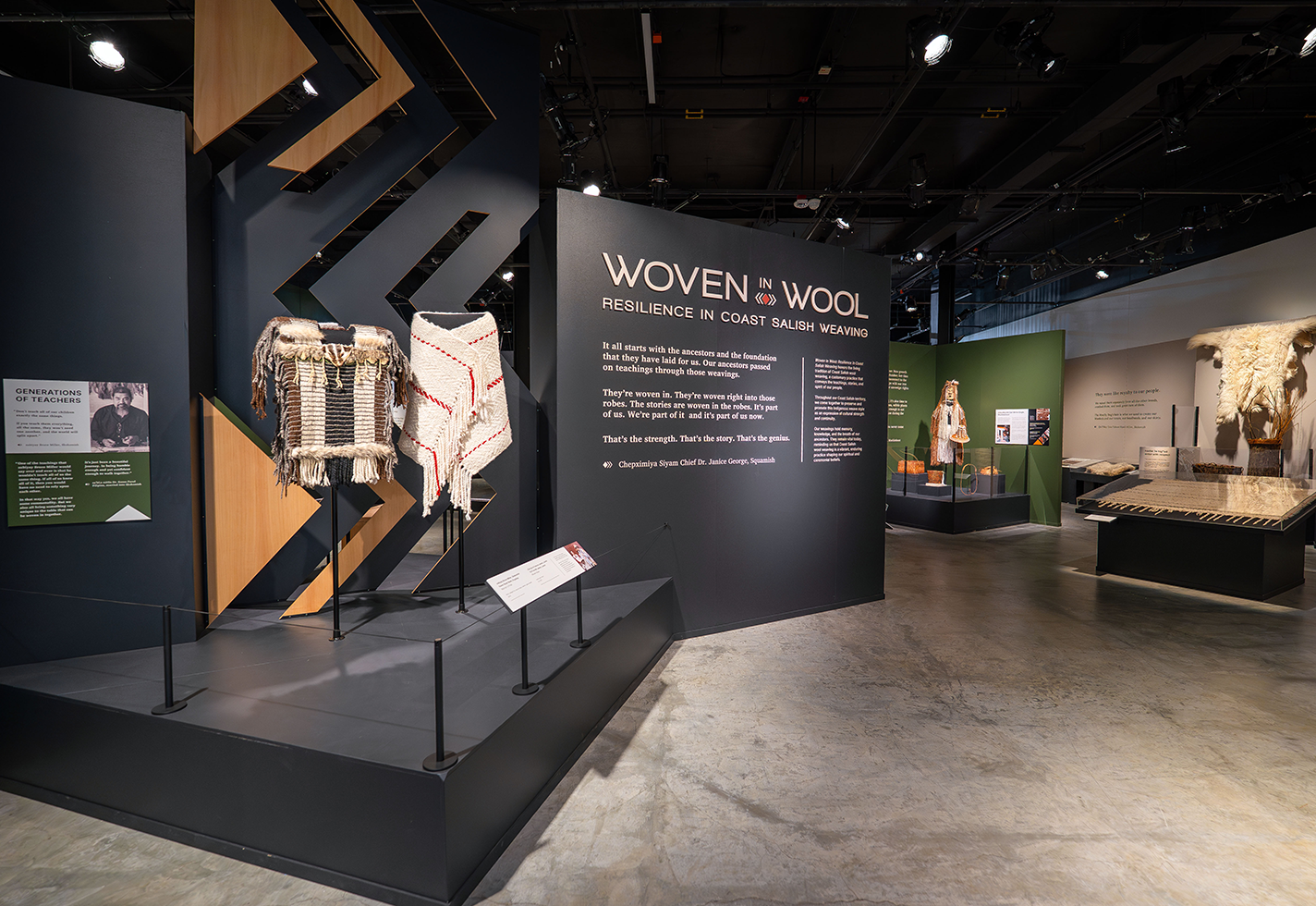
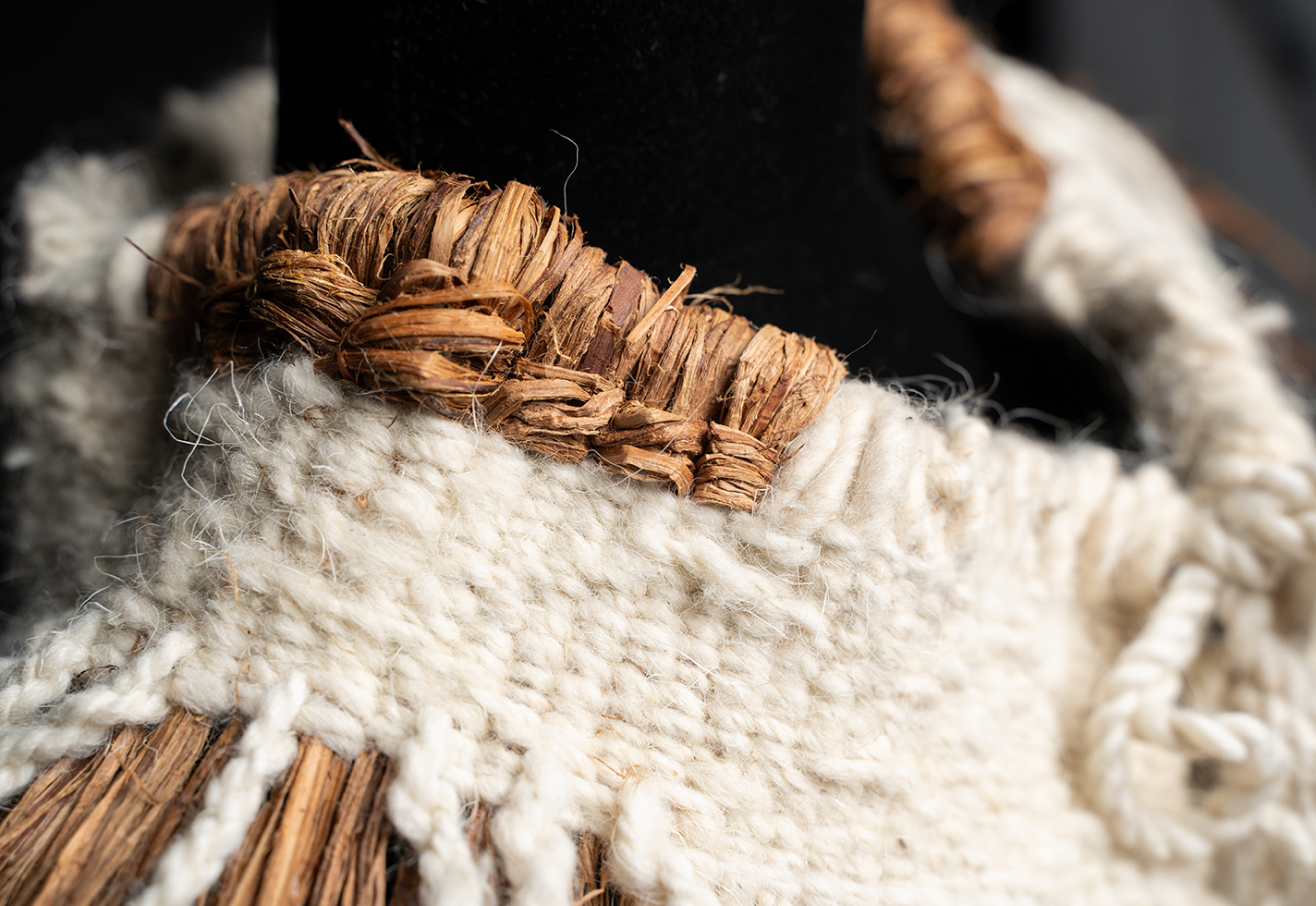
Woven in Wool: Resilience in Coast Salish Weaving, an exhibition at the Burke Museum of Natural History and Culture in Seattle, began with collaboration. Running through August 30, the show is rooted in a four-year partnership between the museum and members of the Coast Salish Wool Weaving Center (CSWWC), a Washington nonprofit that aims to promote and teach the traditional weaving methods of the Coast Salish peoples of the Pacific Northwest.
When CSWWC first approached the Burke, curator Katie Bunn-Marcuse says, they brought a clear vision: to share Coast Salish wool regalia—robes, capes, skirts, bags, tumplines, and more—with the public and reveal the full life of a weaving, following the entire process from gathering wool to spinning, dyeing, and finally twining or twilling each piece into form.
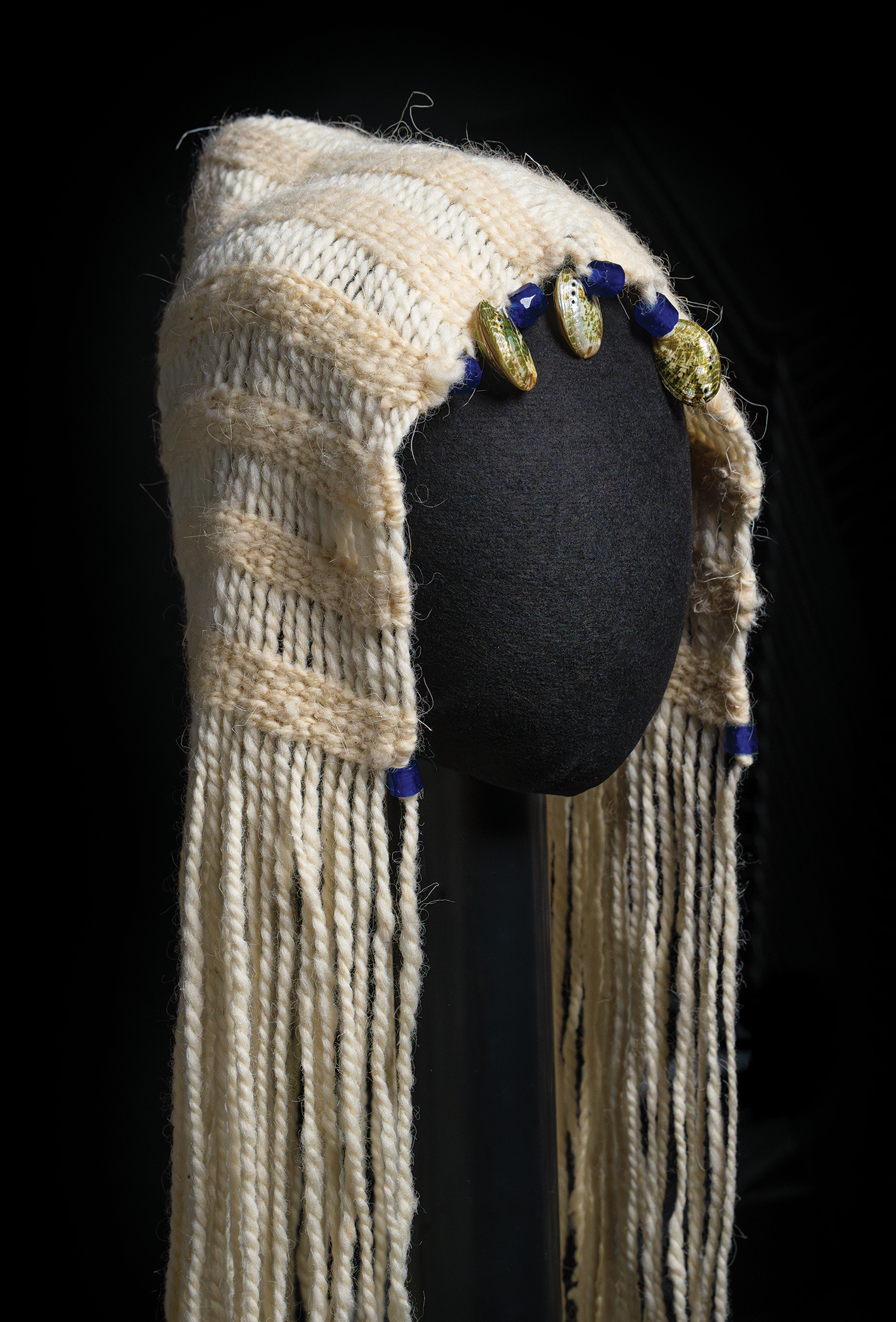
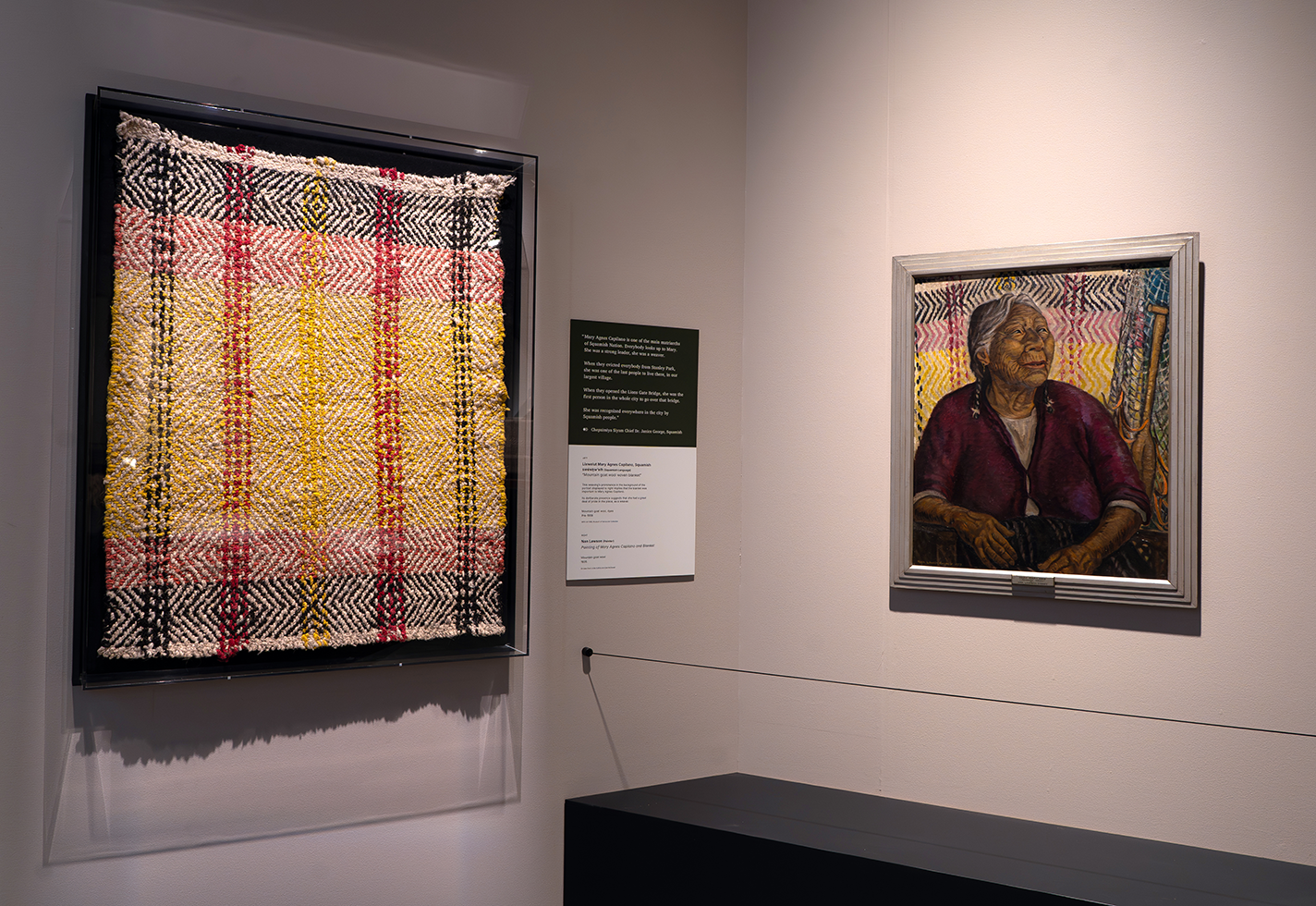
“The galleries illustrate the process of creating a weaving,” Bunn-Marcuse explains. Tools, dyes, and plant materials sit alongside both historic and contemporary works made from mountain-goat wool. Each of the six weavers who participated in curating the exhibition also created a new piece specifically for the exhibition, embedding their handiwork directly into the narrative they helped shape.
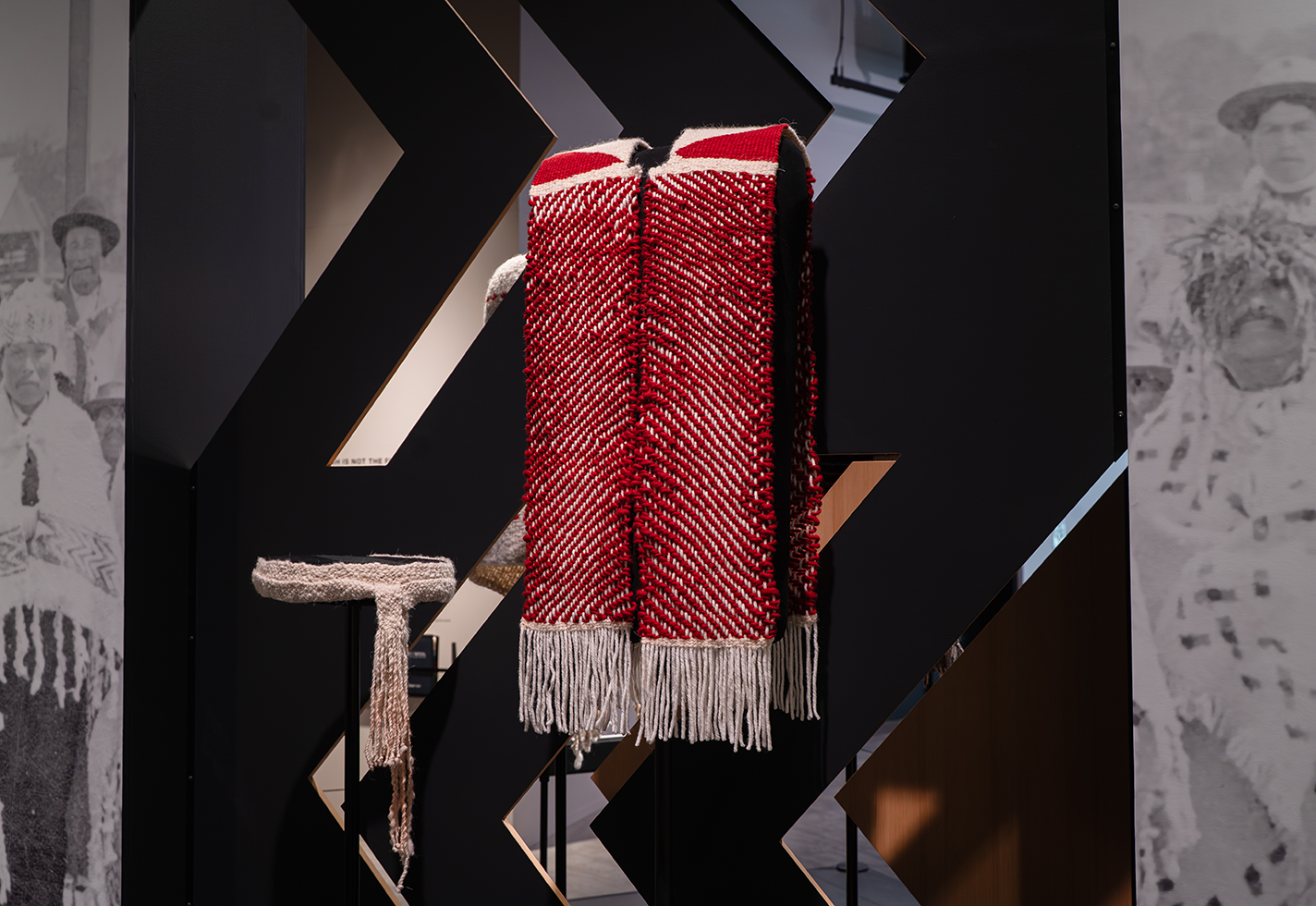
Skwetsimeltx̱w Willard “Buddy” Joseph (Squamish), Chiefly Tunic, 2025.