Craft Around the Country

A New Massachusetts Residency Pairs Artists and Farmers to Tell Untold Agricultural Stories

In the agriCultural Artist/Farmer Residency Project, artists and farmers team up to share space, stories, and their creations in a region where small farms are increasingly threatened by development.

By Kate Schuler
October 14, 2026

Photo by Adam Graves

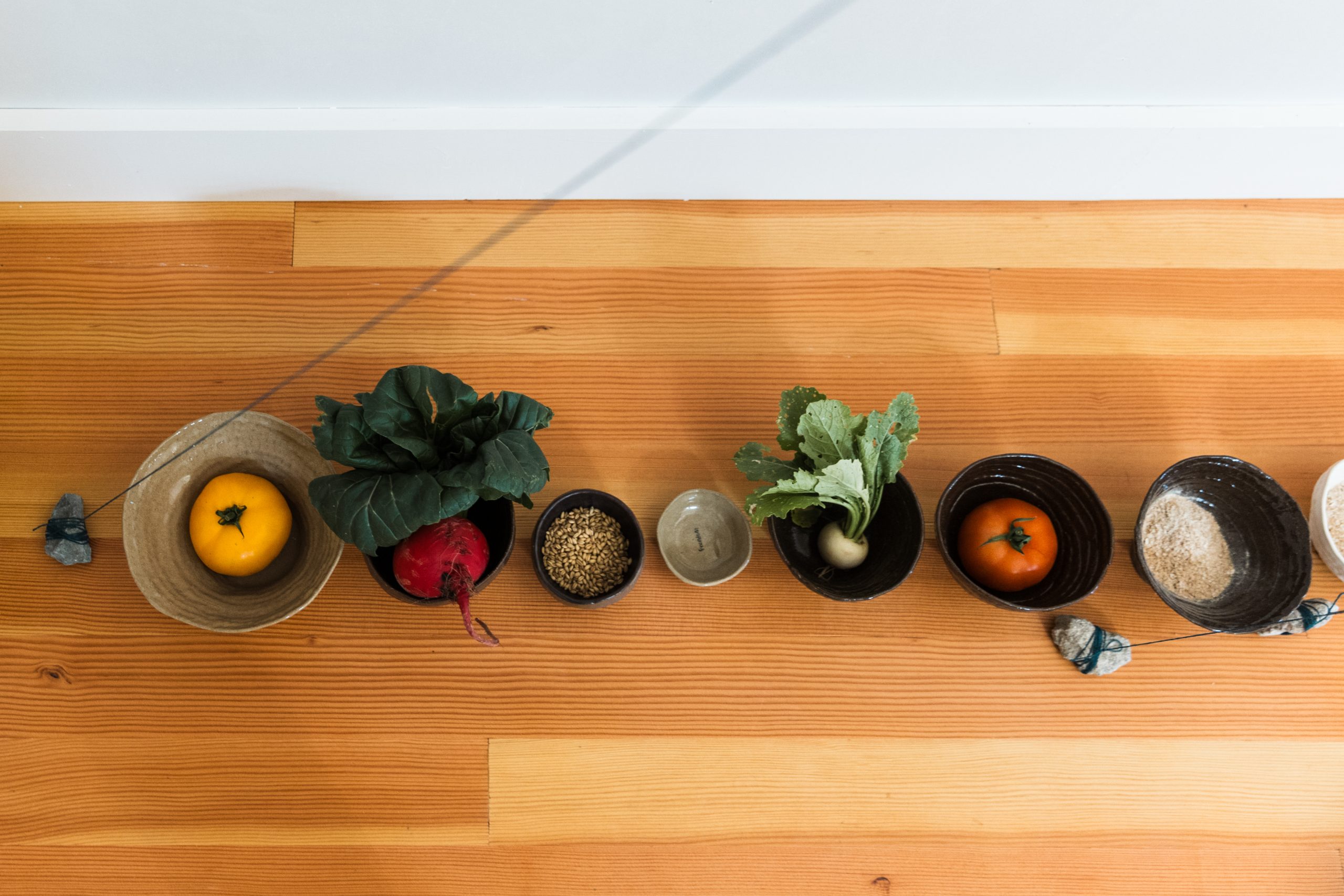
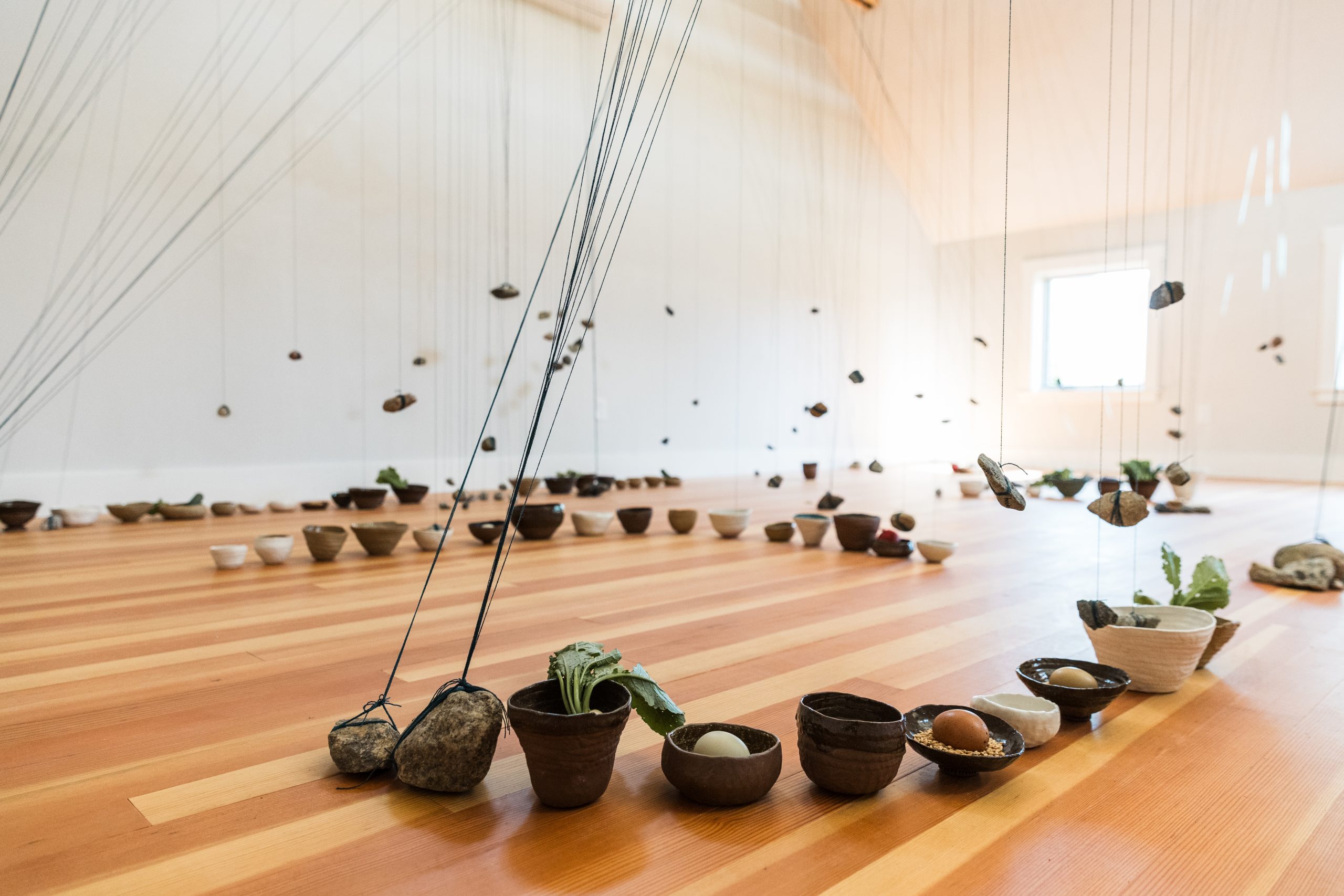
Anis Beigzadeh's Bowls of Freedom, a 2026 collection of stone and ceramic vessels inspired by her time spent with Chuck Currie of Freedom Food Farm as a part of agriCultural Artist/Farmer Residency Project, an initiative of the Southeastern Massachusetts Agricultural Partnership (SEMAP).

In November 2025, textile artist Dena Haden began visiting Catarina Lorenzo at her flower farm in Seekonk, Massachusetts, where they spent the quiet winter months connecting over their shared appreciation for agriculture, flowers, and weaving.

Their exchange was part of the inaugural agriCultural Artist/Farmer Residency Project, an initiative of the Southeastern Massachusetts Agricultural Partnership (SEMAP), an organization that champions and supports local growers in a region that is rapidly losing farmland to developers. The program pairs artists with local farmers, inviting the artists to respond to the textures, colors, and rhythms of a small farm and create a new body of work.

“Contemporary artists can materialize things that are hidden, unsaid, or untold, in new and informed ways,” says Brad Fesmire, program director at SEMAP. “Artists and farmers are both problem solvers. They’re way more powerful together than apart.”

For this first residency, Fesmire—himself an artist who is married to an artist-turned-farmer—recruited participants through word of mouth. He secured funding for modest stipends and established two inaugural pairings: Haden with Lorenzo at Apapacho Bloom Farm, and ceramic artist Anis Beigzadeh with Chuck Currie of Freedom Food Farm.

Fesmire developed the broader agriCultural program as a way to expand advocacy efforts and build awareness about local agriculture. “I thought a way to make people care more was to utilize arts and culture as a powerful tool in telling this story,” he says.
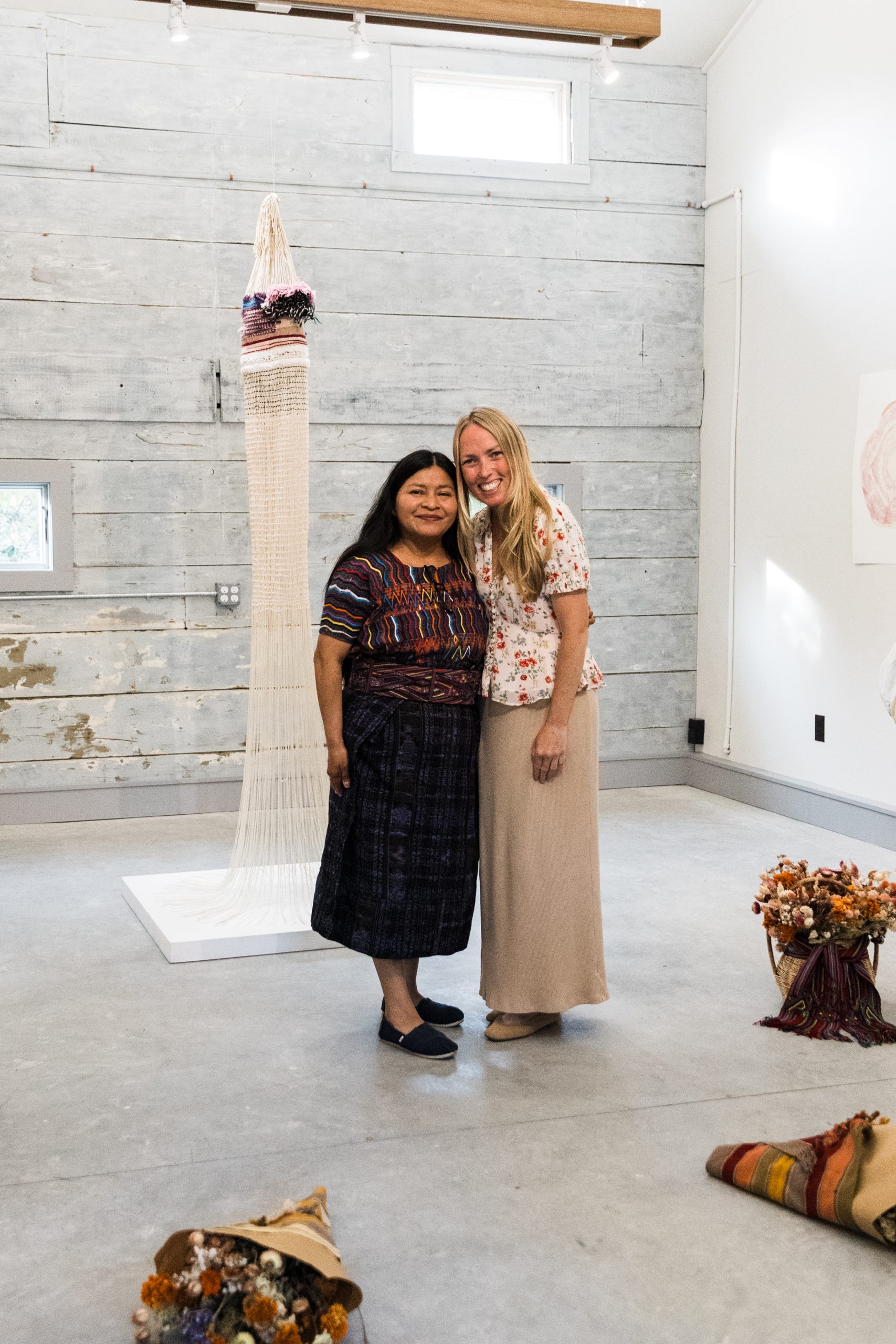
Photo by Adam Graves

Artist Dena Haden (right) with Catarina Lorenzo of Apapocho Bloom Farm. Haden spent months with Lorenzo on her flower farm and made paintings and textile work inspired by and incorporating fresh flowers.

In addition to the residency, the program includes a biennial exhibition, storytelling events, and will eventually include a project on art and medicine. The first iteration of the biennial—a juried show featuring artists who are farmers or farmers who are artists—is on view at the New Bedford Art Museum through November 29.

At Apapacho Bloom Farm, the residency collaboration took shape over several visits during winter and spring as Haden shadowed Lorenzo as she tended to the beehives, chickens, and rows of flowers on the small farm her family has run since 2019. Haden grew up on Cape Cod and spent a decade living and working on a farm in nearby Berkley, Massachusetts, where her artistic practice evolved to include weaving and the use of natural and sustainable materials. 

“The opportunity to work alongside a farmer and have this time period where I could focus on being a vessel for the land, the farmer, and to tell a story—it was just so exciting,” Haden says. “The work of a farmer goes unseen so often, but it’s so important.”

For Lorenzo, color guides what she plants, always with a simple goal of bringing people joy. In both the arrangement of the bouquets she sells, and among the rows of flowers on the farm, Lorenzo’s blooms stand out for their rich tonal depth and sculptural variety. 

Lorenzo grew up in Guatemala among both farmers and weavers, and she was curious to see how an artist would connect with her farm. “It’s a great idea to do a project like this, especially when it’s in the community and people can enjoy it,” she says. “It’s a way you can show that farmwork is also beautiful.”

Photo by Adam Graves

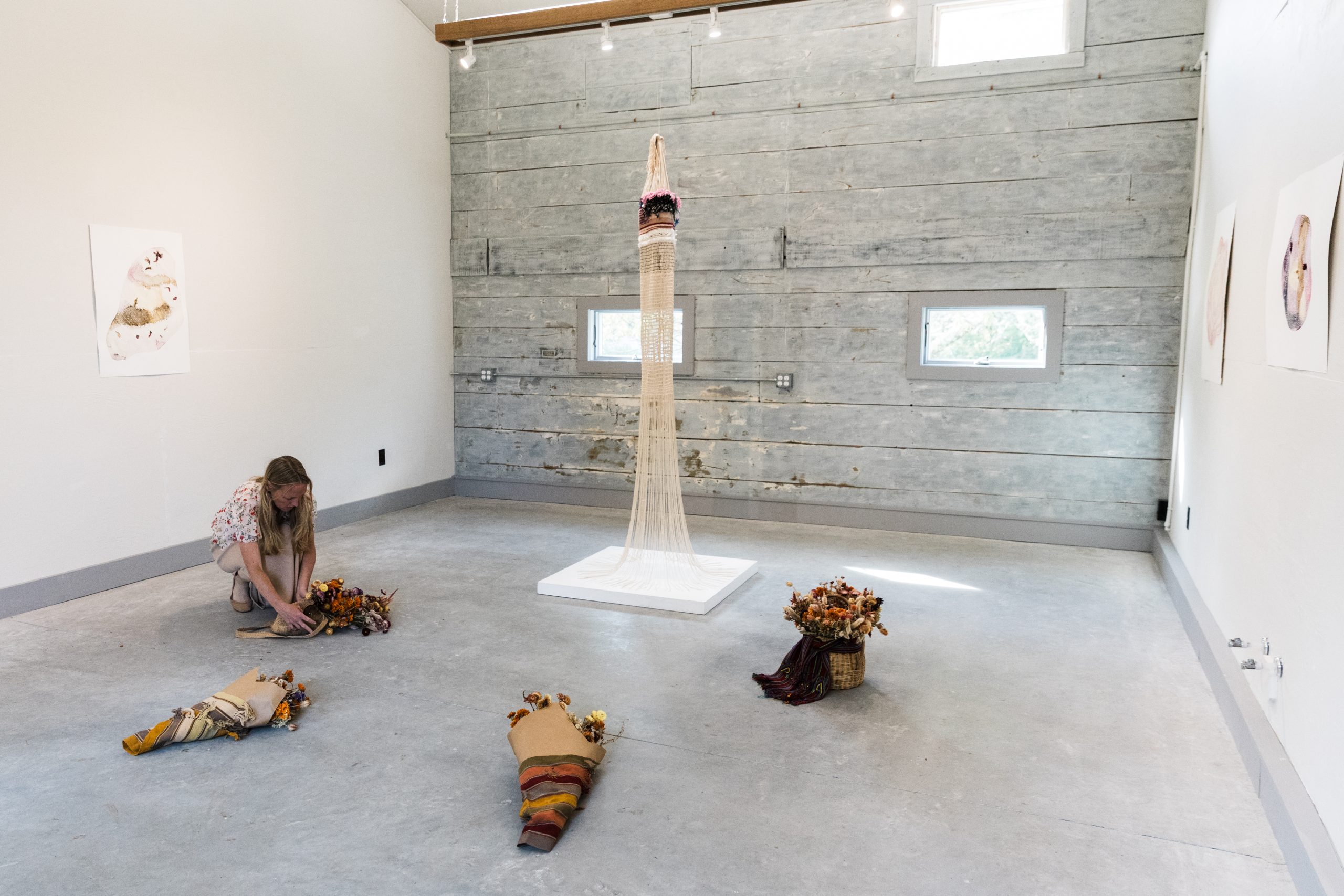
Bouquets surround Haden's handwoven sculpture Tree of Life, 2026, alpaca fiber and recycled fibers, 102 x 12 x 14 in.

Photo by Adam Graves

Beigzadeh incorporated fresh food into Bowls of Freedom.

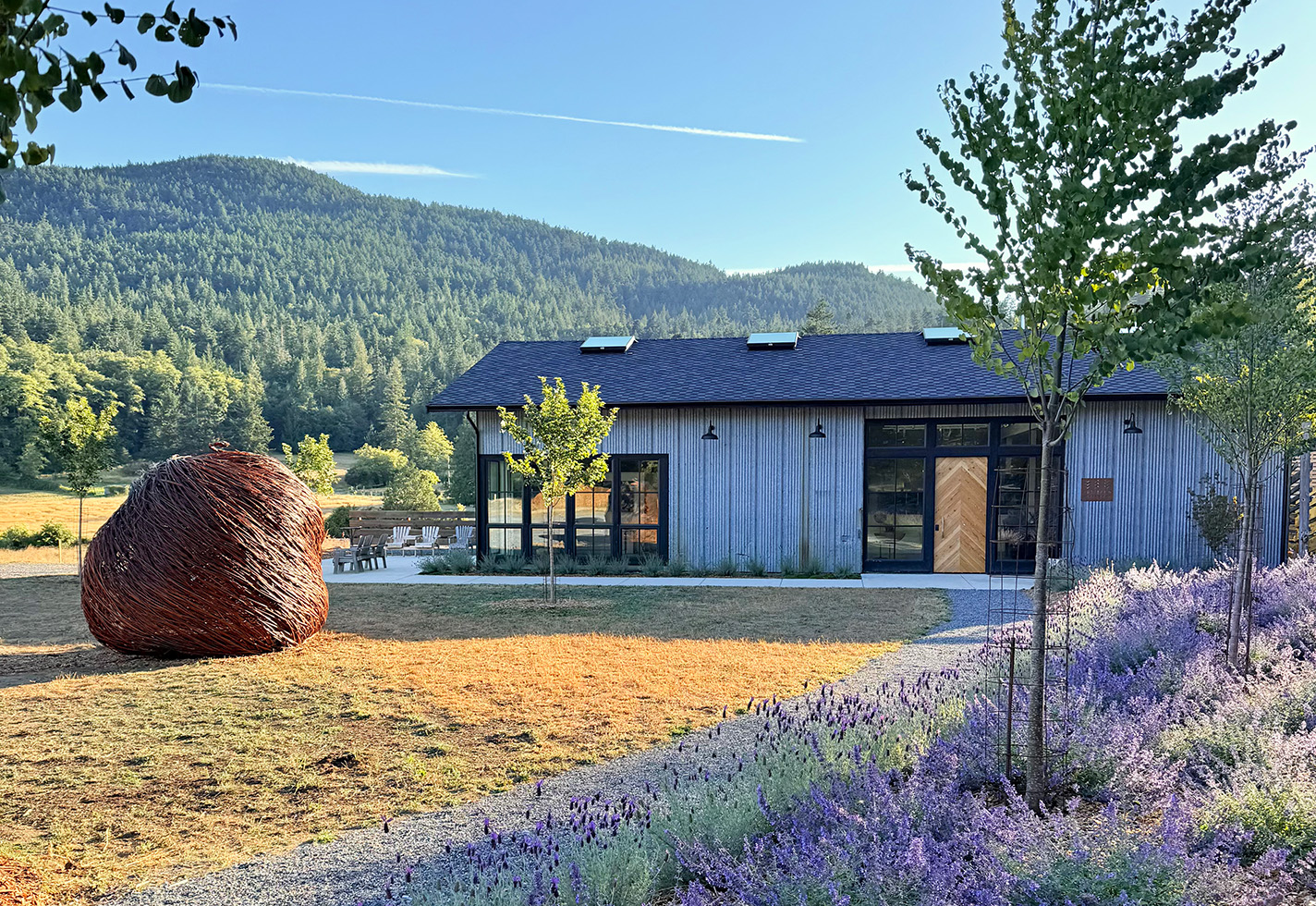
The residency culminated in an exhibition of the two artists’ work in June at the new Longbarn Gallery, a two-story converted chicken barn in Westport, Massachusetts.

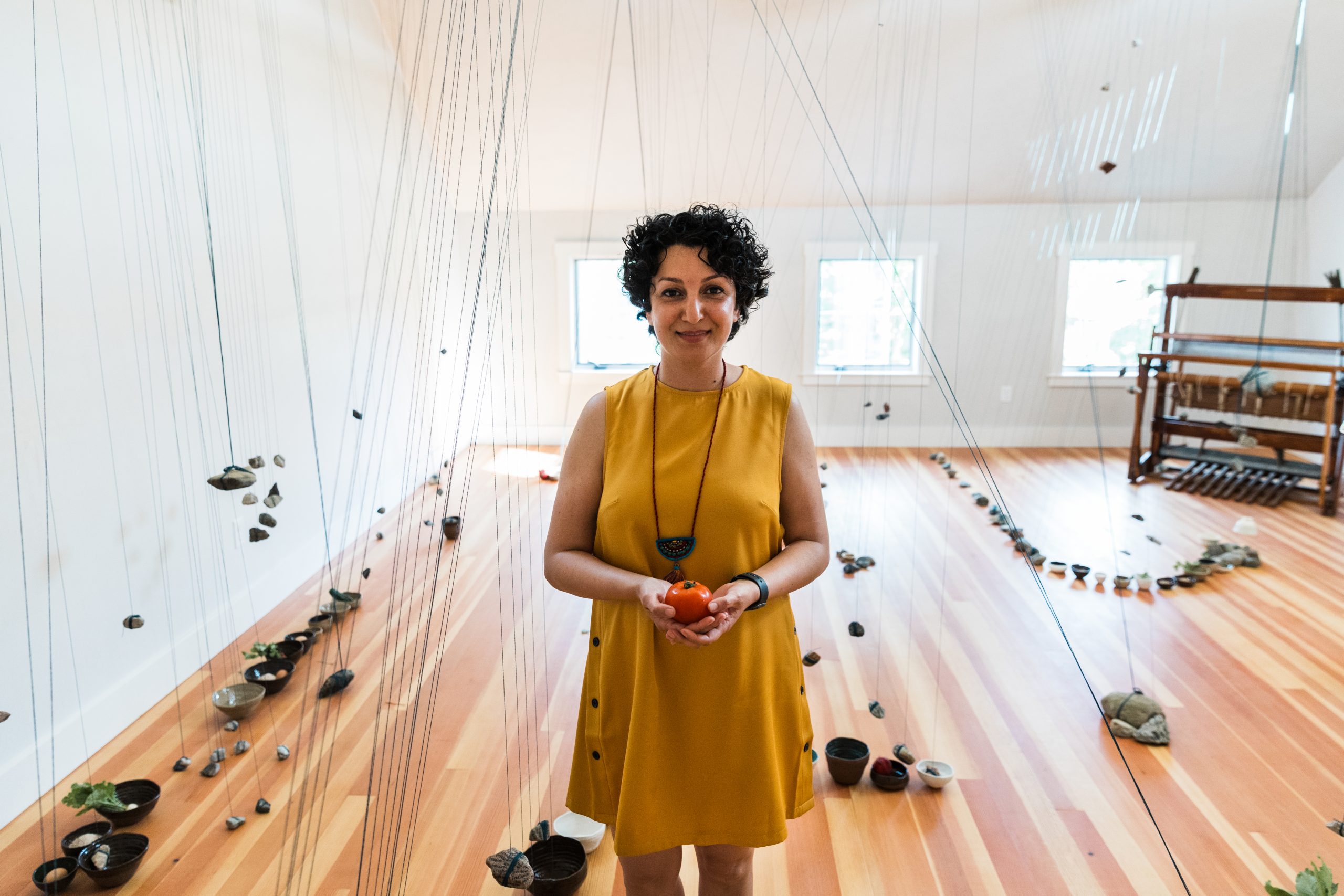
Drawing from her experience at Freedom Food Farm in Raynham, Beigzadeh filled a room in the gallery with an installation reflecting her belief that food and freedom are deeply intertwined. Stones gathered from the farm sit among leafy greens in clay bowls arranged on the floor and suspended from the ceiling at different heights. Beigzadeh, an immigrant from Iran, wrote the word “freedom” on the stones in English, Farsi, and other languages.

Haden created two large-scale fiber sculptures along with works on paper for the show. Tree of Life, an open-weave alpaca fiber column suspended from the ceiling evokes a tree trunk with tufts of pink, blue, and green fibers sprouting from the top. Dried bouquets from Lorenzo’s farm surrounded this central piece, wrapped in woven fabrics from her hometown in Guatemala. The geometry of flowers inspired Haden’s wall-mounted Followed the light through the city of roses, formed by rows of interlocking circles of bamboo. 

Photo by Adam Graves

Beigzadeh at the exhibition at Longbarn Gallery.

“Artists and farmers are both problem solvers. They're way more powerful together than apart.”

— Brad Fesmire

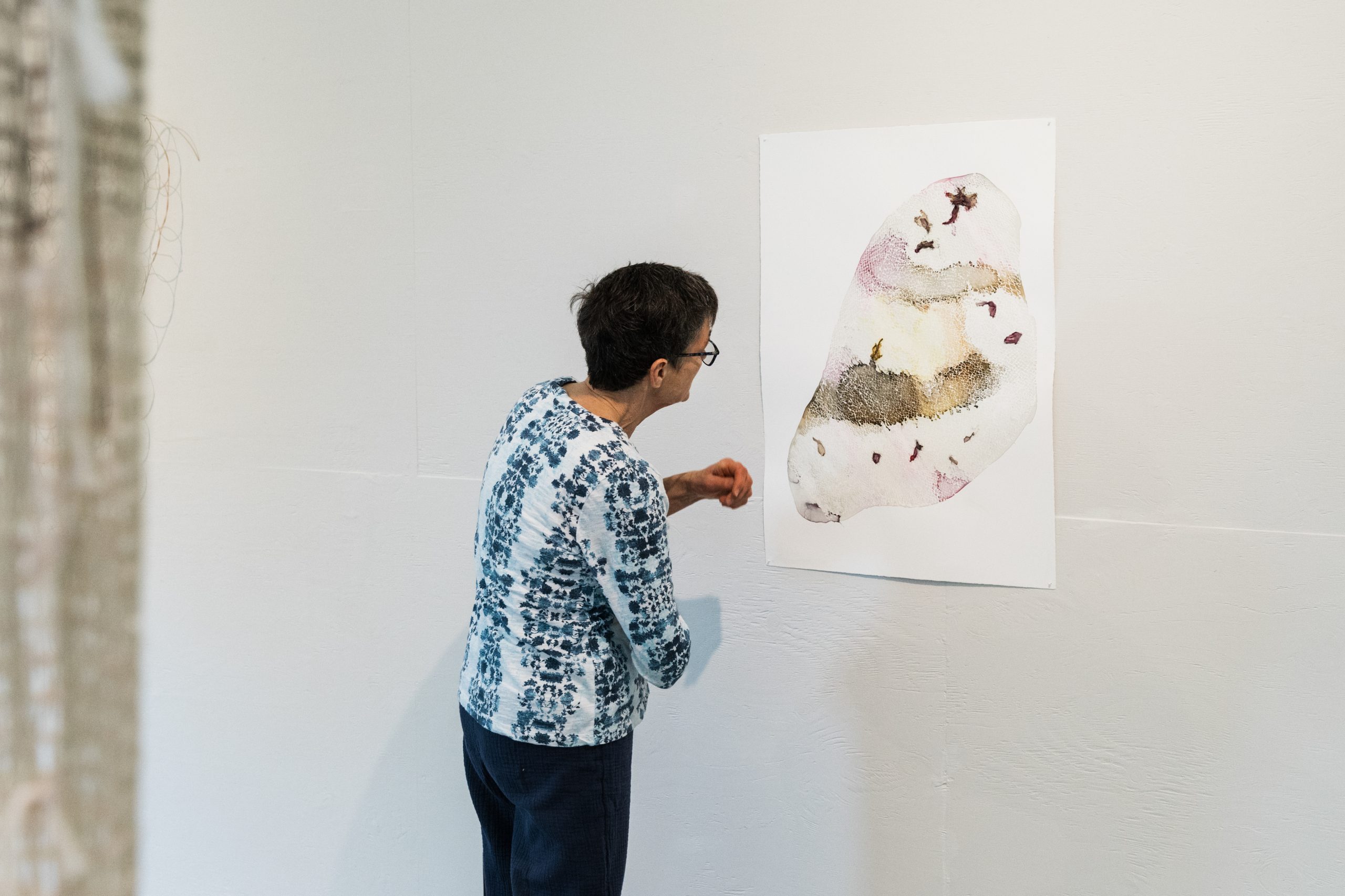
Haden also made a series of batik paintings—each representing an individual flower—from botanical dyes extracted from tulips, roses, peonies, and pokeweed from the farm. “As I watched the farm come to life and the plants grow, I wanted to give her flowers a second life and honor her practice in a way,” Haden says. The first painting in the series used dye made from the farm’s purple tulips. 

Lorenzo finds meaning in the repeating patterns Haden creates with her batik technique. “There’s a community in it. These tiny hole shapes are part of a bigger thing. They are connected to one another,” she says.

Three farmers have already expressed interest in hosting an artist for the next round of residencies. “What I wanted to happen was farmers talking to artists, artists talking to farmers, and community members showing up and maybe their eyes being opened,” Fesmire says. “And that definitely happened.”

Photo by Adam Graves

A visitor to the residency's exhibition at Longbarn Gallery in Westport, Massachusetts, looks at Haden's painting Purple Tulip, 2026, purple tulip pigment on paper, 30 x 22 in.

Kate Schuler is a writer, potter, and editor based in Washington, DC.

Learn more about agriCultural: The Farmer/Artist Residency Program online.

SEMAP Website New Bedford Art Museum Website

This article was made possible with support from the Windgate Foundation.

Before you go!

We believe that making creates a meaningful world, and we hope you do, too. Deeply researched and impactful journalism on the craft community is in short supply. At the same time, being featured in craft-centered media and articles can have a major effect on a maker’s or artist’s livelihood, particularly those who are just starting in their career. You can help support our mission and the work of makers around the country by becoming a member or by making a gift today.

Thank you!
American Craft Council