Craft Around the Country

An Art Space’s Innovative Programming Draws Visitors to Small-Town Alabama

Sumac Cottage, in the tiny town of Greensboro, holds workshops, music, and exhibitions in a lovingly restored outbuilding.

By Robert Alan Grand
September 18, 2026

Photo by Robert Alan Grand

The exterior of Sumac Cottage, an arts space in Greensboro, Alabama.

When fiber artist Aaron Sanders Head and his partner, folk musician Tim Higgins, first laid eyes on a rundown white cottage in Greensboro, Alabama, in late 2023, the two saw a lot of potential—even if, at the time, the almost-200-year-old homestead lacked a front porch and an exterior back wall.

Today, the two have transformed the home into Sumac Cottage, a community art space sitting on almost an acre of land in the west-central section of Alabama’s Black Belt region. From traces of odd renovations over the years, such as two sets of natural oak roof beams overlapping in odd ways, to the original cottage orné–style latticework, lovingly restored and painted bright yellow to mimic the marigolds growing in the garden, the place is full of character at every turn.

Inside, the cottage has been transformed into an airy white-walled studio space, while the back of the house features a 1,000-square-foot covered deck, where the couple hosts most of Sumac’s creative happenings, from intimate concerts to hands-on workshops.

Photo by Robert Alan Grand

Aaron Sanders Head, one of the founders of Sumac Cottage, offers fiber and textile classes.

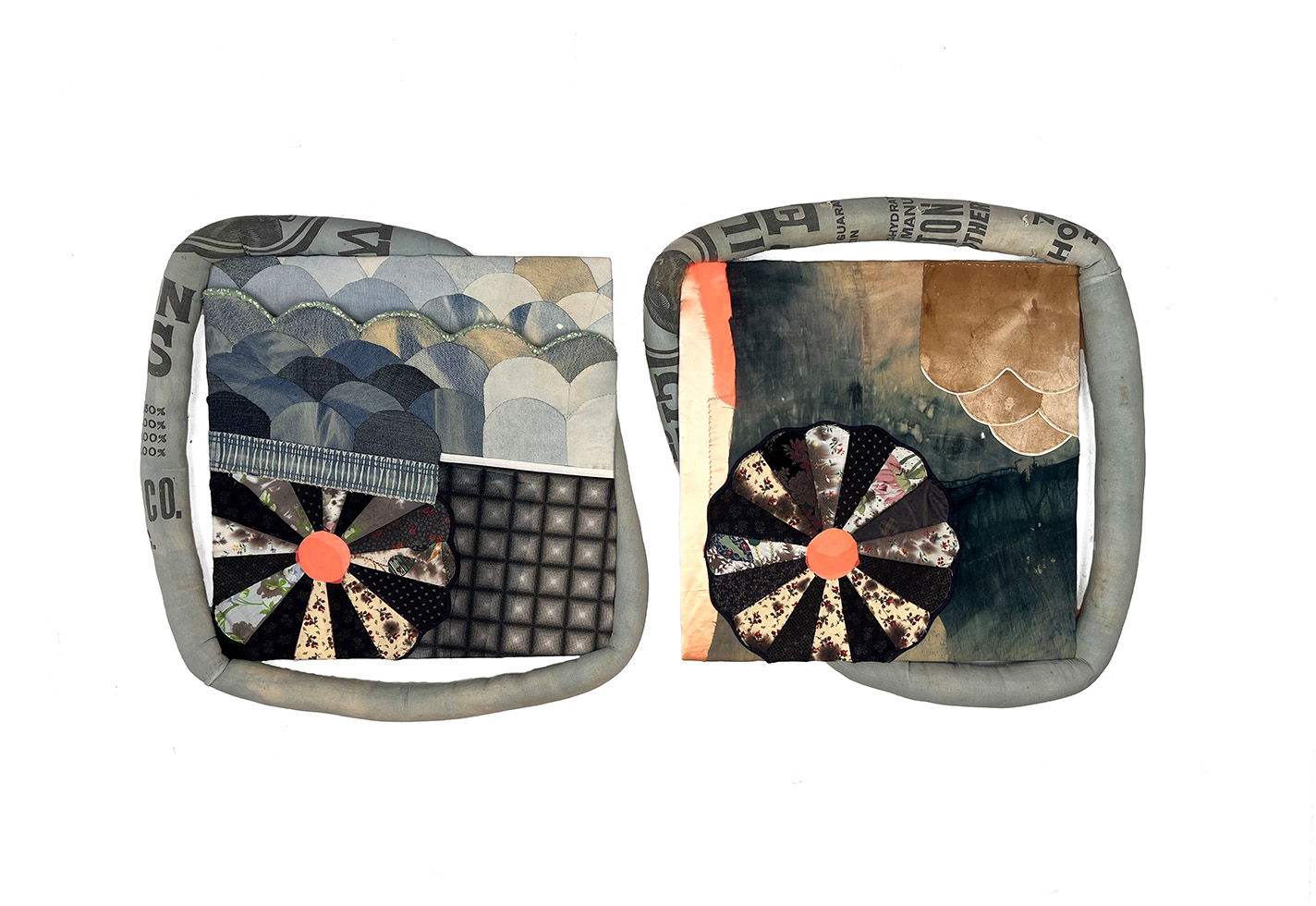
Sumac’s identity is flexible by design. The space primarily serves as a studio for Sanders Head, whose quilts and large-scale fiber pieces reflecting communal joy in the face of political strife, are made from salvaged fabrics and naturally dyed to capture the polychromatic possibilities of rural Alabama’s ecosystem. However, the cottage can easily shapeshift into white-walled gallery, open-air music venue, or tiny folk school, all steps from Greensboro’s idyllic main street, 

The versatility stems from the couple’s “build-it-and-they-will-come” mentality. When they initially acquired the building from a friend who saved it from demolition, the two were frequently on the road—with Higgins touring and performing his blend of Southern Gothic-inspired Americana music and Sanders Head leading workshops at community centers and craft schools across the region. Appreciating the slower pace of life in a rural enclave, and looking to travel less, the couple found themselves trying to communicate the magic of Greensboro to friends and fellow creatives. With a venue offering a variety of programs, they thought, they could encourage them to experience it firsthand.

Even though some friends were apprehensive of their decision to move to the small Alabama town in 2020, Sanders Head and Higgins—who now live in a stately, brightly colored three-story Victorian home a couple blocks from Sumac—see Greensboro as a place of creative fulfillment and artistic inspiration while also being deeply connected to their upbringing: Higgins grew up with this family splitting time between Gulf Shores and Detroit, while Sanders Head is from Grady, a tiny town south of Montgomery.

Photo by Aaron Sanders Head

Workshop participants learn the Pine Burr, Alabama's state quilt pattern.

“It’s a really great place to sink yourself into something,” Sanders Head says. “There’s more time to stretch things out and see what happens.” 

The affordability of the area was also a main draw for the pair, who support themselves primarily through their creative practices. “In Greensboro, we could live the life that we wanted to see ourselves having,” Higgins says.

Enthusiasm for their efforts has followed. Higgins, who jokes that Greensboro is halfway between music hubs of New Orleans and Nashville, Tennessee, says that they’ve seen 60 to 70 people show up for one-off house shows. Sanders Head recounts great demand for the workshops, too, with people traveling from larger cities in Alabama—and as far away as South Carolina and Illinois—to experiment with fiber and natural dye. The two note a lot of community support in Greensboro itself, with city council members and planners helping the couple make their vision a reality.

Photo by Aliza Scott

The set-up for Home Once, a musical performance and visual installation at Sumac Cottage by mixed-media artist Jenna Clark, with collaborators Ryan Brown, Jasper Lee, and Sam Herman.

“It’s a really great place to sink yourself into something. There’s more time to stretch things out and see what happens.”

— Aaron Sanders Head

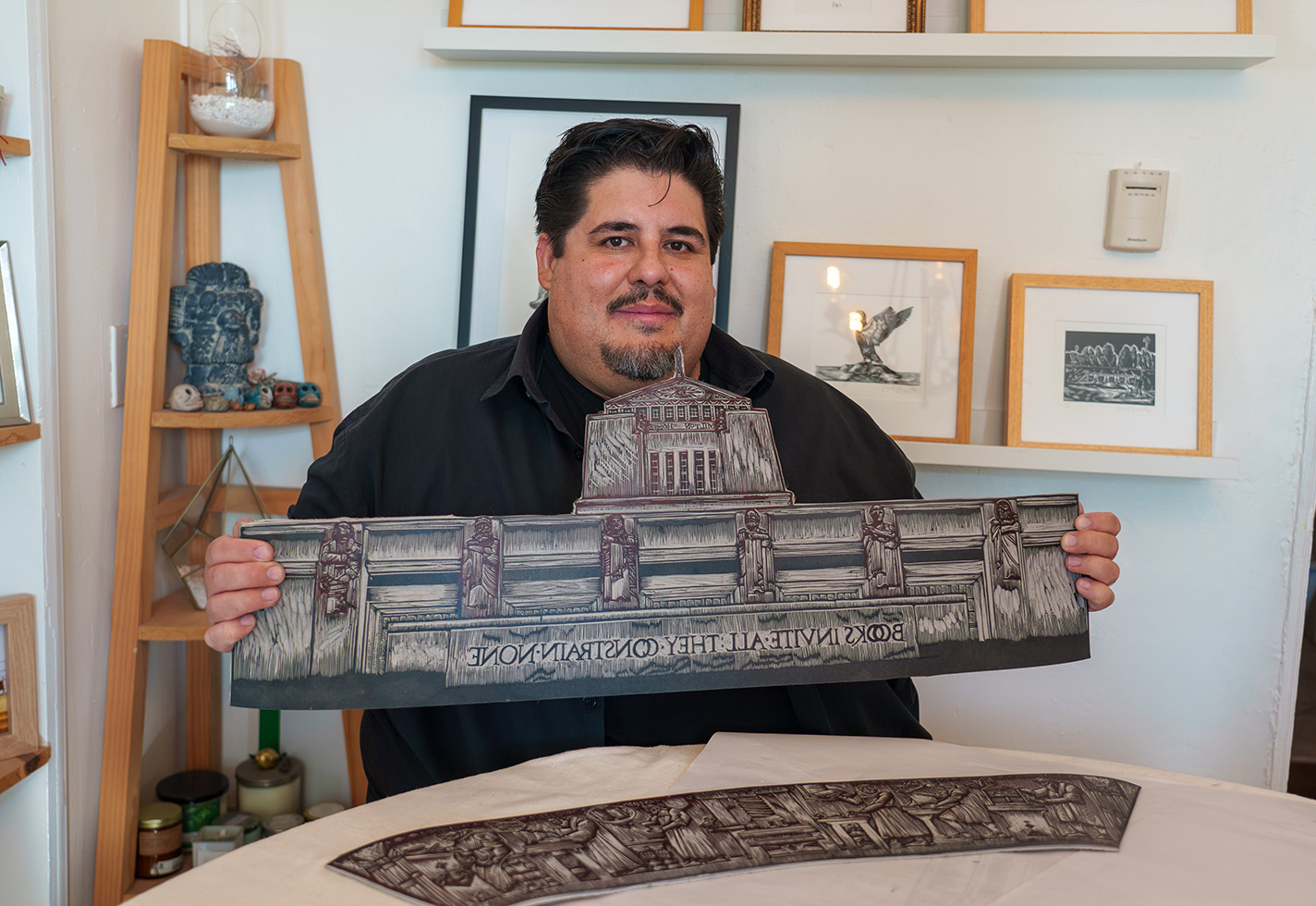
Since opening to the public in August 2024, Sumac has maintained a steady calendar of programming. Workshops in basketry, natural dyeing, quilting, and more are offered sporadically throughout the year, pausing during the sweltering months of June and July. They’re often led by Sanders Head or a rotating cast of local artists, including basket weaver Sarah Bell, who primarily works with invasive kudzu vines; fiber artist Douglas Baulos, whose “cloth stories” of mended textiles, layered drawings, and found materials speak to the artist’s experience growing up queer and nonbinary in rural Alabama; or photographer Will H. Jacks, whose “cameraless” cyanotypes and photograms reflect on Southern folklore and the fuzziness of memory. Registration is capped at 10 to 12 students for each class, keeping the lessons intimate and experimental. 

Sanders Head, who is white, also acknowledges the history and legacy of fiber arts in the Black Belt, teaching alongside the legendary Black women quilters of Gee’s Bend at Alabama Folk School earlier this year and offering free workshops at Sumac exploring the Pine Burr pattern, Alabama’s state quilt.

Photo by Aaron Sanders Head

Participants in a wearables workshop show off their work. The workshop, led by Sanders Head and artist and professor Doug Baulos, incorporates cyanotypes and hand stitching.

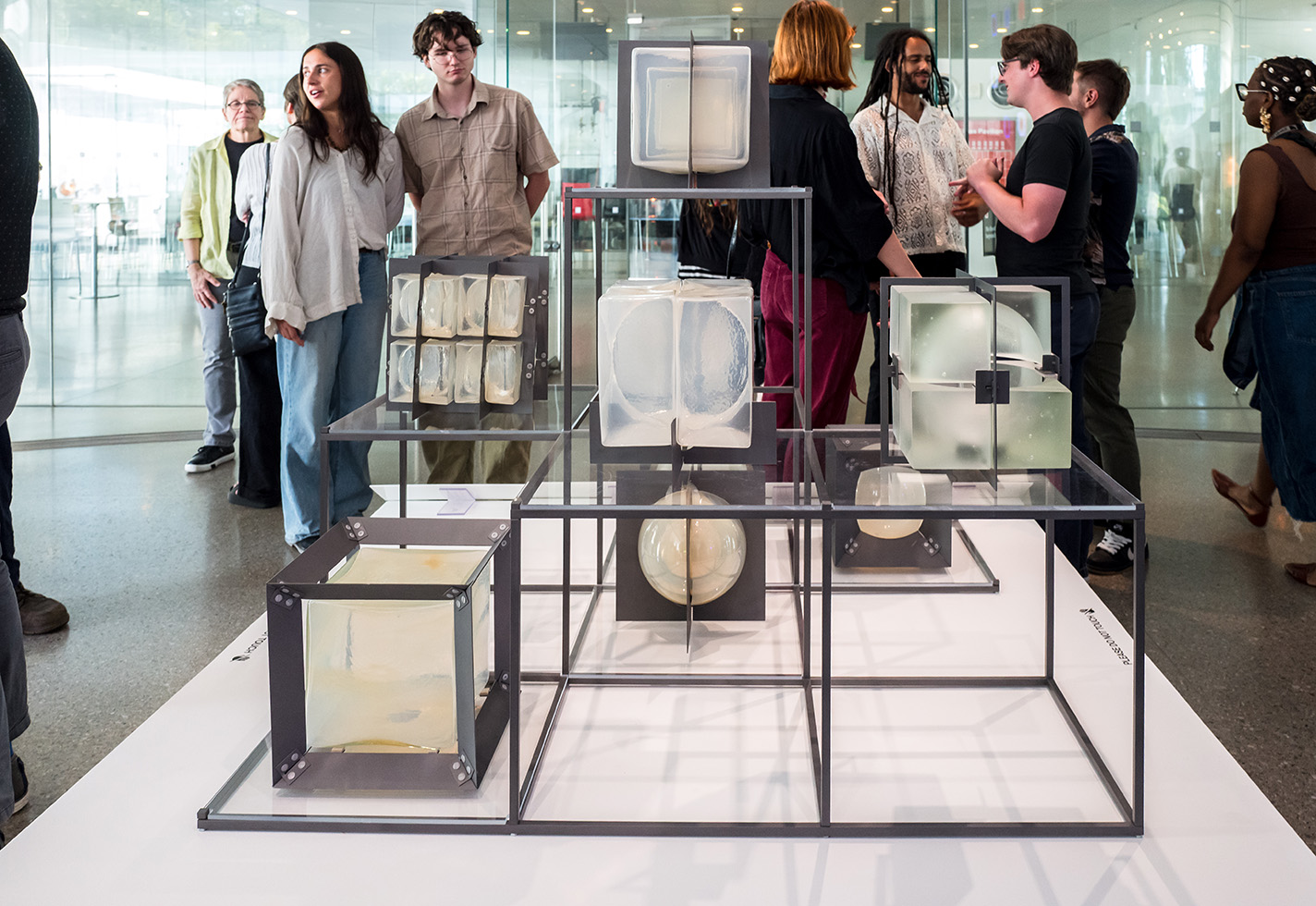
Exhibitions, holiday markets, open houses, and other public events are also key to Sumac’s programming. During Alabama Audubon’s annual Black Belt Birding Festival—an early August celebration highlighting the birds, history, and heritage of Alabama’s south-central region—the Cottage hosted a full day of drop-in making activities and live music, alongside an artist market and thematic exhibition, with submissions open to artists across the country. 

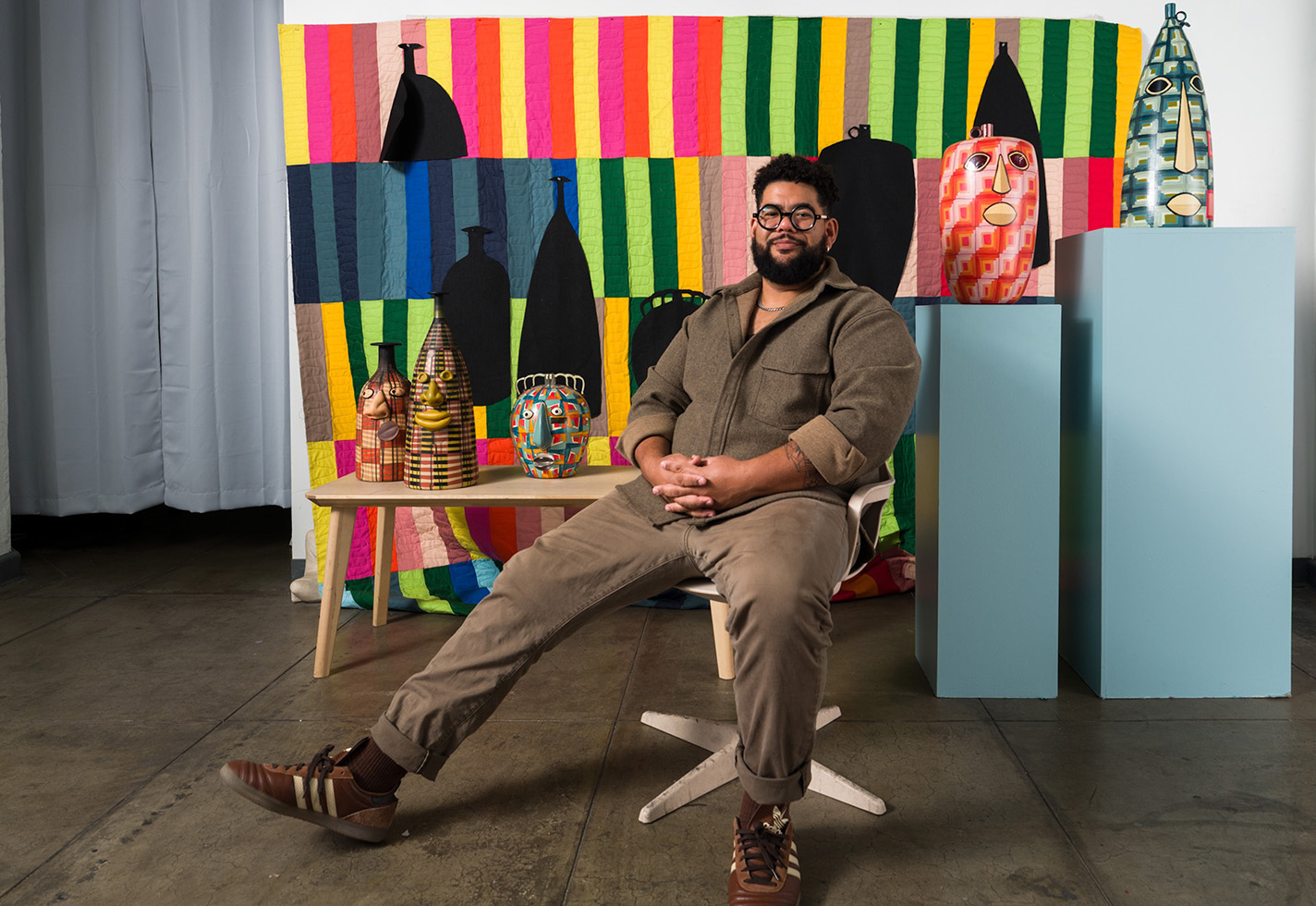
Those submissions have varied from the meticulous to the magnificent: the cottage’s 2025 exhibition, Nestle, featured around 30 artworks, including Kentucky-based designer Anna Gregory’s three-foot-tall Great Blue Heron, an elegant sculpture made from offcut plywood and ash dyed with indigo, alongside Sarah Bell’s roughly 6.5-by-6.5-foot human-sized, immersive bird’s nest installation made from rebar and a collection of natural materials including saplings, vines, brush, wisteria, and privet.

Sanders Head describes an expansive vision for Sumac Cottage’s building and grounds, one that’s embedded in the name itself. “In dyeing, sumac is a plant I could use every component of it: the berries for a reddish or grayish color, the tree bark and leaves for tan, no part goes to waste,” he says. “I named this space Sumac Cottage because I wanted to do the same thing here—use every part of this space and land, engaging with it in some way and creating an almost closed loop.”

Photo by Aliza Scott

An installation view of Home Once showing textile works by Jenna Clark.

Photo by Aliza Scott

Sumac Cottage's rural environs in west-central Alabama.

Robert Alan Grand is a writer and photographer based in Asheville, North Carolina. He received the 2025 Andy Warhol Foundation Arts Writers Grant to cover contemporary art in southern and central Appalachia.

Learn more about Sumac Cottage online.

Website Instagram

This article was made possible with support from the Windgate Foundation.

Before you go!

We believe that making creates a meaningful world, and we hope you do, too. Deeply researched and impactful journalism on the craft community is in short supply. At the same time, being featured in craft-centered media and articles can have a major effect on a maker’s or artist’s livelihood, particularly those who are just starting in their career. You can help support our mission and the work of makers around the country by becoming a member or by making a gift today.

Thank you!
American Craft Council