Craft Around the Country

Black Furniture Designers Look to Africa for Inspiration

The functional objects featured in Reset: Abstraction Embodied in Design, now on view at the National Museum of African American History and Culture in Washington, DC, weave together form, material, and ancestral memory.

By Kate Schuler
September 21, 2026

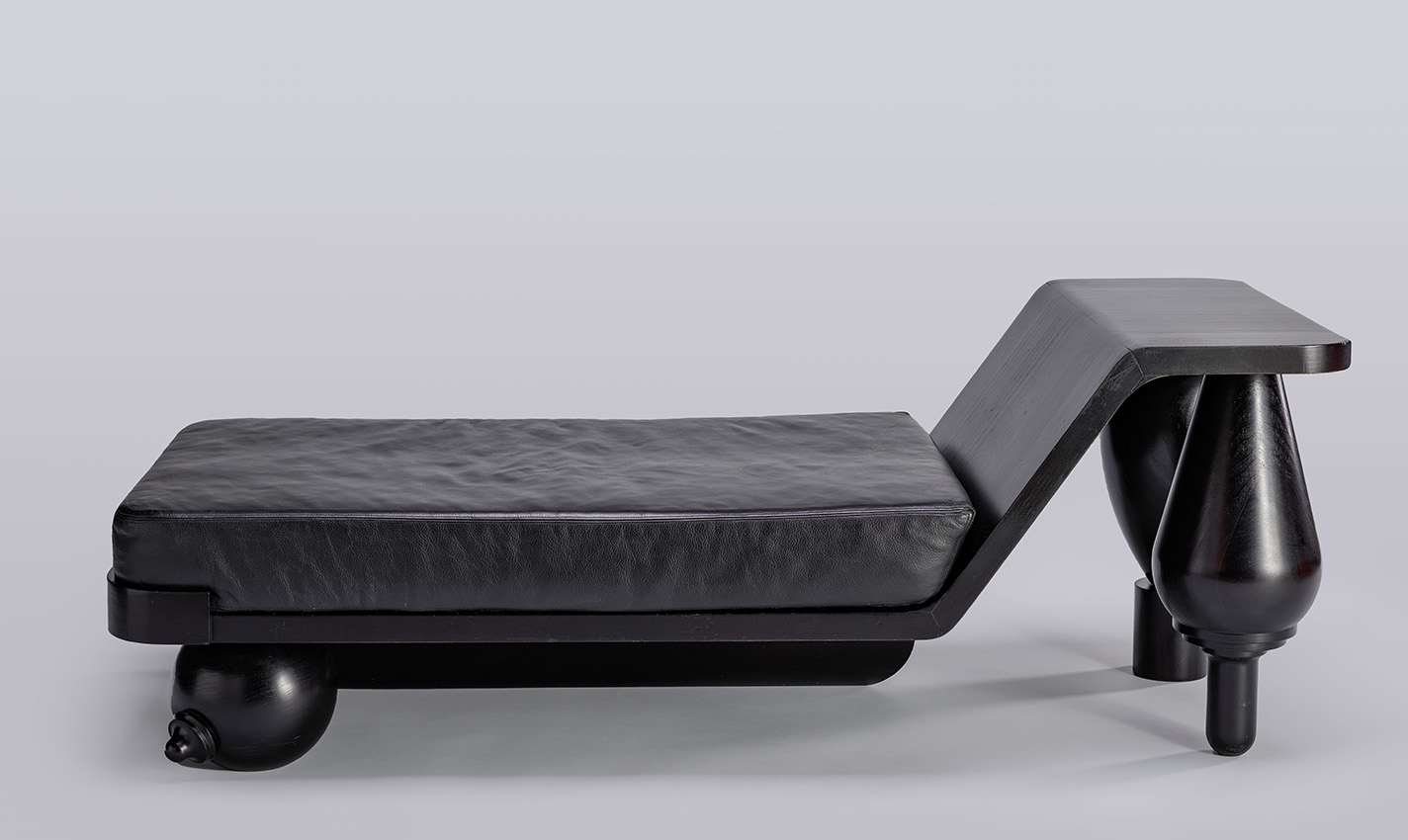
Photo courtesy of Smithsonian National Museum of African American History and Culture, © Simone Brewster

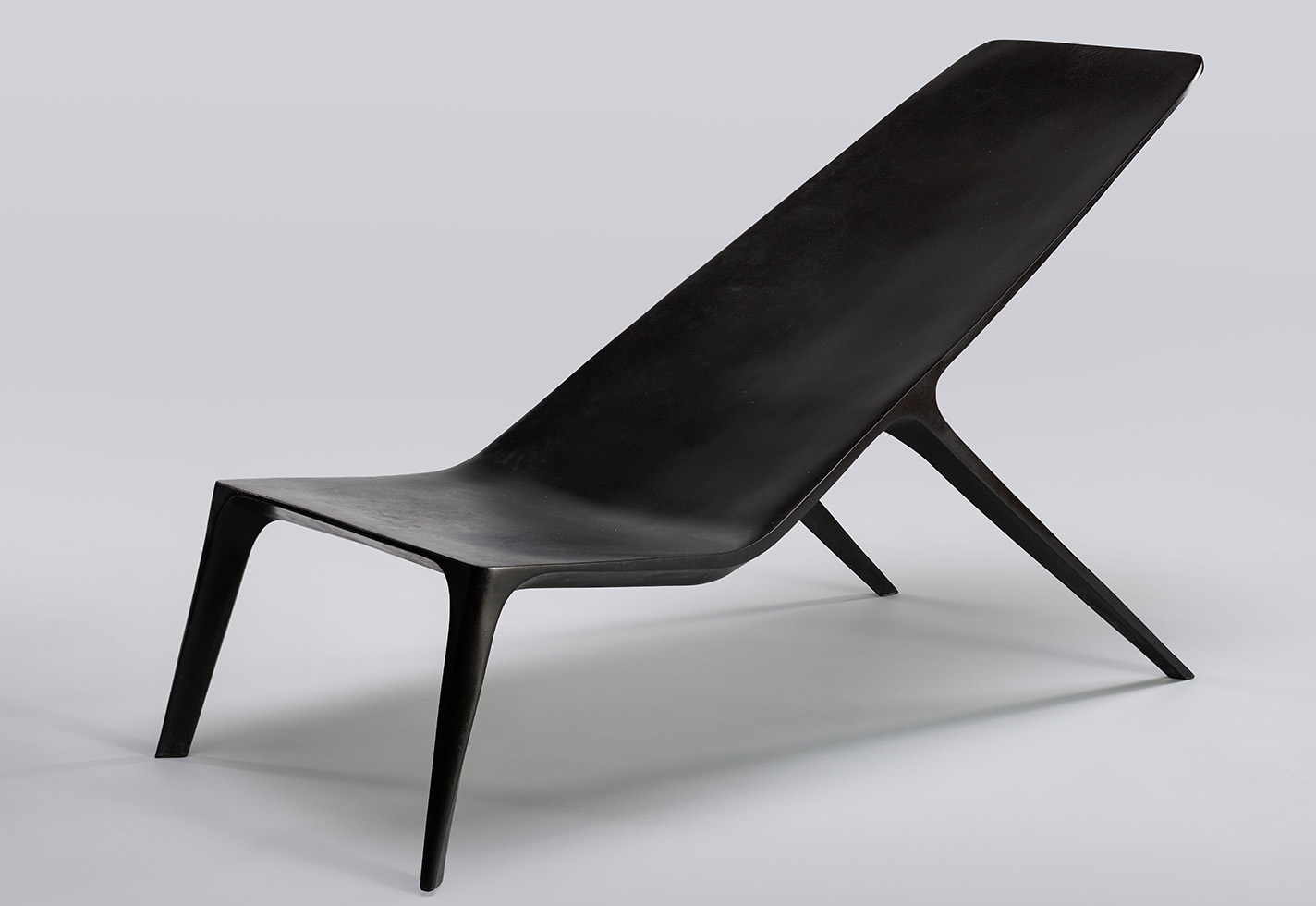
Simone Brewster, Negress Chaise, 2010, tulipwood with foam and leather chaise): 19 x 21.25 × 50.75 in. (chaise), 4.25 x 21.25 x 30.75 in. (cushion).

Near the end of Revelation: A Journey into Abstraction—the National Museum of African American History and Culture’s recently opened exhibition exploring abstract painting and sculpture by African American artists—visitors encounter a small, intimate gallery displaying an ongoing companion exhibition, Reset: Abstraction Embodied in Design

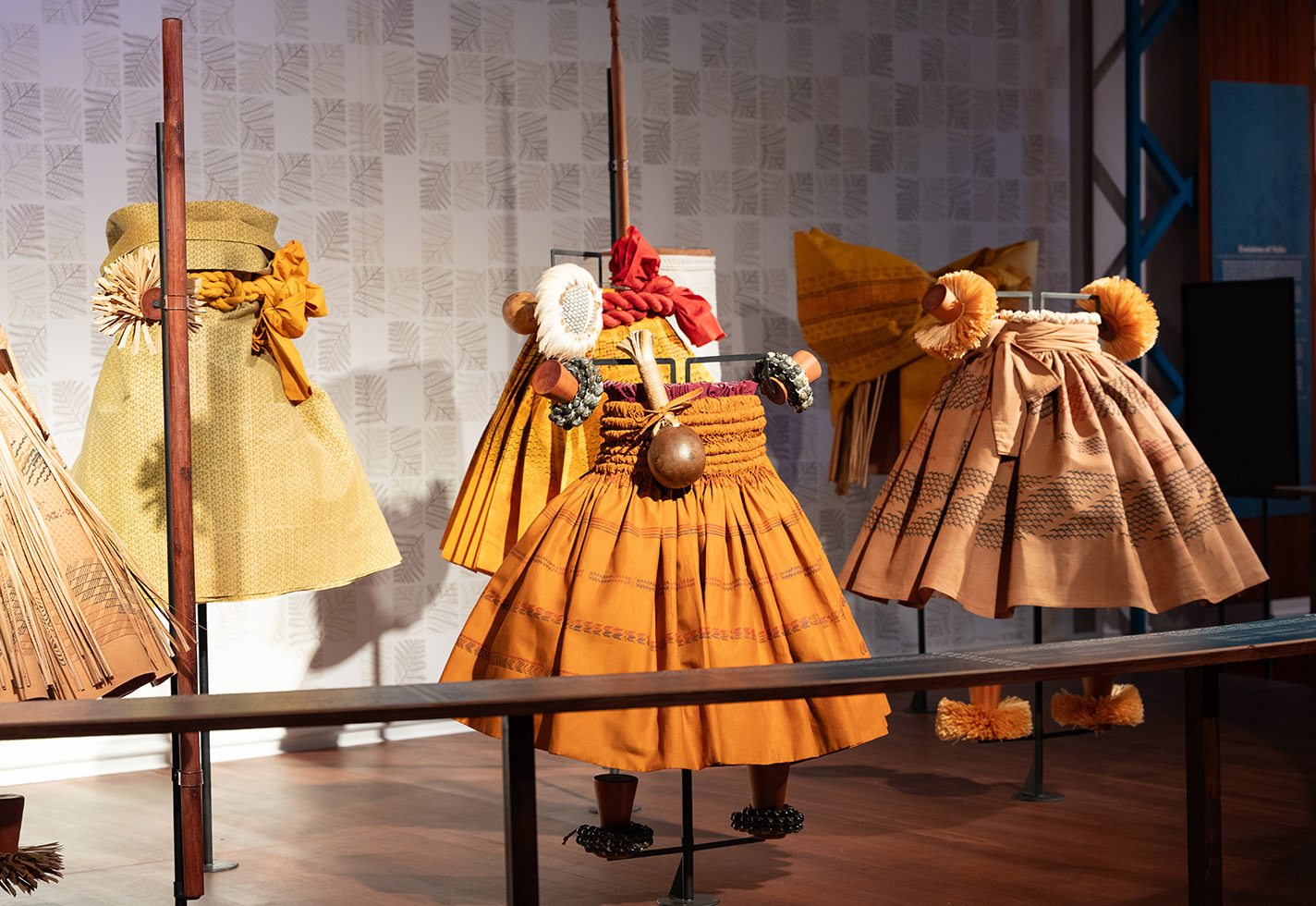
With benches created for the space by New Jersey artist and furniture designer Cheryl R. Riley, the gallery creates room for rest and reflection as Reset shifts the exhibitions’ focus to functional objects. Showcasing contemporary chairs, rugs, and lighting acquired during the museum’s first ten years, Reset explores how Black designers employ form, materials, and cultural memory to transform everyday spaces into areas of renewal. 

“What I was interested in with this selection was the significance of how the body—my body, our bodies—responds to its immediate environment,” said Michelle Joan Wilkinson, the museum’s curator of architecture and design, who organized Reset. “Materials play a key role in stimulating our bodies’ physical and emotional responses.”
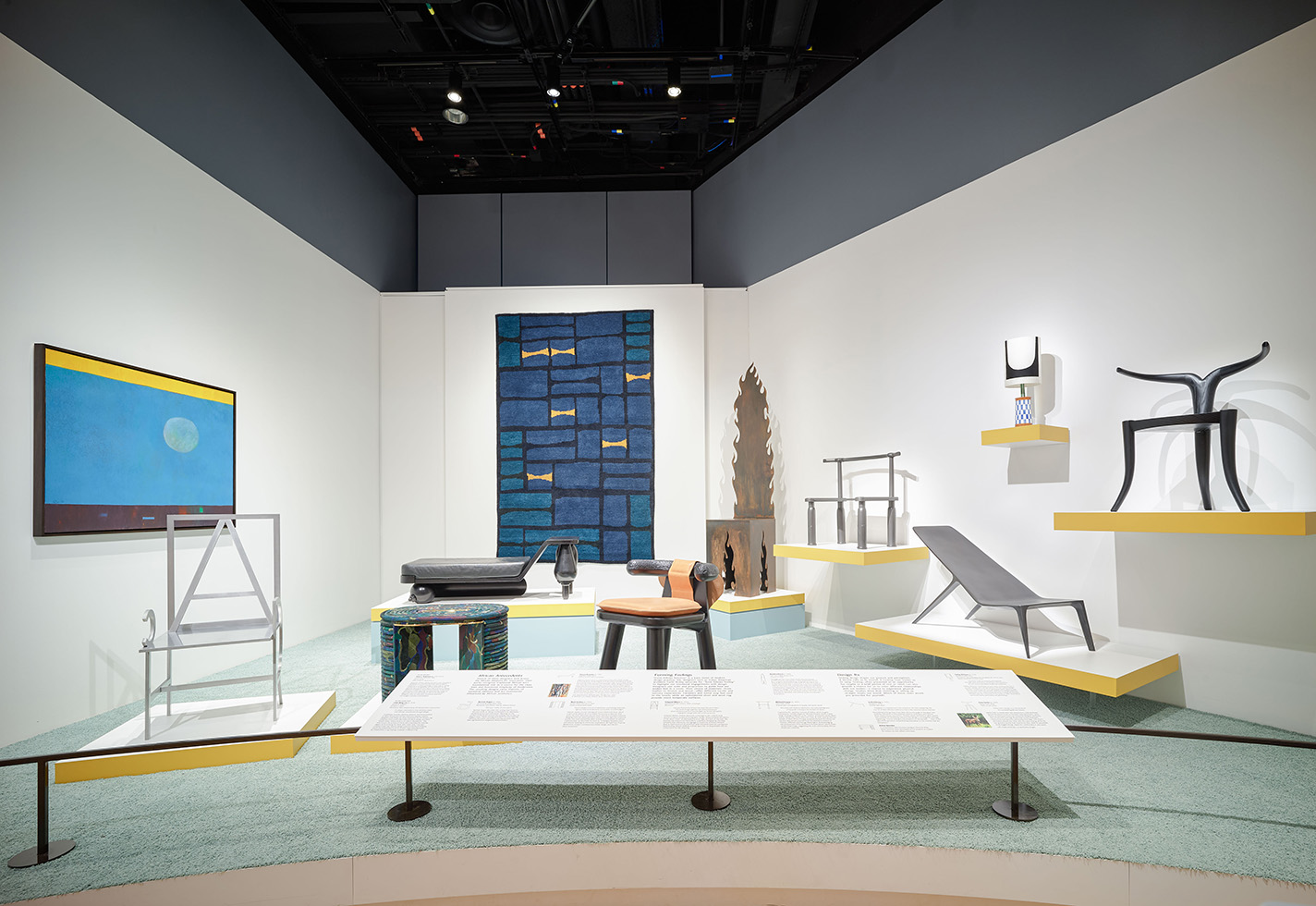
Photo by Dontez Henderson, courtesy of Smithsonian National Museum of African American History and Culture

Installation view of Reset: Abstraction Embodied in Design.

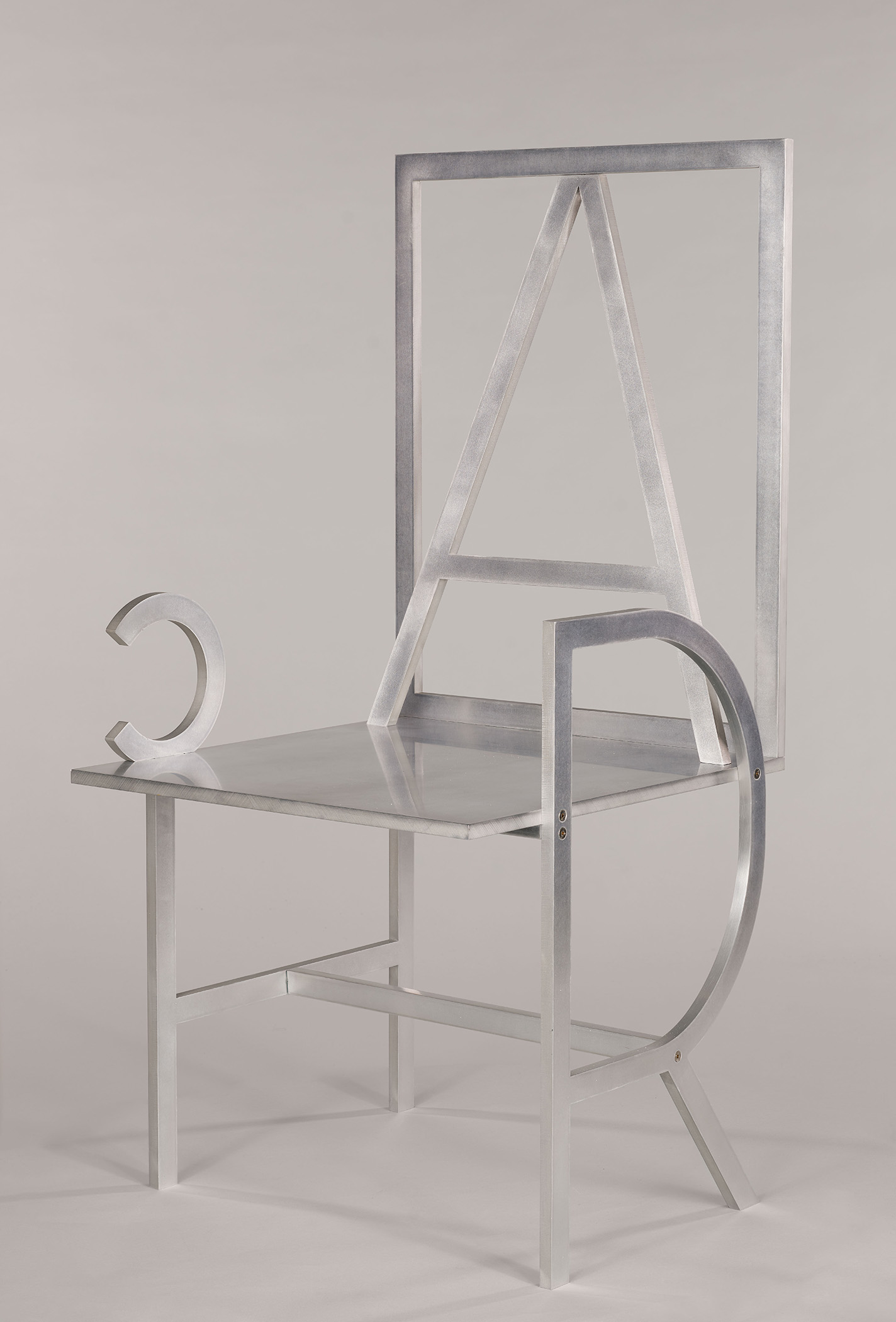
Folayemi Wilson’s Typochair (Chair, Chair), from 2004, stands out for its sleek architectural lines and aluminum finish. She worked with an industrial waterjet-cutting company to rough out the aluminum components, then did all the drilling, joining, and polishing by hand to preserve a human touch. The artist’s wit is there too—the chair’s structure incorporates the letters C-H-A-I-R in the architecturally inspired Neutraface typeface.  

Wilson, now based in Philadelphia, made the chair as a graduate student in the furniture design department at the Rhode Island School of Design, thinking of Typochair as a bridge between her two-decade career in graphic design and the new discipline she was studying. The chair’s design bears this out, folding a graphic designer’s mastery of type and proportion together with a furniture maker’s attention to engineering and materials. 

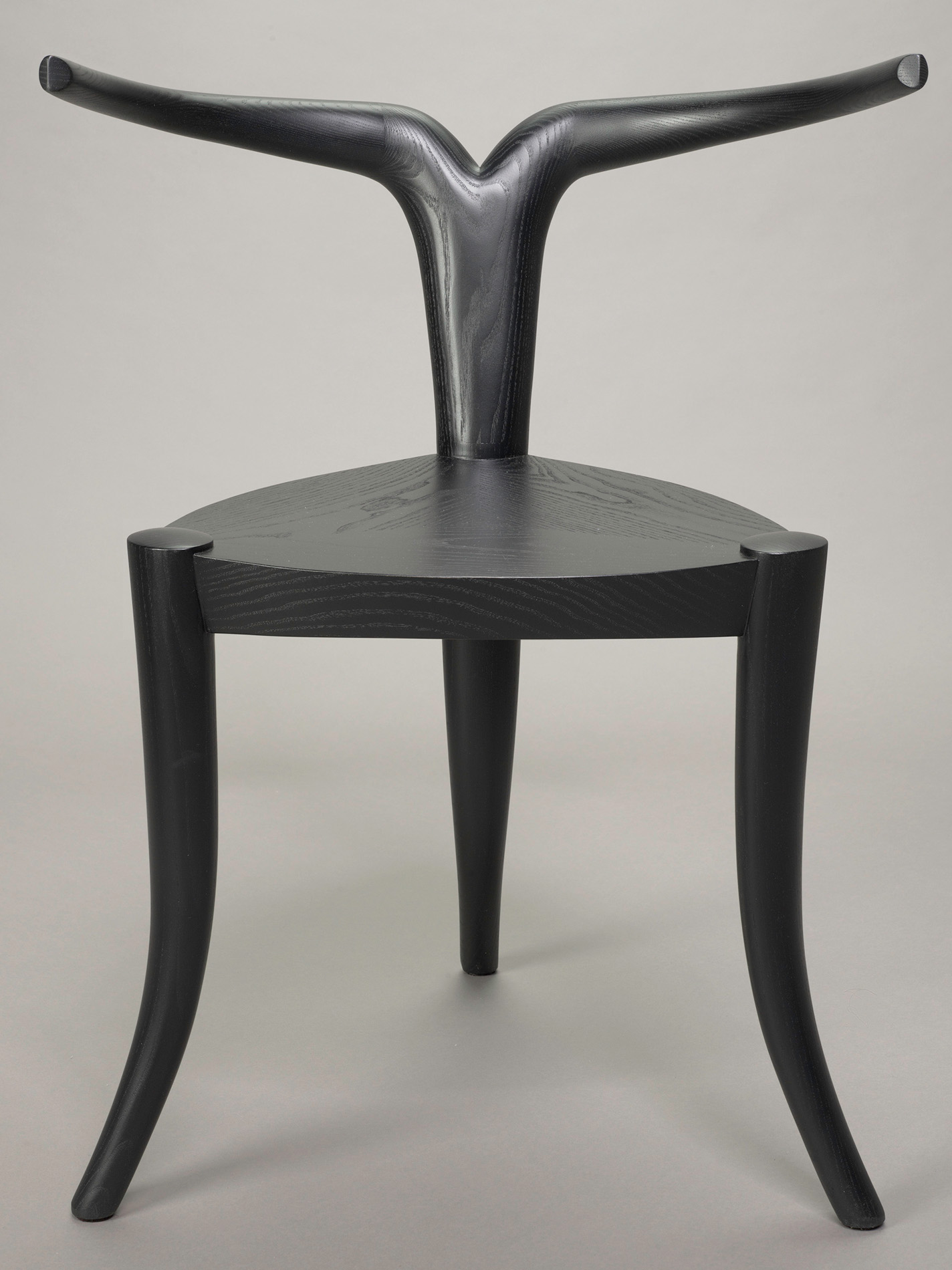
Echoing the curving horns of the mountain nyala, an antelope found in the highlands of Ethiopia, Jomo Tariku‘s Nyala chair rises into a sculptural, T-shaped back that seems to open in an embrace. The warmth of hand-carved ash wood, finished in ebony stain, invites viewers in closer.

Photo courtesy of the Smithsonian National Museum of African American History and Culture, © Folayemi Wilson

Folayemi Wilson, Typochair [Chair, Chair], 2004, prototype, aluminum, 39 x 18.5 x 18.5 in.

“Anything from the African continent can serve as the launchpad for a new idea.”

— Jomo Tariku

Tariku, based in Springfield, Virginia, grew up in Ethiopia and moved to the United States to study industrial design. He looks to Africa for inspiration, and his designs emerge from a process of constant refinement through sketching, 3D modeling, and prototyping as he considers form, ergonomics, and engineering.

“Every idea begins with research into objects, designs, colors, nature, culture, utensils, food, wildlife, and more,” he says. “Anything from the African continent can serve as the launchpad for a new idea.” 

A thread among several designers in Reset is their engagement with Africa and its diaspora, honoring the roots of modernism in the aesthetics of African art and exploring shared histories and ancestral memory. Wilkinson points to Ini Archibong’s Stargazer chair, which takes its form from West African birthing chairs, as one example. “In his design, the emphasis is on the sitter gazing upward and outward, toward the sky,” she says. “He references the sky as conduit for the sitter’s connection to the ancestors.”

Photo courtesy of the Smithsonian National Museum of African American History and Culture, Design © Jomo Tariku

Jomo Tariku, Nyala Chair, 2020, manufactured by David Bohnhoff, American stain on ash wood, 30 x 23.5 x 20 in.

Some of the seating in the show asks visitors to confront difficult histories. In British artist Simone Brewster’s Negress Chaise, each leg of the chaise represents an abstracted part of the female body. The piece “is both a beautifully constructed and conceptualized object that is also a commentary on the ways the Black female body has been used as a support system,” says Wilkinson. 

The exhibition takes its title from the idea that each of the designs presents an opportunity to reset—to change perspective and shift our bodies. Tariku has been thinking about this idea since his student days, when he examined the topic in his senior thesis. “One of my central arguments was that the home is a space for rest and reflection, one of the few places a person gets to self-curate and reshape their environment according to their own needs and on their own timeline,” he says. “For many Black homeowners, one element had long been missing: furniture that genuinely carried their values and aesthetic like seating, tables, and objects that felt like their own.”

Wilson, whose practice has expanded to focus on installation with found objects, sound, video, archival media, slipcast objects, and original sculpture, says some of her work, such as her 2019 installation Dark Matter, has purposefully created spaces to breathe and rest. “I like that reset means a lot of different things, and yes, reset does mean rest too,” she says.

Photo courtesy of the Smithsonian National Museum of African American History and Culture, © Ini Archibong

Ini Archibong, Stargazer, 2022, bronze with paint, 26.25 x 18 x 40.5 in.

Kate Schuler is a potter, writer, and editor based in Washington, DC.

Learn more about Reset online.

Exhibition Website

This article was made possible with support from the Windgate Foundation.

Before you go!

We believe that making creates a meaningful world, and we hope you do, too. Deeply researched and impactful journalism on the craft community is in short supply. At the same time, being featured in craft-centered media and articles can have a major effect on a maker’s or artist’s livelihood, particularly those who are just starting in their career. You can help support our mission and the work of makers around the country by becoming a member or by making a gift today.

Thank you!
American Craft Council