Craft Around the Country

Chris Kallmyer's Furniture and Objects are Built for Sound

In hopes that people will relearn the act of listening, the California acoustic artist blends art, design, and craft to create sonically charged communal experiences.

By David Schimke
November 16, 2026

Photo by Nico Zurcher, courtesy of the Eames Institute of Infinite Curiosity

Chris Kallmyer.

At the age of 21, Chris Kallmyer, a trumpet-playing undergrad at Saint Mary’s College of Maryland, was studying abroad when he found himself all alone in the sanctuary of an acoustically charmed cathedral in Alba, Italy. Warming up for a music festival scheduled later in the day, he not only heard but experienced his horn’s sound as it traveled across the cavernous space and echoed back.

It’s a defining memory for the artist, maker, and sonic explorer.

“I was just like a little fish experiencing the world for the first time, and all I could think was, Wow, this is radical,” he says. “I realized that when you look at a building, it doesn’t notice you. But when you make sound in a building, it speaks back. It changed all the rules for me.”

Upon returning home to Washington, DC, where he’d come of age in the city’s storied DIY punk scene, Kallmyer chose to head west and pursue an MFA at the California Institute of the Arts. There, he studied with the Pulitzer Prize-winning composer Wadada Leo Smith, and absorbed the writings of theorists such as experimental electronic musician Pauline Oliveros, a pioneering champion of “deep listening,” and R. Murray Schafer, who argued in his seminal 1977 book, The Soundscape: Our Environment and the Tuning of the World, that sounds cannot be understood in isolation. 
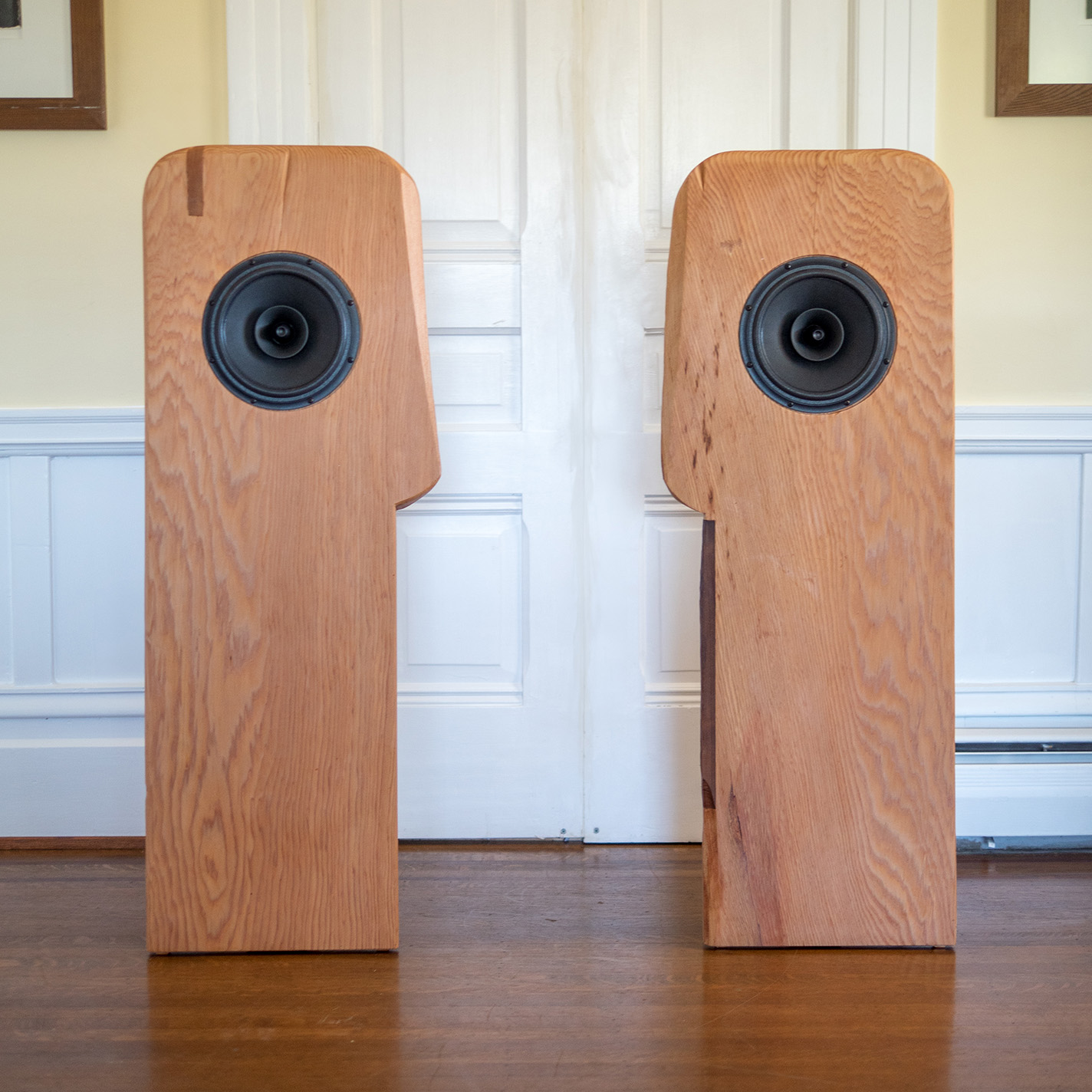
Photo courtesy of the artist

Listening System, a functional speaker made with old-growth Douglas fir with two full range drivers.

“At CalArts, which was like a living organism, I was awakened to the idea that music can help us listen differently and to live differently in the world,” says Kallmyer, who after earning his MFA began to forge a reputation for producing museum pieces, community projects, compositional works, and improvisational experiments that consistently reward deep immersion and, more often than not, rely on some sort of audience participation or interaction. 

Drawn to “collectivism and communal formation,” he’s amplified the sound of crickets through makeshift speakers in the trees surrounding an at an outdoor music festival in Wisconsin; composed a piece about “milk’s journey into cheesehood” for a California creamery that featured field recordings of cows and cowbells; hosted a community bike ride through Seattle that combined “homemade musical-bicycle instruments, site-specific listening, smoothies, and cartography”; mashed up autotuned weather reports and live Doppler radar to encourage audiences to ponder their relationship with the elements; and composed and participated in genre-bending concert-hall performances inspired by the likes of Hall & Oates, Devo, and Johann Sebastian Bach, collaborating with experimental collectives including the LA-based Machine Project. 

Along the way, Kallmyer began to wonder “what it would look like if there was a design studio that was solely focused on sound,” and launched Furniture Music in 2018. “I found myself tapping into a really interesting conversation happening in craft and interior design around how you give aura and atmosphere to a space,” he says. “I became dedicated to honoring the animating qualities of the materials, which carry their own history and identity.”

Photo courtesy of the artist

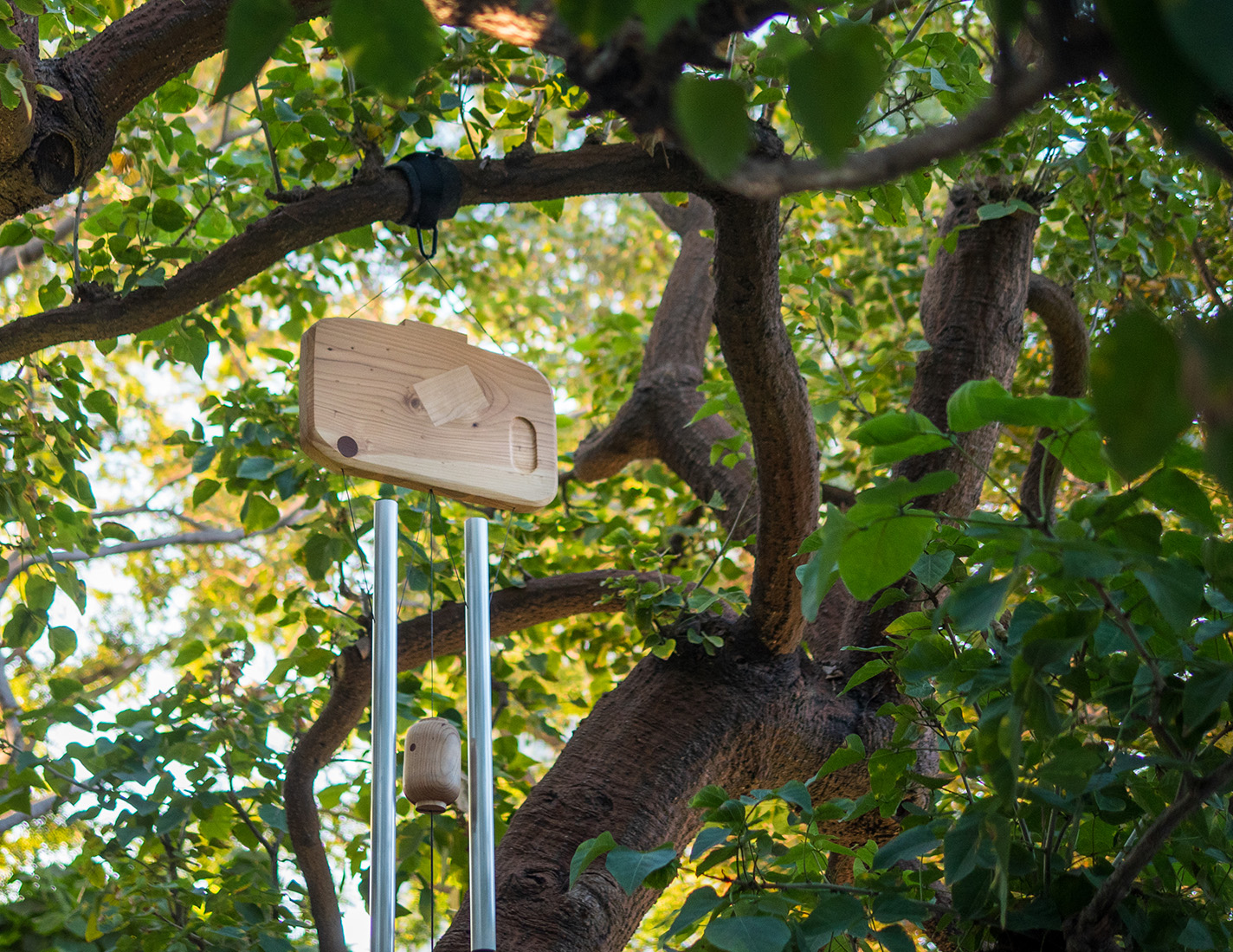
A wind chime made from deodar cedar, walnut, and aluminum at the Walt Disney Concert Hall, the home of the Los Angeles Philharmonic, 72 x 18 x 2 in.

“I’d hope you would install one of my chimes in your garden, not only to listen to the chime, but because it helps you to listen to the birds. And it wakes you up to the light.”

— Chris Kallmyer

  • Photo courtesy of Commune Design

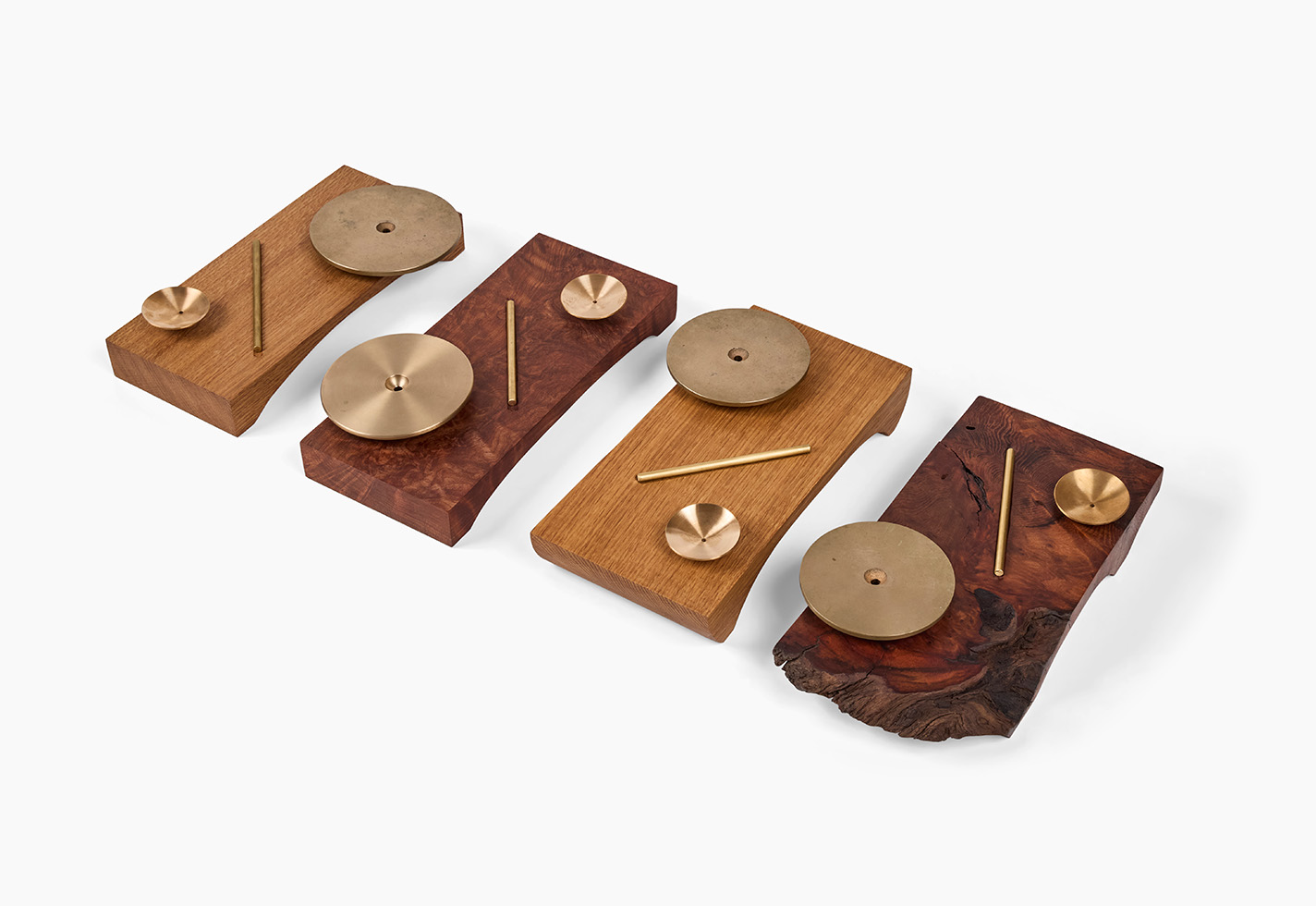
    Four of Kallmyer's Meditation Station sculptures in redwood and oak. Each station features a cast bell and incense holder for hand-rolled incense made by Keijirou Hayashi in his family's 180-year-old shop, Hayashi Ryushodo, in Kyoto, Japan. 12 x 6 x 2 in.

  • Photo by Commune Design

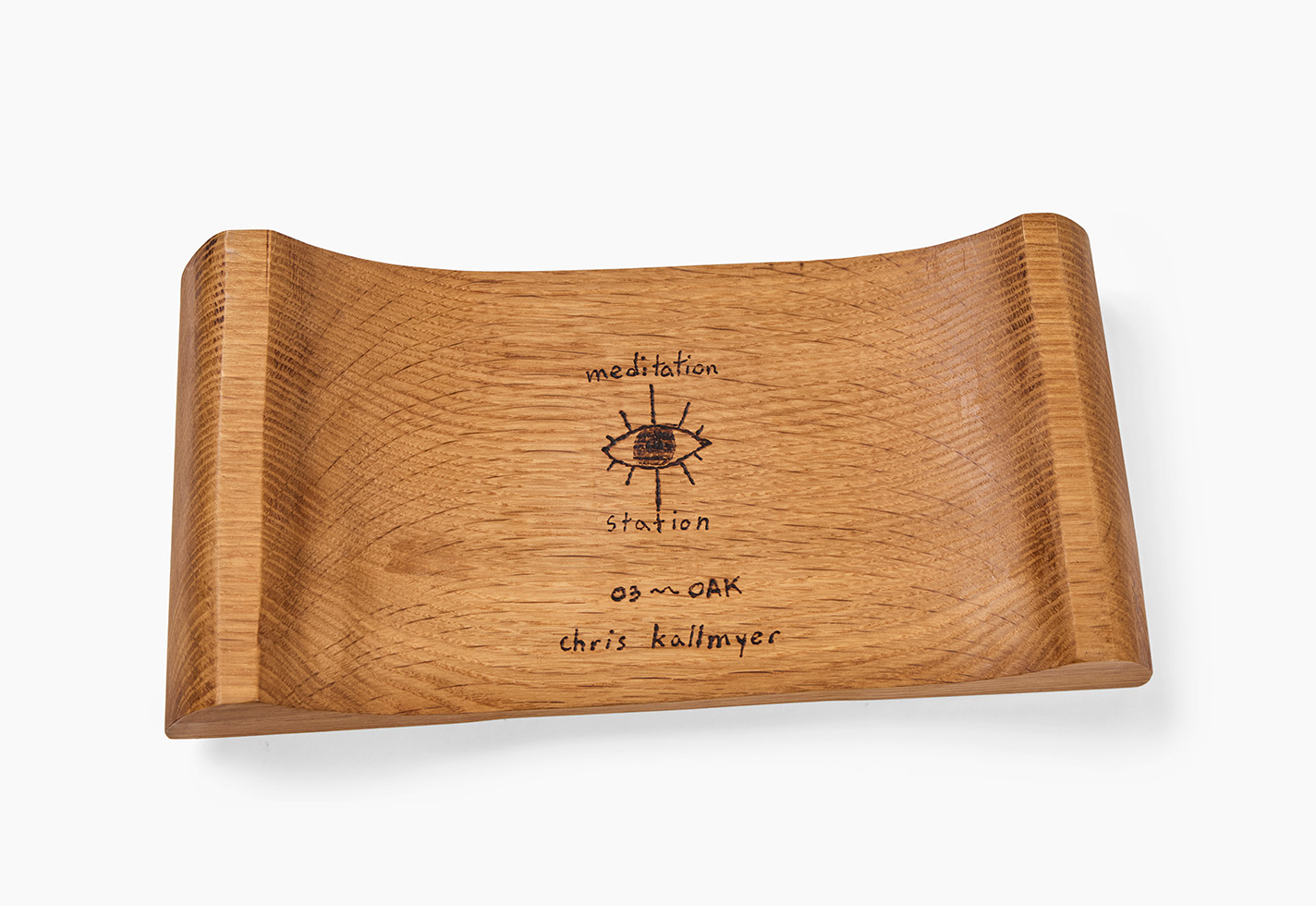
    The other side of Meditation Station in Oak, 12 x 6 x 2 in.

Having “grown up in a world where you could make things,” Kallmyer—the son of a lathe-operating patternmaker and a florist, and the great-grandson of a cheesemaker—started designing and making copper-plated aluminum chimes, bronze and brass bells, and wood sculptures in a small shop outside his Petaluma, California, home. 

“If you think of a Venn diagram of the creative process that includes art, design, and craft, Chris’s work fits in the middle of that Venn diagram,” says former American Craft executive director Sarah Schultz, who worked with Kallmyer when she was a curator at Walker Art Center in Minneapolis. “The objects that he creates and the way he works creates particular tones and feelings. And along with the objects he makes, he’s also crafting sound waves. They’re tangible. They exist as another element, another material of the work. It’s just invisible to us.”

Kallmyer has no formal training in any one medium (“I tend to learn one skill at a time,” he says), but as his understanding of wood, metals, and the attendant machinery continues to deepen (he just learned to use a lathe to make mallets), his creations have become increasingly sophisticated and singular. The ornate top pieces and wind catchers, or sails, of his chimes, carved out of raw timber. The strikers in those same chimes, made of dense, resonant redwood root. The thick wooden bases that anchor strategically mounted finger cymbals, equal parts splintered and varnished. The bespoke hi-fi speakers made of Douglas fir, indigenous to the area around his home.

Photo courtesy of the artist

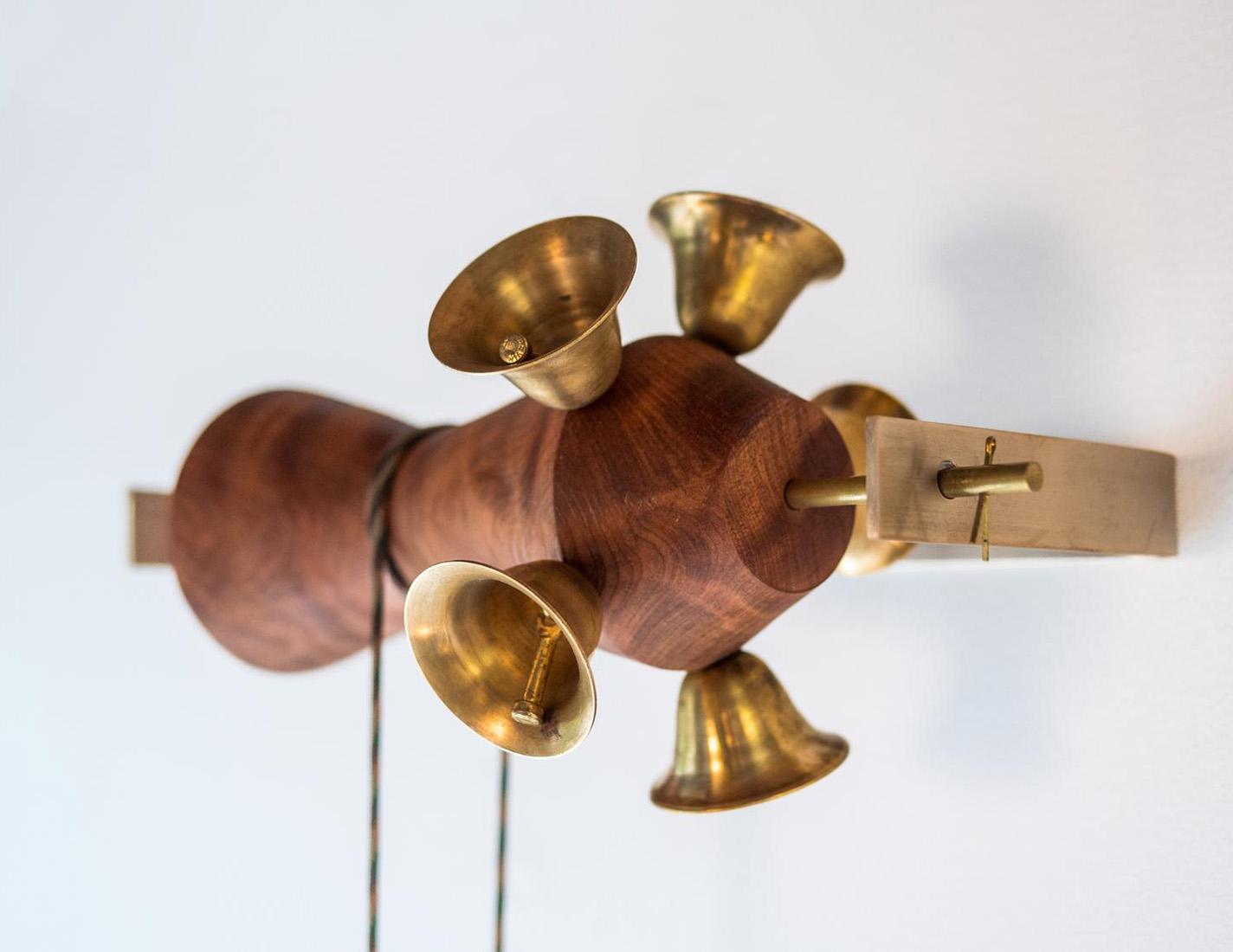
Door Bell, curly redwood and brass, 14 x 6 x 6 in., is designed after the doorbell on Charles and Ray Eames's Case Study House No. 8 in Los Angeles.

“They are all designed objects, crafted and sculpted, but they’re also attentional tools,” Kallmyer says. “I’d hope you would install one of my chimes in your garden, not only to listen to the chime, but because it helps you to listen to the birds. And it wakes you up to the light.” 

Over the last year, Kallmyer spent significant time concentrating on, and improving upon carving 3D molds from wood, which he uses to cast bronze bells. “Patternmaking,” he says, “is one of those rare crafts that is an essential part of most objects in our lives.” He’s also been preparing for an exhibition at the Further Triennial art event in Northern California, slated for next spring. Another show—a solo exhibition that opened November 13 at Vacant/Centre in Tokyo—includes bells and other objects that “have to do with sound, stillness, and time.”

“I’m very interested in the way that an object comes to bear the marks of seasons and time. Because we think of music as being kind of like a three-minute song or a 74-minute symphony. But we don’t think of it as extending over seasons and years. So, even though I’m less and less likely to ‘write’ music, I’m starting to think everything I do is still compositional.”

Photo courtesy of Commune Design

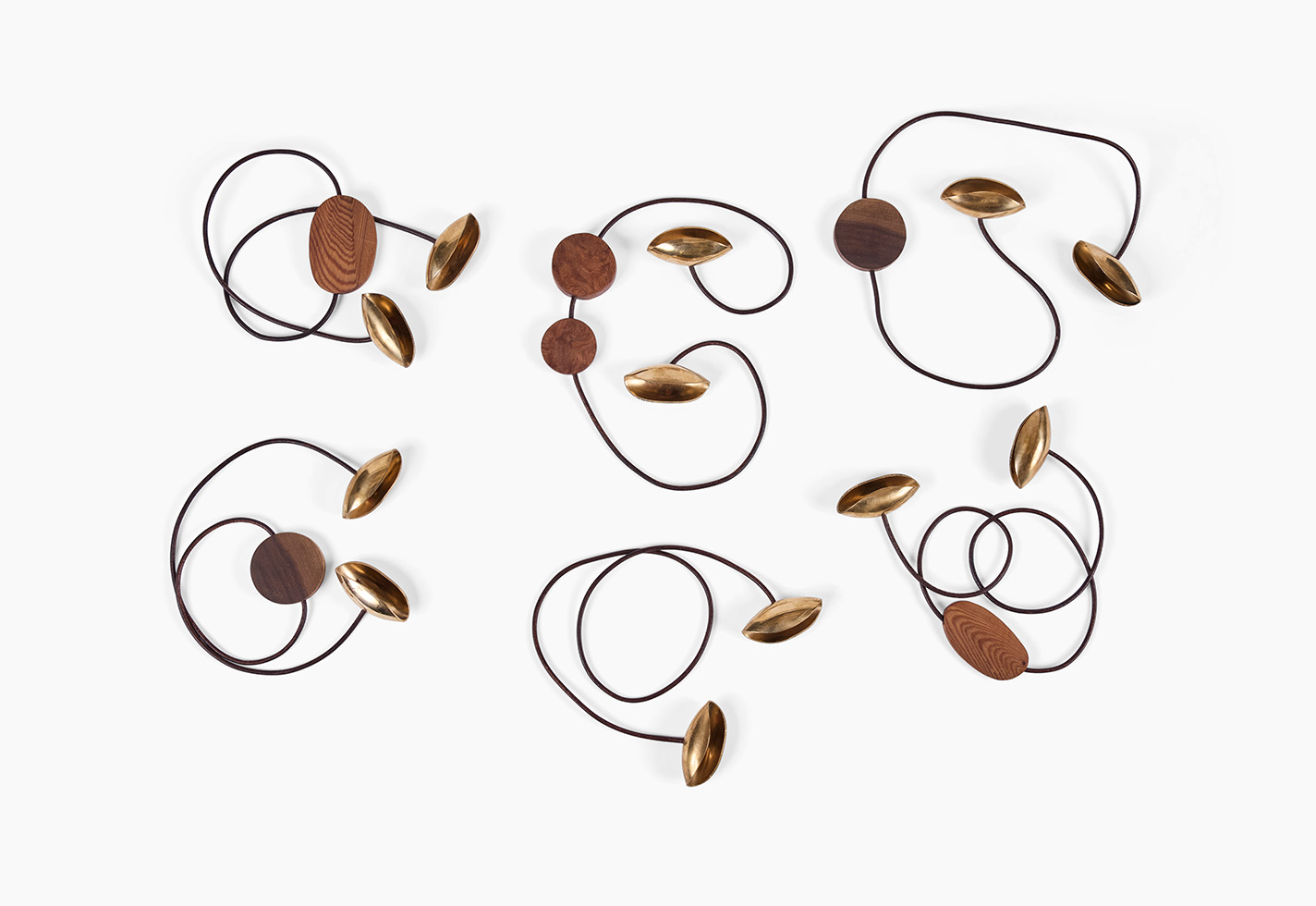
Kallmyer made these hand-formed brass, redwood, and walnut Shell Bells to create a bright, quick tone, 16 x 3 in.

Photo by Ben Bloom

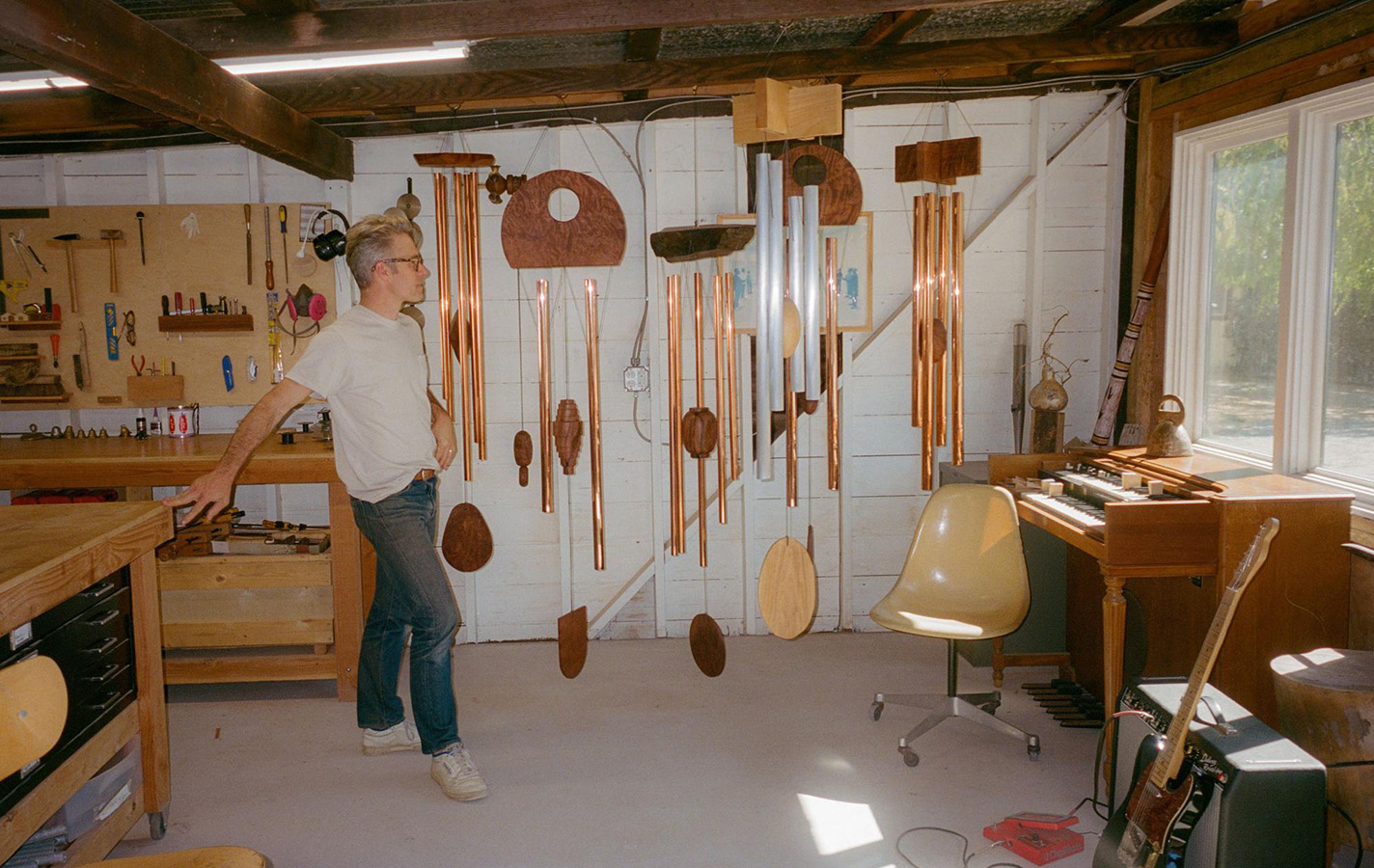
Kallmyer in his Petaluma, California, studio with chimes and a vintage Hammond organ that he uses to compose harmonies for his designs.

David Schimke is a Minneapolis-based writer and editor.

Learn more about Chris Kallmyer online.

Website Instagram

Before you go!

We believe that making creates a meaningful world, and we hope you do, too. Deeply researched and impactful journalism on the craft community is in short supply. At the same time, being featured in craft-centered media and articles can have a major effect on a maker’s or artist’s livelihood, particularly those who are just starting in their career. You can help support our mission and the work of makers around the country by becoming a member or by making a gift today.

Thank you!
American Craft Council