Craft Around the Country

He Used to Make People Dance. Now He Can Make You a DJ Booth.

Attuned to the needs of acoustic needs of DJs from his own experience, Seattle-based metalworker and millwright Tyler Morrison crafts custom DJ booths for clubs and bars.

By Megan Gannon
September 28, 2026

Photo courtesy of Process PDX

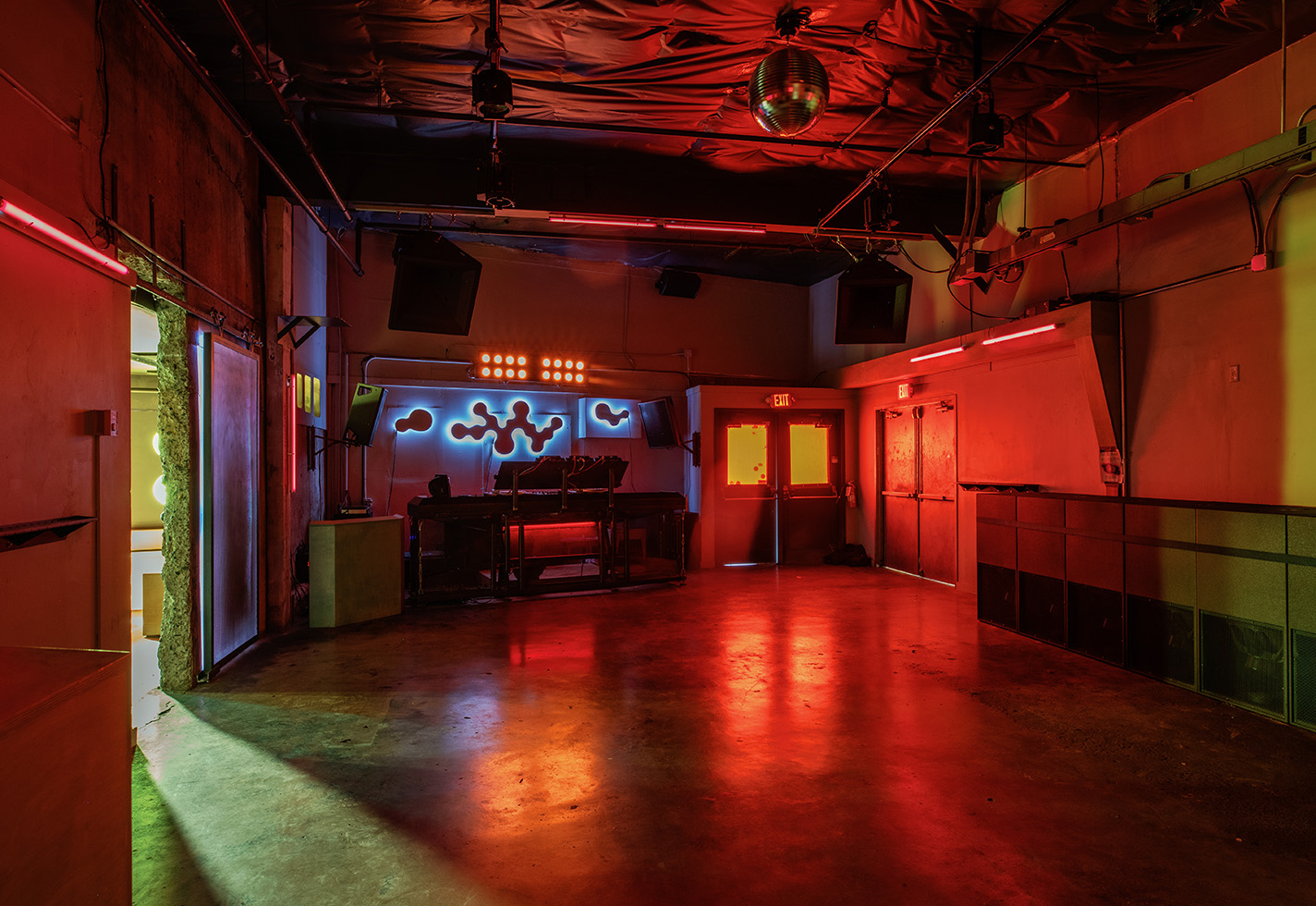
A DJ booth designed and fabricated by Tyler Morrison at Process PDX, a Portland, Oregon, bar and event space that hosts techno and other electronic music.

For DJs, a booth is not just a placeholder for turntables, CDJs, and other instruments. It’s a surface that needs to function as a tool too, according to Seattle-based millwright and metalworker Tyler Morrison. 

A former DJ himself—he still helps organize techno and electronic music shows around the Pacific Northwest—Morrison has found a niche building booths inside music spaces and clubs. “It’s super fun that I get to serve my community in this way,” Morrison says. “It’s like if you’re a chef and you finally get to cook for your friends.”

When Morrison built the DJ booth for Process PDX, a Portland, Oregon, club and rave space that opened in 2024, he realized a long-held vision for a booth that operates under the principle of tensegrity: the surface appears like it’s floating, with cables rated to support over 13,000 pounds holding up it through tension and compression. “It occurred to me that, actually, that could have some real functional use, in terms of isolating a surface from the floor on which it sits,” he says.

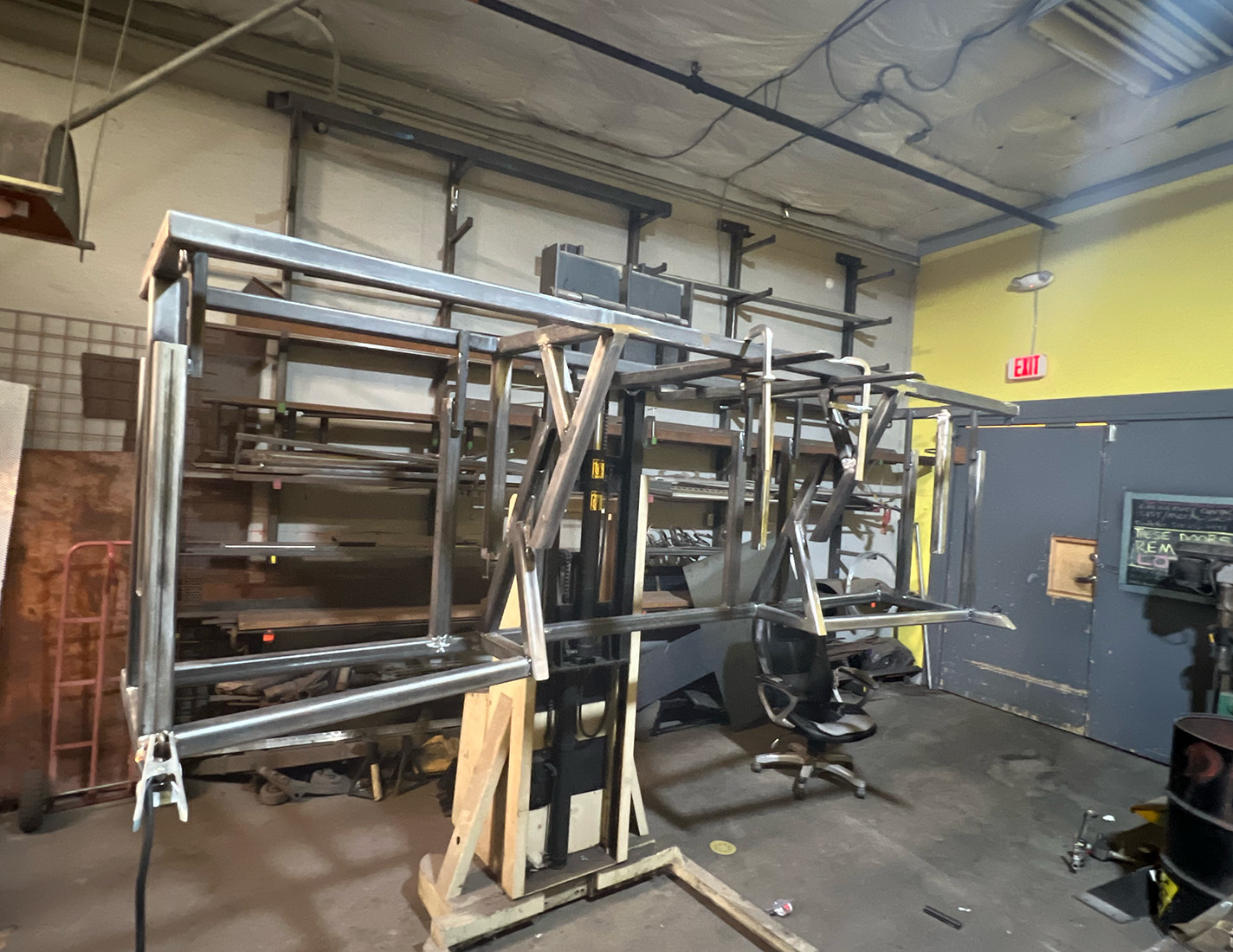
Morrison starts every booth as a 3D model, iterating designs with collaborators before fabricating the structure in steel. Depending on the project and access to a shop, the build can unfold in phases over many months. The booth at Process, for instance, took almost a year off and on.
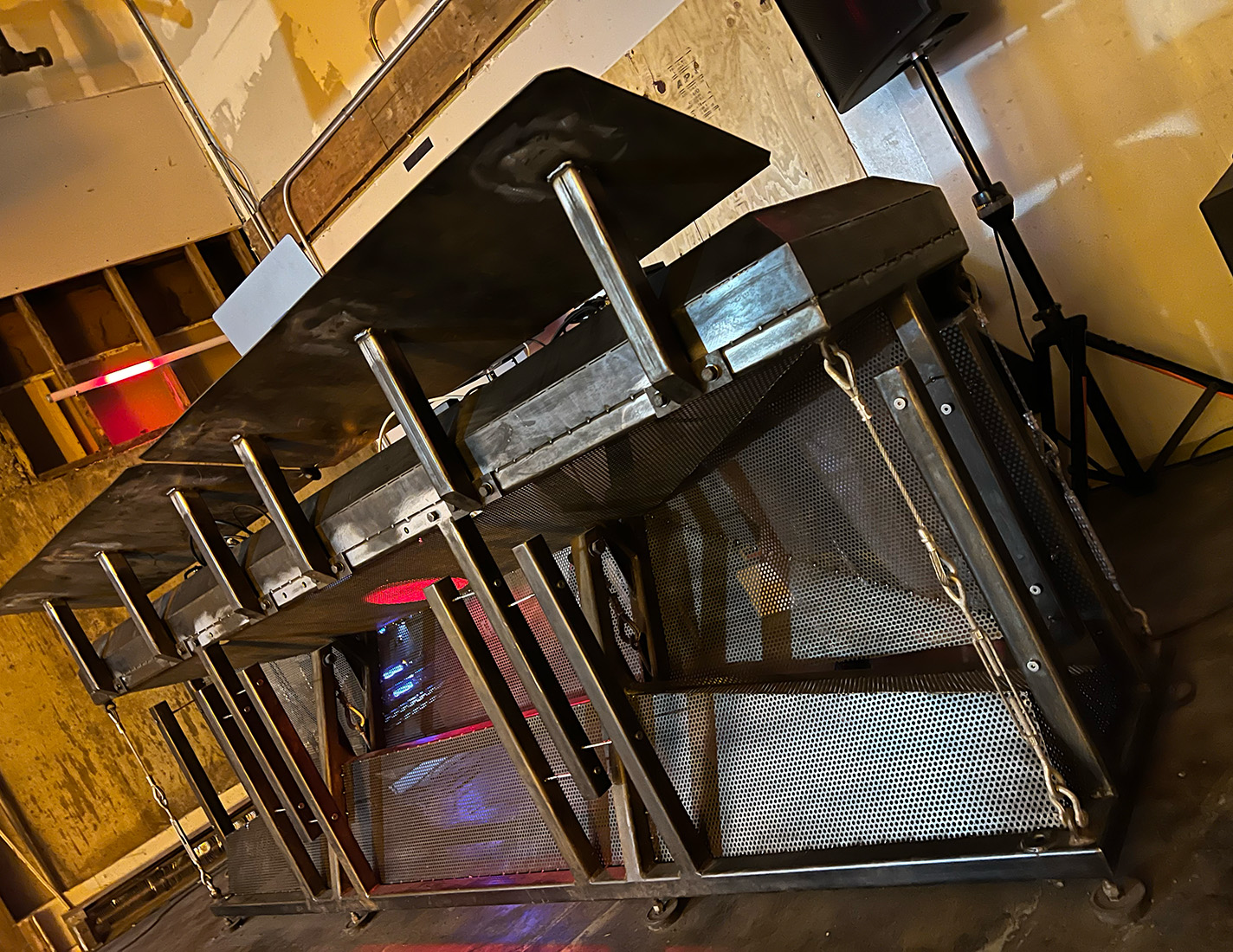
Photo by Tyler Morrison

A DJ booth during the fabrication process. Here, its steel cables and the perforated steel plates have been added.

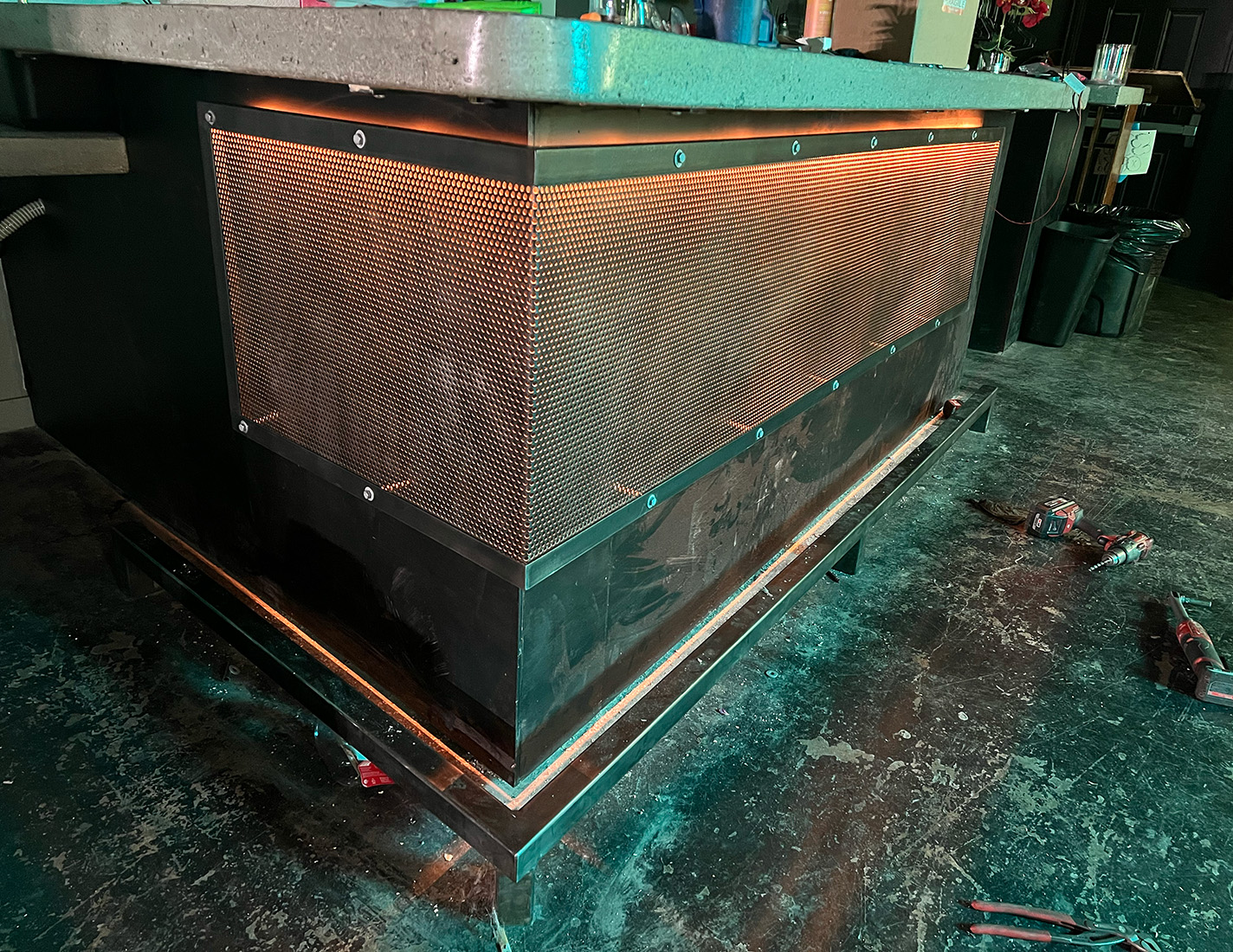
For that club, he and his collaborators wanted the booth to be aesthetically cohesive with the rest of the environment, which pairs industrial elements and sleek geometric shapes. The blackened, perforated steel plates and steel tubing featured on the booth mirror architect Spencer Russell’s designs for the bar. Other functional elements—a slab of concrete, rubber softeners between fasteners—help combat the vibration and feedback that could interfere with a DJ’s work.

Morrison has since built other tensegrity booths, each a little different, for the Cleveland, Ohio, hi-fi bar Mister Zhangs and the Seattle queer club Massive. The DIY music scenes he’s found himself in are often full of designers and makers, but not metalworkers, making it gratifying to contribute his skills. 

And his own experience as a DJ has informed his approach to cable management, lighting, and modular elements that allow the user to choose whether they want to be more hidden from the audience or on display.

“It’s really about creating an environment where people can be completely comfortable and do their best and enjoy themselves the most,” Morrison says. “In any creative process, being good at it requires that you’re actually having fun. That’s not a bonus. That’s a prerequisite. If I can make this thing like an ergonomic tool that fits everyone and makes their creative process easy, that feels really good.”

Photo by Tyler Morrison

Morrison also created the bar for Process PDX.

Photo by Tyler Morrison

The steel frame of the booth under construction for Process PDX

Megan Gannon is a writer and ceramist based in Seattle. She is a manager at Third Place Pottery, a community clay studio, and her journalism has appeared in National Geographic, High Country News, and Scientific American, among many other publications. 

Learn more about Tyler Morrison's work online.

Instagram

This article was made possible with support from the Windgate Foundation.

Before you go!

We believe that making creates a meaningful world, and we hope you do, too. Deeply researched and impactful journalism on the craft community is in short supply. At the same time, being featured in craft-centered media and articles can have a major effect on a maker’s or artist’s livelihood, particularly those who are just starting in their career. You can help support our mission and the work of makers around the country by becoming a member or by making a gift today.

Thank you!
American Craft Council