
Craft Around the Country

Josh Simpson Shoots for the Moon

The latest project from the veteran glass artist aims to make glass—and habitats for human life—from lunar soil.

By Kate Schuler
March 31, 2026

Photo courtesy of Josh Simpson Glass

A rendering of a glass habitat for humans on the moon.

When NASA announced its 2025 Innovative Advanced Concepts (NIAC) grants, awardees included scientists from the Massachusetts Institute of Technology, the Jet Propulsion Laboratory, and the Goddard Space Center. Also on the list: a team that Josh Simpson calls “an elderly glassblower and an architect.” 

A glass artist based in Shelburne Falls, Massachusetts, Simpson’s description belies the defining role he’s played in the studio glass movement. In a career spanning more than five decades, Simpson’s artistic vision and his inclination to experiment with technique, glass formulations, and color chemistry have produced hues and effects unlike anything seen before in the medium. 

His space-inspired glass art includes vases, platters, sculpture, and perhaps most famously, his spherical Planets series. The innovative planets are built layer by layer, encapsulating intricate shapes and surprising colors that suggest expansive vistas on earth, at sea, and in space. 
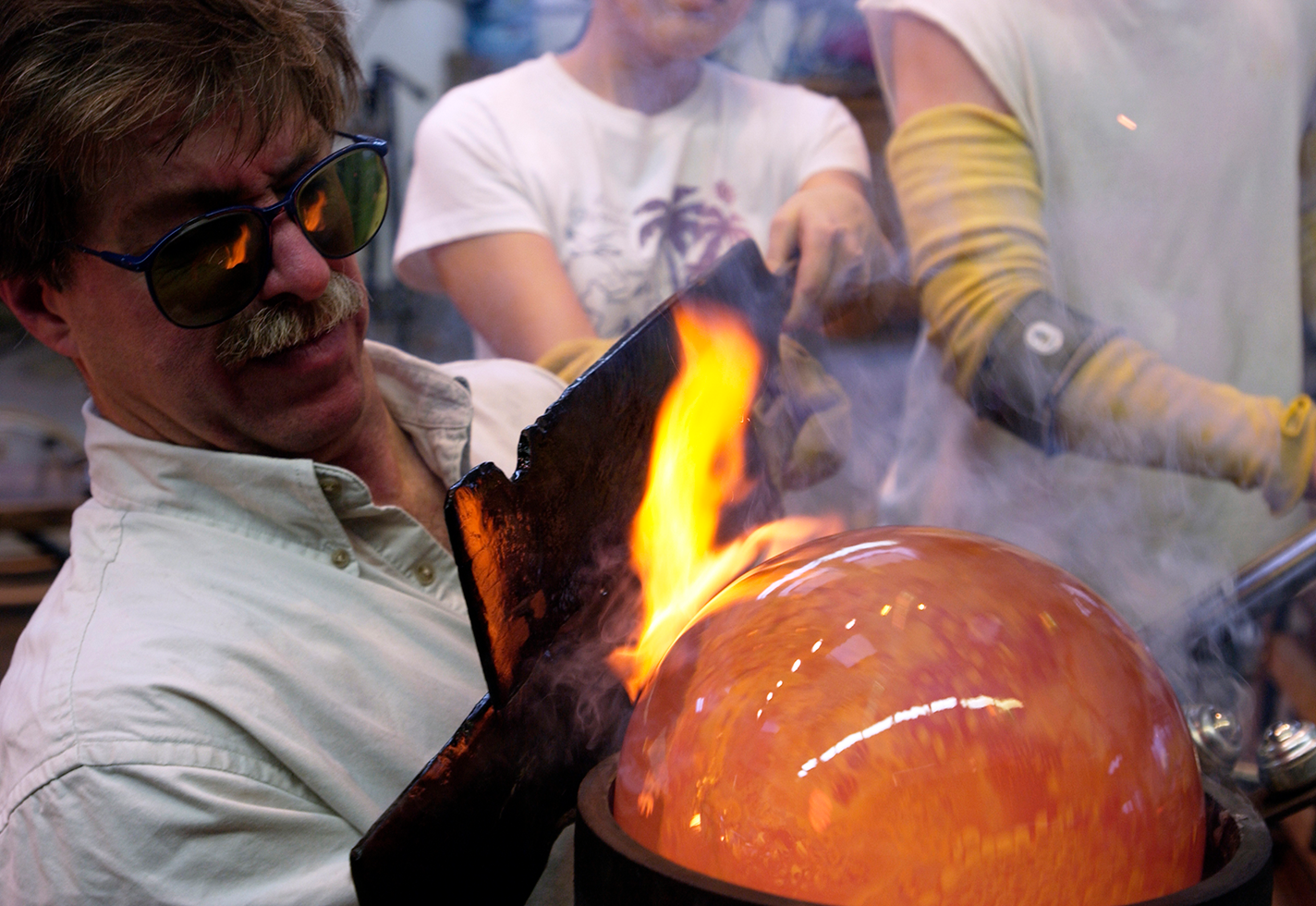
Photo courtesy of Josh Simpson Glass

Simpson forms a megaplanet, one of his signature glass works.

Surprisingly, it wasn’t the space-centered nature of Simpson’s work that led architect Martin Bermudez to seek him out to partner on a proposal to NASA to create glass habitats on the moon. Nor was it the fact that Simpson is married to Cady Coleman, a retired astronaut who once spent six months on the International Space Station. 

“I typed ‘glassblowing experts’ on Google and Josh came right up,” Bermudez laughs. He then looked at Simpson’s website and his glass planets. Amazed, Bermudez gave him a call. 

Bermudez, who has expertise in eco-friendly and self-sustaining buildings and a lifelong casual interest in space, had come across a call for proposals from NASA for lunar habitats. It got his mind turning. “I saw the opportunity, and thought maybe I can make a difference,” he says. He began to sketch and research and realized the amount of silica on the lunar surface could potentially make glass.

It was during that first phone call that Simpson said, “I’m in.”

Photo courtesy of Josh Simpson Glass

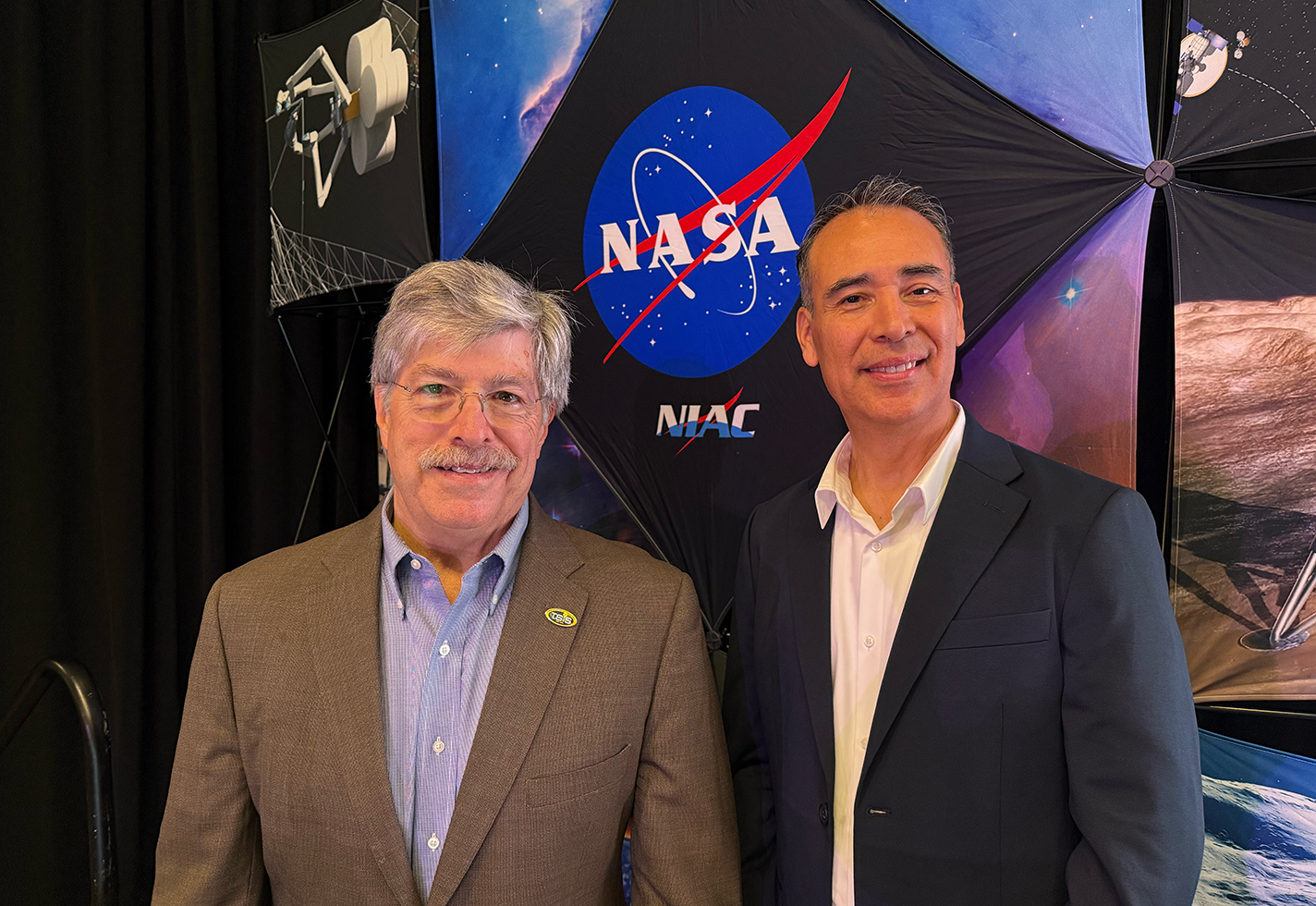
Josh Simpson and Martin Bermudez at NASA.

“I typed ‘glassblowing experts’ on Google and Josh came right up.”

— Martin Bermudez

Defying Lunar Extremes

The mission to return to the moon is a priority for NASA. Artemis II, which could launch as soon as April 1, will bring a crew of astronauts near the moon for the first time in over half a century. NASA’s goals target 2028 for a lunar landing and eventually establishing a “sustained human presence,” along with structures required to house and support life on the moon. 

The moon is an inhospitable place for humans, with temperatures that can fluctuate 500 degrees Fahrenheit in a lunar day, near-vacuum conditions, low gravity, radiation, a fine abrasive dusty soil, and constant bombardment with micrometeorites. Any habitat would need to resist these extreme conditions. 

Many phone calls between Simpson and Bermudez followed that first one—the pair had never met in person until this past October, three years after they began working together—as they developed their plan and set up a company, Skyeports LLC.

Photo courtesy of Josh Simpson Glass

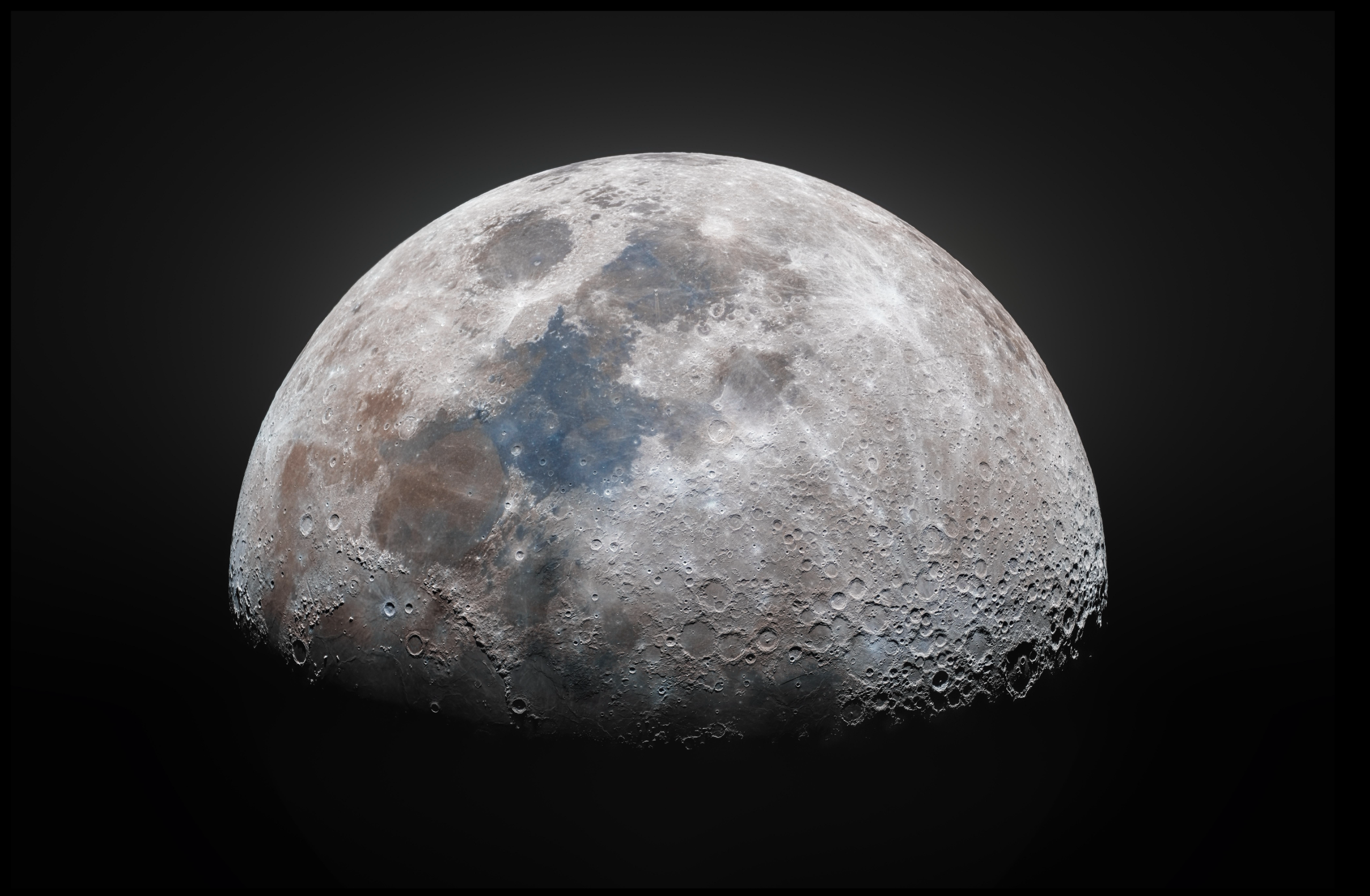
NASA astronauts haven't approached the moon in more than 50 years. In early April, Artemis II will bring four people near it.

For the NIAC grant, which funds early-stage concepts, they proposed building a habitat by turning lunar soil into glass that could then be blown into a monolithic hollow sphere 900 feet in diameter (about the height of a 75-story building). The building process would take place entirely on the moon. 

“Right now, if we go to the moon, we have to bring everything with us. All our building materials have to come from Earth,” Simpson said. “But if we could actually use the materials that are already on the moon, it would be literally game-changing.” 

Instead of fighting all the harsh conditions that make the moon uninhabitable, they realized they could use them. That abrasive dust blanketing the surface, known as regolith, contains 50 to 60 percent silica, one of the core components of glass. Low gravity removes the challenge glassblowers face on earth (where molten glass slumps under its own weight) and would allow for larger spheres. And the lack of atmosphere means less pressure required to blow, or inflate, glass to large sizes. 

They would still need to bring a furnace and blower into space, but Bermudez already has ideas for reusing that equipment, possibly as the glass habitat’s entry chambers. 

Photo courtesy of Josh Simpson Glass

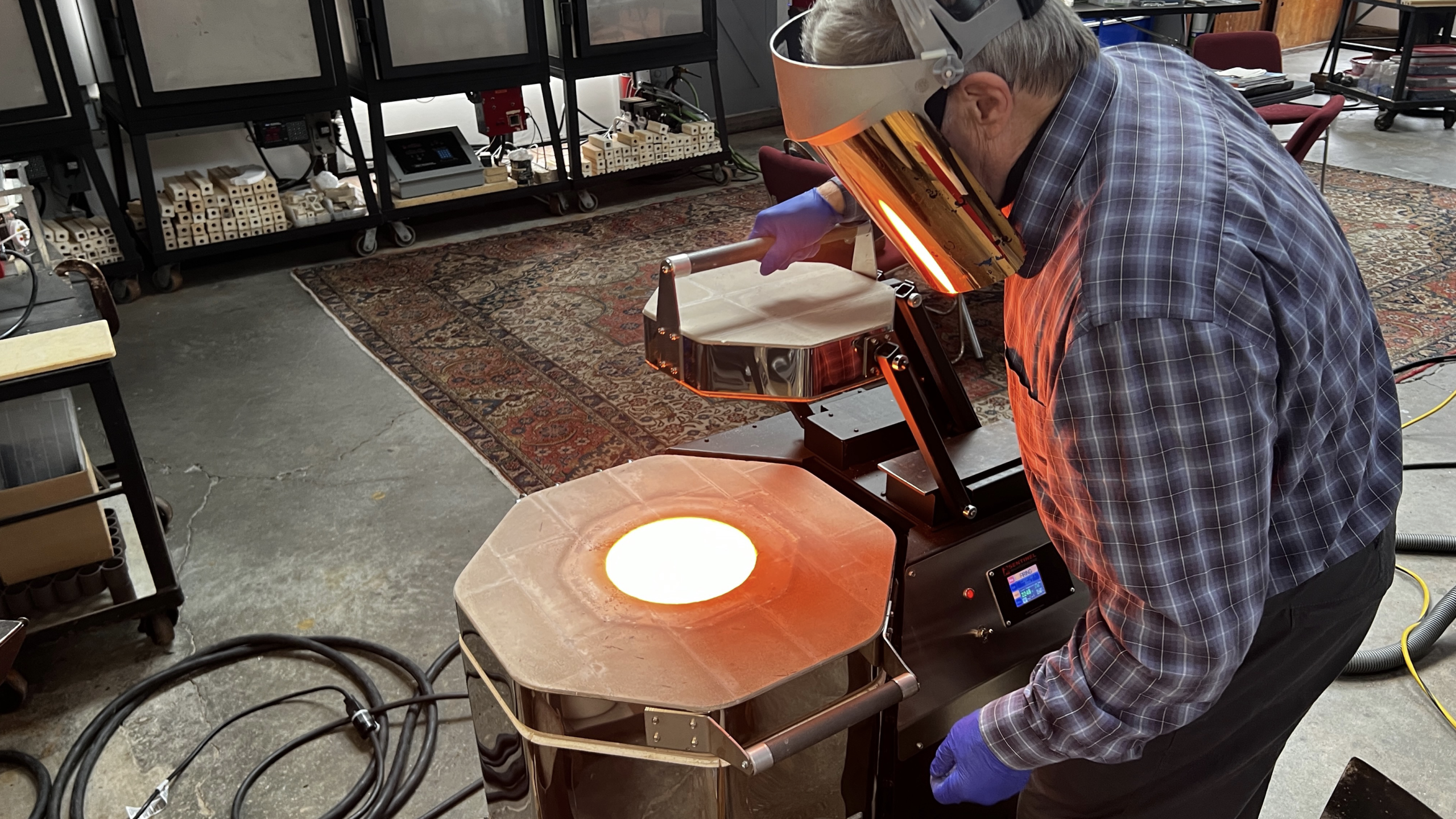
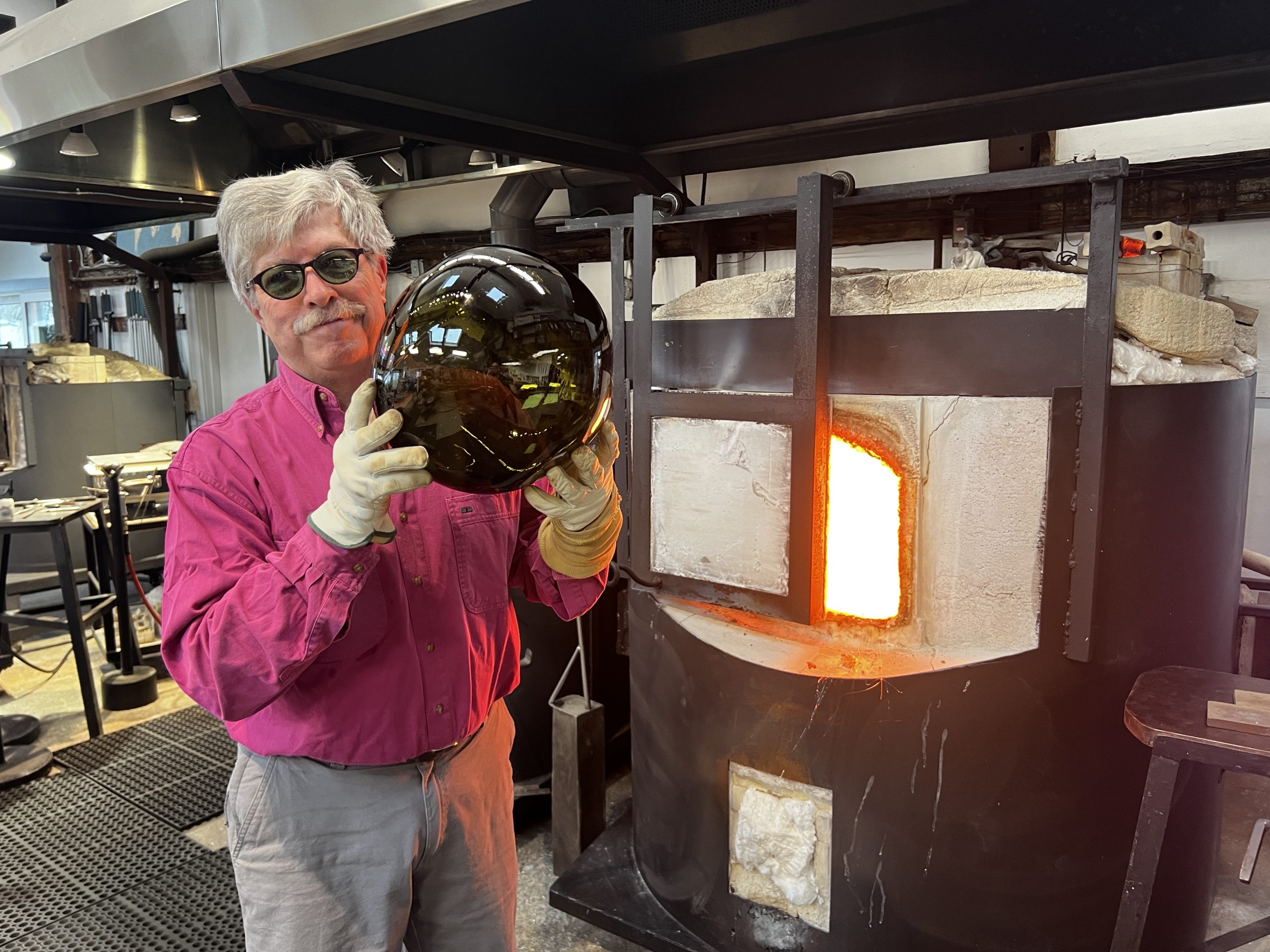
Josh Simpson at a furnace in his glass studio.

Photo courtesy of Josh Simpson Glass

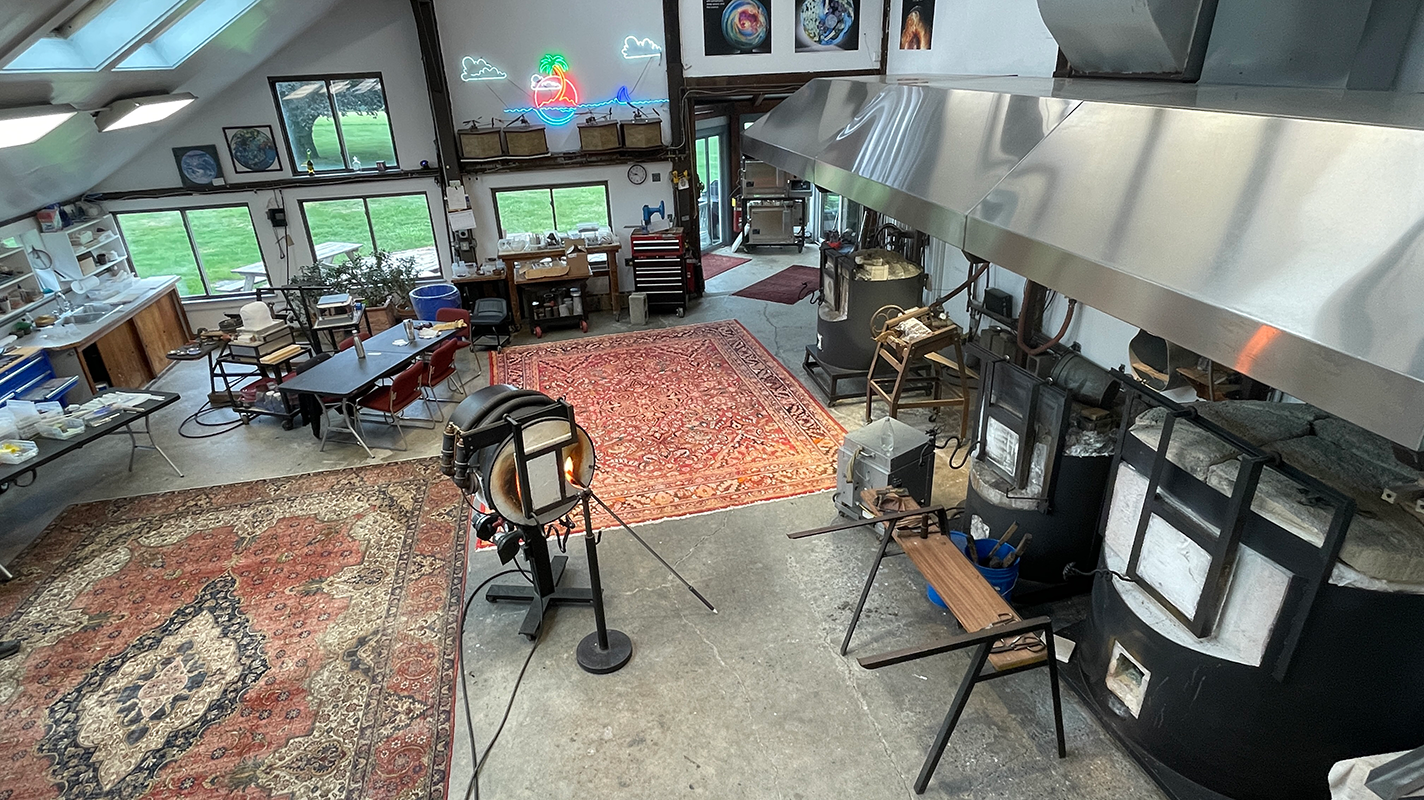
Simpson's thoroughly earthbound glass studio in Shelburne Falls, Massachusetts.

Digging In

Three components make up glass: silica, stabilizers, and a flux that helps that silica melt. “If you had a shovel and dug it up, the moon soil has two out of the three things that you need to make glass,” Simpson says. “It has silica, but it also has magnesium and calcium, which are stabilizers.” The regolith also contains “a melange of other material,” he says, which can’t be separated out. Simpson’s task became finding the fluxes, melting temperature, and coefficient of expansion that could turn the regolith into glass—and then prove it could be blown. 

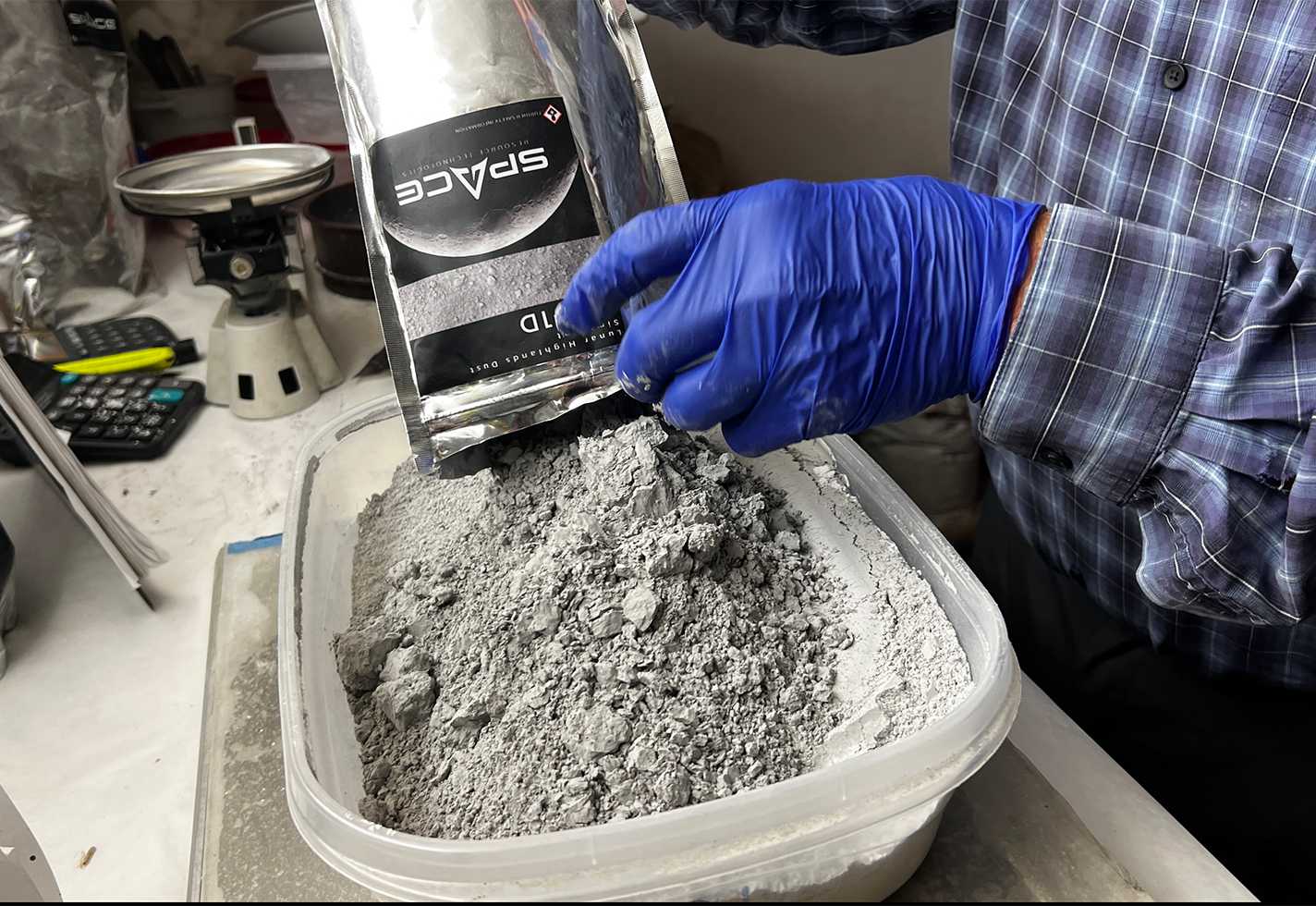
With the grant money, he purchased simulated moon dust from Space Resource Technologies, a company that replicates the chemical and physical properties of lunar and Martian regolith. He also purchased a small electric melting furnace. That furnace was the first one he had ever bought—always the tinkerer, he had been building his own his whole career.  

“I started experimenting mixing lunar simulant soil with flux and I just kept using different fluxes and then different amounts of flux,” Simpson says. “And amazingly, it actually worked.” Simpson landed on boron, the same material used in Pyrex, as the primary flux.

Photo courtesy of Josh Simpson Glass

Simpson experimented with simulated moon dust from Space Resource Technologies, a company that replicates the chemical and physical properties of lunar and Martian regolith.

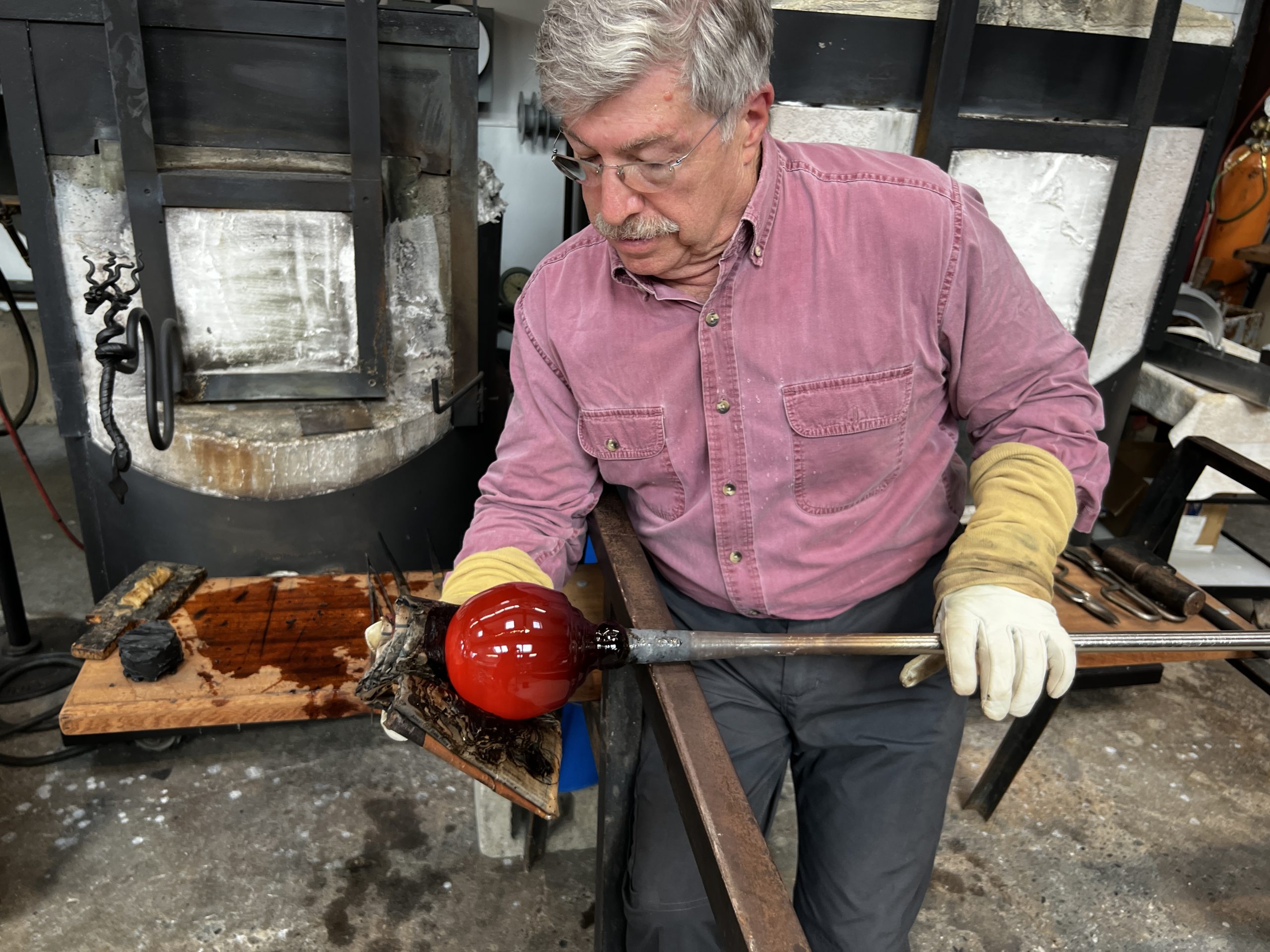
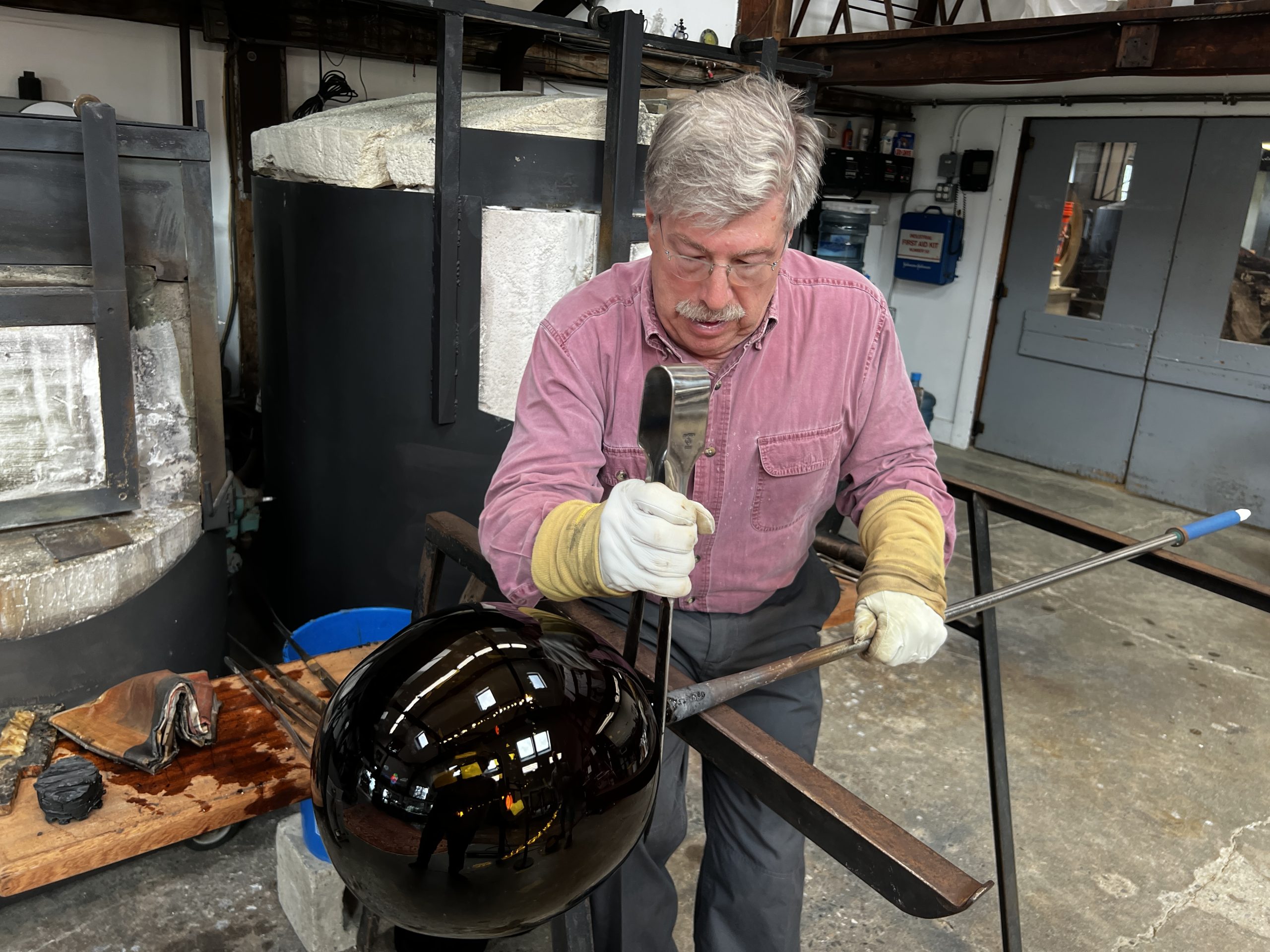
Blowing glass on earth requires gathering molten glass in a furnace onto the end of a long tube called a blow pipe. After blowing the molten glass into a bubble, the glassblower then must keep the pipe rotating while shaping the piece. Using the regolith and a boron-heavy flux, last summer, Simpson made a basketball-sized sphere.

Despite the rigor and scientific experimentation he’s put into the moon habitat project, Simpson considers himself an artist first. “I can’t imagine giving that up,” he says. “I’m old enough to retire, but this is what I love doing, and I am what I am—a glass artist.” 

He approaches his studio glass with a sculptural eye. For his planets, “I spend a lot of time manipulating where your eye is likely to travel and your experience exploring the work,” he says. “I pay attention to making each piece have surprises.”

The moon habitat work has been a completely different way of working, he says, because he has to approach it solely from a technical angle and can’t think about aesthetics. But the NIAC project hasn’t left his artistic vision untouched—he personally purchased some lunar simulant soil to use in his art someday. “Conceptually, making something with glass that could have been created on the moon would be incredible,” he says.

Photo courtesy of Josh Simpson Glass

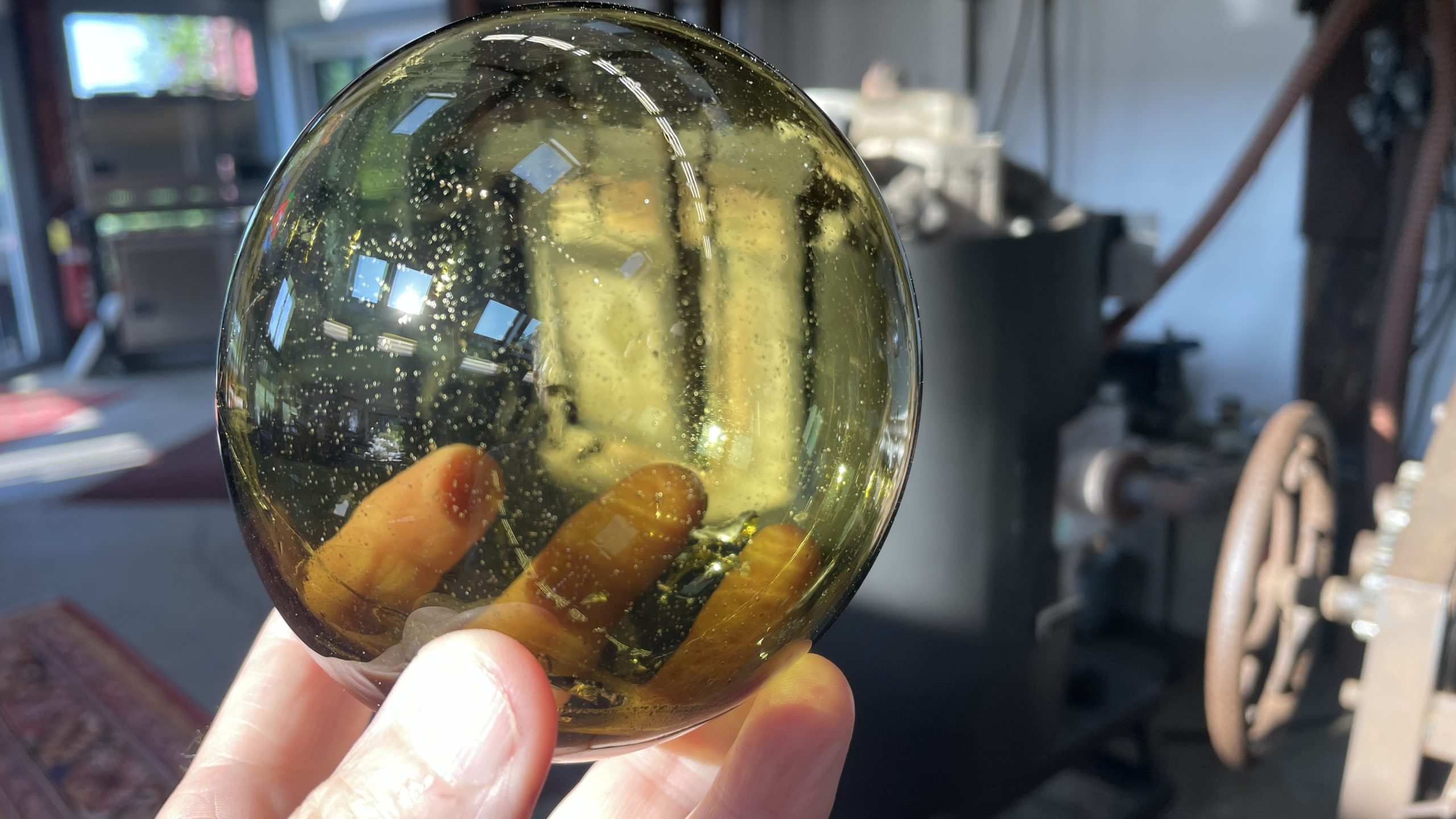
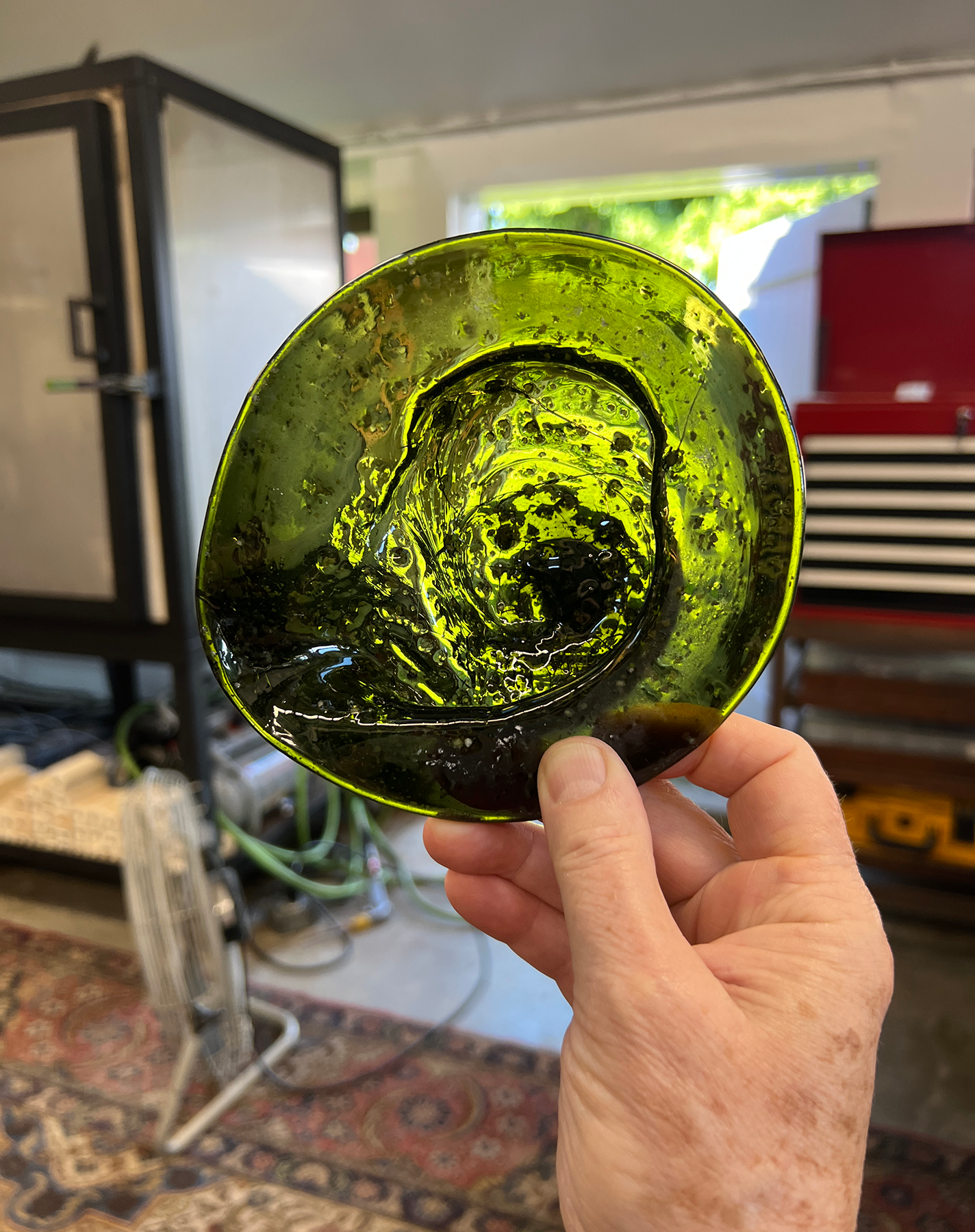
Glass made with lunar soil.

  • Photos courtesy of Josh Simpson Glass

    Josh Simpson making glass from lunar soil.

“I'm old enough to retire, but this is what I love doing, and I am what I am—a glass artist.”

— Josh Simpson

Partnerships and Possibilities

Since Simpson proved glass could be made and blown with the material in regolith, the next challenge will be to see if it can be blown in a vacuum. Georgia Tech scientists are pitching in and providing their Atlanta vacuum chamber for the tests.

Simpson and Bermudez already see the possibilities far beyond the next stage. They’re now planning to try multiple concentric glass spheres that could add more protection and increase self-sustaining properties by capturing heat and condensation inside the habitat. And they continue to refine the mechanisms for building in space. “I lie in bed trying to imagine different equipment that I would build or construct, or fabricate or weld, and how I could build a furnace that’s made to blow a sphere upward instead of sideways, and keep it from rotating,” Simpson says. 

Simpson and Bermudez’s idea has the kind of simple elegance that often comes from an outside perspective. “I think the combination of an artist and an architect creates something unique,” said Bermudez. “We built something that no one has ever thought about doing. It’s going to need a lot of engineering, of course. But the basic idea is pure art.” 

Meanwhile, Simpson has been back in his studio this winter developing new jewel-like colors for his glass objects. One is a chromium copper cobalt green, and the other is a copper cobalt blue color. He can’t wait to get them onto the blow pipe.

Photo courtesy of Josh Simpson Glass

Lunar glass.

Kate Schuler is a potter, writer, and editor based in Washington, DC. 

Visit Josh Simpson online.

Website Instagram

This article was made possible with support from the Windgate Foundation.

Before you go!

We believe that making creates a meaningful world, and we hope you do, too. Deeply researched and impactful journalism on the craft community is in short supply. At the same time, being featured in craft-centered media and articles can have a major effect on a maker’s or artist’s livelihood, particularly those who are just starting in their career. You can help support our mission and the work of makers around the country by becoming a member or by making a gift today.

Thank you!
American Craft Council