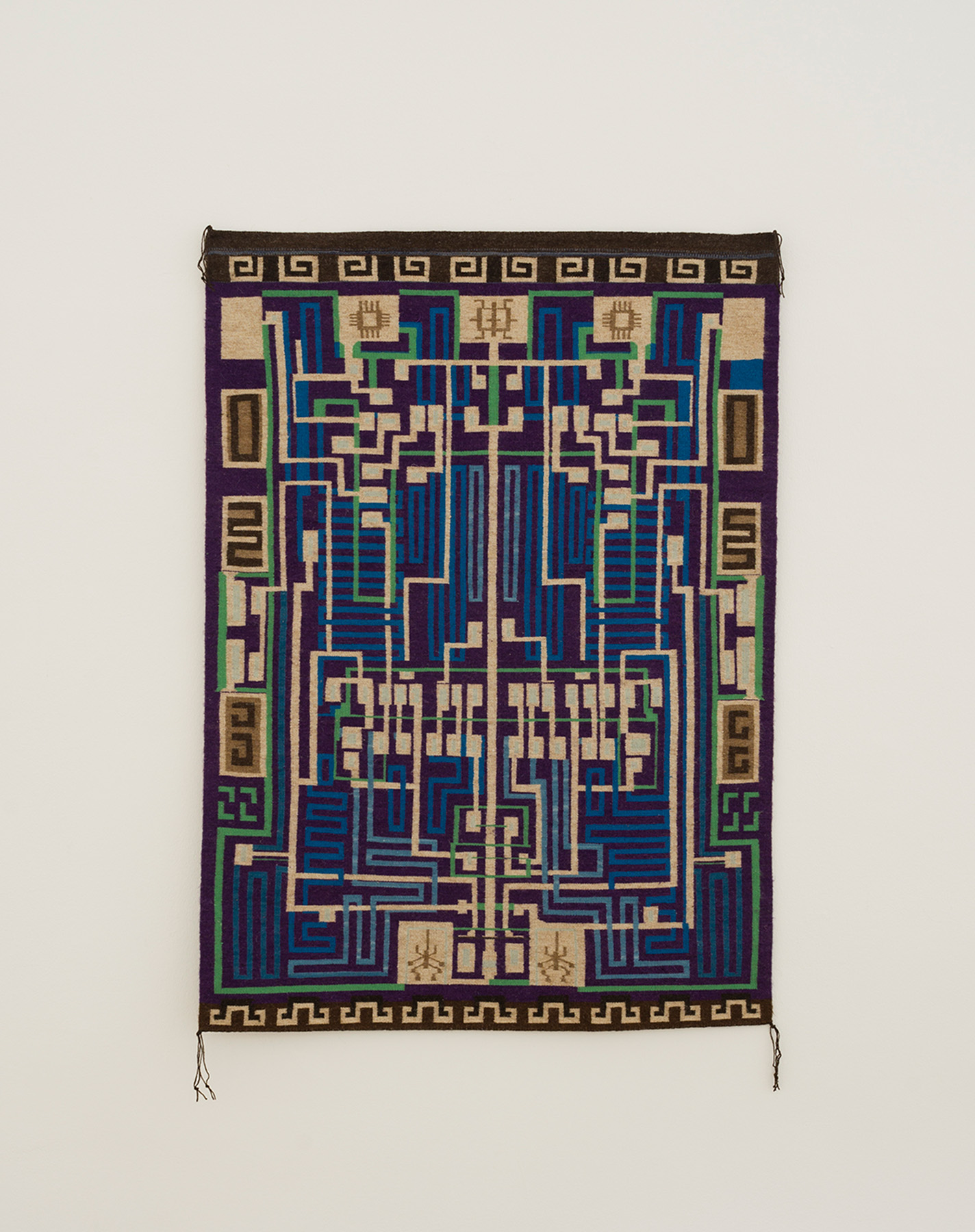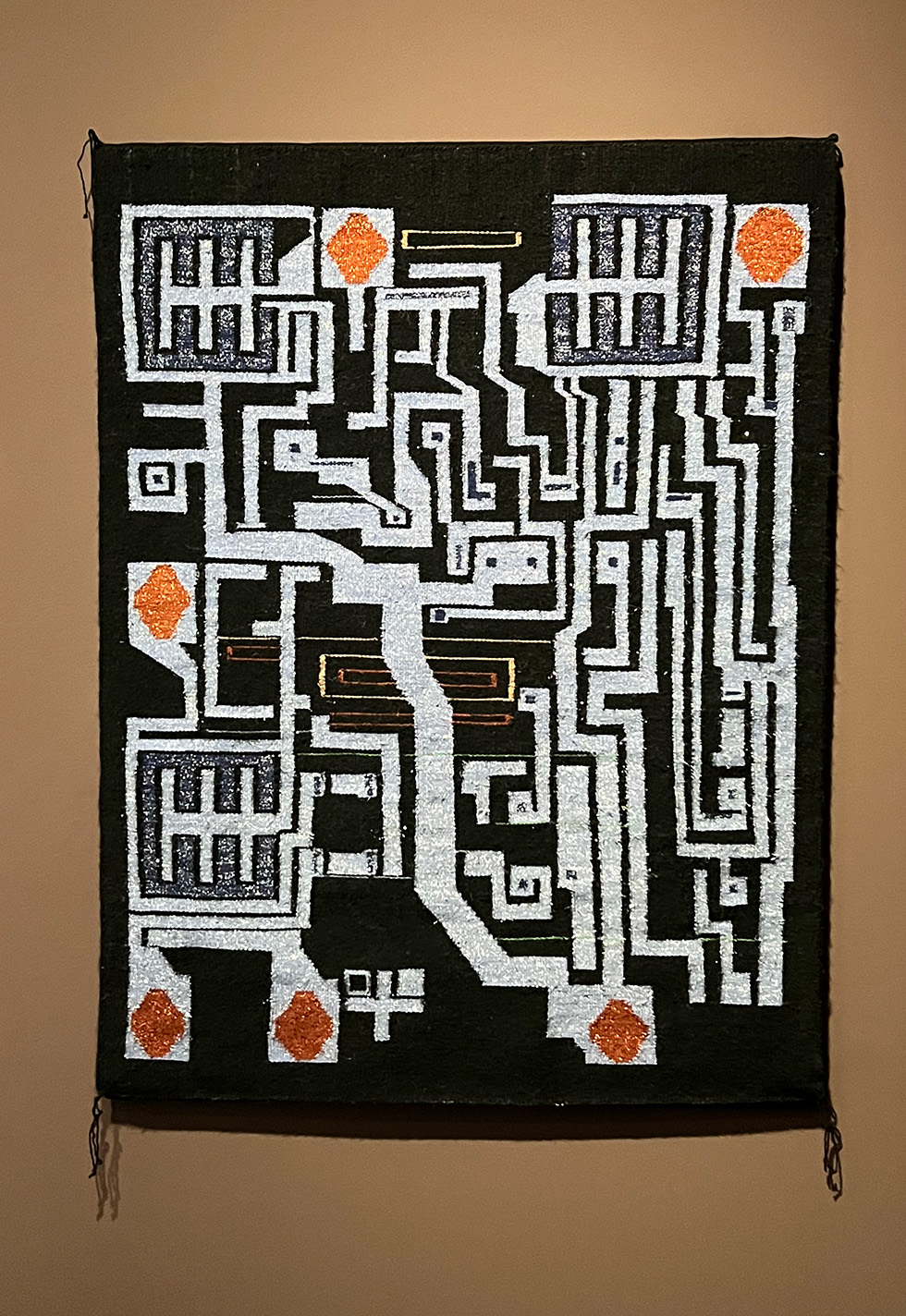
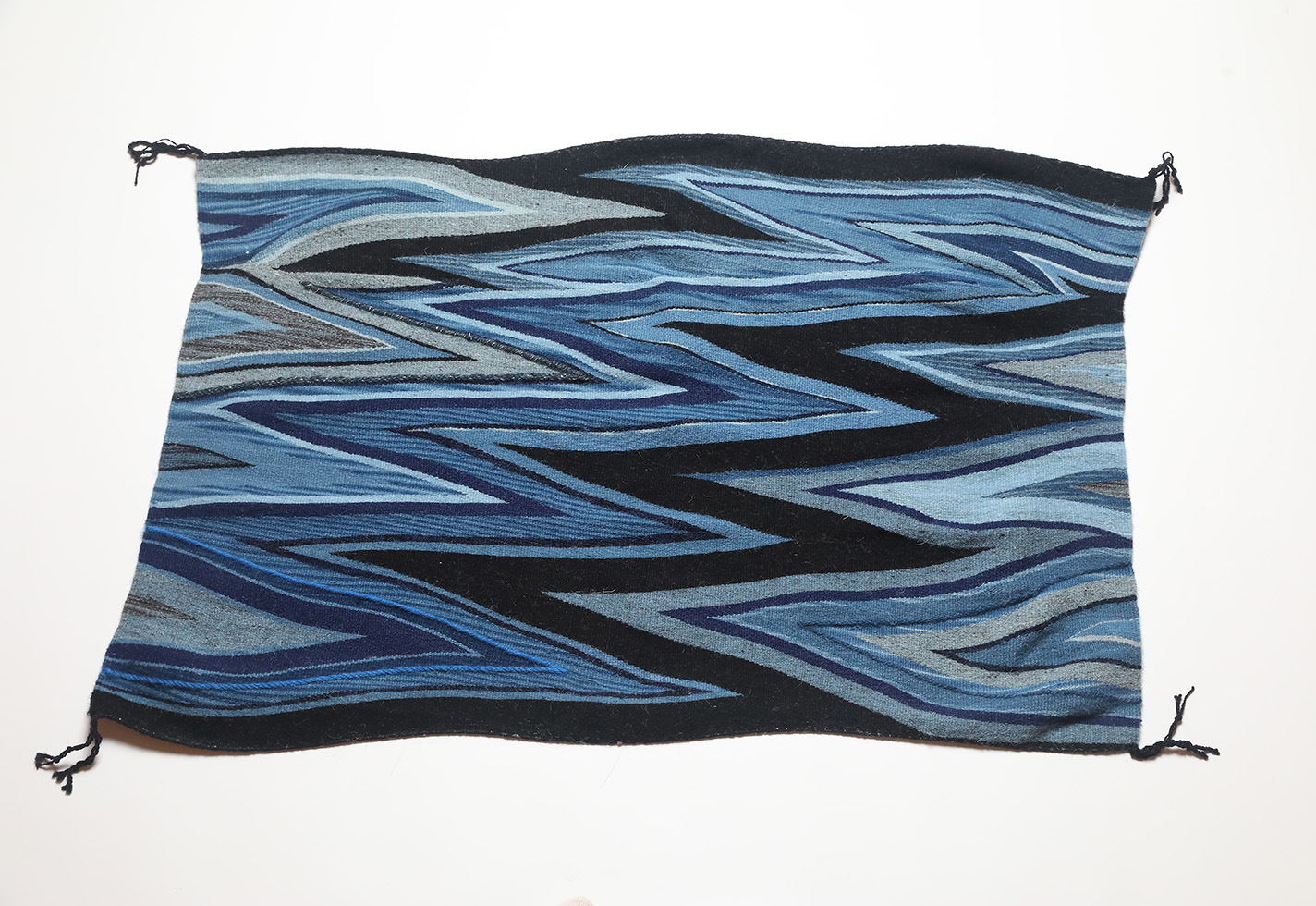
Navajo (Diné) weaving has always been a dynamic practice, with artists historically incorporating the changing world around them into their designs. For Marilou Schultz, continuing this cultural legacy has meant embracing computer technology as a subject and inspiration for her art.
When Intel commissioned Schultz to weave a replica of their Pentium microchip in 1994, she began a decades-long exploration of computer architecture, translating the geometry of circuitry onto the loom. Replica of a Chip: The Weaving Technology of Marilou Schultz, the first major survey of her work, opens June 27 at the Hessel Museum of Art in Annandale-on-Hudson, New York, highlighting how she artfully brings these worlds together.
Schultz, a fourth-generation Diné weaver based in Mesa, Arizona, absorbed the culture and traditions of weaving growing up in Leupp on the Navajo Nation in northern Arizona. She helped with spinning and carding the yarn and experimented with her mother and grandmother’s looms as a five-year-old. That attention and curiosity came to define her as an innovative leader in Navajo weaving.
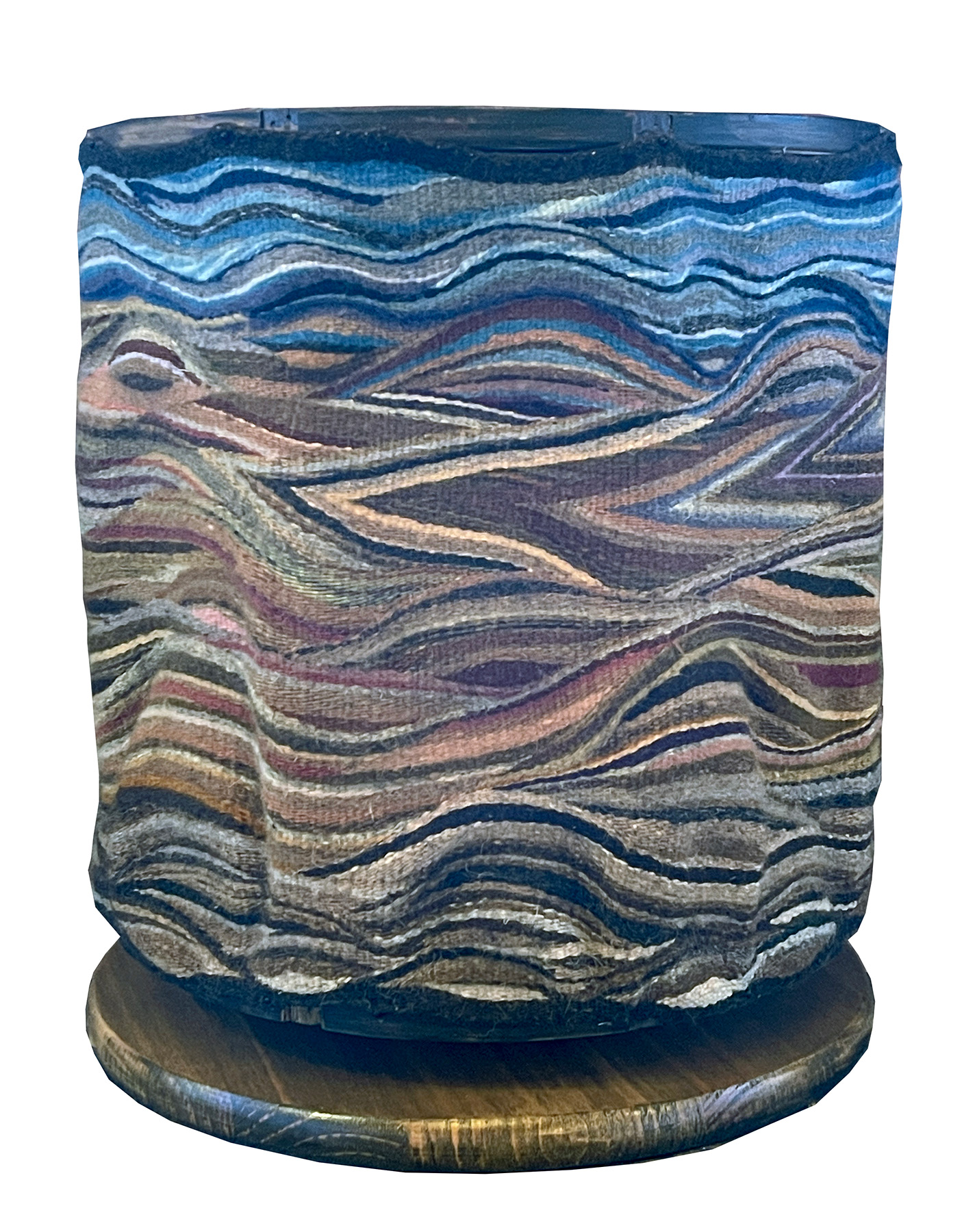
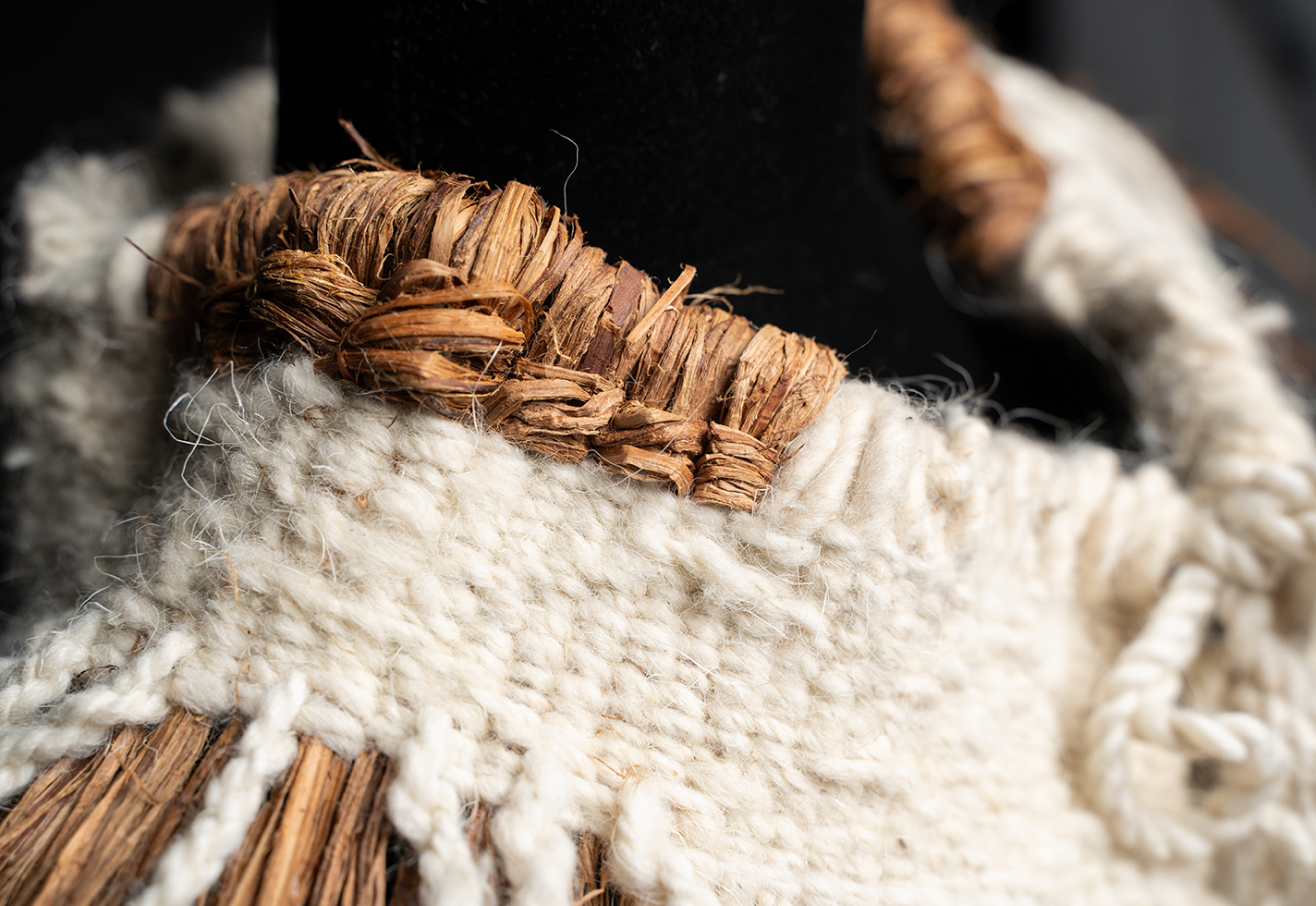
Landscape, 2020, woven variegated yarn with natural dyed yarn and natural Navajo-Churro wool yarn, 18 x 17 1/2 in. (diameter).