Craft Around the Country

The Rough and the Smooth

Emelie Röndahl’s tackles the personal and the political in her rya weavings.

By Jon Spayde
March 30, 2026

Photo by Angelica Hvass

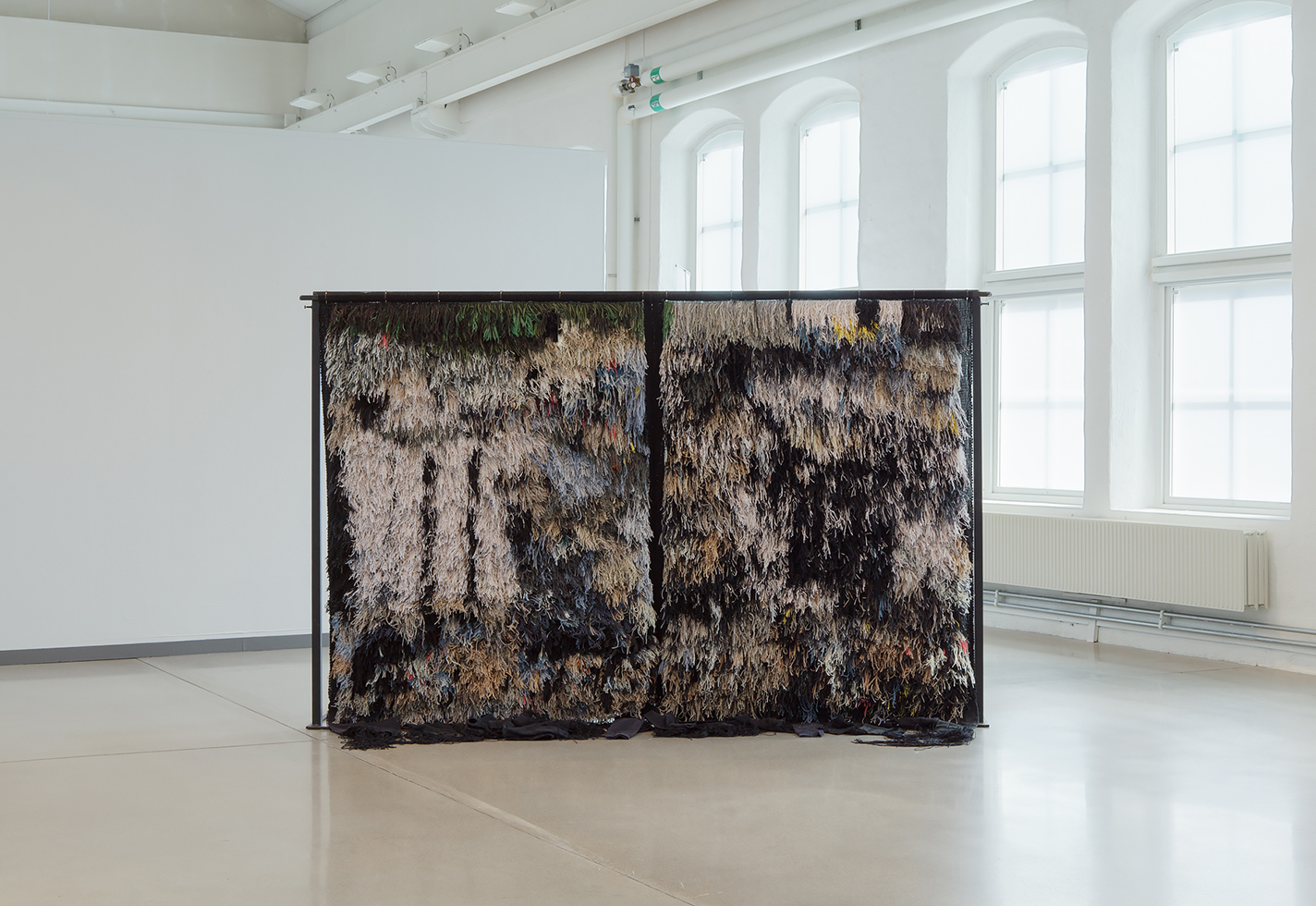
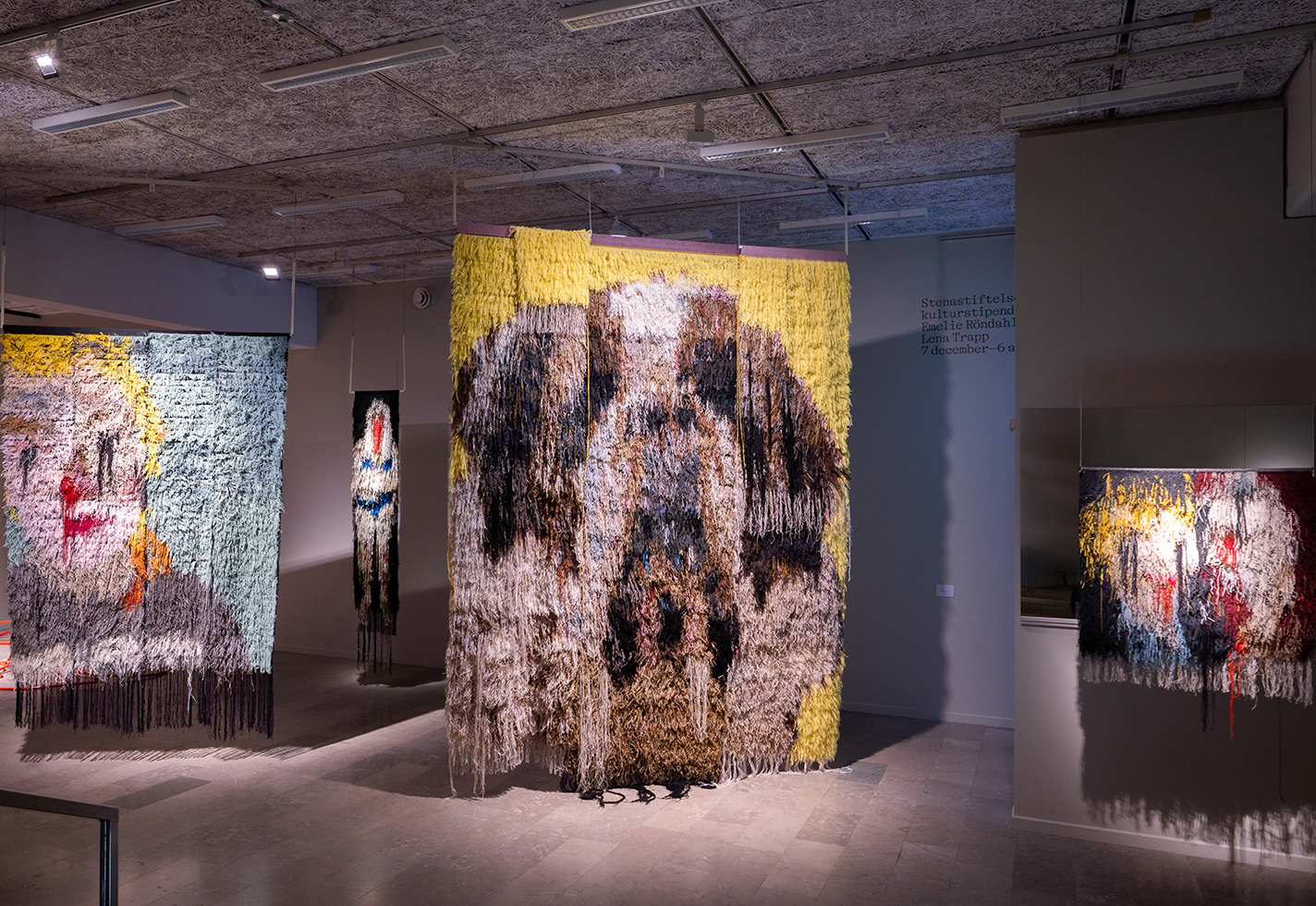
Installation view of woven works by Swedish artist Emelie Röndahl at the Gothenburg Museum of Art, 2024.

The centerpiece of Handwoven: Between Chaos and Order, a show at Minneapolis’ American Swedish Institute, is a very shaggy dog. 

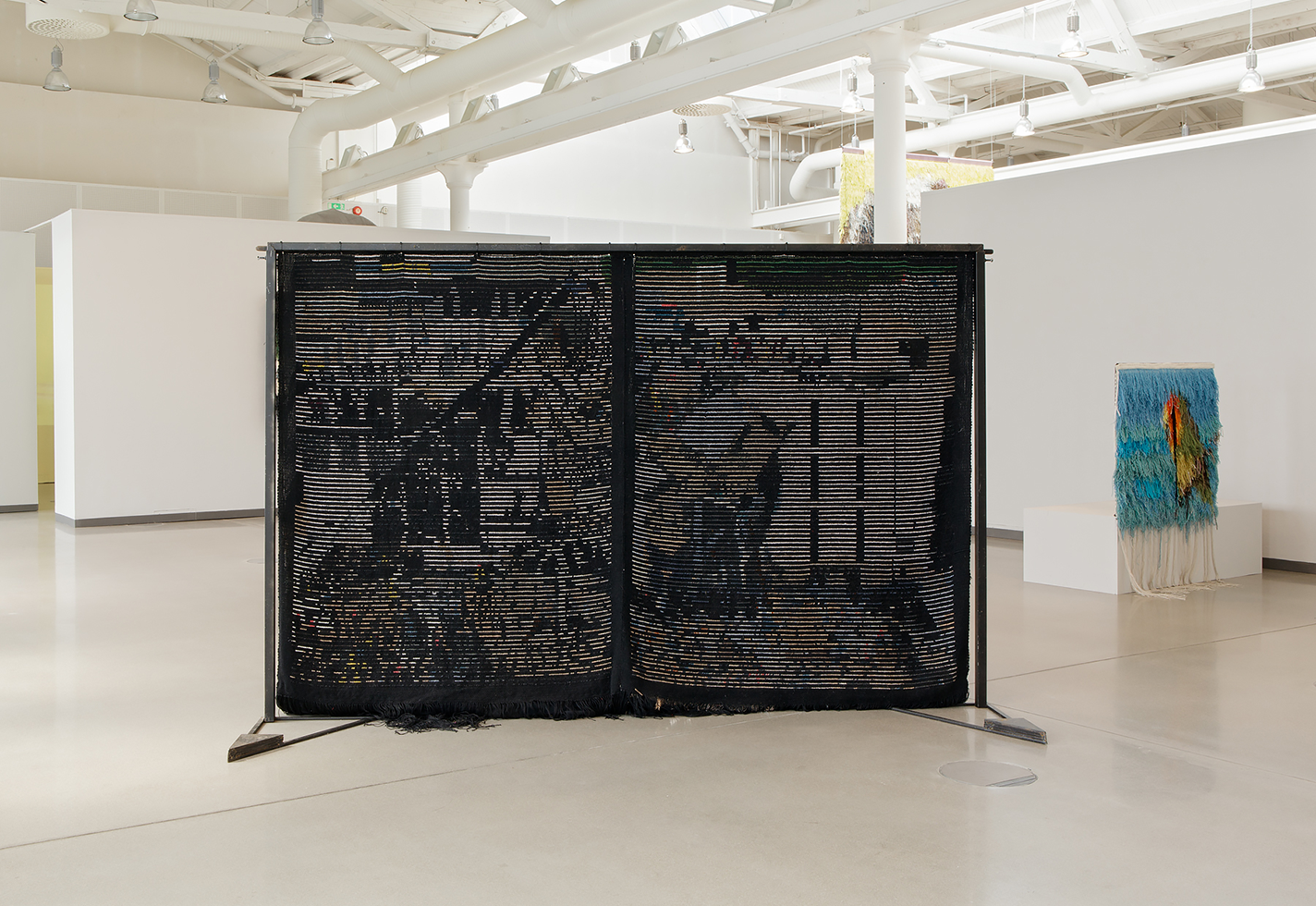
Maxim, by the Falkenberg, Sweden–based textile artist Emelie Röndahl, is a huge portrait of her family dog, executed in rya, the Swedish weaving technique that involves knotting lengths of yarn onto the warp on a loom. The result, on one side, is a shaggy surface of drooping yarn that can look chaotic; on the flipside, the image is crisp and orderly.

Röndahl, who holds a PhD in crafts from HDK-Valand, the art and design academy of the University of Gothenburg, has been employing this mode—originally used to make coverlets with the shaggy side down for warmth—to create images that are, depending on which side of the piece you’re looking at, both recognizable and hard to interpret, wildly improvisational-looking and carefully planned.

Erin Stromgren is the Institute’s director of exhibitions and curator of the show, which runs until June 7. She’s known Röndahl since both were graduate students at HDK. The making of Maxim, Stromgren explains, represented a significant shift in the artist’s subject matter, from the social and political to the personal and familial themes she has pursued since the Covid lockdown in 2020.
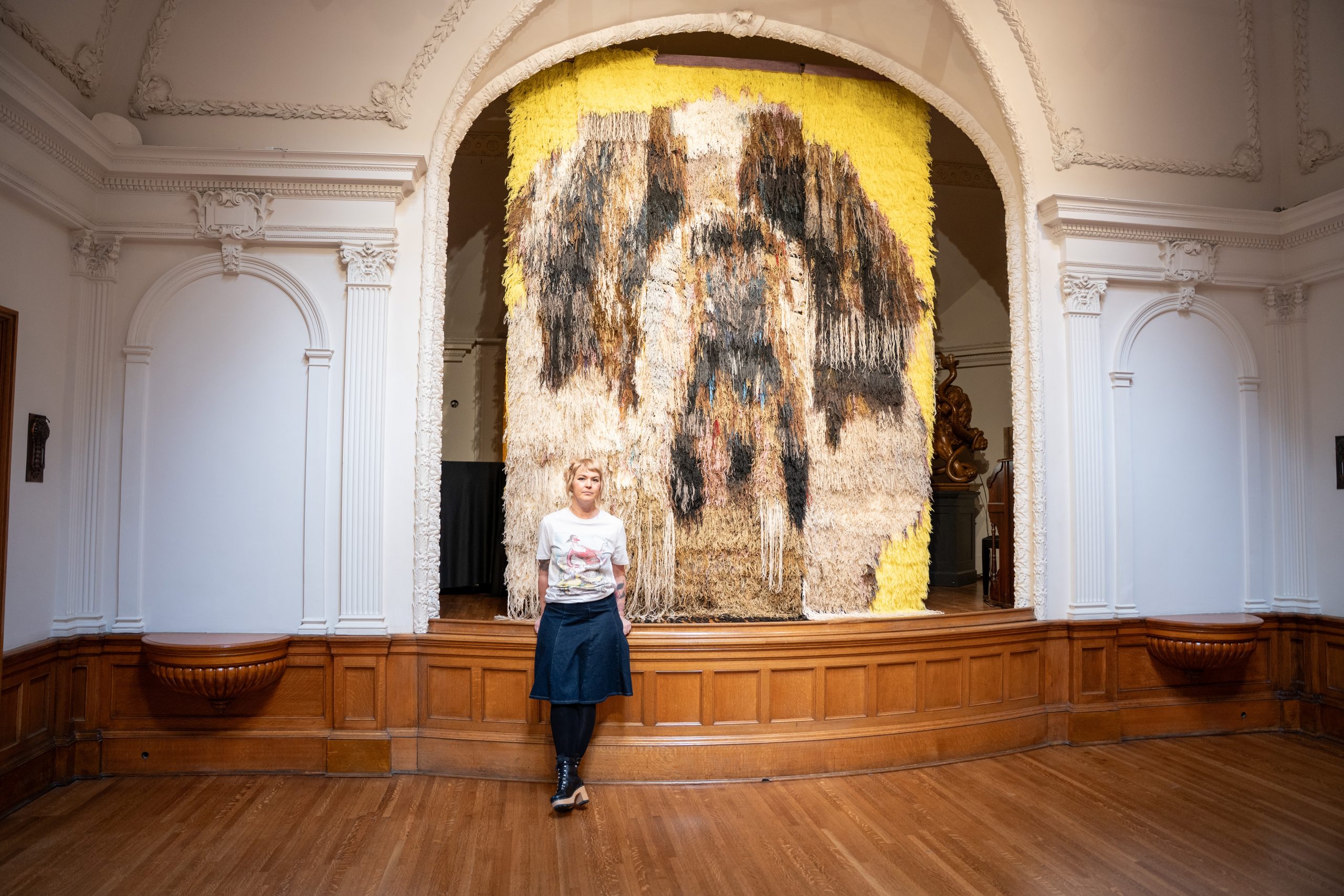
Photo by Mandi Gavois

Röndahl's family dog Maxim inspired this handwoven rya portrait of the same name.

Two earlier pieces in the show, Textile Labour and Rana Plaza—The Collapse, are based on internet images: one of a young worker laboring in a Turkish sweatshop, and the other of the ruins of the textile factory in Bangladesh whose collapse in 2013 killed 1,134 people. The knots  on the “smooth” sides resemble the pixels of the original computer image; the reverse sides present near-abstract images of violence—the downward-hanging yarn becoming, in the artist’s view, something like tears.

With Maxim, Röndahl turned toward her own life, and the show offers rya portraits of her children, friends, her mother—and pop-culture heroines too, including rather hard-to-interpret shaggy images of Marge Simpson and Barbamama, a nurturing mother figure in a French children’s book series. 

The shift to the familiar doesn’t exclude sadness, pain, and the travails of the body, however; in one of the sections of commentary posted with the show, Röndahl alludes to what she calls “the tragicomic everyday.” In a self-portrait, the shaggy side—the only side the artist’s installation allows us to see—presents a jagged smear of red on her nose, in an allusion to the asthmatic symptoms that afflict her when she’s at the loom. 

And, commentary informs us, Maxim the dog died during the making of his portrait. “When I first showed the children the finished weaving, they walked around it, jumped and sat on it—like they were getting to be with our dog again,” the artist writes. “In a way this weaving can be seen as a way to deal with the grief.”

In each case, the unruly, ungraspable aspects of things we think we understand are literally woven into the fabric of these images of life.

Photo by Angelica Hvass

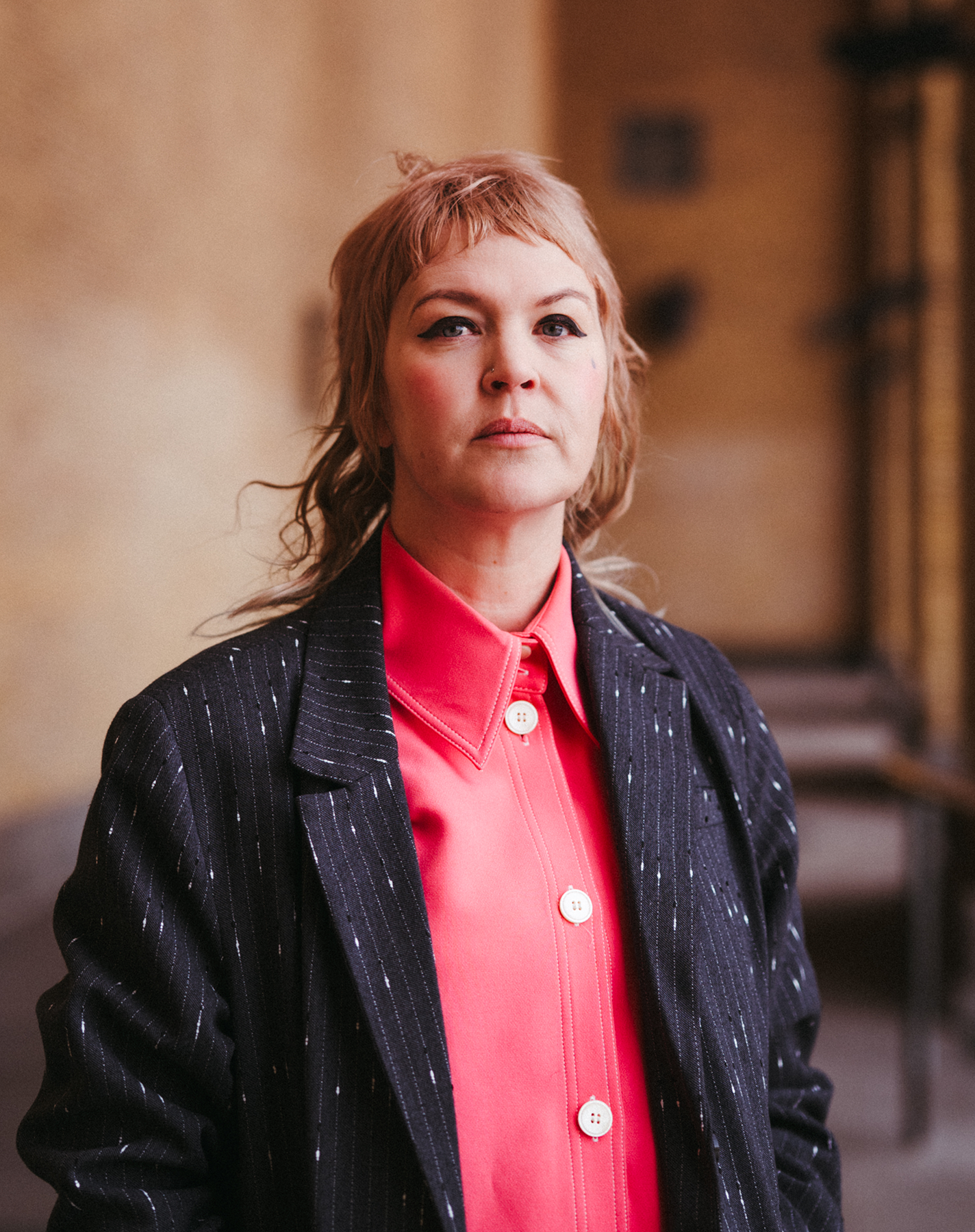
Emelie Röndahl.

  • Photos by Mandi Gavois

    The rough side of Röndahl's 2016 woven Rana Plaza—The Collapse. The rya knots are woven onto black clothes from fast-fashion brands produced in factories such as Rana Plaza, the site of the deadliest garment-factory disaster in history.

  • ...and the smooth side.

Jon Spayde is a writer and editor in Saint Paul, Minnesota. A former contributing editor to American Craft, he writes on art, psychology, education, and personal growth for a number of regional and national publications.

Learn more about the exhibition online.

Website

Before you go!

We believe that making creates a meaningful world, and we hope you do, too. Deeply researched and impactful journalism on the craft community is in short supply. At the same time, being featured in craft-centered media and articles can have a major effect on a maker’s or artist’s livelihood, particularly those who are just starting in their career. You can help support our mission and the work of makers around the country by becoming a member or by making a gift today.

Thank you!
American Craft Council