Craft Around the Country

Timea Tihanyi's Ceramics are Born of Collaboration

The Seattle ceramist and founder of Slip Rabbit Studio has found a steady creative partner—a 3D printer.

By Megan Gannon
October 9, 2026

Photo by Mark Stone

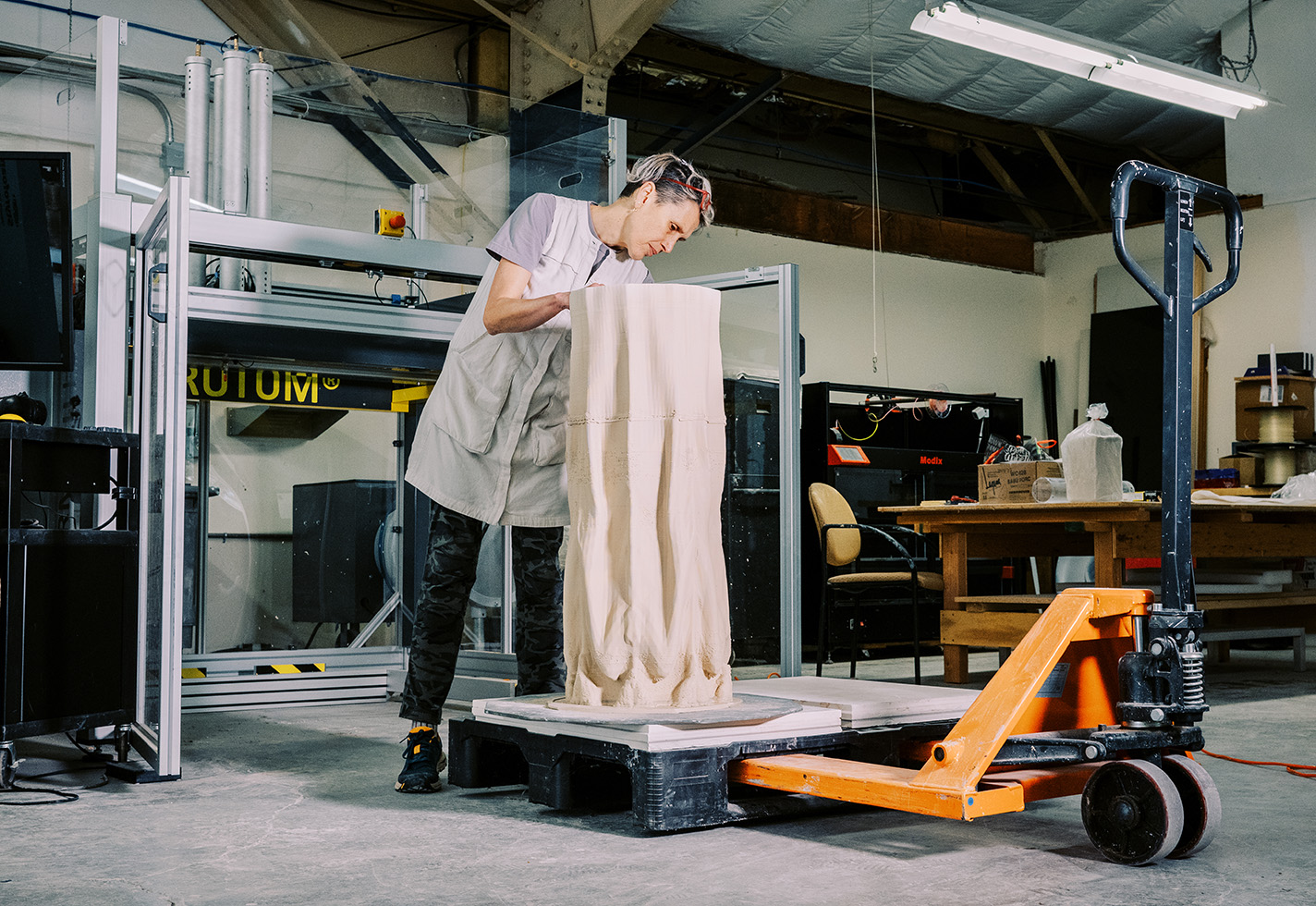
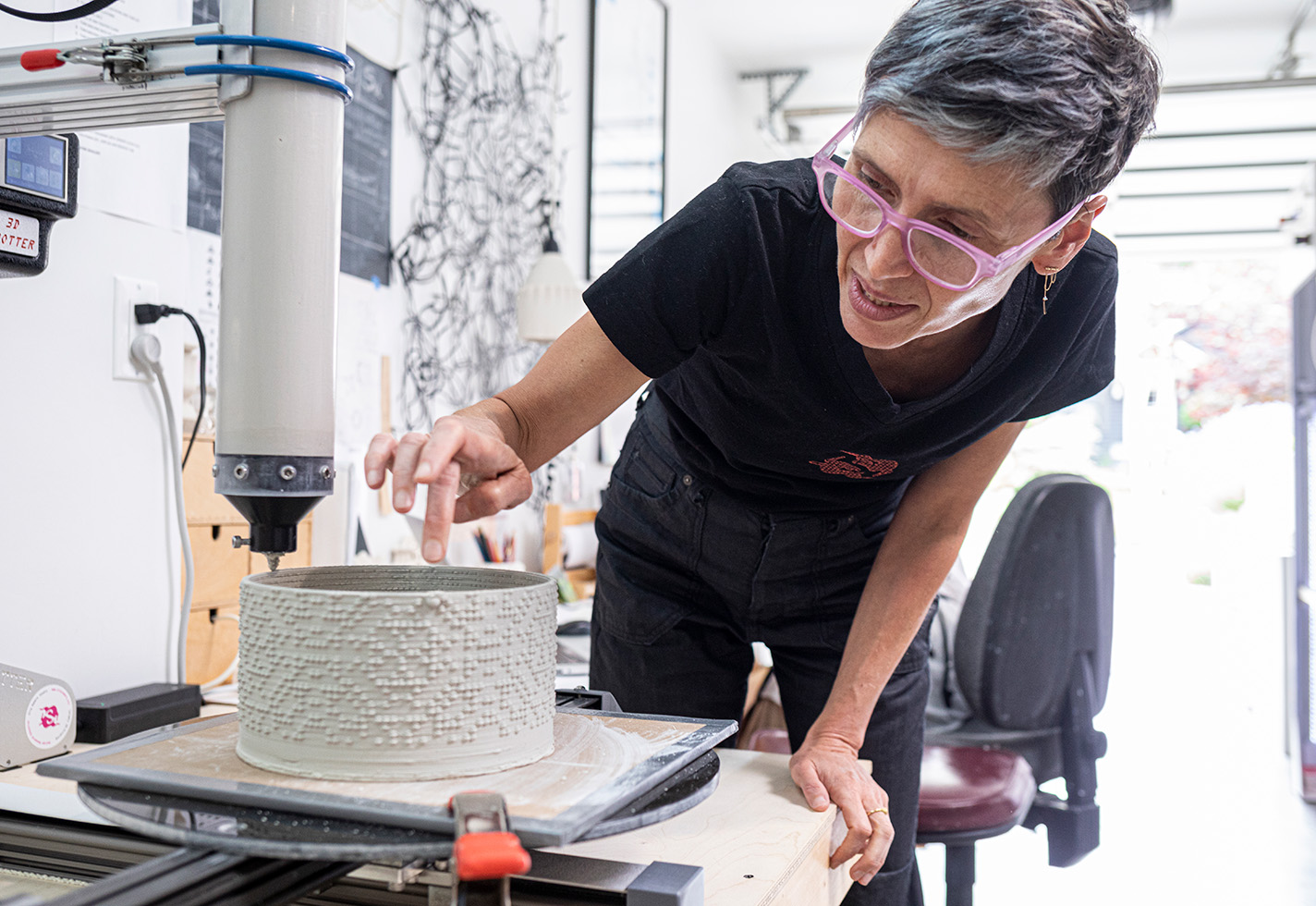
Timea Tihanyi at her own Slip Rabbit Studio in Seattle.

While training in medicine at Semmelweis University in Budapest, Hungarian-born artist Timea Tihanyi was fascinated with the duality of the human body, its resilience and heartbreaking fragility. 

Today, similar dualities show up in her work with clay. “It’s trying to be a body and not a body, soft and hard at the same time, tactile and virtual at the same time,” she says. 

Tihanyi is an emeritus teaching professor at the University of Washington in Seattle and the founder of Slip Rabbit, a studio dedicated, since its founding in 2017, to digital ceramics. When she started using 3D printers in her work around that time, she found a process for building patterns for vessels using CAD software.
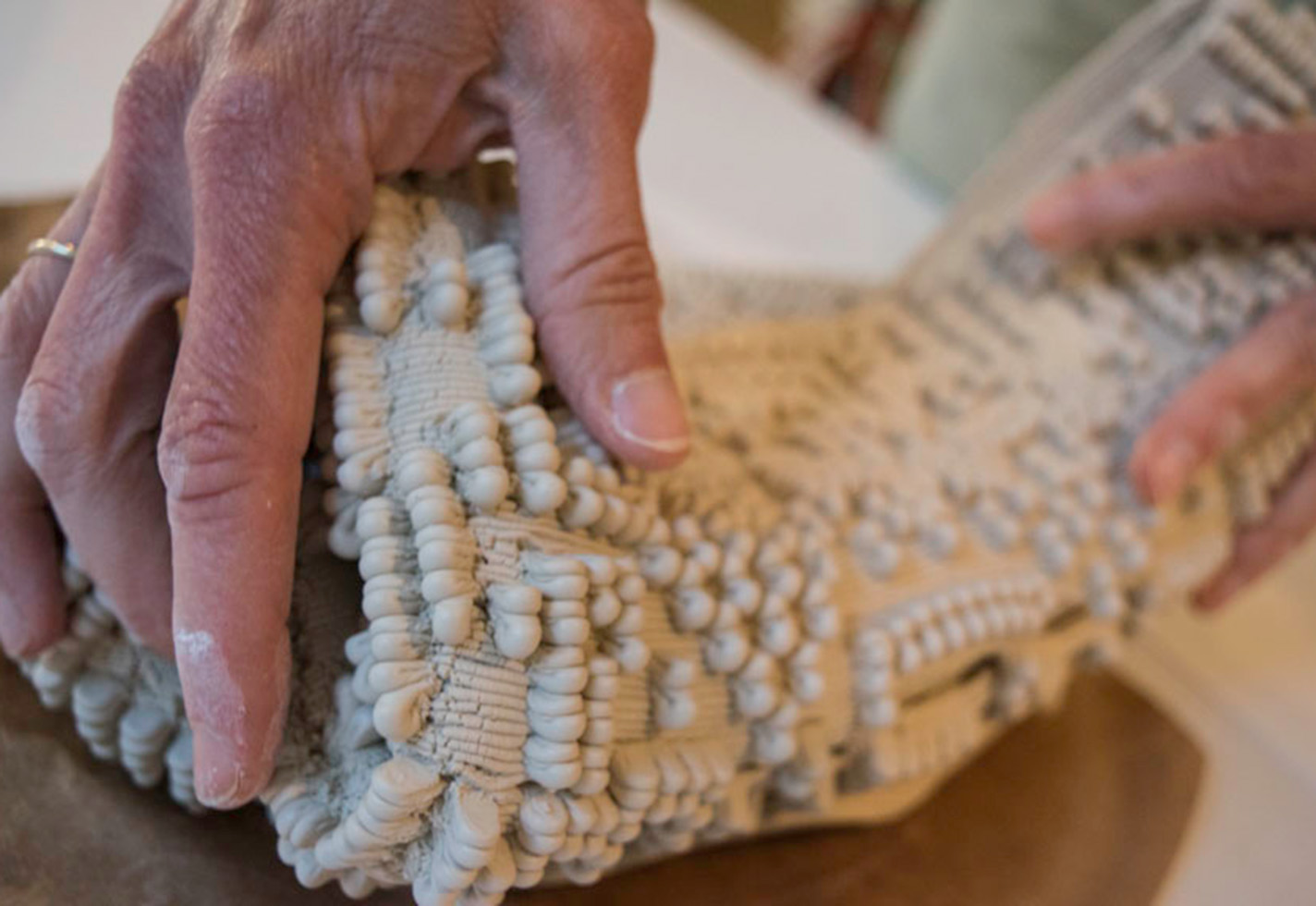
Photo courtesy of the artist

Tihanyi folds a slab of 3D-printed clay.

A decade ago, commercial clay 3D printers were only just becoming more widely available, and she noticed that some members of the ceramics community were wary of artists working with those machines. “I was always very conscious of that criticism and wanted to make the point that when you are printing with clay, it’s really an interaction between the machine, the maker, and the material,” she says.

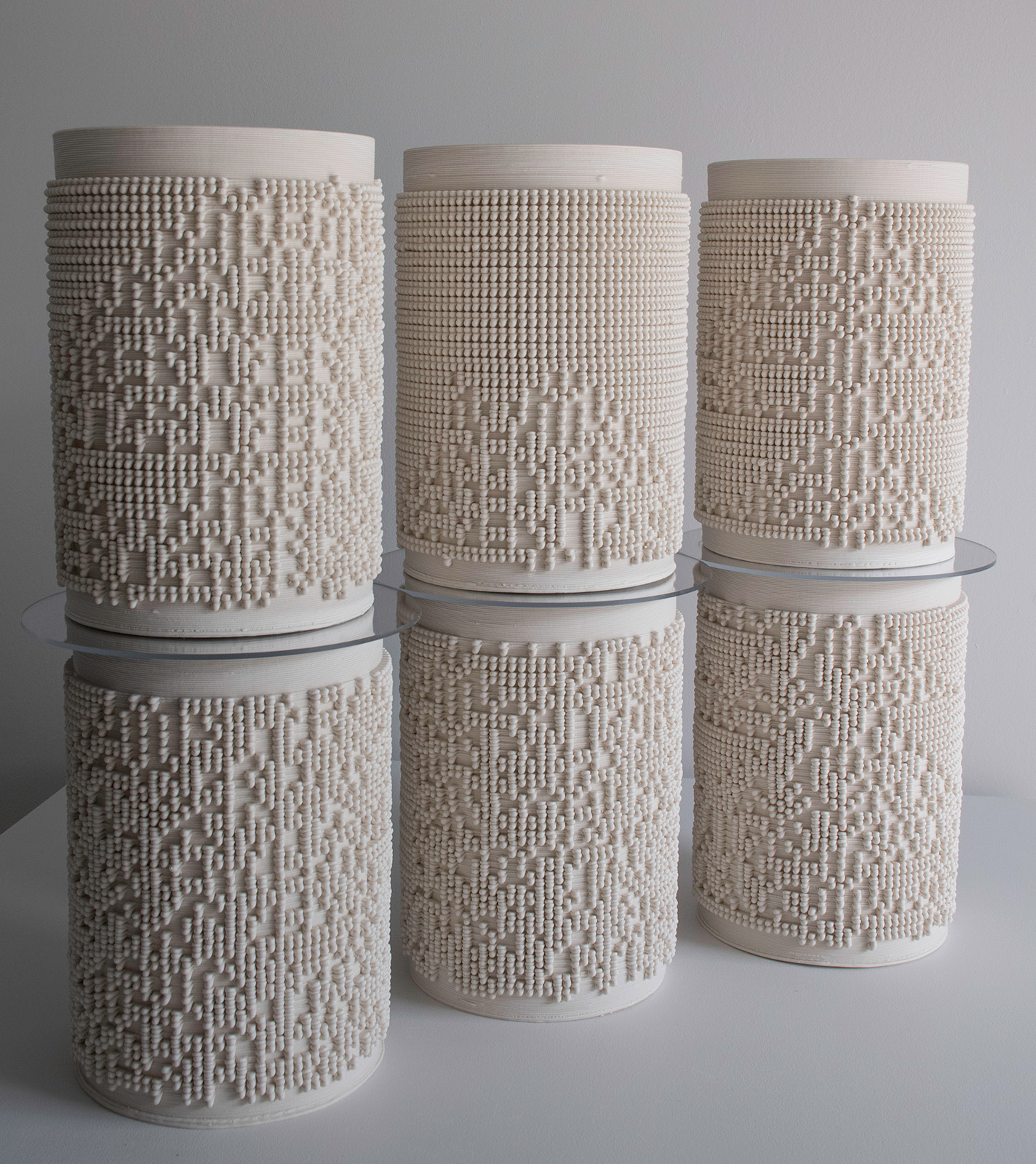
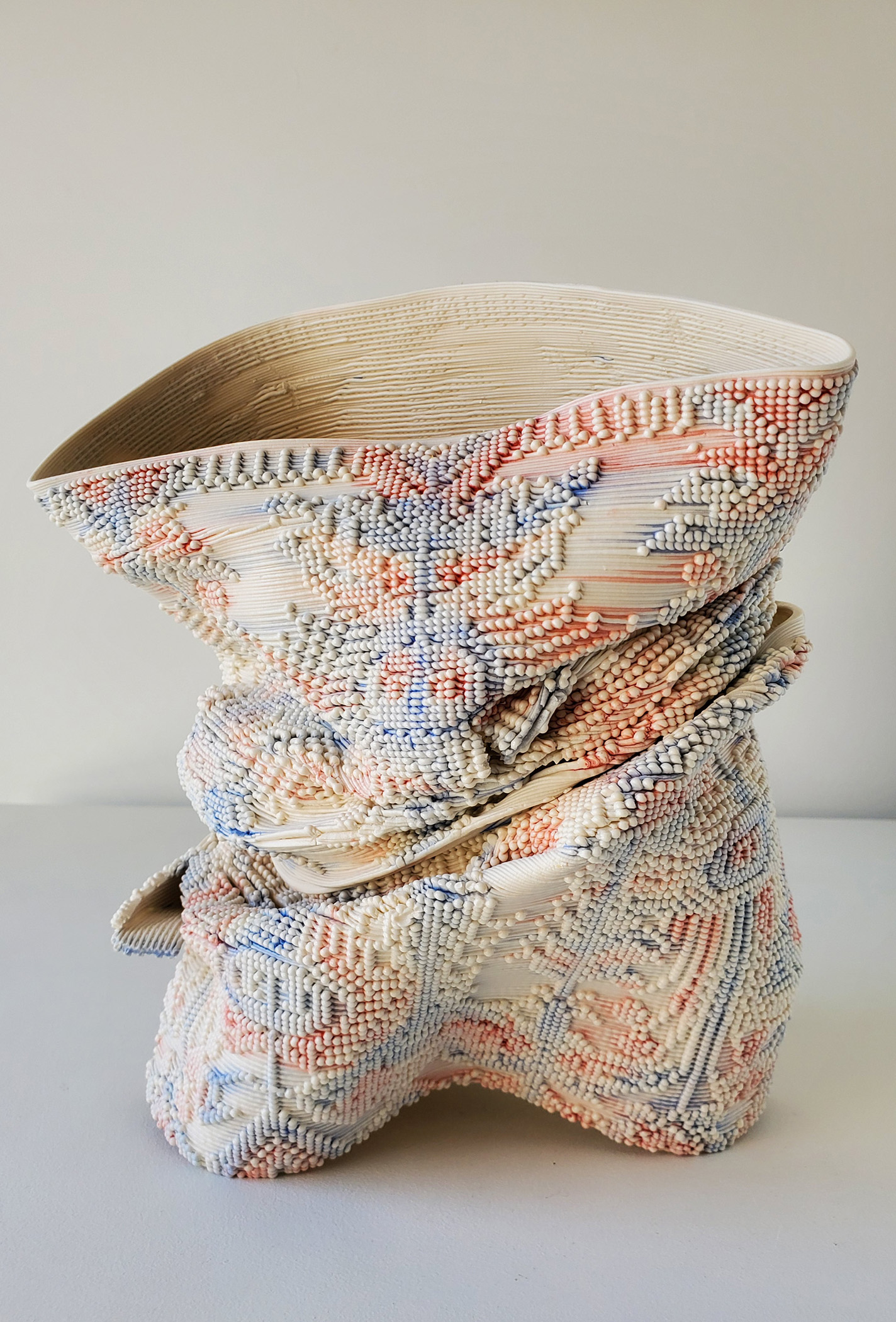
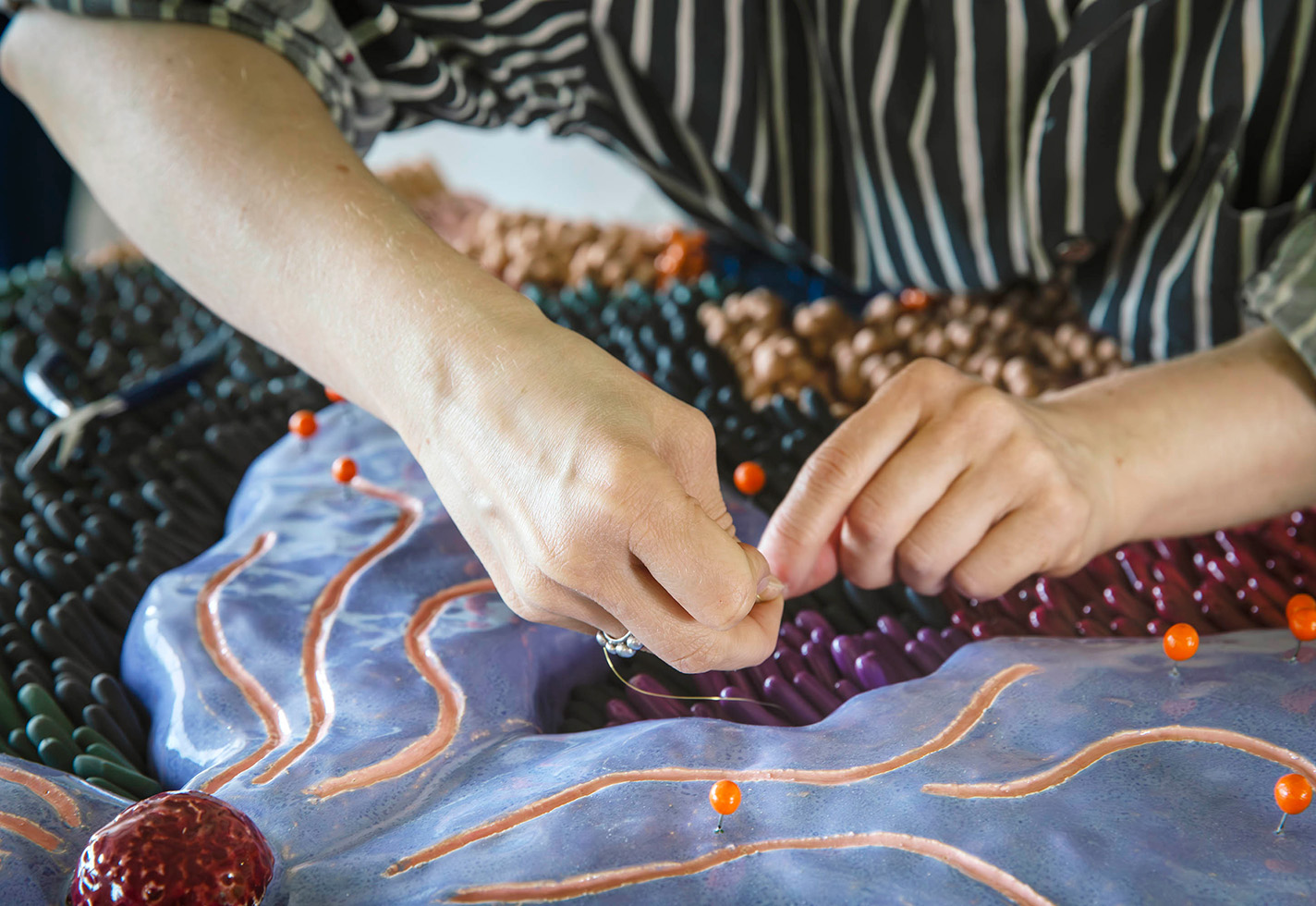
Tihanyi’s patterns are often based on mathematical concepts, with beads and loops of soft clay that protrude from the vessel surface, creating a form that only a 3D printer could make. Because 3D printers deposit clay in long strands, the resulting work often resembles textiles. Sometimes her work is more explicitly based on textile patterns, such as her Etelköz series, created in 2020. When the thin-walled cylindrical vessels she was making kept collapsing, she embraced the failure, continually refiring the vessels with strategically placed weights to encourage further collapse. “The seed idea of every single body of work is in some accident, some glitch, some flaw, some opportunity that happens,” she says.

Photo courtesy of the artist

Burst and Follow (Viral Rule #105), 2018, 3D printed porcelain, mirrorized acrylic, 26 x 30 x 30 in.

Tihanyi often collaborates with designers and computer scientists to explore those interactions between material, maker, and machine. For her 2018 collaboration with interaction-design researcher Audrey Desjardins, she produced a series of vessels called ListeningCups, with protruding beads of clay based on sound data collected from the environment. More recently, she worked with PhD student Joyce Passananti and other collaborators at the University of California, Santa Barbara, on a virtual pottery kit in augmented reality. 

Now, when buying a clay 3D printer is like buying a toaster and patterns for vessels can readily be created through automation, Tihanyi wants to keep finding new areas to explore. She has become more interested in knitting and researching fiber-craft histories. And she’ll soon have a vehicle to explore innovations in both areas: Newly based on Washington’s Bainbridge Island and surrounded by a robust fiber community, she is splitting Slip Rabbit between a textile studio and a ceramic 3D-printing lab.

“I’ve gone back to textiles a lot, and I feel like this is the time for me where I can draw more interest from textile work and try to bring that back to clay,” she says.

Photo by Charles Cerrone

Tihanyi at Maker House, a community arts space in Santa Barbara, California.

  • Photo courtesy of the artist

    Tulipan Vilagom (My Tulip World) II, 2020, 3D-printed porcelain, pigments glaze, 13 x 11 x 10 in.

  • Photo courtesy of the artist

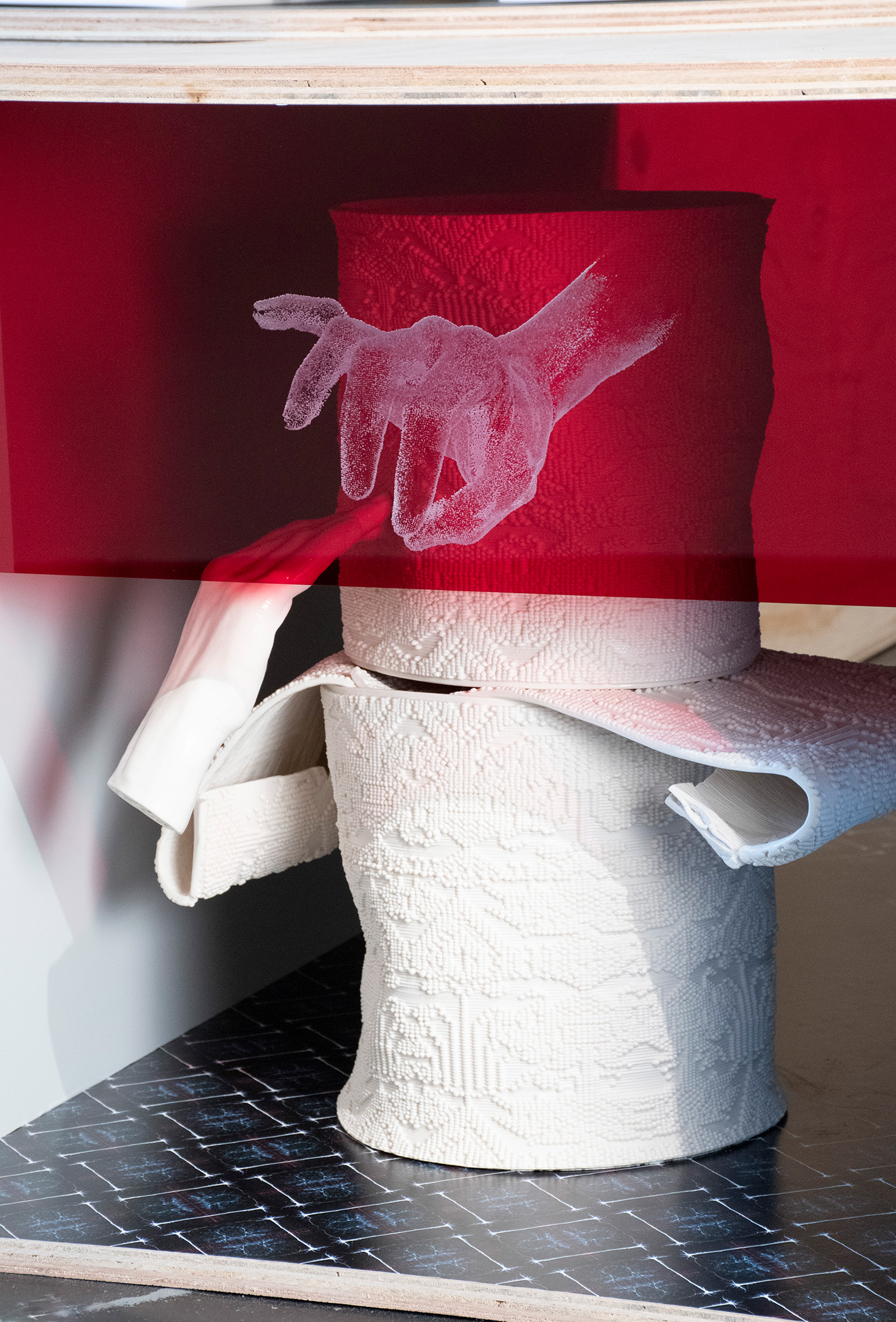
    Tender in Object Permanence, 2022, 3D-printed porcelain, laser-etched acrylic, custom wallpaper, plywood, 24 x 24 x 24 in.

Megan Gannon is a writer and ceramist based in Seattle. She is a manager at Third Place Pottery, a community clay studio, and her journalism has appeared in National Geographic, High Country News, and Scientific American, among many other publications. 

Learn more about Timea Tihanyi's work online.

Website Instagram

This article was made possible with support from the Windgate Foundation.

Before you go!

We believe that making creates a meaningful world, and we hope you do, too. Deeply researched and impactful journalism on the craft community is in short supply. At the same time, being featured in craft-centered media and articles can have a major effect on a maker’s or artist’s livelihood, particularly those who are just starting in their career. You can help support our mission and the work of makers around the country by becoming a member or by making a gift today.

Thank you!
American Craft Council