Craft Around the Country

Merel Karhof’s Knits are Written on the Wind

The Dutch designer recently wrapped up a tour of three Midwestern states, where her wind-powered knitting machine visited its American cousins—and made plenty of scarves.

By Jon Spayde
October 21, 2026

Photo courtesy of the artist

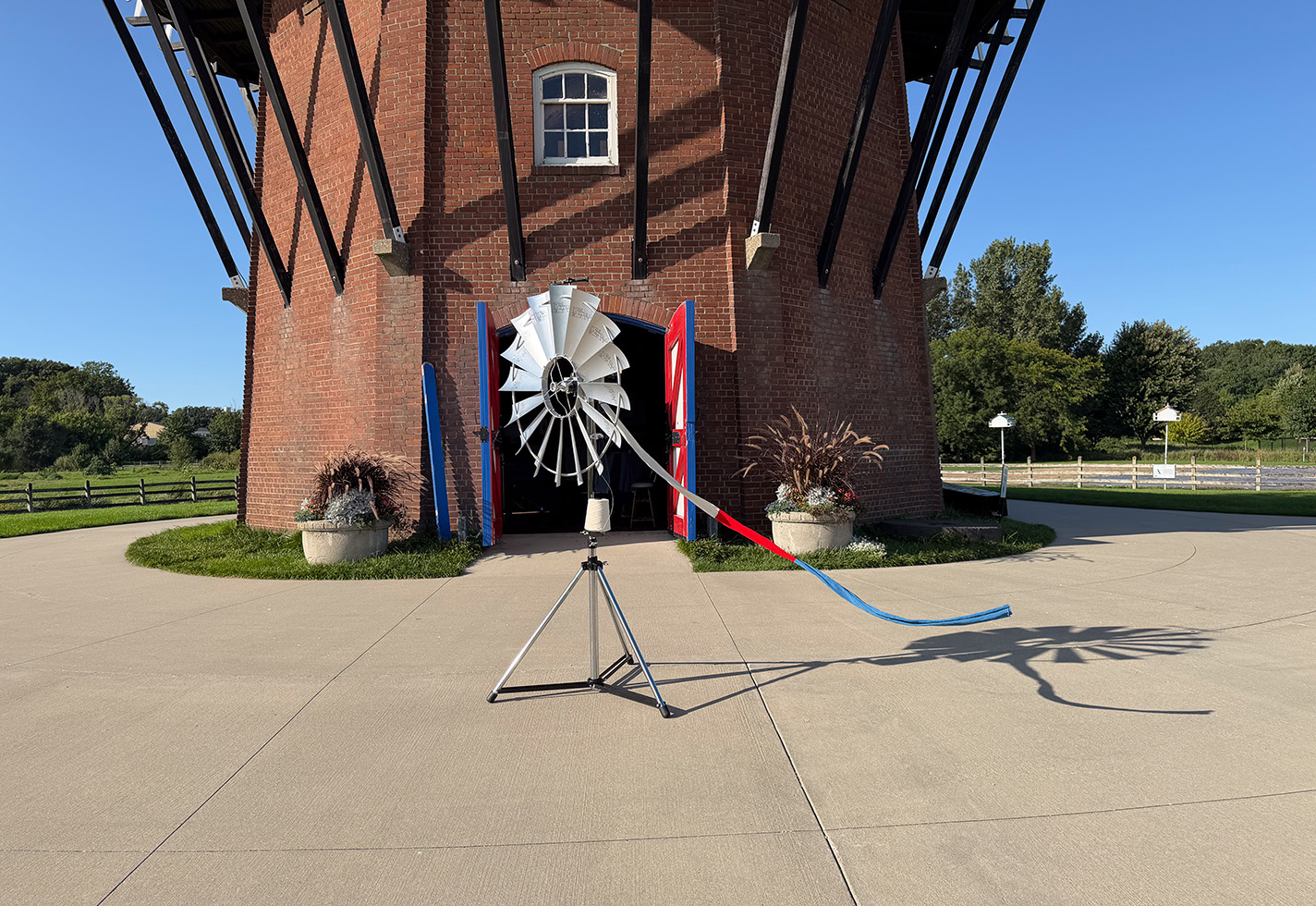
Merel Karhof's Wind Knitting Factory set up in front of De Zwaan, a historic windmill in Holland, Michigan.

Merel Karhof knits with the wind.

To be more precise, the Dutch designer has created a knitting machine powered by a windmill, and she’s demonstrated the device to appreciative crowds in a number of places—including, most recently, the American Midwest.

Karhof’s Wind Knitting Factory is a vintage, crank-operated sock-knitting machine on permanent loan from a Dutch museum that she connected to her own diminutive version of one of the classic American windmills mainly used to pump water on farms and ranches. With lines of yarn feeding upward into the machine (and Karhof supervising the play of colors), it produces scarves that she sells online and in shops. Each scarf comes with information about the time, date, and duration of the knitting event. Given the vagaries of the wind, some scarves take a lot longer than others.

Last month, Karhof took the Factory on a tour of Michigan, Indiana, and Illinois.

The tour, an initiative of the Dutch government to highlight friendly historical relations between the Netherlands and the US, brought her to what is probably the most ethnically Dutch community in America: Holland, Michigan. The town of 35,000 people near the shore of Lake Michigan boasts the De Zwaan windmill, the only authentic Dutch windmill in the country. Originally built in 1884 in the town of Vinkel, it was brought to Michigan in 1964.
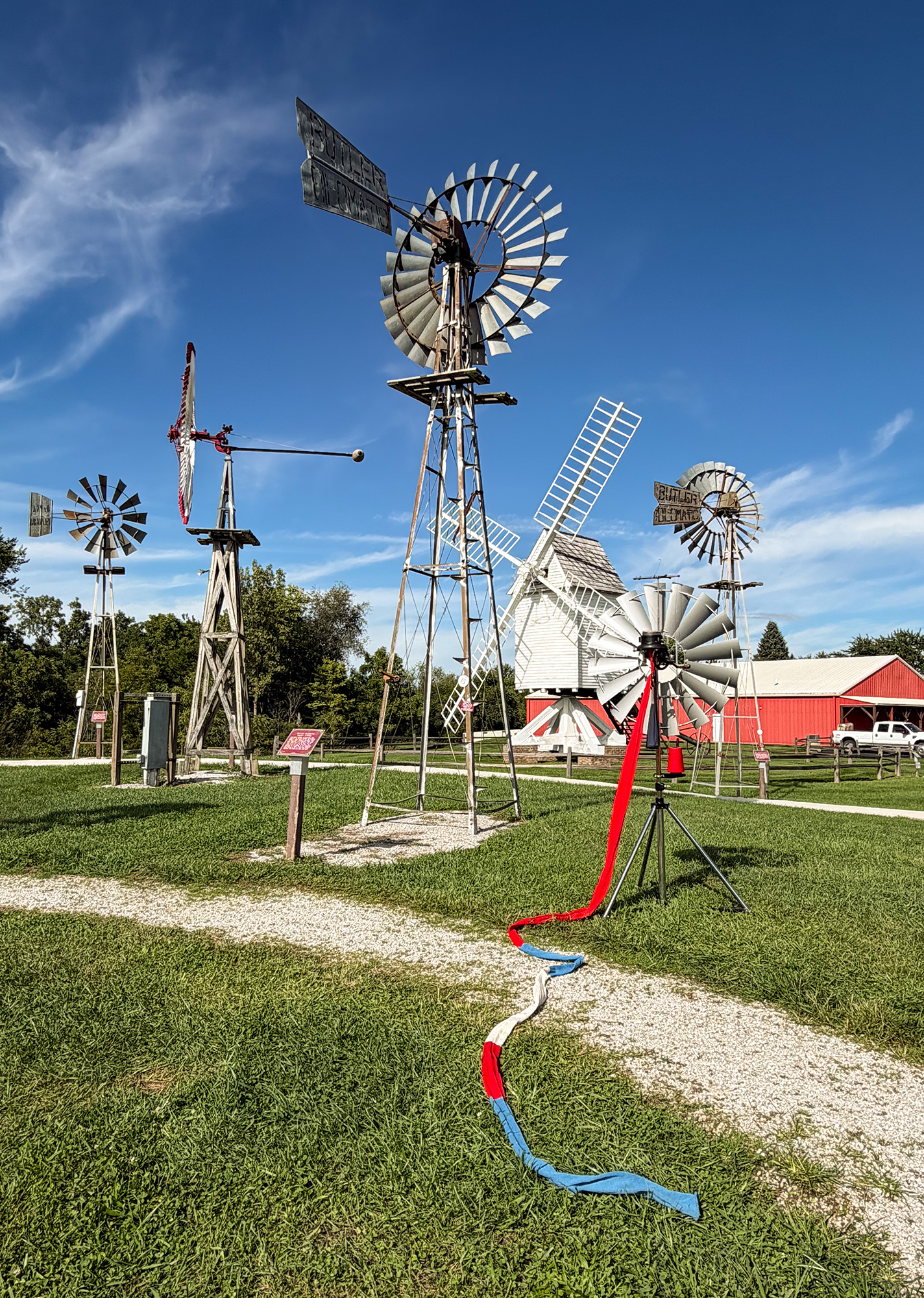
Photo courtesy of the artist

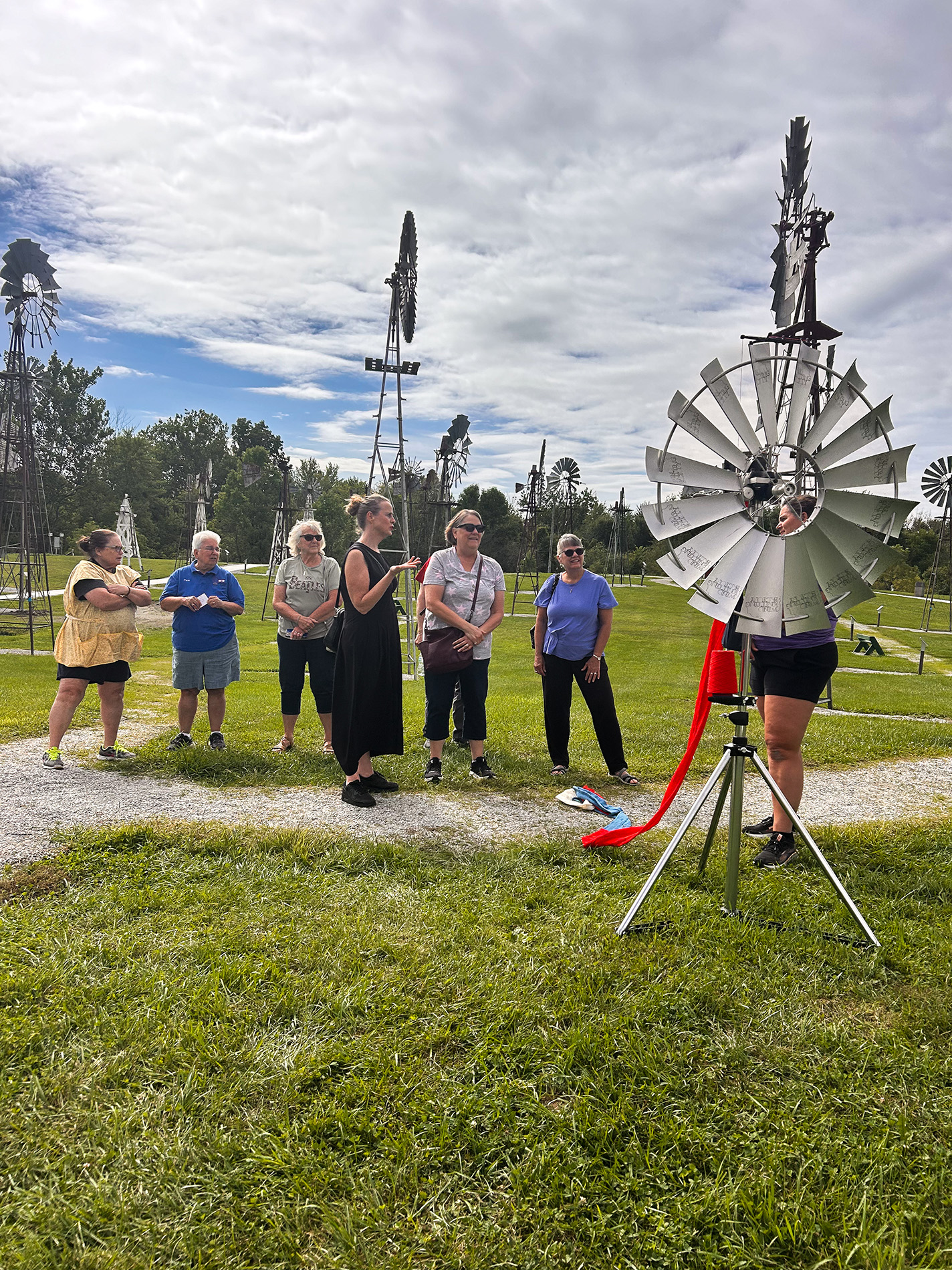
The knitting machine set up at the Mid-America Windmill Museum in Kendallville, Indiana. It produced a multicolor scarf using just the wind as a power source.

Responding to an open call for projects from the Dutch government, Karhof says, “I thought, wouldn’t it be nice if I brought my American-inspired windmill to America to visit their Dutch windmill?” 

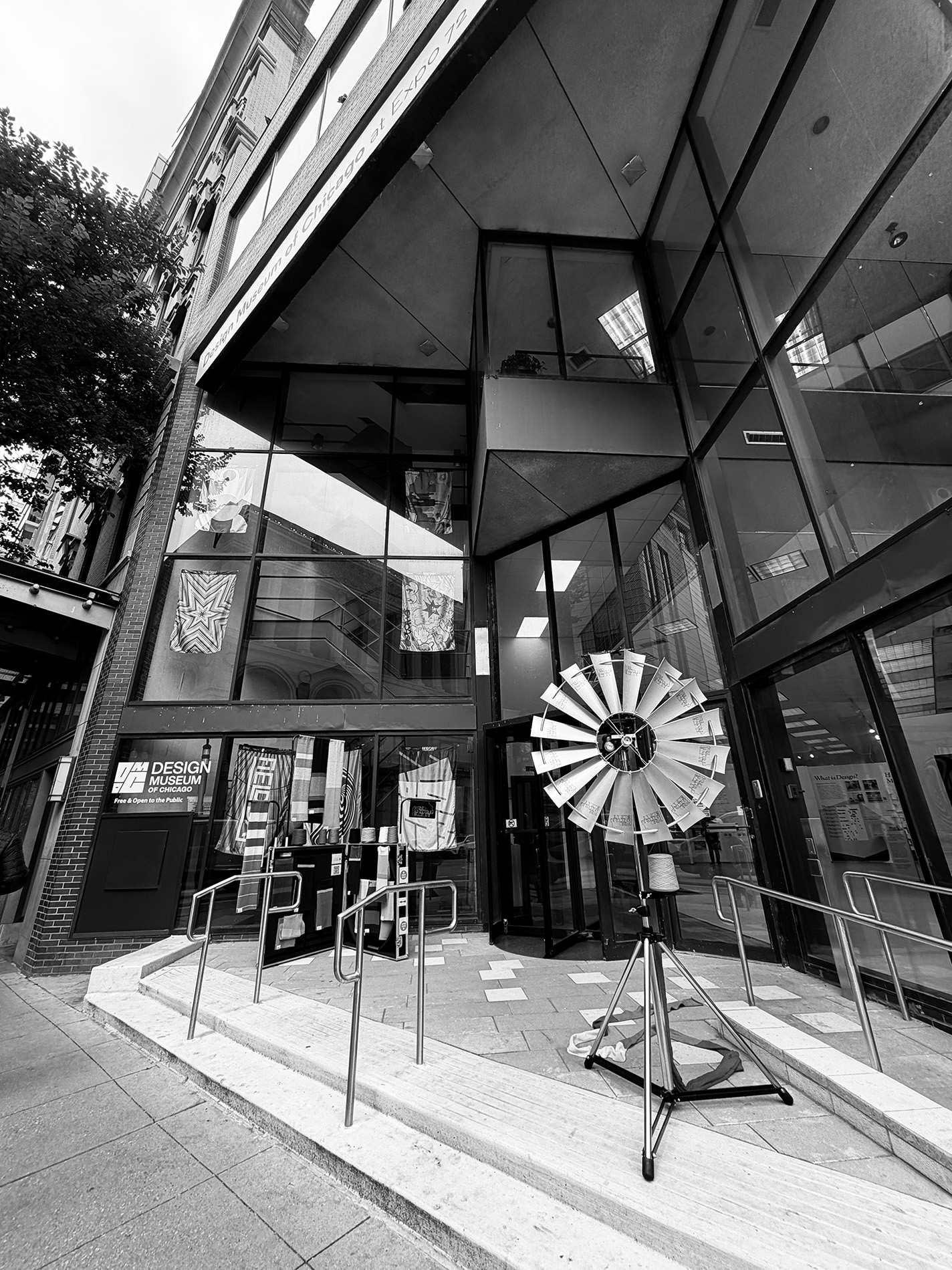
After her Holland stint, which included visits to a local museum and the city’s arts council, she traveled to the Mid-America Windmill Museum in Kendallville, Indiana, where curators have collected more than 50 classic American-style windmills, including a full run of those formerly produced by Kendallville-based Flint & Walling Manufacturing Company. She wrapped up the journey with a demonstration and discussion at the Design Museum of Chicago.

Karhof was confident from the start that her wind-powered knitting machine would be a crowd pleaser. She had brought it, along with a speedier version she dubbed Wind Knitting Factory 2.0, to locations in many parts of Western Europe. “Everywhere I go, it brings people together,” she says. “They talk about wind energy. There are people who have very positive feelings towards wind power and some negative, but at least there’s a discussion about it. And it makes people smile.” 

The human scale of the machine is important, she notes—it makes the production of something beautiful by wind power an intimate experience. “You can stand next to it and it’s on eye level, so you can really see something being produced with the wind. And it is only produced when there is wind. So when there’s no wind, there’s no scarf.”

Photo courtesy of the artist

Karhof's knitting machine outside the Design Museum of Chicago.

Karhof’s own discovery of the power of wind was the result of a class assignment at London’s Royal College of Art, where she earned her MA in product design. Students were assigned nearby destinations that they had to reach by traveling on as straight a line as possible; if they encountered obstacles, they had to figure out ways to overcome them and continue on their straight-line journey.

Karhof found herself in a cul-de-sac of buildings, completely stopped. 

“Sitting there for a while in the street, I noticed that there was a lot of wind flowing in and out of the street and into little eddies,” she says. “I thought, maybe I should just do something with what I have here, and the wind is what I have here. From there, I started a whole investigation into winds, and eventually I came to the conclusion I should make something which could capture the wind and reveal it.”

Karhof wants to keep knitting, and to keep bringing her human-scale “factory” to new venues. “I made a flight case for it,” she says. “And the flight case can also become a shop where I can sell my scarves. So now I have this nice piece of equipment to bring on a plane and go anywhere.”

Photo courtesy of the artist

Karhof demonstrates how the machine operates at the Mid-America Windmill Museum.

Jon Spayde is a writer and editor in Saint Paul, Minnesota. A former contributing editor to American Craft, he writes on art, psychology, education, and personal growth for a number of regional and national publications.

Check out more of Merel Karhof's work online.

Website Instagram

Before you go!

We believe that making creates a meaningful world, and we hope you do, too. Deeply researched and impactful journalism on the craft community is in short supply. At the same time, being featured in craft-centered media and articles can have a major effect on a maker’s or artist’s livelihood, particularly those who are just starting in their career. You can help support our mission and the work of makers around the country by becoming a member or by making a gift today.

Thank you!
American Craft Council