Craft Around the Country

A River Runs Through It

In a new exhibition at the Minnesota Marine Art Museum, seven craft artists explore material history, generational knowledge, and ecological lament through an aquatic lens.

By Kasey Payette
February 17, 2026

Photo by Bailey Bolton for Minnesota Marine Art Museum

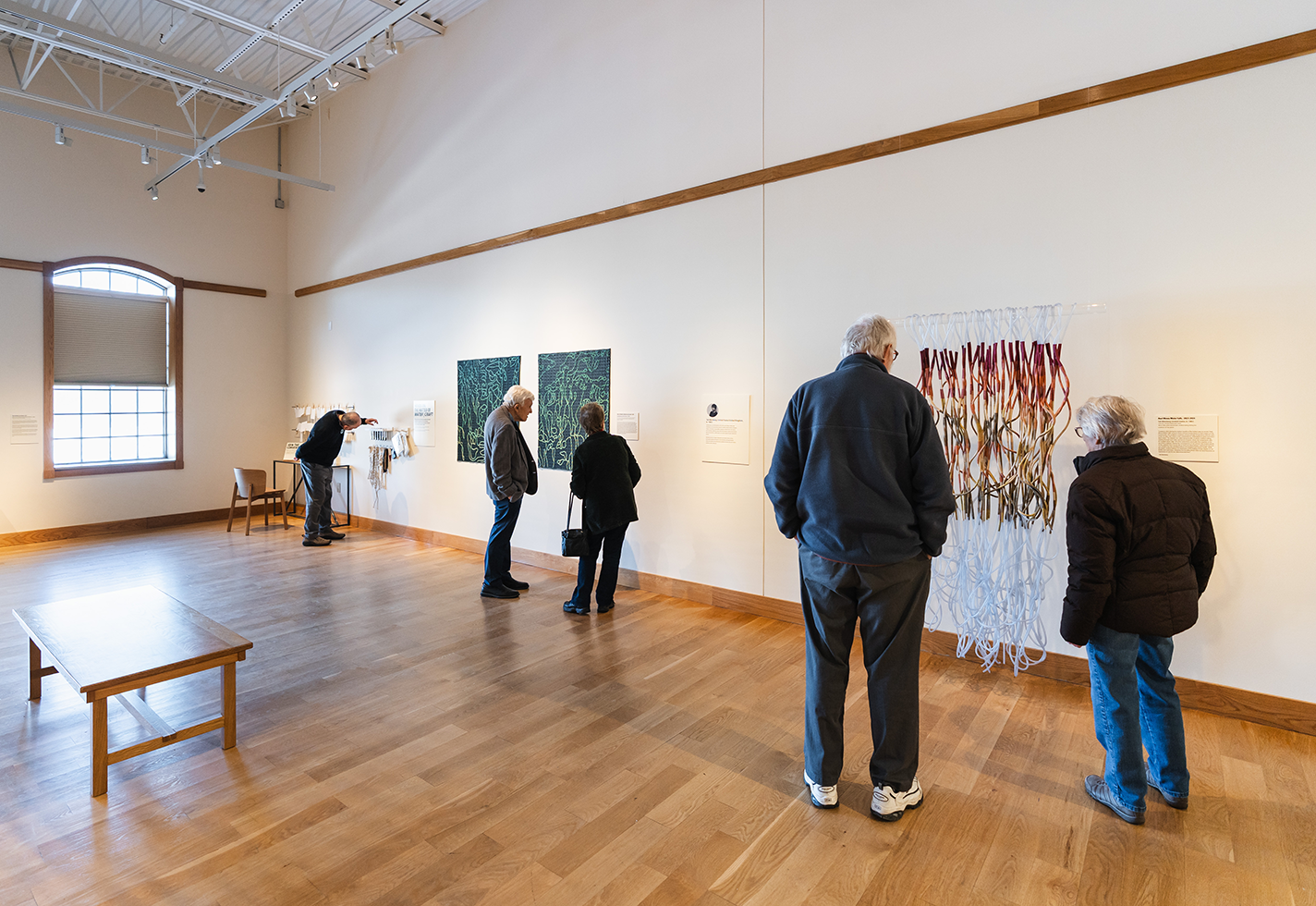
Visitors to Water | Craft at the Minnesota Museum of Marine Art look at works around the gallery space.

The Minnesota Marine Art Museum (MMAM) is situated on the banks of the Mississippi River in the city of Winona, just over 100 miles southeast of Minneapolis. Originally conceived as a traditional maritime museum, MMAM opened in 2006 with a collection focused on marine paintings and regional folk art. Over the past 20 years, the museum has grown to include six gallery spaces, a range of experiential programming, and an ever-expanding definition of what marine art can be.

Water | Craft, a new exhibition featuring the works of seven craft artists, exemplifies the museum’s expansive approach. The exhibition, which runs through December 27, draws a parallel between the flow of craft traditions across generations and the flow of water through bodies and landscapes. Craft techniques and materials with deep ties to land, water, and culture illuminate environmental destruction.

Entering the exhibition space, the eye is immediately drawn to Rowland Ricketts’s Bow, an indigo-dyed linen sculpture spanning the entire length of the gallery. In both its scale and its ethos, this piece sets the stage for the exhibition. Suspended from a beam near the ceiling, ropes drape together to form the shape of a ship’s bow. The piece’s title has two meanings, also conveying a position of humility and reverence. “It references the act of bowing,” says Maggie Sather, associate curator at MMAM. “Bowing to the process, bowing to the earth, taking care of our water.”
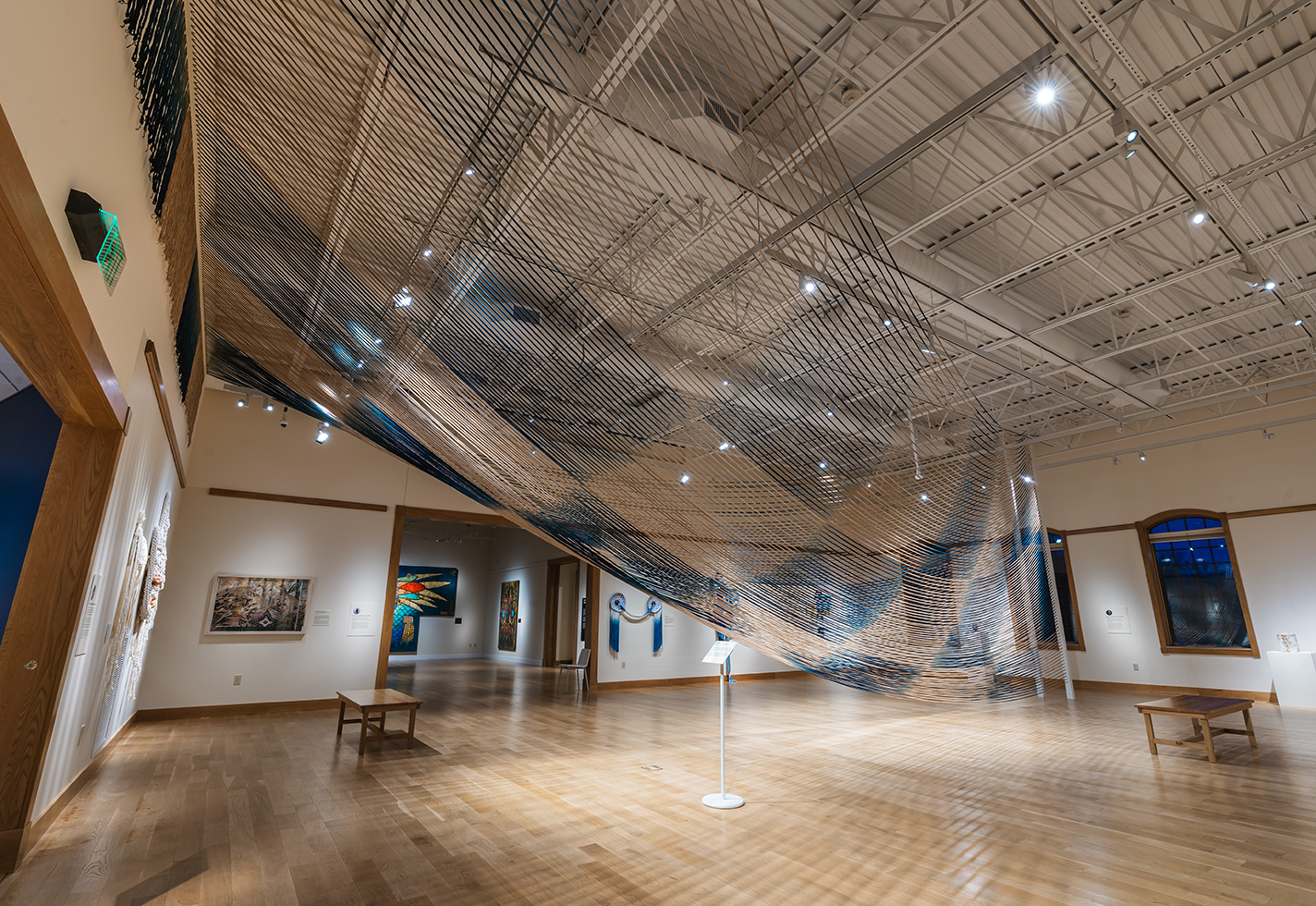
Photo by Bailey Bolton for Minnesota Marine Art Museum

Rowland Ricketts's 2023 indigo-dyed linen installation Bow dominates the gallery space.
Displayed on the walls and around the room’s perimeter are contemporary works in fiber, clay, glass, basketry, and found materials by Nicole McLaughlin, Sarah Sense, Tali Weinberg, Therman Statom, Tanya Aguiñiga, and Kelly Church. Each artist draws on traditional craft practices, techniques, and materials in their work.

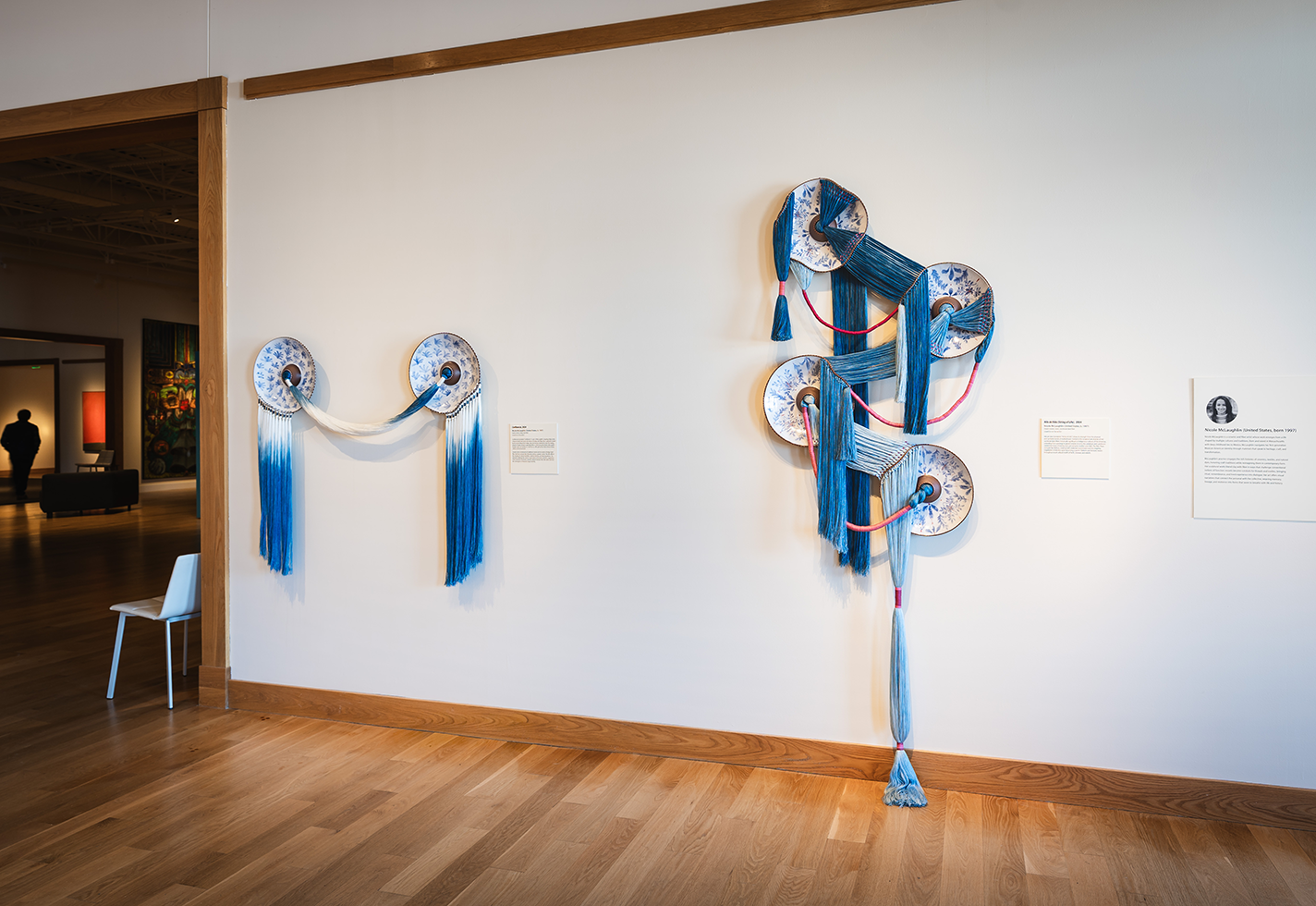
Nicole McLaughlin’s wall sculpture Hilo de Vida (which translates to “string of life”) incorporates Talavera pottery techniques to represent her Mexican heritage. Some of the Tencel fibers running through and between the ceramic vessels are dyed with indigo, which, Sather explains, “is one of the ingredients in Maya blue, a pigment used by the ancient Maya in sacrifices to bring rain.” Other fibers, dyed red to evoke the umbilical cord, are colored with cochineal, an insect-derived pigment that was once one of Mexico’s most valuable exports.

Photo by Bailey Bolton for Minnesota Marine Art Museum

Nicole McLaughlin's Hilo de Vida (String of Life) incorporates glazed Talavera ceramics to honor her Mexican heritage.

“Craft carries the voice of those who came before us.”

— Nicole McLaughlin

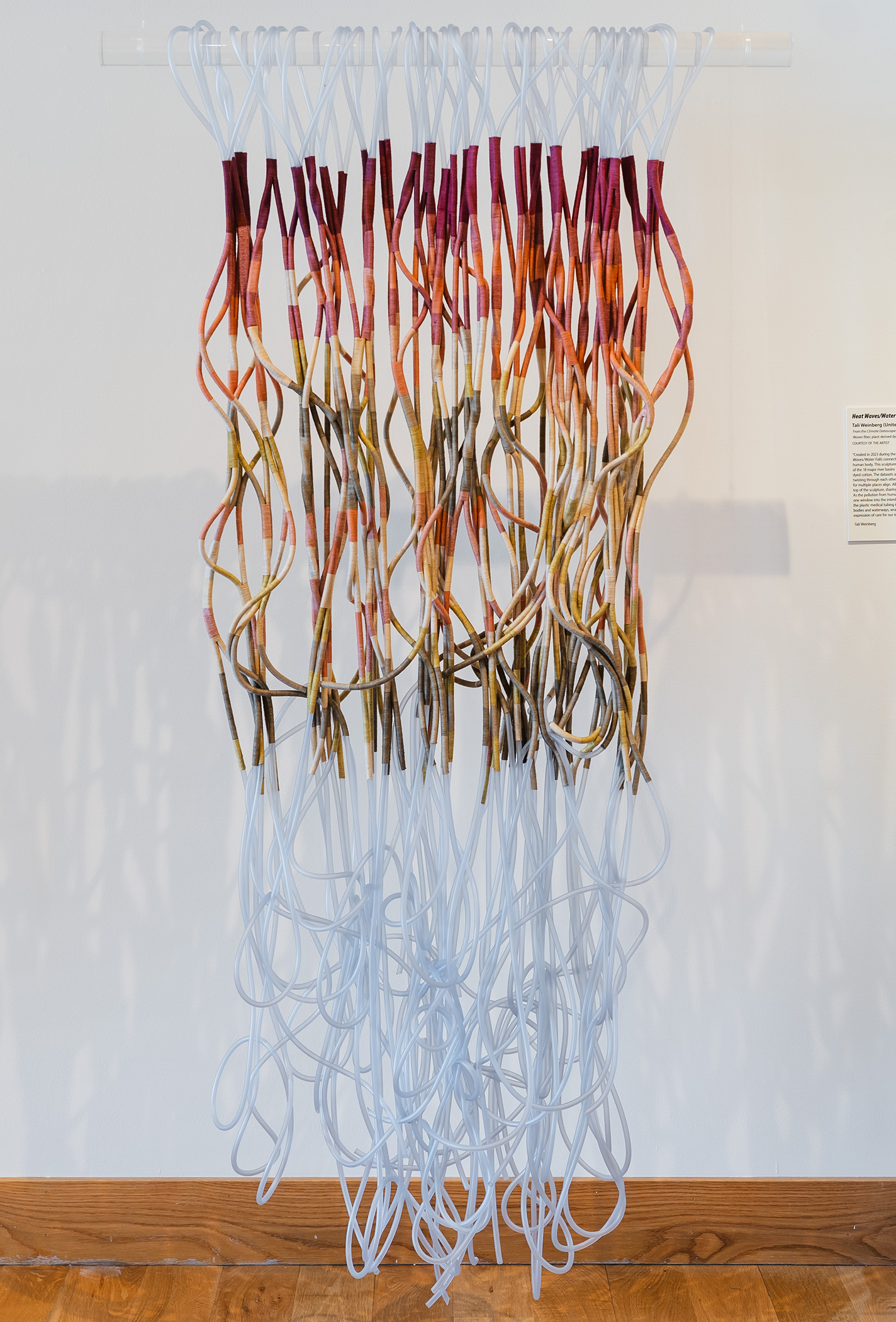
Cochineal appears again in Tali Weinberg’s Heat Waves/Water Falls, a 2023 sculpture showing annual average temperature data for each of the 18 major river basins in the continental United States. This data is materialized in the form of insect-dyed cotton fibers coiled around plastic medical tubing. This juxtaposition of natural fibers and dyes with petrochemical-derived medical plastics complicates the dichotomy of care and harm. “While the plastic medical tubing is an expression of the buildup of toxic plastics in our bodies and waterways, wrapping and bundling these tubes by hand becomes an expression of care for our interconnected lives,” says Weinberg.  

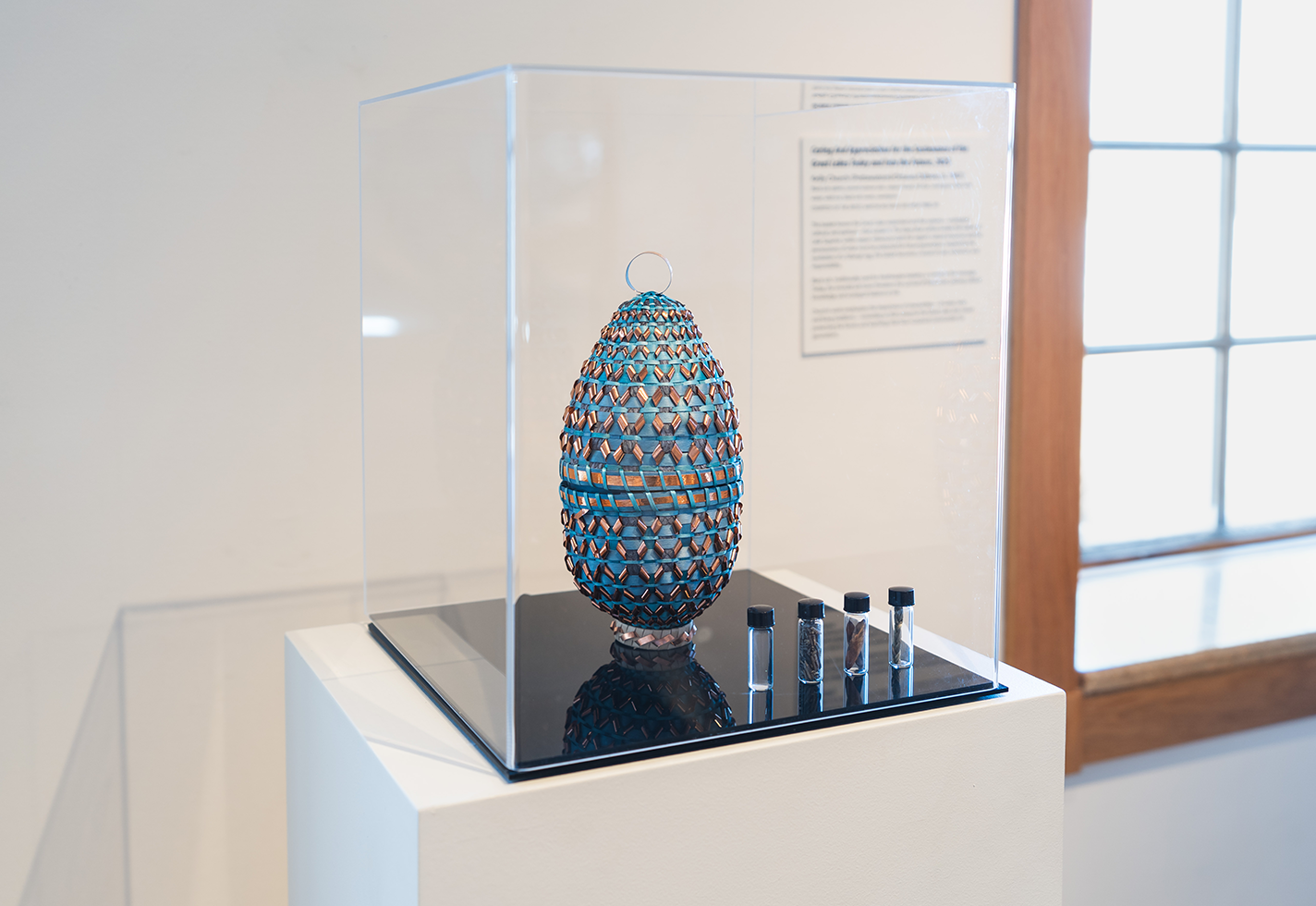
On a nearby wall, Weinberg’s 2025 jacquard-woven tapestries Short of Breath/Ash Borer Scars 8 and 9 replicate the trails left by the larvae of the invasive emerald ash borer. These pieces are positioned next to the work of Kelly Church, an Ottawa/Pottawatomi/Ojibwe black ash basket weaver, fiber artist, educator, activist, and culture keeper. Church’s interpretations of traditional black ash basketry simultaneously preserve cultural knowledge and hold grief for the impending extinction of black ash trees as a result of emerald ash borer invasion.

Materials and ideas repeat across works in the exhibition, forming patterns and connections. A material conversation emerges from the layers of history and meaning in the craft traditions used by the artists.

Photo by Bailey Bolton for Minnesota Marine Art Museum

Plant-dyed woven fibers are wrapped around plastic medical tubing in Tali Weinberg's Heat Waves/Water Falls.

For MMAM, which has most often mounted monographic exhibitions, bringing seven artists together in one show is a shift. “I think of the artists in this exhibition as a cohort,” says Sather, who approached curation of Water | Craft as an opportunity to pair artists in ways that nurture their ongoing practices. 

Sather has invited several of the artists to come to MMAM to teach, and in January, McLaughlin traveled to Winona for the museum’s New Look Weekend, a three-day celebration launching 2026 exhibitions and programming. Over the weekend, she shared parts of her process with the public through a panel discussion and a live demonstration of how she makes her sculptures. “Craft carries the voice of those who came before us,” says McLaughlin. “The privilege of adding my voice to the tapestry of Mexican craft is something I do not take lightly.” 

Reflecting on her participation in the exhibition and her visit to MMAM, McLaughlin says, “Sometimes, as an artist, the impact of my work can feel quite small. But when welcomed into a community that celebrates diversity, culture, and tradition within the arts, my role as an artist feels much more important.”

Photo by Bailey Bolton for Minnesota Marine Art Museum

Kelly Church's Caring and Appreciation for the Sustenance of the Great Lakes Today and Into the Future is made from black ash splints, tanned salmon skin, copper, beads, Rit dye, and sweetgrass. The vials contain water, wild rice, black ash seeds, and sweetgrass.

Kasey Payette is a writer and editor based in Minneapolis.

Learn more about the exhibition online.

Website

Before you go!

We believe that making creates a meaningful world, and we hope you do, too. Deeply researched and impactful journalism on the craft community is in short supply. At the same time, being featured in craft-centered media and articles can have a major effect on a maker’s or artist’s livelihood, particularly those who are just starting in their career. You can help support our mission and the work of makers around the country by becoming a member or by making a gift today.

Thank you!
American Craft Council