Craft Around the Country
Interviews & Profiles

In Glass Objects, A Radiant Optimism

SaraBeth Post Eskuche channels color and energy into her vivid glass jewelry, home wares, and sculptures.

By Kate Schuler
February 17, 2026

Photo by Anna Brewer

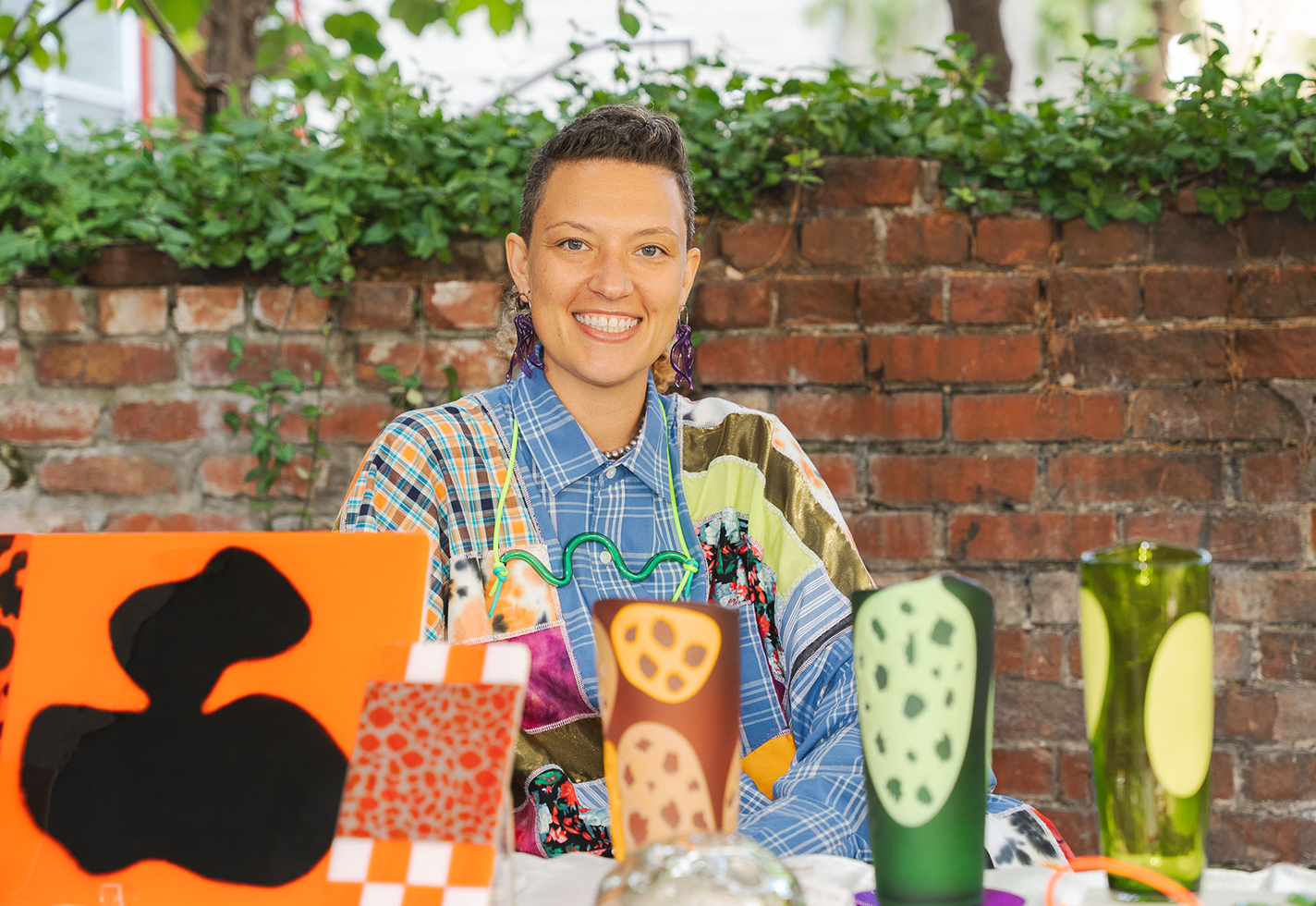
SaraBeth Post Eskuche with her glass wares at Hot House Market in Pittsburgh.

SaraBeth Post Eskuche’s glasswork hits with a sugary jolt of joy. It’s nostalgic, hopeful, and unabashedly optimistic. And its candy-shop whimsy is anchored by her masterful command of traditional glass techniques and an intuitive understanding of the medium.

Post Eskuche’s skill is evident in a recent piece, Mango, a colorful amphoric vessel with a full-bellied base and soft shoulder. It began in the hot shop using an overlay process, with Post Eskuche picking up color bars and creating an egg shape and then letting it cool. Using a diamond radius wheel on the lathe, she made circular cuts through the colored layers before bringing the piece back up to temperature, gathering a bigger mass of glass, and blowing it into its final form. 

Using this complex technique, known as Graal, allows Post Eskuche to work bigger and use carved designs—which are typically limited to smaller cups and dishes—on larger-scale pieces. In Mango, carving the glass before blowing the final shape produced large circles of transparent glass. It’s a risky and somewhat grueling process that stretches over at least three days, but the resulting vessel glows as dots of light dance across its saturated green-and-peach surface.
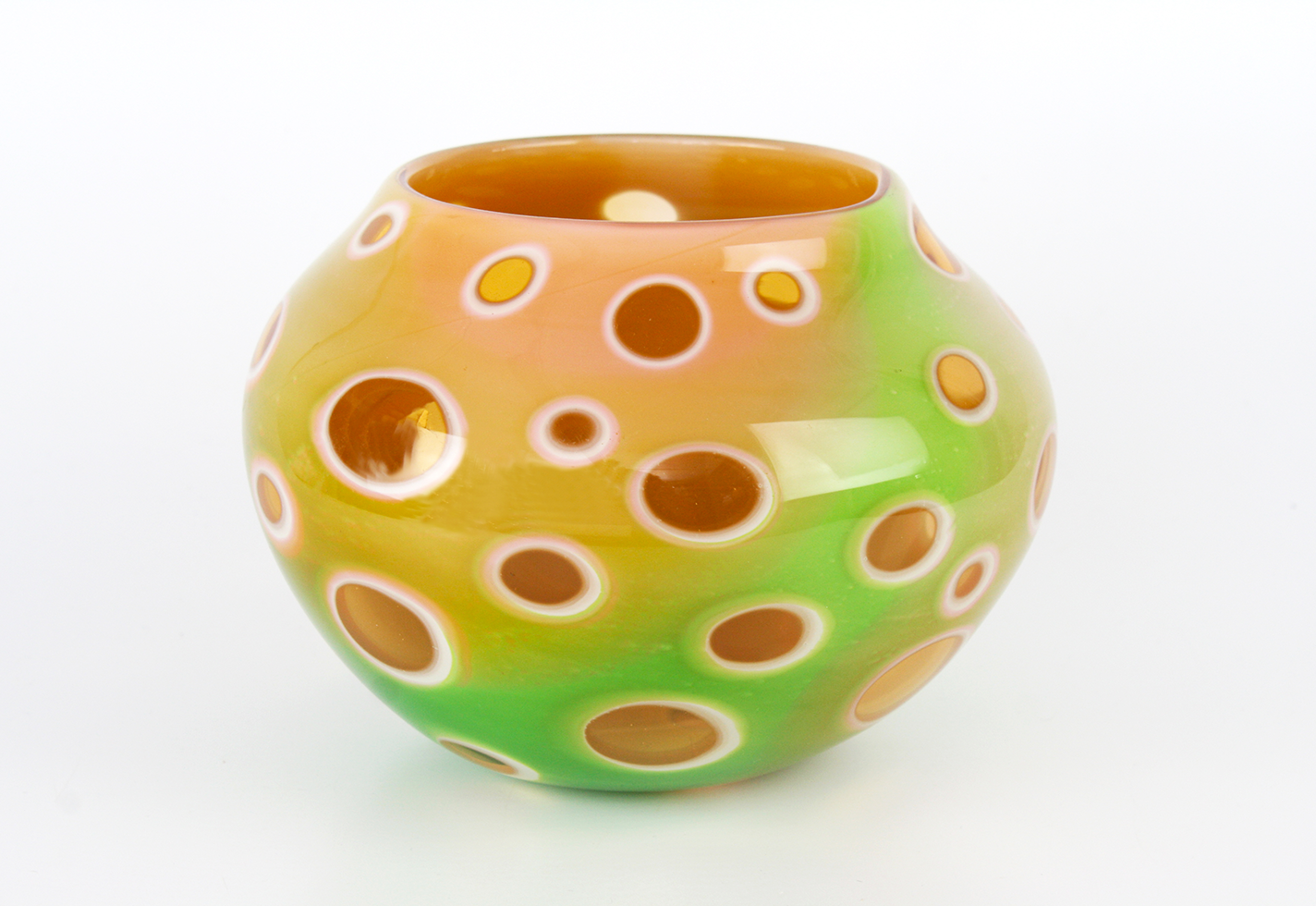
Photo courtesy of the artist

SaraBeth Post Eskuche used Graal techniques to make her Mango vase.

The variety of work she makes now—sculpture, functional glassware, and jewelry—reflects her broad formal education in traditional glass techniques at Harrisburg Area Community College in her Pennsylvania hometown and later at the University of Louisville. While some artists specialize, she tends to give the same weight to her housewares, jewelry, and sculpture. “They’re equal in my mind—I understand that they’re kind of different—but the way I started out in craft, I learned them at the same time,” she says.

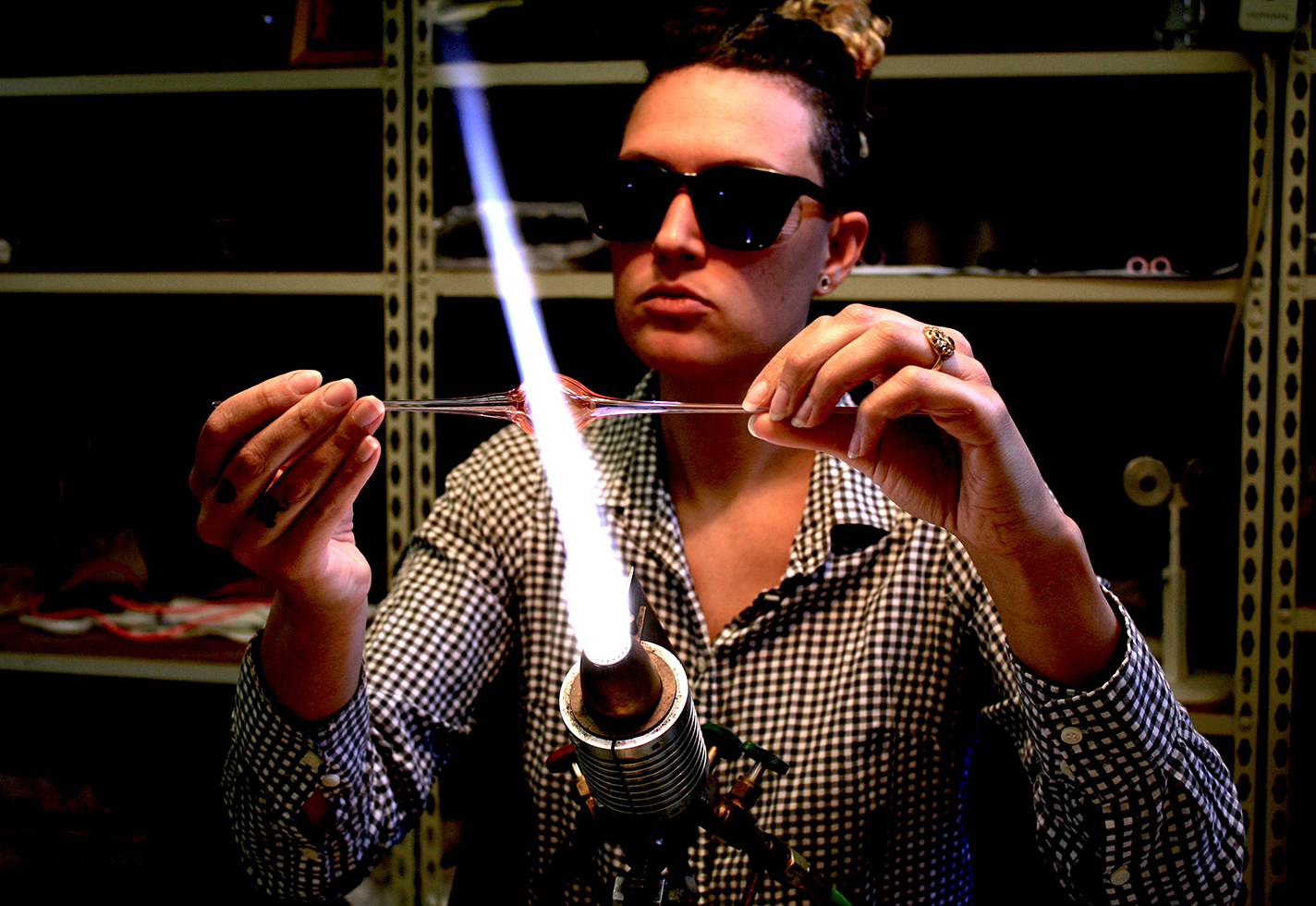
Post Eskuche works out of her home studio outside of Pittsburgh in Turtle Creek, Pennsylvania, which is equipped for flameworking, kiln fusing, and metalsmithing. From 2019 to 2021, she completed the Core Fellowship at Penland School of Craft, where she learned the metalsmithing skills she now uses in her flameworked jewelry. For some processes, she still rents hot-shop time at the Pittsburgh Glass Center, where she also teaches. “It keeps me in my local community of glassworkers,” she says. She sells her jewelry and functional wares through her design brand Ultra Lit, which she began developing during her time at Penland. (She cribbed the brand name from a pen name she used in college while writing about her mixed-race identity.)

Photo courtesy of the artist

Post Eskuche in the studio.

  • Photo courtesy of the artist

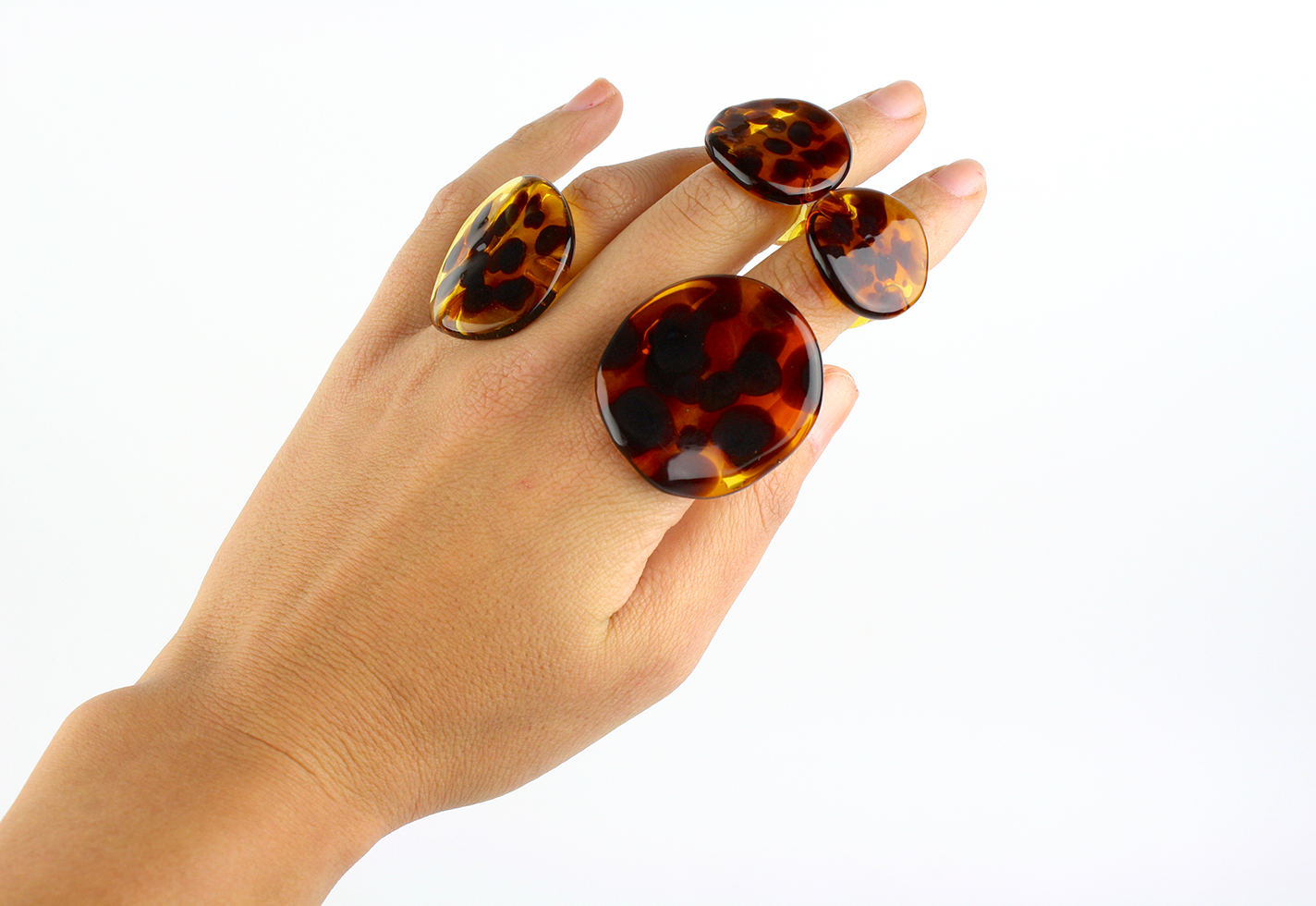
    The tortoiseshell Coin Rings are made from flameworked glass.

  • Photo courtesy of the artist

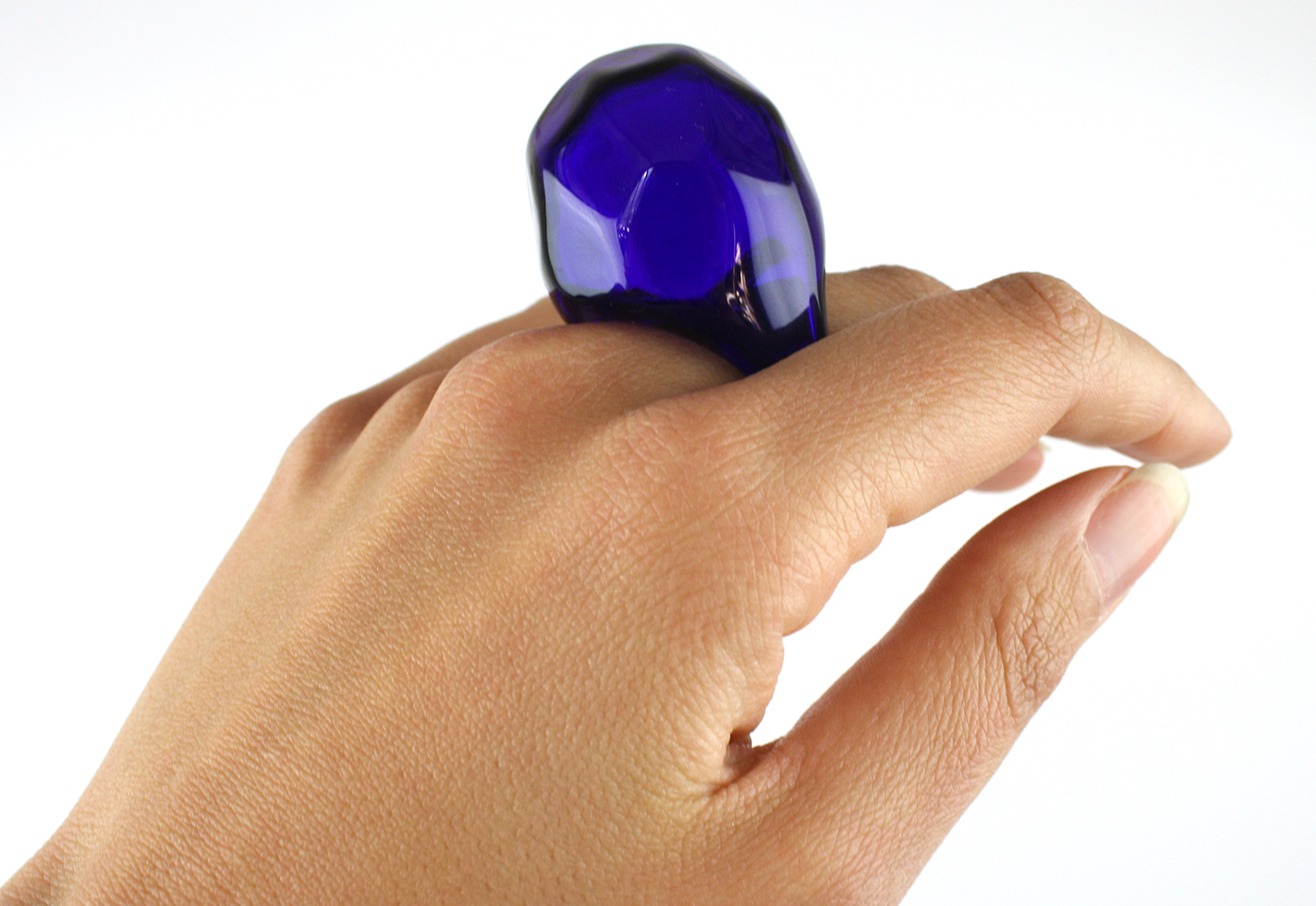
    A Blow Pop Ring in cobalt.

Intuition guides the creation of her jewelry. She occasionally sketches out ideas, but “I tend to make a bunch of beads and lay them out, and then I compose from there,” she says. This improvisational approach produces striking and unexpected pieces—blown- and solid-glass rings in rich hues, necklaces with bright faceted beads—that she hopes will bring confidence to the wearer.  

More than just an aesthetic choice, in many ways color defines Post Eskuche’s purpose. She often reminds herself of an analogy: “If you have a big bouquet of flowers and you put your face into it, and you smell them and your senses are overwhelmed by the feeling of the petals on your face, and then the smell of the flowers and the color—that’s an all-encompassing experience,” she says. That’s why I use very saturated color—I want that same type of impact.”

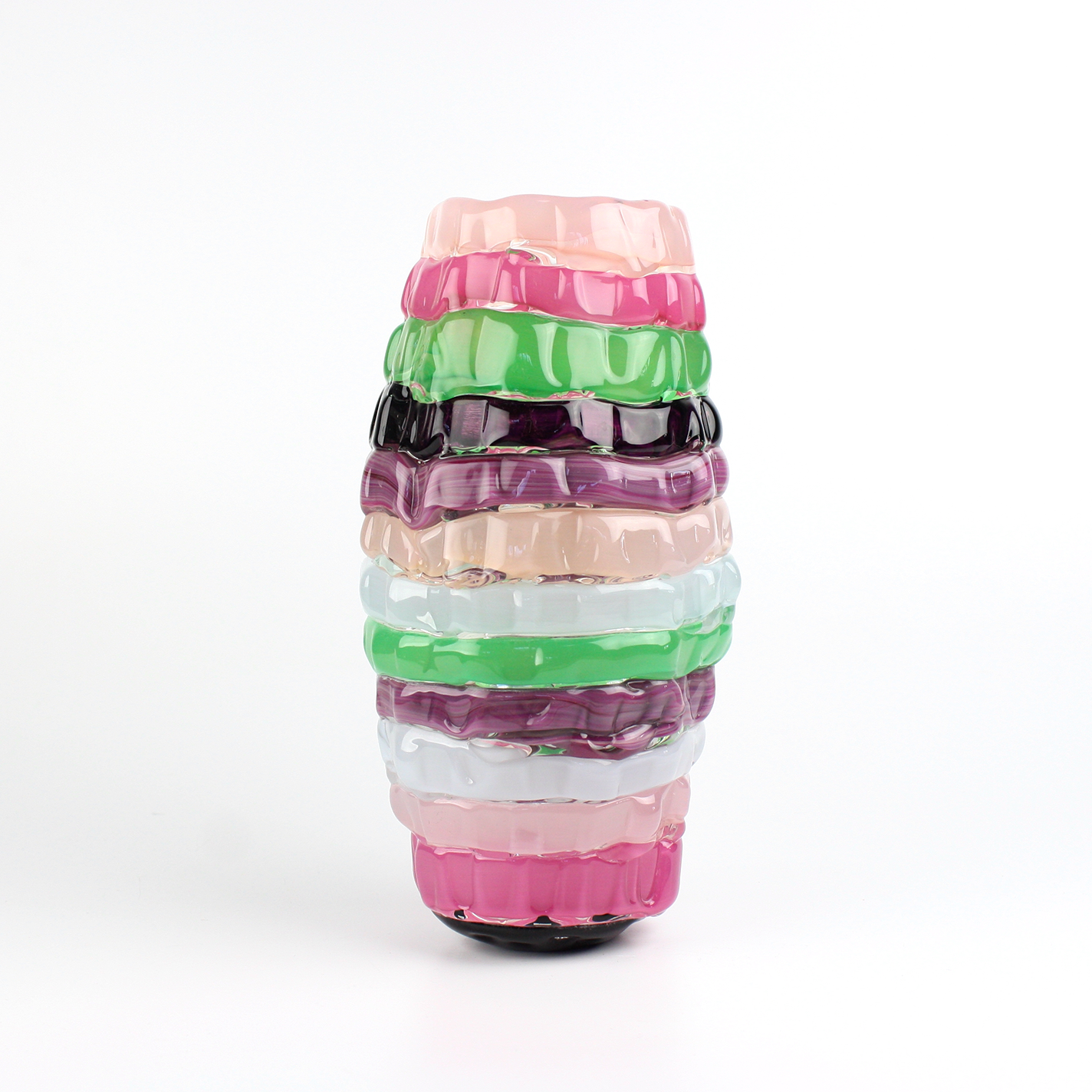
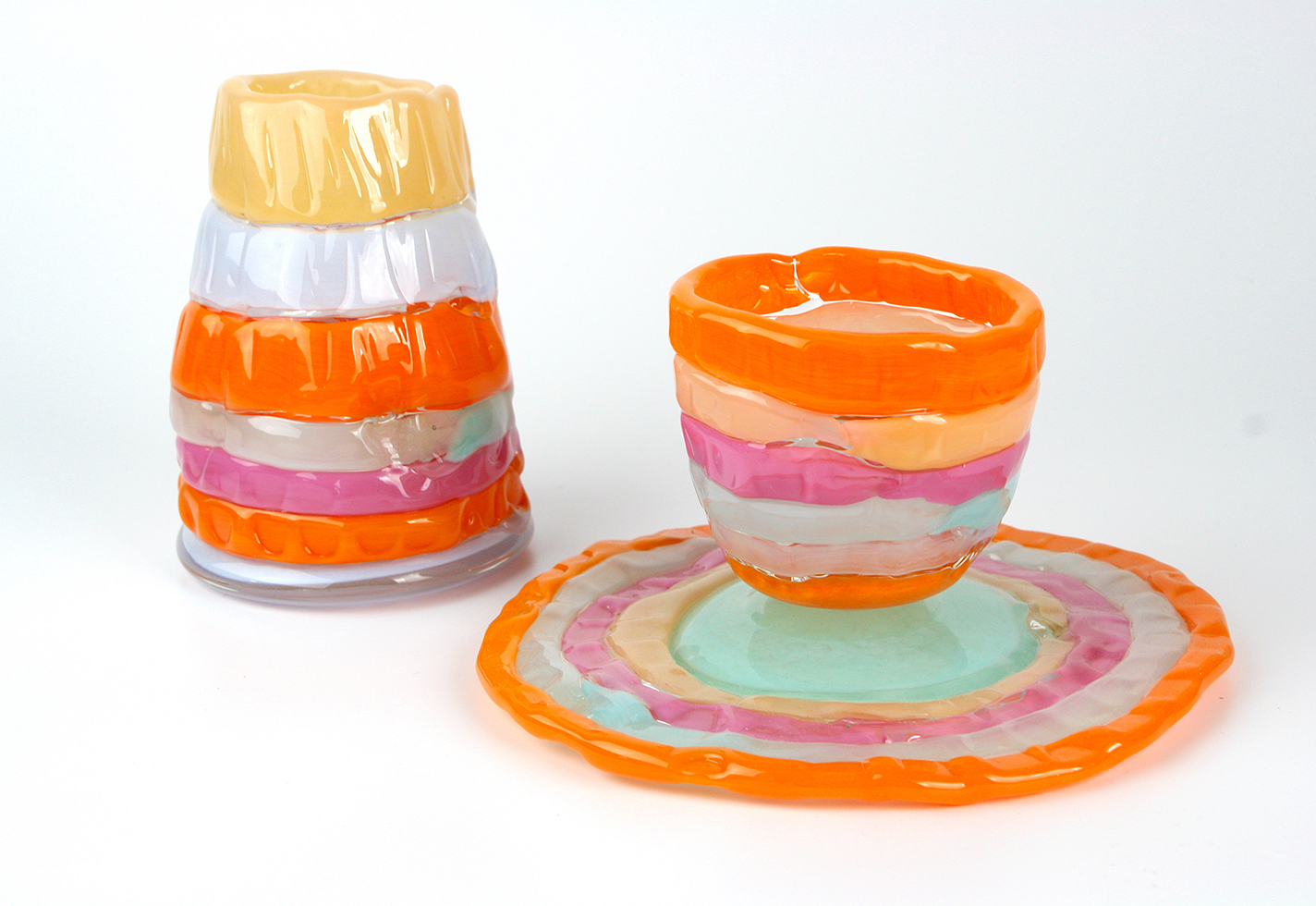
To make a series of coil-pinched vessels, she draws inspiration from ceramics and ancient glass core-forming processes—and Play-Doh. “Winding the glass this way is a very old tradition, but I’m using it in a more contemporary way,” she says. Stainless steel tweezers with paddle-shaped tips stand in for a potter’s fingers as she pinches together confection-colored molten glass strands, called wraps. Light collects in the dimples that join the coils, while the colors recall spring and summer. They look, in a word, delicious (which also happens to be the title of a recent coiled vase in pink, green, and purple).

Photo courtesy of the artist

Post Eskuche's 2025 vessel Delicious was formed by coiling hot glass strands, 10 x 4 x 4 in.

  • Photo courtesy of the artist

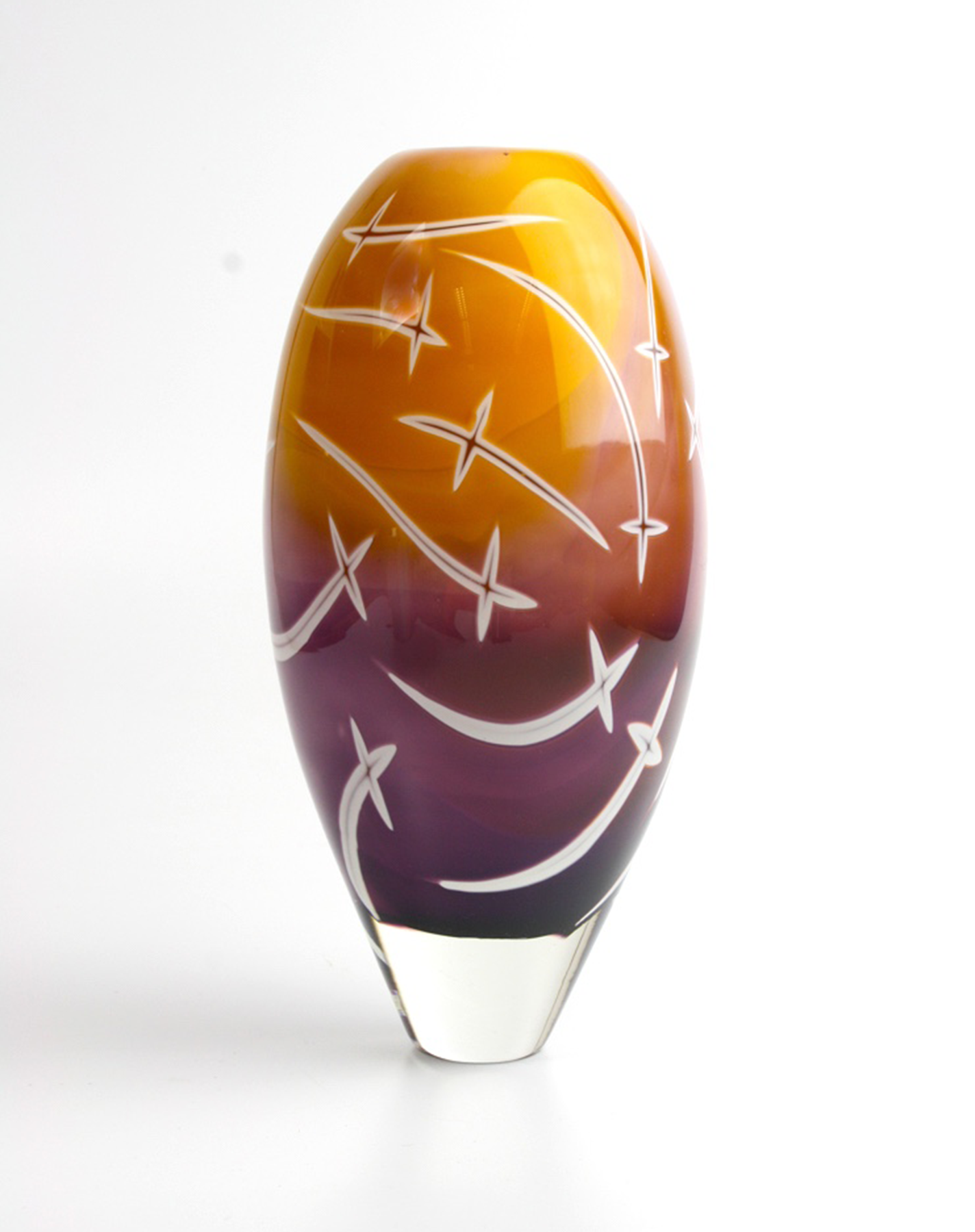
    The 2024 blown glass vase Desert Sky uses the Swedish overlay technique, 9 x 3 x 3 in.

  • Photo by Dave Bryce

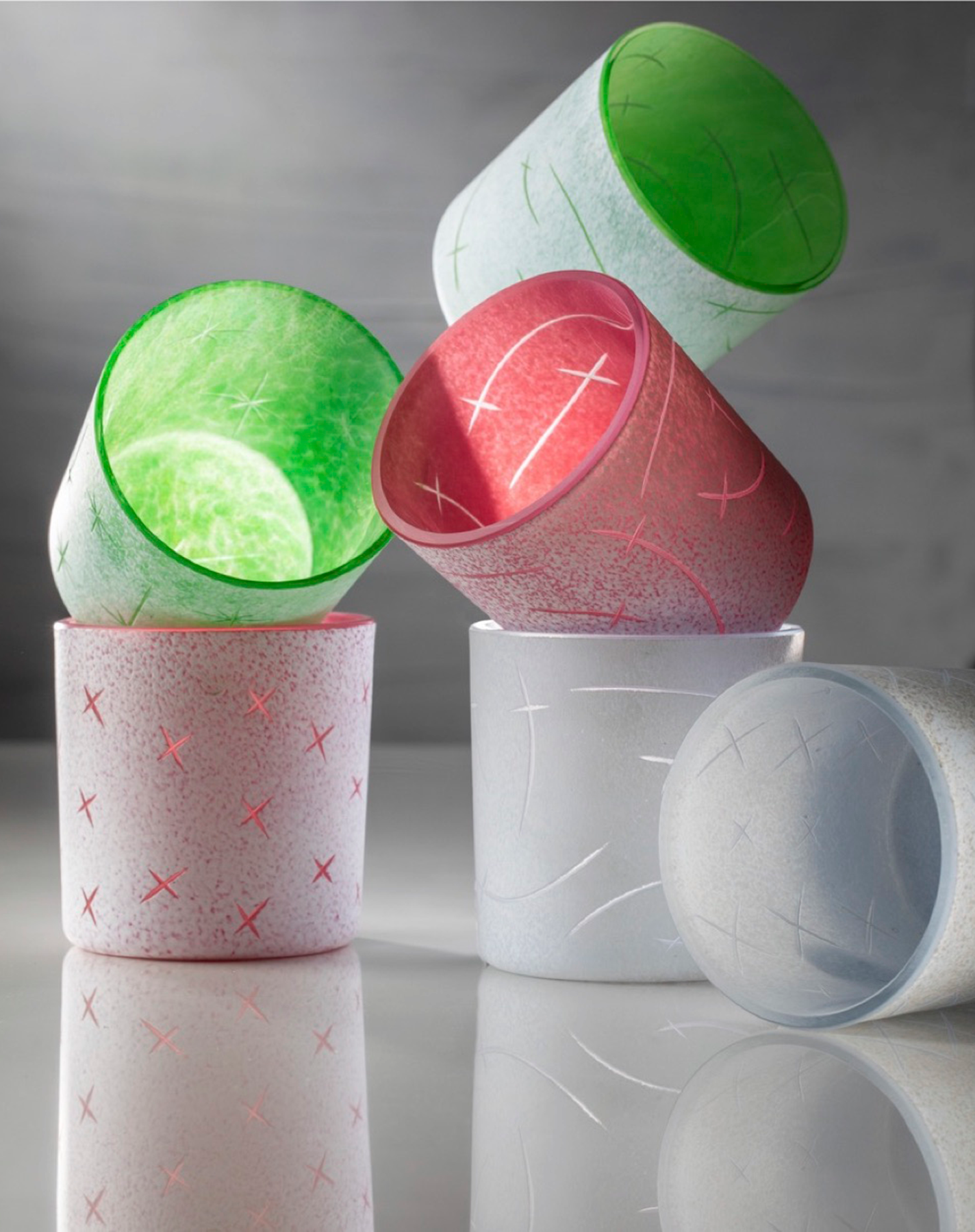
    These blown and coldworked Old Fashioned Carved Tumblers glass cups are carved with a star pattern, 3.5 x 3.5 x 3.5 in.

  • Photo courtesy of the artist

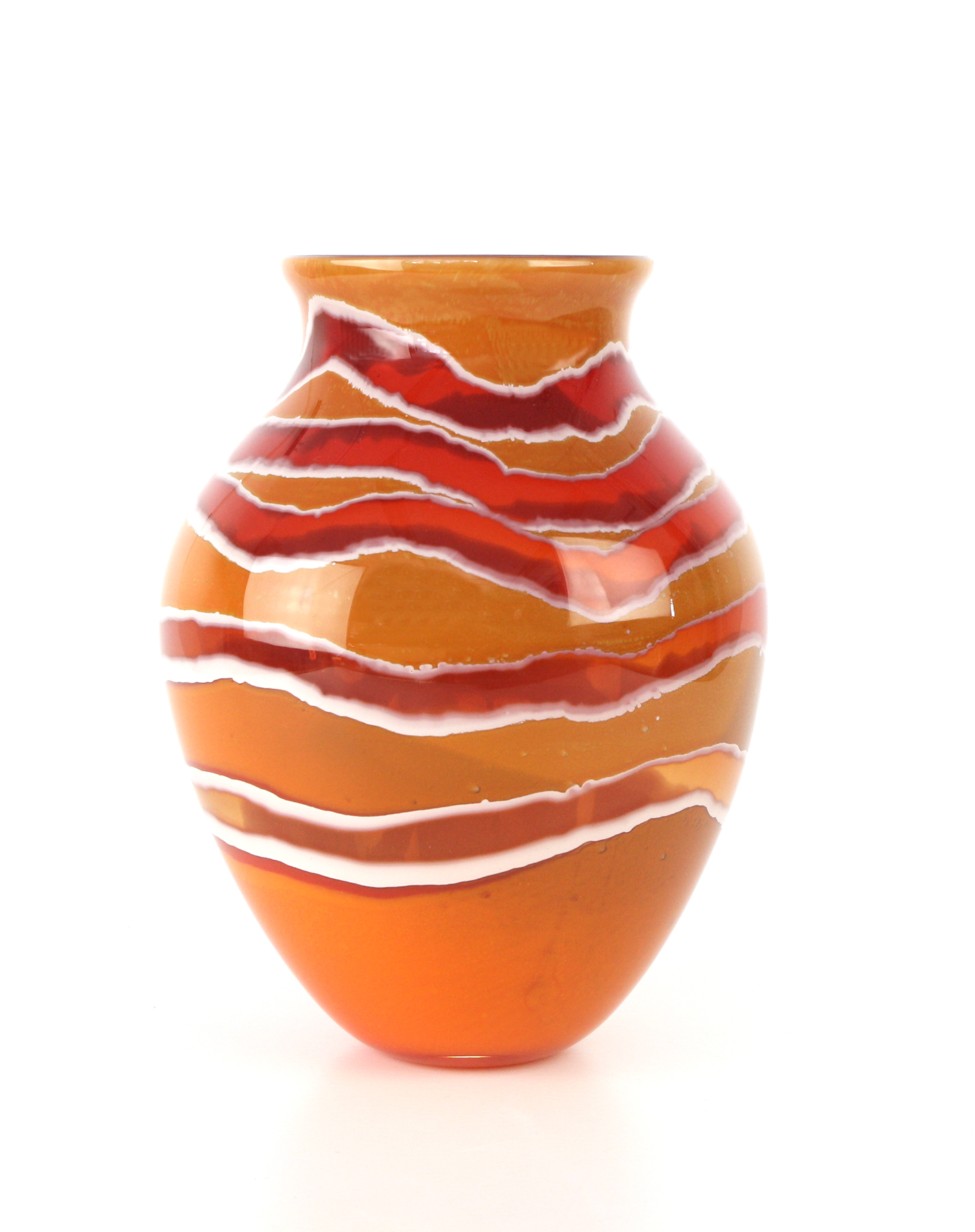
    Arizona, 2026, blown glass, 8 x 6 x 6 in.

It’s an uncommon way of working, but it lends a unique touch to Post Eskuche’s work. “I think there is maybe something specific about the texture and the mark making that sets my work apart.”

In contrast to a vessel like Mango, these pieces are meant to look imperfect and fun. “I see it as anti-perfection, being able to slow down and live a little bit more in the moment,” she says. “Each pinch is for me. I’m thinking about transferring energy.”

Energy comes up often when Post Eskuche talks about her craft. The energy and joy and color she puts into her work can, she believes, transfer a vibrancy and light to someone else. “When I’m making things, I’m thinking about how they will exist with other people and in their space,” she says. “And the intent is typically to imbue some type of optimism.”

Photo courtesy of the artist

A Little Here, a hot-sculpted glass vessel from 2023, takes inspiration from ceramic forms, 6 x 10 x 7 in.

Kate Schuler is a potter, writer, and editor based in Washington, DC. 

Check out more of SaraBeth Post Eskuche's work online.

Website Instagram

Before you go!


We believe that making creates a meaningful world, and we hope you do, too. Deeply researched and impactful journalism on the craft community is in short supply. At the same time, being featured in a national publication can have a major effect on a maker’s or artist’s livelihood, particularly those who are just starting in their career. You can help support our mission and the work of makers around the country by becoming a member or by making a gift today.

Thank you!
American Craft Editors