Craft Around the Country

Craft Contemporary's Clay Biennial Centers BIPOC Artists' Relationship to the Earth

Organized around four land-based themes and running through October 25, tierra features 14 artists working in clay, video, printmaking, and more.

By Jacqueline Huynh Young
July 1, 2026

Photo by Marc Walker, courtesy of Craft Contemporary

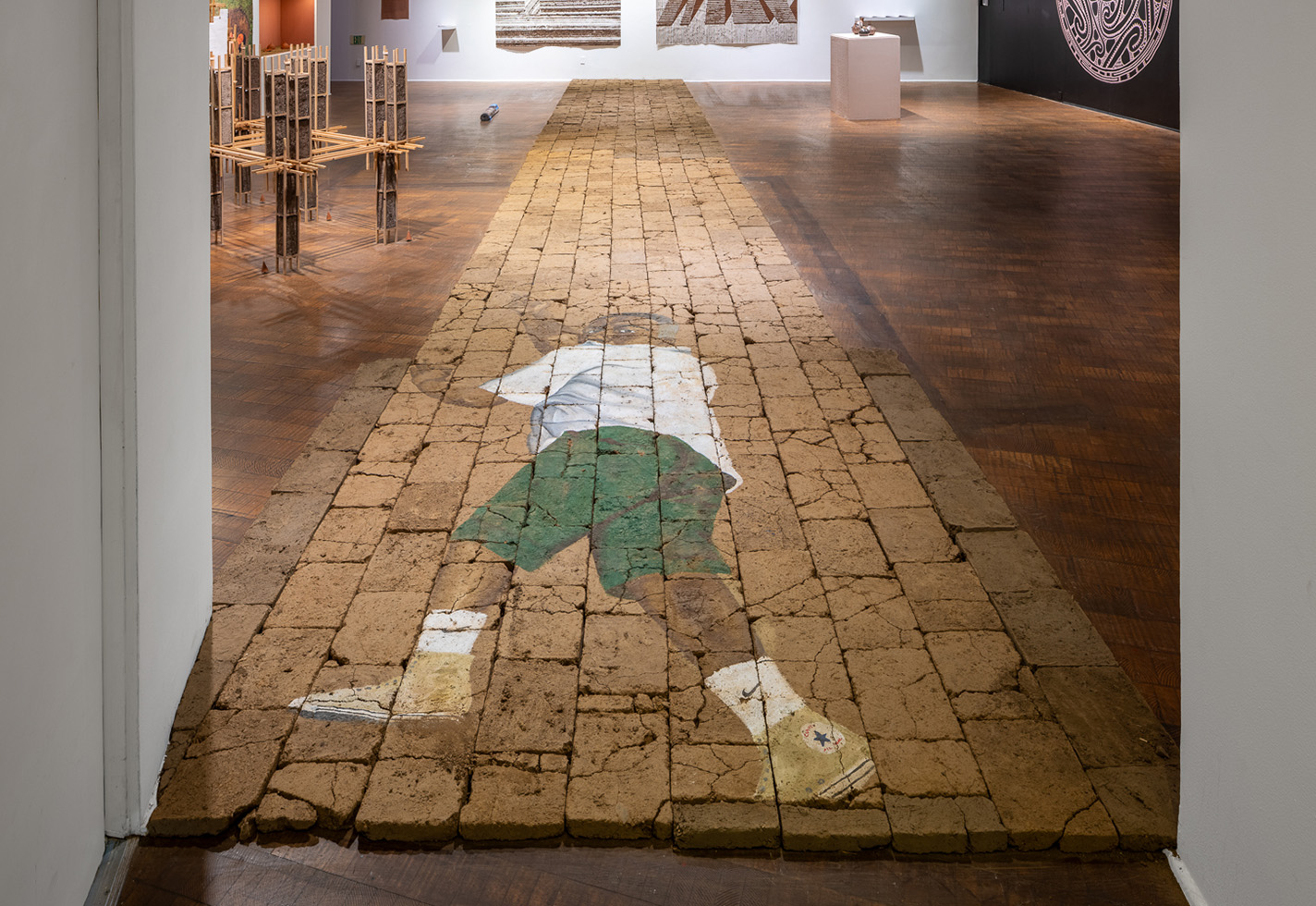
Installation view of rafa esparza's vuela vuela, 2021, acrylic paint, adobe, 1.5 x 82 x 240 in., at tierra at Craft Contemporary in Los Angeles, 2026.

At the entrance to tierra, on view in Los Angeles through October 25, visitors encounter a chorus of words for “earth.” 

In Tania Candiani’s La tierra pronunciada (“The Pronounced Earth”), the word shifts across 23 Indigenous languages spoken between the Yucatán Peninsula and the Great Plains, each reflecting a distinct relationship to place. In ’Iipay and Kumeyaay languages of San Diego and Baja California, amut can mean ”earth,” “clay,” or “human being.” In the Ralámuri/Rarámuri language of Chihuahua, Mexico, nolóachi describes “the place where the river wraps around a hill.” Accompanied by sound-wave visualizations of each spoken word, Candiani introduces one of the exhibition’s central concerns: how language shapes our relationship to land, and, in turn, how it shapes us. 

Featuring 14 Black, Indigenous, and Latinx artists, along with an additional six contributors to the accompanying catalog, the fourth iteration of Craft Contemporary’s fourth Clay Biennial series unfolds across four thematic gallery sections: Earth as Relative, Land Holds Trace, Care and Kinship, and Returning to the Earth.
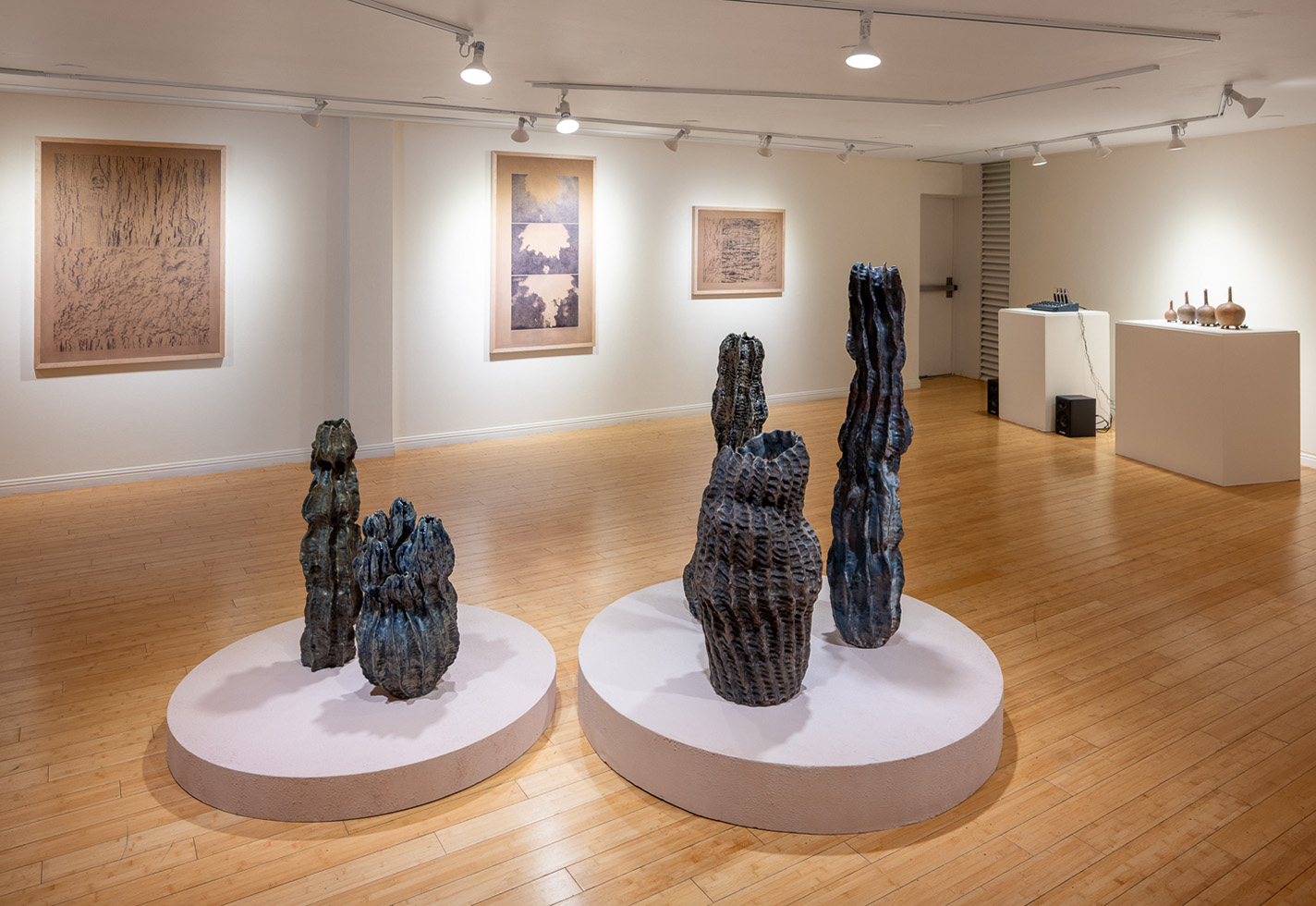
Photo by Marc Walker, courtesy of Craft Contemporary

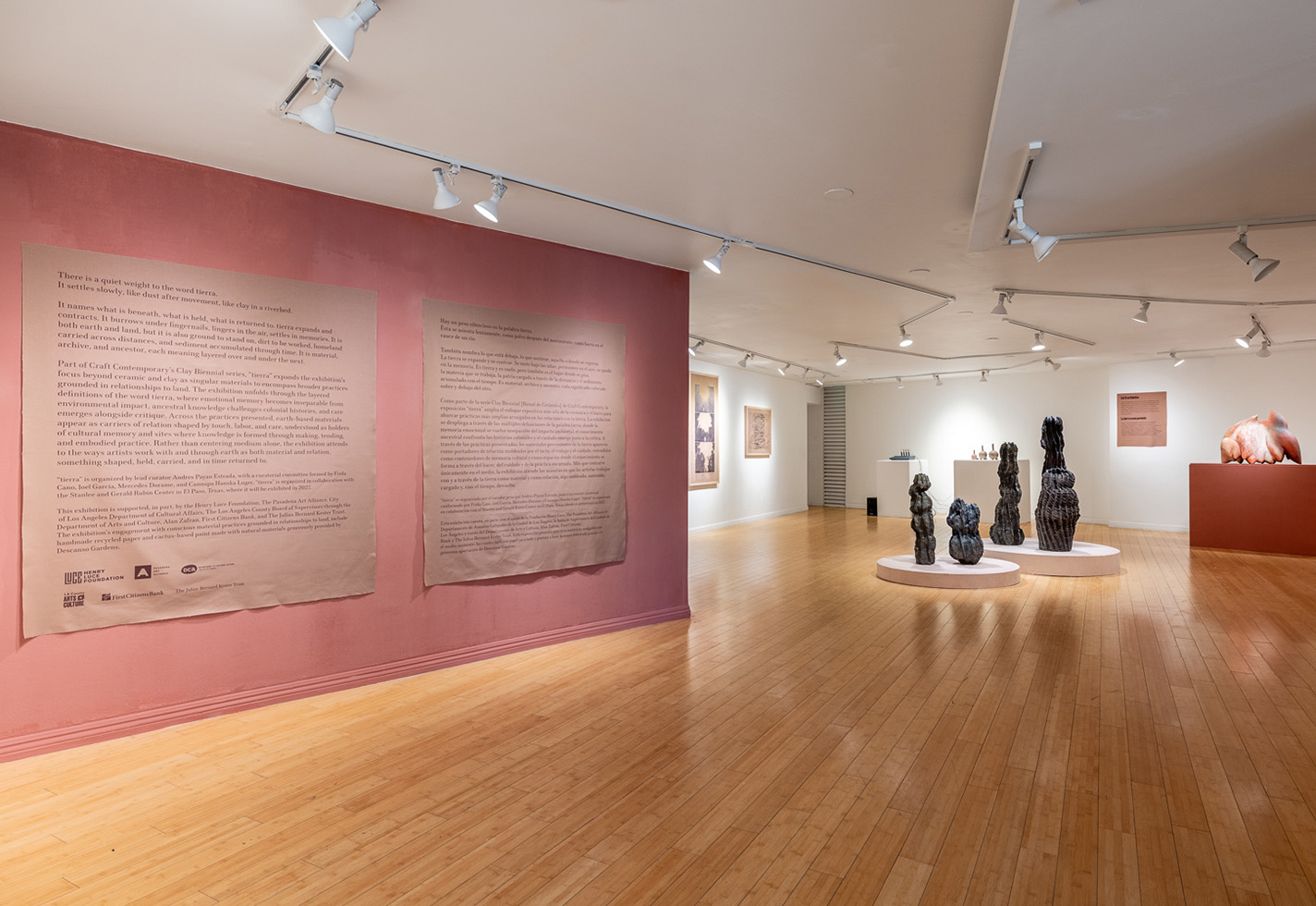
tierra installation view, 2026.
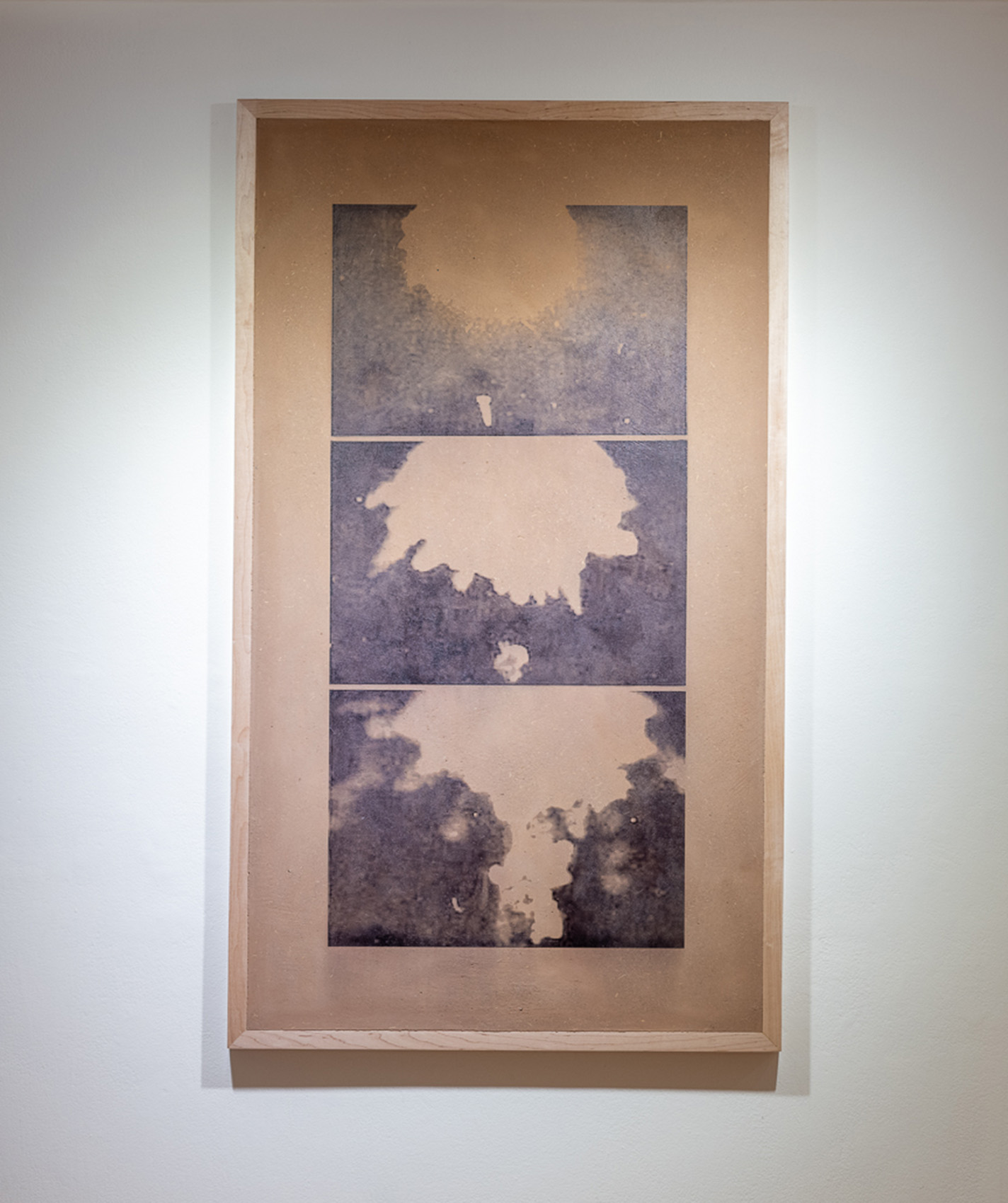
Artist Joanna Keane Lopez takes up that first theme with her adobe panels, which combine wood rubbings from her family’s ranch in New Mexico with archival photographs of missile trials. In Energetic Materials (2025), three vertically stacked images capture a missile’s descent and explosion. Because the ranch sits near military testing grounds, portions of the property are periodically leased to the government. “You start to build these relationships between your family being in a place and these other components of extraction and poisoning of the land to militarization,” says curator Andres Payan Estrada.

Of the exhibition’s most arresting works is rafa esparza’s vuela vuela (2021), a 20-foot-long walkway of adobe bricks that stretches from the third-floor gallery entrance to the back wall. To access the gallery, visitors must walk over the painted image of a young man, a close friend of esparza’s from the queer community. The man wears Nike socks and cream Converse Chuck Taylors, a pair of green shorts and a white tee. Though his back is turned, his gaze meets the viewer’s, implicating them as they cross the threshold. Payan Estrada explains, “Through the process of walking over that painting, your steps are erasing it.” The work, he says, reflects the erasure of marginalized communities in Los Angeles while the adobe’s gradual disintegration serves as a reminder that all bodies ultimately return to the earth. 

This attention to the spiritual and material dimensions of the land is present throughout the exhibition. Wall labels were made from recycled paper dyed with soil from Los Angeles, and wall paints were created in-house using prickly pear cactus slime and earth pigments such as terracotta and red iron oxide. As part of a community workshop leading up to the exhibition, participants wrote reflections on their relationship to soil, then turned the pages into pulp for labels. “What we’re seeing there is not just the materiality but also the emotional connection,” says senior curator Frida Cano. “Around 60 people helped us create those.”

Photo by Marc Walker, courtesy of Craft Contemporary

Joanna Keane Lopez, Energetic Materials, 2025, adobe earth, UV cured acrylic pigment print, maple frame, 60 x 35 in.

Photo by Marc Walker, courtesy of Craft Contemporary

Craft Contemporary created its own natural pigments for print-based materials and wall paints. The dusty rose color on this wall was made in-house using prickly pear cactus slime and earth pigments such as terracotta and red iron oxide.

Jacqueline Huynh Young is a Vietnamese American artist and writer based in Los Angeles.

Learn more about tierra online.

Website

This article was made possible with support from the Windgate Foundation.

Before you go!

We believe that making creates a meaningful world, and we hope you do, too. Deeply researched and impactful journalism on the craft community is in short supply. At the same time, being featured in craft-centered media and articles can have a major effect on a maker’s or artist’s livelihood, particularly those who are just starting in their career. You can help support our mission and the work of makers around the country by becoming a member or by making a gift today.

Thank you!
American Craft Council