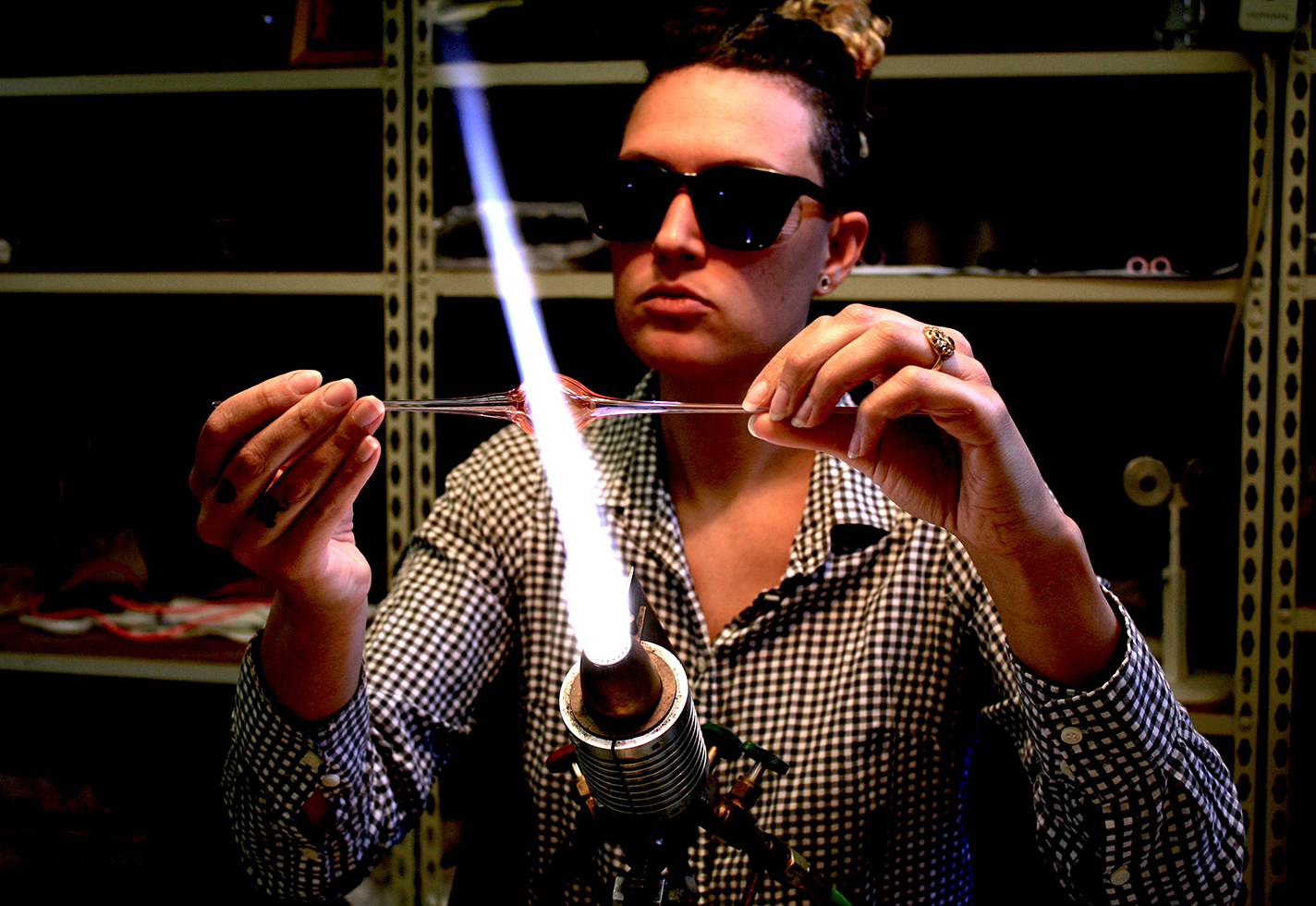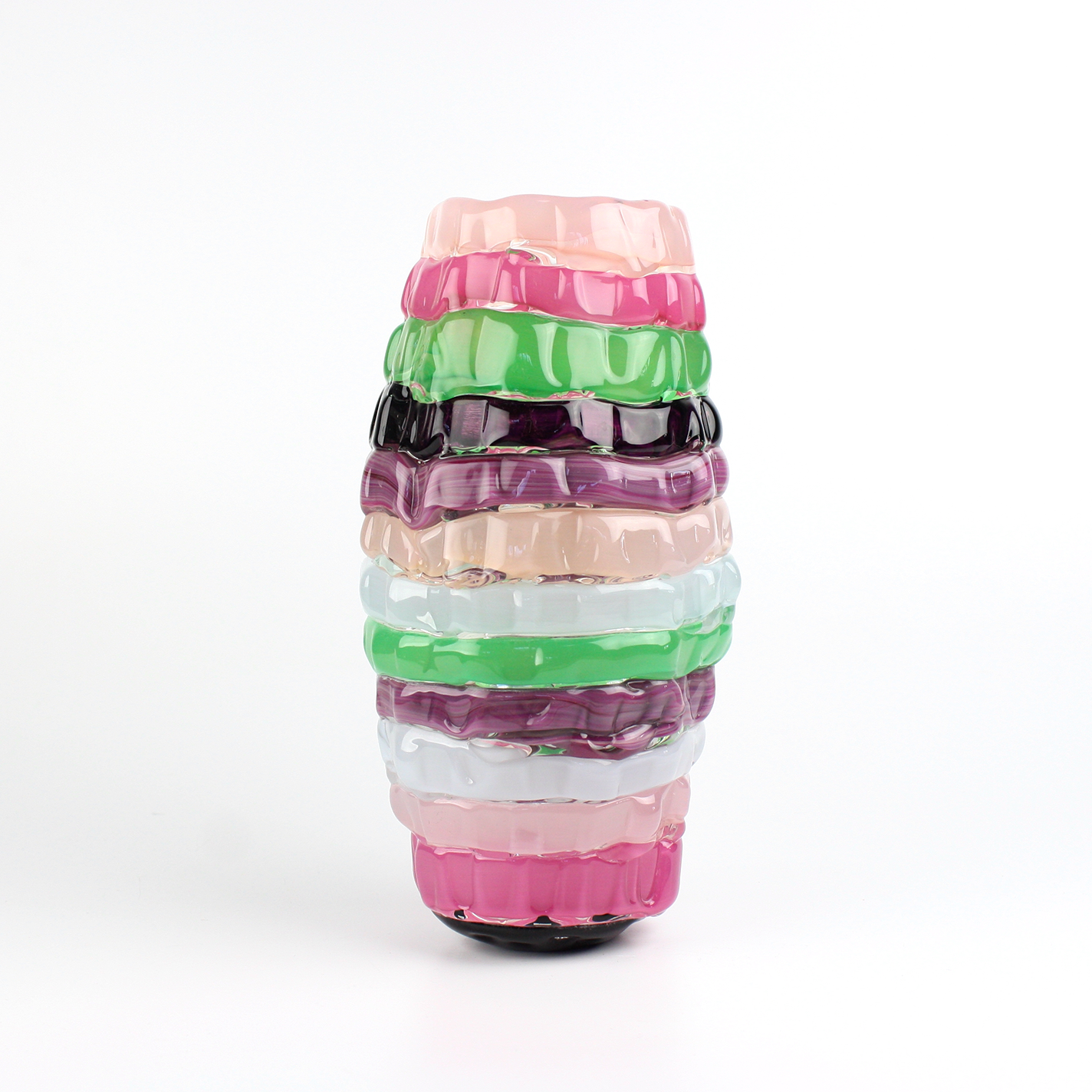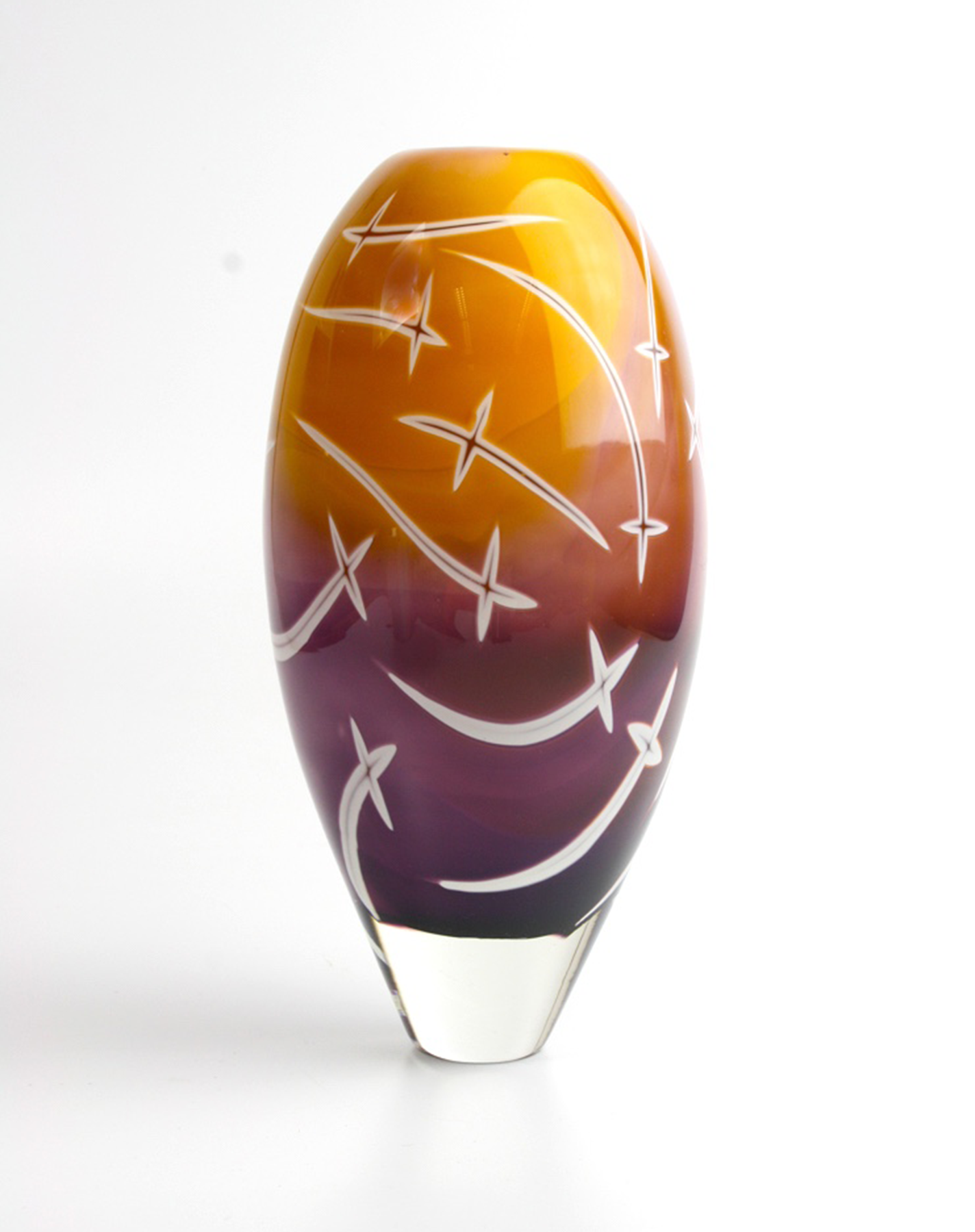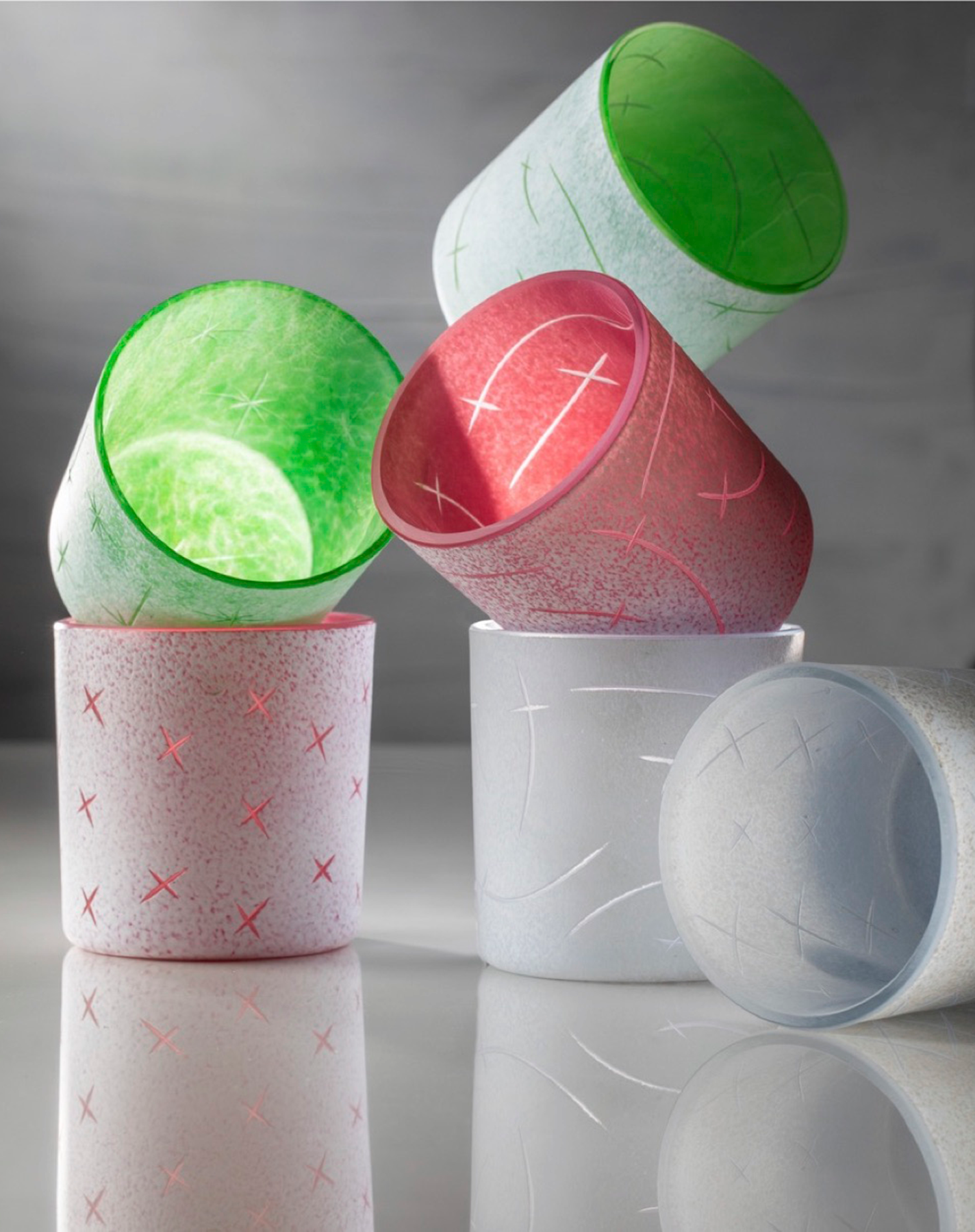
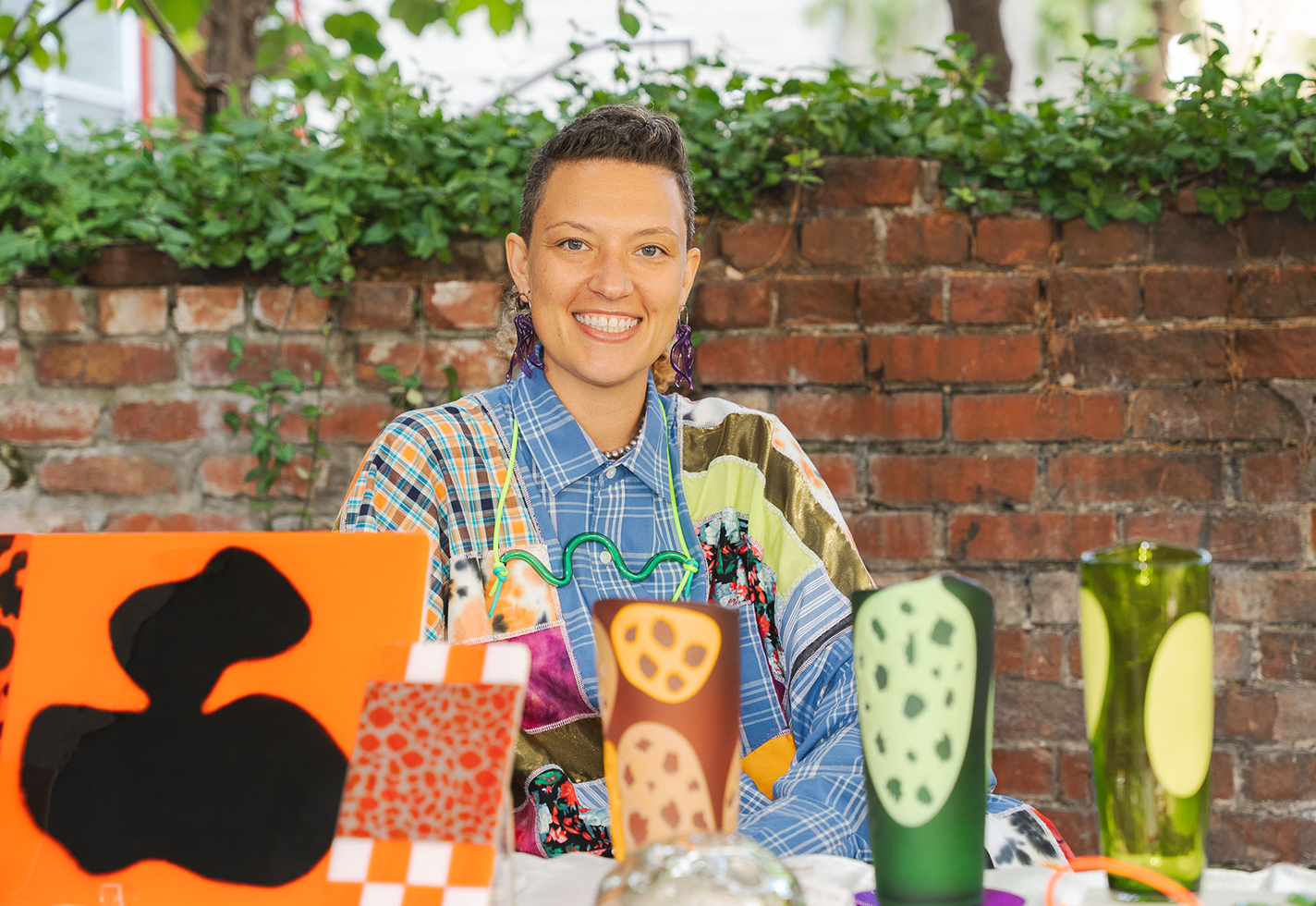
SaraBeth Post Eskuche’s glasswork hits with a sugary jolt of joy. It’s nostalgic, hopeful, and unabashedly optimistic. And its candy-shop whimsy is anchored by her masterful command of traditional glass techniques and an intuitive understanding of the medium.
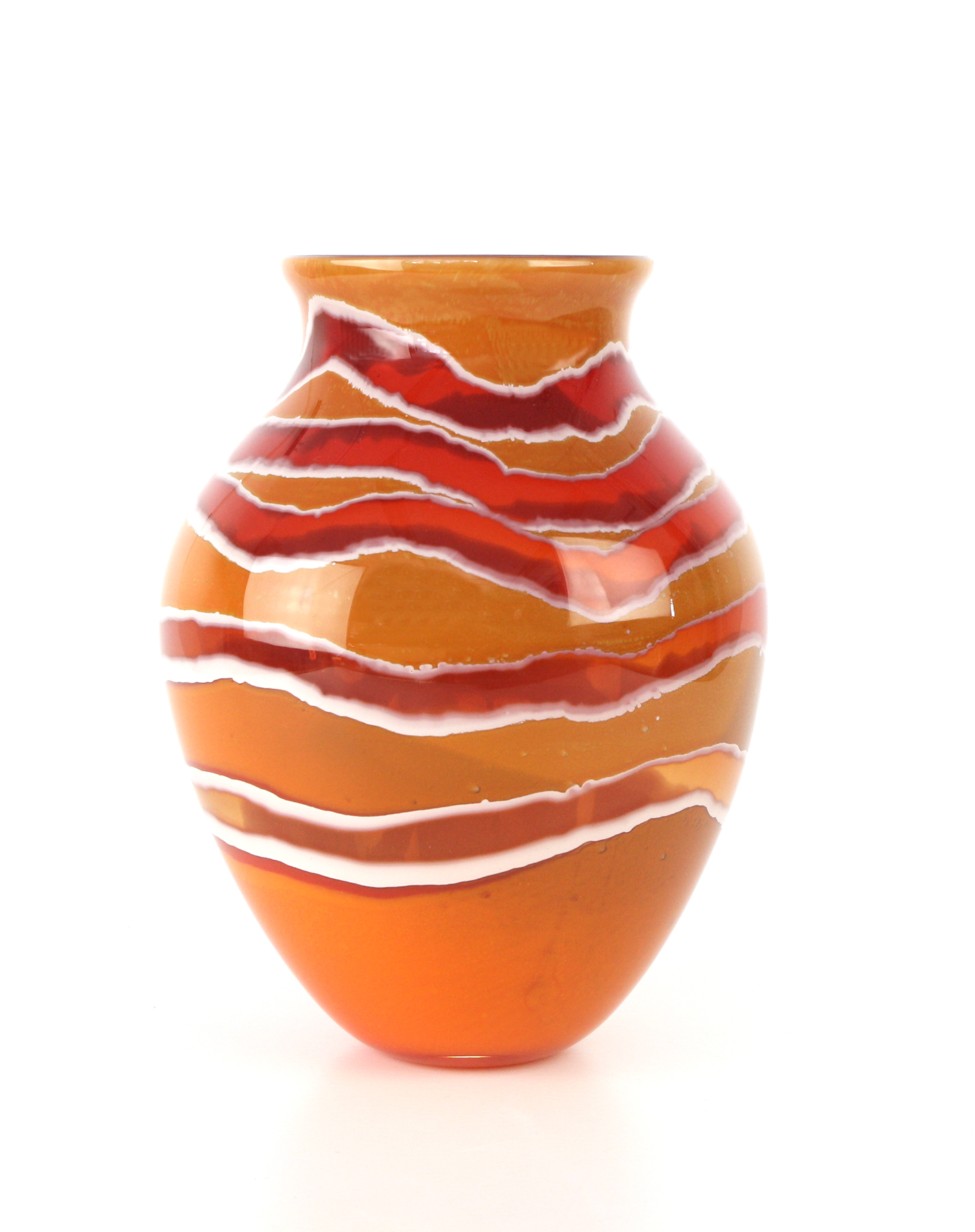
Post Eskuche’s skill is evident in a recent piece, Mango, a colorful amphoric vessel with a full-bellied base and soft shoulder. It began in the hot shop using an overlay process, with Post Eskuche picking up color bars and creating an egg shape and then letting it cool. Using a diamond radius wheel on the lathe, she made circular cuts through the colored layers before bringing the piece back up to temperature, gathering a bigger mass of glass, and blowing it into its final form.
Using this complex technique, known as Graal, allows Post Eskuche to work bigger and use carved designs—which are typically limited to smaller cups and dishes—on larger-scale pieces. In Mango, carving the glass before blowing the final shape produced large circles of transparent glass. It’s a risky and somewhat grueling process that stretches over at least three days, but the resulting vessel glows as dots of light dance across its saturated green-and-peach surface.
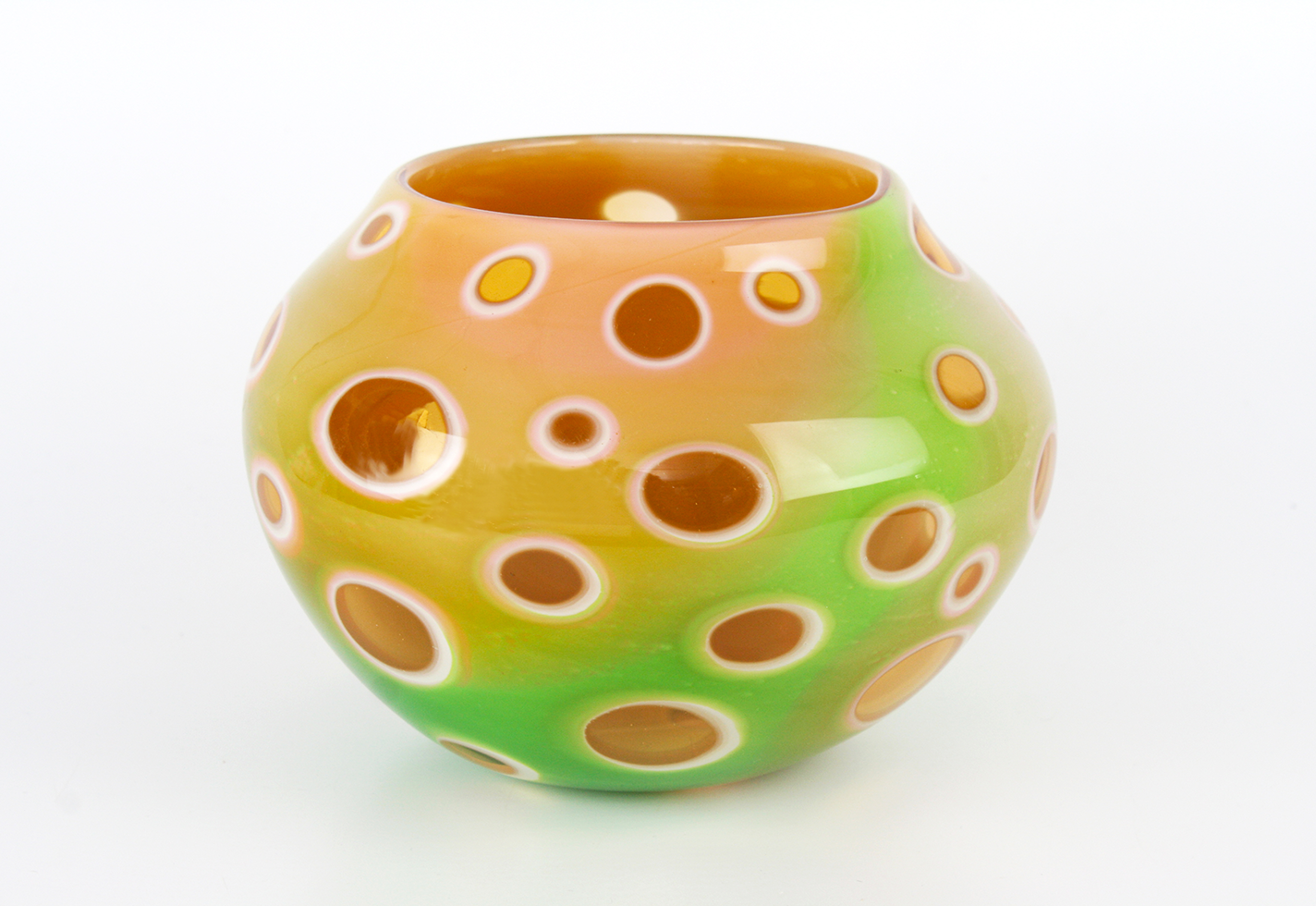
SaraBeth Post Eskuche used Graal techniques to make her Mango vase.