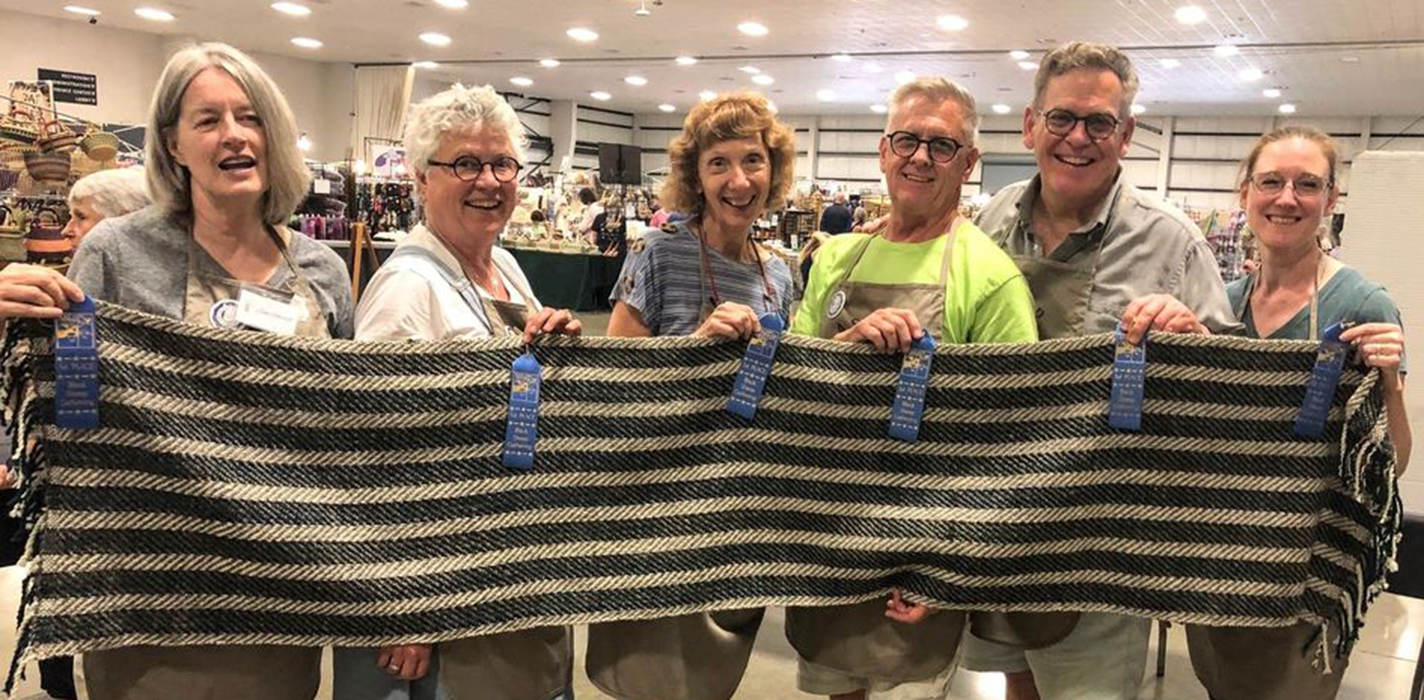
The Aurora Colony Handspinners Guild in Aurora, Oregon, has grown from a small group of students into a community of more than 150 members dedicated to preserving and sharing the craft of handspinning. The guild is rooted in a town with a deep craft history: established in 1856, Aurora was home to the Aurora Colony, a Christian utopian community known for its furniture making and textile production. Today, the town, located in the Willamette Valley 22 miles south of Portland, is a popular antiquing destination.
Guild president Jayme Rabenberg traces the group’s origins to 1982, when a handful of spinners—students of instructor Lorie Cobb—began meeting informally to practice and share skills. Cobb, a spinning-wheel expert who spent more than three decades with the guild, was known for restoring and collecting antique wheels, helping shape the group’s deep connection to textile history.
Those early gatherings took place at the Aurora Colony Museum, a living history site preserving the legacy of the Aurora Colony. What started as a meeting space quickly grew into a lasting partnership. Within a few years, guild members and museum staff launched the Antique Spinning Wheel Showcase—now a hallmark annual event held each March.
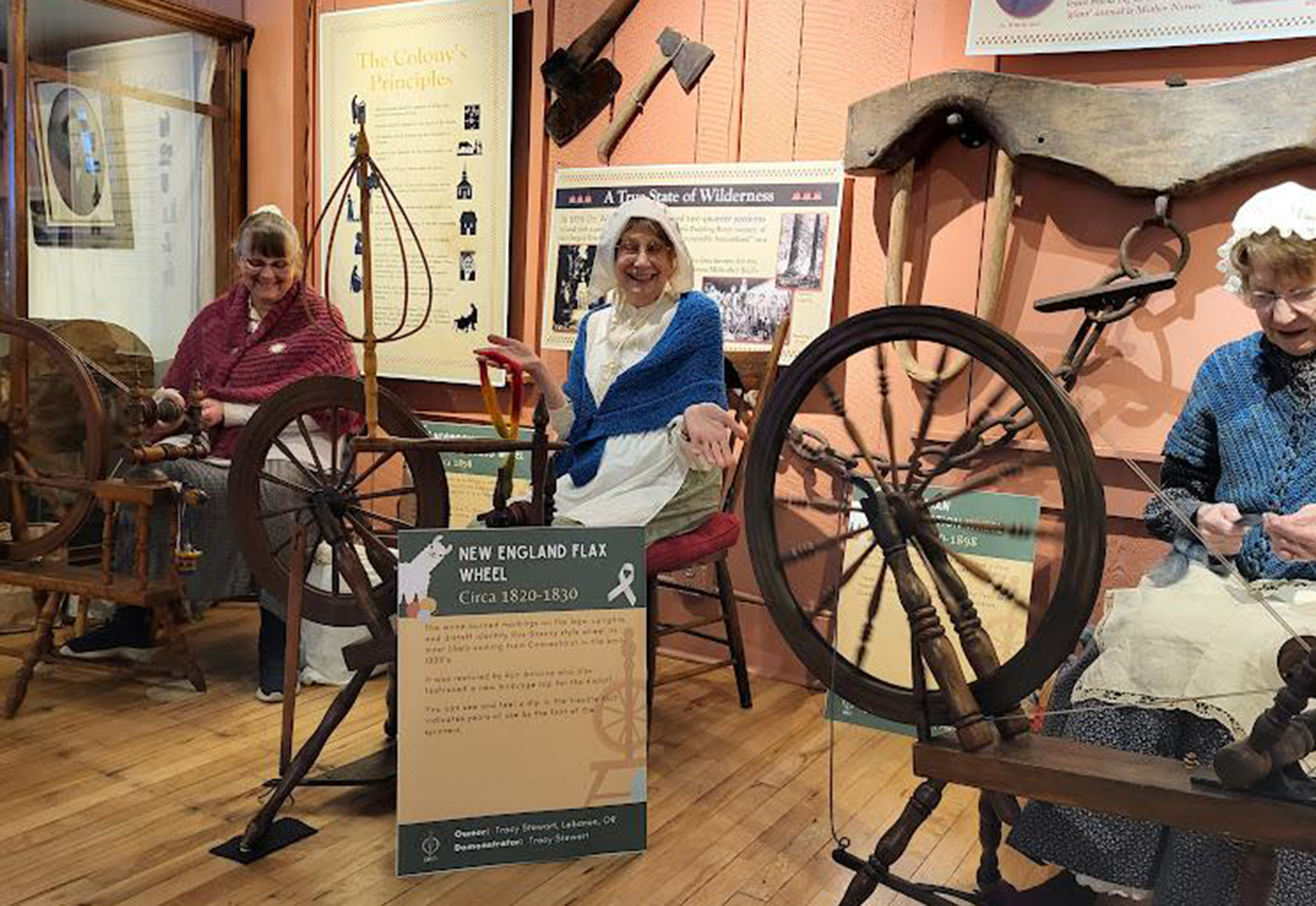
For more than four decades, the showcase has brought history to life through more than 20 working antique spinning wheels, many dating to the 1800s. Visitors can follow the entire “sheep-to-shawl” process, watching raw fleece transform into a finished woven garment. Guild members, dressed in 19th-century attire, demonstrate spinning wool, flax, and other fibers, while live heritage fiber animals—including Babydoll Southdown and Cormo sheep, alpacas, and French Angora rabbits—add to the immersive experience. Now in its 42nd year, the event stands as both a celebration of craftsmanship and a vivid link to the region’s textile traditions.
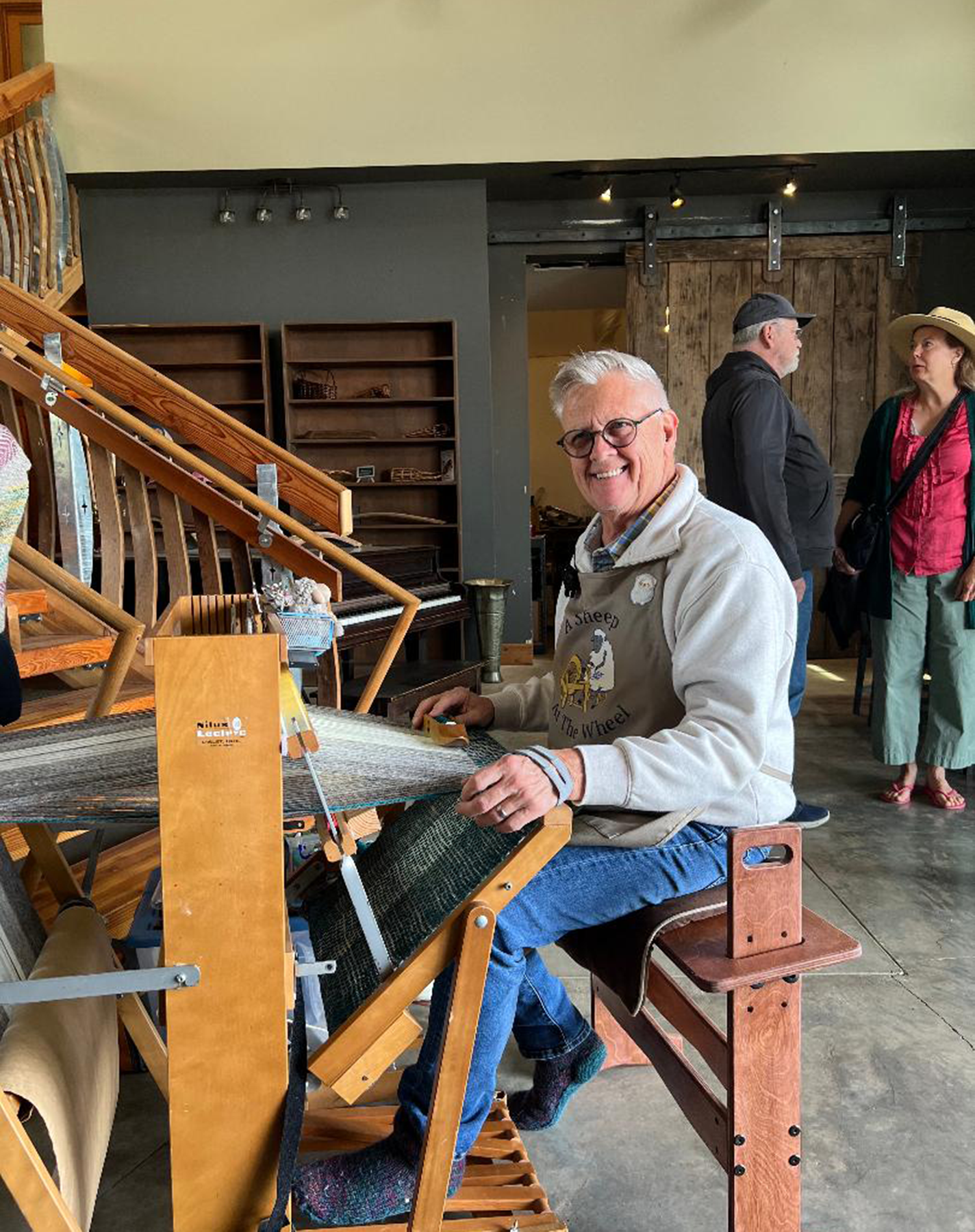
A guild member at a loom.