Interviews & Profiles

The Queue: Thomas Campbell

The imposing works of Thomas Campbell are marriages of industrial metalwork and fine craftsmanship.

In The Queue, the Asheville, North Carolina–based sculptor talks about making art in Western North Carolina after Hurricane Helene, learning from Hoss Haley, and using an industrial steelmaking technique to turn sheet metal into voluminous forms.

Interview by Jon Spayde
April 8, 2026

Photo by Bill Green

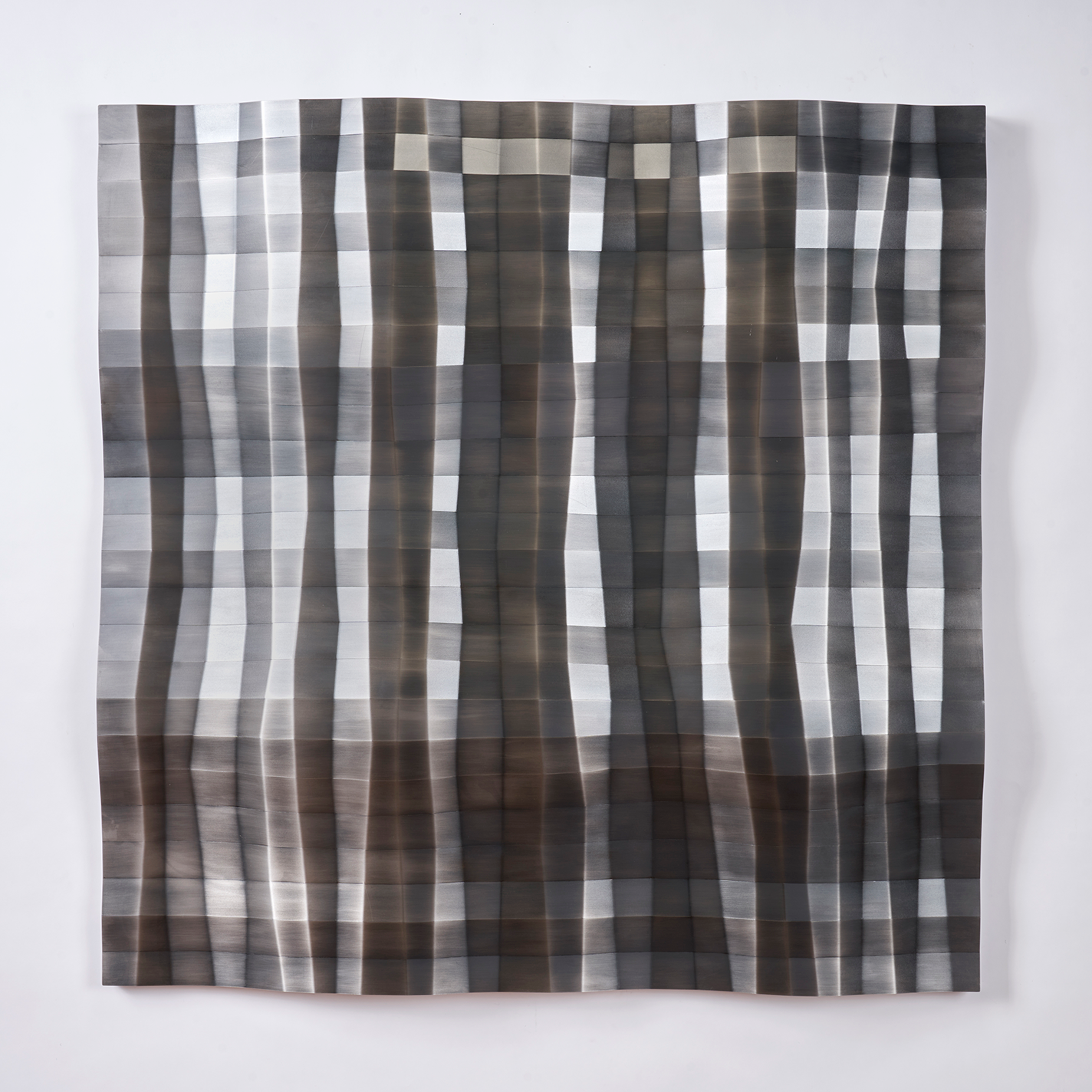
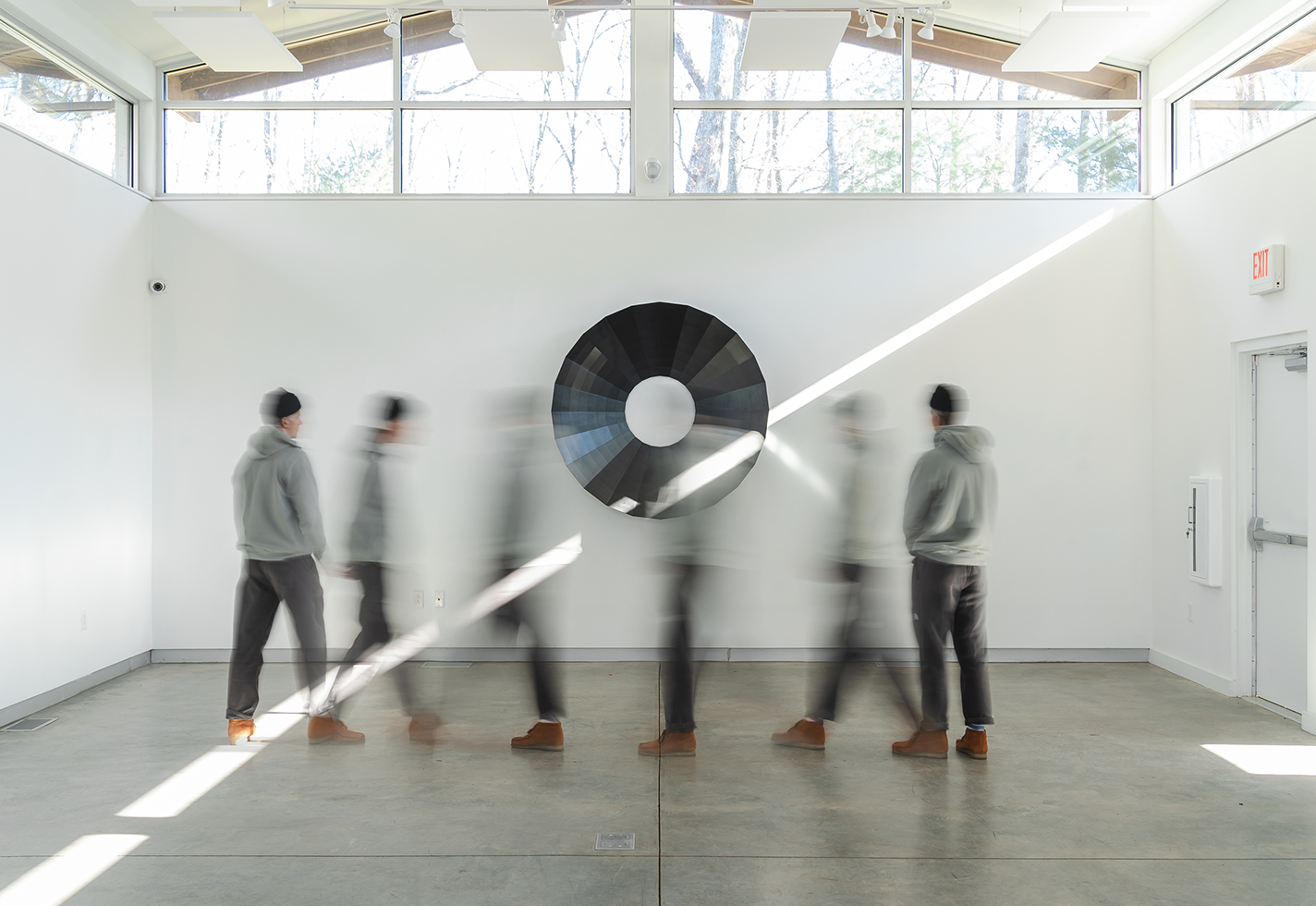
Thomas Campbell's Passage, 2023, blackened steel, 60 x 60 x 10 in.

The imposing works of Thomas Campbell are marriages of industrial metalwork and fine craftsmanship. Whether attached to walls or freestanding, his minimalist-yet-dynamic geometrical forms are powerful presences with delicate effects: the bends and facets he creates reflect light in a host of different ways that change as viewers move about them.

The Asheville, North Carolina–based sculptor grew up with industrial steel, joining Bemberg Iron Works, his family’s 140-year-old business in Little Rock, Arkansas, after college. Campbell’s apprenticeship there gave him a love for metalwork; a core fellowship at the Penland School of Craft in North Carolina set his artistic course. His work has been exhibited at the Arkansas Museum of Fine Arts in Little Rock; the Mint Museum in Charlotte, North Carolina; the Penland Gallery; the Philadelphia Museum of Art; and many other venues. Campbell’s work can be found in the collections of the University of Arkansas at Little Rock and the Metal Museum in Memphis, Tennessee.
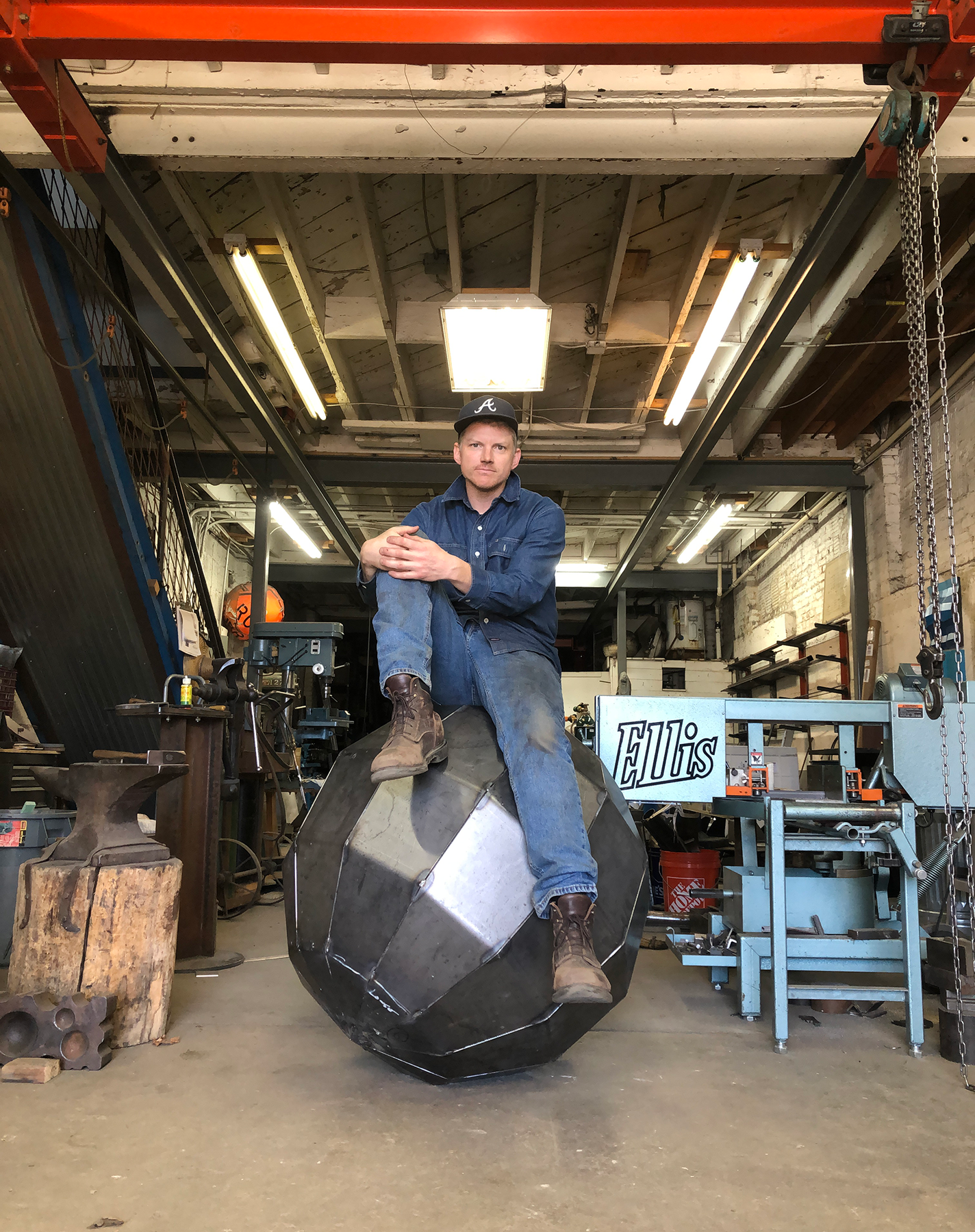
Photo courtesy of Thomas Campbell

Thomas Campbell sits atop Corollary I, 2022, blackened steel, 38 x 38 x 38 in.
How would you describe your work and practice in 50 words or less?
I am a fifth-generation-steelworker-turned-sculptor. Grounded in industrial traditions and techniques, my work is driven by geometry, mathematics, and precision. Through movement and light, my sculptures cultivate quiet, contemplative moments for the viewer. 

Do you belong to art and/or craft lineages? Who have been your greatest teachers, directly or indirectly?
My great-great-grandfather started a steel business in Little Rock, Arkansas, in 1886 that has been passed down in my family through five generations. I worked at this business for seven years. One of my greatest teachers was my uncle Richard, who took me under his wing when I first entered the industry. I have countless other teachers from my family’s shop, many of whom devoted their entire lives to the industrial steel trade. After leaving the industry, I met Hoss Haley, who became not just a mentor to me, but a dear friend. I have learned so much from him.

Photo courtesy of Thomas Campbell

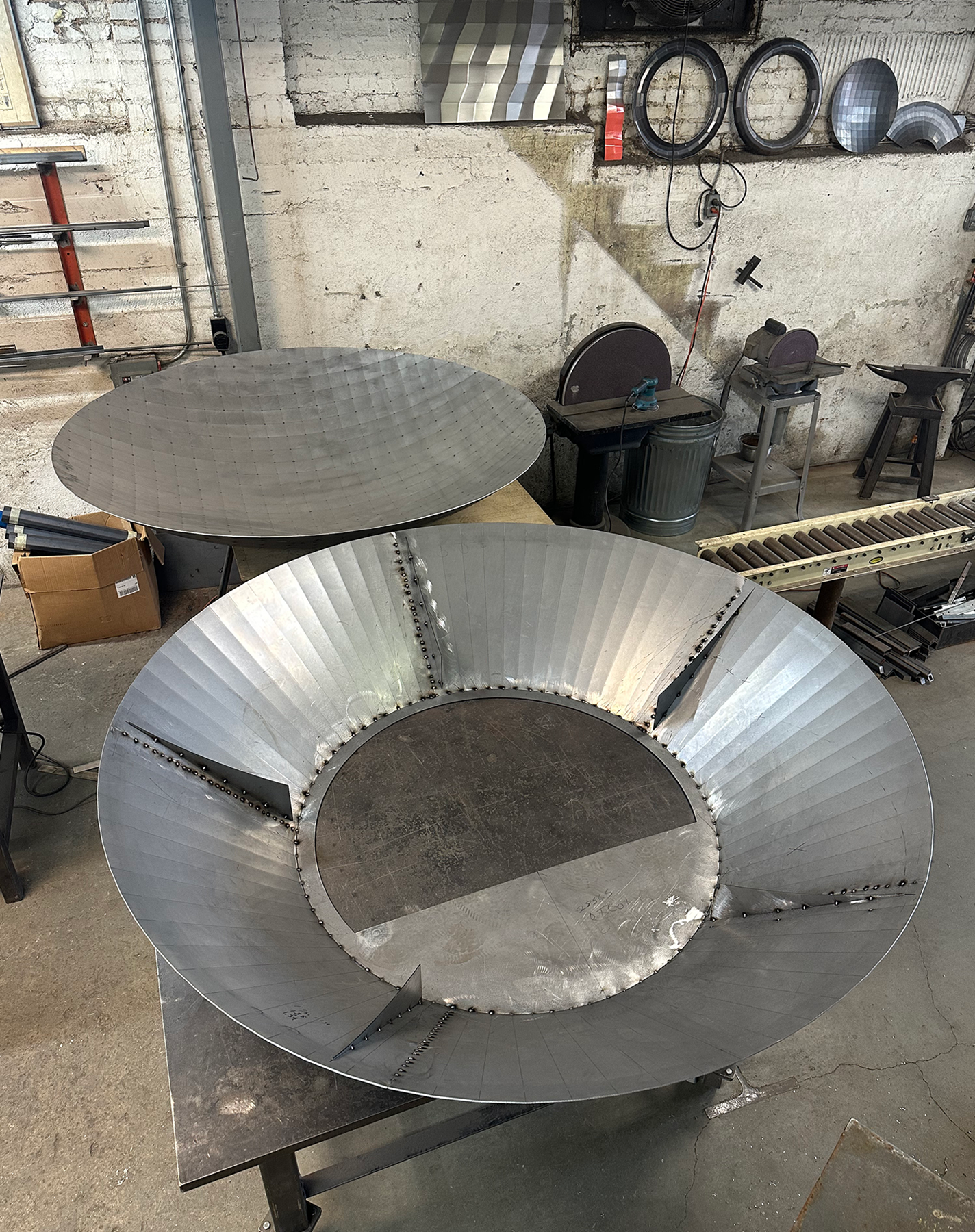
An in-progress shot of Arc, 2025, blackened steel, 72 x 72 x 15 in

“I’ve known since the beginning of my studio practice that I wanted to pursue large-scale work; I believe the work is more impactful when large.”

— Thomas Campbell

  • Photos by Steve Mann

    Scape, 2025, blackened steel, 48 x 48 x 4 in.

You worked in your family’s steel business as a fabricator for seven years. How did that experience affect your practice and your aesthetic?
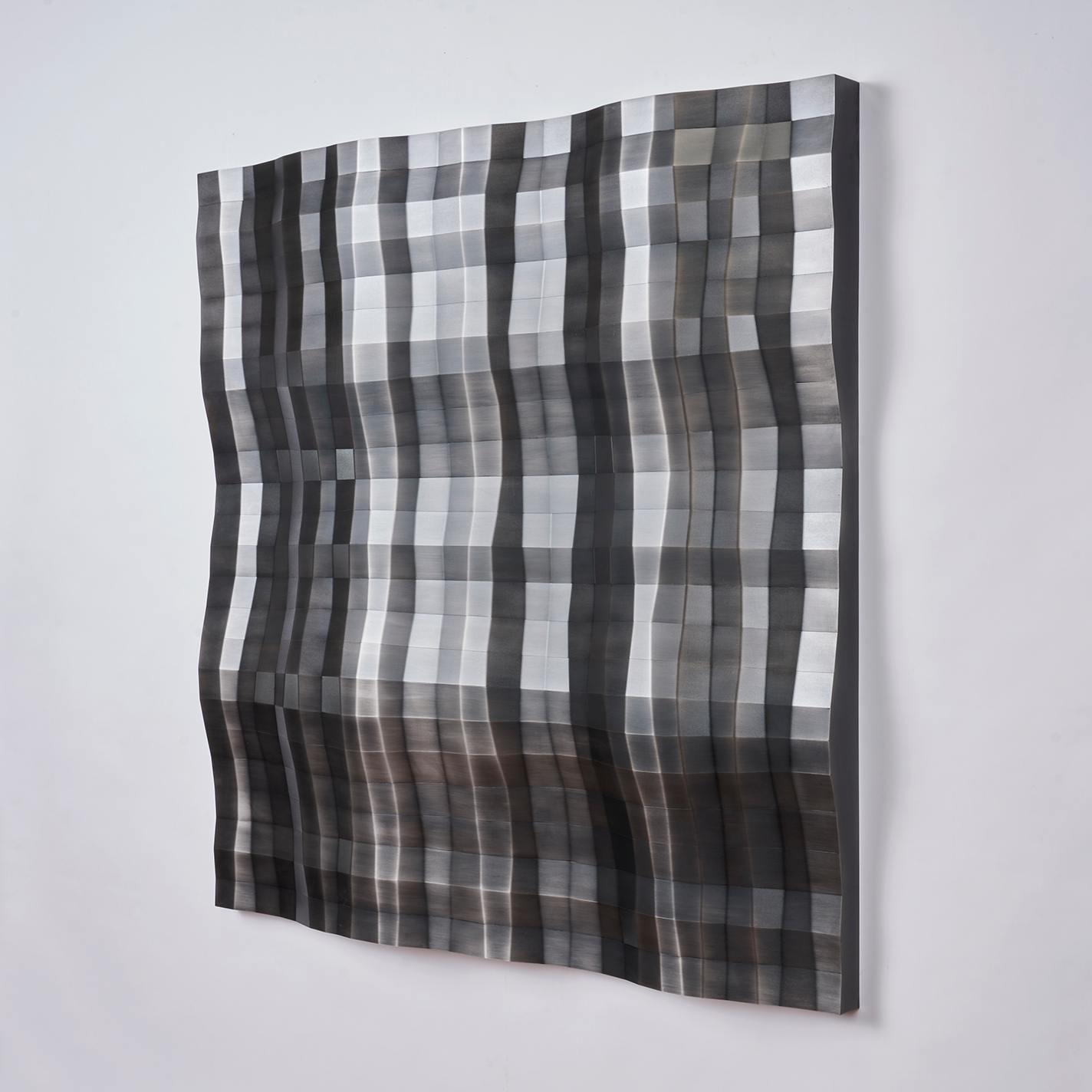
The skillset I developed in industry continues to drive my practice and dictate how I choose to approach making work. Bends, or brakelines, as they’re commonly referred to in the industry, allow me to turn flat steel into volumetric forms. Lately I have been pushing the subtlety of these bends, creating large forms composed of hundreds of facets created by these brakelines, each facet reflecting light differently. I’ve known since the beginning of my studio practice that I wanted to pursue large-scale work; I believe the work is more impactful when large. Because of my time in my family’s business, I’m very comfortable working on this current scale. 

What are the greatest challenges in making art with steel?
My current greatest challenge is weight. I have been growing the scale of my work over the past few years, and as this scale increases, weight does too. Arc, the most recent piece I’ve completed, is close to 300 pounds. I am well equipped to handle this weight in my shop, but installation always becomes a stress point. You just have to figure out a way!

Photo by Steve Mann

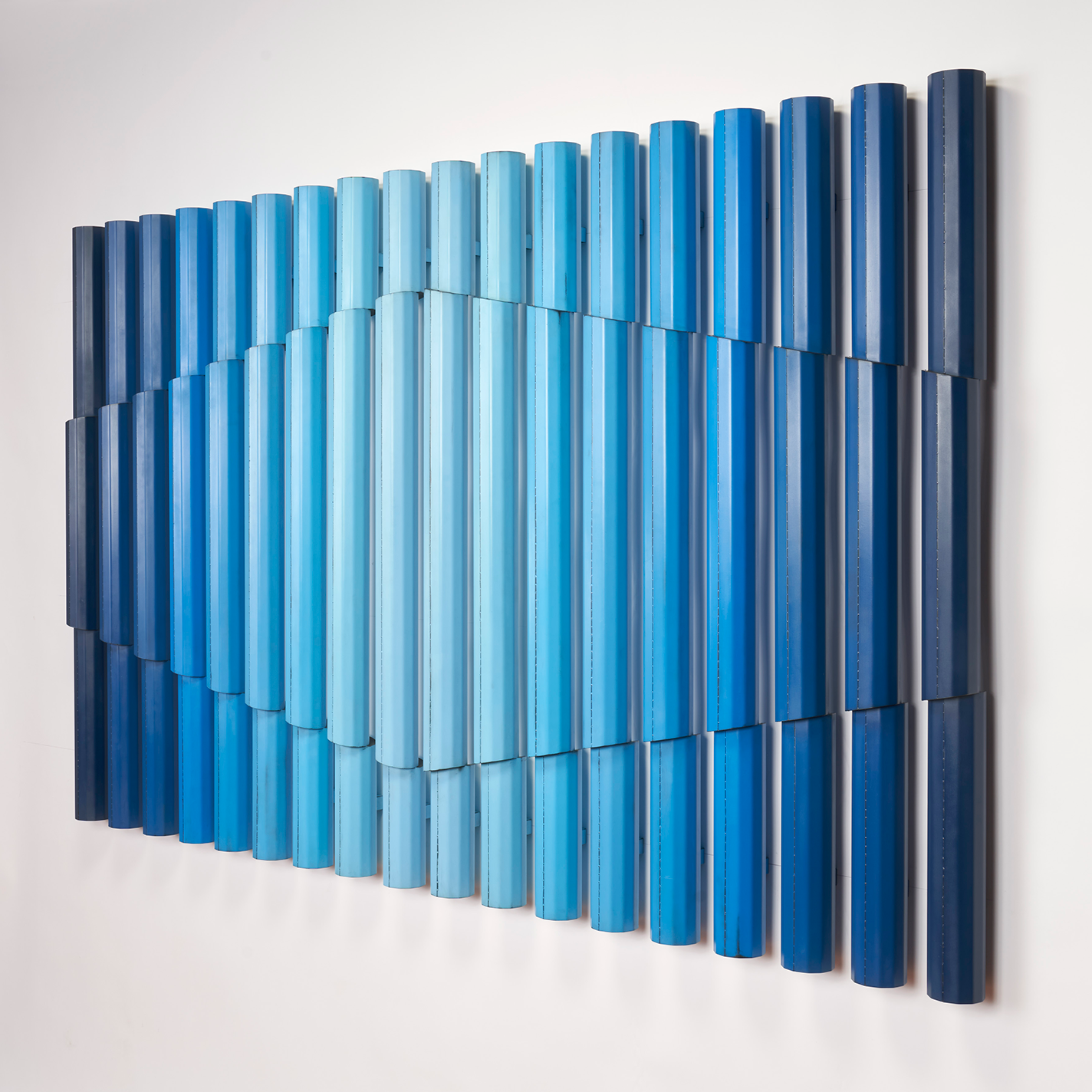
Cathedral, 2021, painted and blackened steel, 48 x 80 x 4 in.

You’ve taught at Penland and Haystack Mountain. What did you learn from teaching that’s been of value in your career?
Teaching is such an eye-opener because it forces you to wrestle with why you take the material approaches that you do, and it demands that you explain these approaches cohesively and concisely. It’s kind of a roundabout way of checking in with yourself and your practice, and I often leave feeling reenergized. It’s also such a thrill to watch a beginner take this shared knowledge and make it their own, and this often leads to new discoveries for me in my practice. Watching students learn can help get you out of your own box a bit. 

You were awarded the Virginia A. Groot Material Exploration Residency at the Center for Craft in 2025. What did you explore, and what did you find out?
This residency was a partnership between the Virginia A. Groot Foundation and the Center for Craft’s WNC Craft Futures Cohort Residency, which was a response to the devastation Hurricane Helene caused in our region, particularly to how it affected artists. Forty artists from the western North Carolina region were part of this cohort, many of whom lost studios from the flooding. We spent six months together participating in programming led by the Center for Craft, but, more than anything, this felt like time for all of us to navigate the uncertainty of our practices in a city and region completely reshaped by an environmental crisis. I spent a good bit of this time working on two pieces, Scape and Arc, both of which felt like indirect responses to the months of chaos and disruption post-storm. How can I find calm through my work during a period of life that feels completely out of my control? I was considered for the Groot part of this residency because I was awarded an Honorable Mention Virginia A. Groot Award in 2023.

Photo by Steve Mann

Merge, 2022, blackened steel, 60 x 60 x 10 in.

Photo by Steve Mann

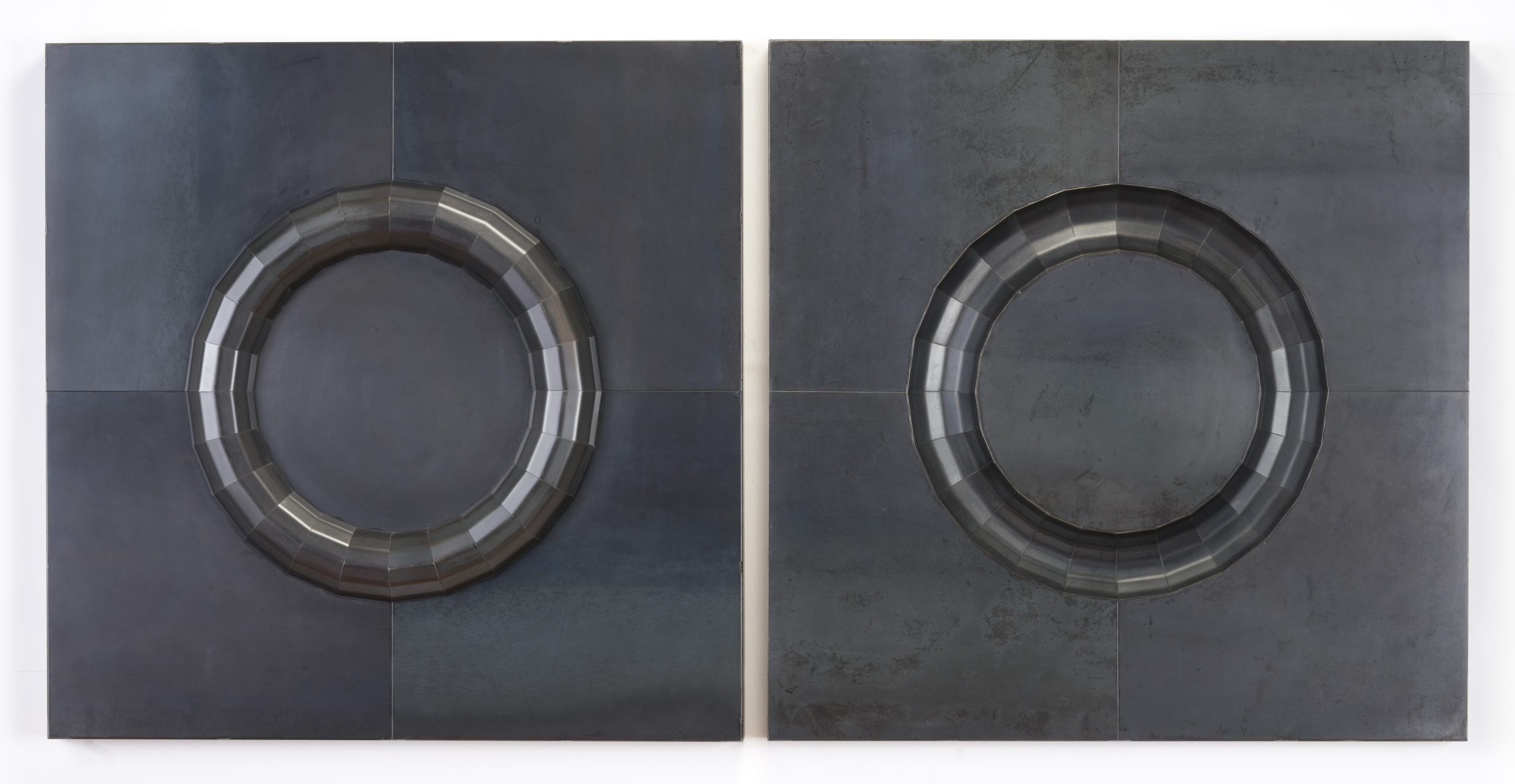
Cycle I + II, 2021, Blackened Steel, 30 x 62 x 3.5 in.

If you were to furnish your home or studio with craft art, which craftspeople’s work would you include?
My wife, Laura Wood, is also an artist, and our three-year-old daughter has developed into quite the enthusiast herself, so we have always prioritized having art and handmade objects made by artists, many of whom we consider friends. Maggie Jaszczak, Leigh Suggs, Jennifer Ling Datchuk, Leslie Noell, Matt Repsher, and Andrew Hayes are some of our favorites. I love the work of Cristina Córdova, Hiroyuki Hamada, and Kristen Martincic

Which craft artists, exhibitions, or projects do you think the world should know about, and why?
I live in Asheville, and there are so many amazing artists and craftspeople in the Western North Carolina region. We are still recovering from the devastation of Hurricane Helene, so I would encourage anyone interested in craft artists to visit our city. The Trump administration has continually cut hurricane relief funding to our region, so we need all of the support we can get. Come visit, support the artists, and enjoy our beautiful city as we continue on a path to recovery.

Photo by Bill Green

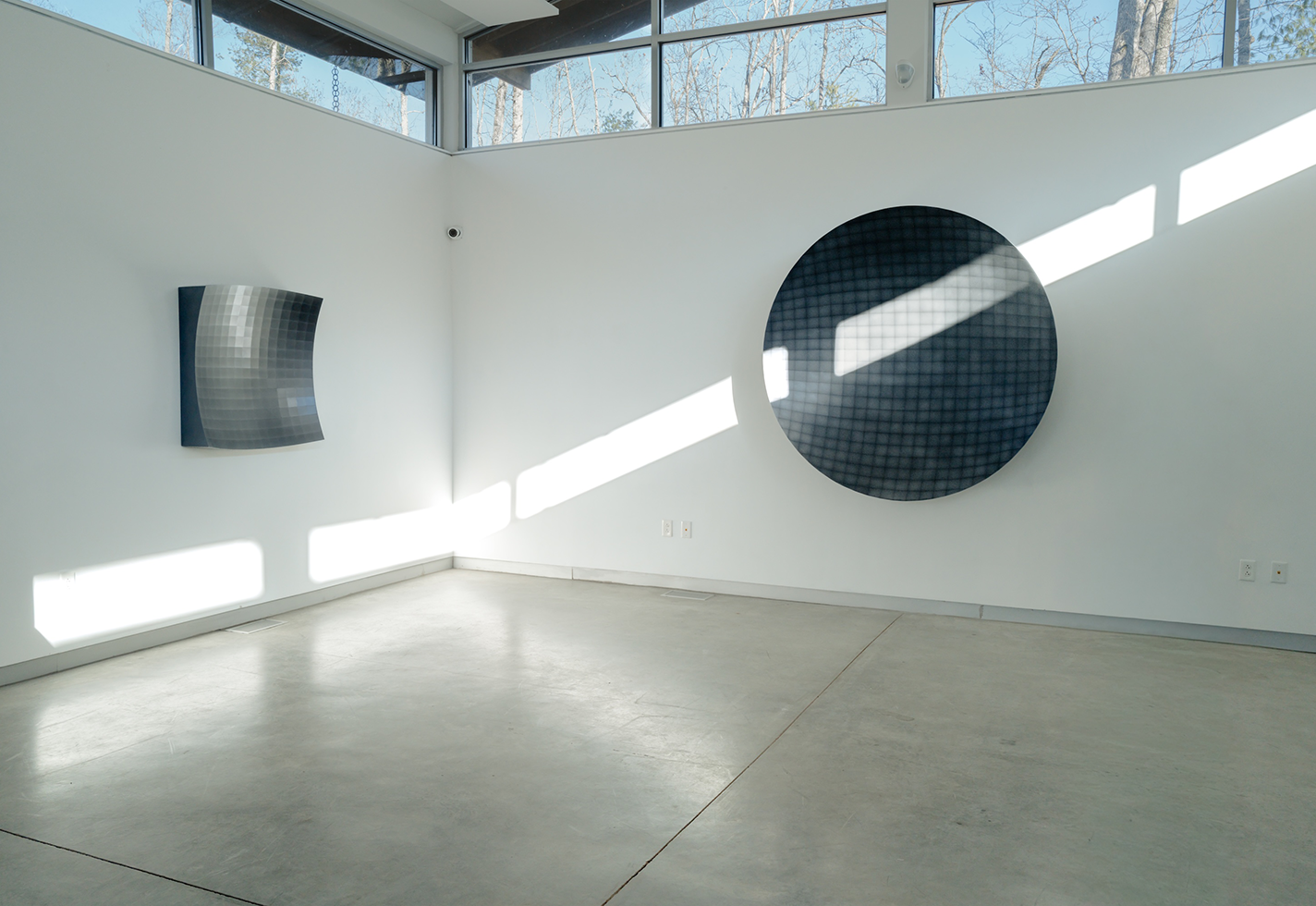
Untitled (Stainless), 2025, stainless steel, 37.5 x 38.25 x 8.5 in. (left) and Arc, 2025, blackened steel, 72 x 72 x 15 in. (right), installation view.

Jon Spayde is a writer and editor in Saint Paul, Minnesota. A former contributing editor to American Craft, he writes on art, psychology, education, and personal growth for a number of regional and national publications.

Visit Thomas Campbell online.

Website Instagram

Before you go!

We believe that making creates a meaningful world, and we hope you do, too. Deeply researched and impactful journalism on the craft community is in short supply. At the same time, being featured in craft-centered media and articles can have a major effect on a maker’s or artist’s livelihood, particularly those who are just starting in their career. You can help support our mission and the work of makers around the country by becoming a member or by making a gift today.

Thank you!
American Craft Council