Craft Around the Country

Jackson Martin Takes Repairing Everyday Objects to the Extreme

The Asheville, North Carolina–based sculptor and artist’s Making Amends series is a pointed rebuke of planned obsolescence.

By Robert Alan Grand
July 3, 2026

Photo by Emma Levitz

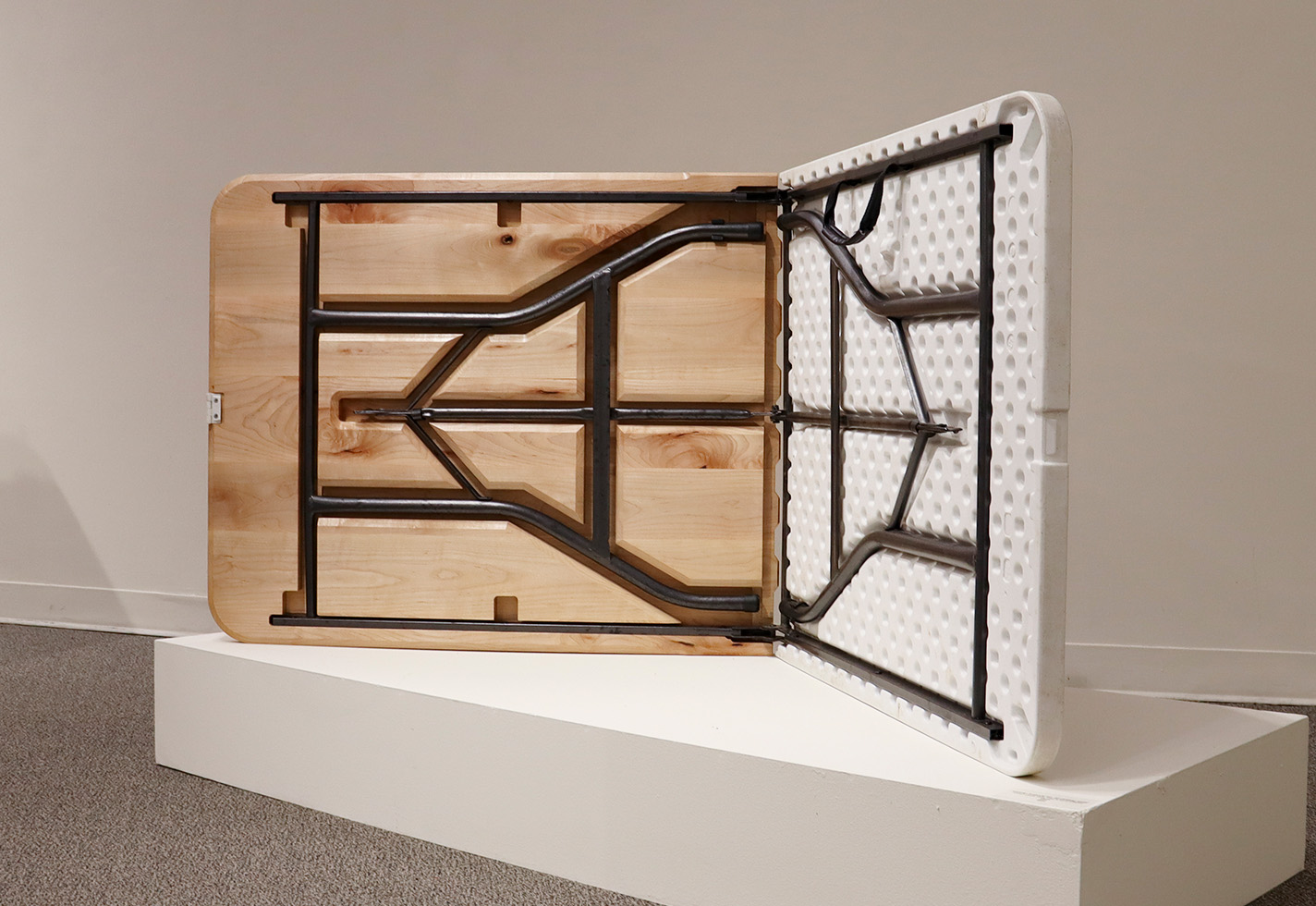
Jackson Martin's sculptures critique the disposability of everyday objects. For Making Amends No. 22 (Folding Table), 2021, Martin repaired a once-broken folding table with hand-routered maple, 30 x 72 x 30 in.

The 24 objects that make up Jackson Martin’s Making Amends series show the great, sometimes illogical lengths the Asheville, North Carolina–based sculptor has gone to repair mass-produced everyday objects with striking, handcrafted solutions. On view together for the first time in a solo exhibition at Tennessee Tech’s Appalachian Center for Craft in Smithville, Tennessee, through July 11, Martin’s clever interventions transform cast-off objects into one-of-a-kind heirlooms, infusing the pieces with a dose of humor and irony. 

Making Amends No. 5 (Styrofoam Cooler) (2019), for instance, replaces the broken foam lid with one fashioned out of quilted insulation fabric, a solution that may last longer than the expendable cooler itself. The seventh entry in the series, subtitled Laura’s Laundry Basket (2019), supplants one of the plastic hamper’s plain gray grips with a two-toned handle crafted from steam-bent ash and cherry wood.

In another work, Martin recreated a child’s safety gate from milled walnut and replaced the plastic latticework with a two-way mirror. The resulting sculpture, 2020’s Making Amends No. 14 (Baby Gate 2), reflects on widespread surveillance in modern culture, musing about how even innocent devices can serve as tools of omniscient observation.
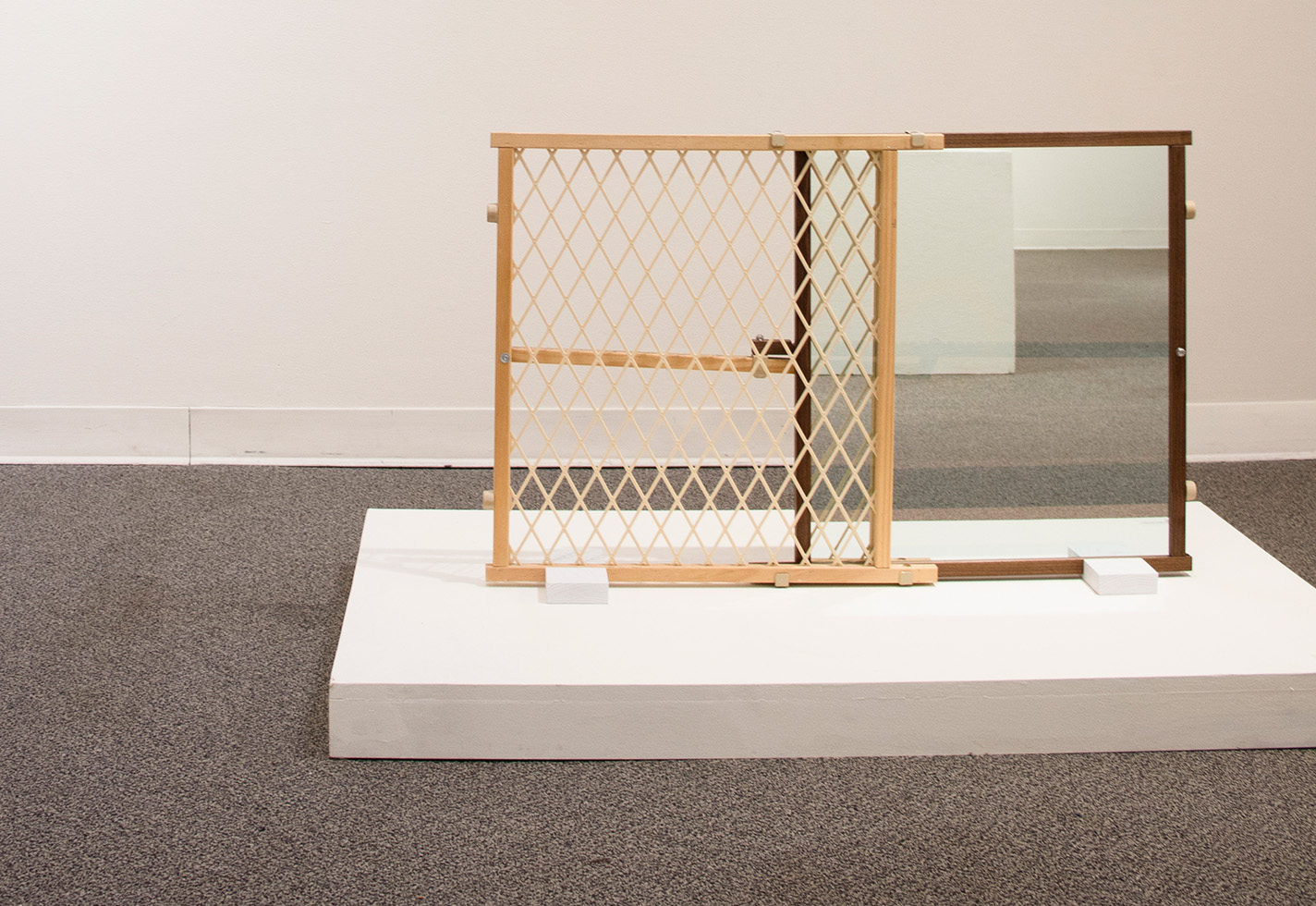
Photo by Emma Levitz

Making Amends No. 14 (Baby Gate 2), 2020, broken baby gate, milled walnut, two-way mirror, hardware, C-print, 23 x 42 x 3 in.

Martin describes his initial approach as somewhat improvisational, shaped by whatever fell apart around him. His goal was to give care and attention to disposable objects—those “designed to break or never really be fixed in the first place,” as he puts it—just as he would with other home repairs. Spending, as he says, “a ridiculous amount of time, energy, and money,” to reconstruct these objects has been part of the challenge—but also the joy—for the artist. 

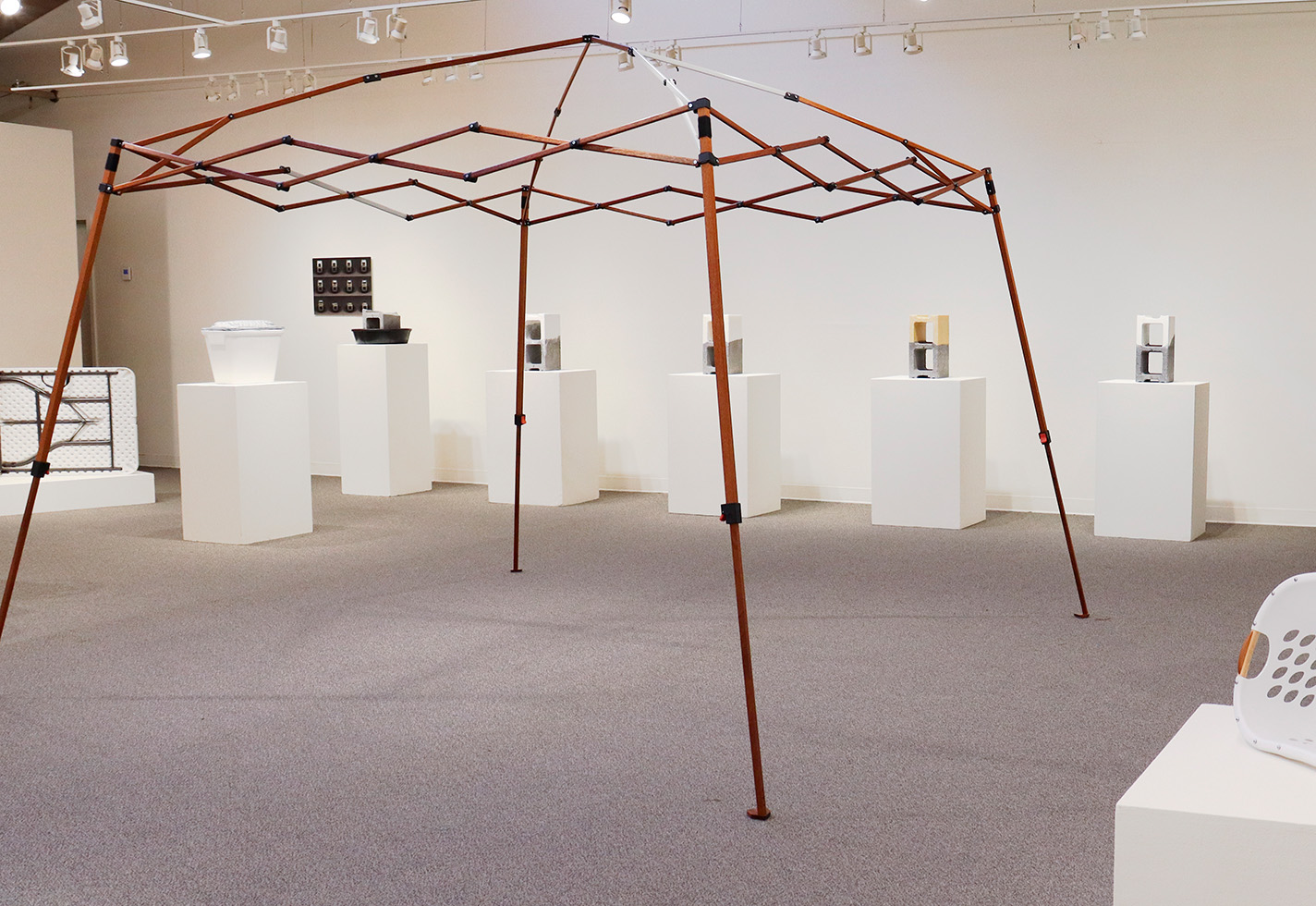
Two of the most labor-intensive pieces are also the most engrossing. Making Amends No. 22 (Folding Table) (2021), which required multiple foam and maple prototypes to get the utility table form just right, and Making Amends No. 12 (Canopy Tent) (2020), which replaced the aluminum poles of a pop-up sunshade with attractive mahogany, demonstrate the intricate construction and extreme precision Martin used to create an accurate, seamless intervention.

Later works in the Making Amends series move in a more abstract, subversive direction. “I challenged myself to see how many different types of materials and how many processes I could possibly use,” Martin says, adding that he’d ask himself, What were the extremes I could take this to? What were the boundaries I could push up against?  

Photo by Emma Levitz

Making Amends No. 12 (Canopy Tent), 2020, broken canopy tent, mahogany, C-print, 84 x 120 x 120 in.

“What were the extremes I could take this to? What were the boundaries I could push up against?”

— Jackson Martin

This shift into more outlandish materials and complex reconstructions leads the resulting works to take on a surrealist bent. One of the most fantastical works in a series rife with absurdity, 2017’s Making Amend  No. 17 (Candy Block 1), replaces half of a cinder block with a mold made from red hard candy similar in style to a Jolly Rancher—a material even more temporary and ephemeral than the concrete that inspired it. 

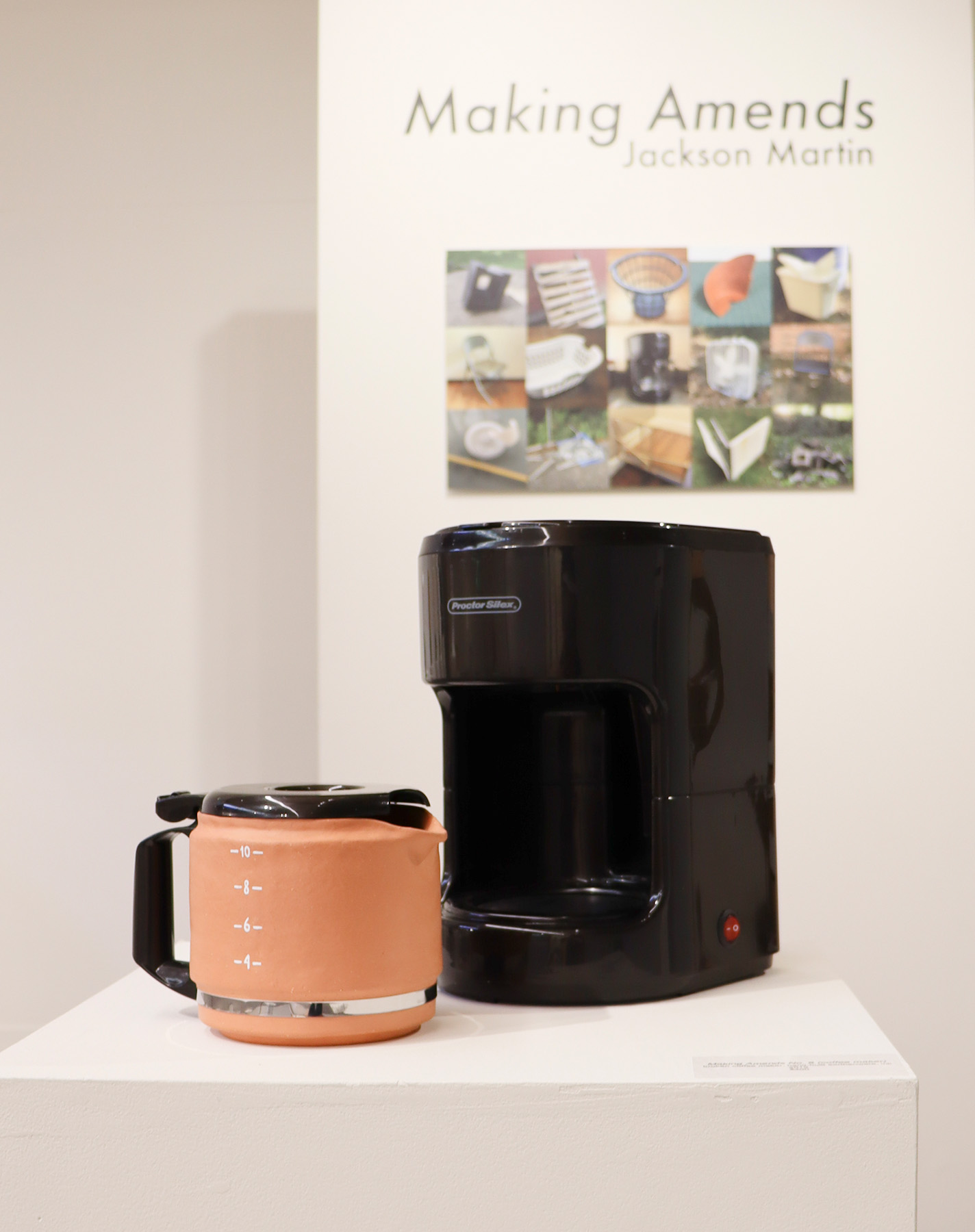
In 2019’s Making Amends No. 8 (Coffee Maker), Martin reconstructs the appliance’s shattered glass carafe from hand-built earthenware; the resulting pockmarked, slightly porous surface looks more like skin or animal hide than low-fired clay. Similarly bizarre and dreamlike are the cinder block salvaged with glistening, milky-looking wax in 2021’s Making Amends No. 18 (Wax Block) and the cast-bronze repairs to a cup from a Southern meat-and-three in the same year’s Making Amends No. 20 (Double Styrofoam Cup).

Martin’s Making Amends series aligns with the artist’s broader interdisciplinary practice of using everyday materials to create optical illusions. In his 2014 installation Seep, a white oak tree appears to emerge from the gallery’s curling strips of wood flooring, as if reclaiming the space that was once its habitat. In another series of sculptures, he crafted meticulous replicas of his three-piece wedding tuxedo using Kraft paper, quilted moving blankets, and reclaimed trampoline fabric. 

Raised on a self-described “hippie commune” in rural Tennessee, Martin crafts his pieces with a collective benefit in mind, the whimsical nature of his works drawing attention to larger social issues.

“I appreciate that some of the fixes are aesthetic and not entirely functional,” Martin says. “I hope it causes viewers to think about the throwaway culture that pervades American society and their participation in it.” 

Photo by Emma Levitz

Making Amends No. 8 (Coffee Maker), 2019, broken coffee maker, hand-built earthenware, ink, C-print, 11 x 7 x 9 in.

Robert Alan Grand is a writer and photographer based in Asheville, North Carolina. He received the 2025 Andy Warhol Foundation Arts Writers Grant to cover contemporary art in southern and central Appalachia.

Learn more about Jackson Martin's work online.

Website Instagram

This article was made possible with support from the Windgate Foundation.

Before you go!

We believe that making creates a meaningful world, and we hope you do, too. Deeply researched and impactful journalism on the craft community is in short supply. At the same time, being featured in craft-centered media and articles can have a major effect on a maker’s or artist’s livelihood, particularly those who are just starting in their career. You can help support our mission and the work of makers around the country by becoming a member or by making a gift today.

Thank you!
American Craft Council