Craft Around the Country

A New Exhibition Takes Cranbrook Visitors into the Labyrinth

Works by alumni and faculty of the Cranbrook Academy of Art comprise a new exhibition at the affiliated Cranbrook Art Museum in Michigan.

By Jon Spayde
April 8, 2026

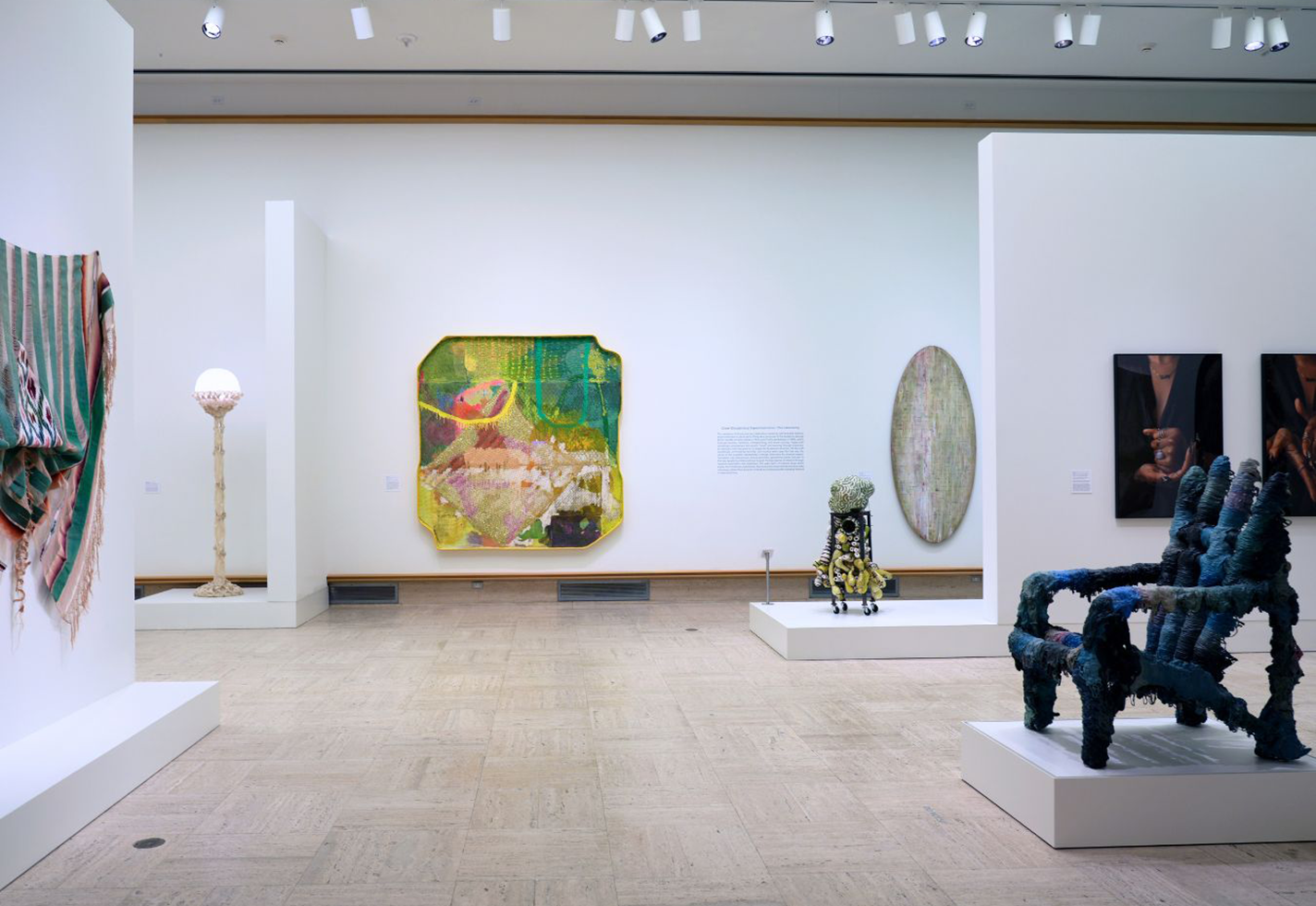
Photo courtesy of Cranbrook Art Museum

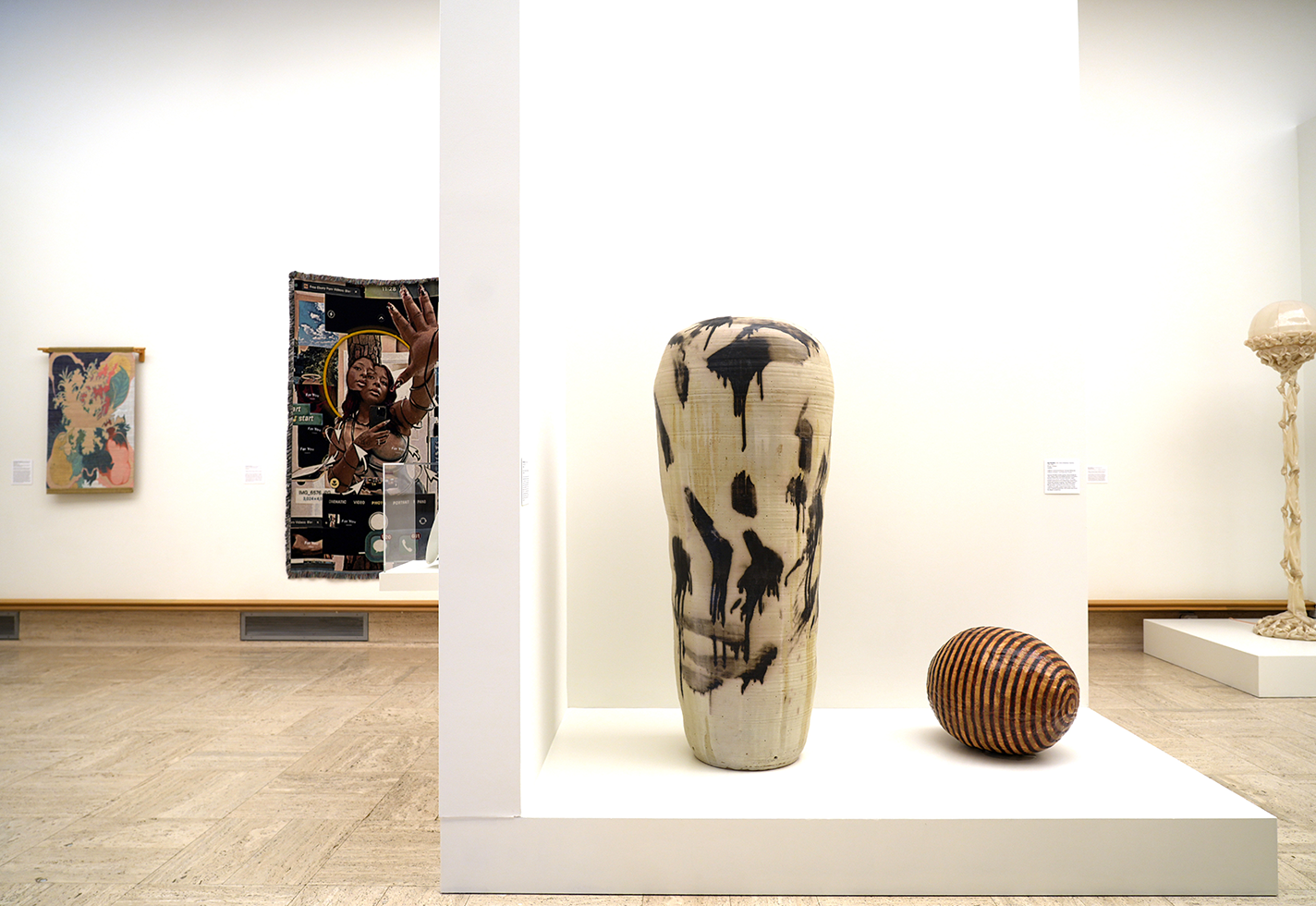
The Cranbrook Art Museum's gallery is filled with works by alumni and faculty of the Cranbrook Academy of Art. From left: a tapestry by Kelly Tapia-Chuning, a lamp by Ross Hansen, a painting by James Benjamin Franklin, ceramics by Annabeth Rosen, fiber art by Jane Lackey, photographs by Ricky Weaver, and a chair by Cody Norman.

True to its title, Cranbrook Art Museum’s new exhibition Labyrinth/Laboratory: Selections from the Cranbrook Collection, which opened April 4, is designed as a labyrinth—a maze in which visitors can wander, pondering the connections among the works on display. 

Those 40-plus works, drawn from the museum’s collection, were created by artists who have attended or taught at the famed Cranbrook Academy of Art from the 1950s to the present, many of them prominent figures within the world of craft-based art. 

The Academy, in the Detroit suburb of Bloomfield Hills, Michigan, is well-known for its atelier-style teaching methods: there are no courses, no grades, and students pursue self-directed learning under the mentorship of established artists. The labyrinthine layout of the exhibition is a metaphor for the Academy experience, says co-curator Kat Goffnett. “Artists at Cranbrook seek out their own problems to solve as they develop their practice, cutting their own path through the two-year experience,” she says.
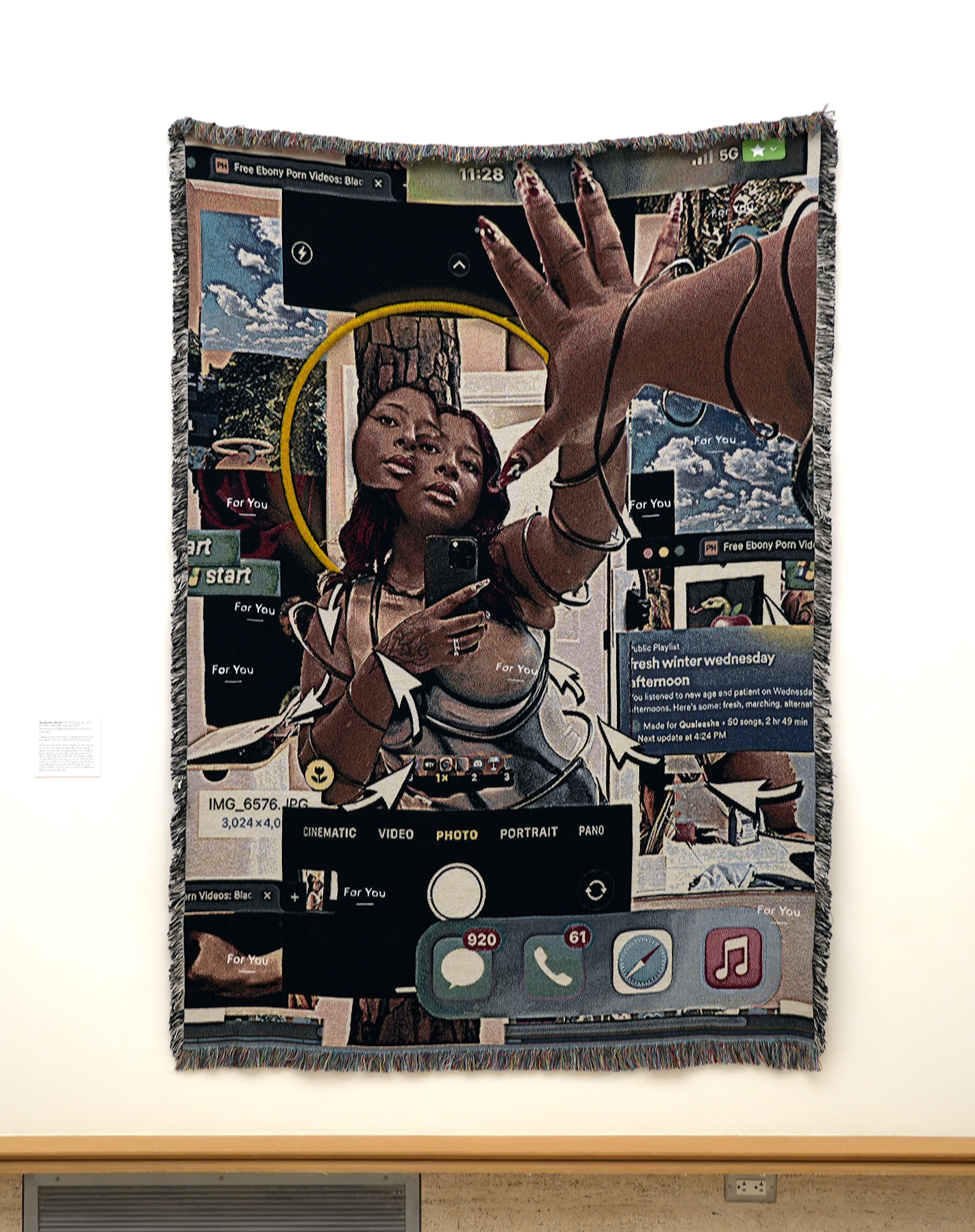
Photo courtesy of Cranbrook Art Museum

Qualeasha Wood, It’s All For U (If U Rlly Want It), 2024, woven jacquard, glass seed beads, machine embroidery, 85.5 x 59 in.

Cranbrook is also a place where influences thrive across disciplines and media: a ceramist, say, is encouraged to learn from a fiber artist, and vice versa. The show reflects this aspect too, says its other curator, Katy Kim: “Labyrinth/Laboratory isn’t segregated by material. We’ve got a great Iris Eichenberg metal piece right across from a section with a fantastic dango, a huge ceramic sculpture in the shape of Japanese dumpling, by Jun Kaneko and a large vessel by Toshiko Takaezu.” All of the school’s materials and media sections—ceramics, fiber, painting, photography, design, metalsmithing, prints, and sculpture—are represented.

And while the school’s history, reaching back to its founding in 1932, is an inescapable presence, Labyrinth/Laboratory, which has no closing date at this point, is focused on its contemporary relevance; all the works in the show were created from the 1970s forward, including an inkjet print by an artist, Daniel Rybar, who graduated in 2025. 

“Even though Cranbrook has this really rich historical legacy it’s an active, ever-changing environment of material experimentation and artists posing new questions,” Kim says. In other words, it’s a laboratory too.

Photo courtesy of Cranbrook Art Museum

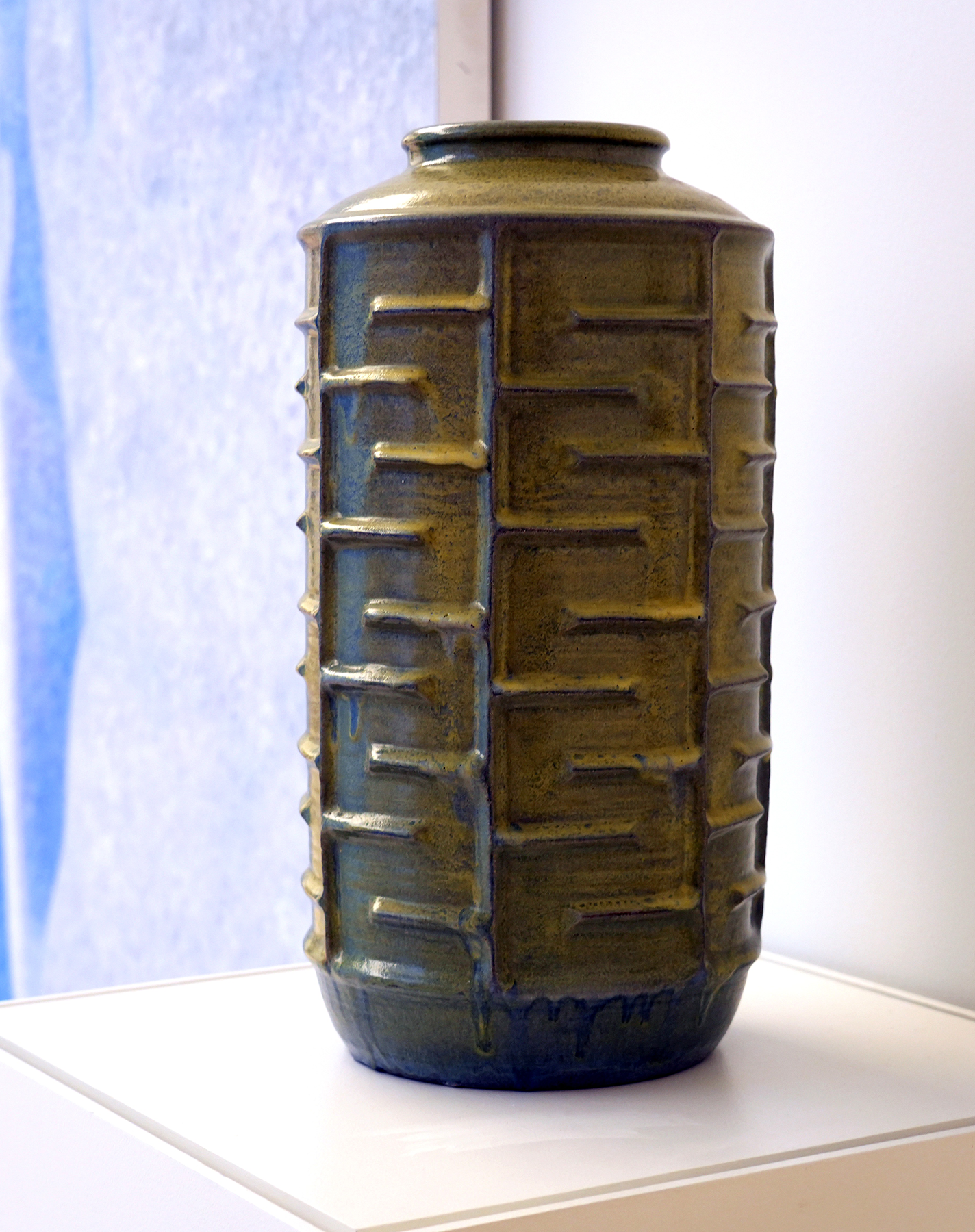
A 1942 stoneware vase by Maija Grotell, 20 x 11.25 x 11.25 in. Grotell was an artist-in-residence in ceramics from 1938 to 1966.

Photo courtesy of Cranbrook Art Museum

In the foreground, Toshiko Takaezu's Early Spring, ca. 2000, 75 x 27 x 27 in., sits to the left of Jun Kaneko's Dango, 17 x 25 x 18 in. Takaezu graduated with a degree in ceramics in 1954; Kaneko was an artist-in-residence in ceramics from 1979 to 1986.

Jon Spayde is a writer and editor in Saint Paul, Minnesota. A former contributing editor to American Craft, he writes on art, psychology, education, and personal growth for a number of regional and national publications.

Learn more about Labyrinth/Laboratory online.

Website

Before you go!

We believe that making creates a meaningful world, and we hope you do, too. Deeply researched and impactful journalism on the craft community is in short supply. At the same time, being featured in craft-centered media and articles can have a major effect on a maker’s or artist’s livelihood, particularly those who are just starting in their career. You can help support our mission and the work of makers around the country by becoming a member or by making a gift today.

Thank you!
American Craft Council