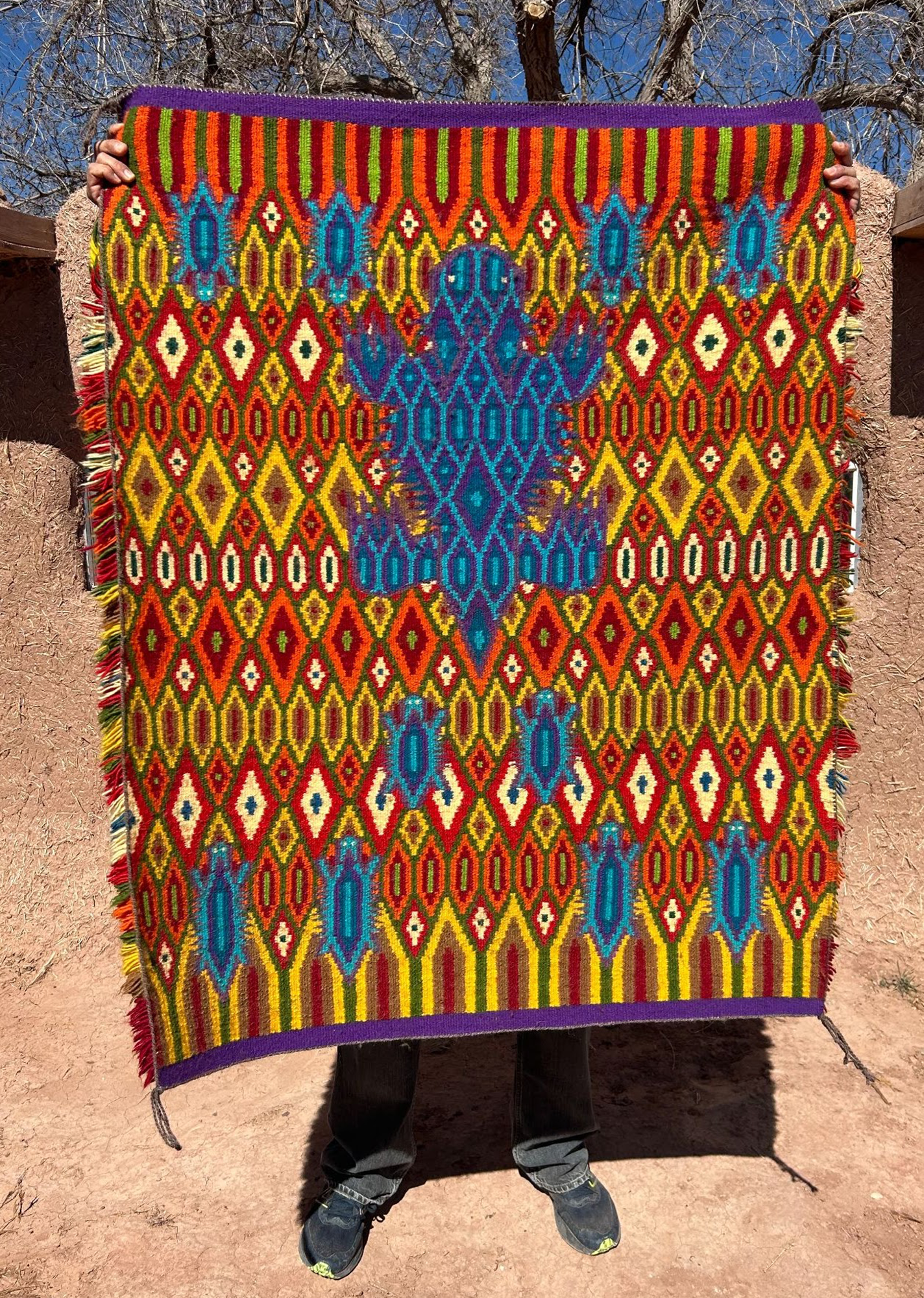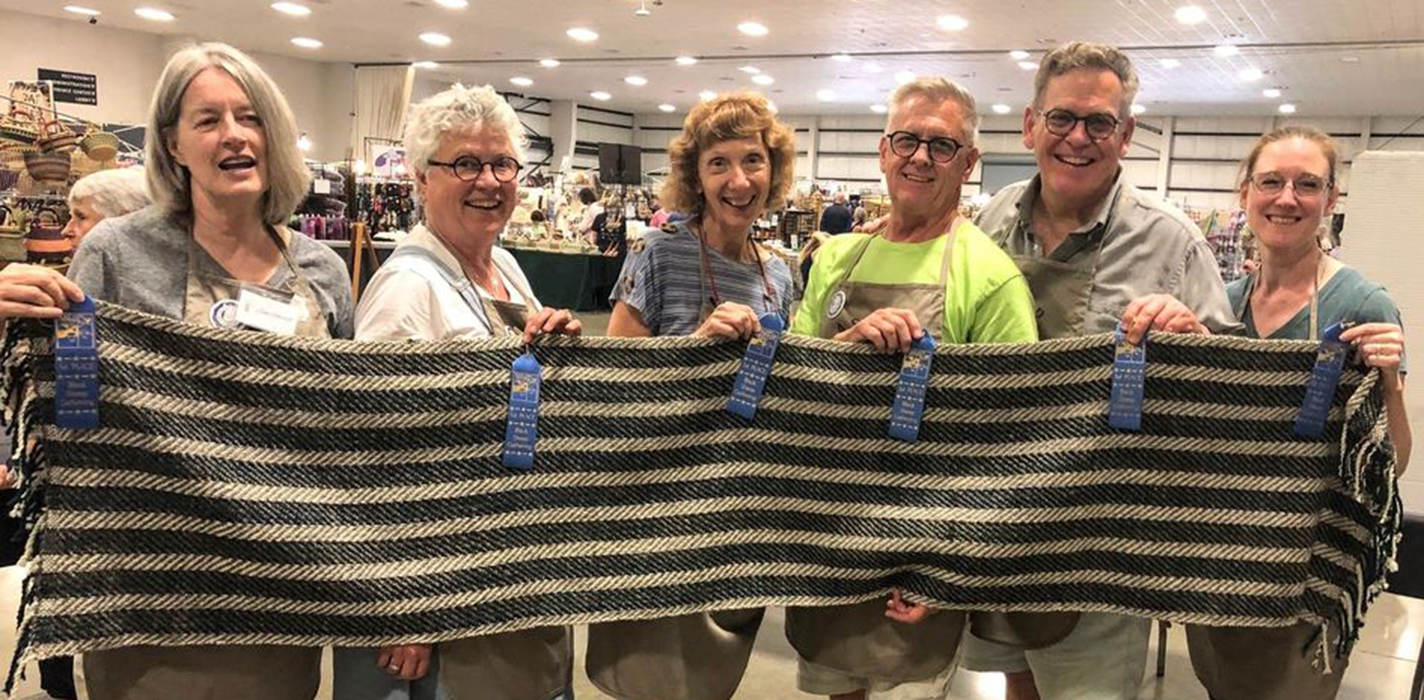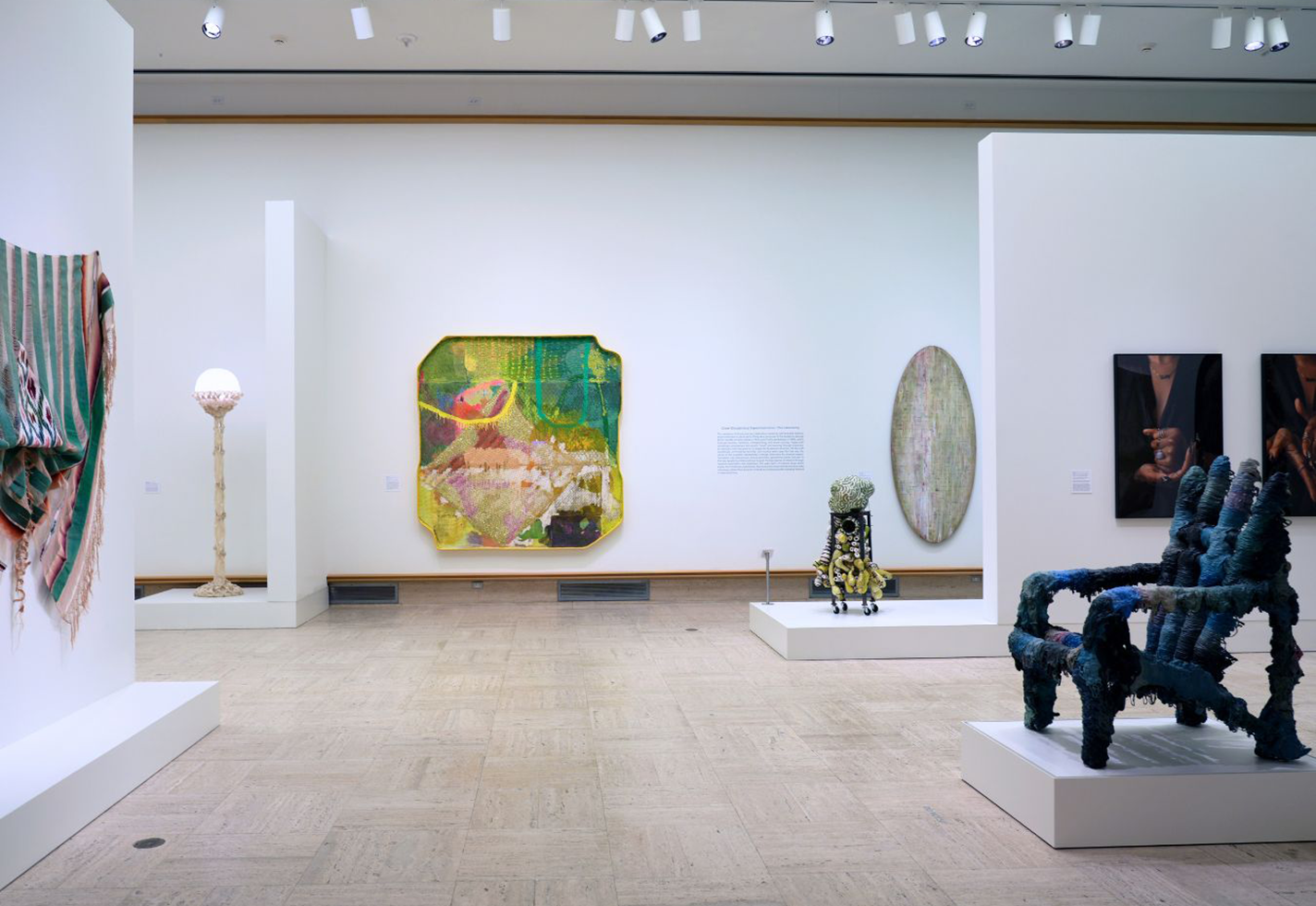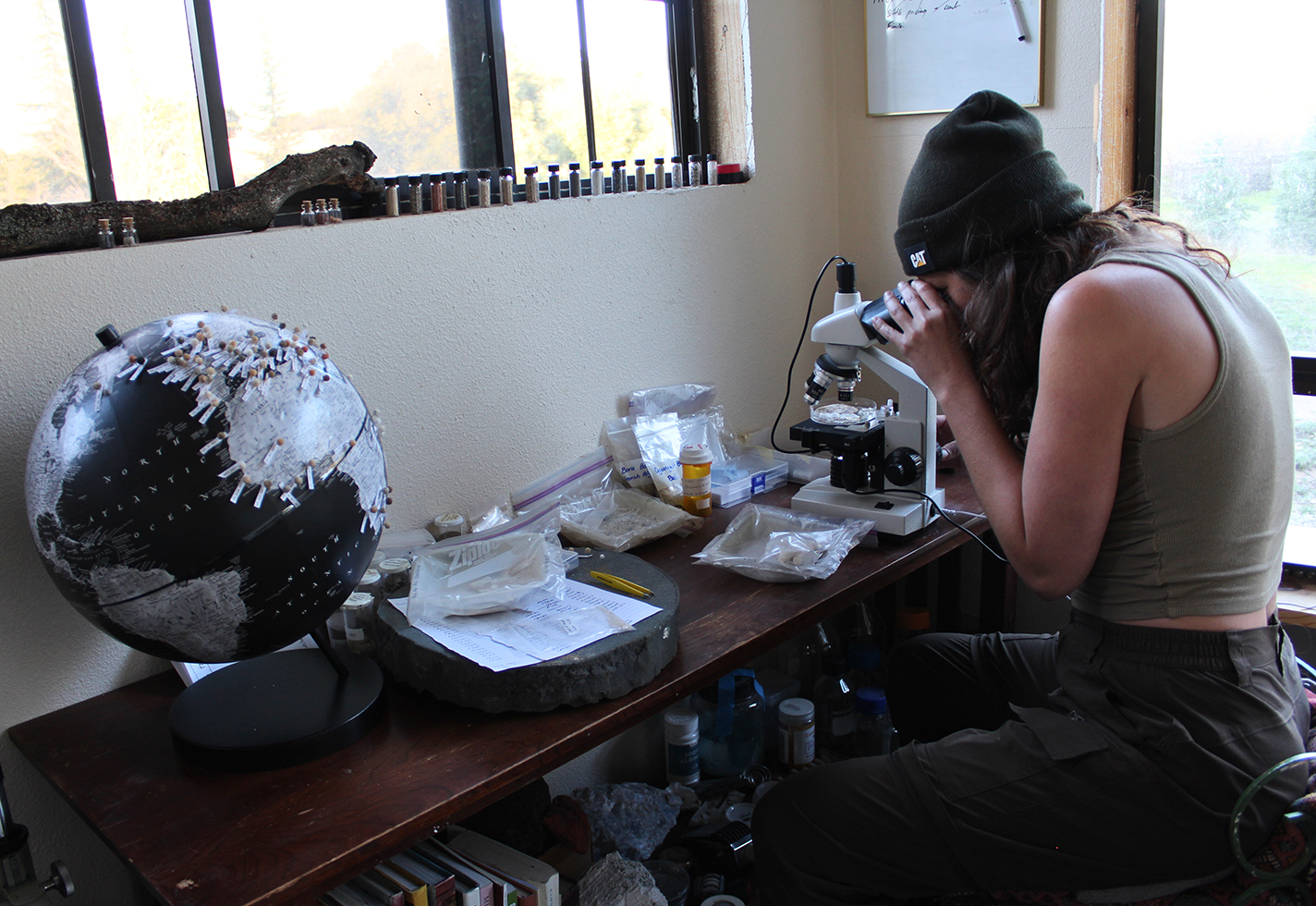
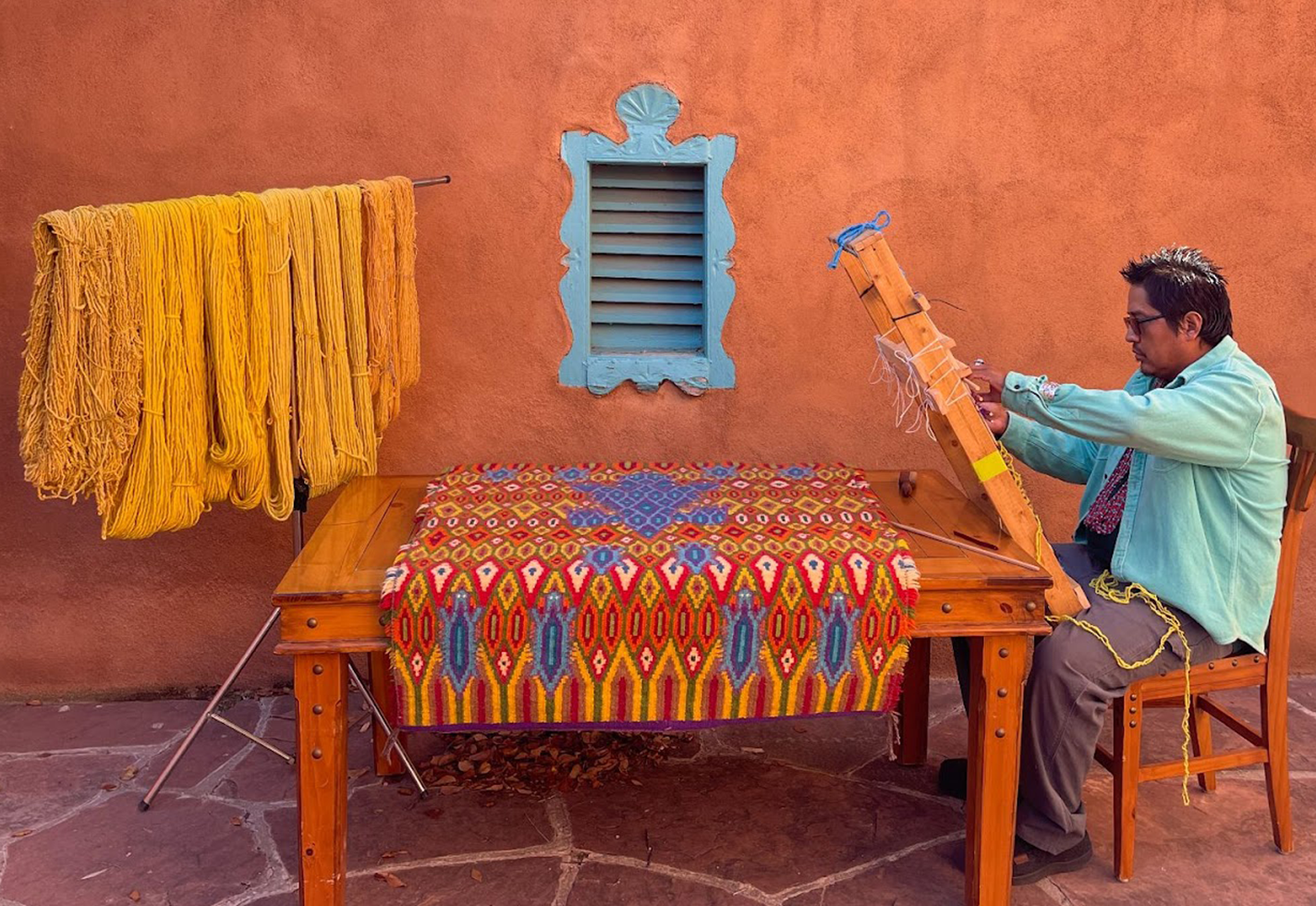
Moving between his home on the Navajo Nation Reservation in Chinle, Arizona, and the artist communities of northern New Mexico, shepherd, weaver, and adobe architect Kevin Tsosie works from sheep-to-loom, guiding wool through each stage of its transformation.
Tsosie is the co-director and recurring artist-in-residence at Futuros Ancestral in Taos, a research and design studio focused on sustaining and teaching traditional arts in the region. There, he devotes his time to weaving, teaching wool-spinning workshops, and building the adobe ovens known as hornos with members of the surrounding community.
Tsosie describes sheepherding as reciprocal. “You take care of the sheep, and then they take care of you. They feed you, they clothe you, they keep you company.” From there, his work continues by hand: shearing the sheep, cleaning and carding the wool, spinning it into yarn, and dyeing the skeins with natural pigments before they reach the loom. Tsosie’s finished textiles are kaleidoscopic, with colors derived from earth materials like chamisa, lichen, and walnut, all gathered from the land or acquired through exchange.
Along with weaving, Tsosie builds adobe hornos called báá bighan, or “bread houses,” traditional ovens for roasting and baking. While stone ovens remain more common in parts of the Navajo Nation, he favors adobe’s adaptability and ease of construction. The material was once widely used across Navajo communities before falling out of practice in the mid-20th century, but Tsosie wants to change that. “Adobe is not just for hornos. We can use it for making houses or storage or making a wall around a garden.”
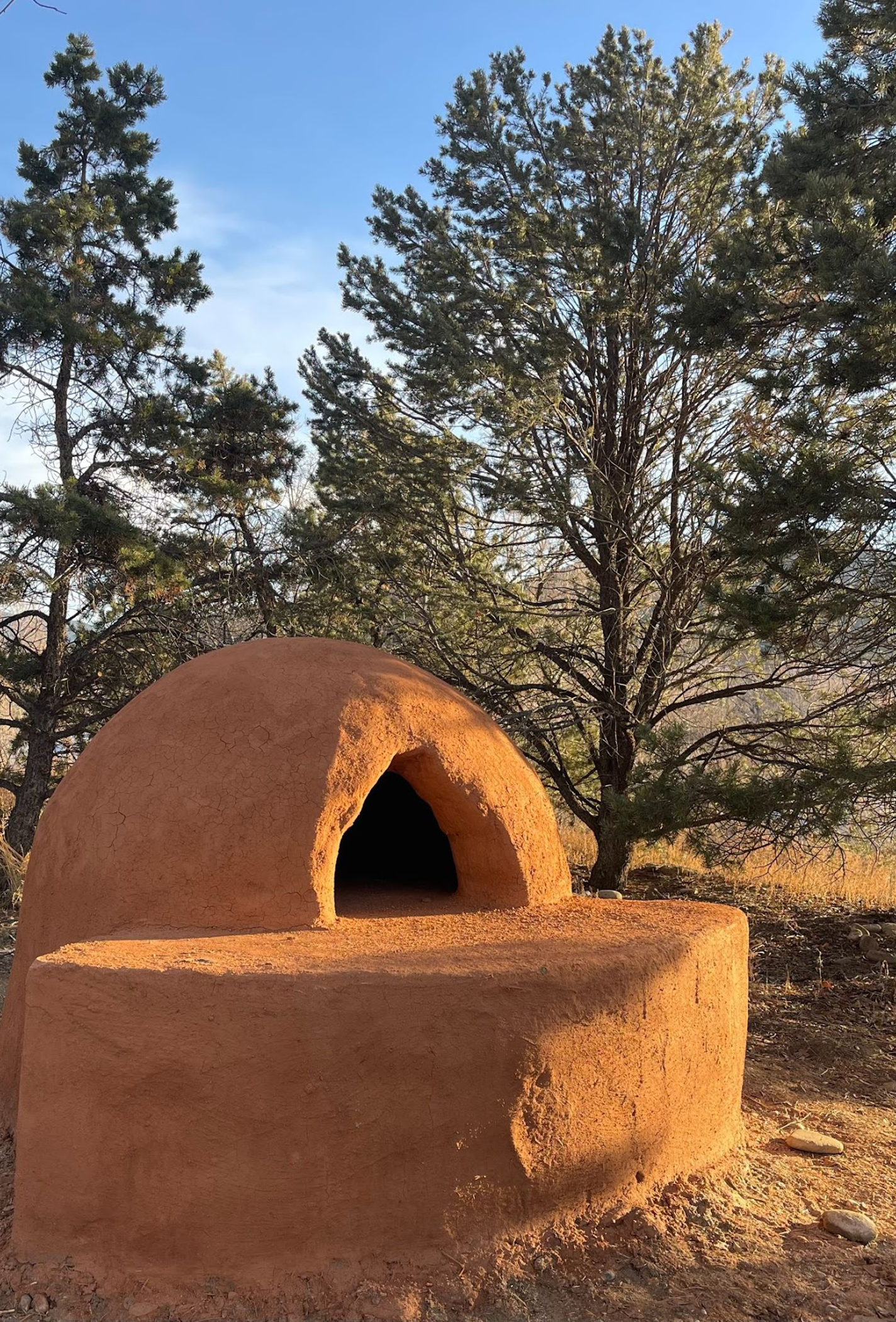
An adobe horno. Tsosie is dedicated to reviving the use of adobe in the construction of these ovens.